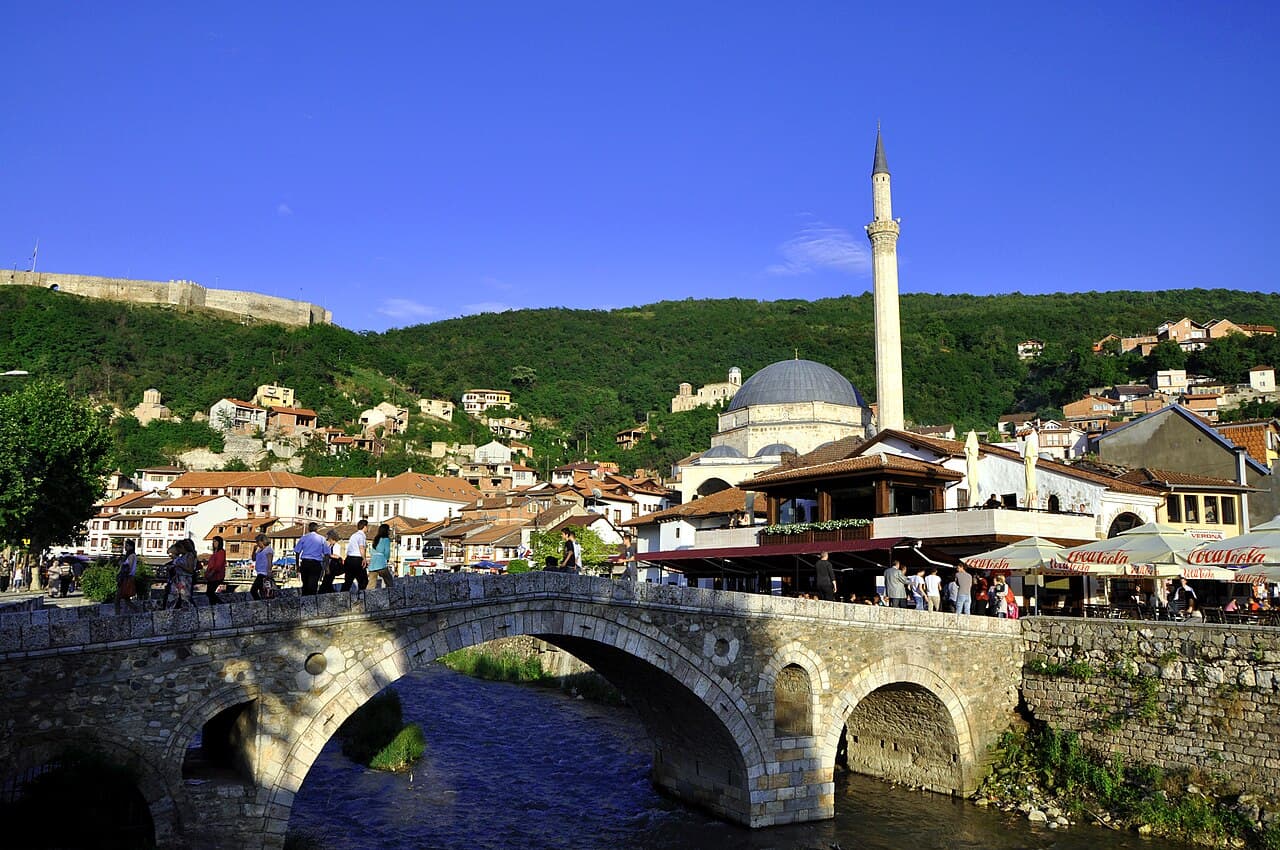
KosovoPhoto: Aljabakphoto / Wikimedia Commons (CC BY-SA 4.0)

Kosovo

Country · XK · EUR · Europe/Belgrade

This information may change. Always check the official source.Last verified: August 2026 by

The order in which you visit Kosovo and Serbia matters more than any visa rule - get it wrong and Serbia can refuse you entry.

  • Serbia does not recognise Kosovo as a state. It regards Kosovo as its own territory.
  • If you enter Kosovo from Albania, Montenegro or North Macedonia, Serbia considers that you entered Serbian territory at a crossing it does not accept as an international border.
  • Kosovo is outside the Schengen area and outside the EU. Its 90 days in 180 are counted separately.
  • Days spent here do not consume your Schengen allowance - which makes the region genuinely useful if you are close to your 90-day Schengen limit and want to stay in Europe.
  • Most Western passports get 90 days visa-free.
More details

Plan the order of your trip

This is the single most important thing on this page, and it is about sequence rather than paperwork.

  • Serbia does not recognise Kosovo as a state. It regards Kosovo as its own territory.
  • If you enter Kosovo from Albania, Montenegro or North Macedonia, Serbia considers that you entered Serbian territory at a crossing it does not accept as an international border.
  • Going on to Serbia directly from Kosovo can then be refused as illegal entry, because you have no Serbian entry stamp.

The two orders that work:

  1. Serbia first, then Kosovo, then back into Serbia. You already hold a Serbian entry stamp, so returning is a re-entry and is accepted.
  2. Kosovo, then back out the way you came into Albania, Montenegro or North Macedonia, and into Serbia from there at a crossing Serbia recognises.

In practice most travellers are waved through, particularly flying into Belgrade. Enforcement is inconsistent, which is exactly what makes it a bad thing to gamble a trip on.

The allowance

The allowance is not your Schengen one

  • Kosovo is outside the Schengen area and outside the EU. Its 90 days in 180 are counted separately.
  • Days spent here do not consume your Schengen allowance - which makes the region genuinely useful if you are close to your 90-day Schengen limit and want to stay in Europe.
  • Your passport is stamped on entry and exit. This country is outside EES, so the stamps are the record and you should keep the passport pages readable.
  • Crossing back into the EU re-enters Schengen and is an external border: expect the EES biometric check, and a longer queue than the drive suggests.

Practicalities

  • Most Western passports get 90 days visa-free.
  • Kosovo is not recognised by five EU member states - Spain, Greece, Cyprus, Romania and Slovakia - which affects paperwork rather than tourism.
  • Kosovo is not in Schengen and its clock is its own.
Sources (3)

Kosovo uses the euro, sits outside every customs union around it, and its border with Serbia has rules of its own.

  • Cash of EUR 10,000 or more must be declared on entry and exit; the euro is used here although Kosovo is not in the EU or the eurozone.
  • The allowance from outside is a carton of cigarettes and a small quantity of spirits per adult, applied at all five borders.
  • The Serbian border is a special case. Serbia does not recognise Kosovo's stamps, and travellers who entered Kosovo from a third country have been refused entry to Serbia - plan the route so you leave the way you came.
  • Animal products cannot be carried into the EU on the onward leg through North Macedonia or Albania into Greece.
  • North Macedonia, Albania and Montenegro are the straightforward crossings, all of them customs borders with routine checks.
More details
  • Cash of EUR 10,000 or more must be declared on entry and exit; the euro is used here although Kosovo is not in the EU or the eurozone.
  • The allowance from outside is a carton of cigarettes and a small quantity of spirits per adult, applied at all five borders.
  • The Serbian border is a special case. Serbia does not recognise Kosovo's stamps, and travellers who entered Kosovo from a third country have been refused entry to Serbia - plan the route so you leave the way you came.
  • Animal products cannot be carried into the EU on the onward leg through North Macedonia or Albania into Greece.
  • North Macedonia, Albania and Montenegro are the straightforward crossings, all of them customs borders with routine checks.
Sources (1)

No EHIC, limited state facilities, and insurance that must cover repatriation.

  • The EHIC and GHIC do not apply.
  • Travel insurance is essential and should explicitly cover repatriation - serious cases are frequently moved to Skopje or further.
  • State healthcare is limited. Private clinics in Pristina handle routine problems.
  • Tap water is generally safe in Pristina; bottled is the safer default elsewhere.
  • Pharmacies (barnatore) are well stocked in towns.
More details

Cover

  • The EHIC and GHIC do not apply.
  • Travel insurance is essential and should explicitly cover repatriation - serious cases are frequently moved to Skopje or further.
  • State healthcare is limited. Private clinics in Pristina handle routine problems.

Everyday health

  • Tap water is generally safe in Pristina; bottled is the safer default elsewhere.
  • Pharmacies (barnatore) are well stocked in towns.
  • Air quality in Pristina is poor in winter, as in Skopje and Sarajevo - coal heating in a basin.
  • Stray dogs are common; seek treatment immediately after any bite.
Sources (2)

Pristina

Long-term averages for Pristina: the mean daily high, the mean overnight low and the mean monthly rainfall across 30 years of ERA5 reanalysis data (1995–2024).

DayNight
-551525°C0100mmJanFebMarAprMayJunJulAugSepOctNovDecJanuary: Day 4 °C, Night -3 °C, Rain 50 mm. February: Day 7 °C, Night -2 °C, Rain 39 mm. March: Day 11 °C, Night 1 °C, Rain 59 mm. April: Day 16 °C, Night 5 °C, Rain 65 mm. May: Day 21 °C, Night 10 °C, Rain 70 mm. June: Day 25 °C, Night 14 °C, Rain 66 mm. July: Day 28 °C, Night 16 °C, Rain 44 mm. August: Day 28 °C, Night 17 °C, Rain 39 mm. September: Day 22 °C, Night 12 °C, Rain 50 mm. October: Day 17 °C, Night 7 °C, Rain 48 mm. November: Day 11 °C, Night 3 °C, Rain 52 mm. December: Day 5 °C, Night -1 °C, Rain 56 mm
Show the monthly table
Pristina
MonthDay (°C)Night (°C)Rain (mm)
January4-350
February7-239
March11159
April16565
May211070
June251466
July281644
August281739
September221250
October17748
November11352
December5-156

When to visit

Pristina's comfortable months - May, June and September - are also its wettest. July and August are hot and dry instead, and the winter is the season to think twice about.

Kosovo inverts the usual bargain. May and June, at 21 and 25 C by day, are the two wettest months of the year at 70 and 66 mm, while July and August - 28 C, the hottest - are among the driest at 44 and 39 mm - August level with February. So the choice is not between good weather and bad weather; it is between warm and dry, or mild and showery.

More details

The mild months are the wet ones

Kosovo inverts the usual bargain. May and June, at 21 and 25 C by day, are the two wettest months of the year at 70 and 66 mm, while July and August - 28 C, the hottest - are among the driest at 44 and 39 mm - August level with February. So the choice is not between good weather and bad weather; it is between warm and dry, or mild and showery.

The rain is spread thinly. No month here is dry in the Mediterranean sense: even the driest months still take 39 mm, and the wettest takes only 70. There is no season to avoid on rainfall alone.

May, June and September are the months this page picks, at 21-25 C by day and 10-14 C at night. September is the quietest of the three at 50 mm.

Winter is short on daylight and long on smog

January averages 4 C by day and -3 C at night, which is cold but unremarkable for the Balkans at altitude. What is worth knowing is what the heating season does to the air in a bowl-shaped basin. The European Environment Agency puts some of the Western Balkan countries among the highest particulate concentrations in Europe, primarily from burning solid fuels for domestic heating - which makes it a problem of the cold months by definition.

Two consequences for a trip: the ski season at Brezovica is the reason most people accept a January visit, and if you are choosing a cold-weather date without one, March at 11 C is the better half of the winter.

Sources (2)

Cheap and plentiful, and busiest in the summer when the diaspora comes home.

  • Kosovo's busy season is July and August, when hundreds of thousands of Kosovars living in Switzerland, Germany and Austria come home.
  • Prices rise and the roads fill, particularly at the borders.
  • Prizren is the most attractive town - Ottoman, riverside, and walkable.
  • Pristina is functional rather than beautiful and is where the country's energy is.
  • You will be asked for your passport at check-in.
More details

The diaspora summer

  • Kosovo's busy season is July and August, when hundreds of thousands of Kosovars living in Switzerland, Germany and Austria come home.
  • Prices rise and the roads fill, particularly at the borders.
  • The rest of the year is quiet and very cheap.

Where

  • Prizren is the most attractive town - Ottoman, riverside, and walkable.
  • Pristina is functional rather than beautiful and is where the country's energy is.
  • Peja is the base for the Rugova valley and the Accursed Mountains, and for the Peaks of the Balkans trail.

Practicalities

  • You will be asked for your passport at check-in.
  • Cash is useful outside Pristina.
Sources (2)

EU roaming does NOT apply here - Kosovo is outside the EU, so a European SIM roams at foreign rates unless your operator includes the Western Balkans.

  • Kosovo is outside the EU, so roam-like-at-home does not apply. A European SIM roams at whatever your operator charges for a non-EU country, which can be brutal.
  • Vala (Telekomi i Kosoves) - https://www.kosovotelecom.com/
  • An eSIM is live before you land and skips the shop entirely, which on a short trip is the whole argument for it.
  • Keep your home number reachable for two-factor codes. If you swap in a local SIM as your only card, bank apps that text a code to your home number stop working at the worst possible moment. A dual-SIM phone, or an eSIM alongside your home SIM, solves it.
More details

Your EU plan does not cover you here

This is the trap, and it is the reverse of everywhere else in this part of Europe.

  • Kosovo is outside the EU, so roam-like-at-home does not apply. A European SIM roams at whatever your operator charges for a non-EU country, which can be brutal.
  • Some EU operators now include the Western Balkans in their roaming zones - a regional agreement has pushed prices down - but it is opt-in by operator, not automatic. Check yours before you land.
  • Turn off data roaming on arrival until you have checked.

Local prepaid SIM

eSIM

  • An eSIM is live before you land and skips the shop entirely, which on a short trip is the whole argument for it.
  • Check your phone takes one. Most flagship phones since 2019 do; most budget models do not.

Practical points

  • Keep your home number reachable for two-factor codes. If you swap in a local SIM as your only card, bank apps that text a code to your home number stop working at the worst possible moment. A dual-SIM phone, or an eSIM alongside your home SIM, solves it.
  • Wi-fi is widespread in cafes, hotels and stations.
Sources (2)

Kosovar sockets are Type Schuko at 230 V, matching the neighbouring Balkan countries.

  • A Europlug fits every socket in the country.
  • Albania, North Macedonia, Serbia and Montenegro all match.
  • British, American and Australian plugs need an adapter.
  • The supply has improved but still dips under evening load in smaller towns, and older buildings are wired unearthed.
  • 230 V, so only American 120 V-only appliances need a converter.
More details

Sockets in Kosovo are Type and at 230 V, 50 Hz - the round Schuko outlet used across the region.

  • A Europlug fits every socket in the country.
  • Albania, North Macedonia, Serbia and Montenegro all match.
  • British, American and Australian plugs need an adapter.
  • The supply has improved but still dips under evening load in smaller towns, and older buildings are wired unearthed.
  • 230 V, so only American 120 V-only appliances need a converter.
  • A Europlug is all most travellers need - phone, laptop and camera chargers all end in one and none of them wants an earth.
  • Type is the earthed version of the same outlet, with clips on the rim rather than a third hole.
Sources (1)

Type sockets, Albanian and Serbian both official, and the youngest population in Europe.

  • 230 V, 50 Hz, sockets type and .
  • Albanian and Serbian are both official. Albanian is what you will hear almost everywhere.
  • Kosovo has its own country code, +383, since 2017. Before that its networks used Monaco and Slovenian numbers, which is why old contact details look strange.
  • Hospitality is emphatic, as in Albania.
  • Coffee is a long social event and Pristina's cafe culture is genuinely excellent.
More details

Power and language

  • 230 V, 50 Hz, sockets type and .
  • Albanian and Serbian are both official. Albanian is what you will hear almost everywhere.
  • English is very widely spoken by young people - Kosovo has the youngest population in Europe and its schooling is heavily English-oriented.
  • "Faleminderit" is thank you.

The mobile country code

  • Kosovo has its own country code, +383, since 2017. Before that its networks used Monaco and Slovenian numbers, which is why old contact details look strange.

Manners

  • Hospitality is emphatic, as in Albania.
  • Coffee is a long social event and Pristina's cafe culture is genuinely excellent.
  • Both mosques and Orthodox churches stand in the same towns. Treat the Serbian Orthodox monasteries - Decani, Gracanica - as working religious sites; some are under KFOR protection and have security procedures.
Sources (2)

Kosovo uses the euro without being in the eurozone - one of only two territories in the world to do so.

  • Kosovo uses the euro and is not in the eurozone.
  • It adopted the currency unilaterally - first the Deutschmark, then the euro - and with Montenegro is one of only two territories using it with no monetary agreement with the EU.
  • Always refuse the machine's offer to charge you in your own currency. Dynamic currency conversion at an ATM or a card terminal costs several per cent, every time, and the offer is worded to sound helpful. Choose the local currency and let your own bank convert.
  • Use bank ATMs rather than the independent machines in tourist areas, which add their own fee on top.
  • Rounding up is normal, 10 per cent for good restaurant service.
More details

The euro, without the eurozone

  • Kosovo uses the euro and is not in the eurozone.
  • It adopted the currency unilaterally - first the Deutschmark, then the euro - and with Montenegro is one of only two territories using it with no monetary agreement with the EU.
  • For you this means nothing to change and nothing to calculate.
  • Cards work in Pristina, less reliably in smaller towns.
  • Prices are among the lowest in Europe.

ATMs

  • Always refuse the machine's offer to charge you in your own currency. Dynamic currency conversion at an ATM or a card terminal costs several per cent, every time, and the offer is worded to sound helpful. Choose the local currency and let your own bank convert.
  • Use bank ATMs rather than the independent machines in tourist areas, which add their own fee on top.
  • Beware the standalone Euronet machines in tourist areas across the region. They add a large fee and push dynamic currency conversion hard. Use a bank's own machine.

Tipping

  • Rounding up is normal, 10 per cent for good restaurant service.
Sources (2)

Everyday prices

Typical prices in euro (EUR), averaged across the country by Numbeo and read on 19 August 2026. Tick Convert prices above the table to see every amount in your own currency.

Everyday prices
ItemTypical price
Inexpensive restaurant meal5.00 EUR
Dinner for two, mid-range, three courses25 EUR
Cappuccino1.41 EUR
Local draught beer, 0.5 l2.00 EUR
Bottled water, 0.33 l0.95 EUR
Public transport, one-way ticket0.55 EUR
Taxi, starting fare2.00 EUR
Petrol, 1 litre1.34 EUR
Cigarettes, pack of 20 (Marlboro)3.20 EUR
Average net monthly salary544 EUR

These are country-wide averages, not a price list: tourist districts, airports and islands sit well above them, and small towns below. The salary line is there for proportion - it is what people living here actually earn.

Sources (1)

Airport guides for Kosovo1

One page per airport: the routes into town, what they cost and the trap particular to that arrival.

See all 1 airports

Pristina airport is close to the city and taxis are the practical option; Skopje is often the cheaper way in.

  • The airport is about 15 km southwest of Pristina.
  • Taxis are the practical way in and there is a customary fixed rate - agree it before you set off.
  • Skopje airport is about two hours from Pristina by road and is frequently much cheaper.
  • Buses run between the two cities regularly.
  • Buses to Prizren, Peja and Gjakova leave from Pristina's bus station.
More details
Pristina (PRN)
  • The airport is about 15 km southwest of Pristina.
  • Taxis are the practical way in and there is a customary fixed rate - agree it before you set off.
  • A shuttle bus runs to the city but is infrequent and timed loosely to flights.
  • The airport is small and handles a lot of diaspora traffic, so it is busiest in summer when Kosovars living in Switzerland and Germany come home.
Skopje is close
  • Skopje airport is about two hours from Pristina by road and is frequently much cheaper.
  • Buses run between the two cities regularly.
  • This is a genuine alternative, not a stretch - many visitors to Kosovo arrive that way.
Onward
  • Buses to Prizren, Peja and Gjakova leave from Pristina's bus station.
  • Prizren is the prettier town and is worth more time than the capital.
Sources (2)

A small country covered entirely by buses, and one border you should think about before crossing.

  • Kosovo is small - Pristina to Prizren is under two hours - and the bus network covers it comprehensively and cheaply.
  • Buses run frequently to Skopje, Tirana and Podgorica.
  • Roads on the main corridors are good and recently built.
  • The motorway to Albania is excellent and makes the Adriatic about three hours away.
  • The northern municipalities around Mitrovica are Serb-majority and periodically tense.
More details

Buses

  • Kosovo is small - Pristina to Prizren is under two hours - and the bus network covers it comprehensively and cheaply.
  • Buses run frequently to Skopje, Tirana and Podgorica.
  • Buses to Belgrade exist but see the entry section before taking one.

Driving

  • Roads on the main corridors are good and recently built.
  • The motorway to Albania is excellent and makes the Adriatic about three hours away.
  • Check your rental agreement covers Kosovo - many Serbian and some regional hire companies exclude it, and insurance green cards sometimes do not list it.

The north

  • The northern municipalities around Mitrovica are Serb-majority and periodically tense.
  • Check current advice before travelling there, and do not cross into Serbia at the northern crossings without reading the entry section first.
Sources (2)

Kosovo's motorways are free and new, but a foreign car needs insurance bought at the border.

  • Insurance is bought at the border for a foreign-registered car: most green card policies do not cover Kosovo, and a short-term local policy is sold at the crossing.
  • The R7 and R6 motorways are free and connect Pristina to Albania and North Macedonia in a couple of hours.
  • The alcohol limit is 0.5 g/l, and zero for new and professional drivers.
  • Crossing between Kosovo and Serbia with a hire car is often prohibited by the rental agreement; check before planning it.
  • Rural roads are narrow and unlit and share space with tractors well after dark.
More details

Free, modern motorways, and an insurance formality at the border.

  • Insurance is bought at the border for a foreign-registered car: most green card policies do not cover Kosovo, and a short-term local policy is sold at the crossing.
  • The R7 and R6 motorways are free and connect Pristina to Albania and North Macedonia in a couple of hours.
  • The alcohol limit is 0.5 g/l, and zero for new and professional drivers.
  • Crossing between Kosovo and Serbia with a hire car is often prohibited by the rental agreement; check before planning it.
  • Rural roads are narrow and unlit and share space with tractors well after dark.
Sources (1)

Safe for visitors, with two exceptions: the northern municipalities and unexploded ordnance off marked paths.

  • The Serb-majority municipalities around north Mitrovica are periodically tense, with roadblocks and occasional unrest.
  • Check current advice before going, and follow it.
  • Mines and unexploded ordnance from the 1998-99 conflict remain in some border areas and mountains.
  • Violent crime against visitors is rare and Kosovo is a safe country to walk around.
  • Driving standards are assertive and rural roads are unlit.
More details

The north

  • The Serb-majority municipalities around north Mitrovica are periodically tense, with roadblocks and occasional unrest.
  • Check current advice before going, and follow it.
  • The rest of the country is calm and this does not describe Pristina, Prizren or Peja.

Unexploded ordnance

  • Mines and unexploded ordnance from the 1998-99 conflict remain in some border areas and mountains.
  • Stay on marked paths and hard surfaces, particularly near the Albanian and Serbian borders and in the Rugova mountains.
  • Do not touch any munition. Report it and leave by the way you came.

Crime

  • Violent crime against visitors is rare and Kosovo is a safe country to walk around.
  • Pickpocketing is at the usual low level.
  • Kosovo has the youngest population in Europe and Pristina's nightlife reflects it - it is lively rather than threatening.

Roads

  • Driving standards are assertive and rural roads are unlit.
Sources (1)

112 works, and 192/193/194 are the local numbers.

  • 112 works from any phone, free, with no credit and no SIM, and operators handle English.
  • Report a theft to the police and get a written record. No insurer will pay a claim without one, and obtaining it later from another country is close to impossible.
  • A lost passport means the police first, then your embassy.
  • Save 112 in your phone now, and write your accommodation's address somewhere that does not depend on a charged battery.
  • Not every country keeps an embassy in Kosovo. Several cover it from a neighbouring capital - check yours before you need to know.
More details

The numbers

Emergency numbers in Kosovo
ServiceNumber
All emergencies112
Police192
Fire193
Ambulance194
  • 112 works from any phone, free, with no credit and no SIM, and operators handle English.

If you need help

  • Report a theft to the police and get a written record. No insurer will pay a claim without one, and obtaining it later from another country is close to impossible.
  • A lost passport means the police first, then your embassy.
  • Your embassy cannot pay your bills or get you out of jail, but it can issue emergency travel documents, contact your family and provide lists of local lawyers and doctors.

Before you need them

  • Save 112 in your phone now, and write your accommodation's address somewhere that does not depend on a charged battery.

  • Not every country keeps an embassy in Kosovo. Several cover it from a neighbouring capital - check yours before you need to know.

  • Not every country has an embassy in Pristina and several cover Kosovo from Skopje or Belgrade - which, given the political position, is worth checking before you need it.

Sources (2)