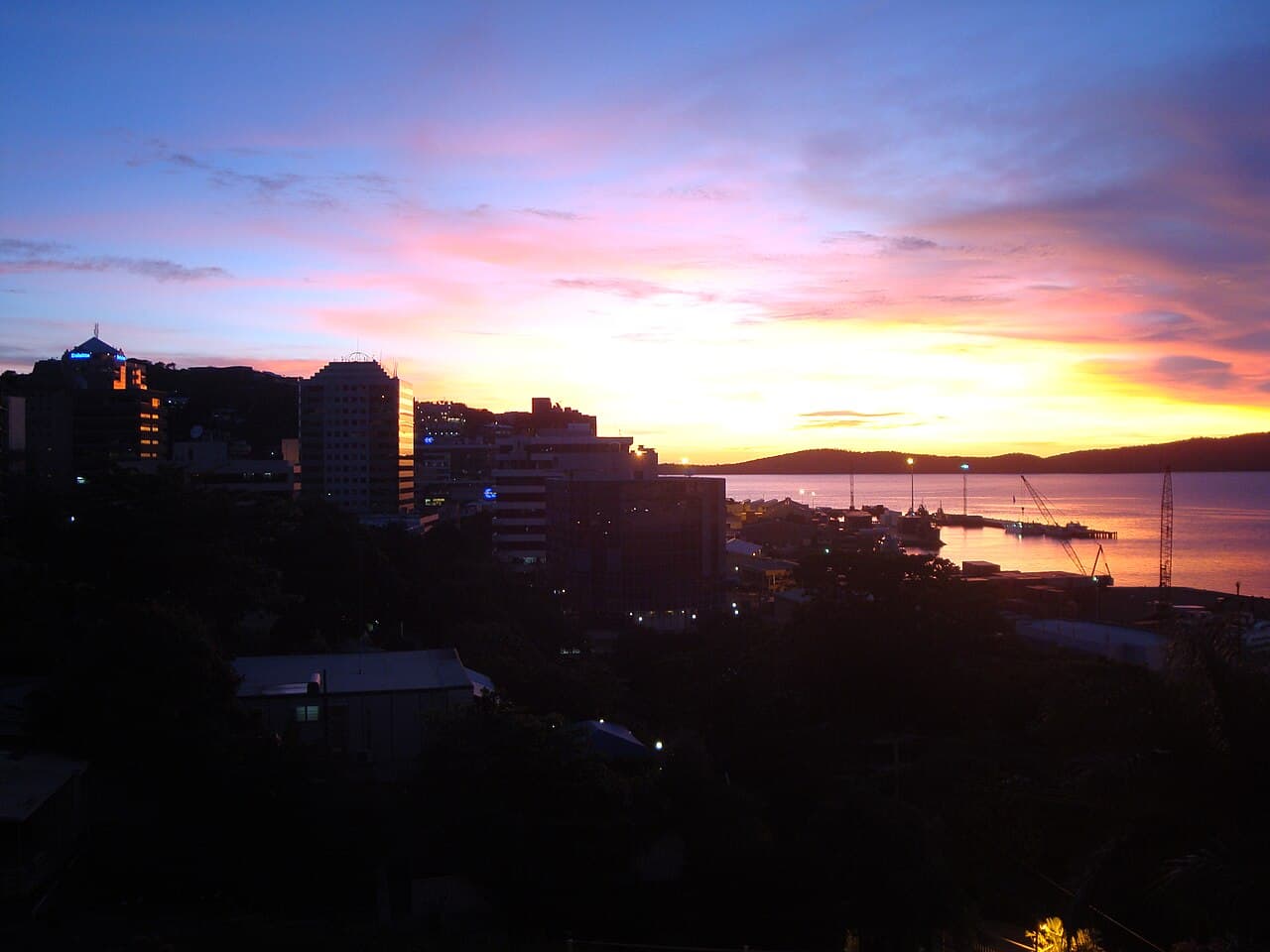
Papua New GuineaPhoto: Michael Cousins / Wikimedia Commons (CC BY-SA 3.0)

Papua New Guinea

Country Β· PG Β· PGK Β· Pacific/Port_Moresby

This information may change. Always check the official source.

Visa and entry in Papua New Guinea

Warning Important

Visa on arrival survives only for a short list of nationalities, and airlines refuse boarding without prior authorisation - so apply for the eVisa in advance whoever you are. Everyone also files the free PNG Digital Arrival Card in the 72 hours before landing.

More details

How your entry route is decided

  1. Check whether your passport still qualifies for visa on arrival. A limited list survives - Japan, the United Kingdom, Canada, Singapore and most Pacific island states, plus diplomatic and official passports of selected countries. Everyone else, including the United States, Australia, India and every EU member state, must be authorised before departure. Even where visa on arrival technically exists, the ICA and the airlines have moved to a documents-before-boarding posture, so treat it as a fallback rather than a plan.
  2. Pick the visa class. Eligible nationalities apply for an Easy Visitor Permit (EVP), issued for 30 or 60 days depending on nationality. Everyone else applies for Tourist (Own Itinerary), which allows 60 days.
  3. Apply online. The only official channel is https://evisa.ica.gov.pg/. You will need a scan of the passport data page, a confirmed return or onward ticket, and a card to pay the lodgement fee - USD 50 for the standard classes. Commercial sites advertising PNG visas charge two to three times that for filing the same form.
  4. Wait, then print. Easy Visitor Permits typically come back in 24 to 72 hours, tourist visas in 3 to 5 working days, and up to 10 working days at busy times. You are issued an Entry Permit which you show at check-in and again at immigration in Port Moresby.

Entry formalities that apply to everyone

  • PNG Digital Arrival Card (PNGDAC): Mandatory for every traveller since 1 October 2025 - citizens, residents and visitors alike. It replaced the paper landing card, it is free, and you file it at https://pngdac.ica.gov.pg/. The form opens 72 hours before arrival; complete it inside that window and you get a confirmation email with a QR code to show at check-in and at the border. If you did not file it, there are Digital Arrival Kiosks in the terminal at Jacksons, but they queue badly when several flights land together.
  • Passport validity: At least 6 months from the date of entry, checked strictly at immigration in Port Moresby.
  • Onward ticket: A confirmable departure ticket is checked at the border, not just at the visa stage.
  • Customs allowances: New goods to a value of PGK 1,000 for adults and PGK 500 for under-18s; 2.25 litres of alcohol; 200 to 250 cigarettes or 250 g of tobacco or 50 cigars; 1 litre of perfume. Currency and bearer instruments above PGK 20,000 must be declared in writing.
  • No local registration: Visitors on a tourist permit do not report to a police station after arrival.

What actually matters in practice

The mistake that recurs in traveller reports is assuming visa on arrival covers you. Passengers from ineligible countries get stopped at check-in in Brisbane, Cairns, Manila or Singapore and never reach Port Moresby at all - the airline is liable for carrying them, so it will not take the risk.

Two practical habits worth adopting: apply at least two weeks out, because the ICA portal has periods of downtime and there is no expedited channel; and carry paper printouts of the entry permit and the PNGDAC confirmation. Phone signal inside the terminal is unreliable and officials will ask to see the documents.

SIM and eSIM in Papua New Guinea

Digicel has by far the widest 4G coverage and PGK 100 buys 76 GB for 30 days. SIM registration against your passport is compulsory, and the airport kiosk keeps erratic hours - so have a backup if you land late at night.

More details

What to buy as soon as you land

Buy a physical Digicel PNG SIM. It runs the most stable 4G/LTE network and reaches far more of the country than anything else, including provincial towns where Vodafone has no presence. International eSIM profiles either roam expensively or drop out entirely here, so this is one of the few countries where the local card is clearly the right answer.

Getting connected before you leave the terminal is not a convenience question. You need a working phone to confirm your transfer and to stay in contact while you move across Port Moresby, and that matters more here than the data allowance does.

Comparison table

Digicel prepaid prices as published by the operator; Vodafone Konekt as of March 2026.

OperatorPrepaid planPriceDataValidityWhere to buyPassport registration
Digicel PNGBikpla DataPGK 2012 GB3 daysPOM airport, city storesYes
Digicel PNGBikpla DataPGK 3020 GB7 daysPOM airport, city storesYes
Digicel PNGBikpla DataPGK 5040 GB7 daysPOM airport, city storesYes
Digicel PNGBikpla DataPGK 10076 GB30 daysPOM airport, city storesYes
Digicel PNGBikpla DataPGK 200175 GB30 daysPOM airport, city storesYes
Vodafone PNGKonekt prepaidPGK 69about 20 GB30 daysPOM airport, branded storesYes

Where exactly to buy

  • Jacksons International Airport (POM): Digicel and Vodafone kiosks sit in the arrivals hall once you clear customs. The Digicel desk is the reliable one, but its hours track the international schedule loosely and travellers regularly find it shuttered on late-night arrivals. If you land after dark, assume you may not get a SIM until morning and make sure your transfer is already confirmed by email.
  • Port Moresby: Official Digicel and Vodafone stores are in the Vision City Mega Mall at Waigani.
  • Registration: SIM registration is compulsory under NICTA rules. The seller copies your passport, registers the card in your name and sets up the data profile; Digicel charges about PGK 10 for the registration itself. Manage plans afterwards through the MyDigicel app or the USSD codes *675# and *777#.

Short verdict

Take the PGK 100 Digicel plan with 76 GB over 30 days if you are staying more than a few days, or the PGK 50 plan with 40 GB over 7 days for a short trip. Both are ample, and neither is worth optimising further given how much having a working phone matters to everything else here.

Transport from the airport in Papua New Guinea

Warning Important

Arrange your transfer before you fly. A hotel van meeting you inside the secured airport perimeter is the only route out of Jacksons that foreign missions consider sensible - not street taxis, and emphatically not the PMV minibuses.

More details

Jacksons International Airport, Port Moresby (POM)

Jacksons is about 8 km from the government district at Waigani and 12 km from the coastal downtown around Ela Beach. Unlike almost anywhere else in this guide, the choice here is a safety decision rather than a budget one.

  • Hotel transfer: The right answer. The established hotels - Airways, Gateway, The Stanley, Grand Papua - run private air-conditioned vans for guests, often meeting you inside the secured perimeter. It is either included in the room rate or costs PGK 50 to PGK 100. Book it when you book the room and reconfirm by email the day before.
  • Pre-booked contract taxi: Acceptable if arranged in advance through your accommodation. Waigani or downtown runs PGK 80 to PGK 150, 15 to 30 minutes. Unbooked cars touting at the terminal are not the same thing and should be declined.
  • PMV minibuses: The public network stops outside the airport grounds on the Hubert Murray Highway and costs PGK 1 to 2. Do not use it from the airport with luggage. Foreign missions advise against it outright because of the risk of armed robbery, and walking out to the road to reach it is itself the exposed part.
  • Rail: There is none anywhere in the country.

Nadzab Tomodachi International Airport, Lae (LAE)

The second international airport, serving Lae in Morobe province, about 45 km north-west of the city.

  • Transfers are almost entirely hotel minibuses - the Lae International Hotel among others. The run down the Nadzab Express Highway takes 45 to 60 minutes and costs PGK 100 to PGK 200. There is no rank of taxis waiting at the terminal, so arriving without a booking leaves you stranded.

Which option suits which traveller

  • Solo traveller: Book accommodation that includes an airport pickup, and treat that as a filter when choosing where to stay. Walking out of the airport grounds is not a reasonable option.
  • Family: A private hotel van collecting you airside, so nobody is standing outside a terminal with bags and children while a vehicle is found.
  • Night arrival: Stay inside the terminal until your named driver is physically present. Do not step out into unlit areas to look for them.
  • On a budget: The saving is not available here. The nearest thing is booking one of the secured hotels in the 7 Mile area beside the airport, most of which include a free transfer, and moving on in daylight.

Getting around and apps in Papua New Guinea

Getting around the city, and which apps to install

There is no Uber, Grab or Bolt in Papua New Guinea and no local equivalent. Journeys are arranged through your hotel's front desk or a vetted private driver, and the informal PMV minibus network is not a tourist option.

More details
  • Ride-hailing does not exist here. Uber, Grab and Bolt do not operate in Papua New Guinea and there is no domestic equivalent. Every journey around town is arranged through a hotel reception or a private driver you have used before. Plan on that being how you move, and factor the cost into the trip.
  • PMV minibuses: The informal Public Motor Vehicle network is how the country actually travels - no timetables, no marked stops, PGK 1 to 2 paid in cash to the conductor. It requires local knowledge to use safely and is not a sensible way for a first-time visitor to cross a city.
  • Domestic flights: Because the road network does not connect the major centres, moving between provinces means flying - Air Niugini and PNG Air. Book well ahead, expect schedule changes, and do not plan a same-day connection onto an international departure.
  • Offline maps matter. Download the map area in Google Maps or Maps.me before you arrive. Coverage outside the towns is patchy and you do not want to be navigating on a live connection.
  • Apps worth installing:
  • MyDigicel - manage your data plan and top up.
  • My Vodafone PNG - the equivalent for Vodafone customers.
  • Google Maps / Maps.me - with the offline area downloaded before departure.

Apps and platforms

The official portals worth bookmarking: the eVisa site, the digital arrival card, and the two mobile operators' self-service apps.

Money and payments in Papua New Guinea

The kina is a cash currency outside international hotels and big supermarkets, and shops that do take cards add a 3 to 5 per cent surcharge. BSP runs the ATM network and charges PGK 15 to 20 per withdrawal on a foreign card.

More details

Money and paying for things

The currency is the Papua New Guinean kina (PGK, symbol K), divided into 100 toea. As of March 2026 the indicative rate is about 1 USD β‰ˆ 4.05 PGK and 1 EUR β‰ˆ 4.35 PGK.

  • ATM withdrawals: The network is dominated by Bank South Pacific (BSP), with Kina Bank and ANZ also present. A foreign card is charged a local fee of PGK 15 to PGK 20 per withdrawal, and the single-transaction limit is usually PGK 1,000 to PGK 2,000. Use machines inside bank branches, hotels or guarded shopping centres rather than street-facing units.
  • The DCC trap (dynamic currency conversion): The machine will offer to bill you in your own currency. Decline it - choose "Continue in local currency" so the transaction settles in PGK and your own bank sets the rate.
  • Cards versus cash: Visa and Mastercard work in international hotels, the large supermarkets and established restaurants, but merchants routinely add a 3% to 5% surcharge for card payment. American Express is rarely accepted. At markets and anywhere outside the main centres, cash is the only option, so draw enough before you leave a town.
  • Changing money: Exchange counters at the airport and bank branches handle USD, AUD and EUR. There is no street exchange, official or otherwise.
  • Tipping: Not part of the local culture and not expected.
  • Declaring cash: Amounts above PGK 20,000 must be declared in writing on arrival.

Accommodation in Papua New Guinea

Accommodation here is bought as a security perimeter with a bed attached, which is why Port Moresby rates start around PGK 450 a night. Whether the property collects you from the airport is the thing to check before you book.

More details

Where to stay for your first nights in Port Moresby

Prices are high for what you get by regional standards, because what you are paying for is a guarded compound, a generator and a vehicle that collects you. Judge a property on whether it runs its own airport transfer before you judge it on the room.

  • 7 Mile (the airport area): The right choice for a transit stop or a late arrival. Secured compounds adjacent to the airport - Airways Hotel, Gateway Hotel. PGK 450-1,000 a night.
  • Waigani: The government and residential district, with modern guarded hotels such as The Stanley Hotel & Suites and the Vision City mall next door. PGK 600-1,200 a night.
  • Downtown / Town (Ela Beach): The traditional business centre on the water, including the Grand Papua Hotel, in guarded complexes. PGK 500-1,100 a night.
  • Where not to book: Boroko, Gordons, Badili, Koki and Gerehu see markedly more street crime.

Practicalities

Check-in requires a passport and usually a refundable cash deposit of PGK 200 to PGK 500, or a card pre-authorisation. Foreign guests do not need to register separately with any authority. Confirm the airport pickup in writing at the time of booking and again the day before you fly - the arrangement, not the room, is the part that matters on arrival.

Safety and common scams in Papua New Guinea

Warning Important

This is the one country in this guide where the safety advice shapes the whole trip. Australian and British missions advise against walking in Port Moresby and Lae after dark, and city journeys should be made in a locked vehicle with a driver you know.

More details

Safety and the most common risks

Urban Papua New Guinea has a serious violent-crime problem, driven by organised street gangs known locally as raskols. Port Moresby, Lae and Mount Hagen are the areas of concern. This is not the pickpocket-and-overcharging risk profile of most destinations, and it should change how you plan rather than just how alert you are.

  • Official advice: Both the Australian Smartraveller service and the UK FCDO advise against walking the streets of Port Moresby and Lae after dark, and recommend that movement around the cities happens in locked vehicles with a known driver.
  • Unofficial transport: Accepting a lift from someone soliciting outside the terminal has led to vehicles picking up additional passengers en route and the traveller being robbed. Only use a driver arranged through your accommodation.
  • Markets: Bag-snatching and phone theft by organised groups at busy markets, Gordons Market in Port Moresby especially.
  • Unofficial guides: People offering to escort you around a site or a town, then demanding payment afterwards. Arrange guiding through your accommodation or a tour operator.
  • What reduces risk most: Not being out on foot after dark, not carrying a visible phone or bag on the street, keeping vehicle doors locked and windows up in traffic, and staying in guarded accommodation. Travellers on r/travel who have spent time in the country converge on the same advice.

Outside the cities - in the highlands on an organised trek, in the islands, at the dive resorts - the picture is very different and the country is rewarding. The risk is concentrated in the urban centres you have to pass through to get anywhere else.

Health in Papua New Guinea

Warning Important

Malaria is present year-round below 1,800 m and you need prophylaxis. Tap water is not drinkable, public hospitals are poorly supplied, and your insurance must cover air evacuation to Australia - that is the one clause that matters here.

More details

Health, insurance and where to be treated

  • Vaccinations: A yellow fever certificate is required if you are arriving from a country with a risk of transmission. Hepatitis A and B, typhoid, tetanus and polio are recommended; check with a travel clinic 6 to 8 weeks before departure.
  • Malaria and dengue: Transmission is year-round below 1,800 m, which includes Port Moresby, Lae and the coast and islands. Take prophylaxis - Malarone or doxycycline are the usual choices - and use a repellent with a high DEET content, morning and evening especially. Dengue circulates in the same areas and there is no prophylaxis for it, so the repellent is doing double duty.
  • Tap water: Not drinkable. Bottled or boiled only, and that includes ice and brushing your teeth outside a good hotel.
  • Medical care: Pacific International Hospital (PIH) at 3 Mile in Port Moresby is the private facility used by foreign visitors, with an emergency department and intensive care. The public Port Moresby General Hospital is chronically short of supplies. Serious cases are stabilised locally and flown out.
  • Insurance: Your policy must explicitly cover aeromedical evacuation to Australia - Cairns or Brisbane. In-country capability for major trauma or a cardiac event is limited, and an unplanned medical flight costs more than any holiday. This is the single most important thing to get right before you travel.

Everyday practical information in Papua New Guinea

Australian type sockets at 240 V and no daylight saving. Ask before photographing anyone - in much of the country a photograph is something you negotiate and often pay for, not something you take.

More details

Local rules and cultural differences

  • Photography: Photographing people, private houses or a ceremony without asking first is a real breach of etiquette, not a minor one. In many areas a fee is expected and that is a normal, open negotiation rather than a scam. Ask, agree, then take the picture.
  • Betel nut (buai): Chewing areca nut with lime and spitting the red residue is banned in public buildings, on transport and in designated parts of Port Moresby, with fines. The red stains everywhere are what the ban is about.
  • Drones: Need approval from CASA PNG. Flying near infrastructure without it gets the equipment confiscated.
  • Dress: Outside the resorts, dress conservatively - shoulders and knees covered. This applies to men as well.
  • Alcohol: Drinking in public places is illegal, and some provinces run their own prohibition rules.
  • Wantok: Obligation to one's own language group runs deep in daily life and explains a lot about how things get arranged. It is worth knowing the word exists.

Everyday practicalities

  • Power sockets: Type , the Australian three-pin plug. 240 V, 50 Hz.
  • Drinking water: Bottled or boiled, always.
  • Time zone: UTC+10 across most of the country, with no daylight saving. Bougainville runs on UTC+11.
  • Opening hours: Banks Monday to Thursday 08:30-15:00 and Friday 08:30-16:00; government offices 07:45-16:00; supermarkets daily 08:00-18:00. Very little stays open after dark.
  • Wi-Fi: Free public Wi-Fi is essentially non-existent and hotel connections are slow. The 4G network is the most reliable internet you will have, which is another argument for the larger Digicel data plan.
  • Language: English is an official language, alongside Tok Pisin and Hiri Motu. Tok Pisin is the everyday lingua franca and a few words of it go a long way.

Emergency information in Papua New Guinea

Warning Important

000 for police, 111 for St John Ambulance, 110 for fire - but response times are long and coverage is uneven, so your accommodation's security desk is usually the faster first call.

More details

Emergency numbers

  • Police: 000 (112 also connects from a mobile), or +675 324 4300 for Port Moresby
  • Ambulance (St John): 111, or +675 7111 4000
  • Fire: 110

Be realistic about what these can do. Emergency response is slow and patchy outside the main centres, and in Port Moresby the practical first call in an incident is your hotel's security desk, which has vehicles and radios and knows the area. Save that number alongside these when you check in.

Register your trip with your own embassy or high commission before you travel - Australia, the UK and the US all maintain missions in Port Moresby, and consular help is meaningfully easier to obtain if they already know you are in the country.

Your travel insurer's 24-hour assistance line belongs in the same list, because aeromedical evacuation to Australia is the mechanism behind any serious medical outcome here.

Weather in Papua New Guinea

Port Moresby

Long-term averages for Port Moresby: the mean daily high, the mean overnight low and the mean monthly rainfall across 30 years of ERA5 reanalysis data (1995–2024).

DayNight
202530Β°C0500mm30Β°22Β°285JanFebMarAprMayJunJulAugSepOctNovDec
Show the monthly table
MonthDay (Β°C)Night (Β°C)Rain (mm)
January3024241
February3023211
March2923285
April2923188
May292388
June292356
July282334
August292233
September302351
October302374
November3023115
December3024179

Lae

Long-term averages for Lae: the mean daily high, the mean overnight low and the mean monthly rainfall across 30 years of ERA5 reanalysis data (1995–2024).

DayNight
202530Β°C01000mm29Β°21Β°637JanFebMarAprMayJunJulAugSepOctNovDec
Show the monthly table
MonthDay (Β°C)Night (Β°C)Rain (mm)
January2923458
February2923405
March2823531
April2822631
May2722637
June2622589
July2621571
August2621563
September2621506
October2722458
November2822527
December2823568

Mount Hagen

Long-term averages for Mount Hagen: the mean daily high, the mean overnight low and the mean monthly rainfall across 30 years of ERA5 reanalysis data (1995–2024).

DayNight
10152025Β°C0500mm23Β°13Β°439JanFebMarAprMayJunJulAugSepOctNovDec
Show the monthly table
MonthDay (Β°C)Night (Β°C)Rain (mm)
January2314428
February2214428
March2214439
April2214334
May2214232
June2213171
July2113205
August2213215
September2213233
October2213266
November2314289
December2314360