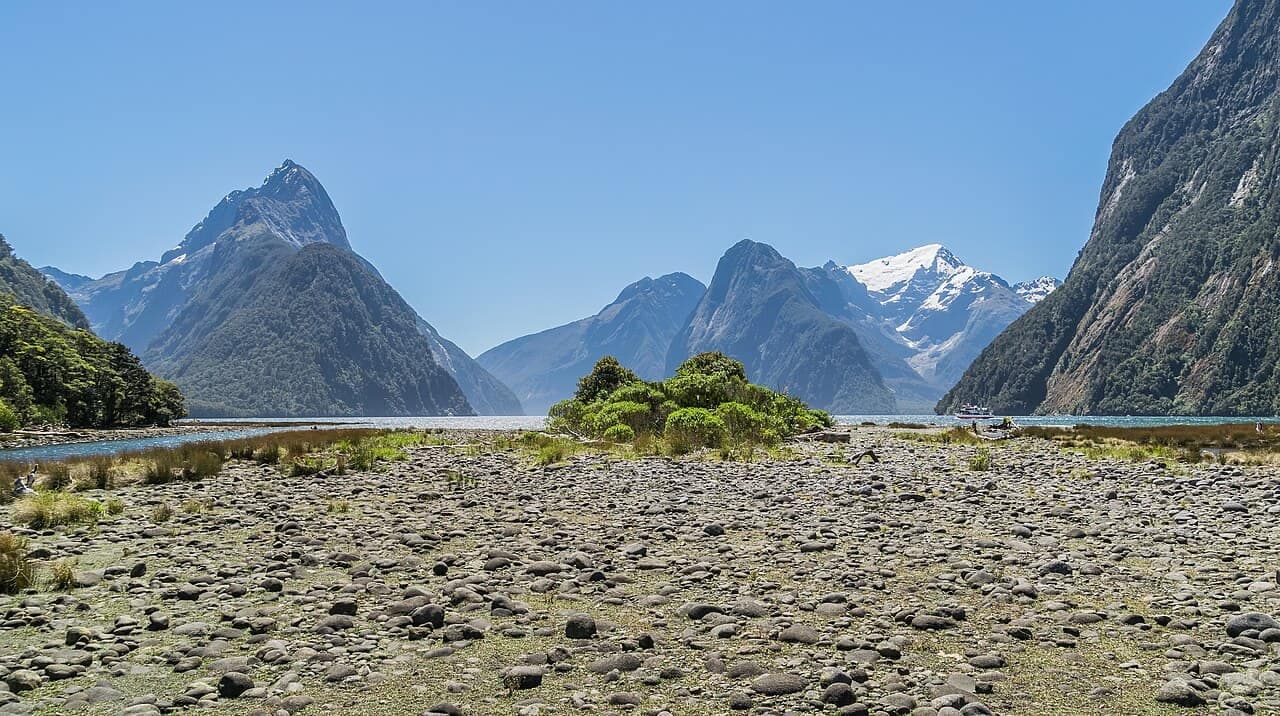
New ZealandPhoto: Krzysztof Golik / Wikimedia Commons (CC BY-SA 4.0)

New Zealand

Country Β· NZ Β· NZD Β· Pacific/Auckland

Visa and entry in New Zealand

This information may change. Always check the official source.

Visa and entry in New Zealand

Warning Important

Every arriving traveller must file the free NZ Traveller Declaration, which opens 24 hours before departure. Visa-waiver nationals also need an approved NZeTA (NZD 17 in the app, NZD 23 on the web) plus the NZD 100 conservation levy, and airlines refuse boarding without an onward ticket.

  • Australian citizens on an Australian passport need neither an NZeTA nor a visa. Australian permanent residents do need an NZeTA.
  • Passport holders from 60 waiver countries, Czechia included, get 90 days without a visa (6 months for the UK) but must hold an approved NZeTA before departure.
  • The NZeTA costs NZD 17 in the mobile app or NZD 23 on the web portal, takes up to 72 hours, and is valid for multiple entries over 2 years.
  • The International Visitor Conservation and Tourism Levy of NZD 100 is paid alongside the NZeTA or the visa.
  • Everyone flying in must file the New Zealand Traveller Declaration (NZTD). It is free and opens 24 hours before the first leg of the journey.
  • Everyone else - India, China on a direct flight, Russia - applies online for a Visitor Visa well in advance.
  • Transiting Auckland on a connection under 24 hours still requires an approved NZeTA.
  • Airlines refuse boarding without a return or onward ticket leaving New Zealand within 90 days. This is the single most common problem.
  • Declare all food on the NZTD. Undeclared fruit or a sandwich from the plane draws a non-negotiable NZD 400 fine at the border.
  • Duty-free: 50 cigarettes, 4.5 litres of wine or beer, 3 bottles of spirits, goods to NZD 700. Cash over NZD 10,000 must be declared.
More details

How your entry route is decided

Working out which entry regime and documents apply follows these steps:

  1. Are you an Australian citizen? Australians travelling on a valid Australian passport need neither an NZeTA nor a visa in advance. Australian permanent residents do not need a visa, but are legally required to obtain an NZeTA before departure.
  2. Check the visa waiver list: Passport holders from 60 approved countries and territories - including Czechia, Slovakia, Germany, the USA and Japan - do not need a conventional visa for a tourist stay of up to 90 days (up to 6 months for UK citizens). An approved NZeTA before departure is, however, strictly required.
  3. Check the specific territorial exceptions: Citizens of China or of Pacific Forum member states travelling from Australia and holding a valid Australian visa may also apply for an NZeTA instead of a full visitor visa.
  4. Standard visa route (Visitor Visa): Travellers from all other countries - India, China on a direct flight, Russia, Cambodia - must apply online for a conventional Visitor Visa well in advance, through the official Immigration New Zealand portal.
  5. Transit passengers: Anyone transiting through Auckland international airport with a connection under 24 hours must be from a visa-waiver or transit-visa-waiver country and hold an approved NZeTA for transit.

Entry formalities that apply to everyone

Every traveller flying into New Zealand must have submitted the electronic New Zealand Traveller Declaration (NZTD). Filing it is free, and the earliest you can do so is 24 hours before the first leg of your journey to the country. The form collects immigration, customs and biosecurity information.

The NZeTA is handled electronically and costs NZD 17 through the NZeTA mobile app, or NZD 23 through the Immigration New Zealand web portal. Standard processing takes up to 72 hours. Alongside the NZeTA application - or as part of a visa application - you must also pay the International Visitor Conservation and Tourism Levy (IVL), set at NZD 100 since 1 October 2024. An approved NZeTA is valid for multiple entries over 2 years.

Everyone is subject to customs and biosecurity rules administered by NZ Customs and the Ministry for Primary Industries (MPI). Duty-free allowances as of 1 March 2026:

  • Cash and monetary instruments: Physical money in any currency exceeding NZD 10,000 must be declared in writing.
  • Tobacco: A maximum of 50 cigarettes, or 50 grams of tobacco or cigars, or a combination not exceeding 50 grams in total.
  • Alcohol: Up to 4.5 litres of wine or beer (6 bottles of wine at 750 ml, or 12 cans of beer at 330 ml) and a maximum of 3 bottles of spirits (each up to 1,125 ml).
  • Other personal goods: Goods bought abroad up to a total value of NZD 700.

What actually matters in practice

Travellers on r/Aotearoa and r/travel report that the most common problem arises at check-in for the outbound flight, when passengers cannot show a return or onward ticket leaving New Zealand within 90 days of arrival. Airlines strictly refuse boarding without it.

The second most common mistake is failing to declare food on the NZTD. Specially trained dogs and X-ray scanners in the arrivals area pick up even forgotten fruit or a sandwich from the in-flight service. MPI inspectors issue a non-negotiable on-the-spot fine of NZD 400 for any undeclared risk item.

Last verified: 2026-07-26

Report a change

Suggest a correction

JPEG, PNG or WebP, up to 5 MB. Location metadata is removed.

Corrections and photos are private and visible only to the review team.

SIM and eSIM in New Zealand

SIM and eSIM in New Zealand

Spark, One NZ and 2degrees split the market, with Spark and One NZ having the densest rural coverage. Buying at the airport means passport registration and a markup; an eSIM activated before departure avoids both.

More details

What to buy as soon as you land

Getting mobile data sorted in the first hours after landing matters for navigation and communication. The New Zealand market is dominated by Spark, One NZ and 2degrees, plus the virtual operator Skinny. For coverage in remote rural regions and near national parks, Spark and One NZ have the densest tower networks.

Comparison table

Tourist offers verified as of 1 March 2026.

OperatorTourist packagePrice (NZD / USD)DataValidityWhere to buyPassport registration
SparkNZ Travel PackNZD 29 / NZD 49 / NZD 1122 GB / 10 GB / "Endless" data (throttled after 100 GB)28–90 daysAKL/CHC airports, official stores, online (eSIM)Yes, when buying at the airport
One NZTravel SIMNZD 29 / NZD 49 / NZD 692 GB / 10 GB / 40 GB30–60 daysAKL/CHC arrivals halls, official storesYes, when buying at the airport
2degreesPrepaid ComboNZD 30 / NZD 503 GB / up to 40 GB30 daysSupermarkets, airports, city storesSimplified registration
SkinnyPrepaid PackNZD 16 / NZD 261.25 GB / 2.5 GB (Spark network)28 daysSupermarkets (Countdown/Woolworths, New World), RelayNot required
JetpacGlobal Travel eSIMUSD 18 (~NZD 30) / USD 24 (~NZD 40)10 GB / 15 GB30 daysOnline in the app before departureNo (online verification)

Where exactly to buy

At Auckland international airport (AKL), Spark runs two stores: one in the duty-free transit area (open 04:30–02:30) and one in the main arrivals hall past customs. The One NZ stand is in the main arrivals hall of the international terminal (open 05:30–02:00). At Christchurch (CHC), the stands are immediately after passport and biosecurity control.

Away from the airports, prepaid SIMs are sold in the operators' own city-centre stores, at Relay bookshops in stations, and in the Woolworths, New World and PAK'nSAVE supermarket chains.

Short verdict

For the average tourist flying into New Zealand, the most economical and practical move is to activate an international data eSIM (Jetpac or the Spark eSIM, for example) on your phone before departure - that avoids both the queues and the airport-store markup. If you need a local phone number for calling accommodation or rental firms, buy a Spark Travel Pack at the airport for the best coverage outside the main cities.

Last verified: 2026-07-26

Report a change

Suggest a correction

JPEG, PNG or WebP, up to 5 MB. Location metadata is removed.

Corrections and photos are private and visible only to the review team.

Transport from the airport in New Zealand

Transport from the airport in New Zealand

Auckland's airport is 21 km south of the CBD - the SkyDrive express is NZD 18 to 20, or bus 380 to Puhinui and a train for less. Christchurch is 12 km out, with city buses 3 and 29 into the centre for NZD 4.

More details

Auckland Airport (AKL)

Auckland international airport is 21 km south of the city centre (CBD).

  • Official airport express (SkyDrive): An express bus linking the international terminal with the SkyCity hub in the CBD.
  • Price: NZD 18 to 20 one way.
  • Journey time: 40–50 minutes depending on city traffic.
  • Where to board: The marked stop directly outside the international terminal exit.
  • Hours: Daily 05:00 to 22:30, every 15–30 minutes.
  • Public transport (bus + train):
  • Route: Bus 380 (AIRPORT23) runs from the airport to the Puhinui or Papatoetoe interchanges, where the Southern Line and Eastern Line trains connect directly to Waitematā (Britomart) in the city centre.
  • Price: About NZD 6–8 paying by contactless card or AT HOP card.
  • Journey time: 60–75 minutes.
  • Ride-hailing (Uber / DiDi / Bolt):
  • Price: NZD 50–75 into the centre, subject to surge pricing.
  • Where to board: The designated Rideshare Pick-up zone by doors 11 and 12 at the international terminal.
  • Official taxi / Super Shuttle:
  • Price: Licensed taxis charge NZD 70–100+. The shared Super Shuttle van costs about NZD 35 for the first person and NZD 8 for each additional passenger.
  • Note: Always decline touts inside the terminal and use the marked ranks.

Christchurch Airport (CHC)

Christchurch international airport is 12 km north-west of the city centre.

  • City buses (Metro Christchurch):
  • Route 3 (Airport - Sumner via City) and Route 29 (Airport - City via Fendalton) connect the airport directly with the central Bus Interchange.
  • Price: NZD 4.00 for an adult, paying cash to the driver or by contactless card.
  • Journey time: 25–35 minutes.
  • Hours: Daily 06:00 to 23:00, every 15–30 minutes.
  • Ride-hailing (Uber):
  • Price: NZD 25–40 into the centre.
  • Journey time: 15–20 minutes.
  • Where to board: The Rideshare Pick-up zone next to the express car park in front of the terminal.
  • Official taxi:
  • Price: NZD 45–65. The taxi rank is directly outside the international arrivals hall.

Which option suits which traveller

  • Solo traveller: In Auckland, the SkyDrive express bus (NZD 20); in Christchurch, city bus route 3 or 29 (NZD 4).
  • Family / group of 3 or more: An Uber or official taxi works out comparable to buying individual bus tickets, and takes you straight to your door.
  • Night arrival (after 23:00): Uber or a pre-booked airport taxi - city bus routes do not run regular night services.
  • Budget: In Auckland, bus 380 to Puhinui station and onward by train to the centre; in Christchurch, a standard Metro bus route.

Last verified: 2026-07-26

Report a change

Suggest a correction

JPEG, PNG or WebP, up to 5 MB. Location metadata is removed.

Corrections and photos are private and visible only to the review team.

Useful local apps in New Zealand

Useful local apps in New Zealand

AT Mobile in Auckland, Metlink in Wellington, Transit in Christchurch, the NZTD app for your arrival declaration, and Uber for rides in the main cities.

Apps and platforms

Last verified: 2026-07-26

Report a change

Suggest a correction

JPEG, PNG or WebP, up to 5 MB. Location metadata is removed.

Corrections and photos are private and visible only to the review team.

Local transport and booking in New Zealand

Local transport and booking in New Zealand

Auckland, Wellington and Christchurch all take contactless bank cards and phone wallets - tap on when you board and tap off when you leave. Uber and DiDi run nationwide; Bolt operates in Auckland only.

More details

Getting around the city, and which apps to install

  • Auckland: City transport is run by Auckland Transport (AT). The whole network accepts contactless payment with physical cards (Visa / Mastercard) and mobile wallets (Apple Pay / Google Pay) - tap on when you board and tap off when you leave. The official AT Mobile app (iOS/Android) handles journey planning.
  • Wellington: The Metlink system accepts contactless payment cards and local Snapper transport cards. Official app: Metlink (iOS/Android).
  • Christchurch: The Metro Christchurch network takes contactless cards and cash. Recommended apps for real-time tracking: Transit or Metro Christchurch.
  • Ride-hailing: The main operators are Uber (nationwide), DiDi (nationwide) and Bolt (Auckland only so far). You sign up by registering a phone number and linking a payment card in the app. The Indian service Ola ceased operating in New Zealand on 12 April 2024 and its app no longer works here.

Last verified: 2026-07-26

Report a change

Suggest a correction

JPEG, PNG or WebP, up to 5 MB. Location metadata is removed.

Corrections and photos are private and visible only to the review team.

Money and payments in New Zealand

Money and payments in New Zealand

Local ATM operators add their own fee - exactly NZD 3 at ANZ - on top of whatever your own bank charges. Always decline dynamic currency conversion and choose to be billed in NZD; the hidden markup is 4 to 8 per cent.

More details

Money and paying for things

The local currency is the New Zealand dollar (NZD). Indicative rate as of 1 March 2026: 1 NZD / 0.60 USD (or 1 EUR β‰ˆ 1.82 NZD).

  • ATM withdrawals: The dominant banks with their own ATM networks are ANZ, BNZ, Westpac and ASB. Local ATM operators charge foreign cards their own usage fee (an "ATM owner fee"). At ANZ this is exactly NZD 3 per transaction, and it is added on top of whatever your own issuing bank charges.
  • The DCC trap (dynamic currency conversion): At an ATM or a shop terminal, the system will often offer to settle in your card's home currency (EUR/CZK). Always decline and choose to be charged in NZD. DCC carries a hidden exchange markup of 4–8%.
  • Card payments: New Zealand is overwhelmingly cashless. payWave contactless is accepted almost everywhere. Some smaller merchants do add a 1–2% surcharge for contactless card payment, which must be clearly displayed on the terminal. You can avoid it by inserting the card and selecting the "Credit" or "Savings" account.
  • Tipping: Not required, not expected, and never added automatically to the bill.
  • Recommended card: To keep fees down, a Wise multi-currency card is worth having - it gives the mid-market rate and free ATM withdrawals up to NZD 350 a month.

Last verified: 2026-07-26

Report a change

Suggest a correction

JPEG, PNG or WebP, up to 5 MB. Location metadata is removed.

Corrections and photos are private and visible only to the review team.

Accommodation in New Zealand

Accommodation in New Zealand

The CBD and Britomart if you arrive without a car, since the airport buses and ferries land there; Ponsonby for something quieter ten minutes out; Christchurch's rebuilt Central City is walkable from the bus interchange.

More details

Accommodation

For your first nights after landing, these neighbourhoods work well:

  • Auckland:
  • CBD / Britomart: Ideal if you arrive without a car - excellent access to airport buses and ferries. Indicative price: NZD 180–350 per night.
  • Viaduct Harbour / Wynyard Quarter: Modern waterfront district with upmarket hotels. Indicative price: NZD 250–550 per night.
  • Ponsonby: Residential area with boutique hotels and cafΓ©s, 10 minutes from the centre. Indicative price: NZD 160–300 per night.
  • Christchurch:
  • Central City / Cathedral Square: The fully rebuilt centre, walkable from the bus interchange. Indicative price: NZD 120–250 per night.
  • Merivale: A quiet district north of the centre with good motels. Indicative price: NZD 140–280 per night.

What check-in usually involves: You will be asked for your passport and a credit or debit card. Properties take a pre-authorisation of NZD 50 to 200 against damage. There is no special obligation for accommodation providers to register foreign guests with any immigration authority.

Last verified: 2026-07-26

Report a change

Suggest a correction

JPEG, PNG or WebP, up to 5 MB. Location metadata is removed.

Corrections and photos are private and visible only to the review team.

Safety and common scams in New Zealand

This information may change. Always check the official source.

Safety and common scams in New Zealand

Warning Important

Violent crime is very low and the real risk is theft from parked vehicles at trailheads, beaches and lookouts. Leave nothing visible in a car or campervan, and ignore the unlicensed drivers touting in the Auckland arrivals hall.

Safety and the most common scams

New Zealand has a very low rate of violent crime. The main risks are property offences targeting tourists:

  • Break-ins to parked vehicles: The most common crime against tourists, at unattended car parks by lookouts, beaches and trailheads. Never leave valuables, electronics or travel documents visible in a parked car or campervan.
  • Unofficial touts at the airport: Unlicensed drivers offering rides do appear in the Auckland arrivals hall. Always use the official taxi rank or the Uber app.
  • Fake campervan listings: Fraudulent social-media adverts offering cheap rentals or non-existent campervans for sale to travellers. Book only through established, verified rental companies.

Last verified: 2026-07-26

Report a change

Suggest a correction

JPEG, PNG or WebP, up to 5 MB. Location metadata is removed.

Corrections and photos are private and visible only to the review team.

Health in New Zealand

This information may change. Always check the official source.

Health in New Zealand

Warning Important

No vaccinations are required, neither malaria nor dengue occurs, and the tap water is drinkable everywhere. ACC covers the treatment of accidental injury for every visitor regardless of fault, but not illness, evacuation or cancellation.

More details

Health, insurance and where to be treated

  • Health risks and water: No vaccinations are required to enter New Zealand. Neither malaria nor dengue occurs in the country. Tap water is fully drinkable everywhere.
  • Hospitals with an emergency department:
  • Auckland City Hospital: 2 Park Road, Grafton, Auckland 1023 (tel: +64 9 367 0000).
  • Wellington Regional Hospital: 49 Riddiford Street, Newtown, Wellington 6021 (tel: +64 4 385 5999).
  • Christchurch Hospital: 2 Riccarton Avenue, Christchurch Central City, Christchurch 8011 (tel: +64 3 364 0640).
  • ACC accident cover: New Zealand's state Accident Compensation Corporation (ACC) covers the cost of treating accidental injuries for every visitor on New Zealand soil, regardless of fault. ACC does not cover ordinary illness, medical evacuation or trip cancellation, so commercial travel insurance remains essential.

Last verified: 2026-07-26

Report a change

Suggest a correction

JPEG, PNG or WebP, up to 5 MB. Location metadata is removed.

Corrections and photos are private and visible only to the review team.

Everyday practical information in New Zealand

Everyday practical information in New Zealand

Type I sockets, which need an adapter almost everywhere else in the world. NZST is UTC+12, moving to UTC+13 from the last Sunday in September to the first Sunday in April. Shops close around 17:30.

More details

Local rules and cultural differences

  • Freedom camping rules: Camping outside designated campgrounds is tightly regulated under the Freedom Camping Act and local bylaws. Only fully Certified Self-Contained vehicles - with their own toilet and waste-water tank - may freedom camp. Breaching the rules, or camping in a non-certified vehicle, brings an immediate NZD 400 infringement fine.
  • Drone rules: Drone flying is governed by Civil Aviation Authority (CAA) rules. It is strictly prohibited over private land without the owner's consent, over national parks (administered by DOC) without a printed permit, and within 4 km of any airport.
  • Māori culture (tikanga): When entering sacred places (marae), follow local etiquette. Places marked tapu are sacred. Sitting on tables or on any surface used for preparing or eating food is strictly not done.
  • Alcohol in public: Most city centres have Liquor Ban Zones prohibiting drinking in public places, with substantial on-the-spot fines.

Everyday practicalities

  • Power sockets: Type I (three flat pins in a V shape). 230 V, 50 Hz. You will need an adapter.
  • Time zone: NZST (UTC+12) standard time. During daylight saving - from the last Sunday in September to the first Sunday in April - NZDT (UTC+13) applies.
  • Opening hours: Shops and services generally run 09:00–17:30. Supermarkets tend to open 07:00 to 21:00 or 22:00.
  • Wi-Fi: Free Wi-Fi is available at the international airports, in public libraries and on long-distance coaches. Spark customers additionally get access to the Spark Wi-Fi public hotspot network nationwide.

Last verified: 2026-07-26

Report a change

Suggest a correction

JPEG, PNG or WebP, up to 5 MB. Location metadata is removed.

Corrections and photos are private and visible only to the review team.

Emergency information in New Zealand

This information may change. Always check the official source.

Emergency information in New Zealand

Warning Important

111 reaches police, ambulance and fire. Use 105 for anything that is not urgent - a theft reported after the fact, or property damage with no threat to life.

Emergency numbers

New Zealand runs a single emergency number alongside a separate non-urgent line, and calling the wrong one wastes time.

  • 111: The single emergency number for police, ambulance and fire.
  • 105: For reporting non-urgent matters (a theft reported after the fact, property damage with no threat to life).

ACC covers the cost of treating accidental injury for every visitor regardless of fault, but not ordinary illness, evacuation or trip cancellation.

Last verified: 2026-07-26

Report a change

Suggest a correction

JPEG, PNG or WebP, up to 5 MB. Location metadata is removed.

Corrections and photos are private and visible only to the review team.