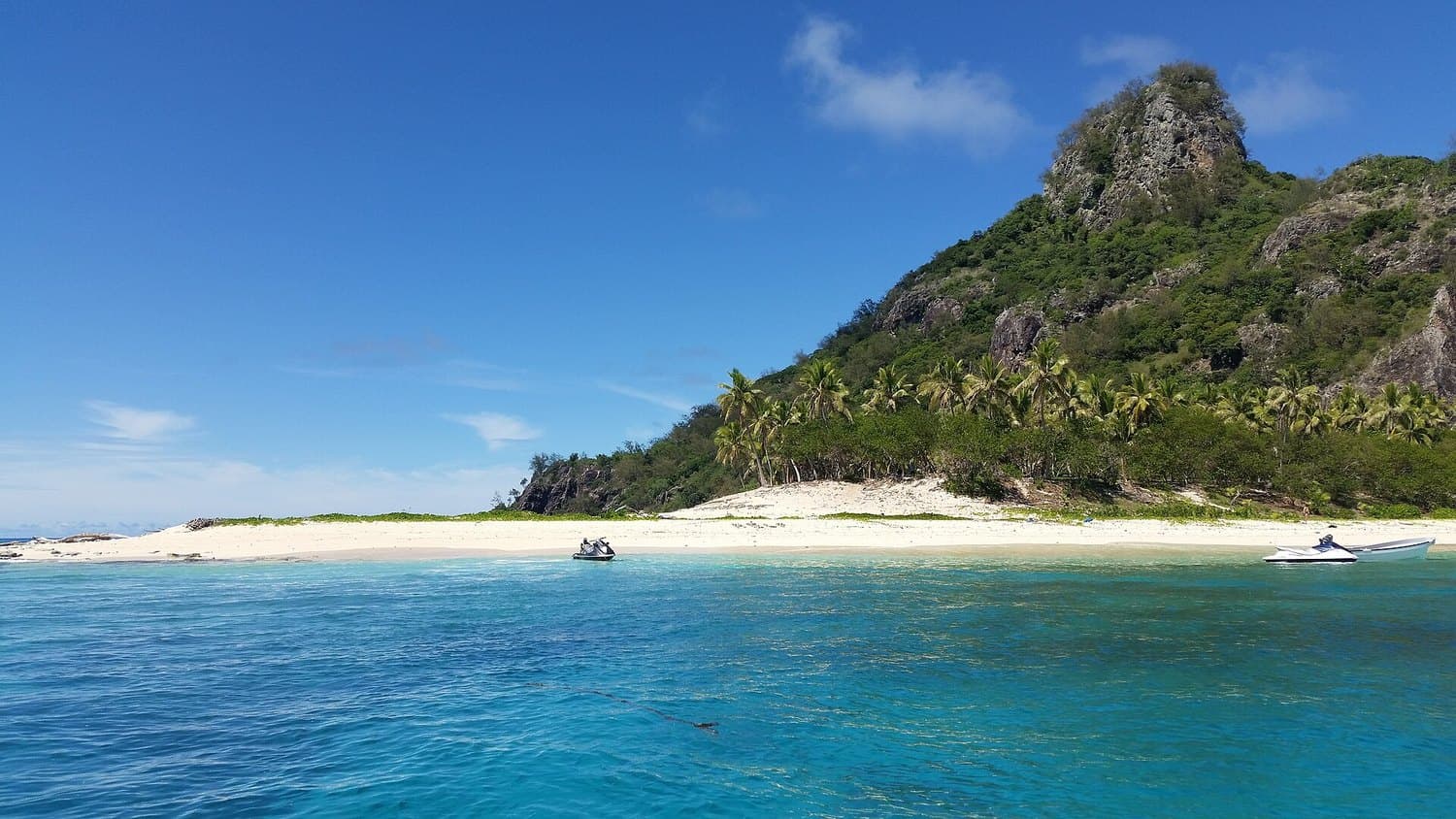
FijiPhoto: KhufuOsiris / Wikimedia Commons (CC BY-SA 4.0)

Fiji

Country · FJ · FJD · Pacific/Fiji

This information may change. Always check the official source.Last verified: August 2026 by

Four months without a visa, a passport valid six months, an onward ticket the border actually asks for, and a biosecurity form that costs 400 dollars to get wrong.

  • No visa for a visit of up to 4 months. That is unusually generous, and it is the length of a season rather than a holiday.
  • Your passport must be valid for at least 6 months after the day you arrive.
  • Every bag arriving at Nadi is X-rayed. Not sampled - all of it.
  • Declare more than FJD 5,000 in any currency when you arrive.
  • A yellow fever certificate is required only if you are arriving from a country on the transmission risk list. There is no yellow fever in Fiji itself.
More details

The stay

  • No visa for a visit of up to 4 months. That is unusually generous, and it is the length of a season rather than a holiday.
  • Your passport must be valid for at least 6 months after the day you arrive.
  • An onward or return ticket is checked, along with a visa for the next country if that country needs one. This is not a formality at Nadi.
  • More than 100 nationalities enter visa-free, including Australia, New Zealand, the United States and the United Kingdom.

The form that matters more than the visa

The passenger arrival card is a biosecurity declaration, and Fiji means it.

  • Every bag arriving at Nadi is X-rayed. Not sampled - all of it.
  • You declare food, animal products, equipment used with animals or on farms, and outdoor equipment such as hiking boots, tents and dive gear.
  • Poultry products from Australia and honey are prohibited outright.
  • If you are unsure about an item, declare it anyway. Failing to declare carries a fine of FJD 400 or legal action; declaring something that turns out to be allowed costs you nothing but a conversation.
  • Most fresh food is confiscated unless you are arriving from a country with a quarantine agreement with Fiji.

Cash at the border

  • Declare more than FJD 5,000 in any currency when you arrive.
  • Declare more than FJD 10,000 when you leave.
  • Undeclared money can bring a fine or a prison sentence.

Yellow fever

  • A yellow fever certificate is required only if you are arriving from a country on the transmission risk list. There is no yellow fever in Fiji itself.
Sources (3)

Mosquitoes, water and getting treated

Dengue, Zika and chikungunya are all present and none has a vaccine you can rely on, so bite avoidance is the whole strategy. Insurance must cover evacuation.

  • Dengue is a risk to travellers here. The mosquitoes that carry it bite in the daytime, particularly around sunrise and sunset, which is the opposite of what people expect.
  • Zika is present, and matters most if you are pregnant or planning to be. It is also sexually transmitted.
  • Typhoid is present but the risk is low for most travellers, and it travels in contaminated food and water.
  • Treat water outside resorts as something to think about, not as automatically safe.
  • Medical evacuation from Fiji is expensive and sometimes necessary, because serious cases go to Australia or New Zealand.
More details

Mosquito-borne illness

  • Dengue is a risk to travellers here. The mosquitoes that carry it bite in the daytime, particularly around sunrise and sunset, which is the opposite of what people expect.
  • Zika is present, and matters most if you are pregnant or planning to be. It is also sexually transmitted.
  • Chikungunya is a risk, with joint pain that can last months.
  • Bite avoidance is the strategy, because there is no reliable vaccine or prophylaxis for dengue or Zika. Repellent, long sleeves at dawn and dusk, and a room with screens or air conditioning.

Food and water

  • Typhoid is present but the risk is low for most travellers, and it travels in contaminated food and water.
  • Treat water outside resorts as something to think about, not as automatically safe.

If something goes wrong

  • Medical evacuation from Fiji is expensive and sometimes necessary, because serious cases go to Australia or New Zealand.
  • Travel insurance must cover medical evacuation and hospital stays. This is the country where that clause earns its money.
  • Buy cover for the activities you actually plan. Diving and adventure sports are commonly excluded by default.
Sources (2)

Nadi

Long-term averages for Nadi: the mean daily high, the mean overnight low and the mean monthly rainfall across 30 years of ERA5 reanalysis data (1995–2024).

DayNight
202530°C0500mmJanFebMarAprMayJunJulAugSepOctNovDecJanuary: Day 29.6 °C, Night 24.1 °C, Rain 339 mm. February: Day 29.7 °C, Night 24.1 °C, Rain 315 mm. March: Day 29.3 °C, Night 24 °C, Rain 304 mm. April: Day 29.1 °C, Night 23.5 °C, Rain 166 mm. May: Day 28 °C, Night 22.3 °C, Rain 85 mm. June: Day 27.3 °C, Night 21.4 °C, Rain 66 mm. July: Day 26.9 °C, Night 20.7 °C, Rain 48 mm. August: Day 27 °C, Night 20.5 °C, Rain 71 mm. September: Day 28 °C, Night 21.2 °C, Rain 78 mm. October: Day 28.7 °C, Night 21.9 °C, Rain 120 mm. November: Day 29.3 °C, Night 22.8 °C, Rain 147 mm. December: Day 29.8 °C, Night 23.7 °C, Rain 220 mm
Show the monthly table
Nadi
MonthDay (°C)Night (°C)Rain (mm)
January29.624.1339
February29.724.1315
March29.324.0304
April29.123.5166
May28.022.385
June27.321.466
July26.920.748
August27.020.571
September28.021.278
October28.721.9120
November29.322.8147
December29.823.7220

Suva

Long-term averages for Suva: the mean daily high, the mean overnight low and the mean monthly rainfall across 30 years of ERA5 reanalysis data (1995–2024).

DayNight
202530°C0500mmJanFebMarAprMayJunJulAugSepOctNovDecJanuary: Day 28.3 °C, Night 24.1 °C, Rain 317 mm. February: Day 28.6 °C, Night 24.2 °C, Rain 271 mm. March: Day 28.4 °C, Night 24.1 °C, Rain 269 mm. April: Day 27.6 °C, Night 23.7 °C, Rain 238 mm. May: Day 26.2 °C, Night 22.8 °C, Rain 181 mm. June: Day 25.4 °C, Night 22.1 °C, Rain 143 mm. July: Day 24.7 °C, Night 21.4 °C, Rain 110 mm. August: Day 24.6 °C, Night 21.1 °C, Rain 136 mm. September: Day 25.2 °C, Night 21.5 °C, Rain 161 mm. October: Day 26 °C, Night 22.1 °C, Rain 211 mm. November: Day 27 °C, Night 22.8 °C, Rain 194 mm. December: Day 27.7 °C, Night 23.6 °C, Rain 271 mm
Show the monthly table
Suva
MonthDay (°C)Night (°C)Rain (mm)
January28.324.1317
February28.624.2271
March28.424.1269
April27.623.7238
May26.222.8181
June25.422.1143
July24.721.4110
August24.621.1136
September25.221.5161
October26.022.1211
November27.022.8194
December27.723.6271
Sources (1)

Nadi, Denarau and the first night

Most long-haul flights land at night and the islands leave in the morning, so the first night is a Nadi or Denarau problem, not a choice.

  • Nadi airport is on the dry western side of Viti Levu, and the island boats leave from Denarau in the morning.
  • That makes the first night an airport-area night for most people. It is not where you came to stay, and it is the practical answer.
  • Nadi town, 20 minutes and a metered taxi away, is the cheap and ordinary one.
  • Denarau, a resort peninsula about 20 minutes from the airport, is where the ferries go from. Staying here removes the morning transfer.
  • Ask about the airport shuttle when you book. Many hotels run one; some charge, some do not, and the fare is roughly a taxi either way.
More details

The shape of the problem

  • Nadi airport is on the dry western side of Viti Levu, and the island boats leave from Denarau in the morning.
  • That makes the first night an airport-area night for most people. It is not where you came to stay, and it is the practical answer.

The three options

  • Nadi town, 20 minutes and a metered taxi away, is the cheap and ordinary one.
  • Denarau, a resort peninsula about 20 minutes from the airport, is where the ferries go from. Staying here removes the morning transfer.
  • Airport hotels exist for a genuinely short turnaround, and for a layover over 10 hours where you have had to clear immigration anyway.

Practical

  • Ask about the airport shuttle when you book. Many hotels run one; some charge, some do not, and the fare is roughly a taxi either way.
  • Cover shoulders and knees in rural villages, and during kava ceremonies. This is expected rather than optional, and it applies to guesthouse stays in villages.
Sources (2)

SIM cards and data in Fiji

Vodafone and Digicel both sell to arriving passengers in the Nadi arrivals hall, 05:00 to 22:00, against a physical passport. The same Vodafone counter sells the bus card.

  • Vodafone and Digicel both have outlets in the Nadi arrivals hall, open 05:00 to 22:00 daily.
  • Bring your physical passport. Vodafone's terms name a valid physical passport as the only acceptable identification for registration; a photo of one is not it.
  • Top-ups and data packages are bought by dialling , which works without an app or a shop.
  • Nadi airport has free Wi-Fi for 2 hours or 1 GB, whichever runs out first. That is enough to message a hotel, not enough to work.
  • Coverage follows the roads and the resorts. Viti Levu's coastal ring and the main tourist islands are fine; the interior and the outer islands are not.
More details

Where to buy

  • Vodafone and Digicel both have outlets in the Nadi arrivals hall, open 05:00 to 22:00 daily.
  • Bring your physical passport. Vodafone's terms name a valid physical passport as the only acceptable identification for registration; a photo of one is not it.
  • Every tourist arriving in Fiji is eligible for the tourist SIM offers at the Vodafone airport outlet.
  • The airport counter is the only sensible place to do this. It is also where you buy the bus card, so it is one queue for two problems.

Data on a phone that is already yours

  • Top-ups and data packages are bought by dialling , which works without an app or a shop.
  • Nadi airport has free Wi-Fi for 2 hours or 1 GB, whichever runs out first. That is enough to message a hotel, not enough to work.

Coverage, honestly

  • Coverage follows the roads and the resorts. Viti Levu's coastal ring and the main tourist islands are fine; the interior and the outer islands are not.
  • Assume a resort on a small island has satellite backhaul, which behaves like a slow, high-latency connection rather than a broken one.
Sources (2)

Power, language and how the day runs

Type sockets at 240 V, English everywhere, and "Fiji time" as an actual scheduling assumption.

  • 240 V, 50 Hz, type sockets - the flat three-pin plug used in Australia and New Zealand.
  • A UK or European adapter will not fit. Bring the Australian one.
  • English is an official language and is spoken everywhere. iTaukei (Fijian) and Fiji Hindi are the other two.
  • "Bula" is the greeting, and you will hear it from the moment the door of the aircraft opens.
  • Fiji is UTC+12, which puts it a day ahead of most of the world and is a real source of booking errors.
More details

Power

  • 240 V, 50 Hz, type sockets - the flat three-pin plug used in Australia and New Zealand.
  • A UK or European adapter will not fit. Bring the Australian one.

Language

  • English is an official language and is spoken everywhere. iTaukei (Fijian) and Fiji Hindi are the other two.
  • "Bula" is the greeting, and you will hear it from the moment the door of the aircraft opens.

Time and rhythm

  • Fiji is UTC+12, which puts it a day ahead of most of the world and is a real source of booking errors.
  • Shops and offices keep short hours, and Sunday is quiet in a way that closes things.
  • Kava is social, not decorative. If you are offered a bowl in a village, taking it is the polite move.
Sources (2)

Cash, cards and the 3 per cent that surprises people

Cards work at resorts, usually with a 3 per cent surcharge. ATMs cap out at FJD 2,000 a day. Buses, taxis, markets and small restaurants are cash.

  • The Fiji dollar (FJD). Notes and coins carry Fijian flora and fauna rather than a head of state.
  • Currency exchange desks and ATMs are in the Nadi arrivals terminal, which is the easiest place to get your first cash.
  • Most resorts, restaurants and shops take cards, and ATMs are widely available in the main centres.
  • FJD 2,000 is the daily withdrawal limit at a Fijian ATM, whatever your own bank allows.
  • More than FJD 5,000 in, more than FJD 10,000 out, and you declare it.
More details

The currency

  • The Fiji dollar (FJD). Notes and coins carry Fijian flora and fauna rather than a head of state.
  • Currency exchange desks and ATMs are in the Nadi arrivals terminal, which is the easiest place to get your first cash.

Cards

  • Most resorts, restaurants and shops take cards, and ATMs are widely available in the main centres.
  • Expect a surcharge of about 3 per cent on card payments at resorts and activity operators. It is normal here and it is disclosed, but it is not in the advertised price.
  • You need cash for buses, taxis, supermarkets, markets, retail shops and some local restaurants. That is most of a day outside a resort.

ATMs

  • FJD 2,000 is the daily withdrawal limit at a Fijian ATM, whatever your own bank allows.
  • Withdraw before heading to a remote area or an outer island. Cash machines thin out fast once you leave the main towns.
  • Be careful at ATMs. The FCDO flags card skimming and data theft in Fiji specifically.

The declaration, again

  • More than FJD 5,000 in, more than FJD 10,000 out, and you declare it.
Sources (3)

Everyday prices

Typical prices in Fiji dollar (FJD), averaged across the country by Numbeo and read on 28 August 2026. Tick Convert prices above the table to see every amount in your own currency.

Everyday prices
ItemTypical price
Inexpensive restaurant meal12 FJD
Dinner for two, mid-range, three courses90 FJD
Cappuccino6.77 FJD
Local draught beer, 0.5 l7.00 FJD
Bottled water, 0.33 l2.20 FJD
Public transport, one-way ticket1.80 FJD
Taxi, starting fare2.00 FJD
Petrol, 1 litre3.03 FJD
Cigarettes, pack of 20 (Marlboro)22 FJD
Average net monthly salary1,950 FJD

These are country-wide averages, not a price list: tourist districts, airports and islands sit well above them, and small towns below. The salary line is there for proportion - it is what people living here actually earn.

Sources (1)

Airport guides for Fiji1

One page per airport: the routes into town, what they cost and the trap particular to that arrival.

See all 1 airports

Nadi airport to Nadi, Denarau and the Coral Coast

The rank taxis are metered from FJD 7.50. Off the street, LT plates have a meter and LH plates do not. The bus needs a card you buy in the Vodafone shop.

  • The yellow four-seaters outside arrivals are metered, with a flag-fall of FJD 7.50. Check the meter is running before you move.
  • Off the street it depends on the plate. LT is a metered taxi with a base rate of FJD 2.50. LH is not metered at all and works on fixed distance rates.
  • Fiji's buses run on an electronic ticketing card, and drivers do not take cash.
  • The Airport to Hotel Connections bus leaves Nadi twice a day, at 07:30 and 13:00, running the Queen's Highway with stops at hotels along the way.
  • Private and shared transfers want 24 hours' notice, though the airport desks (Tourist Transport Fiji, Rosie Holidays, Tour Managers, Tewaka, Sunny Tours, Go Local Tours) take walk-ins when they have space.
More details
Taxis, and the two letters that matter
  • The yellow four-seaters outside arrivals are metered, with a flag-fall of FJD 7.50. Check the meter is running before you move.
  • Off the street it depends on the plate. LT is a metered taxi with a base rate of FJD 2.50. LH is not metered at all and works on fixed distance rates.
  • With an LH taxi, agree the fare before you get in. Ask your hotel reception what the trip should cost first; that is the number to negotiate against.
  • Licensed taxis carry yellow number plates. One that does not is not a taxi.
  • Carry Fiji dollars. Taxis are cash.
  • There is no Uber and no Lyft in Fiji.
The bus, and the shop that sells the ticket
  • Fiji's buses run on an electronic ticketing card, and drivers do not take cash.
  • Buy a disposable card at the Vodafone outlet in the arrivals terminal before you leave the building. They come in FJD 2, 5, 10, 20, 50 and 100.
  • The card is valid 30 days and any unused balance is refunded in cash at a Vodafone retail outlet against the card and your ID.
  • Intercity buses stop outside the departures terminal, not arrivals. Look for Pacific Transport, Sunbeam or Sunset.
  • Nadi to anywhere between here and Suva costs under FJD 25, and takes between 1 and 4 hours.
The scheduled hotel bus
  • The Airport to Hotel Connections bus leaves Nadi twice a day, at 07:30 and 13:00, running the Queen's Highway with stops at hotels along the way.
  • Book it at the Rosie Holidays or Tourist Transport Fiji desks outside international arrivals. It costs a little more than a public bus.
Transfers and hotel shuttles
  • Private and shared transfers want 24 hours' notice, though the airport desks (Tourist Transport Fiji, Rosie Holidays, Tour Managers, Tewaka, Sunny Tours, Go Local Tours) take walk-ins when they have space.
  • Many of the larger hotels run an airport shuttle, some free and some not. Ask before you arrive rather than after.

A layover at Nadi: 10 hours is the line

Under 10 hours you stay in the transit lounge. Over 10 and you clear immigration and customs, which means the biosecurity queue and a full entry.

  • A layover of under 10 hours can be spent in the Nadi transit lounge, without clearing immigration.
  • A layover longer than 10 hours means going through immigration and customs and entering Fiji properly, which is also what lets you check into a hotel.
  • You need an outward ticket within 72 hours of arriving, and you must meet the entry requirements of your final destination.
  • The 10 hour line is what decides whether your bags come out. Plan which side of it you are on before you book, not at the desk.
  • On the entry side, budget for the biosecurity check, because every bag is X-rayed.
More details
The rule
  • A layover of under 10 hours can be spent in the Nadi transit lounge, without clearing immigration.
  • A layover longer than 10 hours means going through immigration and customs and entering Fiji properly, which is also what lets you check into a hotel.
  • You need an outward ticket within 72 hours of arriving, and you must meet the entry requirements of your final destination.
What that means in practice
  • The 10 hour line is what decides whether your bags come out. Plan which side of it you are on before you book, not at the desk.
  • On the entry side, budget for the biosecurity check, because every bag is X-rayed.
  • Left luggage sits in the arrivals area, past biosecurity, signed Left Luggage, open 05:00 to 22:00. It is paid upfront in Fiji dollars for the whole stay.
Sources (4)

Buses, boats and driving on Viti Levu

Paved highways ring both big islands, buses are cheap and slow, and you drive on the left at 80 km/h.

  • Paved highways encircle Viti Levu and Vanua Levu, linking the villages, towns and cities, so getting around the two main islands is straightforward.
  • You drive on the left. Vehicles are right-hand drive and the national highway speed limit is 80 km/h.
  • Cheap and slow, and that is the whole trade. Nadi to Suva is 1 to 4 hours depending on the service and costs under FJD 25.
  • The e-ticket card is the fare. Top it up at any Vodafone outlet.
  • The Yasawas and Mamanucas are reached by catamaran from Denarau, not from the airport, and the ferry timetable is what sets your arrival day, not your flight.
More details

By road

  • Paved highways encircle Viti Levu and Vanua Levu, linking the villages, towns and cities, so getting around the two main islands is straightforward.
  • You drive on the left. Vehicles are right-hand drive and the national highway speed limit is 80 km/h.
  • A driving licence in English and a credit card are what a rental desk wants. Avis, Thrifty, Budget and Hertz all sit outside international arrivals, normally open 05:00 to 22:00.
  • Do not drive outside towns after dark. The FCDO is blunt about the state of the roads, the standard of driving and the animals on them.

By bus

  • Cheap and slow, and that is the whole trade. Nadi to Suva is 1 to 4 hours depending on the service and costs under FJD 25.
  • The e-ticket card is the fare. Top it up at any Vodafone outlet.

To the islands

  • The Yasawas and Mamanucas are reached by catamaran from Denarau, not from the airport, and the ferry timetable is what sets your arrival day, not your flight.
  • Do not board an overloaded boat. The FCDO warns about capsizing specifically; this is a real risk here rather than a generic caution.
Sources (3)

Crime, water and cyclones

Serious crime is rare, the sea is the bigger risk, marijuana carries a mandatory three-month sentence, and the cyclone season runs November to April.

  • The risk of serious crime is generally low, but there are incidents, including sexual assault.
  • Serious assaults have targeted foreign nationals, particularly women travelling alone at night in the cities and towns.
  • Rip tides along the reefs and river estuaries are dangerous. Swim at beaches with lifeguards unless you have reliable local knowledge.
  • Marijuana possession carries a mandatory 3 month prison sentence. Not a fine, not discretion.
  • The cyclone season runs November to April, though cyclones happen outside it.
More details

Crime

  • The risk of serious crime is generally low, but there are incidents, including sexual assault.
  • Serious assaults have targeted foreign nationals, particularly women travelling alone at night in the cities and towns.
  • Card skimming and data theft are flagged specifically. Use ATMs inside banks and shopping centres where you can.

The sea

  • Rip tides along the reefs and river estuaries are dangerous. Swim at beaches with lifeguards unless you have reliable local knowledge.
  • Refuse an overloaded boat. Overloading is the named cause of capsizings here.

Laws people break without meaning to

  • Marijuana possession carries a mandatory 3 month prison sentence. Not a fine, not discretion.
  • Any illegal drug risks imprisonment and heavy fines.
  • Topless bathing and public nudity are illegal, resort beach or not.
  • Cover shoulders and knees in rural villages and at kava ceremonies.

Cyclones

  • The cyclone season runs November to April, though cyclones happen outside it.
  • A cyclone brings flooding, landslides and damaged roads, which strand people far more often than they hurt them. Build slack into an itinerary in that window.
Sources (2)

911 reaches ambulance, fire and police. 910 is fire direct.

  • 911 is the single number, and it covers all three services.
  • Save your accommodation's own number too. On an outer island, the resort is the first responder and the mainland is an hour away by boat.
  • Biosecurity queries go to the Biosecurity Authority of Fiji on (679) 3312 512, which is worth knowing before you are standing at a counter with something in your bag.
More details

The numbers

Emergency numbers in Fiji
ServiceNumber
Ambulance, fire, police911
Fire, direct910

Before you need them

  • 911 is the single number, and it covers all three services.
  • Save your accommodation's own number too. On an outer island, the resort is the first responder and the mainland is an hour away by boat.
  • Biosecurity queries go to the Biosecurity Authority of Fiji on (679) 3312 512, which is worth knowing before you are standing at a counter with something in your bag.
Sources (1)