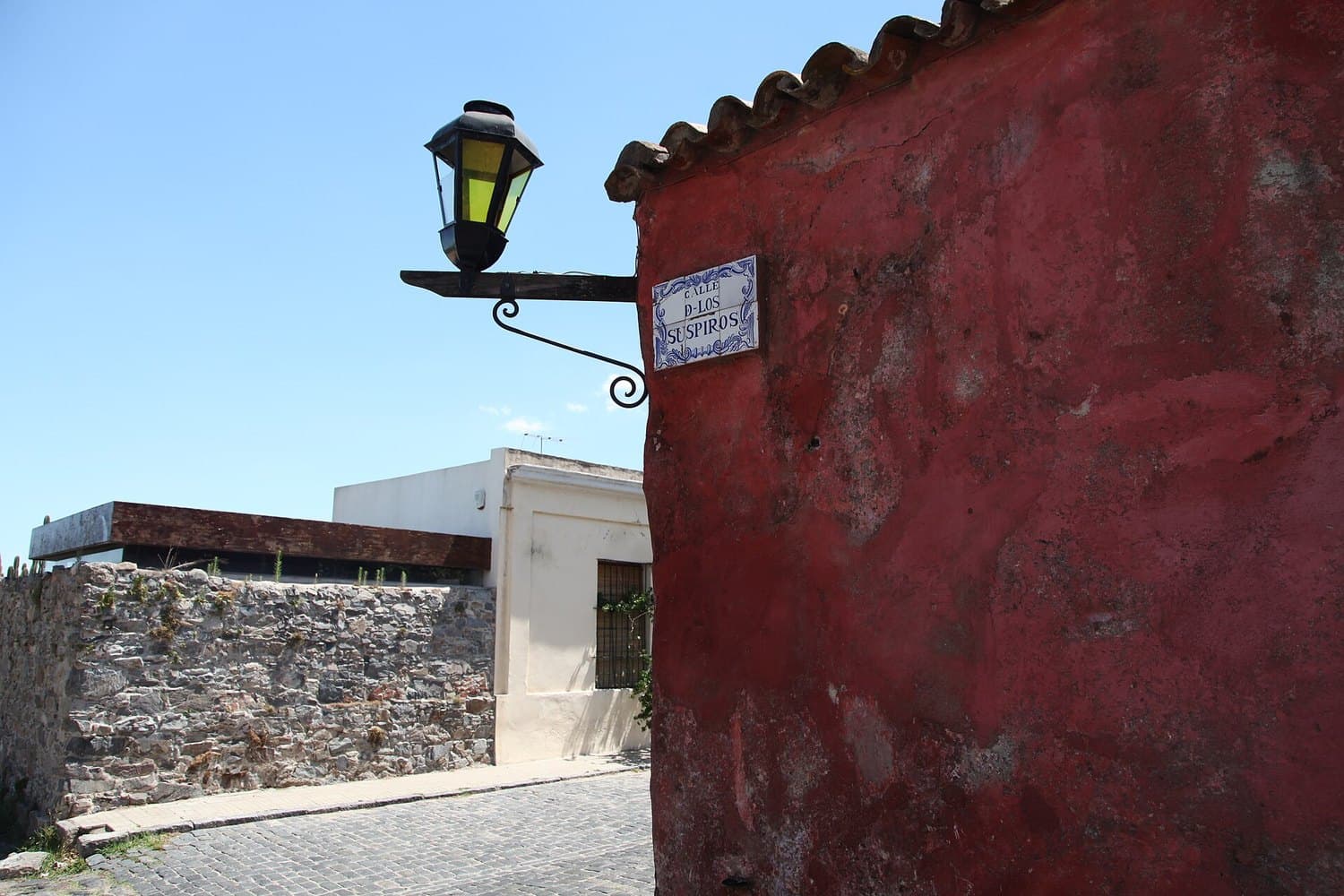
UruguayPhoto: Liam Quinn from Canada / Wikimedia Commons (CC BY-SA 2.0)

Uruguay

Country · UY · UYU · America/Montevideo

This information may change. Always check the official source.Last verified: August 2026 by

Ninety days without a visa, a passport that need only outlast the trip but must have a blank page, and a 10,000 dollar cash line.

  • No visa for a visit of up to 90 days.
  • Your passport must be valid for the duration of your stay and have at least one blank page for the entry stamp.
  • Up to USD 10,000, or the equivalent in other currencies, can be brought in without declaring.
  • Fruit, vegetables, animals and dairy products are prohibited, along with flammable materials, alkaloids and narcotics.
  • Make sure the passport is actually stamped on entry. Leaving without an entry record is a problem you discover at the other end of the trip.
More details

The stay

  • No visa for a visit of up to 90 days.
  • Your passport must be valid for the duration of your stay and have at least one blank page for the entry stamp.
  • There is no online entry form and no pre-arrival authorisation. Uruguay is one of the few remaining countries where the paperwork is the passport.

Cash

  • Up to USD 10,000, or the equivalent in other currencies, can be brought in without declaring.
  • Above that you declare it.

What may not come in

  • Fruit, vegetables, animals and dairy products are prohibited, along with flammable materials, alkaloids and narcotics.
  • The prohibition on fresh produce is enforced at the airport, which catches people carrying fruit from the plane.

Get the stamp

  • Make sure the passport is actually stamped on entry. Leaving without an entry record is a problem you discover at the other end of the trip.
Sources (1)

Three hospitals that will treat you without insurance

Health care is very good and available countrywide. In Montevideo, three private hospitals run 24 hour emergency departments that accept tourists without cover.

  • Health care is very good and available throughout the country.
  • You may have to pay upfront or confirm your insurance before treatment.
  • British Hospital
  • Medical evacuation is expensive and is what insurance is really for here.
  • Dengue occurs sporadically and chikungunya is present; both are daytime-biting mosquitoes.
More details

The system

  • Health care is very good and available throughout the country.
  • You may have to pay upfront or confirm your insurance before treatment.

In Montevideo

Three private hospitals offer 24 hour emergency services and accept tourists who have no insurance cover:

  • British Hospital

  • Sanatorio Americano

  • MP Medicina Privada

  • Fees are paid in cash or by card before you leave the hospital.

  • Emergency services are also available at Hospital de Clinicas, the public teaching hospital.

Cover

  • Medical evacuation is expensive and is what insurance is really for here.
  • Make sure the policy covers hospital stays as well as treatment.

Everyday risks

  • Dengue occurs sporadically and chikungunya is present; both are daytime-biting mosquitoes.
  • Tap water in Montevideo is treated and drinkable, and bottled water is universally available if you would rather.
Sources (1)

Montevideo

Long-term averages for Montevideo: the mean daily high, the mean overnight low and the mean monthly rainfall across 30 years of ERA5 reanalysis data (1995–2024).

DayNight
51015202530°C0200mmJanFebMarAprMayJunJulAugSepOctNovDecJanuary: Day 25.7 °C, Night 19.7 °C, Rain 72 mm. February: Day 25.1 °C, Night 19.7 °C, Rain 100 mm. March: Day 23.5 °C, Night 18.3 °C, Rain 105 mm. April: Day 20.4 °C, Night 15.5 °C, Rain 98 mm. May: Day 16.8 °C, Night 12.5 °C, Rain 74 mm. June: Day 14.1 °C, Night 9.7 °C, Rain 73 mm. July: Day 13.3 °C, Night 8.6 °C, Rain 84 mm. August: Day 14.8 °C, Night 9.5 °C, Rain 92 mm. September: Day 15.8 °C, Night 10.7 °C, Rain 81 mm. October: Day 18.5 °C, Night 13.1 °C, Rain 103 mm. November: Day 21.6 °C, Night 15.6 °C, Rain 94 mm. December: Day 24.1 °C, Night 17.9 °C, Rain 80 mm
Show the monthly table
Montevideo
MonthDay (°C)Night (°C)Rain (mm)
January25.719.772
February25.119.7100
March23.518.3105
April20.415.598
May16.812.574
June14.19.773
July13.38.684
August14.89.592
September15.810.781
October18.513.1103
November21.615.694
December24.117.980

Punta del Este

Long-term averages for Punta del Este: the mean daily high, the mean overnight low and the mean monthly rainfall across 30 years of ERA5 reanalysis data (1995–2024).

DayNight
51015202530°C0200mmJanFebMarAprMayJunJulAugSepOctNovDecJanuary: Day 25.1 °C, Night 19.3 °C, Rain 85 mm. February: Day 24.7 °C, Night 19.4 °C, Rain 106 mm. March: Day 23.4 °C, Night 18.3 °C, Rain 103 mm. April: Day 20.5 °C, Night 15.7 °C, Rain 103 mm. May: Day 17.1 °C, Night 12.8 °C, Rain 80 mm. June: Day 14.6 °C, Night 10.1 °C, Rain 89 mm. July: Day 13.7 °C, Night 8.9 °C, Rain 94 mm. August: Day 15 °C, Night 9.6 °C, Rain 97 mm. September: Day 15.7 °C, Night 10.4 °C, Rain 87 mm. October: Day 18.1 °C, Night 12.7 °C, Rain 94 mm. November: Day 21 °C, Night 15.1 °C, Rain 87 mm. December: Day 23.4 °C, Night 17.3 °C, Rain 83 mm
Show the monthly table
Punta del Este
MonthDay (°C)Night (°C)Rain (mm)
January25.119.385
February24.719.4106
March23.418.3103
April20.515.7103
May17.112.880
June14.610.189
July13.78.994
August15.09.697
September15.710.487
October18.112.794
November21.015.187
December23.417.383
Sources (1)

Montevideo neighbourhoods, and the VAT-free invoice

Show a foreign passport at check-in and the night is invoiced without VAT. Avoid the Ciudad Vieja and port area on foot after dark.

  • Present an identity document issued abroad and the accommodation is invoiced VAT exempt. The tax is simply not charged, so ask that the booking is in the name on the passport.
  • This applies all year and is not time-limited, unlike the restaurant reduction.
  • Pocitos is residential, on the rambla, and the easy default for a first stay.
  • Ciudad Vieja is the historic core, excellent by day and specifically flagged by the FCDO as somewhere not to walk alone at night or at weekends.
  • Keep away from isolated or poorly lit areas at night, which is the FCDO's phrasing for Montevideo generally.
More details

The tax, at check-in

  • Present an identity document issued abroad and the accommodation is invoiced VAT exempt. The tax is simply not charged, so ask that the booking is in the name on the passport.
  • This applies all year and is not time-limited, unlike the restaurant reduction.

Neighbourhoods

  • Pocitos is residential, on the rambla, and the easy default for a first stay.
  • Ciudad Vieja is the historic core, excellent by day and specifically flagged by the FCDO as somewhere not to walk alone at night or at weekends.
  • The port area carries the same warning.
  • Punta Carretas sits between the two in price and is quiet.
  • Carrasco, near the airport, is leafy and far from everything else.

Practical

  • Keep away from isolated or poorly lit areas at night, which is the FCDO's phrasing for Montevideo generally.
  • Park in a paid lot and leave nothing visible in the car. Break-ins are common.
  • Beaches have lifeguards from December to March and fly green, yellow and red flags. Outside those months nobody is watching.
Sources (2)

Antel, Movistar and Claro

Three networks, the state operator with the best rural coverage, and an eSIM as the sensible answer for a short trip.

  • Antel is the state operator and has the broadest coverage, including the interior and the coast outside the season.
  • Movistar and Claro compete in the cities and are usually cheaper.
  • Bring your passport. A prepaid SIM is registered to a named holder.
  • Antel has shops in the main shopping centres, including Tres Cruces, which is where you are likely to pass anyway.
  • A roaming eSIM bought before departure covers a week comfortably and removes a queue on arrival, which matters more here than usual because the airport is 20 km out.
More details

The networks

  • Antel is the state operator and has the broadest coverage, including the interior and the coast outside the season.
  • Movistar and Claro compete in the cities and are usually cheaper.
  • Coverage along the Ruta Interbalnearia and in Montevideo is good. The interior is thinner but rarely absent.

Buying a SIM

  • Bring your passport. A prepaid SIM is registered to a named holder.
  • Antel has shops in the main shopping centres, including Tres Cruces, which is where you are likely to pass anyway.

The short-trip answer

  • A roaming eSIM bought before departure covers a week comfortably and removes a queue on arrival, which matters more here than usual because the airport is 20 km out.
  • Free Wi-Fi is common in cafes, hotels and the Montevideo rambla.
Sources (1)

Italian plugs, Spanish spoken differently, and mate

Sockets take C, F and L, which includes the Italian three-pin. Spanish here uses vos, and everyone is carrying a thermos.

  • 230 V, 50 Hz, sockets type , and .
  • Type is the Italian three-pin in line, which is the one nobody's universal adapter handles well. A European two-pin fits the C and F sockets.
  • Spanish, and a distinctive one. Uruguayan Spanish uses vos rather than tu, and pronounces ll and y as a soft "sh".
  • The thermos under the arm is not an affectation. Mate is drunk constantly, in the street, at work and while driving, and hot water taps for refilling flasks are provided at petrol stations.
  • Dinner is late, from about 21:00.
More details

Power

  • 230 V, 50 Hz, sockets type , and .
  • Type is the Italian three-pin in line, which is the one nobody's universal adapter handles well. A European two-pin fits the C and F sockets.

Language

  • Spanish, and a distinctive one. Uruguayan Spanish uses vos rather than tu, and pronounces ll and y as a soft "sh".
  • English is spoken in hotels and tourism and much less elsewhere. This is not a country where you get by on English alone outside Montevideo and Punta.
  • Portuguese is understood near the Brazilian border.

Mate

  • The thermos under the arm is not an affectation. Mate is drunk constantly, in the street, at work and while driving, and hot water taps for refilling flasks are provided at petrol stations.
  • If you are offered the gourd, drink it and pass it back. Do not stir the straw.

The day

  • Dinner is late, from about 21:00.
  • Sunday afternoon closes the country, and January is when Uruguayans themselves are on holiday.
  • Time is UTC-3, with no daylight saving since 2015.
Sources (2)

Pay by card and the tax comes off

Hotel nights are invoiced VAT-free for a foreign passport, and restaurants, car hire and events take nine points off the 22 per cent rate, but only on card.

  • Hotels and lodging: VAT exempt, all year round, for a foreigner presenting an identity document issued abroad. The tax is never charged, so there is nothing to reclaim and nothing to file.
  • You must pay by card or electronic money. Debit, credit or e-money - not cash.
  • Nine points, not twenty-two. Uruguay ran a much larger refund as a pandemic-era support measure and it has since been reset. Anything promising 22 per cent off a restaurant bill is out of date.
  • A separate Tax Free regime covers goods bought in participating shops, with the paperwork done at the moment of purchase.
  • The Uruguayan peso (UYU). Some businesses also take US dollars and Argentine pesos, particularly in Punta del Este.
More details

The benefit, as the Ministry of Tourism actually states it

There are two different things here and they work differently.

  • Hotels and lodging: VAT exempt, all year round, for a foreigner presenting an identity document issued abroad. The tax is never charged, so there is nothing to reclaim and nothing to file.
  • A 9 point VAT reduction on: restaurants, bars, canteens, cafeterias, coffee shops and tea rooms; catering for parties and events; other party and event services; hire of vehicles without a driver; mediation in letting property for tourism; and guided tours, wine tastings and local produce tastings at registered wine tourism establishments.
  • That reduction runs until 30 September 2026.

The condition that decides whether you get it

  • You must pay by card or electronic money. Debit, credit or e-money - not cash.
  • The discount shows on the POS ticket, and the card issuer has to show it on your statement.
  • Cash gets you nothing. This is the single most useful thing to know before your first dinner.

And the 22 per cent you may have read about

  • Nine points, not twenty-two. Uruguay ran a much larger refund as a pandemic-era support measure and it has since been reset. Anything promising 22 per cent off a restaurant bill is out of date.

Tax Free on goods

  • A separate Tax Free regime covers goods bought in participating shops, with the paperwork done at the moment of purchase.
  • You claim it on the way out, at listed crossings including Carrasco International Airport and the Port of Montevideo.

Cash, cards and ATMs

  • The Uruguayan peso (UYU). Some businesses also take US dollars and Argentine pesos, particularly in Punta del Este.
  • Use ATMs inside banks and shopping centres rather than on the street. The FCDO says this specifically.
  • Cards are widely accepted, which for once is also the cheaper option because of the tax rules above.
Sources (3)

Everyday prices

Typical prices in Uruguayan peso (UYU), averaged across the country by Numbeo and read on 28 August 2026. Tick Convert prices above the table to see every amount in your own currency.

Everyday prices
ItemTypical price
Inexpensive restaurant meal650 UYU
Dinner for two, mid-range, three courses2,010 UYU
Cappuccino176 UYU
Local draught beer, 0.5 l160 UYU
Bottled water, 0.33 l74 UYU
Public transport, one-way ticket55 UYU
Taxi, starting fare75 UYU
Petrol, 1 litre82 UYU
Cigarettes, pack of 20 (Marlboro)220 UYU
Average net monthly salary43,700 UYU

These are country-wide averages, not a price list: tourist districts, airports and islands sit well above them, and small towns below. The salary line is there for proportion - it is what people living here actually earn.

Sources (1)

Airport guides for Uruguay1

One page per airport: the routes into town, what they cost and the trap particular to that arrival.

See all 1 airports

Carrasco to the city, and the taxi partition

Four bus companies serve the airport and none of them is the airport's. Taxis have a glass screen that hurts people in minor crashes.

  • Carrasco is served by four operators, and the airport is explicit that none is affiliated with it: COPSA, COT, CUTCSA and Turismar.
  • CUTCSA is Montevideo's city network, with over a thousand buses covering the city and its metropolitan area.
  • Montevideo taxis have a thick glass partition between driver and passenger. It is there to protect the driver.
  • Ride-hailing apps operate in Montevideo and are regulated to standards equivalent to taxis.
  • The airport is on Ruta 101, about 20 km east of the centre, past the Carrasco neighbourhood itself.
More details
The buses
  • Carrasco is served by four operators, and the airport is explicit that none is affiliated with it: COPSA, COT, CUTCSA and Turismar.
  • CUTCSA is Montevideo's city network, with over a thousand buses covering the city and its metropolitan area.
  • COPSA connects Montevideo with Maldonado and Canelones, which is the corridor to Punta del Este.
  • COT runs the intercity coaches to the rest of the country, air-conditioned with a toilet and Wi-Fi.
  • Tres Cruces is the interchange. It is Montevideo's bus terminal and shopping centre, and it is where you change from an airport service to a bus for anywhere else in Uruguay.
The taxi, and the screen
  • Montevideo taxis have a thick glass partition between driver and passenger. It is there to protect the driver.
  • Passengers are thrown against it when a driver brakes hard, and Global Affairs Canada warns that injuries can be severe even in a minor collision.
  • Sit back, wear the belt, and do not lean forward to talk to the driver.
Ride-hailing
  • Ride-hailing apps operate in Montevideo and are regulated to standards equivalent to taxis.
  • Check the driver's identity and the plate before getting in, which is the usual advice and applies here.
Getting oriented
  • The airport is on Ruta 101, about 20 km east of the centre, past the Carrasco neighbourhood itself.
  • Punta del Este is roughly two hours east by road, and it is a different trip rather than a suburb.
Sources (3)

Buses everywhere, and driving carefully

Intercity buses are safe, reliable and the default. Driving is the risky part, and a UK licence lasts 90 days.

  • Bus travel in Montevideo and around the country is safe and reliable, which is Global Affairs Canada's own assessment.
  • Everything intercity goes through Tres Cruces, so learning that one terminal covers the whole country.
  • The main toll road to Punta del Este is in good condition and well marked. Other roads vary, with potholes.
  • Serious accidents are common, and they spike in summer, at Carnaval in mid-February and in Easter week.
  • Buquebus and Colonia Express run ferries to Buenos Aires, from Montevideo and from Colonia. Immigration for both countries is done at the departure port, so you clear Argentina before boarding.
More details

Buses

  • Bus travel in Montevideo and around the country is safe and reliable, which is Global Affairs Canada's own assessment.
  • Everything intercity goes through Tres Cruces, so learning that one terminal covers the whole country.
  • The Montevideo to Punta del Este corridor is frequent and takes about two hours.

Driving

  • The main toll road to Punta del Este is in good condition and well marked. Other roads vary, with potholes.
  • Serious accidents are common, and they spike in summer, at Carnaval in mid-February and in Easter week.
  • Expect lane changes without signalling, ignored traffic signals and motorbikes riding the wrong way up one-way streets.
  • A UK photocard licence is valid for 90 days, and an international driving permit may be required beyond that.
  • Seatbelts are compulsory and a first aid kit must be in the car.
  • Drink-driving is strictly enforced, with fines and possible imprisonment.

Across the river

  • Buquebus and Colonia Express run ferries to Buenos Aires, from Montevideo and from Colonia. Immigration for both countries is done at the departure port, so you clear Argentina before boarding.
Sources (2)

Street crime, and the cannabis rule tourists get wrong

Opportunistic theft is the real risk. Cannabis is legal for residents and illegal for you.

  • Bag-snatching, pickpocketing, mugging, armed robbery and car break-ins are common in Montevideo.
  • Do not walk downtown or in the port area alone, especially at night and at weekends.
  • Uruguay legalised cannabis, and not for you. Residents registered with the state can buy from pharmacies or grow their own.
  • Lifeguards work December to March. Flags are green, yellow and red.
  • There is a wildfire risk from December to March. Smoke can degrade air quality well away from the fire itself.
More details

Crime

  • Bag-snatching, pickpocketing, mugging, armed robbery and car break-ins are common in Montevideo.
  • Do not walk downtown or in the port area alone, especially at night and at weekends.
  • Use ATMs in banks and shopping centres, not on the street.
  • Do not leave valuables visible in a parked car, and use a paid car park.

Cannabis

  • Uruguay legalised cannabis, and not for you. Residents registered with the state can buy from pharmacies or grow their own.
  • It is illegal for tourists to do either. The pharmacy will not sell to you and buying elsewhere is a drug offence.

On the beach

  • Lifeguards work December to March. Flags are green, yellow and red.
  • Watch for currents, rocks and sandbanks that drop away suddenly, which is the specific local hazard.

Wildfires

  • There is a wildfire risk from December to March. Smoke can degrade air quality well away from the fire itself.
Sources (2)

911 for ambulance, fire and police.

  • 911 is the single number and it covers all three services.
  • In Montevideo, know which of the three private hospitals is nearest to you. British Hospital, Sanatorio Americano and MP Medicina Privada all run 24 hour emergency departments and take tourists without insurance.
  • Emergency treatment is paid before you leave, in cash or by card, so keep a card that works.
More details

The number

Emergency numbers in Uruguay
ServiceNumber
Ambulance, fire, police911

Before you need it

  • 911 is the single number and it covers all three services.
  • In Montevideo, know which of the three private hospitals is nearest to you. British Hospital, Sanatorio Americano and MP Medicina Privada all run 24 hour emergency departments and take tourists without insurance.
  • Emergency treatment is paid before you leave, in cash or by card, so keep a card that works.
Sources (2)