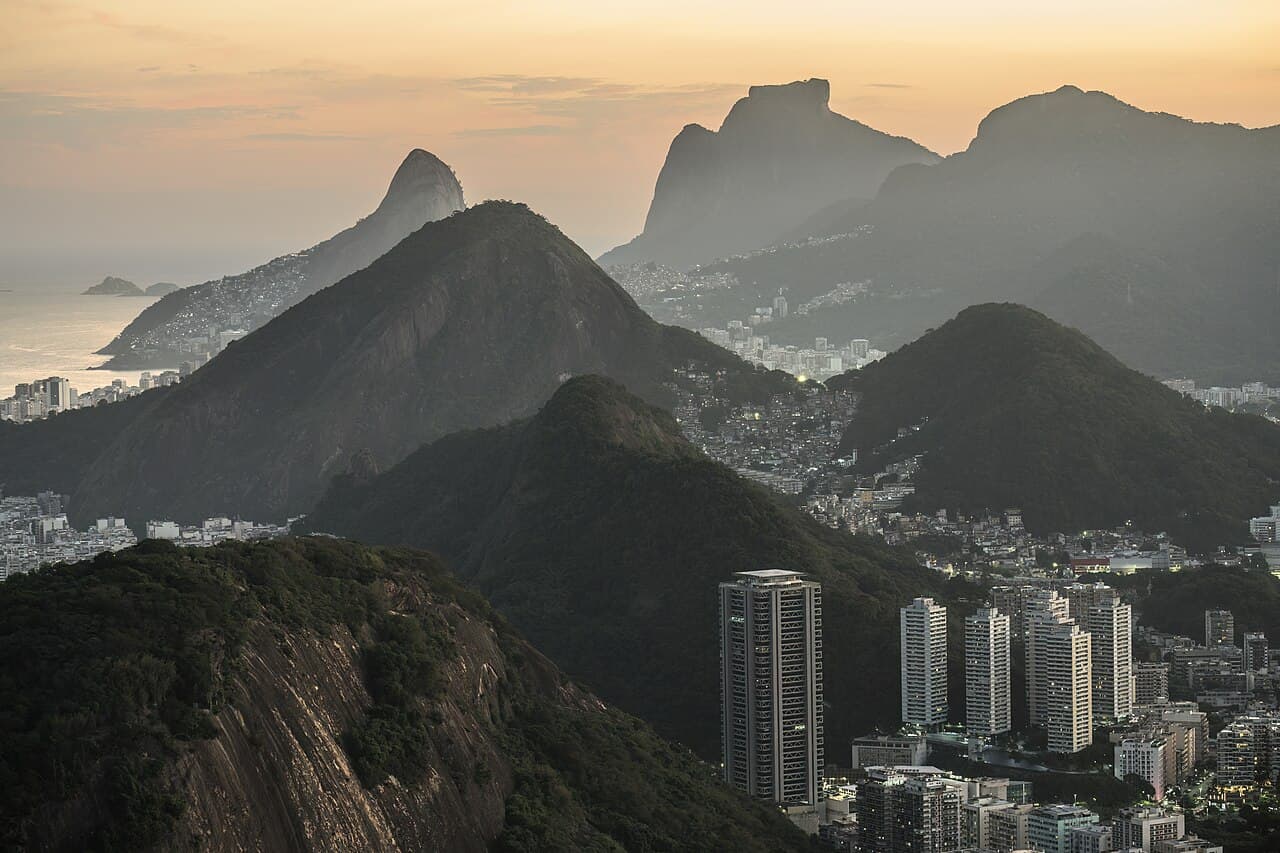
BrazilPhoto: Wilfredor / Wikimedia Commons (CC0)

Brazil

Country · BR · BRL · America/Sao_Paulo

This information may change. Always check the official source.Last verified: August 2026 by

EU and UK passports enter visa-free for 90 days. US, Canadian and Australian passports need an e-Visa bought in advance for USD 80.90 - and since early 2026 airlines will not issue a boarding pass without it.

  • EU, Schengen and UK passports enter visa-free for 90 days in any 180, stamped on arrival with no pre-registration. Japan, South Korea, Malaysia and most of Latin America are in the same group.
  • US, Canadian and Australian passports need an e-Visa before departure. Since early 2026 it is wired into airline departure control: no valid e-Visa code, no boarding pass.
  • Apply only through the official VFS Global portal. The fee is USD 80.90 and processing takes 2 to 5 business days - everything else charging you for this is a reseller or a scam.
  • The e-Visa also covers airport transit, which catches out people merely changing planes in Sao Paulo. US passports get 10 years, Canadian and Australian 5, with 90 days per entry.
  • Passport valid 6 months with two blank pages, and proof of onward travel is enforced - the Policia Federal expects a confirmed booking out of Brazil inside your permitted stay.
More details

How your entry route is decided

Brazil split its visitors into two groups in April 2025, and the split is now enforced at the boarding gate.

  1. Visa-free, 90 days in any 180. EU and Schengen passports, including the United Kingdom, get an entry stamp on arrival with no pre-registration. Japan, South Korea, Singapore, Malaysia and most of Latin America are in the same group.
  2. e-Visa required before departure: United States, Canada and Australia. The requirement took effect on 10 April 2025, and from early 2026 the e-Visa is wired into airline departure control - no valid e-Visa code, no boarding pass.
  3. Visa-free, 30 days on a shorter allowance: Singapore, and since 11 May 2026 also China, under a reciprocal exemption. For Chinese passports that is 30 days a year, not per entry, and not extendable - two trips in a calendar year share the allowance. The arrangement is agreed only until 31 December 2026, so check it has been renewed before booking beyond that.
  4. Consular visa for everyone else, from a Brazilian mission before travel. Indian nationals can use an electronic visa for business travel only; tourism still needs a consular application.

The e-Visa, in detail

  • Apply only at brazil.vfsevisa.com. VFS Global runs the sole authorised portal. Everything else charging you for this is a reseller or a scam.
  • Fee USD 80.90, paid online by card during the application.
  • Processing takes 2 to 5 business days. Do not leave it to the airport.
  • Validity: United States passports get 10 years, multiple entry; Canada and Australia get 5 years. Maximum 90 days per entry in all cases.
  • It also covers airport transit for these nationalities, which catches out people merely changing planes in Sao Paulo.

Formalities that apply to everyone

  • Passport: valid at least 6 months beyond arrival, with at least two blank pages.
  • Proof of onward travel is enforced. The Policia Federal expects a confirmed booking leaving Brazil inside your permitted stay, and airlines check it at check-in.
  • Yellow fever: no certificate is required to enter Brazil itself, but you will need one to travel onward to some neighbouring countries, and vaccination is recommended for the Amazon, the Pantanal and Iguacu.
  • Minors: Brazil applies strict rules to children travelling without both parents, including notarised authorisation. If this is your situation, check the requirements before booking - people are turned back at the border over it.

The 90 days is per 180-day window, and the count is enforced. Overstaying brings a daily fine, payable before you can leave.

Sources (4)

Brazil bans vapes, and the courts have upheld it - a device in your luggage is contraband rather than a duty question.

  • Electronic cigarettes are prohibited. The health regulator's ban on import, sale and advertising was reaffirmed in 2024, and devices are seized at the airport.
  • The traveller's allowance covers goods up to a set value arriving by air, with a lower figure by land or sea, plus a separate allowance for the airport duty-free shop on arrival.
  • Cash of BRL 10,000 or the equivalent must be declared, in any currency, on entry and on exit.
  • The electronic declaration is filed online before you land, and the receipt is what you show if you are stopped.
  • Fresh food, plants and animal products are controlled, and the Amazon states add their own checks on wildlife products - anything made from feathers, skin or shell is a problem.
More details
  • Electronic cigarettes are prohibited. The health regulator's ban on import, sale and advertising was reaffirmed in 2024, and devices are seized at the airport.
  • The traveller's allowance covers goods up to a set value arriving by air, with a lower figure by land or sea, plus a separate allowance for the airport duty-free shop on arrival.
  • Cash of BRL 10,000 or the equivalent must be declared, in any currency, on entry and on exit.
  • The electronic declaration is filed online before you land, and the receipt is what you show if you are stopped.
  • Fresh food, plants and animal products are controlled, and the Amazon states add their own checks on wildlife products - anything made from feathers, skin or shell is a problem.
Sources (1)

Do not drink the tap water. Dengue is endemic nationwide and peaks December to April, so repellent matters more than any vaccine. Public emergency care is free but overwhelmed; private hospitals want proof of insurance first.

  • Do not drink the tap water. Bottled, boiled or filtered only; ice in established restaurants and hotels is made from purified water and is fine.
  • The real risk is mosquitoes, not water. Dengue is endemic countrywide and peaks December to April, so DEET or icaridin repellent is the most useful health item you can pack.
  • Yellow fever vaccination is recommended for the Amazon, Iguacu, the Pantanal and inland rural areas. No certificate is needed to enter Brazil, but you may need one to move on.
  • Public emergency care is free to foreigners but severely overcrowded. Private hospitals are world class and require proof of insurance or a financial guarantee before admission.
  • Bring medication in original packaging with a translated prescription. Loose or unlabelled pills are prohibited and are what triggers a problem at the border.
More details

Do not drink the tap water. It is treated in the big cities but not to a standard visitors should rely on. Bottled, boiled or filtered only. Ice in established restaurants and hotels is made from purified water and is fine.

The real risk is mosquitoes, not water

  • Dengue is endemic across the whole country and peaks in the rainy summer months, December to April. Repellent with DEET or icaridin is the single most useful health item you can pack.
  • Chikungunya, Zika and Oropouche circulate in the tropical regions.
  • Malaria is low risk in Sao Paulo and Rio de Janeiro but moderate to high in the Amazon basin.

Vaccinations

  • Yellow fever is recommended for the Amazon basin, Iguacu, the Pantanal and inland rural areas. No certificate is needed to enter Brazil, but you may need one to move on to a neighbouring country.
  • Routine: hepatitis A and B, typhoid, tetanus, and rabies for longer rural trips.

Hospitals

  • Public emergency care through SUS is free to foreigners, including at UPA emergency units. It is also severely overcrowded, with long waits and little English.
  • Private hospitals are world class - Hospital Albert Einstein and Hospital Sirio-Libanes in Sao Paulo, Copa Star in Rio de Janeiro - and they require proof of insurance or a financial guarantee before admission.
  • Insurance is not legally required to enter, but cover of at least BRL 250,000 with evacuation is strongly advised.

Bringing your own medication

Under ANVISA resolution RDC 28/2011 you may bring personal medicines without a permit, in a quantity matching the length of your stay.

  • Keep everything in original packaging with a prescription translated into English or Portuguese, showing the condition, dose and your name.
  • Loose or unlabelled pills are prohibited and are what triggers a problem at the border.
  • Controlled medicines - narcotics, psychotropics and amphetamine-based ADHD treatments - are inspected at the border and need the full paperwork.
Sources (2)

Rio de Janeiro

Long-term averages for Rio de Janeiro: the mean daily high, the mean overnight low and the mean monthly rainfall across 30 years of ERA5 reanalysis data (1995–2024).

DayNight
1520253035°C0250mmJanFebMarAprMayJunJulAugSepOctNovDecJanuary: Day 30 °C, Night 24 °C, Rain 236 mm. February: Day 31 °C, Night 24 °C, Rain 179 mm. March: Day 30 °C, Night 23 °C, Rain 186 mm. April: Day 28 °C, Night 22 °C, Rain 100 mm. May: Day 26 °C, Night 19 °C, Rain 73 mm. June: Day 25 °C, Night 18 °C, Rain 45 mm. July: Day 25 °C, Night 18 °C, Rain 47 mm. August: Day 26 °C, Night 18 °C, Rain 48 mm. September: Day 27 °C, Night 19 °C, Rain 79 mm. October: Day 27 °C, Night 20 °C, Rain 113 mm. November: Day 28 °C, Night 21 °C, Rain 192 mm. December: Day 29 °C, Night 23 °C, Rain 216 mm
Show the monthly table
Rio de Janeiro
MonthDay (°C)Night (°C)Rain (mm)
January3024236
February3124179
March3023186
April2822100
May261973
June251845
July251847
August261848
September271979
October2720113
November2821192
December2923216

Sao Paulo

Long-term averages for Sao Paulo: the mean daily high, the mean overnight low and the mean monthly rainfall across 30 years of ERA5 reanalysis data (1995–2024).

DayNight
1015202530°C0250mmJanFebMarAprMayJunJulAugSepOctNovDecJanuary: Day 27 °C, Night 19 °C, Rain 227 mm. February: Day 27 °C, Night 19 °C, Rain 168 mm. March: Day 26 °C, Night 19 °C, Rain 137 mm. April: Day 25 °C, Night 17 °C, Rain 59 mm. May: Day 22 °C, Night 14 °C, Rain 52 mm. June: Day 22 °C, Night 13 °C, Rain 41 mm. July: Day 22 °C, Night 12 °C, Rain 46 mm. August: Day 23 °C, Night 13 °C, Rain 37 mm. September: Day 25 °C, Night 15 °C, Rain 77 mm. October: Day 25 °C, Night 16 °C, Rain 115 mm. November: Day 25 °C, Night 17 °C, Rain 147 mm. December: Day 26 °C, Night 18 °C, Rain 172 mm
Show the monthly table
Sao Paulo
MonthDay (°C)Night (°C)Rain (mm)
January2719227
February2719168
March2619137
April251759
May221452
June221341
July221246
August231337
September251577
October2516115
November2517147
December2618172

Manaus

Long-term averages for Manaus: the mean daily high, the mean overnight low and the mean monthly rainfall across 30 years of ERA5 reanalysis data (1995–2024).

DayNight
20253035°C0500mmJanFebMarAprMayJunJulAugSepOctNovDecJanuary: Day 29 °C, Night 24 °C, Rain 281 mm. February: Day 29 °C, Night 24 °C, Rain 287 mm. March: Day 29 °C, Night 24 °C, Rain 353 mm. April: Day 29 °C, Night 24 °C, Rain 335 mm. May: Day 29 °C, Night 24 °C, Rain 290 mm. June: Day 29 °C, Night 24 °C, Rain 151 mm. July: Day 30 °C, Night 24 °C, Rain 94 mm. August: Day 31 °C, Night 24 °C, Rain 78 mm. September: Day 32 °C, Night 25 °C, Rain 103 mm. October: Day 31 °C, Night 25 °C, Rain 135 mm. November: Day 31 °C, Night 25 °C, Rain 174 mm. December: Day 29 °C, Night 24 °C, Rain 270 mm
Show the monthly table
Manaus
MonthDay (°C)Night (°C)Rain (mm)
January2924281
February2924287
March2924353
April2924335
May2924290
June2924151
July302494
August312478
September3225103
October3125135
November3125174
December2924270
Sources (1)

BRL 250 to BRL 600 buys a mid-range room outside Carnival, when prices multiply. In Rio stay in Ipanema, Leblon or Botafogo; in Sao Paulo, Jardins or Pinheiros. A physical passport is required at check-in by federal law.

  • Book Carnival and New Year months ahead or skip those dates. Rates in Rio and Salvador multiply and minimum-stay rules appear.
  • A mid-range room is BRL 250 to BRL 600 a night, a hostel BRL 80 to BRL 180, luxury BRL 850 to BRL 2,500 and up.
  • A physical passport is required at check-in - federal law obliges every provider to complete the guest registration form.
  • In Rio, Ipanema and Leblon are the safest beachfront choices and are on the metro; Copacabana between postos 4 and 6 has the most hotel choice; Botafogo is the value option.
  • Where you sleep matters more in Brazil than in most places. The difference between neighbourhoods a kilometre apart is real, and a cheaper room in the wrong district is not a saving.
More details

Book Carnival and New Year months ahead or skip those dates. Rates in Rio de Janeiro and Salvador multiply during Carnival in February or March and over Reveillon, and minimum-stay rules appear.

Accommodation in Brazil
TypePrice per night
Hostel or budgetBRL 80 to 180
Mid-range 3 to 4-starBRL 250 to 600
Luxury or boutiqueBRL 850 to 2,500 and up
  • A physical passport is required at check-in. Federal law obliges every provider to complete the Ficha Nacional de Registro de Hospedes (FNRH).
  • A taxa de turismo of BRL 5 to BRL 15 per room per night may appear on the bill. It is discretionary at many hotels and can be asked about at checkout.
  • Platforms: Booking.com, Airbnb, Expedia and Hostelworld.

Where to stay for a first visit

  • Rio de Janeiro: Ipanema and Leblon are the safest beachfront choices, residential, well policed and on the metro. Copacabana between postos 4 and 6 has the most hotel choice and needs ordinary night-time care. Botafogo is the value option, good food and views of Pao de Acucar.
  • Sao Paulo: Jardins for upmarket, walkable streets beside Avenida Paulista; Itaim Bibi and Vila Olimpia for modern business hotels; Pinheiros and Vila Madalena for galleries, bars and Metro line 4.
  • Brasilia: the hotel sectors SHS and SHN along the Eixo Monumental - the city is designed around them and staying elsewhere means driving everywhere.

Where you sleep matters more in Brazil than in most places. The difference between neighbourhoods a kilometre apart is real, and a cheaper room in the wrong district is not a saving.

Sources (1)

Do not buy a SIM at the airport - kiosks charge BRL 100 to BRL 150 for what costs BRL 30 in a shopping centre. Vivo has the best coverage outside the cities, and an international eSIM avoids the passport registration entirely.

  • Do not buy the SIM in the arrivals hall. Airport kiosks charge BRL 100 to BRL 150 for a starter kit that costs BRL 10 to BRL 15 for the chip in a city store.
  • Buy in a shopping centre instead - official carrier stores there sell at normal domestic prices, around BRL 20 to BRL 50 a month for 10 GB to 30 GB.
  • Vivo has the largest national footprint and the best reception in small towns, on the coast and in national parks. Claro is fastest in the cities, TIM cheapest but weaker rurally.
  • Every SIM must be registered to an identity, so a corner shop cannot activate a line - it has to be a proper carrier branch with your passport.
  • An international eSIM needs no CPF and no registration. Saily sells Brazil data from USD 13.99 for 5 GB over 30 days, installed by QR code before you fly.
More details

Whatever you do, do not buy the SIM in the arrivals hall.

  • Airport kiosks at GRU, GIG and BSB charge BRL 100 to BRL 150 for a tourist starter kit. The same connection bought in a city store costs BRL 10 to BRL 15 for the chip plus BRL 20 to BRL 50 a month for 10 GB to 30 GB.
  • Buy in a shopping centre instead: Shopping Leblon or Shopping Rio Sul in Rio de Janeiro, Shopping Ibirapuera or Conjunto Nacional in Sao Paulo. Official carrier stores there sell at normal domestic prices.

The networks

  • Vivo has the largest national footprint and the best reception in small towns, coastal areas and national parks. This is the one to buy if you are leaving the big cities.
  • Claro has the fastest urban speeds and wide 5G across the major centres.
  • TIM is strong in cities and the cheapest, weaker in rural areas.

Registration

Every SIM must be registered to an identity. Brazilians use a CPF tax number; foreigners register with a passport at an official carrier branch, where staff scan the photo page. This means a corner shop cannot activate a line for you - it has to be a proper store.

eSIM

  • Local eSIMs from Claro, Vivo and TIM exist, but converting a prepaid tourist line to eSIM still means going to a store in person with the passport.
  • An international eSIM needs no CPF and no registration and switches on the moment you land. Saily sells data-only Brazil plans from USD 3.99 for 1 GB over 7 days, USD 13.99 for 5 GB over 30 days and USD 24.99 for 10 GB over 30 days. You install it by QR code before you fly, which is the whole point of paying more per gigabyte than a local chip costs.

Install WhatsApp before you arrive. In Brazil it is not a messaging app, it is the phone system - hotels, drivers, restaurants and tour operators all expect to reach you on it.

Sources (3)

Brazil uses the Type socket at either 127 V or 220 V depending on the region, which is the detail that catches people out.

  • The voltage genuinely changes between regions and sometimes between cities. Sao Paulo and Rio run mostly at 127 V, much of the northeast and Brasilia at 220 V. Hotel sockets are usually labelled; if they are not, ask.
  • Type is Brazil's own standard - three round pins almost in a line, the earth offset by only 3 mm. It was made compulsory in 2010, so old buildings still hold every kind of socket that came before it.
  • A Europlug fits a Type socket. That covers most chargers arriving from Europe.
  • American and British plugs need an adapter, and American appliances also need to survive whichever voltage the room has.
  • South Africa uses the same Type , and nowhere else does in daily life.
More details

Sockets in Brazil are Type and at 60 Hz, and the voltage is either 127 V or 220 V depending on where in the country you are.

  • The voltage genuinely changes between regions and sometimes between cities. Sao Paulo and Rio run mostly at 127 V, much of the northeast and Brasilia at 220 V. Hotel sockets are usually labelled; if they are not, ask.
  • Type is Brazil's own standard - three round pins almost in a line, the earth offset by only 3 mm. It was made compulsory in 2010, so old buildings still hold every kind of socket that came before it.
  • A Europlug fits a Type socket. That covers most chargers arriving from Europe.
  • American and British plugs need an adapter, and American appliances also need to survive whichever voltage the room has.
  • South Africa uses the same Type , and nowhere else does in daily life.
Sources (1)

Voltage changes between cities - 127V in Sao Paulo and Rio, 220V in Brasilia - on Type sockets. Toilet paper goes in the bin, not the bowl, and swimwear stays on the sand.

  • Voltage changes between cities: Sao Paulo and Rio are mostly 127V, Brasilia and the northeast 220V, on Type sockets that also take Europlugs. A single-voltage 110V appliance on 220V is destroyed instantly.
  • Brazil does not observe daylight saving, so the gap to Europe and North America shifts twice a year. Sao Paulo, Rio and Brasilia are UTC-3.
  • Banks open only 10:00 to 16:00 on weekdays, shops 09:00 to 19:00 with a half day Saturday, and shopping centres 10:00 to 22:00.
  • Toilet paper goes in the bin beside the toilet, not down it. Brazilian drainage pipes are narrow and flushing paper blocks them.
  • Beachwear belongs on the beach. Bikinis and bare chests are fine on the sand and unacceptable in shops, on transport and in banks - and the OK hand sign is an obscene gesture here.
More details
  • Power is the one to check. Sockets are Type (three round pins in a triangle) and accept Type Europlugs. Voltage varies by city: Sao Paulo and Rio de Janeiro are mostly 127V, Brasilia and the northeast are 220V, both at 60 Hz. Dual-voltage devices just need an adapter; a single-voltage 110V appliance plugged into 220V is destroyed instantly.
  • Time: UTC-3 in Sao Paulo, Rio and Brasilia. Brazil does not observe daylight saving, so the gap to Europe and North America shifts twice a year.
  • Tap water: not for drinking.
  • Language: Portuguese, and English proficiency is limited outside luxury hotels, airports and tourist businesses. Por favor, obrigado (obrigada if you are a woman) and com licenca go a long way. Spanish is not Portuguese and trying it is not appreciated as much as people expect.

Hours

  • Shops Monday to Friday 09:00 to 19:00, Saturday 09:00 to 13:00.
  • Shopping centres Monday to Saturday 10:00 to 22:00, Sunday 14:00 to 20:00.
  • Banks Monday to Friday 10:00 to 16:00 only, closed weekends.
  • Supermarkets daily 07:00 to 22:00.

Public holidays that close commerce: 1 January, Carnival (moveable, February or March), 21 April, 1 May, 7 September, 12 October, 2 November, 15 November, 20 November and 25 December.

Rules visitors break

  • Toilet paper goes in the bin beside the toilet, not down it. Brazilian drainage pipes are narrow and flushing paper blocks them. Every bathroom has a lixeira for this.
  • Beachwear belongs on the beach. Bikinis, trunks and bare chests are fine on the sand and at the pool, and unacceptable in shops, on public transport and in banks. Put a shirt on to cross the road.
  • The OK hand sign - thumb and finger in a circle - is an obscene gesture in Brazil. Use a thumbs up, which is the universal local signal for yes, thanks, agreed and go ahead.
Sources (1)

Cards work at beach kiosks and street stalls, so you barely need cash. Withdraw inside bank branches at Banco do Brasil, Itau or Bradesco, and know that ATMs cut withdrawals to BRL 300 to BRL 500 between 22:00 and 06:00.

  • Card acceptance is extraordinary. Contactless works at beach kiosks, street food stalls, taxis and transit turnstiles, so you need very little cash.
  • Pix is how Brazil actually pays, but it needs a Brazilian bank account and a CPF, so as a visitor you will be on cards.
  • Withdraw inside bank branch lobbies - Banco do Brasil, Itau, Bradesco, Santander. Standalone Banco24Horas kiosks charge BRL 20 to BRL 35 on a foreign card.
  • Night limits are a security feature, not a fault. Between 22:00 and 06:00 ATMs cap withdrawals at BRL 300 to BRL 500 to reduce express kidnapping - take out what you need in daylight.
  • Restaurants add a 10% to 13% service charge automatically; paying it is customary but legally optional. Decline dynamic currency conversion, which costs 6% to 12%.
More details

Money and paying for things

Brazil uses the Brazilian real (BRL, R$).

  • Card acceptance is extraordinary. Contactless Visa and Mastercard work at beach kiosks, street food stalls, taxis and transit turnstiles. You need very little cash.
  • Pix is how Brazil actually pays - the central bank's instant transfer system now carries most transactions - but it needs a Brazilian bank account and a CPF, so as a visitor you will be on cards.
  • Use bank ATMs inside branch lobbies: Banco do Brasil, Itau, Bradesco and Santander. Being indoors matters here for safety, not just fees.
  • Avoid standalone Banco24Horas kiosks at petrol stations and on street corners: BRL 20 to BRL 35 per withdrawal on a foreign card.
  • Night limits are a security feature, not a fault. Between 22:00 and 06:00 Brazilian ATMs cap withdrawals at BRL 300 to BRL 500 specifically to reduce express kidnapping. Daytime limits are BRL 500 to BRL 1,500 per transaction. Withdraw what you need in daylight.
  • Decline dynamic currency conversion and choose BRL; accepting the terminal's rate costs 6% to 12%.
  • Airport cambio booths mark up 15% to 20%. Use a bank ATM or an exchange house in a commercial district instead.

Tipping

Restaurants add a 10% to 13% service charge to the bill automatically. Paying it is customary but legally optional. Taxi drivers do not expect a tip beyond rounding up. Hotel porters get BRL 5 to BRL 10 a bag.

What things cost

Money and payments in Brazil
ItemTypical price
EspressoBRL 6 to 12
Pao de queijo or coxinhaBRL 8 to 18
Prato feito lunchBRL 30 to 60
Mid-range restaurant, per personBRL 85 to 180
Bottled water, 1 litreBRL 4 to 8
Bus or metro singleBRL 4.40 to 5.40
Taxi, per kilometreBRL 4 to 7
Sources (1)

Everyday prices

Typical prices in Brazilian real (BRL), averaged across the country by Numbeo and read on 12 August 2026. Tick Convert prices above the table to see every amount in your own currency.

Everyday prices
ItemTypical price
Inexpensive restaurant meal32 BRL
Dinner for two, mid-range, three courses170 BRL
Cappuccino11 BRL
Local draught beer, 0.5 l10 BRL
Bottled water, 0.33 l3.86 BRL
Public transport, one-way ticket5.00 BRL
Taxi, starting fare6.50 BRL
Petrol, 1 litre6.33 BRL
Cigarettes, pack of 20 (Marlboro)12 BRL
Average net monthly salary2,690 BRL

These are country-wide averages, not a price list: tourist districts, airports and islands sit well above them, and small towns below. The salary line is there for proportion - it is what people living here actually earn.

Sources (1)

Airport guides for Brazil14

One page per airport: the routes into town, what they cost and the trap particular to that arrival.

See all 14 airports

From Sao Paulo GRU the train is BRL 5.40 and a taxi is BRL 140 to BRL 220. In Rio, Uber or 99 to Copacabana costs BRL 60 to BRL 130. In both, the person who approaches you inside the hall is the problem.

  • Sao Paulo GRU: the train is BRL 5.40 flat and 35 to 45 minutes to Luz, with a free shuttle bus from Terminals 1, 2 and 3 every 15 minutes. It is immune to the traffic that ruins every other option.
  • The EMTU executive coach is BRL 36.50 to BRL 46.50 direct to Praca da Republica, Avenida Paulista, Tiete and Congonhas; Uber or 99 runs BRL 70 to BRL 130 and an official taxi BRL 140 to BRL 220.
  • Rio GIG: Uber or 99 to Copacabana or Ipanema is BRL 60 to BRL 130 and 45 to 75 minutes. This is what most visitors should use.
  • Rio's BRT plus VLT combination is BRL 4 to BRL 9 in total and runs 24 hours, but at 60 to 80 minutes it is not the arrival you want at 23:00 with luggage.
  • The rule at all three airports is the same: anyone who speaks to you inside the terminal about a ride is quoting an inflated cash fare. Use the app, the official desk or the marked rank.
More details
Sao Paulo Guarulhos (GRU)

GRU is 25 km northeast of central Sao Paulo, and the traffic is the variable, not the distance.

  • Train - BRL 5.40 flat, 35 to 45 minutes to Luz. CPTM Line 13 (Jade) runs from Airport-Guarulhos station, with a free shuttle bus from Terminals 1, 2 and 3 every 15 minutes. Trains run 04:00 to 00:00 every 30 to 60 minutes. To Avenida Paulista with transfers, budget 75 to 90 minutes. It is by far the cheapest option and immune to traffic.
  • EMTU executive coach - BRL 36.50 to BRL 46.50, 45 to 90 minutes. Direct to Praca da Republica, Avenida Paulista, Tiete and Barra Funda bus terminals and Congonhas airport. Tickets and boarding at Terminal 2, east arrivals. Runs 04:30 to 23:10.
  • Uber or 99 - BRL 70 to BRL 130, 45 to 80 minutes. Pick up in the car park structures outside Terminal 2 and Terminal 3.
  • Official taxi (Guarucoop) - BRL 140 to BRL 220 on a fixed pre-paid fare from desks in the arrivals halls.
  • Private transfer - BRL 180 to BRL 280 with meet and greet.
Rio de Janeiro Galeao (GIG)

GIG is on Ilha do Governador, 20 km from the centre and 28 km from Copacabana.

  • Uber or 99 - BRL 60 to BRL 130 for UberX, BRL 110 to BRL 140 for Black, 45 to 75 minutes to Copacabana or Ipanema. From Terminal 2 arrivals, leave the building, turn left and follow the signs to the colour-coded pickup zone. This is what most visitors should use.
  • BRT plus VLT - BRL 4 to BRL 9 in total. The BRT leaves Terminal 2 door D for Terminal Gentileza in 30 to 45 minutes, 24 hours a day every 15 to 20 minutes; transfer there to the VLT light rail or a bus for Centro and Zona Sul. Total 60 to 80 minutes. Cheap, but not the arrival you want at 23:00 with luggage.
  • Pre-paid airport taxi voucher (Aerotaxi, Cordon Rouge) - BRL 150 to BRL 200 to Zona Sul, bought at booths inside arrivals.
  • Metered yellow taxi - BRL 90 to BRL 130 from the rank outside.
Brasilia (BSB)
  • Executive bus lines 113, 113.1 and 113.2 - BRL 12 to BRL 15, 35 to 50 minutes to Asa Sul, Asa Norte and the central bus station, curbside outside Terminal 1 arrivals, every 30 minutes from 06:30 to 23:00.
  • Uber or 99 - BRL 30 to BRL 60, 20 to 30 minutes to the hotel sectors. Pickup is upstairs at departures gates A, B and C.
  • Metered taxi - BRL 50 to BRL 80.

The rule in all three airports is the same: anyone who speaks to you inside the terminal about a ride is quoting an inflated cash fare. Use the app, the official desk, or the marked rank.

Sources (3)

Getting around the city, and which apps to install

Uber and 99 compete hard and both take foreign cards, which makes door-to-door travel cheap and is the standard safety advice at night. Metro fares run BRL 4.40 to BRL 5.40 and contactless bank cards work at Rio turnstiles.

  • Use ride-hailing more than you would at home. Door-to-door transport is cheap and is the standard local safety advice after dark; Uber and 99 both take foreign cards.
  • 99 is the local competitor and often cheaper - 99Pop for private cars, 99Taxi for a licensed metered taxi that may use bus lanes, 99Moto for a motorbike pillion.
  • Metro and bus fares run BRL 4.40 to BRL 5.40. In Rio you tap a contactless Visa or Mastercard on the turnstile; in Sao Paulo the TOP app sells QR-code single rides.
  • There is almost no intercity passenger rail. Long distance means a coach - ask for leito or semi-leito on overnight runs - booked through Busbud, ClickBus or QueroPassagem, which take foreign cards.
  • Keep your phone out of sight on the street. Snatching from the hand by someone on a motorbike is the most common crime against visitors - navigate before you set off, not while walking.
More details

Use ride-hailing more than you would at home. In Brazilian cities door-to-door transport is both cheap and the standard safety recommendation after dark, and both apps take foreign cards.

  • Uber operates in every major city and accepts foreign credit cards, Apple Pay and cash.
  • 99 is the local competitor and often cheaper. 99Pop is private cars, 99Taxi puts you in a licensed metered taxi that may use bus lanes, and 99Moto is a motorbike pillion - fast, cheap and not for your first day.
  • Metro and bus fares run BRL 4.40 to BRL 5.40. In Rio de Janeiro you can tap a contactless Visa or Mastercard straight on the turnstile; Jae and Giro MetroRio are the ticketing apps. In Sao Paulo the TOP app sells QR-code single rides for the Metro and CPTM.
  • Moovit and Google Maps both handle transit routing well in Sao Paulo, Rio and Brasilia.

Between cities

There is almost no intercity passenger rail in Brazil. Long distance means a coach or a flight.

  • Coaches leave from Terminal Rodoviario do Tiete in Sao Paulo and Rodoviaria Novo Rio in Rio. Ask for leito or semi-leito for the reclining overnight services.
  • Operators: Viacao Cometa, Viacao 1001, Viacao Catarinense, Gontijo, Aguia Branca.
  • Book through Busbud, ClickBus or QueroPassagem - all three take foreign cards and issue mobile tickets.
  • Avoid driving highways at night between cities: poor lighting, road surface hazards and cargo theft.

Keep your phone out of sight on the street. Snatching from the hand by someone on a motorbike or bicycle is the single most common crime against visitors. Navigate before you set off, not while walking.

Apps and platforms

WhatsApp is not optional in Brazil. Add Uber and 99 for rides, iFood for delivery, and the local ticketing app for whichever city you are in.

  • WhatsApp is not optional in Brazil. Hotels, drivers, restaurants and guides all use it instead of phone calls or email, so set it up before you arrive.
  • Uber works everywhere and takes foreign cards; 99 is the local rival, often cheaper, with taxi and motorbike tiers.
  • iFood dominates food and grocery delivery. Some merchants ask for a CPF tax number, which you will not have, but most do not.
  • Install the local ticketing app for your city - TOP for the Sao Paulo Metro and CPTM, Jae for Rio - plus Moovit for bus and metro routing.
  • Download the offline Portuguese pack in Google Translate. English proficiency drops sharply outside hotels and airports.
More details
Sources (3)

Brazil's Lei Seca means zero alcohol at the wheel, and the main highways are concessions with frequent toll plazas.

  • The dry law is absolute. Any measurable alcohol is an offence, roadside checkpoints are common in the cities at weekends, and refusing the test carries the same penalty as failing it.
  • Toll plazas are frequent on the highways out of Sao Paulo and Rio; cards and cash are accepted and Sem Parar tags are common in hire cars.
  • Avoid intercity driving at night, which is the standard local advice: unlit trucks, potholes and roadside robbery on some routes.
  • Motorcycles filter between lanes constantly in every large city - check mirrors before any lane change.
  • Fuel comes in two kinds. Ethanol is cheaper per litre than petrol but gives fewer kilometres; a flex-fuel hire car takes either.
More details

Zero alcohol under the Lei Seca, and frequent toll plazas on the concession highways.

  • The dry law is absolute. Any measurable alcohol is an offence, roadside checkpoints are common in the cities at weekends, and refusing the test carries the same penalty as failing it.
  • Toll plazas are frequent on the highways out of Sao Paulo and Rio; cards and cash are accepted and Sem Parar tags are common in hire cars.
  • Avoid intercity driving at night, which is the standard local advice: unlit trucks, potholes and roadside robbery on some routes.
  • Motorcycles filter between lanes constantly in every large city - check mirrors before any lane change.
  • Fuel comes in two kinds. Ethanol is cheaper per litre than petrol but gives fewer kilometres; a flex-fuel hire car takes either.
Sources (1)

Street crime is the real risk and the rule is simple: never resist an armed robber. Do not walk into a favela, including on a tour, and keep your phone out of your hand on the pavement.

  • If you are robbed, hand it over. Armed robbery is the main risk to visitors in Brazilian cities, and resistance is what turns a theft into an injury.
  • Phone snatching from the hand is the routine crime, from a motorbike or bicycle on the pavement. Navigate before you walk, not while walking.
  • Do not walk into a favela, including on an organised tour. They are controlled by armed groups, and navigation apps will sometimes route you through one - do not follow that.
  • Take almost nothing to the beach. Arrastao raids run through Copacabana and Ipanema grabbing bags, phones and jewellery.
  • Pedestrians do not have right of way at crossings unless a signal has stopped the traffic, and motorbikes filter aggressively between lanes. Do not step out expecting cars to yield.
More details

If you are robbed, hand it over. Armed robbery is the main risk to visitors in Brazilian cities and resistance is what turns a theft into an injury. Carry a cheap phone and a small amount of cash if that helps you comply calmly.

What actually happens

  • Phone snatching from your hand on the pavement, by someone on a motorbike or bicycle. Navigate before you walk, not while walking.
  • Arrastao on the Rio beaches: a group runs through Copacabana or Ipanema grabbing bags, phones and jewellery. Take almost nothing to the beach.
  • Express kidnapping (sequestro relampago): held for a few hours and driven between ATMs, or forced to make Pix transfers on your own phone. This is why night ATM limits exist.
  • Drink spiking (boa noite, Cinderela) in nightlife districts - Lapa in Rio, Rua Augusta in Sao Paulo. Watch your drink being poured.

Where not to go

  • Favelas - all of them, including on an organised tour. Rocinha, Vidigal, Complexo do Alemao and the rest are controlled by armed groups and wandering in accidentally is genuinely dangerous. Navigation apps will sometimes route you through one; do not follow that.
  • Sao Paulo: Cracolandia around Estacao da Luz, and the historic centre - Praca da Se, Praca da Republica - after business hours.
  • Rio de Janeiro: back streets of Lapa and Santa Teresa after dark, and the Corcovado walking trail, where muggings are common. Take the train or a van to Christ the Redeemer.
  • Western Amazonas: the UK FCDO advises against all but essential travel to river corridors including the upper Amazon, the Itaquai, the Japura and the Rio Negro above Barcelos, because of drug trafficking and river piracy.

Everything else

  • Traffic: motorbikes filter aggressively between lanes and pedestrians do not have right of way at crossings unless a signal has stopped the traffic. Do not step out expecting cars to yield.
  • Advisories: the US State Department has Brazil at Level 2, the UK FCDO advises high vigilance with regional do-not-travel zones.
  • Solo and female travellers: street comments are common; the standard advice is not to walk alone at night and to use Uber or 99 door to door.
  • LGBTQ+: same-sex marriage has been legal since 2013 and discrimination is a federal crime. Big-city acceptance is high; outer suburbs and rural areas are more conservative.
  • Drugs: the Supreme Court decriminalised possession of small amounts of cannabis in 2024 as an administrative matter, but trafficking carries 5 to 15 years and the line between the two is drawn by police at the scene.
Sources (2)

190 for police, 192 for an ambulance, 193 for fire - and the operators speak Portuguese. For anything as a tourist, the bilingual tourist police units DEAT in Rio and DEATUR in Sao Paulo are the better door.

  • 190 is the patrol police, 192 the SAMU ambulance and 193 fire and rescue. Dispatchers speak Portuguese.
  • For anything non-urgent as a tourist, go to a tourist police unit instead. DEAT in Leblon, Rio, is open 24 hours with bilingual officers; DEATUR has desks inside GRU arrivals.
  • A stolen passport starts with a Boletim de Ocorrencia from the tourist police or a Policia Civil station. Nothing proceeds without it.
  • Then get an emergency travel document from your consulate - embassies are in Brasilia, with consulates-general in Sao Paulo and Rio.
  • Visit the Policia Federal desk at the airport before departure with the new document and the report, so your entry record can be reconciled. Skipping it causes problems at the gate.
More details

Emergency numbers

  • 190 - Policia Militar, the patrol police, for anything immediate
  • 192 - SAMU ambulance
  • 193 - Corpo de Bombeiros, fire and rescue
  • 197 - Policia Civil, crime investigation and reports
  • 194 - Policia Federal, immigration and border matters

Dispatchers on 190 speak Portuguese. If you need English and it is not life-threatening, go to a tourist police unit instead.

Tourist police

  • Rio de Janeiro - DEAT: Av. Afranio de Melo Franco 159, Leblon. +55 21 2332-2924. Open 24 hours with bilingual officers.
  • Sao Paulo - DEATUR: desks inside arrivals at GRU Terminals 2 and 3 and at Congonhas, plus a central station at Rua Cantareira 306, Centro.

If your passport is lost or stolen

  1. Get a Boletim de Ocorrencia (B.O.) from DEAT, DEATUR or a Policia Civil station. Nothing proceeds without it.
  2. Contact your consulate for an emergency travel document.
  3. Go to the Policia Federal desk at the airport before departure with the new document and the police report, so your entry record can be reconciled. Skipping this step causes problems at the gate.

Missions

Embassies are in Brasilia, with consulates-general in Sao Paulo and Rio de Janeiro.

  • United States - Brasilia +55 61 3312-7000; Rio de Janeiro, Av. Presidente Wilson 147, +55 21 3823-2000; Sao Paulo, Rua Henri Dunant 500, +55 11 3250-5000
  • United Kingdom - Brasilia +55 61 3329-2300; Rio de Janeiro, Praia do Flamengo 200, +55 21 2555-9600; Sao Paulo, Rua Ferreira de Araujo 741, +55 11 3094-2700
Sources (2)