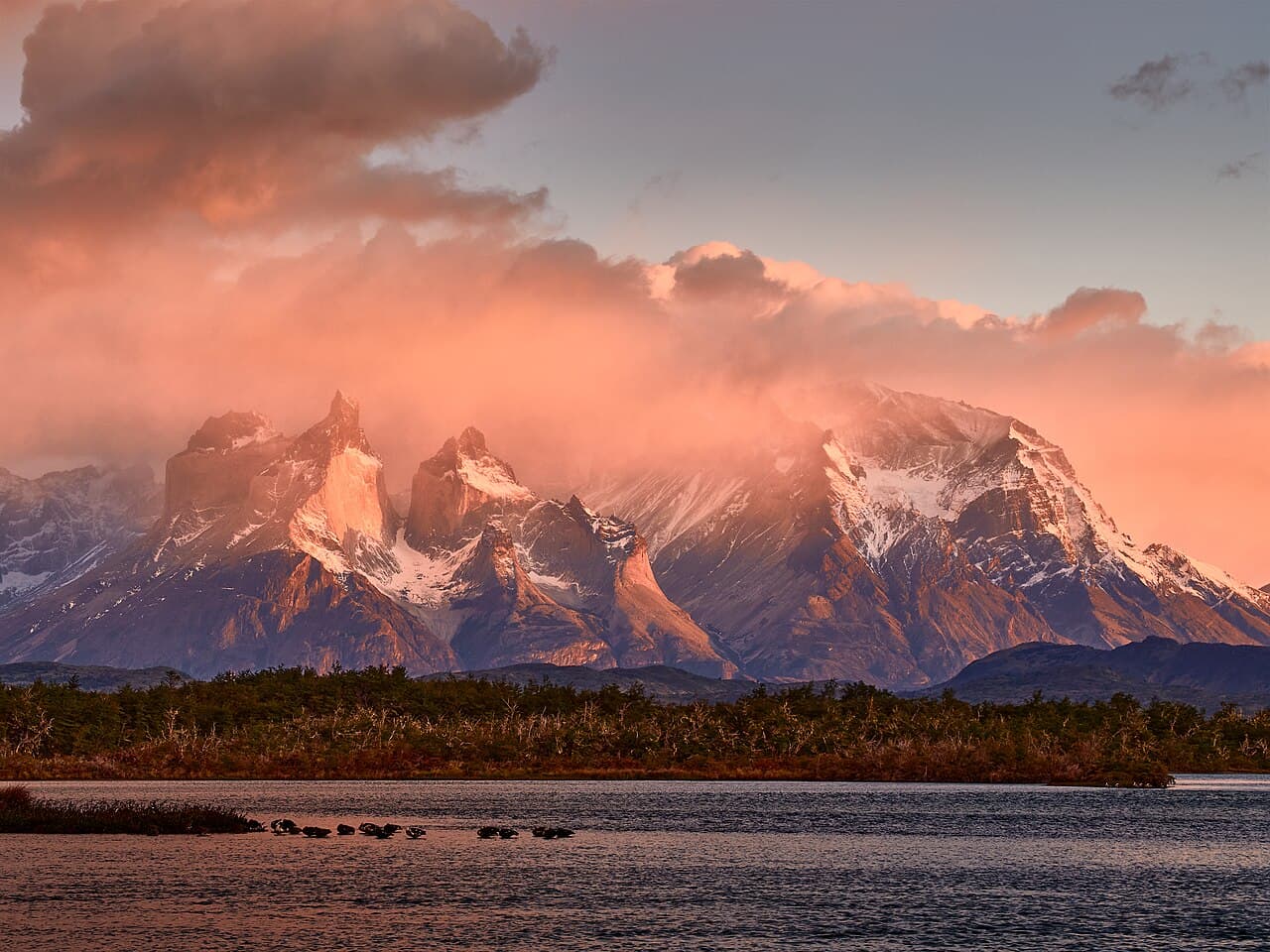
ChilePhoto: Pedro Szekely from Los Angeles, USA / Wikimedia Commons (CC BY-SA 2.0)

Chile

Country Β· CL Β· CLP Β· America/Santiago

This information may change. Always check the official source.Last verified: August 2026 by

No visa for 90 days for most visitors, but everyone must file the sworn agricultural declaration at ingresoachile.cl. Keep the tourist card you are given: it takes 19% off your hotel bill.

  • Most visitors get 90 days on arrival with no visa, including the EU, UK, US, Canada, Australia, Japan, South Korea, China and Russia. Malaysia and Singapore get 30 days.
  • Everyone must file the sworn agricultural declaration at ingresoachile.cl before travelling. It takes five minutes and produces a QR code; the paper form on the plane means a slower queue.
  • Fruit, seeds, nuts, honey, meat, cheese and wooden handicrafts must be declared or binned. An undeclared apple means a fine, and the dogs at Santiago are good at their job.
  • Photograph the tourist card immigration gives you - it is money. Shown with your passport at check-in, it takes the 19% IVA off your hotel bill, and hotels do not volunteer it.
  • Ask for the exemption when you check in, not when you check out, and hand the card back when you leave. If you lose it, the PDI replaces it free.
More details

The visa part, which is simple

  • Most visitors get 90 days on arrival with no visa, including citizens of the EU, the UK, the US, Canada, Australia, Japan, South Korea, China, Russia and Taiwan.
  • Malaysia and Singapore get 30 days.
  • India, Cambodia and Saudi Arabia need a visa in advance, although Chinese and Indian nationals holding a valid US or Canadian visa with at least 6 months to run may enter without a Chilean visa for up to 90 days.
  • Your passport must be valid for your stay and there is no six-month rule.
  • Reciprocity fees are gone. The old charges for US, Canadian and Australian passports were abolished years ago; anyone quoting one is out of date.

The declaration everyone forgets

Every traveller must file a sworn declaration - the Declaracion Jurada - about what food and plant material they are carrying. This is not optional and it is not the same thing as immigration.

  • File it online at ingresoachile.cl, up to a day before you travel. It takes five minutes and produces a QR code.
  • You can also fill in the paper form on the plane, but the queue at Santiago moves on the digital one.
  • Chile is an agricultural island in practice - desert to the north, ice to the south, ocean and Andes on the sides - and it protects that with real enforcement.
  • Fruit, seeds, nuts, honey, meat, cheese, wooden handicrafts and plants must be declared or surrendered in the bins before the checkpoint.
  • An undeclared apple or sandwich means a fine, and the dogs at Santiago are good at their job. Eat it or bin it before the hall.

The tourist card, which is money

  • Immigration issues a tourist card (tarjeta unica migratoria) when you enter. Photograph it immediately.
  • Show it with your passport at hotel check-in and the 19% IVA comes off your room bill, because foreign visitors paying in foreign currency are exempt.
  • Hotels do not volunteer this. Ask for the "exencion de IVA para turistas extranjeros" when you check in, not when you check out.
  • The tax authority has told hotels they may not insist on dollar cash for the exemption; a card charged in a foreign currency qualifies.
  • You must hand the card back when you leave. Lost it? The PDI replaces it online or at any office, free.

Where your nationality lands

Visa and entry in Chile
You holdWhat you need
USA, Canada, Australia, UK, Germany, France, Italy, Spain, Netherlands, Poland, Japan, South Korea, China, Russia, TaiwanNothing. 90 days
Malaysia, SingaporeNothing. 30 days
India, Cambodia, Saudi ArabiaVisa in advance - unless Indian or Chinese with a valid US or Canadian visa
  • Extensions of 90 days are possible through the immigration service for a fee, in person and slowly. Most people leave and come back instead.
Sources (2)

Chile runs the strictest agricultural border in the Americas: one undeclared apple is a fine, and the dogs at Santiago find it.

  • Every arrival declares food, plants and animal products. The SAG inspection is universal, bags are X-rayed after baggage claim, and detector dogs work the hall.
  • An undeclared item is fined even if it would have been allowed. The penalty starts in the hundreds of dollars and is issued on the spot, which is why the bins before the checkpoint are full.
  • Fresh fruit, seeds, nuts, honey, meat and dairy are the categories that get seized, along with wooden items and anything that has been on a farm.
  • The allowance is 400 cigarettes and 2.5 litres of alcohol per adult, generous by regional standards.
  • Cash equivalent to USD 10,000 or more must be declared.
More details
  • Every arrival declares food, plants and animal products. The SAG inspection is universal, bags are X-rayed after baggage claim, and detector dogs work the hall.
  • An undeclared item is fined even if it would have been allowed. The penalty starts in the hundreds of dollars and is issued on the spot, which is why the bins before the checkpoint are full.
  • Fresh fruit, seeds, nuts, honey, meat and dairy are the categories that get seized, along with wooden items and anything that has been on a farm.
  • The allowance is 400 cigarettes and 2.5 litres of alcohol per adult, generous by regional standards.
  • Cash equivalent to USD 10,000 or more must be declared.
  • Easter Island has its own controls, with an entry form and a park fee checked before the flight.
Sources (1)

Private clinics in Santiago are excellent and expensive, the tap water is safe, and the two health risks worth planning for are altitude in the north and UV everywhere.

  • Private clinics in Santiago are first-rate, expensive, and want payment or a guarantee up front. Clinica Alemana, Las Condes and Santa Maria are the usual names, and insurance is not optional.
  • San Pedro de Atacama sits at 2,400 m and the standard tours go to 4,300 m at dawn. Spend a day in town first - people routinely do the geysers on their first morning and feel dreadful.
  • Headache, nausea and breathlessness that do not settle mean going down. Drink water, skip alcohol the first night and go slowly.
  • Tap water is safe in Santiago and most cities, though hard and heavily chlorinated. In the far north it is high in minerals and can upset stomachs - use bottled there.
  • There is no malaria and no yellow fever in Chile and no vaccinations are required. Check your insurance covers hiking, altitude and evacuation.
More details

Medical care

  • Private clinics in Santiago are first-rate: Clinica Alemana, Clinica Las Condes, Clinica Santa Maria.
  • They are expensive and want payment or a guarantee up front. Insurance is not optional.
  • Public hospitals will treat an emergency and are slower and more basic.
  • Pharmacies (Cruz Verde, Salcobrand, Ahumada) are everywhere and pharmacists will advise; many drugs are sold over the counter.
  • In Patagonia and the Atacama, serious care is a flight away, which is what evacuation cover is for.

Altitude

  • San Pedro de Atacama sits at 2,400 m and the standard day trips go to 4,300 m at the El Tatio geysers, at dawn, having got up at 04:00.
  • Spend a day at San Pedro before the high tours. People routinely do the geysers on their first morning and feel dreadful.
  • Drink water, skip alcohol the first night, and go slowly. Coca tea is offered and helps a little.
  • Headache, nausea and breathlessness that do not settle mean going down.

Sun, water and food

  • UV in the Atacama and the far south is extreme. The ozone thinning over southern Chile is real; burn times in Patagonia are shorter than the temperature suggests.
  • Tap water is safe in Santiago and most cities and is very hard and heavily chlorinated. Many visitors prefer bottled for taste; both are fine.
  • In the far north the water is high in minerals and can upset stomachs. Bottled there.
  • Food hygiene is good. Ceviche and raw shellfish are excellent and are the usual culprits when something goes wrong; eat them where it is busy.
  • Red tide (marea roja) closes shellfish harvesting in the south at times, and the ban is publicised and enforced.

Before you go

  • No vaccinations are required. Hepatitis A and the usual boosters are sensible.
  • There is no malaria and no yellow fever in Chile.
  • Bring prescription medicine with the prescription, since names differ.
  • Insurance should cover hiking and altitude if you are going to Patagonia or the Atacama, and evacuation if you are going anywhere remote.
Sources (2)

Santiago

Long-term averages for Santiago: the mean daily high, the mean overnight low and the mean monthly rainfall across 30 years of ERA5 reanalysis data (1995–2024).

DayNight
051015202530Β°C0200mmJanFebMarAprMayJunJulAugSepOctNovDecJanuary: Day 29 Β°C, Night 16 Β°C, Rain 5 mm. February: Day 28 Β°C, Night 16 Β°C, Rain 5 mm. March: Day 27 Β°C, Night 15 Β°C, Rain 8 mm. April: Day 23 Β°C, Night 11 Β°C, Rain 24 mm. May: Day 19 Β°C, Night 8 Β°C, Rain 53 mm. June: Day 15 Β°C, Night 5 Β°C, Rain 102 mm. July: Day 15 Β°C, Night 4 Β°C, Rain 75 mm. August: Day 16 Β°C, Night 5 Β°C, Rain 84 mm. September: Day 18 Β°C, Night 7 Β°C, Rain 53 mm. October: Day 21 Β°C, Night 9 Β°C, Rain 37 mm. November: Day 24 Β°C, Night 12 Β°C, Rain 15 mm. December: Day 27 Β°C, Night 15 Β°C, Rain 5 mm
Show the monthly table
Santiago
MonthDay (Β°C)Night (Β°C)Rain (mm)
January29165
February28165
March27158
April231124
May19853
June155102
July15475
August16584
September18753
October21937
November241215
December27155

San Pedro de Atacama

Long-term averages for San Pedro de Atacama: the mean daily high, the mean overnight low and the mean monthly rainfall across 30 years of ERA5 reanalysis data (1995–2024).

DayNight
051015202530Β°C050mmJanFebMarAprMayJunJulAugSepOctNovDecJanuary: Day 26 Β°C, Night 12 Β°C, Rain 19 mm. February: Day 25 Β°C, Night 12 Β°C, Rain 27 mm. March: Day 25 Β°C, Night 11 Β°C, Rain 13 mm. April: Day 23 Β°C, Night 7 Β°C, Rain 2 mm. May: Day 20 Β°C, Night 3 Β°C, Rain 3 mm. June: Day 18 Β°C, Night 2 Β°C, Rain 2 mm. July: Day 18 Β°C, Night 1 Β°C, Rain 2 mm. August: Day 20 Β°C, Night 2 Β°C, Rain 2 mm. September: Day 22 Β°C, Night 4 Β°C, Rain 2 mm. October: Day 24 Β°C, Night 6 Β°C, Rain 0 mm. November: Day 26 Β°C, Night 9 Β°C, Rain 0 mm. December: Day 26 Β°C, Night 11 Β°C, Rain 3 mm
Show the monthly table
San Pedro de Atacama
MonthDay (Β°C)Night (Β°C)Rain (mm)
January261219
February251227
March251113
April2372
May2033
June1822
July1812
August2022
September2242
October2460
November2690
December26113

Punta Arenas

Long-term averages for Punta Arenas: the mean daily high, the mean overnight low and the mean monthly rainfall across 30 years of ERA5 reanalysis data (1995–2024).

DayNight
051015Β°C0100mmJanFebMarAprMayJunJulAugSepOctNovDecJanuary: Day 13 Β°C, Night 7 Β°C, Rain 80 mm. February: Day 13 Β°C, Night 7 Β°C, Rain 66 mm. March: Day 11 Β°C, Night 6 Β°C, Rain 80 mm. April: Day 9 Β°C, Night 4 Β°C, Rain 86 mm. May: Day 6 Β°C, Night 3 Β°C, Rain 61 mm. June: Day 4 Β°C, Night 1 Β°C, Rain 57 mm. July: Day 4 Β°C, Night 0 Β°C, Rain 60 mm. August: Day 5 Β°C, Night 1 Β°C, Rain 64 mm. September: Day 7 Β°C, Night 2 Β°C, Rain 50 mm. October: Day 9 Β°C, Night 3 Β°C, Rain 67 mm. November: Day 10 Β°C, Night 5 Β°C, Rain 77 mm. December: Day 12 Β°C, Night 6 Β°C, Rain 83 mm
Show the monthly table
Punta Arenas
MonthDay (Β°C)Night (Β°C)Rain (mm)
January13780
February13766
March11680
April9486
May6361
June4157
July4060
August5164
September7250
October9367
November10577
December12683
Sources (1)

Good and expensive by regional standards, and 19% cheaper than the sticker if you claim the tourist exemption. Patagonia in January must be booked by winter.

  • In Santiago stay in Providencia or Lastarria, Bellas Artes for nightlife, Las Condes for business hotels. The centre empties at night.
  • Valparaiso means Cerro Alegre and Cerro Concepcion, restored houses on the hills, and it is worth the stairs.
  • January and February are the Chilean holidays and the whole country moves to the coast and Patagonia - book by winter. October, November, March and April are much easier.
  • Torres del Paine refugios sell out months ahead and the park turns you away without a reservation.
  • Ask for the IVA exemption at check-in with passport and tourist card in hand. Heating in the south is often a wood stove that goes out overnight - ask before booking in winter.
More details

Where to stay

  • Santiago: Providencia and Lastarria for visitors, Bellas Artes for nightlife, Las Condes for business hotels. The centre empties at night.
  • Valparaiso: Cerro Alegre and Cerro Concepcion, in restored houses on the hills, and it is worth the stairs.
  • San Pedro de Atacama is small, adobe and expensive for what you get. Book ahead in season.
  • Patagonia is refugios, domes and lodges, all of them booked far in advance and priced accordingly.
  • The Lake District around Pucon and Puerto Varas has the best mid-range guesthouses in the country.

Booking

  • January and February are the Chilean holidays, and the whole country moves to the coast and to Patagonia. Book by winter.
  • Torres del Paine refugios open bookings months ahead and sell out, and the park will turn you away without a reservation.
  • Shoulder months are much easier: October, November, March and April.
  • Airbnb is widespread and legal, and often the best value in Santiago and Valparaiso.

Practical

  • Ask for the IVA exemption at check-in, passport and tourist card in hand.
  • Heating in the south is often a wood stove that goes out overnight. Ask before booking in winter.
  • Hot water in older buildings is a californ (gas heater) and can be temperamental.
  • Earthquake standards are high and modern buildings are engineered for it; the reason nobody panics is that they are used to it.
  • Wi-fi is good in cities and unreliable in Patagonia, where satellite is normal and video calls are not.
Sources (2)

The registration law that became compulsory for every prepaid line on 20 August 2026 has made shops wary of selling to foreigners, so an eSIM you buy before you fly is now the reliable option. Entel has the best coverage in the desert and the south.

  • Since 20 August 2026 every prepaid line must be registered to a named holder, with biometric verification among the accepted methods, and the systems are built around Chilean ID. Shops can register a passport, but plenty of branches simply refuse.
  • That makes an eSIM the safer plan here - the opposite of the advice in most of South America. Buy and install it before you fly, while you still have wi-fi you trust.
  • If you do want a local SIM, buy it at an official carrier shop in a mall, not a kiosk, with your passport. Airport shops are the most used to foreigners.
  • Entel has the widest coverage, including the Atacama, the Carretera Austral and most of Patagonia; WOM is cheapest and the most urban.
  • San Pedro has signal in town and almost none in the desert, Torres del Paine is patchy, and the Carretera Austral drops out for long stretches. Download offline maps.
More details

The registration law changed the advice

  • Registration of prepaid lines became compulsory for everyone on 20 August 2026. Operators had been running identity checks on new contracts through 2025; since that date every prepaid number in Chile must be tied to a named holder, verified in person or online, with biometric checks among the methods allowed. The systems are built around Chilean ID.
  • Shops can register a foreign passport - passport number, a photo of the passport and a selfie - but plenty of branches simply refuse, and the refusals are not consistent between shops of the same network.
  • This is why an eSIM is now the safer plan for a short trip, which is the opposite of the advice in most of South America.
  • If you want a local SIM, buy it at an official carrier shop in a mall, not a kiosk, and take your passport. Airport shops are the most used to foreigners.

The networks

  • Entel has the widest coverage, including the Atacama, the Carretera Austral and most of Patagonia.
  • Movistar and Claro are close behind in the cities and thinner in the far south.
  • WOM is the cheapest and the most urban.
  • A prepaid bundle runs CLP 5,000 to CLP 15,000 for a week or a month with generous data, if you can get one issued.

eSIM

  • Saily's Chile plans are USD 4.99 for 1 GB over 7 days, USD 17.99 for 5 GB over 30 days and USD 27.99 for 10 GB.
  • Buy and install it before you fly, while you still have wi-fi you trust.
  • All four networks support eSIM if you would rather buy one locally.

Coverage in the places you are going

  • Santiago, Valparaiso and the Lake District are fully covered.
  • San Pedro de Atacama has signal in town and very little in the desert around it, including at the El Tatio geysers.
  • Torres del Paine has patchy coverage at the refugios and none on much of the circuit.
  • The Carretera Austral drops out for long stretches, and so does Route 5 through the far north.
  • Download offline maps. Distances here are the kind where a wrong turn costs two hours.
Sources (3)

Chilean sockets are the Italian Type at 220 V, with Schuko outlets on heavier appliances.

  • Type is the official standard, three round pins in a row with the earth in the middle, the same as Italy's 10 A version.
  • A Europlug fits it. Chargers and laptop bricks need no adapter.
  • Schuko sockets turn up on high-power appliances and in newer buildings, so a room can have both.
  • British, American and Australian plugs need an adapter.
  • 220 V, so American 120 V-only equipment needs a converter. Argentina next door uses the angled Type plug, which fits nothing here.
More details

Sockets in Chile are Type , and at 220 V, 50 Hz - the three-in-line Italian socket is the national standard.

  • Type is the official standard, three round pins in a row with the earth in the middle, the same as Italy's 10 A version.
  • A Europlug fits it. Chargers and laptop bricks need no adapter.
  • Schuko sockets turn up on high-power appliances and in newer buildings, so a room can have both.
  • British, American and Australian plugs need an adapter.
  • 220 V, so American 120 V-only equipment needs a converter. Argentina next door uses the angled Type plug, which fits nothing here.
Sources (1)

Chilean Spanish is the fastest in the region and full of its own slang. Lunch is the meal, dinner is late, and the country closes for a week in September.

  • Chilean Spanish is famously fast and dropped, with its own slang - "cachai?" for you get it, "al tiro" for right now. English is limited outside Santiago hotels and tour operators.
  • Lunch from 13:00 to 15:00 is the main meal and the menu del dia is the best value in the country. Dinner in restaurants starts at 21:00.
  • 18 and 19 September, the Fiestas Patrias, shut the country for the best part of a week. Everything books out and transport is full - it is also the best party of the year.
  • 220 V on type and type sockets. A European two-pin fits; a British or US plug needs an adaptor.
  • Photographing military and police installations is prohibited, and a discarded cigarette in fire season is a criminal matter, not a telling-off.
More details

Language

  • Chilean Spanish is famously fast and dropped. Final s disappears, and the slang is its own dialect.
  • "Cachai?" means "you get it?", "al tiro" means right now, "po" is added to everything.
  • English is limited outside Santiago hotels and tour operators. A translation app earns its keep here more than in Argentina or Peru.
  • Chileans are warm and formal at once: a handshake or a single cheek kiss, and "usted" with anyone older.

The day

  • Lunch, from 13:00 to 15:00, is the main meal, and the "menu del dia" is the best value in the country.
  • Once, at around 19:00, is tea with bread and avocado and often replaces dinner entirely.
  • Dinner in restaurants starts at 21:00.
  • Sunday is quiet. Many shops and restaurants close, particularly in small towns.
  • Working hours are 09:00 to 18:00 with a long lunch outside the cities.

The calendar

  • 18 and 19 September - Fiestas Patrias - shut the country for the best part of a week. Everything books out, transport is full, and it is the best party of the year.
  • January and February are the summer holidays and prices and crowds peak.
  • Easter week is busy, and Good Friday is quiet everywhere.
  • Shops close on the main public holidays in a way they no longer do in Europe.

Practical

  • 220 V and sockets are type and type , the Italian three-pin. A European two-pin fits; a British or US plug needs an adaptor.
  • Chile has no daylight saving in the far south (Magallanes) but the rest of the country changes clocks. Check flight times in September and April.
  • Water is safe and the tap is normal.
  • Do not compare Chile to Argentina and do not assume the food is spicy - Chilean cooking is mild, and merken is the one local heat.
  • Cannabis is decriminalised in tiny amounts for personal use and selling is not. Do not test the boundary.
  • Photographing military and police installations is prohibited, and Carabineros are treated with formality.
  • Recycling and littering rules are taken seriously in the parks, and a discarded cigarette in a fire season is a criminal matter.
Sources (2)

Cards work nearly everywhere and ATMs charge around CLP 5,000 a go. When the terminal asks about cuotas, the answer is one. And ask for the hotel tax exemption.

  • Chile is a card country - restaurants, shops, buses, market stalls and taxis nearly all take contactless. Carry cash for the far south, small towns and tours.
  • ATM fees are high, around CLP 3,500 to CLP 6,000 per withdrawal on top of your own bank. Banco Estado is usually the cheapest, and always decline conversion into your own currency.
  • When the terminal asks "en cuantas cuotas?", say "una". Chilean cards can split a purchase over months, a foreign card cannot, and the wrong answer just fails the transaction.
  • Foreign visitors are exempt from the 19% IVA on accommodation. Show your passport and tourist card at check-in and ask for it explicitly - it is worth a fifth of the bill.
  • 10% is standard in restaurants and usually printed as a suggested propina. Do not tip taxis; a day tour guide gets CLP 5,000 to CLP 10,000 per person.
More details

Cards and cash

  • Chile is a card country. Restaurants, shops, buses, market stalls and taxis nearly all take contactless.
  • Carry some cash for the far south, small towns and tours, where terminals fail or the signal does.
  • ATM fees are high: around CLP 3,500 to CLP 6,000 per withdrawal, plus your bank's charge. Banco Estado is usually the cheapest.
  • Always decline the machine's offer to charge you in your own currency.
  • Notes are CLP 1,000 up to CLP 20,000, and breaking a 20,000 in a small shop is a nuisance.

The cuotas question

  • At the terminal the assistant will ask "en cuantas cuotas?" - in how many instalments.
  • Say "una" or "sin cuotas". Chilean cards can split a purchase over months; a foreign card cannot, and the wrong answer just makes the transaction fail.
  • "Debito o credito?" is the other question, and either usually works.

The hotel tax exemption, again

  • Foreign visitors are exempt from the 19% IVA on accommodation. It is worth more than everything else on this page.
  • Show your passport and tourist card at check-in and ask for it explicitly.
  • The rate must be settled in foreign currency, which a card charged in your home currency satisfies.
  • Some hotels quote net of IVA and some quote with it. Ask which, because it is a fifth of the bill.

Tipping and prices

  • 10% is standard in restaurants and is usually printed as a suggested "propina" on the bill. It is optional in law and expected in practice.
  • Do not tip taxis; round up if you like.
  • Tour guides: CLP 5,000 to CLP 10,000 per person for a day tour is normal.
  • Chile is the most expensive country in South America and visitors from Argentina or Peru feel it immediately.
  • Wine, seafood and lunch menus are the value. A "menu del dia" at lunch is a fraction of the same food at dinner.
Sources (2)

Everyday prices

Typical prices in Chilean peso (CLP), averaged across the country by Numbeo and read on 13 August 2026. Tick Convert prices above the table to see every amount in your own currency.

Everyday prices
ItemTypical price
Inexpensive restaurant meal8,000 CLP
Dinner for two, mid-range, three courses45,000 CLP
Cappuccino2,830 CLP
Local draught beer, 0.5 l3,500 CLP
Bottled water, 0.33 l992 CLP
Public transport, one-way ticket750 CLP
Taxi, starting fare800 CLP
Petrol, 1 litre1,360 CLP
Cigarettes, pack of 20 (Marlboro)5,000 CLP
Average net monthly salary639,000 CLP

These are country-wide averages, not a price list: tourist districts, airports and islands sit well above them, and small towns below. The salary line is there for proportion - it is what people living here actually earn.

Sources (1)

Airport guides for Chile2

One page per airport: the routes into town, what they cost and the trap particular to that arrival.

See all 2 airports

The Centropuerto bus into Santiago is CLP 2,400 against CLP 27,000 for an official taxi. Buy the taxi or transfer at a counter inside, never from someone who approaches you.

  • The Centropuerto bus into Santiago is CLP 2,400 and takes 45 to 60 minutes to Pajaritos and Los Heroes metro, against CLP 27,000 for an official taxi.
  • Buy any taxi or shared van at a counter inside the terminal. The FCDO specifically warns about Santiago airport taxi fraud - inflated fares, extra digits and card readers rigged to capture your PIN.
  • Never accept a lift from someone who approaches you in the hall. Every legitimate operator has a desk.
  • Immigration, then the tourist card, then the SAG agricultural check with dogs and X-ray - have the declaration QR ready. Airport ATMs charge CLP 3,500 to CLP 6,000, so withdraw a decent amount at once.
  • Calama is the airport for San Pedro de Atacama, 100 km and about 90 minutes away; Punta Arenas and Puerto Natales serve Torres del Paine.
More details
Santiago (SCL) to the city
Transport from the airport in Chile
OptionCostTimeNotes
Centropuerto busCLP 2,400 one way45 to 60 minTo Pajaritos and Los Heroes metro; buy at the counter in arrivals
Turbus airport busCLP 2,400 to CLP 3,00045 to 60 minSame idea, to Pajaritos and Universidad de Santiago
Shared van (Transvip, Delfos)CLP 8,000 to CLP 12,000 per person40 to 70 minDoor to door, waits to fill
Official taxiCLP 27,000 to CLP 29,00030 to 50 minFixed price, bought at the counter inside
Uber or CabifyCLP 15,000 to CLP 25,00030 to 50 minMarked pickup area; surges badly
  • The bus plus metro is the local answer. Pajaritos is on Line 1 and 20 minutes from the centre.
  • Buy any taxi or van at a counter inside the terminal. The FCDO specifically warns about Santiago airport taxi fraud: inflated fares, extra digits, and card readers rigged to capture your PIN.
  • Never accept a lift from someone who approaches you in the hall. Every legitimate operator has a desk.
  • A metro bip! card is CLP 1,550 and is bought at any station - not at the airport, which has no metro yet.
The first hour
  • Immigration, then the tourist card, then the SAG agricultural check with dogs and X-ray. Have the declaration QR ready.
  • ATMs are in the arrivals hall and charge a fee of around CLP 3,500 to CLP 6,000. Take out a decent amount at once.
  • Cards work almost everywhere in Chile, so you do not need much cash.
  • Buses to other cities leave from the city terminals, not the airport; the exception is the direct Turbus service to Valparaiso and Vina del Mar.
The other arrival points
  • Calama (CJC) is the airport for San Pedro de Atacama, and the transfer is 100 km and about 90 minutes. Book it with your hotel or with Transvip before you fly.
  • Puerto Natales (PNT) and Punta Arenas (PUQ) serve Torres del Paine. Punta Arenas has the flights, Puerto Natales is three hours closer to the park.
  • Overland from Argentina or Peru, the same agricultural rules apply, and the crossings close in winter snow.
  • Do not carry food across any Chilean border. The border posts search more thoroughly than the airport.
Sources (2)

The country is 4,300 km long, so fly the long legs and take the excellent overnight buses for the rest. Torres del Paine must be booked months ahead.

  • Chile is 4,300 km long, so fly the long legs - Santiago to San Pedro is a 22-hour bus or a 2-hour flight, and LATAM, Sky and JetSmart compete hard on price.
  • Buses are excellent for anything under 10 hours. Turbus and Pullman run modern coaches, and cama or semi-cama means a seat that reclines nearly flat.
  • In Santiago buy a bip! card for CLP 1,550 and load it; it works on the metro and the buses, and the metro closes around 23:00.
  • Torres del Paine must be booked months ahead. Park entry goes through CONAF and the refugios sell out by August for the following January - you cannot walk in and find a bed.
  • Watch the budget airlines' baggage rules. JetSmart and Sky sell fares with no hold bag and charge heavily at the gate.
More details

Distances, honestly

  • Chile is 4,300 km long and 180 km wide on average. Santiago to San Pedro de Atacama is a 22-hour bus or a 2-hour flight.
  • Fly the long legs. LATAM, Sky and JetSmart compete hard and a domestic ticket booked ahead is often cheaper than the bus.
  • Watch the baggage rules on the budget carriers. JetSmart and Sky sell fares with no hold bag and charge heavily at the gate.
  • Buses are excellent for anything under 10 hours: Turbus and Pullman run modern coaches, and "cama" and "semi-cama" mean seats that recline nearly flat.
  • Book buses online or at the terminal. In January and February the popular routes sell out.

Santiago

  • The metro is fast, clean and cheap, and it closes around 23:00.
  • Buy a bip! card (CLP 1,550) and load it; it works on the metro and the buses.
  • Avoid the metro at rush hour with luggage; it is genuinely packed.
  • Uber, Cabify and DiDi all work and are the normal way to move at night.
  • Street taxis are metered and generally fine, but the apps remove the argument.

The two trips everyone takes

  • San Pedro de Atacama: tours are booked in town the day before, and the El Tatio geysers mean a 04:00 start at 4,300 m. Altitude is the issue, not the cold.
  • Torres del Paine: park entry is booked through CONAF's site in advance, and the refugios and campsites on the W and O circuits sell out months ahead, often by August for the following January.
  • You cannot walk into Torres del Paine and find a bed. The park checks reservations at the entrance.
  • Both places are cheaper and emptier in the shoulder months, October and March.

Driving

  • Chile drives on the right and the roads are the best in South America.
  • Route 5, the Panamericana, is a toll road and the tolls add up; keep coins or a card.
  • Renting to cross into Argentina needs paperwork from the rental company arranged days in advance, plus extra insurance.
  • A 4x4 is only necessary for the Carretera Austral and some Atacama tracks, and rental agreements often forbid the gravel ones.
  • Fuel is expensive and stations are far apart in the north and the far south. Fill up when you can.

Apps worth having

  • Uber, Cabify and DiDi for rides.
  • Metro de Santiago or Moovit for the bip! network.
  • Recorrido or PasajeBus to compare and book intercity coaches.
  • CONAF's booking site for the parks.
Sources (2)

Chilean motorways are tolled and Santiago's urban network is electronic-only, so a hire car needs a TAG.

  • Santiago's motorways charge through the TAG transponder with no barriers at all. A hire car must have one; without it, using the urban motorways generates fines rather than tolls.
  • Interurban tolls on Ruta 5 are conventional plazas taking cash and cards.
  • The alcohol limit is 0.03 %, above which the offence is "driving under the influence" with a licence suspension; 0.08 % is drunk driving with far harsher penalties.
  • The country is 4,300 km long and rarely more than 200 km wide. Distances north-south are the constraint on any itinerary.
  • Mountain passes to Argentina close in winter and the Cristo Redentor crossing can shut for days after snow.
More details

Interurban toll plazas and an electronic-only urban network in Santiago.

  • Santiago's motorways charge through the TAG transponder with no barriers at all. A hire car must have one; without it, using the urban motorways generates fines rather than tolls.
  • Interurban tolls on Ruta 5 are conventional plazas taking cash and cards.
  • The alcohol limit is 0.03 %, above which the offence is "driving under the influence" with a licence suspension; 0.08 % is drunk driving with far harsher penalties.
  • The country is 4,300 km long and rarely more than 200 km wide. Distances north-south are the constraint on any itinerary.
  • Mountain passes to Argentina close in winter and the Cristo Redentor crossing can shut for days after snow.
Sources (1)

Phone snatching in Santiago is the thing that actually happens. Protests cluster on known dates, and on the coast a long earthquake means walk uphill without waiting for a siren.

  • Phone snatching is endemic in central Santiago and Valparaiso. Do not walk along holding a phone and do not put it on a cafe table; backpacks go on your lap, not your back.
  • Do not resist a robbery. Phones are insured; people are not.
  • Three protest dates are reliably difficult: 11 September, 29 March and 1 May, clustered around Plaza Baquedano. Police use tear gas and water cannon, and being caught in one as a foreigner can mean deportation.
  • On the coast, a quake you cannot stand up in, or one lasting more than a minute, is your tsunami warning. Walk inland and uphill immediately - do not wait for a siren.
  • The Atacama sun is at extreme UV and 3,000 m of altitude removes any margin, while Patagonian weather changes in minutes and the wind is what people underestimate.
More details

Street crime, which is the real risk

  • Phone snatching is endemic in central Santiago and in Valparaiso. Do not walk along holding a phone, and do not put it on a cafe table.
  • Backpacks come off in the metro and in restaurants and go on your lap or between your feet.
  • The classic scams are a spilled liquid, a dropped wallet and a punctured tyre, all designed to make you put your bag down.
  • Bellavista and Suecia in Santiago have documented drink-spiking incidents. Watch your glass.
  • Do not resist a robbery. Phones are insured; people are not.
  • Valparaiso is beautiful and has a genuine street crime problem away from the two tourist hills. Take a taxi after dark.

Protests

  • There is a risk of violent protest in Santiago, particularly on Friday afternoons and evenings, and around Plaza Baquedano.
  • Three dates are reliably difficult: 11 September, the coup anniversary; 29 March, the Day of the Young Combatant; and 1 May.
  • Police use tear gas and water cannon, and being caught in a protest as a foreigner can mean deportation.
  • Avoid the area entirely rather than watch.

Earthquakes, tsunamis and volcanoes

  • Chile has serious earthquakes and modern buildings are built for them. Stay inside, away from windows, and do not run for the stairs.
  • On the coast, a quake strong enough that you cannot stand, or one lasting more than a minute, is your tsunami warning. Walk inland and uphill immediately; do not wait for a siren or an official alert.
  • Evacuation routes are marked in every coastal town with green signs. Look for them when you arrive, not afterwards.
  • Active volcanoes - Villarrica, Lascar, Copahue and others - close parks at short notice. Follow SENAPRED and CONAF alerts.
  • Wildfires are severe in January and February, closing parks and roads. Open fires are illegal in national parks and the enforcement is real.

Regions and outdoors

  • The FCDO advises caution in the Araucania, Biobio and Los Rios regions, where there have been attacks connected to land disputes, mostly on forestry and state targets rather than tourists.
  • Tell someone your route before hiking, register at the CONAF station where one exists, and expect rescue to be charged for.
  • Patagonian weather changes in minutes and the wind is the hazard people underestimate.
  • The Atacama sun is at extreme UV and 3,000 m of altitude removes any margin. Hat, sleeves, factor 50.
Sources (2)

Ambulance 131, fire 132, police 133 - the ABC 123 that every Chilean knows. All free from any phone, all answered around the clock.

  • Chileans remember the numbers as ABC 123: Ambulancia 131, Bomberos 132, Carabineros 133. All are free from any phone and answered around the clock.
  • English is not guaranteed on those lines, so have your address written down before you call.
  • 130 reaches CONAF for a forest fire, which is worth having in summer when a plume of smoke matters to everyone downwind.
  • Theft means a Carabineros station and the constancia, the written report your insurer will want. A lost passport means the PDI first, then your embassy in Santiago.
  • After an earthquake the mobile network jams. Text and messaging apps get through when calls do not, so agree a meeting point in advance.
More details

The numbers

Emergency information in Chile
ServiceNumber
Ambulance (SAMU)131
Fire (Bomberos)132
Police (Carabineros)133
Investigative police (PDI)134
Forest fires (CONAF)130
Maritime search and rescue137
  • Chileans remember them as ABC 123: Ambulancia 131, Bomberos 132, Carabineros 133.
  • All are free from any phone and answered 24 hours; English is not guaranteed, so have your address written down.
  • Bomberos in Chile are volunteers and turn out for far more than fires.
  • 130 for a forest fire is worth having in summer, when a plume of smoke matters to everyone downwind.

If something goes wrong

  • Theft: report it at a Carabineros station and get the constancia, the written report your insurer will want.
  • A lost passport means the PDI and then your embassy in Santiago. The PDI also replaces a lost tourist card.
  • After an earthquake, expect the mobile network to jam. Text and messaging apps get through when calls do not; agree a meeting point in advance.
  • On the coast after a strong quake, move inland and uphill first and check the news later.

Worth saving now

  • Your insurer's 24-hour number and policy number.
  • Your embassy in Santiago, most of which are in Las Condes and Providencia.
  • A photo of your passport and tourist card, stored offline.
  • Chile's country code is +56, and mobile numbers are 9 followed by 8 digits.
  • SENAPRED's alerts if you are travelling in volcano or wildfire country.
Sources (3)