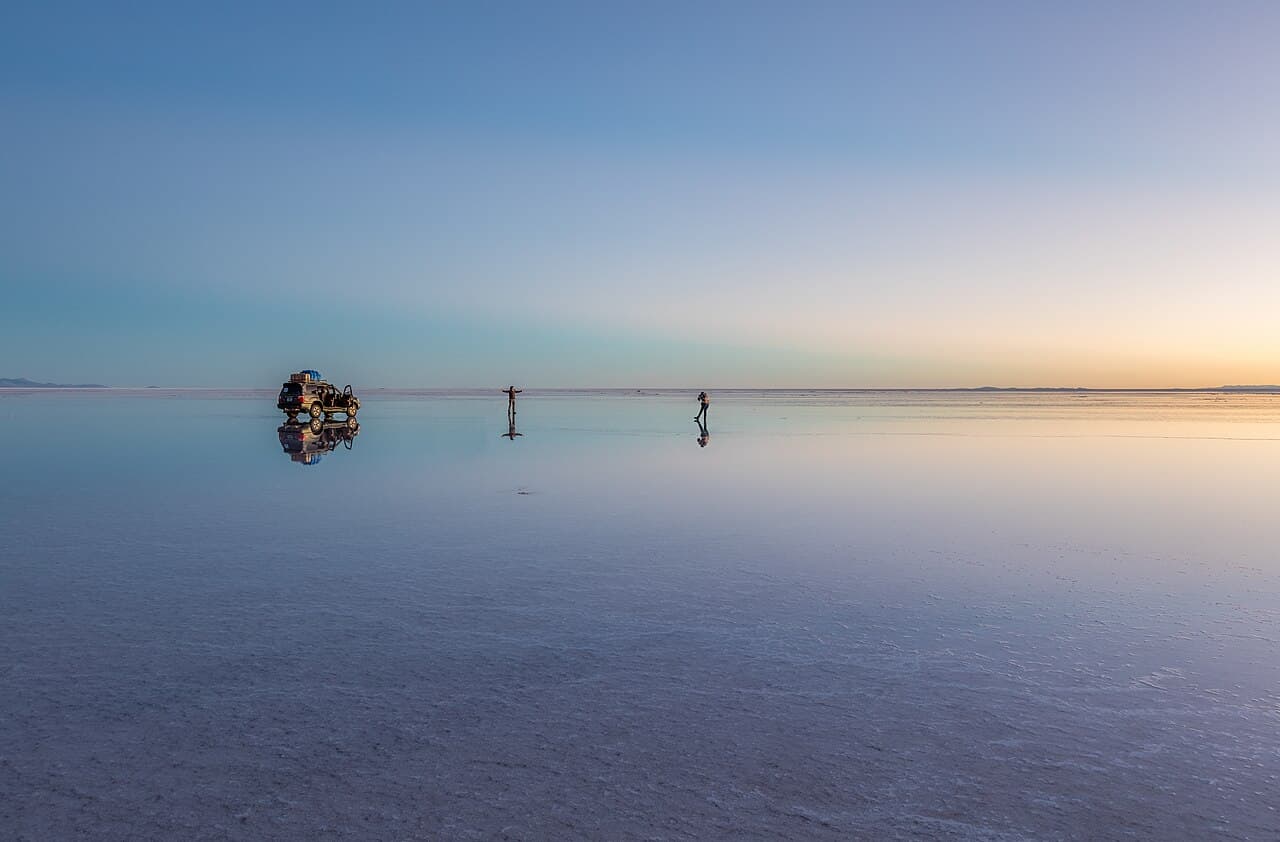
BoliviaPhoto: Diego Delso / Wikimedia Commons (CC BY-SA 4.0)

Bolivia

Country · BO · BOB · America/La_Paz

This information may change. Always check the official source.Last verified: August 2026 by

Bolivia scrapped the USD 160 visa for US citizens on 1 December 2025 - most guides still say otherwise. Whatever your nationality, you must pre-register online with SIGEMIG and give an address, and you need 6 months of passport validity.

  • Bolivia abolished the tourist visa for US citizens on 1 December 2025. The USD 160 fee is gone - if a guide still says Americans pay 1,120 BOB at the border, it is out of date.
  • The EU, UK, Canada, Australia, Japan, South Korea, Russia, China, India and now the USA are visa-free for up to 90 days in any 12-month period. Officers commonly stamp 30 days, extended free at a Migracion office.
  • Everyone must register online with SIGEMIG through the DIGEMIG portal before flying, giving the address where you will stay. It is free, applies to every nationality, and it is the step people miss.
  • Passport valid at least 6 months with two blank pages, plus proof of onward travel and of lodging. A yellow fever certificate is needed if you arrive from or travel on to an endemic zone.
  • Check you actually got the stamp and read the date. Leaving a land border unstamped means fines later, and overstaying costs a daily penalty of roughly 250 BOB charged when you depart.
More details

The big change most guides have not caught up with

On 1 December 2025 Bolivia abolished the tourist visa for US citizens. The USD 160 fee, the application and the paperwork are gone. The United States, Israel, South Korea, South Africa, Latvia, Estonia and Romania were all moved into Group 1, the visa-exempt category. If you read somewhere that Americans pay 1,120 BOB at the border, that information is out of date.

How your entry route is decided

Bolivia sorts nationalities into three groups, and the list is unusual enough that it is worth checking your own against the DIGEMIG site rather than assuming.

  1. Group 1 - visa-free. The EU and Schengen states, the United Kingdom, Canada, Australia, Japan, South Korea, Russia, China, India and, since December 2025, the United States. Entry is granted for up to 90 days in any 12-month period; officers commonly stamp 30 days on arrival, and it is extended free at a Migracion office up to the 90-day annual limit.
  2. Group 2 - visa required. Obtainable in advance at a consulate or, for most of this group, on arrival at any air or land port for 1,120 BOB. Grants 30 days per entry, up to 90 days a year, on a 5-year multiple-entry basis.
  3. Group 3 - prior consular authorisation required before travel. There is no border option.

What everyone has to do

  • Register with SIGEMIG before you fly. Bolivia requires an online migration registration through the DIGEMIG portal, including where you will be staying. It is free, it applies regardless of nationality, and it is the step people miss.
  • Passport valid at least 6 months from entry, with two blank pages.
  • Proof of onward travel - an outbound ticket - and proof of lodging, either a confirmed booking or a notarised host invitation.
  • Yellow fever certificate if you are arriving from, or travelling on to, an endemic tropical zone. Given Bolivia's own lowlands are endemic, this is worth having anyway.
  • Form 250 (Declaracion Jurada de Equipaje) for customs. Cash between USD 10,000 and USD 50,000 must be declared on entry under Supreme Decree 5404 of 23 May 2025, filed on the customs portal or in the ANVIAJERO app. Below USD 10,000 nothing is required.

At the desk, and afterwards

  • Check that you actually got the stamp, and read the date on it. Leaving a land border without one is a real problem later: an unstamped entry means fines and difficulty leaving.
  • Overstaying costs a daily administrative penalty of 100 UFV, roughly 250 BOB and indexed daily, charged when you depart.
  • If an official asks you to convert currency at the border, decline and ask for a supervisor. You are entitled to carry up to USD 10,000 without declaring it, and there is no lawful requirement to change it.
Sources (3)

Coca is legal in Bolivia and illegal almost everywhere you might fly next, which is the customs fact that matters here.

  • Coca leaves may not be taken out. They are sold in every market and chewed openly; carrying them onward is a drug offence in Peru's neighbours, the United States and the EU alike.
  • Cash equivalent to USD 10,000 or more must be declared on entry and exit.
  • The allowance is a carton of cigarettes and a couple of litres of spirits per adult.
  • Archaeological objects and colonial religious art may not be exported without a permit from the culture ministry, which covers the older items in the La Paz antique shops.
  • Wildlife products are prohibited, including anything made from vicuna that lacks certification.
More details
  • Coca leaves may not be taken out. They are sold in every market and chewed openly; carrying them onward is a drug offence in Peru's neighbours, the United States and the EU alike.
  • Cash equivalent to USD 10,000 or more must be declared on entry and exit.
  • The allowance is a carton of cigarettes and a couple of litres of spirits per adult.
  • Archaeological objects and colonial religious art may not be exported without a permit from the culture ministry, which covers the older items in the La Paz antique shops.
  • Wildlife products are prohibited, including anything made from vicuna that lacks certification.
  • The land borders are slow and cash-only for fees, and several close at night without notice.
Sources (1)

La Paz is 3,650 m and El Alto airport 4,060 m, so altitude sickness is the near certainty, not the risk. Tap water is not drinkable anywhere, and yellow fever cover is needed for the lowlands.

  • Altitude is the headline health issue and it starts the moment you land: the airport is at 4,060 m and La Paz about 3,650 m. Soroche hits fit young people as readily as anyone.
  • Do nothing for the first 24 hours - rest, drink water, eat lightly and skip alcohol entirely. Coca tea is what everyone drinks and it genuinely helps.
  • Descend if symptoms turn severe: confusion, breathlessness at rest or a headache that will not respond is no longer ordinary soroche.
  • A yellow fever certificate is required for the endemic lowlands - Santa Cruz, Beni, Pando and the Yungas - while La Paz and Sucre have no dengue or malaria risk at all.
  • Tap water is not drinkable anywhere in Bolivia, and private clinics want cash or a card guarantee before admission. Check your insurance covers high-altitude evacuation.
More details

Altitude is the headline health issue and it starts the moment you land. El Alto airport is at 4,060 m and La Paz itself at about 3,650 m. Soroche - headache, nausea, fatigue, breathlessness - affects fit young people as readily as anyone.

  • Do nothing for the first 24 hours. Rest, drink plenty of water, eat lightly, skip alcohol entirely.
  • Coca tea (mate de coca) is what everyone drinks and it genuinely helps. Sorojchi pills, an over-the-counter caffeine and aspirin blend, are sold in every pharmacy. Acetazolamide (Diamox) is the medical option and works best started before you ascend.
  • Consider sleeping lower. Zona Sur in La Paz is about 450 m below the centre.
  • Descend if symptoms turn severe - confusion, breathlessness at rest, or a headache that will not respond. That is no longer ordinary soroche.

Vaccinations and tropical disease

  • Yellow fever certificate is required for the endemic lowlands - Santa Cruz, Beni, Pando and the Yungas - and for onward travel from them.
  • Recommended: hepatitis A and B, typhoid, tetanus.
  • Dengue in the tropical lowlands during the wet season, December to April. Malaria only in remote lowland Amazon border areas.
  • La Paz and Sucre have no dengue or malaria risk at all - the altitude rules out the mosquito.

Water and food

Tap water is not drinkable anywhere in Bolivia. Bottled, boiled or micro-filtered. Avoid ice in informal places, raw salads and unpeeled fruit from street stalls. Hot, fully cooked street food is fine.

Hospitals and pharmacies

  • Private clinics are the right choice: Clinica Alemana (+591 2 2432155) and Clinica CIMA in La Paz, Clinica Foianini (+591 3 3362211) in Santa Cruz. They require cash or a card guarantee before admission.
  • Public hospitals such as Hospital Viedma in Cochabamba and Hospital Santa Barbara in Sucre are under-resourced with long waits.
  • Travel insurance covering high-altitude medical evacuation is strongly advised. Standard policies sometimes exclude activity above a certain altitude - check yours, because most of Bolivia is above it.
  • Pharmacies: Farmacias Chavez, Farmacorp and Hipermaxi Farmacia stock the basics. Prescription narcotics need a Bolivian prescription; bring your own in original packaging with a translated doctor's letter.
Sources (2)

La Paz

Long-term averages for La Paz: the mean daily high, the mean overnight low and the mean monthly rainfall across 30 years of ERA5 reanalysis data (1995–2024).

DayNight
05101520°C0200mmJanFebMarAprMayJunJulAugSepOctNovDecJanuary: Day 15 °C, Night 6 °C, Rain 132 mm. February: Day 15 °C, Night 6 °C, Rain 122 mm. March: Day 15 °C, Night 6 °C, Rain 97 mm. April: Day 15 °C, Night 5 °C, Rain 43 mm. May: Day 15 °C, Night 3 °C, Rain 19 mm. June: Day 14 °C, Night 2 °C, Rain 9 mm. July: Day 14 °C, Night 1 °C, Rain 13 mm. August: Day 14 °C, Night 2 °C, Rain 19 mm. September: Day 15 °C, Night 3 °C, Rain 36 mm. October: Day 16 °C, Night 5 °C, Rain 52 mm. November: Day 16 °C, Night 6 °C, Rain 58 mm. December: Day 16 °C, Night 6 °C, Rain 110 mm
Show the monthly table
La Paz
MonthDay (°C)Night (°C)Rain (mm)
January156132
February156122
March15697
April15543
May15319
June1429
July14113
August14219
September15336
October16552
November16658
December166110

Santa Cruz de la Sierra

Long-term averages for Santa Cruz de la Sierra: the mean daily high, the mean overnight low and the mean monthly rainfall across 30 years of ERA5 reanalysis data (1995–2024).

DayNight
15202530°C0200mmJanFebMarAprMayJunJulAugSepOctNovDecJanuary: Day 30 °C, Night 22 °C, Rain 183 mm. February: Day 29 °C, Night 22 °C, Rain 151 mm. March: Day 29 °C, Night 22 °C, Rain 130 mm. April: Day 28 °C, Night 20 °C, Rain 80 mm. May: Day 25 °C, Night 18 °C, Rain 68 mm. June: Day 24 °C, Night 17 °C, Rain 58 mm. July: Day 24 °C, Night 17 °C, Rain 46 mm. August: Day 27 °C, Night 18 °C, Rain 50 mm. September: Day 29 °C, Night 20 °C, Rain 68 mm. October: Day 30 °C, Night 21 °C, Rain 93 mm. November: Day 30 °C, Night 22 °C, Rain 132 mm. December: Day 30 °C, Night 22 °C, Rain 190 mm
Show the monthly table
Santa Cruz de la Sierra
MonthDay (°C)Night (°C)Rain (mm)
January3022183
February2922151
March2922130
April282080
May251868
June241758
July241746
August271850
September292068
October302193
November3022132
December3022190

Uyuni

Long-term averages for Uyuni: the mean daily high, the mean overnight low and the mean monthly rainfall across 30 years of ERA5 reanalysis data (1995–2024).

DayNight
-505101520°C0200mmJanFebMarAprMayJunJulAugSepOctNovDecJanuary: Day 18 °C, Night 6 °C, Rain 122 mm. February: Day 17 °C, Night 5 °C, Rain 102 mm. March: Day 17 °C, Night 4 °C, Rain 51 mm. April: Day 16 °C, Night 2 °C, Rain 9 mm. May: Day 13 °C, Night -1 °C, Rain 2 mm. June: Day 11 °C, Night -2 °C, Rain 1 mm. July: Day 11 °C, Night -3 °C, Rain 3 mm. August: Day 13 °C, Night -2 °C, Rain 3 mm. September: Day 16 °C, Night -1 °C, Rain 4 mm. October: Day 18 °C, Night 1 °C, Rain 7 mm. November: Day 19 °C, Night 3 °C, Rain 13 mm. December: Day 19 °C, Night 5 °C, Rain 57 mm
Show the monthly table
Uyuni
MonthDay (°C)Night (°C)Rain (mm)
January186122
February175102
March17451
April1629
May13-12
June11-21
July11-33
August13-23
September16-14
October1817
November19313
December19557
Sources (1)

Foreign tourists are exempt from the 13% IVA on lodging - show the passport with its entry stamp and ask for the factura turistica. In La Paz, consider Zona Sur for your first night: it is 450 m lower than the centre.

  • Ask not to pay the 13% IVA. Foreign tourists showing a passport with a valid entry stamp are exempt from VAT on lodging - the hotel issues a zero-rated Factura Turistica, and many will not offer it unprompted.
  • Prices run 40 to 85 BOB for a hostel dorm, 180 to 450 BOB for a mid-range room and 700 to 1,800 BOB and up for luxury.
  • Your passport is scanned into SIGEMIG at check-in - lodging providers must register foreign guests in the national migration database.
  • In La Paz, Zona Sur sits about 450 m lower than the centre, at roughly 3,200 m, which makes a real difference to how you sleep on the first night. Choosing it is altitude strategy, not fussiness.
  • Sopocachi is the safe, restaurant-heavy middle option, and the Centro Historico near Calle Sagarnaga has the agencies and the sights but is the loudest and highest.
More details

Ask not to pay the 13% IVA. Foreign tourists showing a passport with a valid entry stamp are legally exempt from value added tax on lodging under Ley 2064 and the associated rules. The hotel issues a zero-rated Factura Turistica - Sin Derecho a Credito Fiscal. Many will not offer this unprompted.

Accommodation in Bolivia
TypePrice per night
Hostel dorm bed40 to 85 BOB
Mid-range hotel or private room180 to 450 BOB
Luxury hotel700 to 1,800 BOB and up
  • Your passport is scanned into SIGEMIG at check-in. Under Decreto Supremo 4574 lodging providers must verify and register foreign guests in the national migration database.
  • Platforms: Booking.com, Airbnb, Hostelworld and Agoda.

Where to stay for a first visit

  • La Paz: Sopocachi is safe, has the restaurants, and connects to the yellow and white Mi Teleferico lines. Zona Sur (Calacoto, San Miguel) sits about 450 m lower at roughly 3,200 m, which makes a real difference to how you sleep on the first night, and it is very secure. The Centro Historico near Calle Sagarnaga is where the tour agencies and the sights are, and it is the loudest and highest of the three.
  • Santa Cruz de la Sierra: Equipetrol for modern hotels and restaurants, the Centro Historico around Plaza 24 de Septiembre for walkable sightseeing.
  • Sucre: the Centro Historico around Plaza 25 de Mayo, which is compact, well policed and pleasant.

Choosing a lower neighbourhood for the first night is a legitimate altitude strategy, not fussiness.

Sources (2)

Entel is the only network worth buying if you are going to the Salar de Uyuni or anywhere rural. A SIM is 10 to 30 BOB and a two to three week data package 50 to 100 BOB, but airport kiosk hours are unreliable so plan to buy in town.

  • Buy Entel - the coverage difference outside the cities is not marginal. It is the state operator, with 4G across the Altiplano and the Salar de Uyuni and 5G in the main cities.
  • Tigo is fast in La Paz, Santa Cruz, Cochabamba and Sucre with moderate rural coverage; Viva is the budget option and covers the big cities only.
  • A SIM costs 10 to 30 BOB and a two to three week data package 50 to 100 BOB, which is cheap by any standard. Registration is in person with a passport.
  • Do not count on buying at the airport. Kiosk hours at El Alto and Viru Viru are irregular and often closed for late arrivals - use an official operator store in town.
  • All three operators support eSIM, and an international eSIM such as Saily saves you problem-solving a closed kiosk at 03:00 at 4,060 m.
More details

Buy Entel. The coverage difference outside the cities is not marginal.

  • Entel is the state operator and has by far the best national reach - 4G across the Altiplano and, importantly, across the Salar de Uyuni, plus 5G in the main cities. Registration is in person with a passport at a store.
  • Tigo has fast 4G and 5G in La Paz, Santa Cruz, Cochabamba and Sucre, with moderate rural coverage. It allows registration in store or online within 5 days.
  • Viva is the budget option, standard 4G in the big cities only.

Practical notes

  • A physical SIM costs 10 to 30 BOB; a tourist data package covering two to three weeks is 50 to 100 BOB. By any standard this is cheap.
  • Do not count on buying at the airport. Kiosk hours in the arrival halls at El Alto (LPB) and Viru Viru (VVI) are irregular and often closed for late arrivals. The reliable option is an official operator store (tienda oficial) in central La Paz, Santa Cruz or Sucre.
  • Passport registration is required for a local SIM at an operator store.
  • All three operators support eSIM on compatible handsets, which avoids the store visit for Tigo.

Have connectivity before you land if you can. An international eSIM such as Saily, activated on arrival, saves you dealing with a closed kiosk at 03:00 at 4,060 m, which is not the moment to be problem-solving.

Sources (2)

Bolivian sockets take American flat pins at 230 V, which destroys US appliances that are not dual-voltage.

  • This is the dangerous combination. A US appliance fits the socket and then receives 230 V. Check the label for 100-240 V before anything goes in the wall.
  • La Paz is a partial exception: parts of the city are still supplied at 115 V, so the same country can give you either.
  • Most sockets are unearthed, whichever shape they are - the earthed Type outlets that the fact block above lists turn up in newer buildings and are the exception, not the rule.
  • A Europlug fits the round-pin outlets, which are common in newer buildings.
  • Altitude does nothing to electricity but does to batteries - cold nights in the altiplano flatten a phone faster than the socket can refill it.
More details

Sockets in Bolivia are Type and at 230 V, 50 Hz - American flat pins and European round ones, at European voltage.

  • This is the dangerous combination. A US appliance fits the socket and then receives 230 V. Check the label for 100-240 V before anything goes in the wall.
  • La Paz is a partial exception: parts of the city are still supplied at 115 V, so the same country can give you either.
  • Most sockets are unearthed, whichever shape they are - the earthed Type outlets that the fact block above lists turn up in newer buildings and are the exception, not the rule.
  • A Europlug fits the round-pin outlets, which are common in newer buildings.
  • Altitude does nothing to electricity but does to batteries - cold nights in the altiplano flatten a phone faster than the socket can refill it.
Sources (1)

Bolivia runs at 220-230V on Type and sockets, so an American 110V device will fit and die - except in parts of La Paz, which are still on 115V. UTC-4 all year, and toilet paper goes in the bin.

  • Power is a genuine hazard: Bolivia is 220-230V on flat Type and round Type sockets, and parts of La Paz are still on 110-115V. A 110V North American appliance plugs straight in and is destroyed on the 220V supply.
  • Time is UTC-4 all year, with no daylight saving.
  • English proficiency is low outside tourist hotels and agencies, more so than in Peru, so basic Spanish makes independent travel much easier.
  • Businesses run 08:30 to 12:30 and 14:30 to 18:30 with a real midday closure in lowland cities; banks are 09:00 to 16:00 on weekdays.
  • Ask before photographing people, especially Aymara women in traditional polleras. Leave alone the Santa Cruz versus La Paz rivalry and the loss of the coastline to Chile - both are live.
More details
  • Power is a genuine hazard here, and the exception runs the way round you would not guess. Bolivia is 220 to 230V at 50 Hz almost everywhere - Santa Cruz, Cochabamba, Sucre - and it is parts of La Paz that are still supplied at 110 to 115V, a legacy of the older grid up there. Sockets take flat two-pin Type and round Type plugs either way.
  • So the shape tells you nothing about the voltage. A 110V North American appliance plugs straight in and is destroyed on the 220V supply, and works fine in a La Paz building on the old one. Check the label says 100-240V and stop worrying about which building you are in.
  • Time: UTC-4 all year, no daylight saving.
  • Tap water: not drinkable. A filter bottle earns its place on this trip.
  • Language: Spanish plus 36 recognised indigenous languages. English proficiency is low outside tourist hotels and agencies - more so than in Peru. Basic Spanish makes independent travel much easier.

Hours and holidays

  • Businesses 08:30 to 12:30 and 14:30 to 18:30, with a real midday siesta closure in lowland cities and small towns. La Paz offices increasingly run straight through.
  • Banks 09:00 to 16:00 weekdays, 09:00 to 13:00 Saturdays. Most shops close Sunday except malls and supermarkets.
  • Public holidays: 1 January, 22 January (Plurinational State Day), Carnival Monday and Tuesday, Good Friday, 1 May, Corpus Christi, 21 June (Aymara-Amazonian New Year), 6 August (Independence Day), 2 November and 25 December.

Manners that matter

  • Ask before photographing people, especially Aymara women in traditional polleras. Being photographed without consent is resented, and rightly.
  • Do not call coca leaves a narcotic. They are legal, traditional and a matter of national pride.
  • Two subjects to leave alone: the political rivalry between lowland Santa Cruz and highland La Paz, and Bolivia's loss of its coastline to Chile. Both are live.
  • Churches: cover shoulders and knees, and take your hat off going in.
  • Toilets: public ones cost 1 to 2 BOB, and paper goes in the bin, not the bowl.
Sources (2)

Bolivia runs on cash. Cards work only in good hotels and upmarket restaurants in La Paz and Santa Cruz. Banco Union ATMs are the cheapest, and withdrawal limits are low at 1,000 to 2,000 BOB.

  • This is a cash country. Street food, taxis, buses, markets and budget hotels take nothing else, and foreign cards are frequently rejected by Bolivian online payment portals.
  • Banco Union is the ATM to look for - state-owned, the widest urban and rural network, and fee-free or close to it on a foreign card. BNB charges 30 to 50 BOB per withdrawal.
  • Limits are low: 1,000 to 2,000 BOB per transaction. Plan fewer, larger withdrawals and carry more cash than you would elsewhere; avoid unbranded street machines entirely.
  • Change money downtown, not at the airport. The airport counters are 5% to 15% worse than the casas de cambio on Avenida Camacho in La Paz.
  • Calibrate on these: a set market lunch 10 to 25 BOB, a mid-range main 40 to 90 BOB, a trufi ride 1.50 to 2.50 BOB, a cable car line 3 BOB.
More details

Money and paying for things

Bolivia uses the boliviano (BOB, Bs.).

  • This is a cash country. Street food, taxis, buses, markets, budget hotels and most of everything outside the two big cities are cash only. Cards work in mid-range and upmarket hotels, better restaurants and major supermarkets in La Paz and Santa Cruz - and foreign cards are frequently rejected by Bolivian online payment portals, which is why intercity buses need an aggregator.
  • Banco Union is the ATM to look for: state-owned, the widest urban and rural network, and fee-free or close to it on a foreign card.
  • Banco Nacional de Bolivia (BNB) charges 30 to 50 BOB per withdrawal. Banco Mercantil Santa Cruz charges a standard fee.
  • Limits are low everywhere: 1,000 to 2,000 BOB per transaction. Combined with fees, plan fewer larger withdrawals and carry more cash than you would elsewhere.
  • Avoid unbranded street machines - skimming and tampering are the reason.
  • Decline dynamic currency conversion and pick BOB; the markup runs 5% to 10%.
  • Change money downtown, not at the airport. The counters at El Alto (LPB) and Viru Viru (VVI) are 5% to 15% worse than the casas de cambio on Avenida Camacho in La Paz or around Plaza 24 de Septiembre in Santa Cruz.

Tipping

Not customary in informal places. 5% to 10% in a sit-down restaurant is appreciated. Taxi drivers do not expect a tip; rounding up to the nearest note is normal.

What things cost

Money and payments in Bolivia
ItemTypical price
Espresso or cappuccino10 to 18 BOB
Almuerzo set lunch in a market10 to 25 BOB
Mid-range restaurant main40 to 90 BOB
Bottled water, 1 litre4 to 8 BOB
Micro or trufi ride1.50 to 2.50 BOB
Mi Teleferico, per line3 BOB
Taxi, per kilometre5 to 10 BOB, minimum 10 to 15 BOB
Sources (2)

Everyday prices

Typical prices in Bolivian boliviano (BOB), averaged across the country by Numbeo and read on 12 August 2026. Tick Convert prices above the table to see every amount in your own currency.

Everyday prices
ItemTypical price
Inexpensive restaurant meal20 BOB
Dinner for two, mid-range, three courses140 BOB
Cappuccino20 BOB
Local draught beer, 0.5 l15 BOB
Bottled water, 0.33 l5.44 BOB
Public transport, one-way ticket2.50 BOB
Taxi, starting fare15 BOB
Petrol, 1 litre5.96 BOB
Cigarettes, pack of 20 (Marlboro)20 BOB
Average net monthly salary3,400 BOB

These are country-wide averages, not a price list: tourist districts, airports and islands sit well above them, and small towns below. The salary line is there for proportion - it is what people living here actually earn.

Sources (1)

Airport guides for Bolivia1

One page per airport: the routes into town, what they cost and the trap particular to that arrival.

See all 1 airports

El Alto airport is at 4,060 m and the drive down into La Paz drops nearly 500 m. An official Cotranstur taxi is 60 to 90 BOB, Yango or Uber 50 to 80 BOB. Take it slowly - this is where altitude sickness starts.

  • You land at 4,060 m, higher than La Paz itself. The drive down into the city drops you to about 3,650 m, which genuinely helps - move slowly and plan nothing for the rest of the day.
  • An official Cotranstur taxi is 60 to 90 BOB to central La Paz, or 120 to 200 BOB for a larger vehicle, from the desk inside arrivals, 24 hours, 30 to 45 minutes.
  • Yango or Uber runs 50 to 80 BOB from the curb outside, with Yango the stronger of the two in Bolivia.
  • The best-value daylight arrival is a minibus plus Mi Teleferico, about 8 BOB total - the cable car descent over the city is spectacular. Cable cars run 06:00 to 22:30 Monday to Saturday.
  • Use the official desk or an app in both airports. An unlicensed taxi here is also the vehicle used for paseo millonario express kidnapping.
More details
El Alto International Airport (LPB) - La Paz

You land at 4,060 m. That is higher than almost any airport you have used, and higher than La Paz itself. The drive down the Autopista into the city drops you to about 3,650 m, which genuinely helps. Move slowly, do not carry your own bags up stairs, and do not plan anything for the rest of the day.

  • Official taxi (Cotranstur) - 60 to 90 BOB for a sedan to central La Paz, 120 to 200 BOB for a larger vehicle. Desk inside arrivals and a rank outside, 24 hours, 30 to 45 minutes. Agree the fare at the desk.
  • Yango or Uber - 50 to 80 BOB, 30 to 45 minutes, from the curb outside. Yango is the stronger of the two in Bolivia.
  • Minibus (trufi) line 212 - 3.50 to 5 BOB, 45 to 60 minutes to Plaza San Francisco, every 5 to 10 minutes from 06:00 to 21:00. The stop is outside the airport perimeter gates. Cheap, and not what you want with luggage on your first night at altitude.
  • Minibus plus Mi Teleferico - about 8 BOB total. A minibus to Jach'a Qhatu (red line) or 6 de Marzo (silver line) in El Alto, then the cable car down into La Paz, 35 to 50 minutes. This is the best-value arrival in daylight and the descent over the city is spectacular. Cable cars run 06:00 to 22:30 Monday to Saturday and 07:00 to 21:00 on Sunday.
Viru Viru International Airport (VVI) - Santa Cruz de la Sierra

Santa Cruz sits at 400 m, so no altitude issue at all - it is hot and tropical instead. Taxis and Yango run into the city centre and to Equipetrol, and the journey takes about 30 minutes.

In both airports, use the official desk or the app. Unlicensed drivers approaching arrivals are the usual overcharge, and in Bolivia an unlicensed taxi is also the vehicle used for paseo millonario express kidnapping.

Sources (2)

Getting around the city, and which apps to install

Yango is the dominant ride app. La Paz gets around by cable car at 3 BOB a line, which is public transport rather than a tourist attraction. Intercity means overnight flotas, booked through aggregators because local sites reject foreign cards.

  • Mi Teleferico is not a tourist ride, it is the metro - ten colour-coded cable car lines across terrain that defeats buses, at 3 BOB per line segment.
  • Yango dominates ride-hailing in La Paz, Santa Cruz and Cochabamba, takes cash or card, and accepts a foreign mobile number for SMS verification, which many local apps do not.
  • Intercity means overnight flotas from the Terminal de Buses. Todo Turismo specialises in the La Paz to Uyuni run and is the one most visitors take.
  • Book buses through TicketsBolivia, Busbud or Bookaway: local operator websites routinely reject foreign credit cards, so it is an aggregator or cash at the terminal window.
  • Bloqueos - union roadblocks - are a normal part of Bolivian life and close highways for a day or more with little warning. Leave slack before an international flight.
More details

Mi Teleferico is not a tourist ride, it is the metro. Ten colour-coded cable car lines connect La Paz and El Alto across terrain that defeats buses. 3 BOB per line segment, paid with a paper QR ticket or a rechargeable Tarjeta Inteligente. It is fast, clean, and the fastest way across the city.

  • Ride-hailing: Yango dominates in La Paz, Santa Cruz and Cochabamba, taking cash or card, and it accepts a foreign mobile number for SMS verification - which many local apps do not. Uber works in La Paz and Santa Cruz and bills foreign cards directly. InDrive runs on negotiated cash fares.
  • City buses: PumaKatari and ChikiTiti in La Paz use the Tarjeta Ciudadana or exact cash. Micros and trufis are 1.50 to 2.50 BOB cash.

Between cities

  • Long-distance coaches (flotas) leave from Terminal de Buses La Paz and the Terminal Bimodal in Santa Cruz. El Dorado, Trans Copacabana, Bolivar and Todo Turismo are the main names; Todo Turismo specialises in the La Paz to Uyuni overnight run and is the one most visitors take.
  • Book through TicketsBolivia.com, Busbud or Bookaway. Local operator websites routinely reject foreign credit cards, so it is the aggregators or cash at the terminal window.
  • Trains: FCA runs the highland line linking Oruro, Uyuni, Atocha and Tupiza to Villazon on the Argentine border. FCO runs the Ferrobus from Santa Cruz to Puerto Quijarro on the Brazilian border.
  • Lake Titicaca: launches from Copacabana to Isla del Sol are 25 to 35 BOB, cash at the port.

Roads

Bloqueos - union roadblocks - are a normal part of Bolivian life and can close a highway for a day or more with little warning. Ask locally before a long overland leg, and leave slack before an international flight. Mountain roads also flood and slide (derrumbes) in the wet season from December to March.

Apps and platforms

Yango for rides because it takes a foreign number, WhatsApp because everything is arranged on it, and offline maps because coverage stops.

  • Yango - https://yango.com/ - The main ride app in La Paz, Santa Cruz and Cochabamba. It accepts a foreign phone number for verification, unlike most local apps.
  • Uber - https://www.uber.com/bo/ - Works in La Paz and Santa Cruz and bills foreign cards.
  • WhatsApp - https://www.whatsapp.com/ - How hotels, tour agencies and drivers communicate. Not optional.
  • TicketsBolivia - https://www.ticketsbolivia.com/ - Intercity coach tickets that a foreign card can actually pay for.
  • Mi Teleferico - https://www.miteleferico.bo/ - Cable car lines, hours and fares.
More details
  • Yango - https://yango.com/ - The main ride app in La Paz, Santa Cruz and Cochabamba. It accepts a foreign phone number for verification, unlike most local apps.
  • Uber - https://www.uber.com/bo/ - Works in La Paz and Santa Cruz and bills foreign cards.
  • WhatsApp - https://www.whatsapp.com/ - How hotels, tour agencies and drivers communicate. Not optional.
  • TicketsBolivia - https://www.ticketsbolivia.com/ - Intercity coach tickets that a foreign card can actually pay for.
  • Mi Teleferico - https://www.miteleferico.bo/ - Cable car lines, hours and fares.
  • Google Maps - Reasonable in the cities; download the offline map before leaving them.
  • Google Translate - Download the Spanish pack. English proficiency is low outside tourist hotels and agencies.
Sources (3)

Bolivian roads are tolled in places, altitude and blockades shape any itinerary, and the mountain roads earn their reputation.

  • Blockades close intercity roads for days during protests, without warning and with no way around them. Any Bolivian itinerary needs slack.
  • Altitude is extreme. La Paz sits at 3,600 m and the altiplano roads run above 4,000; engines and people both lose power.
  • The old Yungas road - the "Death Road" - is now a cycling route, and the replacement highway is paved and safe.
  • The alcohol limit is 0.05 % for private drivers.
  • Night driving is avoided: unlit vehicles, animals and unbarriered drops on the mountain routes.
More details

Some tolls, extreme altitude, and roadblocks as a normal part of political life.

  • Blockades close intercity roads for days during protests, without warning and with no way around them. Any Bolivian itinerary needs slack.
  • Altitude is extreme. La Paz sits at 3,600 m and the altiplano roads run above 4,000; engines and people both lose power.
  • The old Yungas road - the "Death Road" - is now a cycling route, and the replacement highway is paved and safe.
  • The alcohol limit is 0.05 % for private drivers.
  • Night driving is avoided: unlit vehicles, animals and unbarriered drops on the mountain routes.
Sources (1)

Level 2 for crime and civil unrest. The scam to know is the fake plainclothes policeman asking to inspect your passport or money - real Bolivian police never do this, and you are entitled to insist on walking to a station.

  • The scam that matters most is the fake plainclothes policeman: a badge, a request to inspect your passport or check your money for counterfeits, a waiting taxi, and you are robbed.
  • Real Bolivian police do not stop tourists in the street to inspect money. Refuse, stay in public and offer to walk to the nearest police station - a genuine officer accepts, a fake one leaves.
  • Watch for the spill scam, drink spiking in disreputable bars, and paseo millonario express kidnapping in unlicensed taxis driven between ATMs. Use Yango or Uber instead.
  • Avoid Zona Cementerio, the unlit staircases between El Alto and La Paz, and La Ceja at night, plus the outer ring roads and Los Pozos market in Santa Cruz after dark.
  • Coca is legal and culturally protected here - never call the leaves a narcotic, and never take them out of the country. Drug sentences run 8 to 25 years.
More details

Violent crime against tourists is uncommon; opportunist theft and roadblocks are routine. Both the US and UK place Bolivia at the "exercise increased caution" level, largely for crime and civil unrest.

The scam that matters most here

The fake plainclothes policeman. Someone in ordinary clothes shows a badge, says they are undercover police, and asks to inspect your passport or check your currency for counterfeits. A "colleague" or a waiting taxi appears. This ends with you robbed.

  • Real Bolivian police do not stop tourists in the street to inspect money, and do not put you in an unmarked car.
  • Refuse, stay in public, and offer to walk to the nearest police station (Estacion Policial Integral, EPI). A genuine officer will accept; a fake one will leave.

The others

  • The spill scam: sauce or liquid on your clothes, a helpful stranger, your bag gone.
  • Pildoreitas - drink spiking with sedatives or scopolamine in disreputable bars and clubs.
  • Paseo millonario - express kidnapping in unlicensed taxis, driven between ATMs. Use Yango or Uber.

Places and conditions

  • La Paz: Zona Cementerio, the unlit pedestrian staircases between El Alto and La Paz, and La Ceja transport hub in El Alto at night.
  • Santa Cruz: the outer ring roads (7th and 8th anillos) at night, and the Los Pozos market area after dark.
  • Bloqueos: union roadblocks close highways regularly and with little notice. They are usually not dangerous, but do not try to drive through or around one.
  • Mountain roads: aggressive driving, unlit highways, sheer drops, and flash floods and landslides in the wet season from December to March.

Law and social climate

  • Drug sentences under Ley 913 run 8 to 25 years.
  • Coca is legal and culturally protected here. Chewing leaves (acullico) and coca tea are normal and offered everywhere. Never call coca leaves a narcotic in conversation - it is a genuinely sensitive point. Taking leaves out of the country is illegal.
  • Solo and female travellers: machismo street harassment occurs; avoid unlit streets at night and do not hike isolated trails without a registered guide.
  • LGBTQ+: same-sex activity is legal and anti-discrimination law exists, but attitudes outside Sopocachi in La Paz and Equipetrol in Santa Cruz are traditional.
Sources (2)

911 is the unified number, 110 the police and 118 or 165 an ambulance - and dispatchers rarely speak English. The tourist police in La Paz, Santa Cruz, Sucre and Potosi are the better route for a foreign visitor.

  • 911 is the unified emergency number, 110 or 120 reaches the Policia Nacional, 118 or 165 an ambulance and 119 the fire brigade.
  • Dispatchers rarely speak English, which is the strongest practical argument for staying somewhere with a 24-hour desk on your first nights.
  • The tourist police are the better route for a visitor, with offices in La Paz at the Estadio Hernando Siles, in Santa Cruz on Plaza 24 de Septiembre, and in Sucre and Potosi.
  • A lost passport means the police report first, then your embassy in La Paz for an emergency travel document.
  • Sort out your migration record with DIGEMIG before you fly, because your entry stamp went with the passport. This is not something to discover at the airport.
More details

Emergency numbers

  • 911 - unified emergency services
  • 110 or 120 - Policia Nacional patrol response
  • 118 or 165 - ambulance and medical emergency
  • 119 - Bomberos, fire
  • 122 or 116 - FELCC, crime investigation

Dispatchers on 110 and 911 rarely speak English. If you can, have hotel reception or a tourist police officer translate. This is the strongest practical argument for staying somewhere with a 24-hour desk on your first nights.

Tourist police (Policia de Turismo)

  • La Paz - Puerta 22, Estadio Hernando Siles - +591 2 2225016
  • Santa Cruz de la Sierra - Plaza 24 de Septiembre - +591 3 3225016
  • Sucre - Plazuela Zudanez - +591 4 6480467
  • Potosi - Calle Ayacucho and Bustillos - +591 2 6227404

If your passport is lost or stolen

  1. Report it to the tourist police or the FELCC and get the written report.
  2. Contact your embassy in La Paz for an emergency travel document.
  3. Sort out your migration record with DIGEMIG before you fly, since your entry stamp went with the passport. Leave time for this - it is not something to discover at the airport.

Remember the fake-police scam in the safety section: a real officer will happily walk you to a station, and a genuine emergency response comes from a marked vehicle.

Sources (3)