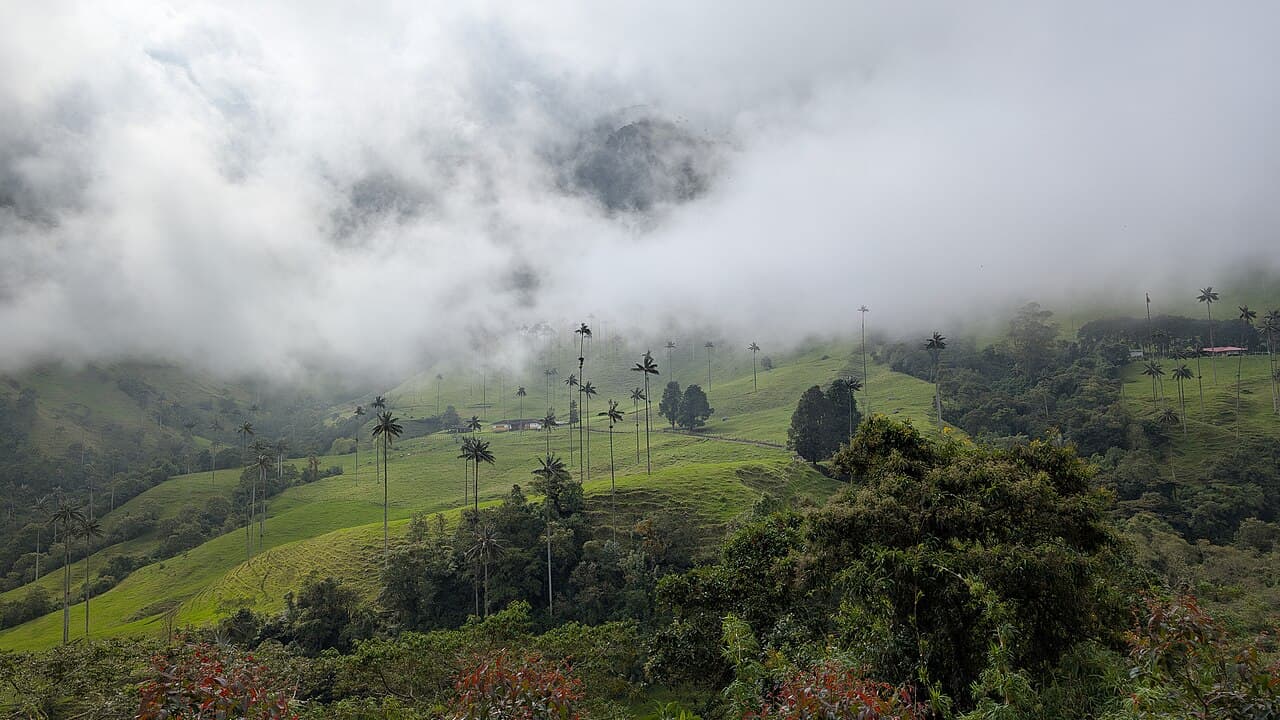
ColombiaPhoto: AmiGueko / Wikimedia Commons (CC BY-SA 4.0)

Colombia

Country · CO · COP · America/Bogota

This information may change. Always check the official source.Last verified: August 2026 by

Most Western passports get 90 days on arrival, capped at 180 days in a calendar year. Check-Mig is free and officially not compulsory, which is exactly why paid lookalike sites make money from it.

  • Colombia gives most visitors 90 days on arrival, written in as a Permiso de Turismo. The officer decides the number, so ask for the full 90.
  • 180 calendar days in one calendar year is the hard ceiling, continuous or not, and the clock resets on 1 January rather than a year after your first entry.
  • Check-Mig is free and officially non-obligatory, filed 72 hours to 1 hour before departure. Airlines still ask for it, so file it - but any site wanting a card number for it is a fake.
  • China, India, Cambodia and Taiwan are visa-free only with a valid US or Schengen visa, and that visa must have at least 180 days left on the day you arrive in Colombia.
  • Get the entry stamp. Crossing a land border without one is the classic way to be fined on the way out, and "nobody stamped it" is not accepted at the airport.
More details

The permission you get at the desk

Colombia gives most visitors 90 days on arrival, and the officer decides the number. It is written into your passport as a Permiso de Turismo, and the limit behind it is annual rather than per-trip.

  • 90 days is the usual grant, but it is discretionary. Ask for the full 90 if you want it, because officers sometimes write less.
  • 180 calendar days in one calendar year is the hard ceiling, continuous or not. Two 90-day trips in the same year use it up completely, and the clock resets on 1 January rather than 12 months after your first entry.
  • Extending costs COP 150,000 under the 2026 tariff schedule, and is free for EU nationals and Ecuadorians. File it online through the FUT at least 5 working days before your current permission expires; approval takes about three working days and arrives by email.
  • Get the entry stamp. Crossing a land border without one is the classic way to be fined on the way out, and the officer at the airport will not take "nobody stamped it" as an answer.

Check-Mig: free, optional, and heavily counterfeited

Migración Colombia describes Check-Mig in its own words as a free service of non-obligatory use. Almost every guide on the internet calls it mandatory. It is not.

  • File it anyway. Airlines still ask for it at check-in, it takes two minutes, and arguing the point at a counter is worse than filling in a form.
  • The window is 72 hours to 1 hour before departure, for entry and for exit, at https://apps.migracioncolombia.gov.co/pre-registro.
  • That URL is the only official one, and it never asks for money. Paid lookalikes charging for a free government form are a standing problem here and Migración has issued alerts about them. If a site wants a card number for Check-Mig, close the tab.

Who needs a visa

Visa and entry in Colombia
NationalityTourism
Australia, Canada, UK, Japan, South Korea, Singapore, USA, Germany, Spain, France, Italy, Netherlands, Poland, RussiaVisa-free, 90 days
China, India, Cambodia, TaiwanVisa-free 90 days only with a valid US or Schengen visa or residence permit
Malaysia, Saudi ArabiaVisa required in advance
  • The US or Schengen visa route has a trap in it: the visa you are relying on must be valid for at least 180 days from the day you arrive in Colombia. A US visa with four months left on it does not work, even though it is still valid.
  • Malaysia lost its exemption in December 2018 and Taiwan lost its in June 2023. Older guides still list both as visa-free.
  • Officially you need an onward ticket and proof of funds. Enforcement is patchy at airports and firmer on the land borders, but it is a stated legal requirement rather than a rumour, and budget airlines do check.
  • Your passport must be valid, and Colombia recommends 6 months beyond your departure. There is no hard 6-month rule in the regulations, but airlines apply one anyway.

Two things at the border that are not about visas

  • Cash above USD 10,000 or the equivalent must be declared, on the way in and on the way out, on Formulario 530. That includes traveller's cheques and bearer instruments, not just notes.
  • San Andrés charges its own tourist card, COP 153,000 in 2026, bought before you board. It is a domestic flight from the mainland and it still has its own entry fee, which surprises people at the gate.
Sources (4)

Colombia's customs interest is in what leaves rather than what arrives, and San Andres runs a customs regime of its own.

  • Departing luggage is searched and often sealed. Bogota and Medellin screen bags for narcotics thoroughly; arrive early and never carry a package for someone else.
  • Coca products may not be taken out. Coca tea is sold openly and is illegal to import almost everywhere else, including the United States and the EU.
  • San Andres is a separate customs zone. The flight from the mainland is checked like an international one and the island has its own duty-free status.
  • Cash equivalent to USD 10,000 or more must be declared on entry and exit.
  • Pre-Columbian gold and archaeological objects are national property and may not be exported.
More details
  • Departing luggage is searched and often sealed. Bogota and Medellin screen bags for narcotics thoroughly; arrive early and never carry a package for someone else.
  • Coca products may not be taken out. Coca tea is sold openly and is illegal to import almost everywhere else, including the United States and the EU.
  • San Andres is a separate customs zone. The flight from the mainland is checked like an international one and the island has its own duty-free status.
  • Cash equivalent to USD 10,000 or more must be declared on entry and exit.
  • Pre-Columbian gold and archaeological objects are national property and may not be exported.
  • The allowance is a carton of cigarettes and a couple of litres of spirits per adult.
Sources (1)

The yellow fever card stopped being paperwork in 2025: national parks including Tayrona check it at the gate and the vaccine has to be 10 days old. Insurance is not required to enter, and you still need it.

  • The yellow fever card is a real gate check now. It is compulsory to enter national parks including Tayrona and the Sierra Nevada, and people are turned away for not having it.
  • The vaccine must have been given at least 10 days before you enter a risk area. That is the number that ruins itineraries - a jab the week you fly does not count.
  • Only Bogotá's tap water is reliably safe. Elsewhere, and certainly on the coast, drink bottled and skip the ice in smaller places.
  • Dengue, Zika, chikungunya and malaria are all present below about 1,700 m - the coast, the Amazon and the Llanos. Repellent and long sleeves at dusk.
  • Private clinics in Bogotá and Medellín are genuinely excellent and billed privately; public hospitals and small-town facilities are poorly equipped. 123 is the ambulance number.
More details

Yellow fever, which is now a real gate check

Colombia declared a yellow fever health emergency in April 2025 and the rules that came with it are still running.

  • To enter the country, a certificate is required only if you are arriving from or transiting a small list of high-risk countries - Angola, Brazil, the Democratic Republic of the Congo and Uganda. Most visitors are not affected.
  • To enter a national park, it is compulsory. Parques Nacionales made the vaccination card mandatory in April 2025 for parks including Tayrona and the Sierra Nevada. People are turned away at the gate for not having it.
  • The vaccine must have been given at least 10 days before you enter a risk area. That is the number that ruins itineraries: a jab the week you fly does not count.
  • Get it before you leave home and carry the yellow card, not a photo of it.

Everything else medical

  • Insurance is not a condition of entry for tourists and you should still treat it as compulsory. Private care is good and it is billed privately.
  • Private clinics in Bogotá and Medellín are genuinely excellent - the country has a serious medical-tourism industry. Public hospitals and anything in a small town are poorly equipped, and rural ambulance cover is unreliable.
  • 123 is the ambulance number, and it works nationally.
  • Only Bogotá's tap water is reliably safe. Elsewhere, and certainly on the coast, drink bottled and skip the ice in the smaller places.
  • Dengue, Zika, chikungunya and malaria are all present below about 1,700 m - the coast, the Amazon and the Llanos. Repellent, long sleeves at dusk, and antimalarials worth discussing with a travel clinic if you are going to the jungle.
  • Altitude affects more people than they expect. Bogotá at 2,640 m, and higher in the páramo. Take the first two days gently.

Pharmacies and medicines

  • Droguerías are on every corner in the cities and thin on the ground rurally. Pharmacists are helpful and many drugs sold on prescription elsewhere are over the counter here.
  • Bring your own medication in its original packaging with a copy of the prescription, and have the prescription written with generic names in Spanish if you might need a refill.
Sources (4)

Bogota

Long-term averages for Bogota: the mean daily high, the mean overnight low and the mean monthly rainfall across 30 years of ERA5 reanalysis data (1995–2024).

DayNight
101520°C0200mmJanFebMarAprMayJunJulAugSepOctNovDecJanuary: Day 19 °C, Night 10 °C, Rain 56 mm. February: Day 20 °C, Night 10 °C, Rain 77 mm. March: Day 19 °C, Night 11 °C, Rain 133 mm. April: Day 19 °C, Night 11 °C, Rain 142 mm. May: Day 18 °C, Night 11 °C, Rain 101 mm. June: Day 18 °C, Night 11 °C, Rain 50 mm. July: Day 19 °C, Night 10 °C, Rain 42 mm. August: Day 19 °C, Night 10 °C, Rain 26 mm. September: Day 20 °C, Night 10 °C, Rain 33 mm. October: Day 19 °C, Night 10 °C, Rain 101 mm. November: Day 19 °C, Night 10 °C, Rain 124 mm. December: Day 19 °C, Night 10 °C, Rain 77 mm
Show the monthly table
Bogota
MonthDay (°C)Night (°C)Rain (mm)
January191056
February201077
March1911133
April1911142
May1811101
June181150
July191042
August191026
September201033
October1910101
November1910124
December191077

Medellin

Long-term averages for Medellin: the mean daily high, the mean overnight low and the mean monthly rainfall across 30 years of ERA5 reanalysis data (1995–2024).

DayNight
15202530°C0500mmJanFebMarAprMayJunJulAugSepOctNovDecJanuary: Day 26 °C, Night 16 °C, Rain 125 mm. February: Day 26 °C, Night 16 °C, Rain 157 mm. March: Day 26 °C, Night 16 °C, Rain 254 mm. April: Day 26 °C, Night 17 °C, Rain 312 mm. May: Day 26 °C, Night 17 °C, Rain 311 mm. June: Day 26 °C, Night 16 °C, Rain 211 mm. July: Day 26 °C, Night 16 °C, Rain 165 mm. August: Day 27 °C, Night 16 °C, Rain 181 mm. September: Day 26 °C, Night 16 °C, Rain 228 mm. October: Day 25 °C, Night 17 °C, Rain 299 mm. November: Day 25 °C, Night 17 °C, Rain 280 mm. December: Day 25 °C, Night 17 °C, Rain 185 mm
Show the monthly table
Medellin
MonthDay (°C)Night (°C)Rain (mm)
January2616125
February2616157
March2616254
April2617312
May2617311
June2616211
July2616165
August2716181
September2616228
October2517299
November2517280
December2517185

Cartagena

Long-term averages for Cartagena: the mean daily high, the mean overnight low and the mean monthly rainfall across 30 years of ERA5 reanalysis data (1995–2024).

DayNight
20253035°C0500mmJanFebMarAprMayJunJulAugSepOctNovDecJanuary: Day 32 °C, Night 24 °C, Rain 9 mm. February: Day 33 °C, Night 25 °C, Rain 7 mm. March: Day 33 °C, Night 25 °C, Rain 18 mm. April: Day 32 °C, Night 25 °C, Rain 72 mm. May: Day 30 °C, Night 25 °C, Rain 166 mm. June: Day 30 °C, Night 25 °C, Rain 172 mm. July: Day 30 °C, Night 25 °C, Rain 156 mm. August: Day 30 °C, Night 25 °C, Rain 181 mm. September: Day 30 °C, Night 25 °C, Rain 191 mm. October: Day 29 °C, Night 25 °C, Rain 256 mm. November: Day 29 °C, Night 24 °C, Rain 205 mm. December: Day 30 °C, Night 25 °C, Rain 61 mm
Show the monthly table
Cartagena
MonthDay (°C)Night (°C)Rain (mm)
January32249
February33257
March332518
April322572
May3025166
June3025172
July3025156
August3025181
September3025191
October2925256
November2924205
December302561
Sources (1)

Ask for the foreigner IVA exemption at check-in and a hotel room drops 19%. Medellín is the one market under real pressure, with the city inspecting short-term lets in El Poblado and a national registration crackdown running alongside it.

  • Ask for the foreigner IVA exemption at check-in with your passport and evidence of entry, and a hotel room drops 19%.
  • Cartagena inside the walls is a different market entirely, priced for cruise passengers and weddings. Getsemaní is ten minutes away, costs a fraction and is more fun.
  • Medellín splits between El Poblado and Laureles. Laureles is quieter, cheaper and where more locals live, and is the better stay for most people.
  • Book ahead around the puentes. Colombia has 18 public holidays and most are shifted to Mondays, so long weekends are constant and they fill Salento and Guatapé.
  • Medellín is actively inspecting short-term lets in El Poblado. The practical risk to you is a cancelled booking, so have a second option and prefer hosts with a long history.
More details

Prices and where they bite

Colombia is cheap to sleep in apart from two places: Cartagena's walled city and the nicer half of El Poblado.

  • Hostels are excellent and everywhere, and the country has one of the better hostel scenes in South America. Salento, Minca, Guatapé and Santa Marta all run on them.
  • Cartagena inside the walls is a different market entirely from the rest of the country, priced for cruise passengers and weddings. Getsemaní, a ten-minute walk away, costs a fraction and is more fun.
  • Medellín splits between El Poblado, which is where the money and the nightlife and the foreigners are, and Laureles, which is quieter, cheaper and where more locals actually live. Laureles is the better stay for most people.
  • Book ahead around the puentes. Colombia has 18 public holidays and most are shifted to Mondays, so long weekends are constant and they empty the good places in Salento and Guatapé.

Claim the tax exemption

  • A non-resident foreigner does not pay the 19% IVA on a hotel room. Say so at check-in, hand over your passport and evidence of your entry to Colombia, and the hotel applies it.
  • It is the hotel's job to do the paperwork, and the larger ones do it automatically. A small guesthouse may never have been asked; it is worth asking anyway.

Short-term rentals are being squeezed

  • Medellín is inspecting apartment buildings in El Poblado, having moved from responding to complaints to going out and looking. Residential blocks are pushing for a municipal decree that operators say would end Airbnb in the city.
  • Nationally, accommodation must hold a Registro Nacional de Turismo entry, and a 2026 ministry decree tightened how that registration is verified.
  • The practical risk to a visitor is a cancelled booking, not a fine. If you are relying on a private apartment in Medellín, have a second option and prefer hosts with a long history.
Sources (3)

Claro has the coverage, Movistar and Tigo are fine in cities, and WOM is the cheap one. The rule nobody warns you about is IMEI registration: a foreign handset on a Colombian SIM has 20 days before the network can cut it off.

  • Claro has coverage nobody else matches once you leave the main corridor - the coffee region, the Guajira, the smaller Caribbean towns. Movistar and Tigo are fine in the big cities, WOM is city-only.
  • Colombia keeps a national registry of handset IMEIs and an unregistered phone gets cut off. You have 20 days from activating a local line to register yours.
  • Ask the assistant explicitly to register the IMEI when you buy the SIM. It is a two-minute job at the counter and an unfixable problem from a hostel in Salento.
  • Roaming on your own foreign SIM is unaffected - the rule bites only when a Colombian line is in the phone.
  • Claro and WOM sell prepaid eSIM, and Saily covers Colombia at USD 16.99 for 5 GB over 30 days. For a fortnight that difference is not worth the errand.
More details

Four networks, all cheap by European standards, and one piece of local bureaucracy that catches people who stay more than a couple of weeks.

  • Claro is the biggest and has the coverage nobody else matches once you leave the main corridor - the coffee region, the Guajira, the smaller Caribbean towns.
  • Movistar and Tigo are both perfectly good in Bogotá, Medellín, Cali and Cartagena and noticeably thinner outside them.
  • WOM is the price fighter, with prepaid packages starting at a few thousand pesos. Coverage is city-only in practice.
  • Expect a small five-figure sum in pesos for a tourist data package, and very little for the SIM itself. Mobile data is one of the few things in Colombia that is cheap for a visitor rather than expensive.

The IMEI rule

Colombia keeps a national registry of handset IMEIs, and a phone that is not on it can be cut off. This is the thing that goes wrong for people who buy a local SIM.

  • You have 20 days from activating the line to register the handset's IMEI. Registration is free and the shop that sells you the SIM will normally do it on the spot if you ask.
  • A handset the network reads as having an invalid IMEI can be blocked in 48 hours, and a non-homologated one in 45 days.
  • Ask the assistant explicitly to register the IMEI when you buy. It is a two-minute job at the counter and an unfixable problem from a hostel in Salento.
  • Roaming on your own foreign SIM is not affected - the rule bites only when a Colombian line is in the phone.

eSIM and buying

  • Claro and WOM both sell prepaid eSIM, which is the least painful route for a short trip. Saily covers Colombia too, at USD 4.99 for 1 GB over 7 days or USD 16.99 for 5 GB over 30 days, and for two weeks that difference is not worth the errand.
  • Bring your passport. Registering the line to a document is routine here.
  • Buy in an official shop, not from a street stall. Claro, Movistar and Tigo all have branches in every mall, and the airport counters at Bogotá and Medellín sell tourist packages.
Sources (4)

Colombian sockets are Type and at 120 V, the American standard.

  • American and Canadian plugs fit straight in. European, British and Australian ones need an adapter.
  • 120 V is the constraint. European 230 V-only appliances will not run properly here, adapter or not.
  • Unearthed two-slot sockets are common in older housing and cheaper hotels.
  • Neighbouring countries differ sharply: Ecuador is also 120 V, but Peru and Venezuela are not the same pairing, and Brazil changes voltage by region.
  • Chargers marked 100-240 V are fine everywhere, which covers phones, laptops and cameras.
More details

Sockets in Colombia are Type and at 120 V, 60 Hz - the American standard, with earthed Type in newer buildings.

  • American and Canadian plugs fit straight in. European, British and Australian ones need an adapter.
  • 120 V is the constraint. European 230 V-only appliances will not run properly here, adapter or not.
  • Unearthed two-slot sockets are common in older housing and cheaper hotels.
  • Neighbouring countries differ sharply: Ecuador is also 120 V, but Peru and Venezuela are not the same pairing, and Brazil changes voltage by region.
  • Chargers marked 100-240 V are fine everywhere, which covers phones, laptops and cameras.
Sources (1)

US sockets at 120V, no clock change ever, and no seasons - only altitude, which decides whether a city is 12 degrees or 32. There are 18 public holidays and most are moved to Monday.

  • Sockets are type and at 120V, 60Hz (often written 110V, same thing), the same as the United States. European and UK devices need an adapter, and anything without a universal power supply needs a converter.
  • There are no seasons, only altitude. Bogotá sits around 8 to 19 degrees every month of the year and Cartagena near 31 - one trip can need a fleece and swimwear on the same day.
  • Time is UTC-5 all year and Colombia has never used daylight saving, so the gap to Europe changes twice a year and the gap to New York does not.
  • Colombia has 18 public holidays and most are moved to the following Monday, manufacturing long weekends called puentes that jam the roads and fill the coffee towns.
  • Greet people before you ask for anything. A "buenos días" first is not optional politeness here - going straight to the request reads as rude.
More details
  • Power: Type and sockets at 120V, 60Hz - the same as the United States. You will see it written as 110V as often as 120V; it is the same supply and nothing you plug in can tell the difference. European and UK devices need an adapter and, for anything without a universal power supply, a converter.
  • Time: UTC-5 all year. Colombia has never used daylight saving, so the gap to Europe changes twice a year and the gap to New York does not.
  • There are no seasons, only altitude. Bogotá at 2,640 m sits around 8 to 19 degrees every month of the year; Cartagena at sea level sits near 31 every month. A single trip can need a fleece and swimwear on the same day.
  • Wet and dry matter more than warm and cold. April to May and October to November are the rainier stretches in the Andes.
  • Language: Spanish, and much less English than you would expect for a country this used to visitors. Outside hotel receptions and Medellín's expat bars, assume none. Colombian Spanish is famously clear and slow, which makes it a good place to try.
  • Tap water is safe in Bogotá and unreliable elsewhere.
  • Shops generally open 09:00 or 10:00 to 19:00 or 20:00, and malls run later and open on Sundays.
  • WhatsApp is how the country communicates. A restaurant, a guide or a landlord will answer it instantly and ignore an email.

Holidays, and why they matter

  • Colombia has 18 public holidays, among the most in the world, and a new one was added on 13 July in 2026.
  • Most are moved to the following Monday under the Ley Emiliani, which manufactures long weekends called puentes. On a puente the roads out of Bogotá and Medellín jam, the coffee towns fill and prices rise.
  • Check the calendar before booking anything in Salento, Guatapé or Villa de Leyva.

The dry law

  • Colombia bans alcohol sales around elections - the ley seca - typically from the evening before until the day after. All three of the 2026 national votes have already passed (March, May and June), so no further national dry period is expected this year.
  • Municipalities can still declare one locally for their own reasons. If the shop refuses to sell you a beer for no apparent reason, that is why.

Small things that help

  • Greet people before you ask for anything. A "buenos días" before the question is not optional politeness here; going straight to the request reads as rude.
  • Colombians are direct about warmth and indirect about refusal. "Maybe later" usually means no.
  • Carry small notes. Breaking a 50,000 for a COP 3,000 purchase is a genuine problem for a street vendor.
Sources (3)

Foreign tourists are legally exempt from the 19% IVA on hotel rooms, which is worth real money over a two-week trip. The 10% tip on your restaurant bill is a cap, not an obligation, and the restaurant has to ask before adding it.

  • People drop the thousands in speech: "veinte" for a taxi means 20,000, and a menu that says 25 means COP 25,000.
  • Foreign tourists do not pay the 19% IVA on hotel accommodation. Show your passport and proof of entry at check-in - the chains all know how, small guesthouses may not.
  • The 10% propina is a cap and it is optional. The restaurant must ask before adding it, and you may decline or reduce it; being told it is compulsory is a well-worn trick with foreigners.
  • Use ATMs inside a bank, a supermarket or a mall, during opening hours. That is the FCDO's wording, aimed at both skimming and the walk away from the machine.
  • Cards work in the cities and not much beyond. Small towns, street food, route buses and the coffee-farm economy are cash, and the menú del día is the cheapest good lunch in Latin America.
More details

The peso, and the missing thousands

Colombia uses the peso (COP), and the numbers are large enough that people drop the thousands in speech. "Veinte" for a taxi means 20,000, not 20. A menu that says 25 means COP 25,000.

  • Cards work in cities and not much beyond them. Bogotá, Medellín, Cartagena and Cali are fine. Small towns, street food, route buses and the coffee-farm economy are cash.
  • Use ATMs inside a bank, a supermarket or a mall, during opening hours. That is the FCDO's wording, not a nervous suggestion, and it is aimed at both skimming and the walk away from the machine.
  • Decline dynamic currency conversion. If the screen offers to bill you in your own currency, say no and take pesos; the markup is several per cent and it is pure loss.
  • Change money in a casa de cambio or a bank, never on the street. Street changers in Cartagena and on the Venezuelan border are running a short-change routine, not a business.

The taxes, which are worth understanding

  • Foreign tourists do not pay the 19% IVA on hotel accommodation. This is real, it is in article 481 of the tax code, and DIAN reconfirmed it in 2025. Show your passport and your proof of entry at check-in and the hotel zero-rates the room. Not every small guesthouse knows how; the chains all do.
  • Restaurants charge either 8% consumption tax or 19% IVA, never both. The 8% applies to ordinary restaurants above the turnover threshold; franchises charge 19% instead. Small independent places charge neither.
  • The 10% propina is a cap and it is optional. Under Ley 1935 de 2018 the restaurant must ask you before adding it, and you may decline it, reduce it or have it removed. It goes to the staff who served you, so tipping when the service was good is the decent thing - but being told it is compulsory is a well-worn trick with foreigners.

What things cost

  • This is an inexpensive country by European or North American standards, and the gap widens the further you get from Cartagena's walled city, which is priced like a resort.
  • A city bus or metro ride is COP 3,550 to COP 3,900, the same order everywhere.
  • The menú del día - soup, a main, a juice - is the cheapest good lunch in Latin America and the thing to eat at midday.
  • Cartagena's old town is the outlier, where a coffee and a plate can cost several times what the same thing costs in Bogotá four hours away.
  • Cash above USD 10,000 must be declared at customs on the way in and out.
Sources (4)

Everyday prices

Typical prices in Colombian peso (COP), averaged across the country by Numbeo and read on 12 August 2026. Tick Convert prices above the table to see every amount in your own currency.

Everyday prices
ItemTypical price
Inexpensive restaurant meal25,000 COP
Dinner for two, mid-range, three courses130,000 COP
Cappuccino8,150 COP
Local draught beer, 0.5 l7,250 COP
Bottled water, 0.33 l3,040 COP
Public transport, one-way ticket3,500 COP
Taxi, starting fare7,000 COP
Petrol, 1 litre4,170 COP
Cigarettes, pack of 20 (Marlboro)12,700 COP
Average net monthly salary1,930,000 COP

These are country-wide averages, not a price list: tourist districts, airports and islands sit well above them, and small towns below. The salary line is there for proportion - it is what people living here actually earn.

Sources (1)

Airport guides for Colombia4

One page per airport: the routes into town, what they cost and the trap particular to that arrival.

See all 4 airports

Bogotá has a COP 3,550 bus to the airport that needs a card you have to buy first, and a taxi with an COP 8,000 airport surcharge on top of the meter. Medellín is the real shock: the airport is a 35 km mountain drive from the city.

  • Bogotá's airport bus is COP 3,550 and cannot be paid in cash - you need a Tullave card, sold and loaded at the station. Turning up with notes is the single most common mistake here.
  • Take the authorised taxi rank inside the terminal: the meter plus a COP 8,000 airport surcharge, with a further COP 3,800 between 20:00 and 05:00 and on Sundays.
  • Medellín's airport is not in Medellín. It is at Rionegro, about 35 km up in the mountains, and an official taxi is COP 132,000.
  • Medellín's shared airport bus is COP 20,000, a sixth of the taxi price, running to the San Diego area near the centre - the obvious choice if you are not carrying much.
  • Cartagena is the easiest arrival in the country, barely 3 km from the walled city at COP 12,800 to the Centro Histórico. El Dorado sits at 2,640 m, so take the first hours slowly.
More details
Bogotá El Dorado (BOG)

El Dorado sits 2,640 m above sea level, and whatever you do first will feel harder than it should. Take the arrival slowly.

Transport from the airport in Colombia
OptionPriceNotes
TransMilenio K86 or M86COP 3,550Stops signed "bus satélite aeroportuario" outside entrances 1 and 8, via Portal El Dorado
Authorised taxiMeter plus COP 8,000 airport surchargeMinimum fare COP 8,000; a further COP 3,800 between 20:00 and 05:00 and on Sundays
Ride-hailing appApp priceLegal grey area, see the getting-around section
  • The bus fare cannot be paid in cash. You need a Tullave card, sold and loaded at the station. Turning up with notes gets you nowhere, which is the single most common airport mistake here.
  • M86 runs roughly 04:30 to 23:00 Monday to Saturday and stops earlier on Sundays. Outside those hours it is a taxi.
  • Take the authorised taxi rank inside the terminal, not an offer in the hall. The 2026 tariff decree fixed the surcharges above; a driver quoting a flat "tourist price" is not using them.
Medellín José María Córdova (MDE)

The airport is not in Medellín. It is at Rionegro, up in the mountains, and the descent into the city is a genuine journey rather than a transfer.

  • Roughly 35 km via Las Palmas, or about 24 km through the Túnel de Oriente, which is the faster road.
  • Official taxi COP 132,000 for a standard car in 2026, rising to about COP 143,100 for the luxury category.
  • The shared airport bus costs COP 20,000 since 1 January 2026 and runs to the San Diego and Nutibara area near the centre. It is a sixth of the taxi price and the obvious choice if you are not carrying much.
  • Olaya Herrera (EOH) is the small airport inside the city itself, used for regional flights, and is ten minutes from El Poblado.
The coastal airports
  • Cartagena (CTG) is barely 3 km from the walled city. The official 2026 fares are COP 12,800 to the Centro Histórico and COP 21,800 to Bocagrande, with a COP 1,100 surcharge after 19:00. This is the easiest airport arrival in the country.
  • Santa Marta (SMR) works on the meter: COP 6,260 to start and COP 121 per 100 metres, with a COP 8,600 minimum, under the January 2026 decree.
  • Cali (CLO) is about 20 km out at Palmaseca, with a shuttle bus to the city terminal and taxis at the rank.

Everywhere, agree that the meter is running or that the fare is the published one before the car moves.

Sources (4)

Getting around the city, and between them

Bogotá and Medellín both run good, cheap card-only transit, and both cost about COP 3,500 to COP 3,800 a ride. Between cities, flying usually beats the ten-hour bus for not much more money.

  • All three city transit systems need a card and drivers take no cash: Tullave in Bogotá, Cívica in Medellín, at COP 3,550 to COP 3,900 a ride. Buy it on your first day.
  • Bogotá's metro is being built, not open - Line 1 was about 80% complete in mid-2026 with service projected for 2028. Until then the city runs on buses.
  • TransMilenio at rush hour is genuinely crushing and is where pickpocketing happens. Travel outside 06:30 to 08:30 and 17:00 to 19:00 if you can.
  • Flying usually beats the bus between cities: Bogotá to Medellín is about 11 hours by road against an hour in the air, and the coach still costs COP 77,000 to COP 85,000.
  • Never hail a taxi in the street - book by app or through your hotel. A licensed Colombian taxi is yellow with white plates, and sitting in the front is the local convention in a ride-hailing car.
More details

In the cities

Getting around the city, and between them
CitySystemFare 2026
BogotáTransMilenio, SITP buses, TransMiCableCOP 3,550
MedellínMetro, Metrocable, tram, busesCOP 3,820
CartagenaTranscaribeCOP 3,900
  • All three need a card. Bogotá uses Tullave, Medellín uses Cívica, and drivers do not take cash. Buy the card at any station on your first day.
  • Medellín's occasional card costs more per ride, COP 4,400, so if you are staying more than two days get the personalised Cívica.
  • The Arví cable is priced separately and foreigners pay far more: about COP 26,700 on the general and visitor tariff against COP 11,900 with a personalised card. It is worth knowing before you assume it is another metro ride.
  • Bogotá's metro is being built, not open. Line 1 was about 80% complete in mid-2026 with commercial service projected for 2028. Until then the city runs on buses.
  • TransMilenio at rush hour is genuinely crushing, and it is where pickpocketing happens. Travel outside 06:30 to 08:30 and 17:00 to 19:00 if you can, and keep your phone in a pocket you can feel.

Between cities

  • Flying is usually the right answer. Bogotá to Medellín is roughly 11 hours by road and an hour in the air, and the buses are not that cheap: a good Bogotá to Medellín coach runs COP 77,000 to COP 85,000. Avianca, LATAM, Wingo and Satena cover the network between them.
  • The coaches are comfortable and the terminals are organised. Expreso Bolivariano, Copetran and Expreso Brasilia are the operators you will meet most. Book at the terminal or online.
  • Overnight buses on mountain roads are a poor trade. You do not see the country, the road is the interesting part, and the seat is not worth the saving.

Taxis and ride-hailing

  • Uber, DiDi, Cabify and inDrive all operate, and none of them is legally regulated. They have run in a grey zone for years; a restrictive bill was going through Congress in 2026 that would fine platforms per trip. In practice they work and Colombians use them constantly.
  • Do not hail a taxi in the street. The FCDO advice is to book by phone, by app or through your hotel. A licensed Colombian taxi is yellow with white plates.
  • Sitting in the front is the local convention in a ride-hailing car, because the driver is pretending you are a friend rather than a fare. Follow it.
  • Renting a car is for the coffee region and not much else. City driving is aggressive, parking is scarce and Bogotá's pico y placa restricts which plates may drive on which days.

Apps and platforms

Moovit or Google Maps for the buses, Rappi for everything delivered, and the Migración Colombia app for the entry form. WhatsApp is how the whole country talks to businesses.

  • WhatsApp is not optional. Hotels, tour operators, drivers and restaurants all run on it - a Colombian business answers WhatsApp in minutes and email in days.
  • Google Maps and Moovit both have Bogotá and Medellín transit built in, and Moovit is better at the SITP bus routes Maps sometimes misses.
  • Compare two ride-hailing apps before you book. Uber, DiDi, Cabify and inDrive all run in the large cities and the prices differ more than you would expect.
  • Rappi is the Colombian delivery app for food, pharmacy and groceries, and it is everywhere.
  • Download the city map offline before you land. You will want the map more than you will want to unlock an expensive phone on a street corner.
More details
  • Check-Mig - https://apps.migracioncolombia.gov.co/pre-registro - The official entry and exit form. Free, and the only URL worth trusting.
  • Google Maps and Moovit - Both have Bogotá and Medellín transit built in, and Moovit is better at the SITP bus routes that Maps sometimes misses.
  • WhatsApp - Not optional. Hotels, tour operators, drivers and restaurants all run on it. A Colombian business will answer WhatsApp in minutes and email in days.
  • Rappi - The Colombian delivery app, for food, pharmacy and groceries. It was born here and it is everywhere.
  • Uber, DiDi, Cabify, inDrive - Ride-hailing in every large city. Compare two, the prices differ more than you would expect.
  • Tullave and Cívica - Balance and top-ups for the Bogotá and Medellín fare cards.
  • Maps offline - Download the city before you land. You will want the map more than you will want to unlock an expensive phone on a street corner.
Sources (7)

Colombian peajes are frequent and expensive, mountain roads are slow, and Bogota bans cars by plate number on weekdays.

  • Pico y Placa restricts cars by the last digit of the plate on weekday mornings and evenings in Bogota, Medellin and Cali. It applies to hire cars, and the rules change from city to city.
  • Peajes are frequent and not cheap; the drive from Bogota to Medellin passes through several.
  • Mountain roads are the norm. Bogota to Medellin is 420 km and eight to nine hours behind lorries on switchbacks.
  • The alcohol limit is effectively zero, with the toughest penalties in the region including licence suspension for a first offence.
  • Night driving between cities is discouraged by official advice, and some rural routes are avoided entirely.
More details

Frequent tolls, slow mountain roads, and a plate-based driving ban in the big cities.

  • Pico y Placa restricts cars by the last digit of the plate on weekday mornings and evenings in Bogota, Medellin and Cali. It applies to hire cars, and the rules change from city to city.
  • Peajes are frequent and not cheap; the drive from Bogota to Medellin passes through several.
  • Mountain roads are the norm. Bogota to Medellin is 420 km and eight to nine hours behind lorries on switchbacks.
  • The alcohol limit is effectively zero, with the toughest penalties in the region including licence suspension for a first offence.
  • Night driving between cities is discouraged by official advice, and some rural routes are avoided entirely.
Sources (1)

The honest version: the cities tourists visit are fine with ordinary care, whole departments are not, and the specific thing killing foreign visitors right now is being drugged after meeting someone on an app.

  • "No dar papaya" is the rule Colombians actually teach - do not hand anyone the opportunity. Phone out on a street corner, laptop in a café window, a good watch on a bus: that is papaya.
  • Criminals use dating apps to find foreigners travelling alone, and this is the single most dangerous thing a visitor can do here. The method is sedation, not force, and some victims do not wake up.
  • Accept nothing from a stranger - not a drink, a sweet, a cigarette or a leaflet. Scopolamine leaves you compliant and amnesiac, and if you think you have been dosed it is a treatable medical emergency.
  • Express kidnapping is common and criminals often pose as taxi drivers, selecting victims near ATMs. People have been killed for resisting - hand over the phone and the cash.
  • Whole departments are off-limits while the tourist areas are not. Catatumbo, most of Arauca, Chocó, Buenaventura and anywhere within 5 km of the Venezuelan border are on the FCDO's do-not-travel list.
More details

The rule Colombians actually teach

"No dar papaya" - do not hand anyone the opportunity. Phone out on a street corner, laptop visible in a café window, a good watch on a bus: that is papaya. The country is not waiting to rob you, but it will not ignore an invitation.

The one that is genuinely killing people

  • Criminals use dating apps to find foreigners travelling alone. The FCDO's language is that they "identify and lure foreign nationals who are travelling alone and looking to meet local people". This is the single most dangerous thing a visitor can do in Colombia right now.
  • The method is sedation, not force. Victims are drugged in a bar, a club or an apartment and wake up robbed, and some do not wake up. The US Embassy in Bogotá has an alert page devoted to it and the pattern is concentrated in Medellín, Bogotá and Cartagena.
  • If you do meet someone, meet in daylight in a public place, tell someone where you are, and do not go back to an apartment. Do not let a drink out of your sight.

Scopolamine and spiked drinks

  • Scopolamine (burundanga) temporarily incapacitates you and leaves you compliant and amnesiac. The FCDO lists the vectors as food, drinks, cigarettes, aerosols and even paper flyers.
  • Accept nothing from a stranger - not a drink, not a sweet, not a cigarette, not a leaflet pushed into your hand.
  • If you think you have been dosed, get to a hospital. It is a medical emergency and the effects are treatable.

Robbery, taxis and express kidnapping

  • Pickpocketing, mugging and armed robbery are a problem in Bogotá, Medellín, Cali and along the Caribbean coast. British nationals have been robbed at gunpoint in La Candelaria, the Bogotá old town everyone visits.
  • Express kidnapping is common, and the FCDO notes that criminals often pose as taxi drivers and select victims near ATMs, then drive them between machines. People have been killed for resisting - hand over the phone and the cash.
  • Never hail a cab off the street. Book by app or through your hotel. A licensed taxi is yellow with white plates.
  • Carry a decoy. A small amount of cash in an accessible pocket ends most street robberies quickly.

Where not to go at all

Large parts of Colombia are off-limits and the tourist parts are not among them. The FCDO advises against all but essential travel to, among others, Catatumbo, most of Arauca, Chocó outside Quibdó, Nuquí, Bahía Solano and Capurganá, western Valle del Cauca including Buenaventura, western Cauca, the Pacific regions of Nariño, Urabá and Bajo Cauca in Antioquia, southern Bolívar, most of Guaviare, and within 5 km of the Venezuelan and Ecuadorian borders.

  • Do not cross into Venezuela by land anywhere.
  • The famous sites are explicitly carved out: Caño Cristales is fine flown in from La Macarena, Capurganá is fine, and the Lost City trek is fine on an organised tour. Read the carve-outs rather than the headline.

Weather, ground and altitude

  • Bogotá is at 2,640 m. Give the first 24 to 48 hours to it: less alcohol, less exertion, more water. People blame the food for what is actually altitude.
  • Volcanoes are monitored and occasionally active. Nevado del Ruiz has sat on a yellow alert for years and Puracé, near Popayán, went to orange in August 2026. Check the Servicio Geológico Colombiano before planning anything in those parks.
  • Protests start at short notice and can turn violent. Roadblocks are a normal protest tactic here and can strand you for a day. Do not try to drive through one.
Sources (4)

One number for everything: 123. If you are robbed you can file the police report online without visiting a station, and your insurer will want it. Losing a passport means an exit permit as well as a new document.

  • 123 is the only number you need - police, ambulance, fire and rescue, national, free and around the clock.
  • Do not count on a fast ambulance outside a city. In the mountains and smaller towns the practical answer is a car to the nearest clinic.
  • File a robbery report online the same day through the Policía Nacional's A Denunciar or CAI Virtual - no station visit needed, and your insurer will require it.
  • A lost passport takes three steps: the police report, an emergency travel document from your embassy in Bogotá, and then a salvoconducto de salida from Migración Colombia, COP 88,000.
  • Without that exit permit you cannot legally leave, because your entry record is attached to a document you no longer have. It is the step people forget.
More details

The number

Emergency information in Colombia
NumberService
123Everything - police, ambulance, fire and rescue. National, free, around the clock
  • 123 is the only number you need to remember. It is the Número Único de Seguridad y Emergencias and it covers the whole country from any phone.
  • Do not count on a fast ambulance outside a city. In the mountains and the smaller towns, the practical answer is often a car to the nearest clinic.
  • An operator may not speak English. Have your address written down, or hand the phone to someone at the hotel.

If you are robbed

  • File a denuncia, and file it online. The Policía Nacional runs A Denunciar and CAI Virtual, both of which take a report from a foreigner without a station visit.
  • Your insurer will require it, and getting one after you have left the country is very difficult. Do it the same day.
  • Block your cards through your own bank's app first. That is faster than any hotline.

If you lose your passport

Three steps, in this order, and the third one is the one people forget:

  1. File the police report.
  2. Get an emergency travel document from your embassy. Most are in Bogotá.
  3. Apply to Migración Colombia for a salvoconducto de salida - an exit safe-conduct, COP 88,000 in 2026. Without it you cannot legally leave, because your entry record is attached to a document you no longer have.

Before anything goes wrong

  • Photograph your passport, your entry stamp and your Check-Mig confirmation and keep them somewhere that is not your phone.
  • Write down your insurer's emergency number rather than relying on finding it in an inbox.
  • Tell someone your plan if you are going anywhere remote, and check the FCDO regional list before you go.
Sources (3)