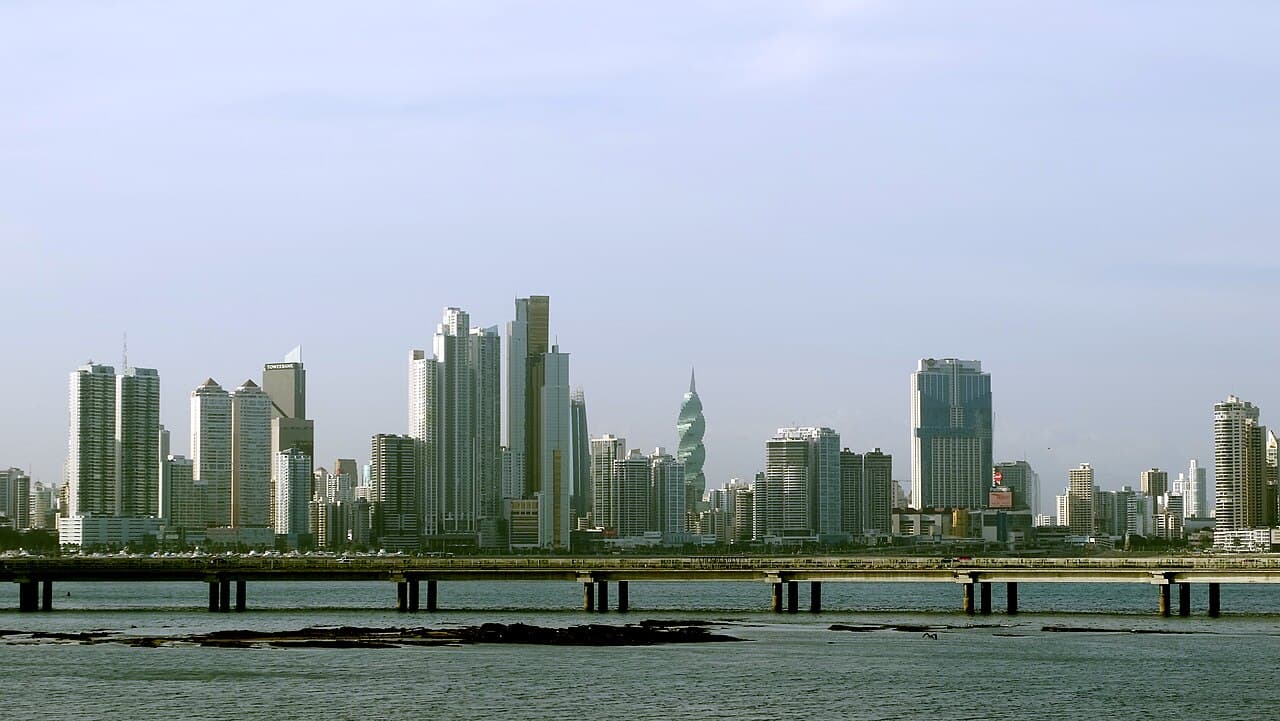
PanamaPhoto: randreu / Wikimedia Commons (CC BY 3.0)

Panama

Country · PA · PAB · America/Panama

This information may change. Always check the official source.Last verified: August 2026 by

Ninety days for most Western passports, but the border can ask to see 1,000 dollars and an onward ticket, and there is a declaration form to fill in online.

  • Most Western passports get 90 days, granted on arrival - British, American, Canadian, Australian, and the EU. It is not extendable in the ordinary way; leaving and returning is the usual route.
  • Everyone completes an immigration and customs declaration. It can be done online in advance at , which is faster than filling in paper on the plane.
  • A valid visa or residence from Canada, the USA, the UK, Ireland, an EU state, Australia, Japan, South Korea or Singapore admits you without a Panamanian visa - on three conditions: it must be genuine and properly issued, it must already have been used in the country that issued it, and it must have at least 6 months left to run.
More details

How long, and what the desk asks for

  • Most Western passports get 90 days, granted on arrival - British, American, Canadian, Australian, and the EU. It is not extendable in the ordinary way; leaving and returning is the usual route.
  • Your passport must be valid at least 6 months beyond the day you leave.
  • You may be asked to prove you have 1,000 US dollars, or to show a credit card. This is a real requirement, not a formality on paper, and it is asked more often at land borders than at Tocumen.
  • A return or onward ticket may be demanded, especially arriving overland from Costa Rica. Border staff at Paso Canoas apply this seriously.

The declaration form

  • Everyone completes an immigration and customs declaration. It can be done online in advance at , which is faster than filling in paper on the plane.
  • The site is frequently unreachable from outside Panama. If it will not load, that is normal and not your connection - the paper form handed out on the aircraft is still accepted.
  • If it does work, do it before you fly and screenshot the confirmation rather than relying on airport wi-fi with a queue behind you.

If your passport needs a visa

  • A valid visa or residence from Canada, the USA, the UK, Ireland, an EU state, Australia, Japan, South Korea or Singapore admits you without a Panamanian visa - on three conditions: it must be genuine and properly issued, it must already have been used in the country that issued it, and it must have at least 6 months left to run.
  • This is the single most useful rule in Panama's visa system and it is why so many travellers on "visa-required" passports arrive here without one.
  • Panama does not publish a consolidated list in English. If your passport is not one of the obviously exempt ones, confirm with the nearest Panamanian consulate before booking rather than trusting a summary.

Two things about the Darien

  • The Darien Gap is not a border crossing. There is no road between Panama and Colombia, and the jungle route is a lethal migration corridor, not a travel option.
  • Overland from South America means flying or a boat. Plan the itinerary around that rather than discovering it in Panama City.
Sources (3)

Panama banned e-cigarettes outright, and the Colón Free Zone next door does not extend its duty-free status to your suitcase.

  • Electronic cigarettes and vaping liquids are prohibited. Importing, selling or using them is banned, and devices are confiscated at Tocumen.
  • The Colón Free Zone is a bonded area, not a duty-free allowance. Goods bought there are cleared and taxed when they enter Panama proper or when you fly out with them.
  • The allowance is a carton of cigarettes and a small quantity of spirits per adult, plus a value cap on other goods.
  • Cash equivalent to USD 10,000 or more must be declared in both directions - Panama uses the US dollar alongside the balboa.
  • Pre-Columbian artefacts may not be exported, and molas and other craft work travel without restriction.
More details
  • Electronic cigarettes and vaping liquids are prohibited. Importing, selling or using them is banned, and devices are confiscated at Tocumen.
  • The Colón Free Zone is a bonded area, not a duty-free allowance. Goods bought there are cleared and taxed when they enter Panama proper or when you fly out with them.
  • The allowance is a carton of cigarettes and a small quantity of spirits per adult, plus a value cap on other goods.
  • Cash equivalent to USD 10,000 or more must be declared in both directions - Panama uses the US dollar alongside the balboa.
  • Pre-Columbian artefacts may not be exported, and molas and other craft work travel without restriction.
Sources (1)

Good private hospitals in the capital and very little outside it. The tap water is safe in most of the country, which is unusual in the region.

  • Panama City has good private hospitals and clinics, several with English-speaking staff. Outside the capital, facilities are limited, and on the islands they are minimal.
  • This shapes the whole trip. A serious problem in Bocas del Toro or Guna Yala means being moved to Panama City, and that is what medical evacuation cover is for.
  • Tap water is safe to drink in most of Panama, which is not true of most of Central America and surprises people.
  • Dengue, Zika and chikungunya are present. Dengue is the realistic one, it is urban as well as rural, and the mosquito bites in daylight.
  • 911 for emergencies, 103 for an ambulance.
More details

Care

  • Panama City has good private hospitals and clinics, several with English-speaking staff. Outside the capital, facilities are limited, and on the islands they are minimal.
  • This shapes the whole trip. A serious problem in Bocas del Toro or Guna Yala means being moved to Panama City, and that is what medical evacuation cover is for.
  • Take insurance that covers evacuation, not just treatment.

Water and food

  • Tap water is safe to drink in most of Panama, which is not true of most of Central America and surprises people.
  • The exceptions are rural areas and the islands - Bocas del Toro in particular - where you should follow local advice and drink bottled.

Mosquitoes

  • Dengue, Zika and chikungunya are present. Dengue is the realistic one, it is urban as well as rural, and the mosquito bites in daylight.
  • Malaria risk exists in parts of the country, chiefly the Darien and the Caribbean coast, not in Panama City.
  • Repellent during the day, not just at dusk, is the practical rule here.

Numbers

  • 911 for emergencies, 103 for an ambulance.
  • Yellow fever certificate is required if you are arriving from a country with transmission risk.
Sources (1)

Panama City

Long-term averages for Panama City: the mean daily high, the mean overnight low and the mean monthly rainfall across 30 years of ERA5 reanalysis data (1995–2024).

DayNight
20253035°C0500mmJanFebMarAprMayJunJulAugSepOctNovDecJanuary: Day 30 °C, Night 24 °C, Rain 22 mm. February: Day 30 °C, Night 24 °C, Rain 13 mm. March: Day 31 °C, Night 24 °C, Rain 17 mm. April: Day 31 °C, Night 25 °C, Rain 91 mm. May: Day 29 °C, Night 25 °C, Rain 236 mm. June: Day 29 °C, Night 24 °C, Rain 263 mm. July: Day 29 °C, Night 24 °C, Rain 297 mm. August: Day 29 °C, Night 24 °C, Rain 281 mm. September: Day 29 °C, Night 24 °C, Rain 268 mm. October: Day 28 °C, Night 24 °C, Rain 275 mm. November: Day 28 °C, Night 24 °C, Rain 278 mm. December: Day 29 °C, Night 24 °C, Rain 111 mm
Show the monthly table
Panama City
MonthDay (°C)Night (°C)Rain (mm)
January302422
February302413
March312417
April312591
May2925236
June2924263
July2924297
August2924281
September2924268
October2824275
November2824278
December2924111

Bocas del Toro

Long-term averages for Bocas del Toro: the mean daily high, the mean overnight low and the mean monthly rainfall across 30 years of ERA5 reanalysis data (1995–2024).

DayNight
202530°C0500mmJanFebMarAprMayJunJulAugSepOctNovDecJanuary: Day 27 °C, Night 23 °C, Rain 188 mm. February: Day 27 °C, Night 23 °C, Rain 128 mm. March: Day 27 °C, Night 23 °C, Rain 119 mm. April: Day 28 °C, Night 24 °C, Rain 138 mm. May: Day 28 °C, Night 24 °C, Rain 278 mm. June: Day 28 °C, Night 24 °C, Rain 292 mm. July: Day 28 °C, Night 24 °C, Rain 356 mm. August: Day 28 °C, Night 24 °C, Rain 264 mm. September: Day 28 °C, Night 24 °C, Rain 195 mm. October: Day 28 °C, Night 24 °C, Rain 282 mm. November: Day 27 °C, Night 23 °C, Rain 381 mm. December: Day 27 °C, Night 23 °C, Rain 315 mm
Show the monthly table
Bocas del Toro
MonthDay (°C)Night (°C)Rain (mm)
January2723188
February2723128
March2723119
April2824138
May2824278
June2824292
July2824356
August2824264
September2824195
October2824282
November2723381
December2723315

Boquete

Long-term averages for Boquete: the mean daily high, the mean overnight low and the mean monthly rainfall across 30 years of ERA5 reanalysis data (1995–2024).

DayNight
152025°C01000mmJanFebMarAprMayJunJulAugSepOctNovDecJanuary: Day 24 °C, Night 17 °C, Rain 84 mm. February: Day 24 °C, Night 17 °C, Rain 60 mm. March: Day 25 °C, Night 18 °C, Rain 78 mm. April: Day 25 °C, Night 18 °C, Rain 184 mm. May: Day 24 °C, Night 19 °C, Rain 408 mm. June: Day 24 °C, Night 19 °C, Rain 377 mm. July: Day 24 °C, Night 18 °C, Rain 362 mm. August: Day 24 °C, Night 18 °C, Rain 386 mm. September: Day 24 °C, Night 18 °C, Rain 388 mm. October: Day 24 °C, Night 18 °C, Rain 527 mm. November: Day 23 °C, Night 18 °C, Rain 492 mm. December: Day 23 °C, Night 17 °C, Rain 218 mm
Show the monthly table
Boquete
MonthDay (°C)Night (°C)Rain (mm)
January241784
February241760
March251878
April2518184
May2419408
June2419377
July2418362
August2418386
September2418388
October2418527
November2318492
December2317218
Sources (1)

Where to stay

Casco Viejo for the old city, the banking district for the skyline, and the islands for everything else Panama is famous for.

  • Casco Viejo is the restored colonial quarter - the most attractive place to stay and the most walkable. It sits directly against El Chorrillo and Santa Ana, which the FCDO names as higher-crime areas, so the boundary matters and is worth knowing before you walk home at night.
  • Marbella, Obarrio and Bella Vista are the modern banking district: towers, restaurants, safe, and characterless.
  • Bocas del Toro - Caribbean islands, backpacker economy, water taxis, patchy power and internet. Book somewhere with a generator.
  • Do not let anyone into your accommodation who you did not arrange to meet. The FCDO specifically warns that gangs have used this route to burgle.
More details

Panama City

  • Casco Viejo is the restored colonial quarter - the most attractive place to stay and the most walkable. It sits directly against El Chorrillo and Santa Ana, which the FCDO names as higher-crime areas, so the boundary matters and is worth knowing before you walk home at night.
  • Marbella, Obarrio and Bella Vista are the modern banking district: towers, restaurants, safe, and characterless.
  • Amador Causeway looks out at the canal entrance and the skyline, and is quiet.
  • Avoid basing yourself near Albrook unless the bus terminal is the point.

Out of the city

  • Bocas del Toro - Caribbean islands, backpacker economy, water taxis, patchy power and internet. Book somewhere with a generator.
  • Boquete - highland town, cool, coffee farms, good walking. The one place in Panama where you need a jacket.
  • Guna Yala (San Blas) - the islands are Guna territory with their own rules and their own entry fees. Accommodation is basic cabins; there is no wi-fi and often no running water. This is deliberate.
  • Santa Catalina and Pedasi - Pacific surf towns, small and cash-only.

Practical

  • Do not let anyone into your accommodation who you did not arrange to meet. The FCDO specifically warns that gangs have used this route to burgle.
  • Air conditioning is not a luxury on the coasts. Check it is included rather than assumed.
Sources (1)

Getting online in Panama

Three networks, cheap prepaid SIMs, and coverage that thins out fast once you leave the city and the canal corridor.

  • Three networks cover Panama: +Movil (formerly Cable & Wireless), Tigo and Digicel. All sell prepaid SIMs with a passport, and all have counters or shops at Tocumen.
  • Prepaid data here is cheap by regional standards, and a tourist package covering a week or two costs very little.
  • The reason to have one here is the taxi problem. The FCDO advises against hailing street taxis and points you at ride-hailing apps instead - and those need data from the moment you walk out of arrivals.
  • Install it before you fly and check it activates on the ground; Panama's networks are well supported by the main eSIM providers.
  • Hotels, malls and cafes in Panama City all have it and it is generally fast.
More details

The local SIM

  • Three networks cover Panama: +Movil (formerly Cable & Wireless), Tigo and Digicel. All sell prepaid SIMs with a passport, and all have counters or shops at Tocumen.
  • Prepaid data here is cheap by regional standards, and a tourist package covering a week or two costs very little.
  • Coverage is excellent in Panama City, along the canal and on the main highway, and drops away quickly in Bocas del Toro, the Guna Yala islands and the highlands. Do not plan on being reachable in the San Blas islands at all.

An eSIM instead

  • The reason to have one here is the taxi problem. The FCDO advises against hailing street taxis and points you at ride-hailing apps instead - and those need data from the moment you walk out of arrivals.
  • Install it before you fly and check it activates on the ground; Panama's networks are well supported by the main eSIM providers.

Wi-fi

  • Hotels, malls and cafes in Panama City all have it and it is generally fast.
  • Outside the city, assume nothing. Island guesthouses in Bocas and Guna Yala may have a single satellite connection shared by everyone, or none.
Sources (1)

Panamanian sockets are Type and at 110 V, the American standard, with hotel exceptions in the city.

  • American and Canadian plugs fit straight in. European, British and Australian ones need an adapter.
  • 110 V is the constraint. European 230 V-only appliances will not run, adapter or not.
  • Panama City's newer towers are wired with earthed Type throughout; older buildings and the islands are two-slot and unearthed.
  • Bocas del Toro and Guna Yala run on generators and solar, with sockets live only part of the day.
  • Colombia next door is 120 V with the same shapes, so the border changes nothing practical.
More details

Sockets in Panama are Type and at 110 V, 60 Hz - the American standard, from the canal era onwards.

  • American and Canadian plugs fit straight in. European, British and Australian ones need an adapter.
  • 110 V is the constraint. European 230 V-only appliances will not run, adapter or not.
  • Panama City's newer towers are wired with earthed Type throughout; older buildings and the islands are two-slot and unearthed.
  • Bocas del Toro and Guna Yala run on generators and solar, with sockets live only part of the day.
  • Colombia next door is 120 V with the same shapes, so the border changes nothing practical.
Sources (1)

American plugs, Spanish with a lot of English, and a country that is genuinely two hours wide.

  • Plugs are the American flat two-pin, type and , at 110 V. European appliances need a converter, not just an adapter, for anything with a heating element.
  • Spanish is the language, and English is widely spoken in Panama City, in the canal economy and in tourism - more than anywhere else in Central America.
  • It is hot and humid at sea level all year. The dry season runs roughly December to April; the rest is the green season, which means an afternoon downpour rather than all-day rain.
  • The highlands are genuinely cold at night. Boquete needs a fleece.
  • The country is small and the distances are short, but the traffic in Panama City is not - budget time, not kilometres.
More details

The basics

  • Plugs are the American flat two-pin, type and , at 110 V. European appliances need a converter, not just an adapter, for anything with a heating element.
  • Spanish is the language, and English is widely spoken in Panama City, in the canal economy and in tourism - more than anywhere else in Central America.
  • The time zone is UTC-5 all year, the same as New York in winter and an hour behind it in summer. Panama does not use daylight saving.
  • The dialling code is +507, and there are no area codes.

Climate and clothing

  • It is hot and humid at sea level all year. The dry season runs roughly December to April; the rest is the green season, which means an afternoon downpour rather than all-day rain.
  • The highlands are genuinely cold at night. Boquete needs a fleece.
  • Air conditioning indoors is fierce, on buses especially. Carry a layer.

Small conventions

  • The country is small and the distances are short, but the traffic in Panama City is not - budget time, not kilometres.
  • Sunday is quiet and many businesses close.
  • The Canal is worth the visit, and the Miraflores and Agua Clara visitor centres both have ship schedules published in advance - going at a time when nothing is transiting is the classic mistake.
  • Guna Yala has its own government, its own rules and its own charges, including a fee to enter the territory and separate charges for photography in some communities. Bring cash and accept it.
Sources (2)

Dollars, balboas, and the coins that confuse everyone

Panama uses US dollars for notes and its own balboa coins, at exactly one to one. Both names mean the same money.

  • The balboa is Panama's official currency and it exists only as coins. There are no balboa banknotes and there never have been.
  • Every note in circulation is a US dollar, and the two are pegged at exactly 1 balboa = 1 US dollar.
  • Cards work in Panama City, hotels, malls and restaurants. Amex is less widely taken than Visa and Mastercard.
  • You may be asked to show 1,000 US dollars or a credit card. Have the card, and know that it satisfies the requirement.
  • Restaurants often add 10%. If not, 10% is normal.
More details

One currency with two names

  • The balboa is Panama's official currency and it exists only as coins. There are no balboa banknotes and there never have been.
  • Every note in circulation is a US dollar, and the two are pegged at exactly 1 balboa = 1 US dollar.
  • Prices are quoted as "B/." or "$" interchangeably and mean the same thing. A menu showing B/. 12 wants twelve dollars.
  • Balboa coins are the same size and weight as US coins and circulate alongside them. The quarter-balboa and the US quarter are used as one coin.
  • The catch: balboa coins are worthless outside Panama. Spend them before you leave. Notes are fine anywhere.

Cards and cash

  • Cards work in Panama City, hotels, malls and restaurants. Amex is less widely taken than Visa and Mastercard.
  • Cash rules outside the city, and completely so in Bocas del Toro, Guna Yala and small towns. Take dollars out before you leave the capital.
  • Small notes matter. A hundred-dollar note is a problem in a village, and often refused.
  • ATMs are common in cities and rare on islands. Withdrawal fees are charged by the local bank on top of yours.
  • Decline the conversion when a machine or a card terminal offers to bill you in your home currency.

At the border

  • You may be asked to show 1,000 US dollars or a credit card. Have the card, and know that it satisfies the requirement.

Tipping

  • Restaurants often add 10%. If not, 10% is normal.
  • Taxi fares are negotiated, not tipped.
Sources (2)

Everyday prices

Typical prices in US dollar (USD), averaged across the country by Numbeo and read on 19 August 2026. Tick Convert prices above the table to see every amount in your own currency.

Everyday prices
ItemTypical price
Inexpensive restaurant meal8.03 USD
Dinner for two, mid-range, three courses45 USD
Cappuccino3.96 USD
Local draught beer, 0.5 l2.25 USD
Bottled water, 0.33 l1.31 USD
Public transport, one-way ticket0.50 USD
Taxi, starting fare2.50 USD
Petrol, 1 litre1.09 USD
Cigarettes, pack of 20 (Marlboro)5.92 USD
Average net monthly salary815 USD

These are country-wide averages, not a price list: tourist districts, airports and islands sit well above them, and small towns below. The salary line is there for proportion - it is what people living here actually earn.

Sources (1)

Airport guides for Panama1

One page per airport: the routes into town, what they cost and the trap particular to that arrival.

See all 1 airports

From Tocumen into Panama City

The metro reaches the airport now. It costs 50 cents and almost nobody arriving knows it exists.

  • Line 2 of the Panama City metro now has an airport branch, with stations at ITSE and Aeropuerto. This is recent enough that most published advice, and most taxi drivers, behave as though it does not exist.
  • The fare is 50 cents. Line 1 costs 35. That is the whole price of getting into the city.
  • The FCDO advises against hailing taxis in the street in Panama, on the grounds of vehicle condition and driving standards, and recommends ride-hailing apps or transport arranged by your hotel instead. That advice applies at the airport too.
  • The Corredor Sur toll road buses run to Albrook, the main terminal, and cost a fraction of a taxi.
More details
The metro, which is the thing nobody tells you
  • Line 2 of the Panama City metro now has an airport branch, with stations at ITSE and Aeropuerto. This is recent enough that most published advice, and most taxi drivers, behave as though it does not exist.
  • The fare is 50 cents. Line 1 costs 35. That is the whole price of getting into the city.
  • You need a card, not cash. A Metro, MetroBus or RapiPass card is bought at the station, and the same card must be tapped on entry and on exit.
  • It is not the fastest route to every neighbourhood - you will change at San Miguelito onto Line 1 for the centre - but it is immune to the traffic, which the taxi is not.
Taxi and ride-hailing
  • The FCDO advises against hailing taxis in the street in Panama, on the grounds of vehicle condition and driving standards, and recommends ride-hailing apps or transport arranged by your hotel instead. That advice applies at the airport too.
  • Airport taxis work on a fixed zone tariff rather than a meter, agreed before you get in. Ask the official desk in arrivals rather than a man in the hall.
  • Uber and Cabify both operate in Panama City and are what most residents use.
  • Traffic into the city is genuinely bad at peak hours - the airport is about 25 km out and the same journey can take 25 minutes or over an hour.
Buses
  • The Corredor Sur toll road buses run to Albrook, the main terminal, and cost a fraction of a taxi.
  • Albrook is where the whole country's long-distance buses leave from, so it is the right target if Panama City is not the destination.
Sources (3)

Getting around Panama

Two metro lines, a bus network on one card, and a domestic airline for the places the road does not reach well.

  • The metro is clean, cheap, air-conditioned and busy. Two lines, a third being built, and it now reaches the airport.
  • MetroBus covers what the metro does not, on the same card. The red articulated buses are the backbone.
  • The "diablo rojo" painted buses are mostly gone from Panama City, replaced by MetroBus, and survive in the provinces.
  • Albrook bus terminal is attached to a metro station and a shopping mall and serves the entire country. Buses are frequent, air-conditioned to the point of cold, and cheap.
  • The road north to David and Boquete is good; the roads to the Caribbean side and into the highlands are not, and the FCDO warns about lighting and potholes.
More details

In the city

  • The metro is clean, cheap, air-conditioned and busy. Two lines, a third being built, and it now reaches the airport.
  • MetroBus covers what the metro does not, on the same card. The red articulated buses are the backbone.
  • The "diablo rojo" painted buses are mostly gone from Panama City, replaced by MetroBus, and survive in the provinces.
  • Walking Casco Viejo is the point of Casco Viejo, but the FCDO flags it as a spot where street crime happens - keep the phone in a pocket.

Between cities

  • Albrook bus terminal is attached to a metro station and a shopping mall and serves the entire country. Buses are frequent, air-conditioned to the point of cold, and cheap.
  • The road north to David and Boquete is good; the roads to the Caribbean side and into the highlands are not, and the FCDO warns about lighting and potholes.
  • Air Panama and Copa fly domestically from Albrook and Tocumen. For Bocas del Toro and Guna Yala, flying is usually the sane choice.
  • Roadblocks from protests are a recurring feature and can close the Pan-American Highway and the Costa Rica border at Paso Canoas for days. Check before a long overland leg.

Apps and platforms

Ride-hailing, the metro card app, and the entry declaration.

  • Uber and Cabify - the FCDO's recommended alternative to street taxis, and the way residents move around Panama City.
  • The official Metro de Panama app - route information and fare payment, alongside the physical card.
  • - the customs and immigration declaration. Not an app, but do it before you fly.
  • Google Maps is reliable in Panama City and much less so in the provinces, where roads exist that it does not have and vice versa.
  • Bus routes are not well mapped by any app. Ask, or use the metro.
More details

Worth having

  • Uber and Cabify - the FCDO's recommended alternative to street taxis, and the way residents move around Panama City.
  • The official Metro de Panama app - route information and fare payment, alongside the physical card.
  • - the customs and immigration declaration. Not an app, but do it before you fly.

Worth knowing

  • Google Maps is reliable in Panama City and much less so in the provinces, where roads exist that it does not have and vice versa.
  • Bus routes are not well mapped by any app. Ask, or use the metro.
Sources (2)

Panama's corredores are tolled and electronic, Panama City traffic is heavy, and the Darien is not a road.

  • The Corredor Norte and Corredor Sur charge electronically through a windscreen tag; hire cars have one and the charges are settled at the end.
  • The Pan-American Highway stops at the Darien Gap. There is no road link to Colombia, and the region is not somewhere to drive.
  • Panama City traffic is heavy and the one-way system around Casco Viejo is unforgiving.
  • The alcohol limit is 0.05 % with roadside checks at weekends.
  • The Interamericana west to Boquete and David is a good four-hour drive and the main long route in the country.
More details

Electronic tolls on the city corredores, dense traffic, and one famous gap in the road network.

  • The Corredor Norte and Corredor Sur charge electronically through a windscreen tag; hire cars have one and the charges are settled at the end.
  • The Pan-American Highway stops at the Darien Gap. There is no road link to Colombia, and the region is not somewhere to drive.
  • Panama City traffic is heavy and the one-way system around Casco Viejo is unforgiving.
  • The alcohol limit is 0.05 % with roadside checks at weekends.
  • The Interamericana west to Boquete and David is a good four-hour drive and the main long route in the country.
Sources (1)

Safety and security

Ordinary street crime in specific neighbourhoods, taxis the FCDO tells you not to hail, and roadblocks that close highways without notice.

  • Panama City has clear geography to its crime. The FCDO names San Miguelito, El Chorrillo, Rio Abajo, 24 de Diciembre, Santa Ana and Juan Diaz as higher risk, and flags pickpocketing and mugging around Albrook Mall, Via Espana, Avenida Central, Calidonia, Casco Viejo and Panama Viejo.
  • Do not hail a taxi in the street. This is the FCDO's advice, not a preference, and it is about vehicle condition and driving as much as crime. Use an app or the hotel.
  • Protests happen without warning and close roads, including the Pan-American Highway and the Paso Canoas crossing to Costa Rica, sometimes for days.
  • Drug offences carry long sentences for small quantities, and there is no leniency for visitors.
More details

Where crime happens

  • Panama City has clear geography to its crime. The FCDO names San Miguelito, El Chorrillo, Rio Abajo, 24 de Diciembre, Santa Ana and Juan Diaz as higher risk, and flags pickpocketing and mugging around Albrook Mall, Via Espana, Avenida Central, Calidonia, Casco Viejo and Panama Viejo.
  • Casco Viejo being on that list surprises people, because it is also the prettiest part of the city. The risk is opportunistic and concentrated at the edges and after dark.
  • Colon city has both elevated crime and large protests, and is not a place to wander.
  • Report a crime before you leave the country. Panamanian police may decline to investigate a report filed after departure, and insurers want the report.

Transport

  • Do not hail a taxi in the street. This is the FCDO's advice, not a preference, and it is about vehicle condition and driving as much as crime. Use an app or the hotel.
  • Road travel is the bigger statistical risk than crime: poor lighting, potholes, and driving standards the FCDO describes plainly.

Protests and roadblocks

  • Protests happen without warning and close roads, including the Pan-American Highway and the Paso Canoas crossing to Costa Rica, sometimes for days.
  • They can affect access to airports. Leave slack on the day you fly if there is anything going on.

Drugs and the Darien

  • Drug offences carry long sentences for small quantities, and there is no leniency for visitors.
  • The Darien Gap is not a route. It is roadless jungle, an active migration corridor and controlled in parts by armed groups. Nobody should be planning to cross it.
Sources (1)

Emergency numbers and what to do

911 reaches everything, 104 is the police directly and 103 the Bomberos, who also bring the ambulance.

  • 911 works and the operators are unlikely to speak English. Have the address written down, or hand the phone to a hotel employee.
  • Panama City has a dedicated tourist police unit operating in Casco Viejo and the main visitor areas, in identifiable uniforms.
  • Report any crime to the police before you leave Panama. The FCDO is explicit that a report filed after departure may not be investigated - and no insurer will pay without one.
  • Keep a copy of the passport and the entry stamp separately from the passport itself.
  • If a protest closes the highway, do not try to drive through it. Wait, or turn back. Blockades in Panama are held for days and are not negotiated with individual drivers.
More details

The numbers

Emergency numbers and what to do
ForCall
Emergencies, all services911
Police direct104
Fire and ambulance (Bomberos)103
Tourist police, Panama City511 9260
  • 911 works and the operators are unlikely to speak English. Have the address written down, or hand the phone to a hotel employee.
  • Panama City has a dedicated tourist police unit operating in Casco Viejo and the main visitor areas, in identifiable uniforms.

If something goes wrong

  • Report any crime to the police before you leave Panama. The FCDO is explicit that a report filed after departure may not be investigated - and no insurer will pay without one.
  • Keep a copy of the passport and the entry stamp separately from the passport itself.
  • Medical evacuation from an island is slow. If something serious happens in Bocas or Guna Yala, the useful call is the insurer's assistance line as well as 911.

Roadblocks

  • If a protest closes the highway, do not try to drive through it. Wait, or turn back. Blockades in Panama are held for days and are not negotiated with individual drivers.
  • Airlines rebook when the road to the airport is closed; the airline app is faster than the counter.
Sources (3)