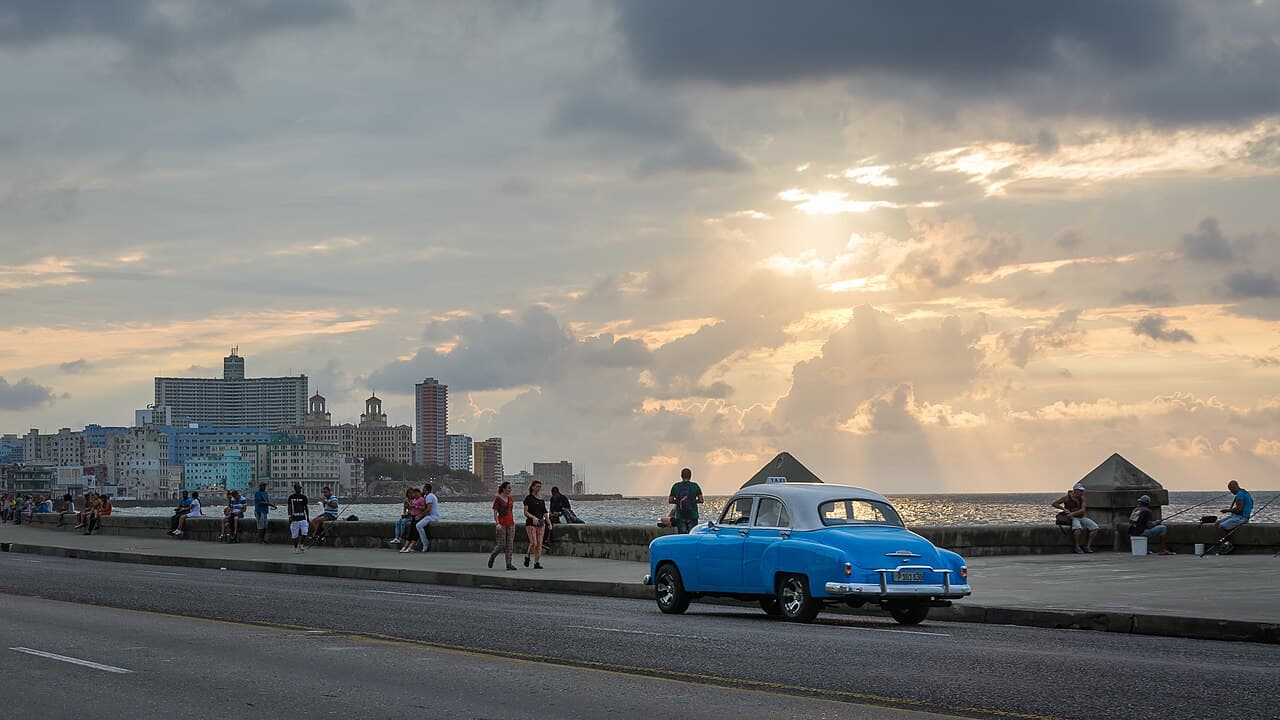
CubaPhoto: kuhnmi / Wikimedia Commons (CC BY 2.0)

Cuba

Country · CU · CUP · America/Havana

This information may change. Always check the official source.Last verified: August 2026 by

A tourist card before you fly, a form filed within 72 hours - and a permanent consequence for your US visa waiver that nobody warns you about.

  • You cannot use the US visa waiver if you have been in Cuba on or after 12 January 2021. That is when the United States designated Cuba a state sponsor of terrorism.
  • It applies to every visa waiver nationality - British, EU, Japanese, Australian, all of them.
  • You need a tourist card - also called a tourist visa - before you travel. It is not issued on arrival.
  • File the arrival declaration on the D'Viajeros portal within 72 hours before you enter Cuba. Not earlier, not on arrival.
  • Your passport must be valid at least 6 months after arrival and 3 months after your planned departure.
More details

Read this before you book: it costs you your ESTA

  • You cannot use the US visa waiver if you have been in Cuba on or after 12 January 2021. That is when the United States designated Cuba a state sponsor of terrorism.
  • It applies to every visa waiver nationality - British, EU, Japanese, Australian, all of them.
  • An already-approved ESTA is revoked once the travel is known.
  • The alternative is a full US visa: an appointment at an embassy, an interview, a fee and a wait measured in weeks or months.
  • This is permanent. There is no expiry on it and no way to undo it. A week in Havana changes how you travel to the United States for the rest of your life.
  • If you have any prospect of a US trip, weigh that before booking, not afterwards. It is the single most consequential thing on this page and it is missing from most guides.

The tourist card

  • You need a tourist card - also called a tourist visa - before you travel. It is not issued on arrival.
  • Get it through the Cuban Embassy, a travel agent, or the eVisa-Cuba platform. Airlines flying to Cuba often sell them too.
  • Check which card you need. There is a separate one for travellers arriving from the United States, and being sold the wrong one is a real problem at check-in.

The D'Viajeros form

  • File the arrival declaration on the D'Viajeros portal within 72 hours before you enter Cuba. Not earlier, not on arrival.
  • A QR code is emailed to you and must be shown at the border.
  • Download or print it before you fly. The FCDO says so specifically, because wifi may not be available to retrieve it on arrival in Cuba - and that is not a hypothetical.

The rest

  • Your passport must be valid at least 6 months after arrival and 3 months after your planned departure.
  • Travel insurance is expected and can be asked for at the border.
  • Bring every peso you will spend. See the money section - this is the other thing that has changed and it matters as much as the visa.
Sources (2)

Cuba confiscates drones on arrival and wants the GPS on your phone switched off, which is not a rule you meet anywhere else.

  • Drones may not be brought in. They are confiscated on arrival and not returned until departure, and the process for getting one back can take longer than your holiday.
  • GPS must be switched off on phones, tablets and laptops, and standalone GPS units are subject to import requirements. High-consumption electrical items may be confiscated at the border.
  • Art and antiques need an export permit from the Bienes Culturales heritage office. Ask the seller whether they hold one, and keep the receipt for the airport.
More details
  • Drones may not be brought in. They are confiscated on arrival and not returned until departure, and the process for getting one back can take longer than your holiday.
  • GPS must be switched off on phones, tablets and laptops, and standalone GPS units are subject to import requirements. High-consumption electrical items may be confiscated at the border.
  • Art and antiques need an export permit from the Bienes Culturales heritage office. Ask the seller whether they hold one, and keep the receipt for the airport.
  • Cigars have an export limit. A small number travel freely; beyond that you need the official state receipt, which cigars bought on the street do not have. US travellers may not import Cuban cigars or rum at all since the exemption ended in 2020.
  • Meat, milk, fresh fruit, vegetables and seeds may not be taken in, with narrow exceptions.
  • Complete a customs form for anything confiscated on arrival - it is what you need to get it back.
Sources (1)

Health, medicines and the mosquito

Bring every medicine you might need. There are severe shortages, and treatment is paid for in foreign currency before you get it.

  • There are severe shortages of basic medicines in Cuba. Many things available at home are simply not obtainable.
  • All treatment requires payment in advance, in foreign currency. You or your insurer settle the bill before care is given.
  • Cuba has had an arbovirus epidemic with Dengue, Oropouche and Chikungunya circulating, and the CDC has issued enhanced precaution notices.
  • Drink bottled or boiled water. Supply is intermittent and treatment is not guaranteed.
  • 104 for an ambulance. Not 911 and not 112.
More details

Bring your own pharmacy

  • There are severe shortages of basic medicines in Cuba. Many things available at home are simply not obtainable.
  • Bring everything you might need and more than you think: your prescriptions, painkillers, rehydration salts, antihistamines, antiseptic, plasters, anti-diarrhoeals, insect repellent.
  • Facilities that treat foreigners stock basic supplies, but that is not the same as a pharmacy.
  • If you have a condition, bring a letter from your doctor setting out the treatment and dosage. The FCDO advises this specifically.
  • Leftover medicines are a genuinely welcome gift to a casa host or a clinic when you leave.

Paying for treatment

  • All treatment requires payment in advance, in foreign currency. You or your insurer settle the bill before care is given.
  • Your card will not work - see the money section. Keep an emergency cash reserve separate from your spending money for exactly this.
  • Havana's facilities are better than everywhere else in Cuba, which matters if something serious happens in the provinces.
  • Take insurance covering treatment and evacuation, and carry the policy number offline.

The mosquitoes

  • Cuba has had an arbovirus epidemic with Dengue, Oropouche and Chikungunya circulating, and the CDC has issued enhanced precaution notices.
  • This is the current health risk, not a background one.
  • Repellent day and night, long sleeves in the evening, and a net or a fan where there is no screen.
  • Bring the repellent with you. It is one of the things that is short here.

Water

  • Drink bottled or boiled water. Supply is intermittent and treatment is not guaranteed.

Numbers

  • 104 for an ambulance. Not 911 and not 112.
Sources (1)

Havana

Long-term averages for Havana: the mean daily high, the mean overnight low and the mean monthly rainfall across 30 years of ERA5 reanalysis data (1995–2024).

DayNight
20253035°C0200mmJanFebMarAprMayJunJulAugSepOctNovDecJanuary: Day 26 °C, Night 20 °C, Rain 30 mm. February: Day 27 °C, Night 20 °C, Rain 30 mm. March: Day 28 °C, Night 21 °C, Rain 23 mm. April: Day 30 °C, Night 22 °C, Rain 34 mm. May: Day 31 °C, Night 24 °C, Rain 93 mm. June: Day 31 °C, Night 25 °C, Rain 157 mm. July: Day 32 °C, Night 26 °C, Rain 107 mm. August: Day 32 °C, Night 26 °C, Rain 134 mm. September: Day 31 °C, Night 25 °C, Rain 149 mm. October: Day 30 °C, Night 24 °C, Rain 95 mm. November: Day 28 °C, Night 23 °C, Rain 41 mm. December: Day 27 °C, Night 21 °C, Rain 29 mm
Show the monthly table
Havana
MonthDay (°C)Night (°C)Rain (mm)
January262030
February272030
March282123
April302234
May312493
June3125157
July3226107
August3226134
September3125149
October302495
November282341
December272129

Varadero

Long-term averages for Varadero: the mean daily high, the mean overnight low and the mean monthly rainfall across 30 years of ERA5 reanalysis data (1995–2024).

DayNight
20253035°C0200mmJanFebMarAprMayJunJulAugSepOctNovDecJanuary: Day 25 °C, Night 21 °C, Rain 31 mm. February: Day 26 °C, Night 21 °C, Rain 22 mm. March: Day 27 °C, Night 22 °C, Rain 26 mm. April: Day 28 °C, Night 23 °C, Rain 36 mm. May: Day 29 °C, Night 24 °C, Rain 112 mm. June: Day 30 °C, Night 25 °C, Rain 148 mm. July: Day 31 °C, Night 26 °C, Rain 106 mm. August: Day 31 °C, Night 26 °C, Rain 128 mm. September: Day 30 °C, Night 26 °C, Rain 148 mm. October: Day 29 °C, Night 25 °C, Rain 111 mm. November: Day 27 °C, Night 23 °C, Rain 53 mm. December: Day 26 °C, Night 22 °C, Rain 32 mm
Show the monthly table
Varadero
MonthDay (°C)Night (°C)Rain (mm)
January252131
February262122
March272226
April282336
May2924112
June3025148
July3126106
August3126128
September3026148
October2925111
November272353
December262232

Santiago de Cuba

Long-term averages for Santiago de Cuba: the mean daily high, the mean overnight low and the mean monthly rainfall across 30 years of ERA5 reanalysis data (1995–2024).

DayNight
20253035°C0200mmJanFebMarAprMayJunJulAugSepOctNovDecJanuary: Day 29 °C, Night 21 °C, Rain 13 mm. February: Day 29 °C, Night 21 °C, Rain 18 mm. March: Day 29 °C, Night 21 °C, Rain 28 mm. April: Day 30 °C, Night 22 °C, Rain 50 mm. May: Day 30 °C, Night 23 °C, Rain 117 mm. June: Day 31 °C, Night 24 °C, Rain 95 mm. July: Day 32 °C, Night 25 °C, Rain 71 mm. August: Day 32 °C, Night 25 °C, Rain 97 mm. September: Day 31 °C, Night 24 °C, Rain 123 mm. October: Day 30 °C, Night 24 °C, Rain 123 mm. November: Day 29 °C, Night 23 °C, Rain 63 mm. December: Day 29 °C, Night 22 °C, Rain 25 mm
Show the monthly table
Santiago de Cuba
MonthDay (°C)Night (°C)Rain (mm)
January292113
February292118
March292128
April302250
May3023117
June312495
July322571
August322597
September3124123
October3024123
November292363
December292225
Sources (1)

Where to stay

Casas particulares are the reason to come and the practical answer to most problems.

  • Private rooms in family homes are the way to stay in Cuba. They are cheaper than hotels, better run, and the money goes to the household rather than a state chain.
  • State-run hotels vary enormously and the photographs are often years old.
  • Power cuts are a normal part of Cuban life and can run for hours.
  • Infrastructure, electricity and water remain severely affected in eastern Cuba after hurricane damage. Santiago, Baracoa and Holguin need checking against current conditions before booking.
  • Pay in cash. See the money section - this is now the only option.
More details

Casas particulares

  • Private rooms in family homes are the way to stay in Cuba. They are cheaper than hotels, better run, and the money goes to the household rather than a state chain.
  • They also solve problems. A casa owner will arrange a taxi, find you a meal during a shortage, and tell you when the power is going off.
  • Book directly or through a specialist agency. Most Western platforms do not handle Cuban properties properly.
  • Have the address written down - casa addresses are hard to find and street numbering is inconsistent.

Hotels

  • State-run hotels vary enormously and the photographs are often years old.
  • The Varadero resorts are a separate holiday from Cuba and are booked as packages.
  • Havana's grand hotels are worth a drink rather than a stay, in most cases.

Blackouts

  • Power cuts are a normal part of Cuban life and can run for hours.
  • Ask whether the casa or hotel has a generator, particularly if you need air conditioning to sleep or a fridge for medicine.
  • Carry a torch and a power bank, charged whenever the power is on.

The east

  • Infrastructure, electricity and water remain severely affected in eastern Cuba after hurricane damage. Santiago, Baracoa and Holguin need checking against current conditions before booking.

Practical

  • Pay in cash. See the money section - this is now the only option.
  • Water may not run continuously. Casas keep tanks; fill a bottle when it is on.
Sources (1)

Getting online in Cuba

One state network, expensive data, and an internet that can be switched off.

  • ETECSA is the only telecoms provider in Cuba, state-owned. There is no competition and no alternative - which is why the eSIM you already own probably does not work here.
  • Tourist SIMs are sold at the airport and at ETECSA offices in the cities. The airport is easier; the town offices have queues that have to be seen.
  • Most mainstream eSIM providers do not cover Cuba at all. ETECSA is the sole operator and international roaming agreements with it are very limited, so a global eSIM that works everywhere else will not work here.
  • Internet access can be blocked during times of political tension. This is the FCDO's own wording and it has happened. Plan on the assumption that connectivity is a convenience, not a utility.
More details

One network

  • ETECSA is the only telecoms provider in Cuba, state-owned. There is no competition and no alternative - which is why the eSIM you already own probably does not work here.
  • Tourist SIMs are sold at the airport and at ETECSA offices in the cities. The airport is easier; the town offices have queues that have to be seen.
  • Data is expensive by any standard and the packages are small.
  • Coverage exists in the cities and the tourist areas and is patchy elsewhere.

An eSIM: check before you buy one

  • Most mainstream eSIM providers do not cover Cuba at all. ETECSA is the sole operator and international roaming agreements with it are very limited, so a global eSIM that works everywhere else will not work here.
  • A handful of providers do roam on ETECSA's network, and they are expensive - substantially more than the same data anywhere else in the region.
  • Check that the specific provider lists Cuba before paying, rather than assuming a regional or global plan includes it. This is the one country where that assumption reliably fails.
  • Whatever you use, set it up before you fly. You cannot count on getting online to activate anything after you land.

Things to understand

  • Internet access can be blocked during times of political tension. This is the FCDO's own wording and it has happened. Plan on the assumption that connectivity is a convenience, not a utility.
  • Wifi in Cuba is often a paid card in a park or a hotel lobby, not something in the room.
  • Download everything before you go: maps, your D'Viajeros QR code, your accommodation address, your insurance details, your booking references. The FCDO specifically warns that wifi may not be available on arrival to retrieve them.
  • Tell people at home you will be hard to reach. That is normal here and not a sign anything is wrong.
Sources (2)

Cuban sockets are mostly American Type and at 110 V, with 220 V European outlets in newer hotels.

  • Newer hotels also fit 220 V sockets for European plugs, sometimes in the same room as the 110 V ones. Read the label beside the socket before plugging anything in; the shapes do not tell you the voltage.
  • American plugs fit the ordinary sockets, and a Europlug fits the round-pin ones where they exist.
  • 110 V means European 230 V-only appliances will not work on the standard sockets even with an adapter.
  • Casas particulares run on the domestic 110 V supply, usually unearthed.
  • Bring what you need with you. Adapters, batteries and chargers are hard to buy locally, unlike almost everywhere else in the region.
More details

Sockets in Cuba are Type , , and at 110 V, 60 Hz - the American standard, with a few European and Italian outlets in the tourist sector.

  • Newer hotels also fit 220 V sockets for European plugs, sometimes in the same room as the 110 V ones. Read the label beside the socket before plugging anything in; the shapes do not tell you the voltage.
  • American plugs fit the ordinary sockets, and a Europlug fits the round-pin ones where they exist.
  • 110 V means European 230 V-only appliances will not work on the standard sockets even with an adapter.
  • Casas particulares run on the domestic 110 V supply, usually unearthed.
  • Bring what you need with you. Adapters, batteries and chargers are hard to buy locally, unlike almost everywhere else in the region.
Sources (1)

Two plug types, very little English, and a country where planning ahead is the whole skill.

  • Plugs are American flat two-pin (type and ), and European round two-pin (type ) also appears - Cuba uses both, and voltage varies between 110 V and 220 V, sometimes in the same building. Bring an adapter for both and check before plugging in anything expensive.
  • Spanish is the language and English is limited outside hotels and the tourist trade. Some Spanish goes a long way here.
  • Everything you cannot buy there, bring. Medicines, toiletries, repellent, batteries, a torch, a power bank, a paper map.
  • Things take longer. Queues, waits, closures and shortages are the texture of the place, not exceptions to it.
  • Tipping matters here more than in most places, in cash, in small notes. Wages are very low.
More details

The basics

  • Plugs are American flat two-pin (type and ), and European round two-pin (type ) also appears - Cuba uses both, and voltage varies between 110 V and 220 V, sometimes in the same building. Bring an adapter for both and check before plugging in anything expensive.
  • Spanish is the language and English is limited outside hotels and the tourist trade. Some Spanish goes a long way here.
  • UTC-5, with daylight saving - Cuba does shift the clocks, unlike most of the Caribbean.
  • Dialling code +53.

The skill is preparation

  • Everything you cannot buy there, bring. Medicines, toiletries, repellent, batteries, a torch, a power bank, a paper map.
  • Everything you need to show, print. QR codes, bookings, insurance, addresses.
  • Everything you will spend, carry. In cash, in good notes.
  • A trip to Cuba rewards planning more than almost anywhere, and punishes improvisation more.

Rhythm

  • Things take longer. Queues, waits, closures and shortages are the texture of the place, not exceptions to it.
  • Cubans are extraordinarily hospitable and will solve problems for you that no system will.
  • Casa hosts are the network. Ask them for everything - a taxi, a restaurant that has food today, whether the coach is running.

Small things

  • Tipping matters here more than in most places, in cash, in small notes. Wages are very low.
  • Do not photograph people without asking, especially in the tourist streets of Havana where posing for photographs is itself a small trade.
  • Two currencies confusion is over - the convertible peso was withdrawn in 2021, and the Cuban peso is the currency, alongside the foreign cash you brought.
  • Bring gifts if you are staying in casas. Toiletries, medicines and school supplies are all genuinely useful and gratefully received.
Sources (2)

Cards stopped working in June 2026

International Visa and Mastercard are no longer accepted anywhere in Cuba. Bring every peso you will spend, in cash.

  • Since 6 June 2026, international cards such as Visa and Mastercard are no longer accepted in Cuba. This is not "American cards do not work", which was the old rule - it is all foreign cards.
  • You are unlikely to be able to withdraw cash from an ATM with an international card.
  • US dollars and euros are widely accepted and can be exchanged. Euros are the safer bet for non-Americans.
  • The FCDO advises against carrying large sums - and you have just been told to bring the whole trip in cash. Both are true.
  • Cuba is not as cheap as its reputation once you are paying tourist prices for transport, casas and restaurants, and shortages push prices up unpredictably.
More details

The change that reorganises the whole trip

  • Since 6 June 2026, international cards such as Visa and Mastercard are no longer accepted in Cuba. This is not "American cards do not work", which was the old rule - it is all foreign cards.
  • You are unlikely to be able to withdraw cash from an ATM with an international card.
  • Payment is now cash, or a Cuban prepaid card.
  • So you must arrive with every peso you intend to spend, for accommodation, food, transport, tips, tours and a margin for things going wrong. There is no top-up mechanism once you are there.
  • Budget generously and then add to it. Running out of money in Cuba is not an inconvenience you can solve with a phone.

What cash to bring

  • US dollars and euros are widely accepted and can be exchanged. Euros are the safer bet for non-Americans.
  • Bring clean, unmarked, untorn notes. Damaged notes are refused.
  • Bring a mix of denominations. Small notes are what you actually spend.
  • Exchange only at Cadeca exchange houses. The FCDO is explicit: it is illegal to exchange money anywhere else, however good the rate someone offers on the street.

Carrying it

  • The FCDO advises against carrying large sums - and you have just been told to bring the whole trip in cash. Both are true.
  • Split it. Leave the bulk in the accommodation safe or a locked bag and carry a day at a time.
  • Opportunistic crime is rising because of economic hardship, and muggings happen in Havana. Do not count money in public.

Costs

  • Cuba is not as cheap as its reputation once you are paying tourist prices for transport, casas and restaurants, and shortages push prices up unpredictably.
  • Casas particulares are the good value and are also where the money reaches a household directly.
Sources (2)

Everyday prices

Typical prices in US dollar (USD), averaged across the country by Numbeo and read on 19 August 2026. Tick Convert prices above the table to see every amount in your own currency.

Everyday prices
ItemTypical price
Inexpensive restaurant meal6.00 USD
Dinner for two, mid-range, three courses25 USD
Cappuccino1.73 USD
Local draught beer, 0.5 l2.00 USD
Bottled water, 0.33 l1.09 USD
Public transport, one-way ticket0.20 USD
Taxi, starting fare2.14 USD
Petrol, 1 litre1.26 USD
Cigarettes, pack of 20 (Marlboro)3.25 USD
Average state monthly salary6 930 CUP (about 11 USD)

These are country-wide averages, not a price list: tourist districts, airports and islands sit well above them, and small towns below. The salary line is there for proportion - it is what people living here actually earn.

Why that last line is in pesos. 6 930 pesos a month is what Cuba's national statistics office reports for the state civil sector in 2025. The dollar figure beside it applies the Banco Central de Cuba rate for 24 August 2026, 638 CUP to the dollar. It is written in pesos first on purpose: the central bank publishes its rates in more than one segment, so what a Cuban wage is "worth" in dollars depends on which rate you apply, and a number quoted only in dollars hides that entirely. The prices above come from a different source and were not converted at that rate, so do not read the two columns as one calculation - the salary is a sourced statistic, the prices are crowd-sourced averages, and only the first has an exchange rate attached to it.

Sources (3)

From Jose Marti into Havana

Twenty kilometres of road, an official taxi rank, and no way to pay by card at the other end.

  • Jose Marti International (HAV) is about 20 km southwest of Havana - 30 to 45 minutes, longer if fuel shortages have thinned the taxi fleet.
  • Terminal 3 handles most international flights.
  • Use the official taxi rank outside arrivals and agree the price before getting in. There is no meter culture here.
  • The FCDO notes fuel shortages can make petrol and diesel difficult to get. In practice this means fewer taxis, longer waits and occasional cancellations of intercity transport.
  • Varadero (VRA) serves the beach resorts and many package flights land there directly.
More details
The airport
  • Jose Marti International (HAV) is about 20 km southwest of Havana - 30 to 45 minutes, longer if fuel shortages have thinned the taxi fleet.
  • Terminal 3 handles most international flights.
  • There is no train and no useful bus. A taxi is the only realistic way in.
The taxi
  • Use the official taxi rank outside arrivals and agree the price before getting in. There is no meter culture here.
  • Do not hail a taxi or accept a lift from anyone you do not know. That is the FCDO's direct advice and it applies most sharply in an arrivals hall.
  • Have cash ready in the right currency. Your card will not work - see the money section - so paying for the ride is something to have solved before you land.
  • Arrange the transfer through your casa or hotel if you can. It costs about the same and removes the negotiation from your first hour in the country.
Fuel shortages are a transport problem
  • The FCDO notes fuel shortages can make petrol and diesel difficult to get. In practice this means fewer taxis, longer waits and occasional cancellations of intercity transport.
  • Build slack into transfer times, particularly on the day you fly home.
Other airports
  • Varadero (VRA) serves the beach resorts and many package flights land there directly.
  • Santiago de Cuba (SCU), Holguin (HOG) and Camaguey (CMW) serve the east - where the FCDO notes infrastructure, electricity and water remain severely affected after hurricane damage.
Sources (2)

Getting around Cuba

Viazul coaches, shared taxis and a fuel supply that decides how much of it runs.

  • Viazul is the long-distance coach network aimed at foreigners - air-conditioned, bookable, and the standard way to move around. Book ahead; seats sell out and the schedule thins when fuel is short.
  • Colectivos - shared taxis, usually an old American car - run the same routes for a similar price and leave when full. Faster and less comfortable.
  • Havana is walkable in Habana Vieja and Centro, and large everywhere else.
  • Rental is possible, expensive and scarce, and cars must usually be booked far ahead.
  • Infrastructure and services including electricity and water remain severely impacted in eastern Cuba after hurricane damage. Check the current position before committing to Santiago, Baracoa or Holguin.
More details

Between cities

  • Viazul is the long-distance coach network aimed at foreigners - air-conditioned, bookable, and the standard way to move around. Book ahead; seats sell out and the schedule thins when fuel is short.
  • Colectivos - shared taxis, usually an old American car - run the same routes for a similar price and leave when full. Faster and less comfortable.
  • Domestic flights exist and are unreliable enough that most visitors do not use them.
  • The train is a Cuban experience rather than a transport option.

In the cities

  • Havana is walkable in Habana Vieja and Centro, and large everywhere else.
  • Classic-car taxis are for tourists and priced accordingly - agree the fare first.
  • Almendrones are the shared fixed-route cars locals use and cost a fraction of that.
  • Coco-taxis - the three-wheeled yellow bubbles - may be in an unsafe condition, which is the FCDO's phrasing and is fair.

Driving yourself

  • Rental is possible, expensive and scarce, and cars must usually be booked far ahead.
  • Do not drive at night. Poor lighting, unlit vehicles, cyclists, carts and potholes.
  • Fuel shortages are real and a queue at a station can last hours. This is the main argument against a self-drive itinerary.

The east

  • Infrastructure and services including electricity and water remain severely impacted in eastern Cuba after hurricane damage. Check the current position before committing to Santiago, Baracoa or Holguin.

Apps and platforms

Almost nothing works the way you are used to. Prepare offline.

  • The D'Viajeros QR code, downloaded and printed. File it in the 72 hours before entry.
  • Offline maps of everywhere you will go. Maps.me and organic-maps handle Cuba well; Google Maps offline is weaker here.
  • No Uber, no Bolt, no ride-hailing of any kind.
  • No international card payments since 6 June 2026 - so no app that ends in a card charge.
  • La Nave and similar Cuban apps exist for taxis in Havana but need a local number and a Cuban payment method.
More details

What you need before you go

  • The D'Viajeros QR code, downloaded and printed. File it in the 72 hours before entry.
  • Offline maps of everywhere you will go. Maps.me and organic-maps handle Cuba well; Google Maps offline is weaker here.
  • Your accommodation addresses on paper. Casa particular addresses are hard to find and a taxi driver will want the street and the number.
  • Insurance policy number and assistance line, offline.

What does not work

  • No Uber, no Bolt, no ride-hailing of any kind.
  • No international card payments since 6 June 2026 - so no app that ends in a card charge.
  • Booking.com and most Western booking platforms do not process Cuban properties in the normal way; casas are booked directly or through specialist agencies.

What does

  • La Nave and similar Cuban apps exist for taxis in Havana but need a local number and a Cuban payment method.
  • WhatsApp is how Cubans communicate and how a casa owner will confirm your booking, when they have signal.
  • Nauta wifi cards from ETECSA are the traditional way to get online in a park or hotel lobby, and are still sold.
Sources (3)

Cuban hire cars are scarce, expensive and booked months ahead, and fuel shortages are part of the trip.

  • Book months in advance. The state agencies have a limited fleet and a car booked on arrival is often simply unavailable at any price.
  • Fuel queues are routine and stations run dry. Locals plan around them; a visitor should carry a full tank and slack in the schedule.
  • Roads are empty and in poor repair, unlit at night, and shared with cyclists, horse carts and pedestrians.
  • The alcohol limit is effectively zero and the penalties for an accident causing injury are severe, including for foreigners.
  • Hitchhikers at junctions are official practice, not a risk - state vehicles are required to pick people up.
More details

A hire car is a scarce resource here, booked far ahead, and fuel is the constraint rather than the roads.

  • Book months in advance. The state agencies have a limited fleet and a car booked on arrival is often simply unavailable at any price.
  • Fuel queues are routine and stations run dry. Locals plan around them; a visitor should carry a full tank and slack in the schedule.
  • Roads are empty and in poor repair, unlit at night, and shared with cyclists, horse carts and pedestrians.
  • The alcohol limit is effectively zero and the penalties for an accident causing injury are severe, including for foreigners.
  • Hitchhikers at junctions are official practice, not a risk - state vehicles are required to pick people up.
Sources (1)

Safety, shortages and the law

The FCDO advises against all but essential travel to Cuba. Crime is low by regional standards; it is the shortages that decide how the trip goes.

  • Since 16 July 2026 the UK Foreign Office advises against all but essential travel to the whole of Cuba. Not because of crime - because of the fuel, power and supply situation, protests and flight disruption described below.
  • Cuba remains safe by Latin American standards, and violent crime against visitors is rare.
  • Fuel shortages make petrol and diesel difficult to get, which cascades into transport.
  • Cubans cannot demonstrate freely, and unapproved political demonstrations may be broken up by the authorities. Do not attend, film, or stand near one.
  • Cuba has strict laws on use, possession and trafficking, and courts give severe sentences. There is no visitor leniency.
More details

The FCDO advises against all but essential travel

  • Since 16 July 2026 the UK Foreign Office advises against all but essential travel to the whole of Cuba. Not because of crime - because of the fuel, power and supply situation, protests and flight disruption described below.
  • Check what that does to your insurance. Most policies void cover, or the whole policy, for travel against your own government's advice, so read the wording before you book rather than after something happens.
  • Other governments word it differently. Canada and the United States have their own levels; look up yours, because it is your insurer's reference point, not the FCDO.

Crime

  • Cuba remains safe by Latin American standards, and violent crime against visitors is rare.
  • Opportunistic crime is rising because of economic hardship. Muggings happen in Havana; pickpocketing and bag-snatching in crowded places and on public transport.
  • Do not hail a taxi or accept a lift from anyone you do not know.
  • Do not carry large sums of cash - and note that the card situation means you are carrying more than you would anywhere else. Split it and leave most of it locked up.

The shortages

  • Fuel shortages make petrol and diesel difficult to get, which cascades into transport.
  • Severe shortages of basic medicines - see the health section. This is the shortage most likely to affect you personally.
  • Power cuts are routine.
  • Food shortages affect what a restaurant can actually serve, and a menu is often aspirational.
  • None of this is dangerous. All of it is friction, and a trip planned with slack in it works and one planned tightly does not.

Politics and photography

  • Cubans cannot demonstrate freely, and unapproved political demonstrations may be broken up by the authorities. Do not attend, film, or stand near one.
  • Internet access can be blocked during political tension.
  • Do not photograph or film military zones or restricted areas. The FCDO's warning is stronger than usual: possession of photographs relating to military areas can be regarded as espionage.

Drugs

  • Cuba has strict laws on use, possession and trafficking, and courts give severe sentences. There is no visitor leniency.

Roads

  • Do not drive at night - poor lighting, unlit vehicles, cyclists and carts.
  • Coco-taxis may be in an unsafe condition.

Hurricanes

  • Season runs June to November, with heavy rain, flooding and landslides.
  • Cuba's civil defence system is genuinely good and evacuations are organised and taken seriously. Follow instructions.
Sources (2)

Emergency numbers and what to do

The ambulance number is 104, and your consulate is probably a long way from where you are.

  • 104 is the ambulance number, not 911 or 112. Save all three before you go.
  • Payment in foreign currency is required in advance. Keep an emergency cash reserve separate from your spending money - your card will not rescue you.
  • Internet access can be blocked during political tension. Agree with people at home in advance that silence is not an emergency signal.
  • Do not attend or film a demonstration. Unapproved ones are broken up.
  • Follow civil defence instructions. Cuba's system is well organised and evacuations are real; the tourist infrastructure moves people early.
More details

The numbers

Emergency numbers and what to do
ForCall
Ambulance104
Police106
Fire105
  • 104 is the ambulance number, not 911 or 112. Save all three before you go.
  • Operators speak Spanish. Have your casa host or hotel make the call if you can.

If something medical happens

  • Payment in foreign currency is required in advance. Keep an emergency cash reserve separate from your spending money - your card will not rescue you.
  • Havana's facilities are the best in the country. In the provinces, the realistic plan for anything serious is getting to Havana.
  • Contact your insurer, accepting that you may have no internet to do it. Have the number written on paper.

If communication goes down

  • Internet access can be blocked during political tension. Agree with people at home in advance that silence is not an emergency signal.
  • Your consulate may be a long way away and Cuba is a long country. Know where yours is before you leave Havana.

Things not to do

  • Do not attend or film a demonstration. Unapproved ones are broken up.
  • Do not photograph military areas. The FCDO warns that even possession of such photographs can be regarded as espionage - which is a category of trouble that ordinary travel insurance does not cover.
  • Do not change money outside a Cadeca. It is illegal regardless of the rate offered.

Hurricanes

  • Follow civil defence instructions. Cuba's system is well organised and evacuations are real; the tourist infrastructure moves people early.
Sources (3)