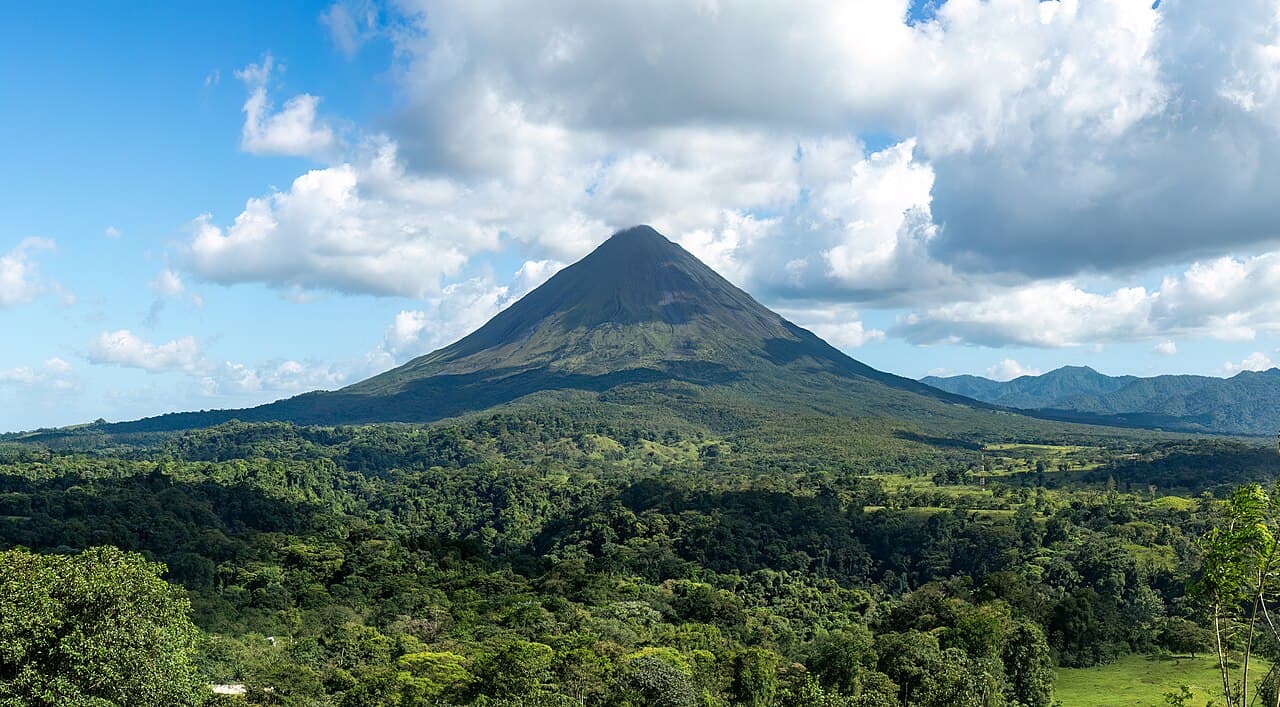
Costa RicaPhoto: Rhododendrites / Wikimedia Commons (CC BY-SA 4.0)

Costa Rica

Country · CR · CRC · America/Costa_Rica

This information may change. Always check the official source.Last verified: August 2026 by

90 days visa free for most Western passports, but you must hold a ticket out of the country dated within 90 days. The airline checks it at check-in and refuses boarding without it.

  • You must hold a ticket out of the country dated within 90 days of arrival. The airline enforces it at check-in because it is fined for carrying you, and there is no arguing at the desk.
  • A one-way flight in will not be boarded - the commonest reason visitors miss their trip. A Ticabus or Transnica booking to Panama or Nicaragua satisfies it for a fraction of a flight.
  • 90 days on arrival for the USA, Canada, the UK, the EU, Australia, Japan, South Korea and most of Latin America. The officer decides the number, so look at what you were given.
  • Overstaying costs USD 100 per month and can mean a re-entry ban of three times the overstay. The old border run no longer reliably works.
  • A yellow fever certificate is checked if you arrive from or transited parts of South America and sub-Saharan Africa, including Colombia, Brazil, Peru and Venezuela.
More details

The onward ticket, which is the actual gate

Costa Rica requires every non-resident visitor to hold proof of onward travel out of the country, dated within 90 days of arrival. This applies at airports and at land borders.

  • The airline enforces it at check-in, because they are fined for carrying you if you are refused. There is no arguing at the desk.
  • A one-way flight in will not be boarded. This is the single commonest reason visitors miss their trip.
  • A bus ticket out counts. If you are continuing overland to Panama or Nicaragua, a Ticabus or Transnica booking satisfies it and costs a fraction of a flight.
  • Buy a real ticket, not a "flight reservation" service. Some are accepted and some are not, and you find out at the airport.

The stay

  • 90 days on arrival for the USA, Canada, the UK, the EU, Australia, New Zealand, Japan, South Korea and most of Latin America.
  • The officer decides the number and it is written on the stamp. It is usually 90 and it is occasionally less. Look at what you were given.
  • Your passport must be valid for the stay and, for some nationalities, one to six months beyond. Six months of validity removes all doubt.
  • Overstaying costs USD 100 per month and can mean a re-entry ban of three times the overstay.
  • The old border run does not reliably work any more. Immigration officers may refuse a fresh 90 days to someone who has just crossed to Nicaragua and back.

Where your nationality lands

Visa and entry in Costa Rica
You holdWhat you need
USA, Canada, Australia, UK, Germany, France, Italy, Spain, Netherlands, Poland, Japan, South Korea, Singapore, Malaysia, RussiaNo visa. 90 days
TaiwanNo visa. 30 days
China, India, Cambodia, Saudi ArabiaConsular visa in advance, or the exception below
  • A useful exception: holders of a valid US, Canadian, Schengen, UK, Japanese or South Korean visa or residence permit can often enter Costa Rica without a Costa Rican visa. The rules differ by nationality and are worth checking against your own consulate.
  • The departure tax is USD 29 and is included in almost every airline ticket now. Check yours; if it is not, you pay at the airport.
  • Travel insurance is not a legal entry requirement. The Covid-era rule was removed in April 2022. Bring it anyway.

Customs and money

  • Declare cash above USD 10,000.
  • Proof of funds of roughly USD 100 per month of stay may be asked for, rarely.
  • Yellow fever certificate is required if you arrive from or have transited certain countries in South America and sub-Saharan Africa, including Colombia, Brazil, Peru and Venezuela. It is checked.
  • Drones must be registered with the civil aviation authority and flying one over a national park is prohibited.
Sources (2)

Costa Rica's allowances are generous and its conservation rules are strict - shells, coral and hardwood do not leave.

  • The alcohol allowance is unusually generous by regional standards, several litres per adult, along with a carton of cigarettes and a value cap on other goods.
  • Shells, coral, turtle products and wildlife may not be exported. Roughly a quarter of the country is protected land, and the enforcement matches.
  • Plants, seeds and fresh produce are controlled in both directions; the coffee you take home should be packaged and roasted.
  • Cash equivalent to USD 10,000 or more must be declared on entry and on exit.
  • Drones need registration with the civil aviation authority and are barred over the national parks.
More details
  • The alcohol allowance is unusually generous by regional standards, several litres per adult, along with a carton of cigarettes and a value cap on other goods.
  • Shells, coral, turtle products and wildlife may not be exported. Roughly a quarter of the country is protected land, and the enforcement matches.
  • Plants, seeds and fresh produce are controlled in both directions; the coffee you take home should be packaged and roasted.
  • Cash equivalent to USD 10,000 or more must be declared on entry and on exit.
  • Drones need registration with the civil aviation authority and are barred over the national parks.
  • The land borders with Nicaragua and Panama charge their own fees and run their own checks, and the Paso Canoas crossing is slow.
Sources (1)

Good private hospitals, safe tap water in most of the country, no malaria worth planning around. Dengue is the real mosquito-borne risk and repellent is the answer.

  • No vaccinations are required unless you arrive from a yellow fever country, and malaria risk is negligible on ordinary tourist itineraries.
  • Dengue is present year round and peaks May to November, and the mosquito that carries it bites in the daytime, which surprises people expecting a dusk problem.
  • A high fever with severe joint pain means a doctor, not paracetamol and a wait - and avoid ibuprofen and aspirin if dengue is suspected.
  • Healthcare is the best in Central America. Go private in an emergency: CIMA in Escazu, Clinica Biblica and Hospital Metropolitano are used to foreign patients.
  • Tap water is safe in most of the country including San Jose; on the Caribbean coast and in remote areas use filtered or bottled. Ten degrees off the equator means burning in 20 minutes.
More details

Before you go

  • No vaccinations are required unless you are arriving from a yellow fever country, in which case the certificate is checked.
  • Hepatitis A and typhoid are the standard travel recommendations, plus routine boosters.
  • Malaria risk is negligible for ordinary tourist itineraries. Prophylaxis is not normally recommended.
  • Rabies exists in bats. Do not handle any wild animal.
  • Bring travel insurance that covers medical evacuation, because Corcovado and Tortuguero are a long way from a hospital.

Dengue, which is the real one

  • Dengue is present year round and peaks in the rainy season, May to November. Chikungunya and Zika are also present.
  • The mosquito that carries it bites in the daytime, which surprises people expecting a dusk problem.
  • DEET or picaridin, applied properly and often, is the whole defence. Long sleeves at dawn and dusk help.
  • The QDENGA vaccine exists and is worth discussing with a travel clinic, particularly if you have had dengue before.
  • A high fever with severe joint pain means a doctor, not paracetamol and a wait. Avoid ibuprofen and aspirin if dengue is suspected.

Healthcare

  • Costa Rica's healthcare is the best in Central America and medical tourism is a national industry.
  • Go private in an emergency. Hospital CIMA in Escazu, Clinica Biblica and Hospital Metropolitano in San Jose are used to foreign patients and have English-speaking staff.
  • The public CCSS system will treat an emergency but the waits are long.
  • Pharmacies dispense a lot without a prescription and pharmacists advise well. Farmacia Fischel and Farmacia La Bomba are the big chains.

Everyday

  • Tap water is safe in most of the country, including San Jose and the Central Valley. On the Caribbean coast, in Puerto Viejo and in remote areas, drink filtered or bottled.
  • The sun is directly overhead. Ten degrees off the equator means burning in 20 minutes, including through cloud.
  • Use reef-safe sunscreen where you are snorkelling, which is both good practice and increasingly required.
  • Heat and humidity on the coast are serious. Drink far more water than feels necessary.
  • Sand flies (purrujas) on the Caribbean beaches are worse than mosquitoes and repellent barely touches them. Cover up at dawn and dusk.
Sources (2)

San Jose

Long-term averages for San Jose: the mean daily high, the mean overnight low and the mean monthly rainfall across 30 years of ERA5 reanalysis data (1995–2024).

DayNight
15202530°C0500mmJanFebMarAprMayJunJulAugSepOctNovDecJanuary: Day 24 °C, Night 16 °C, Rain 89 mm. February: Day 26 °C, Night 16 °C, Rain 61 mm. March: Day 26 °C, Night 17 °C, Rain 61 mm. April: Day 26 °C, Night 18 °C, Rain 113 mm. May: Day 25 °C, Night 18 °C, Rain 357 mm. June: Day 24 °C, Night 18 °C, Rain 404 mm. July: Day 24 °C, Night 18 °C, Rain 311 mm. August: Day 24 °C, Night 18 °C, Rain 378 mm. September: Day 24 °C, Night 17 °C, Rain 417 mm. October: Day 24 °C, Night 17 °C, Rain 464 mm. November: Day 23 °C, Night 17 °C, Rain 345 mm. December: Day 24 °C, Night 17 °C, Rain 163 mm
Show the monthly table
San Jose
MonthDay (°C)Night (°C)Rain (mm)
January241689
February261661
March261761
April2618113
May2518357
June2418404
July2418311
August2418378
September2417417
October2417464
November2317345
December2417163

Liberia

Long-term averages for Liberia: the mean daily high, the mean overnight low and the mean monthly rainfall across 30 years of ERA5 reanalysis data (1995–2024).

DayNight
20253035°C0500mmJanFebMarAprMayJunJulAugSepOctNovDecJanuary: Day 30 °C, Night 22 °C, Rain 4 mm. February: Day 31 °C, Night 23 °C, Rain 2 mm. March: Day 33 °C, Night 23 °C, Rain 7 mm. April: Day 34 °C, Night 24 °C, Rain 39 mm. May: Day 32 °C, Night 24 °C, Rain 244 mm. June: Day 30 °C, Night 23 °C, Rain 324 mm. July: Day 30 °C, Night 23 °C, Rain 201 mm. August: Day 30 °C, Night 23 °C, Rain 253 mm. September: Day 29 °C, Night 23 °C, Rain 385 mm. October: Day 28 °C, Night 22 °C, Rain 421 mm. November: Day 28 °C, Night 22 °C, Rain 153 mm. December: Day 29 °C, Night 22 °C, Rain 20 mm
Show the monthly table
Liberia
MonthDay (°C)Night (°C)Rain (mm)
January30224
February31232
March33237
April342439
May3224244
June3023324
July3023201
August3023253
September2923385
October2822421
November2822153
December292220

Puerto Viejo

Long-term averages for Puerto Viejo: the mean daily high, the mean overnight low and the mean monthly rainfall across 30 years of ERA5 reanalysis data (1995–2024).

DayNight
202530°C0500mmJanFebMarAprMayJunJulAugSepOctNovDecJanuary: Day 26 °C, Night 21 °C, Rain 238 mm. February: Day 27 °C, Night 21 °C, Rain 163 mm. March: Day 27 °C, Night 22 °C, Rain 152 mm. April: Day 28 °C, Night 22 °C, Rain 188 mm. May: Day 28 °C, Night 23 °C, Rain 369 mm. June: Day 28 °C, Night 23 °C, Rain 372 mm. July: Day 27 °C, Night 22 °C, Rain 447 mm. August: Day 28 °C, Night 23 °C, Rain 350 mm. September: Day 28 °C, Night 23 °C, Rain 284 mm. October: Day 28 °C, Night 23 °C, Rain 375 mm. November: Day 27 °C, Night 22 °C, Rain 461 mm. December: Day 26 °C, Night 22 °C, Rain 397 mm
Show the monthly table
Puerto Viejo
MonthDay (°C)Night (°C)Rain (mm)
January2621238
February2721163
March2722152
April2822188
May2823369
June2823372
July2722447
August2823350
September2823284
October2823375
November2722461
December2622397
Sources (1)

Ecolodges, cabinas and hostels are the country strength. Do not stay in San Jose longer than a night. Book the dry season months ahead and expect the rainy season to be half price.

  • Dry season, December to April, is high season and Christmas and Easter week are the most expensive weeks of the year. Book those months ahead.
  • Green season, May to November, is half the price and it does not rain all day - it rains hard in the afternoon and the mornings are clear.
  • Do not build a trip around San Jose. One night on arrival or departure is plenty; the country is elsewhere.
  • Air conditioning is not universal and matters enormously on the coast, while in Monteverde and the highlands you will want a blanket instead.
  • Ask about the road. "Four wheel drive recommended" in a listing means the last kilometre is a river bed.
More details

Seasons decide the price

  • Dry season (December to April) is high season. Prices peak, and Christmas to New Year and Easter week are the most expensive weeks of the year.
  • Green season (May to November) is half the price and it does not rain all day. It rains hard in the afternoon and the mornings are clear.
  • September and October are the wettest on the Pacific and, oddly, the driest on the Caribbean, which is why Puerto Viejo is a good September choice.
  • Book December to April months ahead. Book May to November a week ahead and haggle.

Where to stay

  • Do not build a trip around San Jose. One night on arrival or departure is plenty; the country is elsewhere.
  • La Fortuna for the volcano and the hot springs, Monteverde for cloud forest, Manuel Antonio for the easy wildlife-and-beach combination.
  • Guanacaste (Tamarindo, Nosara, Samara) for surf and dry heat, closest to Liberia airport.
  • Puerto Viejo and the Caribbean coast for a completely different country: Afro-Caribbean, slower, cheaper, wetter.
  • Osa Peninsula and Drake Bay for the serious wildlife, and it is a long way to everything.

Types

  • Cabinas are the local budget standard: simple rooms, often family run, USD 30 to USD 60.
  • Ecolodges are the signature offering and range from rustic to expensive, usually including guided walks.
  • Hostels are excellent and the backpacker circuit is well developed.
  • All-inclusive resorts cluster in Guanacaste and are a different holiday from the rest of the country.

Practical

  • Air conditioning is not universal and matters enormously on the coast. In Monteverde and the highlands you will want a blanket instead.
  • Hot water in cheaper places comes from a "suicide shower", an electric heating element on the shower head. Do not touch it while the water is running.
  • Mosquito nets and screens are worth checking for on the Caribbean coast and in the lowlands.
  • Check-in 15:00, check-out 11:00 is typical.
  • Many rural places are cash only or charge a card surcharge.
  • Ask about the road. "Four wheel drive recommended" in a listing means the last kilometre is a river bed.
Sources (2)

A local SIM costs a few dollars and needs only a passport. Kolbi has the best coverage in the mountains and the national parks, which is where you will actually want it.

  • Kolbi has the widest coverage by a distance, including the mountains, the Osa Peninsula and the national parks. In Monteverde, Corcovado and the Caribbean interior the others simply stop.
  • A prepaid SIM costs about USD 2 to USD 5, with roughly USD 10 buying a week of data and calls. Your passport is the whole formality.
  • The airport desks have largely been replaced by SIM vending machines in Terminal A and the rental car lobby, so buying in town is cheaper and easier.
  • Costa Rica is an expensive eSIM market - Saily is USD 26.99 for 5 GB over 30 days, several times the local price. Land on an eSIM and pick up a Kolbi SIM in town if you are staying a while.
  • Download offline maps before you leave San Jose. Waze is what locals use and it is better here than Google Maps, but neither works without signal.
More details

The three operators

  • Kolbi, run by the state utility ICE, has the widest coverage by a distance, including in the mountains, the Osa Peninsula and the national parks.
  • Claro is competitive in the cities and on the main tourist corridors.
  • Liberty is the cheapest and the thinnest outside towns.
  • If you are going anywhere remote, buy Kolbi. In Monteverde, Corcovado and the Caribbean interior the others simply stop.

Prices and where to buy

  • A prepaid SIM costs about USD 2 to USD 5. Data bundles are cheap: roughly USD 10 for a week of data and calls, USD 19 for unlimited on Claro.
  • The airport situation has changed. The Kolbi and Claro desks that used to sit at baggage claim in SJO have largely been replaced by SIM vending machines in Terminal A and the rental car lobby. A Claro desk sometimes opens near baggage claim but the hours are unreliable.
  • Buying in town is cheaper and easier: operator shops in any mall, electronics chains such as Gollo, and many pulperias.
  • You need your passport to register the line, and that is the whole formality.

eSIM

  • Costa Rica is one of the more expensive eSIM markets. Saily covers it at USD 7.99 for 1 GB over 7 days, USD 26.99 for 5 GB over 30 days and USD 36.99 for 10 GB over 30 days.
  • That is several times the local price, so the trade is clearer here than elsewhere: buy the eSIM if you value landing connected and want to skip the vending machine, and buy local if you are staying more than a week.
  • A middle path works well. Land on an eSIM, use it for the first day, and pick up a Kolbi SIM in town when you have time.

Coverage in practice

  • The Central Valley, Guanacaste beaches and the main highways are well covered.
  • Monteverde, Corcovado, Tortuguero and the Talamanca mountains have real gaps on every network.
  • Download offline maps before you leave San Jose. Waze and Google Maps both work here and Waze is what locals use, but neither works without signal.
  • WhatsApp is how everything is arranged: shuttles, tours, lodges, taxis.
Sources (2)

Costa Rican sockets are Type and at 120 V, the American standard, with unearthed outlets common outside newer hotels.

  • American and Canadian plugs fit straight in. European, British and Australian ones need an adapter.
  • 120 V is what stops European appliances working, adapter or not, unless they are marked 100-240 V.
  • Unearthed two-slot sockets are the norm in older buildings and in lodges away from the main towns.
  • Rainforest and beach lodges frequently run on solar and battery banks with limited overnight capacity, so charging a laptop can be a daytime job.
  • The rest of Central America matches on shape but not always on nominal voltage: El Salvador is 115 V, Panama and Honduras 110 to 120 V.
More details

Sockets in Costa Rica are Type and at 120 V, 60 Hz - the American standard.

  • American and Canadian plugs fit straight in. European, British and Australian ones need an adapter.
  • 120 V is what stops European appliances working, adapter or not, unless they are marked 100-240 V.
  • Unearthed two-slot sockets are the norm in older buildings and in lodges away from the main towns.
  • Rainforest and beach lodges frequently run on solar and battery banks with limited overnight capacity, so charging a laptop can be a daytime job.
  • The rest of Central America matches on shape but not always on nominal voltage: El Salvador is 115 V, Panama and Honduras 110 to 120 V.
Sources (1)

US plugs at 120 V, no street addresses anywhere, early mornings and early nights, and a national attitude called pura vida that will slow your schedule whether you like it or not.

  • Plug types and at 120 V, 60 Hz, the same as the USA. Check your charger says 100 to 240 V; most modern ones do.
  • Costa Rica has no functional street address system. Directions are given by landmark and distance - "200 metres north of the old fig tree" - and the landmark may no longer exist.
  • Use GPS coordinates or a Waze pin for anything you need to find, and ask your accommodation to send one on WhatsApp.
  • The country gets up early and it is dark at 18:00 all year. Wildlife is out at dawn: a 06:00 walk sees three times what a 10:00 walk does.
  • Semana Santa shuts the country - buses stop and the whole nation is at the beach - and Christmas to New Year is the other peak.
More details

Power

  • Plug types and at 120 V, 60 Hz, the same as the USA and Canada.
  • European, UK and Australian appliances need an adapter and possibly a converter. Check that your charger says 100 to 240 V; most modern ones do.
  • Power cuts are common in the rainy season in rural areas. A power bank and a head torch are genuinely useful.

Addresses, which do not exist

Costa Rica has no functional street address system outside a few blocks of central San Jose.

  • Directions are given by landmark and distance: "200 metres north and 50 east of the old fig tree", where 100 metres means one block.
  • The landmark may no longer exist. The most famous example, the Coca-Cola bottling plant in San Jose, closed decades ago and the bus terminal is still named after it.
  • Use GPS coordinates or a Waze pin for anything you need to find. Ask your accommodation to send one on WhatsApp.
  • Post is essentially not used. Everything goes by WhatsApp.

The clock

  • The country gets up early. Sunrise is around 05:30 all year and people start work at 07:00.
  • It gets dark at 18:00 all year, because Costa Rica sits near the equator. There is no long summer evening and no winter gloom.
  • Restaurants in small towns close by 21:00.
  • Wildlife is out at dawn. A 06:00 walk sees three times what a 10:00 walk does.
  • Pura vida is a greeting, a farewell, a thank you and a philosophy, and it explains why the shuttle is twenty minutes late.

Language and manners

  • Spanish, spoken clearly and slowly by regional standards, and English is widespread in tourism.
  • Costa Ricans call themselves Ticos and it is an affectionate word, not a slur.
  • "Con mucho gusto" replaces "de nada" as the answer to thank you.
  • Politeness is valued highly. Greet people when you enter a shop and never raise your voice; direct confrontation is deeply uncomfortable here.
  • Costa Rica has had no army since 1948 and is genuinely proud of it.

The calendar

  • Semana Santa (Easter week) shuts the country. Buses stop, alcohol sales were historically banned on Thursday and Friday, and the whole nation is at the beach.
  • Christmas to New Year is the other peak.
  • Public holidays include 1 January, 11 April, Easter Thursday and Friday, 1 May, 25 July, 2 August, 15 August, 15 September and 25 December.
  • The rainy season is called the green season by the tourist industry, which is marketing but also accurate.
Sources (2)

Colones and US dollars both circulate. Pay small things in colones because dollar change is given at a rounded-down rate, and expect a 10% service charge already on the restaurant bill.

  • Pay small things in colones. When a business takes dollars it gives change in colones at a rounded-down rate, which costs you real money several times a day.
  • Pay in dollars for the big things that were quoted in dollars anyway - tours, hotels, shuttles, car hire - and bring clean notes, because torn bills are refused.
  • Carry a Visa. It works at about 90% of card-accepting businesses against 70% for Mastercard, and this is the one country where the network genuinely matters.
  • Banco de Costa Rica machines charge nothing at their end; others take roughly 2,000 to 3,000 colones a withdrawal. Always decline the machine's own currency conversion.
  • Restaurants add 13% VAT and a 10% service charge, so the bill is 23% above the menu - and that 10% is the tip, with nothing further expected.
More details

Two currencies at once

  • The colon (CRC) is the currency, and US dollars are accepted almost everywhere tourists go.
  • The rate has moved a long way: it is nearer 450 colones to the dollar in August 2026, having sat above 500 for years. Use the converter on this page rather than a remembered figure - the colon has strengthened and a lot of published advice is priced on the old rate.
  • Pay in colones for anything small. When a business takes dollars it gives change in colones at a rounded-down rate, and on a USD 6 purchase that costs you real money several times a day.
  • Pay in dollars for the big things where the price was quoted in dollars anyway: tours, hotels, shuttles, car hire.
  • Bring clean, undamaged notes if you bring dollars. Torn or written-on bills are refused.
  • Nobody wants USD 100 notes in a small shop.

Cards and ATMs

  • Visa works at about 90% of card-accepting businesses, Mastercard at around 70%, and Amex only at upmarket hotels and some tour operators.
  • Carry a Visa. This is the one country where the network genuinely matters.
  • ATMs dispense both colones and dollars and let you choose.
  • Banco de Costa Rica (BCR) machines charge nothing at their end, which makes them the best choice. Others charge roughly 2,000 to 3,000 colones a withdrawal.
  • Decline the machine's own currency conversion, always.
  • Small towns, beach sodas and market stalls are cash only. Take enough out before you leave a town with a bank.

The bill

  • Restaurants add 13% VAT and a 10% service charge to the printed prices, so the bill is 23% above the menu.
  • The 10% is the tip. No further tipping is expected, and adding more is generous rather than customary.
  • Tip guides USD 10 to USD 20 per person per day for a good tour, and drivers a few dollars.
  • Hotel housekeeping: USD 1 to USD 2 a night, in cash.

Costs

Money and payments in Costa Rica
ItemTypical price
Casado (the national set lunch) at a sodaUSD 6 to USD 9
Restaurant main course in a tourist townUSD 15 to USD 25
Imperial beer at a barUSD 3 to USD 4
National park entryUSD 15 to USD 20
Shared shuttle, San Jose to the coastUSD 50 to USD 90
  • Costa Rica is the most expensive country in Central America and prices in the beach towns are close to North American.
  • Eating at sodas rather than restaurants halves your food budget and the food is better.
Sources (2)

Everyday prices

Typical prices in Costa Rican colon (CRC), averaged across the country by Numbeo and read on 12 August 2026. Tick Convert prices above the table to see every amount in your own currency.

Everyday prices
ItemTypical price
Inexpensive restaurant meal5,000 CRC
Dinner for two, mid-range, three courses25,000 CRC
Cappuccino2,000 CRC
Local draught beer, 0.5 l1,500 CRC
Bottled water, 0.33 l865 CRC
Public transport, one-way ticket500 CRC
Taxi, starting fare1,020 CRC
Petrol, 1 litre715 CRC
Cigarettes, pack of 20 (Marlboro)2,500 CRC
Average net monthly salary487,000 CRC

These are country-wide averages, not a price list: tourist districts, airports and islands sit well above them, and small towns below. The salary line is there for proportion - it is what people living here actually earn.

Sources (1)

Airport guides for Costa Rica1

One page per airport: the routes into town, what they cost and the trap particular to that arrival.

See all 1 airports

Official orange taxis run a fixed zone fare from SJO. Uber works but has to meet you off the kerb. If you are renting a car, the mandatory insurance is what turns a cheap quote into a normal price.

  • The official orange taxis are the regulated airport concession, USD 25 to USD 30 to central San Jose on a fixed zone fare paid at the desk.
  • Uber works but operates in a grey area, and drivers avoid the official rank - expect a short walk out of the terminal zone.
  • Third party liability insurance on a hire car is required by law, cannot be declined, and credit-card cover does not replace it. It adds USD 10 to USD 25 a day, so a USD 12 quote arrives at USD 35 to USD 45.
  • Book car hire direct with a company that quotes the insurance up front. Comparison sites almost universally hide it, which is why the price doubles at the desk.
  • Do not drive at night outside the Central Valley - unlit, unfenced roads with potholes, cyclists and dogs - and never leave anything in a parked car at a trailhead or beach.
More details
San Jose, Juan Santamaria (SJO)
Transport from the airport in Costa Rica
OptionCostNotes
Official orange taxiUSD 25 to USD 30 to central San JoseFixed zone fare, paid at the desk. The regulated airport concession
Uberusually a little lessLegal grey area; the driver will ask you to walk out of the terminal zone
Hotel shuttleoften free or USD 10Most airport-area hotels run one
Shared shuttle to the coastUSD 50 to USD 90 per personInterbus and Grayline serve the main beach towns
Public busa couple of dollarsSlow, not designed for luggage
  • The orange taxis are the official concession and are the safe, boring, regulated answer.
  • Uber operates in a grey area and is not formally regulated the way taxis are. It works at SJO and in the metro area; drivers avoid the official rank, so expect a short walk.
  • Liberia (LIR) is the better airport for Guanacaste. If your trip is Tamarindo, Nosara or Papagayo, flying into LIR saves four to five hours of driving.
  • Do not plan to drive to the Pacific coast the night you land. The roads are unlit, mountainous and full of surprises, and most arrivals get in late.
Renting a car, and the insurance that is not optional

This is the biggest single money trap in Costa Rica.

  • Third party liability insurance is required by law and must be bought from the rental company. You cannot decline it, and credit-card rental cover does not replace it.
  • It costs roughly USD 10 to USD 25 a day on top of the quoted rate. A car advertised at USD 12 a day arrives at the counter at USD 35 to USD 45.
  • Collision damage waiver is separate and optional, and to decline it you normally have to show a letter from your card issuer proving cover in Costa Rica.
  • A deposit of USD 750 to USD 3,000 is held on a credit card.
  • Book direct with a company that quotes the insurance up front. Comparison sites almost universally hide it, which is why the price doubles at the desk.
Driving
  • A 4x4 is genuinely needed for Monteverde, the Osa Peninsula, Nosara and much of the Nicoya coast in the rainy season. Elsewhere a normal car is fine.
  • River crossings are real. If you cannot see the bottom, do not drive into it. Rental insurance excludes water damage entirely.
  • Roads are unlit and unfenced, with potholes, cyclists, dogs and no shoulder. Do not drive at night outside the Central Valley.
  • Waze is what everyone uses, and it is better than Google Maps on Costa Rican back roads.
  • Never leave anything in a parked car, especially at a trailhead or a beach car park. Rental-car break-ins are the commonest crime against visitors.
  • Fuel is sold by attendants at a nationally fixed price, so no station is cheaper than another.
Getting between towns without a car
  • Public buses are cheap, frequent and slow and go almost everywhere. San Jose to La Fortuna is about USD 6 and four hours.
  • Shared tourist shuttles cost ten times as much and halve the time, and go door to door. Interbus and Grayline are the big two.
  • Domestic flights on Sansa cut a six hour drive to Drake Bay or Puerto Jimenez down to under an hour, with a strict 15 kg baggage limit.
Sources (2)

Distances are short on the map and long in practice. 200 km can be five hours. Plan half the driving you think you can do and book shuttles for the rest.

  • Costa Rica is the size of Denmark and takes four times as long to cross. San Jose to La Fortuna is 125 km and about 3 hours; to Monteverde 170 km and 4.
  • Two destinations a week is a comfortable pace, three is a driving holiday, and you should add an hour to whatever the map says in the rainy season.
  • Public buses reach nearly everywhere for a few dollars, but there is no single national timetable - each route has its own company and its own San Jose terminal.
  • Shared shuttles cost ten times as much and halve the time, door to door and air conditioned. Interbus and Grayline are the big two.
  • Many national parks now need an advance online reservation through SINAC with daily caps - Manuel Antonio and Corcovado especially, and Corcovado requires a certified guide.
More details

The distance problem

Costa Rica is the size of Denmark and takes four times as long to cross.

  • San Jose to La Fortuna is 125 km and takes about 3 hours. San Jose to Monteverde is 170 km and takes 4. San Jose to Puerto Viejo is 215 km and takes 4h30.
  • Mountain roads, single carriageways and towns with no bypass are why. Nothing here is a motorway drive.
  • Two destinations a week is a comfortable pace. Three is a driving holiday.
  • Add an hour to whatever the map says in the rainy season.

Buses

  • The public bus network is excellent value and reaches nearly everywhere. Fares are a few dollars.
  • There is no single national timetable. Each route has its own company and its own terminal in San Jose, which is the confusing part.
  • Buy at the terminal, in cash, and turn up early for popular routes at weekends.
  • Luggage goes underneath and is generally safe, but keep valuables on you.

Shuttles and taxis

  • Shared shuttles are the standard tourist option and are worth the money: door to door, air conditioned, no changes.
  • Uber works in San Jose and the bigger towns and not in most beach communities.
  • Official taxis are red with a yellow triangle and have a meter (maria). Ask for it to be switched on.
  • Orange taxis are airport-only.
  • In beach towns, informal taxis (piratas) are common and are what everyone uses. Agree the price first.

National parks

  • Many parks now require an advance online reservation through SINAC, with daily visitor caps. Manuel Antonio and Corcovado in particular.
  • Corcovado requires a certified guide and cannot be visited independently.
  • Book Manuel Antonio days ahead in high season. It sells out and turning up does not work.
  • Parks open early and close early, typically 07:00 to 16:00, and wildlife is best in the first two hours.

Apps

  • Waze for driving, and it is meaningfully better than the alternatives here.
  • Uber in the Central Valley.
  • WhatsApp for everything else, including booking shuttles and confirming lodges.
  • Offline maps downloaded before you leave the city, because coverage dies in the mountains.
Sources (2)

Costa Rica has few tolls but plenty of unpaved roads, and the rainy season decides whether a 4x4 is optional.

  • A 4x4 is worth it from May to November. The roads to Monteverde, the Osa peninsula and much of Nicoya are unpaved and cross fords that rise fast after rain.
  • Tolls exist on the routes out of San Jose and are small; most of the network is free.
  • A foreign licence is valid for 90 days alongside the passport stamp that proves the entry date.
  • The alcohol limit is 0.05 % with heavy fines.
  • Do not drive at night outside the towns. Unlit roads, no verges, and potholes that are invisible until they are under the wheel.
More details

A handful of tolls, a lot of gravel, and a rainy season that makes the vehicle choice matter.

  • A 4x4 is worth it from May to November. The roads to Monteverde, the Osa peninsula and much of Nicoya are unpaved and cross fords that rise fast after rain.
  • Tolls exist on the routes out of San Jose and are small; most of the network is free.
  • A foreign licence is valid for 90 days alongside the passport stamp that proves the entry date.
  • The alcohol limit is 0.05 % with heavy fines.
  • Do not drive at night outside the towns. Unlit roads, no verges, and potholes that are invisible until they are under the wheel.
Sources (1)

The ocean is the real danger. Rip currents kill more visitors than crime touches, and almost no beach has a lifeguard. After that it is car break-ins and beach theft, not violence.

  • Rip currents are the leading cause of death for foreign visitors - more than crime, more than road accidents - and almost no beach has a lifeguard.
  • If a rip takes you, do not swim against it. Swim parallel to the shore until the pull stops, then come in at an angle. Ask locally which beaches are safe to swim.
  • Rental car break-ins are the number one crime against visitors. Nothing in the car, ever, not in the boot, not for five minutes - thieves watch trailhead and beach car parks.
  • If you get a flat just after leaving a car park, drive to a petrol station. The slashed tyre and the helpful stranger is a standard team scam.
  • Do not feed the monkeys, and crocodiles live in most Pacific river mouths, the Tamarindo estuary included. Rivers and waterfalls flash flood minutes after rain upstream.
More details

The ocean, first, because it is what actually kills people

  • Rip currents are what drowns people here, and drowning is the risk that reaches visitors. Costa Rica records over fifty drowning deaths a year, rip currents cause four in five of them, and roughly nineteen a year are foreign tourists. Ninety per cent happen on about thirty of the country's six hundred beaches.
  • Almost no beach has a lifeguard. The handful that do are in Manuel Antonio, Jaco and a couple of Guanacaste resorts.
  • If you are caught in one, do not swim against it. Swim parallel to the shore until the pull stops, then come in at an angle.
  • Ask locally which beaches are safe to swim. Every town knows, and the answer changes with the tide and the season.
  • Playa Ventanas, Playa Hermosa and much of the Pacific south have strong permanent currents.
  • Do not swim alone or at dusk, and do not swim after drinking.

Crime

  • Violent crime against tourists is rare. Costa Rica sits at a moderate advisory level and the realistic risk is theft.
  • Rental car break-ins are the number one crime against visitors. Nothing in the car, ever, not in the boot, not for five minutes. Thieves watch trailhead and beach car parks specifically.
  • Beach theft while you swim is routine. Take one bag, one person stays with it, or take nothing worth stealing.
  • San Jose's centre is fine by day and worth avoiding on foot at night, particularly around the Coca-Cola bus terminal and south of the Mercado Central.
  • Limon and parts of the Caribbean coast see more crime; Puerto Viejo itself is relaxed but bag-snatching happens.
  • Do not resist a robbery. Hand it over.

Scams

  • Slashed tyre and the helpful stranger: your tyre is punctured while you are parked, someone stops to help while an accomplice takes the bags. If you get a flat just after leaving a car park, drive to a petrol station.
  • Fake police asking to inspect your wallet or passport. Real officers do not. Offer to go to a station.
  • Unlicensed tour operators for rafting, canyoning and diving. Check for ICT registration and do not book the cheapest option on the beach.
  • Card skimming where the card leaves your sight. Ask for the machine.

Nature

  • Do not feed the monkeys. White-faced capuchins in Manuel Antonio bite and steal, and human food kills them.
  • Crocodiles are in most Pacific river mouths. The estuary at Tamarindo included. Do not swim there.
  • Snakes exist and bites are rare. Wear closed shoes on trails, do not put hands where you cannot see, and go to hospital immediately if bitten.
  • Riptides, rivers and waterfalls flash flood in the rainy season within minutes of rain upstream.

Roads

  • Night driving outside the Central Valley is the highest-risk thing most visitors do. Unlit, unfenced, potholed, with pedestrians and no shoulder.
  • Motorbike accidents are common in the beach towns and rental helmets are often terrible.
  • Landslides close mountain roads in the rainy season, sometimes for days.
Sources (3)

911 works nationwide for everything and operators generally speak English. The tourist police exist and are useful. Go private for anything medical if you can choose.

  • 911 works nationwide, free from any phone, and the operators generally speak English, which is unusual in the region.
  • The Policia Turistica is a real unit stationed in the main tourist towns and deals with visitor problems specifically.
  • For an insurance claim, file the report at the OIJ, the judicial investigation police, not an ordinary station. There is an OIJ office at SJO airport.
  • After a road accident, do not move the vehicles until the traffic police arrive. Costa Rican law requires it and your rental insurance depends on it.
  • Save a Waze pin or GPS coordinates for your accommodation, because there is no address to give, along with your insurer's 24 hour line.
More details

The numbers

Emergency information in Costa Rica
ServiceNumber
All emergencies911
Tourist police (Policia Turistica)via 911
Red Cross ambulance128
Fire118
Traffic police800 8726 7486
Poison centre2223 1028
  • 911 works nationwide, free from any phone, and reaches police, ambulance and fire.
  • Operators generally speak English, which is unusual in the region and worth knowing.
  • The Policia Turistica is a real unit stationed in the main tourist towns, and they deal with visitor problems specifically.

After a theft

  • File a report (denuncia) at the OIJ, the judicial investigation police, not at an ordinary station, if you need it for insurance.
  • There is an OIJ office at SJO airport, which is convenient if the theft happens at the end of a trip.
  • Cancel cards immediately.
  • A stolen passport means the OIJ first, then your embassy, most of which are in Escazu or Rohrmoser in San Jose.
  • You need a police report and an exit permit from Migracion to leave the country on an emergency travel document.

Medical

  • Ask for a private hospital. CIMA in Escazu, Clinica Biblica and Hospital Metropolitano are the ones foreign insurers know.
  • Public emergency care is available to anyone through the CCSS and is free at the point of need in a genuine emergency.
  • Have your insurer's 24 hour line to hand, because remote evacuation from Osa or Tortuguero is by boat or light aircraft and needs authorising.

On the road

  • After a road accident, do not move the vehicles until the traffic police arrive. Costa Rican law requires it and your rental insurance depends on it.
  • Call 911 and your rental company, in that order.
  • The INS insurance adjuster attends and issues the report the rental company needs.

Worth saving now

  • A Waze pin or GPS coordinates for your accommodation, because there is no address to give.
  • Your insurer's assistance number and policy number.
  • Costa Rica's country code is +506, and numbers are eight digits with no area code.
  • Your embassy's out-of-hours number.
Sources (3)