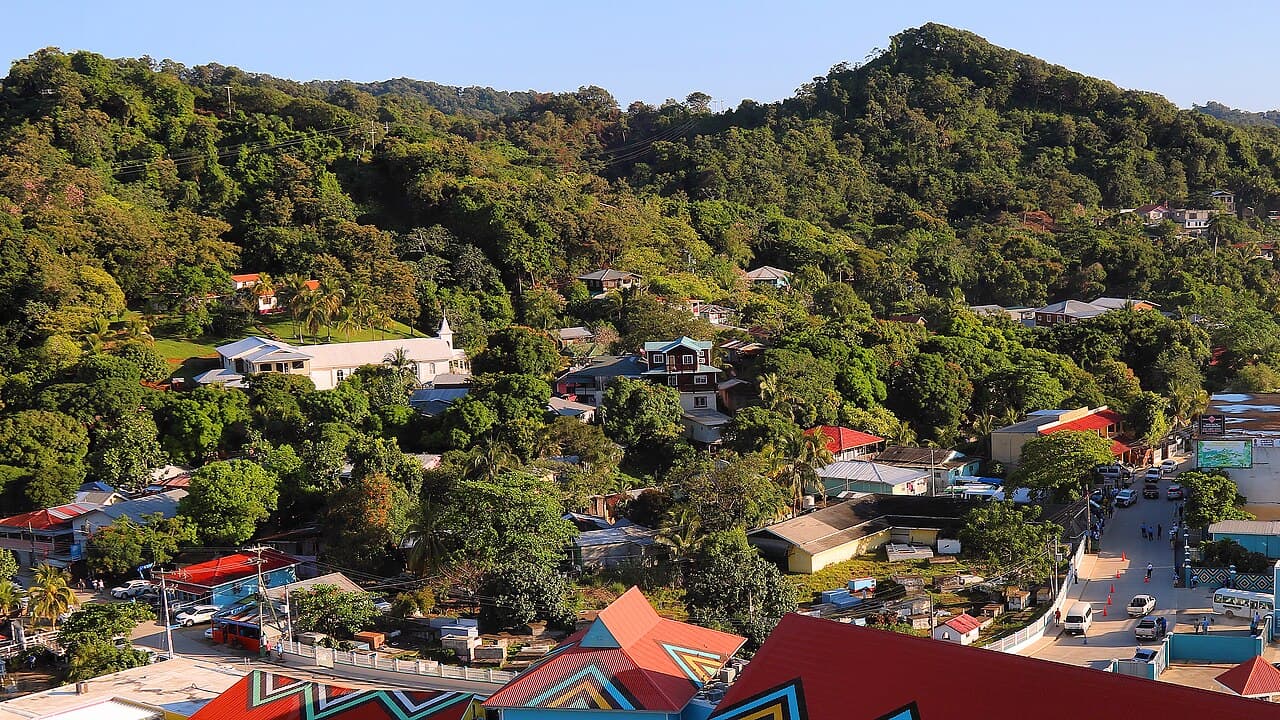
HondurasPhoto: Larry D. Moore / Wikimedia Commons (CC BY 4.0)

Honduras

Country · HN · HNL · America/Tegucigalpa

This information may change. Always check the official source.Last verified: August 2026 by

British citizens now need a visa arranged in advance - Honduras withdrew visa-free entry in 2024, and it is the only CA-4 country that has.

  • Apply in advance through the Honduran Embassy in London, or the nearest Honduran embassy if you are elsewhere. There is no visa on arrival for this.
  • It is the only CA-4 country that does this. Guatemala, El Salvador and Nicaragua all still admit British citizens without one - which is exactly why people arrive at the Honduran border assuming the same and are turned back.
  • You are given a 30-day visit entry stamp on arrival, not 90.
  • The CA-4 agreement's shared 90-day allowance still applies across Guatemala, El Salvador, Honduras and Nicaragua - the clock starts at the first of the four and does not restart at an internal border.
  • Your passport must be valid at least 6 months from arrival, with 2 blank pages.
More details

British citizens need a visa now

This is the fact that ruins itineraries. Honduras withdrew visa-free entry for British citizens in August 2024, as a reciprocal measure, and it has not been restored.

  • Apply in advance through the Honduran Embassy in London, or the nearest Honduran embassy if you are elsewhere. There is no visa on arrival for this.
  • It is the only CA-4 country that does this. Guatemala, El Salvador and Nicaragua all still admit British citizens without one - which is exactly why people arrive at the Honduran border assuming the same and are turned back.
  • Almost every itinerary article written before 2025 says Honduras is visa-free. Those articles are wrong, and the airline check-in desk will apply the current rule.
  • Check your own nationality before booking, whatever passport you hold. Honduras has been adjusting its list.

The stamp says 30 days, the treaty says 90

  • You are given a 30-day visit entry stamp on arrival, not 90.
  • The CA-4 agreement's shared 90-day allowance still applies across Guatemala, El Salvador, Honduras and Nicaragua - the clock starts at the first of the four and does not restart at an internal border.
  • The two numbers do not line up, and the stamp is what gets read at an exit. If you need longer than 30 days, extend at an Instituto Nacional de Migracion office before it expires rather than arguing about the treaty at the airport.
  • Leaving the CA-4 area resets the 90 - Belize, Mexico, Costa Rica and Panama are all outside it.

The rest of it

  • Your passport must be valid at least 6 months from arrival, with 2 blank pages.
  • Complete the Honduran customs declaration form before you enter and again before you leave. It is done online and produces a QR code to show.
  • Land borders may charge 3 US dollars in cash. Keep the receipt - it is your proof you paid, and being asked twice is not unknown.
  • Departure tax by air runs USD 40 to 55 and is normally already in the ticket.
Sources (1)

Honduras follows the regional pattern on allowances, and the Copan artefacts are the export rule to know about.

  • Archaeological objects may not be exported. Anything from Copan or sold as pre-Columbian is national property, and the penalty is criminal rather than a confiscation.
  • The allowance is a carton of cigarettes and a couple of litres of spirits per adult, plus a value cap on other goods.
  • Cash equivalent to USD 10,000 or more must be declared in both directions.
  • Coral and marine curios from the Bay Islands may not be taken out. Roatan's dive shops know this; the beach sellers do not mention it.
  • The CA-4 area with Guatemala, El Salvador and Nicaragua simplifies immigration but not customs - each border still checks goods.
More details
  • Archaeological objects may not be exported. Anything from Copan or sold as pre-Columbian is national property, and the penalty is criminal rather than a confiscation.
  • The allowance is a carton of cigarettes and a couple of litres of spirits per adult, plus a value cap on other goods.
  • Cash equivalent to USD 10,000 or more must be declared in both directions.
  • Coral and marine curios from the Bay Islands may not be taken out. Roatan's dive shops know this; the beach sellers do not mention it.
  • The CA-4 area with Guatemala, El Salvador and Nicaragua simplifies immigration but not customs - each border still checks goods.
Sources (1)

Private clinics in the big towns, state hospitals short of medicine, and a decompression chamber that matters if you dive.

  • State hospitals are underfunded and short of medicines. Use a private clinic in a major town; they are better and they are expensive.
  • There is a decompression chamber on Roatan, which is one of the reasons the island is a serious dive destination rather than just a pretty one.
  • Tap water is not generally safe to drink. Bottled water is cheap and everywhere.
  • Dengue, Zika and malaria are all present, and dengue is the common one. The mosquito bites in daylight.
  • The interior is mountainous and altitude sickness is a risk in parts of the country.
More details

Care

  • State hospitals are underfunded and short of medicines. Use a private clinic in a major town; they are better and they are expensive.
  • Take insurance covering treatment and evacuation, and carry evidence of it - you may be asked to show cover before treatment starts.
  • The Bay Islands have clinics, not hospitals. Anything serious means a flight to the mainland or to the United States.

If you dive

  • There is a decompression chamber on Roatan, which is one of the reasons the island is a serious dive destination rather than just a pretty one.
  • Check your travel insurance covers diving. Standard policies frequently exclude it, or cap it at a depth shallower than the course you have booked.

Water and food

  • Tap water is not generally safe to drink. Bottled water is cheap and everywhere.
  • Ice in tourist restaurants is usually made from purified water; in a village it may not be.

Mosquitoes

  • Dengue, Zika and malaria are all present, and dengue is the common one. The mosquito bites in daylight.
  • Malaria risk is mainly in the lowlands, the north coast and the Bay Islands - which is not what people expect of a beach island.
  • Yellow fever vaccination may be required if you arrive from a country with transmission risk.

Altitude

  • The interior is mountainous and altitude sickness is a risk in parts of the country.

Numbers

  • 911 for an ambulance, and it is the general emergency number.
Sources (1)

Tegucigalpa

Long-term averages for Tegucigalpa: the mean daily high, the mean overnight low and the mean monthly rainfall across 30 years of ERA5 reanalysis data (1995–2024).

DayNight
1520253035°C0500mmJanFebMarAprMayJunJulAugSepOctNovDecJanuary: Day 26 °C, Night 16 °C, Rain 11 mm. February: Day 28 °C, Night 17 °C, Rain 8 mm. March: Day 30 °C, Night 18 °C, Rain 20 mm. April: Day 31 °C, Night 19 °C, Rain 61 mm. May: Day 29 °C, Night 20 °C, Rain 241 mm. June: Day 27 °C, Night 20 °C, Rain 252 mm. July: Day 27 °C, Night 19 °C, Rain 136 mm. August: Day 28 °C, Night 19 °C, Rain 201 mm. September: Day 27 °C, Night 19 °C, Rain 276 mm. October: Day 26 °C, Night 19 °C, Rain 243 mm. November: Day 25 °C, Night 18 °C, Rain 67 mm. December: Day 25 °C, Night 17 °C, Rain 18 mm
Show the monthly table
Tegucigalpa
MonthDay (°C)Night (°C)Rain (mm)
January261611
February28178
March301820
April311961
May2920241
June2720252
July2719136
August2819201
September2719276
October2619243
November251867
December251718

Roatan

Long-term averages for Roatan: the mean daily high, the mean overnight low and the mean monthly rainfall across 30 years of ERA5 reanalysis data (1995–2024).

DayNight
202530°C0500mmJanFebMarAprMayJunJulAugSepOctNovDecJanuary: Day 26 °C, Night 24 °C, Rain 156 mm. February: Day 26 °C, Night 24 °C, Rain 73 mm. March: Day 26 °C, Night 25 °C, Rain 57 mm. April: Day 27 °C, Night 26 °C, Rain 26 mm. May: Day 28 °C, Night 27 °C, Rain 42 mm. June: Day 28 °C, Night 27 °C, Rain 61 mm. July: Day 28 °C, Night 26 °C, Rain 68 mm. August: Day 28 °C, Night 27 °C, Rain 92 mm. September: Day 29 °C, Night 27 °C, Rain 118 mm. October: Day 28 °C, Night 26 °C, Rain 322 mm. November: Day 27 °C, Night 25 °C, Rain 318 mm. December: Day 26 °C, Night 24 °C, Rain 197 mm
Show the monthly table
Roatan
MonthDay (°C)Night (°C)Rain (mm)
January2624156
February262473
March262557
April272626
May282742
June282761
July282668
August282792
September2927118
October2826322
November2725318
December2624197

San Pedro Sula

Long-term averages for San Pedro Sula: the mean daily high, the mean overnight low and the mean monthly rainfall across 30 years of ERA5 reanalysis data (1995–2024).

DayNight
20253035°C0500mmJanFebMarAprMayJunJulAugSepOctNovDecJanuary: Day 26 °C, Night 20 °C, Rain 134 mm. February: Day 28 °C, Night 20 °C, Rain 90 mm. March: Day 30 °C, Night 21 °C, Rain 80 mm. April: Day 32 °C, Night 23 °C, Rain 61 mm. May: Day 32 °C, Night 24 °C, Rain 125 mm. June: Day 31 °C, Night 24 °C, Rain 184 mm. July: Day 31 °C, Night 23 °C, Rain 164 mm. August: Day 31 °C, Night 23 °C, Rain 154 mm. September: Day 31 °C, Night 23 °C, Rain 184 mm. October: Day 29 °C, Night 23 °C, Rain 266 mm. November: Day 27 °C, Night 21 °C, Rain 260 mm. December: Day 26 °C, Night 20 °C, Rain 151 mm
Show the monthly table
San Pedro Sula
MonthDay (°C)Night (°C)Rain (mm)
January2620134
February282090
March302180
April322361
May3224125
June3124184
July3123164
August3123154
September3123184
October2923266
November2721260
December2620151
Sources (1)

Where to stay

The islands, Copan, and as little time as possible in the two big cities.

  • Roatan - West End for bars and dive shops, West Bay for the beach and the resorts, Sandy Bay in between. This is where most visitors to Honduras actually stay.
  • Utila - smaller, cheaper, a serious backpacker and dive-training island, whale sharks offshore.
  • Copan Ruinas - the town beside the Maya site, small, pleasant and walkable, close to the Guatemalan border. The other place visitors genuinely go.
  • The FCDO advises against walking around Tegucigalpa and San Pedro Sula. Stay somewhere with parking and use taxis or Uber door to door.
  • Book the island dive package and accommodation together - most shops do it and it is cheaper.
More details

The Bay Islands

  • Roatan - West End for bars and dive shops, West Bay for the beach and the resorts, Sandy Bay in between. This is where most visitors to Honduras actually stay.
  • Utila - smaller, cheaper, a serious backpacker and dive-training island, whale sharks offshore.
  • Guanaja - the quiet one, few visitors, and reached with more effort.
  • Petty theft is the realistic risk on all three - lock the room, do not leave a bag on the beach.

The mainland

  • Copan Ruinas - the town beside the Maya site, small, pleasant and walkable, close to the Guatemalan border. The other place visitors genuinely go.
  • La Ceiba - the ferry port, with Pico Bonito national park behind it. A night here is usually a transit night.
  • Tela and Trujillo - north coast beaches, and the roads to both carry the FCDO's warning about attacks on vehicles.

The cities

  • The FCDO advises against walking around Tegucigalpa and San Pedro Sula. Stay somewhere with parking and use taxis or Uber door to door.
  • Most itineraries treat both as a night before a flight, and there is little reason to do otherwise.

Practical

  • Book the island dive package and accommodation together - most shops do it and it is cheaper.
  • Air conditioning on the islands is worth paying for from March to September.
Sources (1)

Getting online in Honduras

Two networks with good coverage on the mainland and the Bay Islands, and cheap prepaid data.

  • Tigo and Claro are the two networks and both sell cheap prepaid data with a passport.
  • Coverage is good in the cities, along the north coast and on Roatan and Utila, and thin in the interior mountains and Mosquitia.
  • Worth it for the airport, because the FCDO's advice is to use radio-dispatched or hotel taxis rather than whatever is outside - and arranging that needs a connection before you walk out.
  • Check the plan covers the Bay Islands and not just the mainland.
  • Roatan and Utila have it everywhere - the dive economy runs on it.
More details

The local SIM

  • Tigo and Claro are the two networks and both sell cheap prepaid data with a passport.
  • Coverage is good in the cities, along the north coast and on Roatan and Utila, and thin in the interior mountains and Mosquitia.
  • Buy in a network shop rather than a kiosk if you want the registration done properly first time.

An eSIM instead

  • Worth it for the airport, because the FCDO's advice is to use radio-dispatched or hotel taxis rather than whatever is outside - and arranging that needs a connection before you walk out.
  • Check the plan covers the Bay Islands and not just the mainland.

Wi-fi

  • Roatan and Utila have it everywhere - the dive economy runs on it.
  • The mainland is patchier and hotel wi-fi outside San Pedro Sula and Tegucigalpa is often slow.
  • Copan Ruinas is well served for a small town, being the other place visitors reliably go.
Sources (1)

Honduran sockets are Type and at 120 V, the American standard, mostly unearthed.

  • American and Canadian plugs fit straight in. Everyone else needs an adapter.
  • Two-slot unearthed sockets are the norm, so even an earthed American plug can fail to fit.
  • 120 V means European 230 V-only appliances will not run.
  • The Bay Islands and the interior have frequent cuts, and dive resorts run generators on a schedule.
  • Guatemala, El Salvador and Nicaragua match, so one adapter covers the region.
More details

Sockets in Honduras are Type and at 120 V, 60 Hz - the American standard.

  • American and Canadian plugs fit straight in. Everyone else needs an adapter.
  • Two-slot unearthed sockets are the norm, so even an earthed American plug can fail to fit.
  • 120 V means European 230 V-only appliances will not run.
  • The Bay Islands and the interior have frequent cuts, and dive resorts run generators on a schedule.
  • Guatemala, El Salvador and Nicaragua match, so one adapter covers the region.
  • A Europlug fits nothing here. European travellers need an adapter as well as 100-240 V equipment.
Sources (1)

American plugs, Spanish on the mainland and English on the islands, and two countries in one.

  • Plugs are the American flat two-pin, type and , at 120 V.
  • Spanish is the language on the mainland. On the Bay Islands, English is widely spoken as a first language - an Antillean Creole English that predates Spanish there. This surprises people and makes Roatan far easier than the mainland.
  • The Bay Islands feel Caribbean and the mainland feels Central American, and the difference is not marketing. Prices, language, food and pace all change on the ferry.
  • Hot and humid on both coasts year round; the interior mountains are cooler.
  • Copan is an hour from the Guatemalan border and is often done as a side trip from Antigua - which for a British passport now needs a Honduran visa arranged weeks in advance.
More details

The basics

  • Plugs are the American flat two-pin, type and , at 120 V.
  • Spanish is the language on the mainland. On the Bay Islands, English is widely spoken as a first language - an Antillean Creole English that predates Spanish there. This surprises people and makes Roatan far easier than the mainland.
  • Garifuna communities on the north coast have their own language and culture, and it is worth knowing they are a distinct people rather than a variation.
  • UTC-6 all year. Dialling code +504, eight-digit numbers, no area codes.

Two countries in one

  • The Bay Islands feel Caribbean and the mainland feels Central American, and the difference is not marketing. Prices, language, food and pace all change on the ferry.
  • A trip that does both needs to plan for that, particularly the budget.

Climate

  • Hot and humid on both coasts year round; the interior mountains are cooler.
  • Rainy season roughly May to November, and the north coast is wetter than the Pacific side.
  • Hurricane season June to November.

Small things

  • Copan is an hour from the Guatemalan border and is often done as a side trip from Antigua - which for a British passport now needs a Honduran visa arranged weeks in advance.
  • Cash in small notes, and keep US dollars for the border.
  • Sunday is quiet and much closes.
Sources (2)

Money, cards and cash

The lempira on the mainland, dollars on the islands, and cash for almost everything else.

  • The lempira (HNL) is the currency on the mainland and what you will be quoted in.
  • The Bay Islands run substantially on US dollars - dive shops, hotels and restaurants on Roatan and Utila price in them - though change comes in lempiras.
  • Cards work in San Pedro Sula, Tegucigalpa, Roatan and the larger hotels, and often carry a surcharge.
  • The mainland is cheap; the Bay Islands are not, and Roatan in particular prices like the Caribbean it is.
  • 10% in restaurants, often already added.
More details

The lempira, and the dollar

  • The lempira (HNL) is the currency on the mainland and what you will be quoted in.
  • The Bay Islands run substantially on US dollars - dive shops, hotels and restaurants on Roatan and Utila price in them - though change comes in lempiras.
  • Keep US dollars in cash for the land border fee, which is 3 US dollars and must be in cash. Keep the receipt.
  • Small notes. Breaking a 500 lempira note outside a city is a nuisance.

Cards and machines

  • Cards work in San Pedro Sula, Tegucigalpa, Roatan and the larger hotels, and often carry a surcharge.
  • Cash everywhere else, including most of Copan and the smaller north coast towns.
  • Petty theft is prevalent in cities and on the Bay Islands, so use cash machines inside banks or malls, during the day, and do not count money on the street.
  • Take out several days' worth at once when you are somewhere with a proper bank.

Costs

  • The mainland is cheap; the Bay Islands are not, and Roatan in particular prices like the Caribbean it is.
  • Utila is the budget dive island and is where people go to certify cheaply.

Tipping

  • 10% in restaurants, often already added.
  • Dive guides and boat crews are tipped, and it matters to them.
Sources (2)

Everyday prices

Typical prices in lempira (HNL), averaged across the country by Numbeo and read on 19 August 2026. Tick Convert prices above the table to see every amount in your own currency.

Everyday prices
ItemTypical price
Inexpensive restaurant meal200 HNL
Dinner for two, mid-range, three courses852 HNL
Cappuccino66 HNL
Local draught beer, 0.5 l50 HNL
Bottled water, 0.33 l25 HNL
Public transport, one-way ticket18 HNL
Taxi, starting fare64 HNL
Petrol, 1 litre28 HNL
Cigarettes, pack of 20 (Marlboro)80 HNL
Average net monthly salary14,400 HNL

These are country-wide averages, not a price list: tourist districts, airports and islands sit well above them, and small towns below. The salary line is there for proportion - it is what people living here actually earn.

Sources (1)

Arriving in Honduras

Four international airports, and which one you land at determines almost everything about the trip.

  • Roatan (RTB) - the Bay Islands. Most visitors to Honduras land here and never touch the mainland. Taxis are shared or private and priced per person; agree it first.
  • San Pedro Sula (SAP) - the main mainland gateway and the busiest airport, in a city the FCDO advises against walking around.
  • Use a radio-dispatched taxi or one arranged by your hotel. That is the FCDO's advice and it applies from the moment you arrive.
  • Do not take a public bus with luggage, and do not walk around Tegucigalpa or San Pedro Sula.
  • Ferries run from La Ceiba to Roatan and Utila - the Galaxy Wave and the Utila Dream - and the crossing is notoriously rough. Take the tablets before boarding, not after.
More details
Four doors into the country
  • Roatan (RTB) - the Bay Islands. Most visitors to Honduras land here and never touch the mainland. Taxis are shared or private and priced per person; agree it first.
  • San Pedro Sula (SAP) - the main mainland gateway and the busiest airport, in a city the FCDO advises against walking around.
  • Tegucigalpa (XPL, Palmerola) - the capital's airport since 2021, about 70 km north of the city at Comayagua. It is not the old Toncontin, which is what older guides describe.
  • La Ceiba (LCE) - the ferry port for the islands and the gateway to the north coast.
Getting out of the airport
  • Use a radio-dispatched taxi or one arranged by your hotel. That is the FCDO's advice and it applies from the moment you arrive.
  • Do not take a public bus with luggage, and do not walk around Tegucigalpa or San Pedro Sula.
  • Uber operates in Tegucigalpa and San Pedro Sula and is the practical option there.
  • Agree the price before getting in to anything unmetered, which is most things.
To the islands
  • Ferries run from La Ceiba to Roatan and Utila - the Galaxy Wave and the Utila Dream - and the crossing is notoriously rough. Take the tablets before boarding, not after.
  • Flying to Roatan from San Pedro Sula takes 40 minutes and removes the road and the sea in one move.
  • Palmerola to Tegucigalpa needs a transfer or a shuttle; it is an hour on the road.
Sources (1)

Getting around Honduras

Luxury coaches between cities, and a firm rule about not driving after dark.

  • The luxury private coaches are the right choice for any intercity leg - Hedman Alas and the similar operators run modern buses with assigned seats and security checks at their own terminals.
  • The FCDO describes public buses as poorly maintained, overcrowded and recklessly driven, with frequent and sometimes fatal accidents. That is a direct quote of the situation, not a caution.
  • Do not drive at night. The FCDO's reasons are specific: many vehicles run without lights, and animals wander onto the roads.
  • Roatan has one main road, shared taxis that work like buses, and rental scooters. Distances are short.
More details

Buses

  • The luxury private coaches are the right choice for any intercity leg - Hedman Alas and the similar operators run modern buses with assigned seats and security checks at their own terminals.
  • The FCDO describes public buses as poorly maintained, overcrowded and recklessly driven, with frequent and sometimes fatal accidents. That is a direct quote of the situation, not a caution.
  • The price difference is small measured against that.

Driving

  • Do not drive at night. The FCDO's reasons are specific: many vehicles run without lights, and animals wander onto the roads.
  • Violent attacks on vehicles have occurred on the roads to and from Tela, La Ceiba and Trujillo - the north coast route most visitors use.
  • Some hurricane damage from 2020 has still not been repaired, so a road that exists on the map may not exist on the ground.
  • Four-wheel drive is genuinely needed off the main highways.

On the islands

  • Roatan has one main road, shared taxis that work like buses, and rental scooters. Distances are short.
  • Utila is walked or cycled; there is nothing that needs a car.
  • Water taxis connect the West End and West Bay on Roatan and are the pleasant way to do it.

Apps and platforms

Uber in the two big cities, the customs declaration online, and not much else.

  • Uber - works in Tegucigalpa and San Pedro Sula, and is the safest way to move around either.
  • The Honduran customs declaration - filed online before you enter and again before you leave, producing a QR code. Do it before you fly and screenshot it.
  • Offline maps, because the mountain roads and the north coast have gaps.
  • No ride-hailing on the Bay Islands. Taxis there are hailed and negotiated, and shared taxis run fixed routes for a fixed price per head - ask what the local rate is before you accept the first number.
  • Hedman Alas books online and is worth reserving in advance; the smaller lines do not.
More details

Worth having

  • Uber - works in Tegucigalpa and San Pedro Sula, and is the safest way to move around either.
  • The Honduran customs declaration - filed online before you enter and again before you leave, producing a QR code. Do it before you fly and screenshot it.
  • Offline maps, because the mountain roads and the north coast have gaps.

What does not exist

  • No ride-hailing on the Bay Islands. Taxis there are hailed and negotiated, and shared taxis run fixed routes for a fixed price per head - ask what the local rate is before you accept the first number.
  • Hedman Alas books online and is worth reserving in advance; the smaller lines do not.
Sources (2)

Honduran roads are free, the main highways are reasonable, and the security advice shapes where and when you drive.

  • Roads are free and the CA-5 between Tegucigalpa and San Pedro Sula is the main artery.
  • Do not drive at night between cities. This is the standing official advice and the local practice, for both road and security reasons.
  • The alcohol limit is 0.07 %.
  • The Bay Islands are reached by ferry or plane and a car is of little use on Roatan, where taxis and scooters do the work.
  • Police and military checkpoints are common and documents are checked routinely.
More details

Free roads, adequate main highways, and advice about routes and hours that is worth following.

  • Roads are free and the CA-5 between Tegucigalpa and San Pedro Sula is the main artery.
  • Do not drive at night between cities. This is the standing official advice and the local practice, for both road and security reasons.
  • The alcohol limit is 0.07 %.
  • The Bay Islands are reached by ferry or plane and a car is of little use on Roatan, where taxis and scooters do the work.
  • Police and military checkpoints are common and documents are checked routinely.
  • Roads to the Copan ruins and the north coast are paved and straightforward in daylight; the mountain routes are not.
Sources (1)

Safety and security

One of the highest violent crime rates in Latin America, and it very rarely touches tourists - but the roads and the buses genuinely do.

  • Honduras has one of the highest violent crime rates in Latin America. It is also true that serious crime does not usually target tourists, and that the great majority of visitors - most of whom go to Roatan and Copan - have no trouble.
  • Petty theft in cities and on the Bay Islands. Rooms, beaches, bags.
  • Trafficking carries 15 to 20 years. Use carries 3 to 9 months of compulsory rehabilitation. There is no visitor exception.
  • Utila and Roatan are among the cheapest places in the world to certify, which means the volume of very new divers is high. Choose the shop on its safety record, not its price.
More details

The honest framing

  • Honduras has one of the highest violent crime rates in Latin America. It is also true that serious crime does not usually target tourists, and that the great majority of visitors - most of whom go to Roatan and Copan - have no trouble.
  • The gap between the statistic and the visitor experience is wide here, wider than in Guatemala or El Salvador, because the violence is concentrated in city neighbourhoods that no itinerary passes through.

What actually affects visitors

  • Petty theft in cities and on the Bay Islands. Rooms, beaches, bags.
  • Do not walk around Tegucigalpa or San Pedro Sula. Taxi or Uber, door to door.
  • The roads. Poor driving, unlit vehicles, animals on the carriageway, and unrepaired hurricane damage from 2020. Never drive at night.
  • Public buses are the FCDO's other named risk: poorly maintained, overcrowded, recklessly driven, with frequent and sometimes fatal accidents. Take the luxury coaches.
  • Violent attacks on vehicles have happened on the roads to and from Tela, La Ceiba and Trujillo. Travel those in daylight and preferably not in a conspicuous rental.

Drugs

  • Trafficking carries 15 to 20 years. Use carries 3 to 9 months of compulsory rehabilitation. There is no visitor exception.

Diving

  • Utila and Roatan are among the cheapest places in the world to certify, which means the volume of very new divers is high. Choose the shop on its safety record, not its price.
  • Check your insurance covers diving to the depth you will actually go.

Weather

  • Hurricane season is June to November. Hurricanes Eta and Iota in 2020 did damage the country has still not finished repairing, which tells you what the risk looks like when it lands.
Sources (1)

Emergency numbers and what to do

911 reaches all services, and the insurer is the second call.

  • 911 works nationally and operators speak Spanish.
  • On the Bay Islands, English will get you further, and the dive shops are a practical first contact in a diving emergency because they know the chamber and the flights.
  • Carry evidence of your insurance. Private clinics may want to see cover before they treat, and the FCDO says to carry it for that reason.
  • The chamber is on Roatan. In a suspected decompression illness, the dive shop calls it and arranges the transfer; do not attempt to self-organise.
  • If a road is blocked or something has happened, do not continue after dark. Stop somewhere populated.
More details

The numbers

Emergency numbers and what to do
ForCall
Police, fire, ambulance911
Fire (bomberos) direct198
Red Cross ambulance195
  • 911 works nationally and operators speak Spanish.
  • On the Bay Islands, English will get you further, and the dive shops are a practical first contact in a diving emergency because they know the chamber and the flights.

If something goes wrong

  • Carry evidence of your insurance. Private clinics may want to see cover before they treat, and the FCDO says to carry it for that reason.
  • Contact the insurer immediately if you are referred to a hospital.
  • Report crime to the police and get the report for the claim.
  • Lost passport: police report, then your embassy - most are in Tegucigalpa, which is a journey from Roatan.

Diving emergencies

  • The chamber is on Roatan. In a suspected decompression illness, the dive shop calls it and arranges the transfer; do not attempt to self-organise.
  • Do not fly for 24 hours after diving, which matters when the only way off the island is a plane.

On the road

  • If a road is blocked or something has happened, do not continue after dark. Stop somewhere populated.
Sources (2)