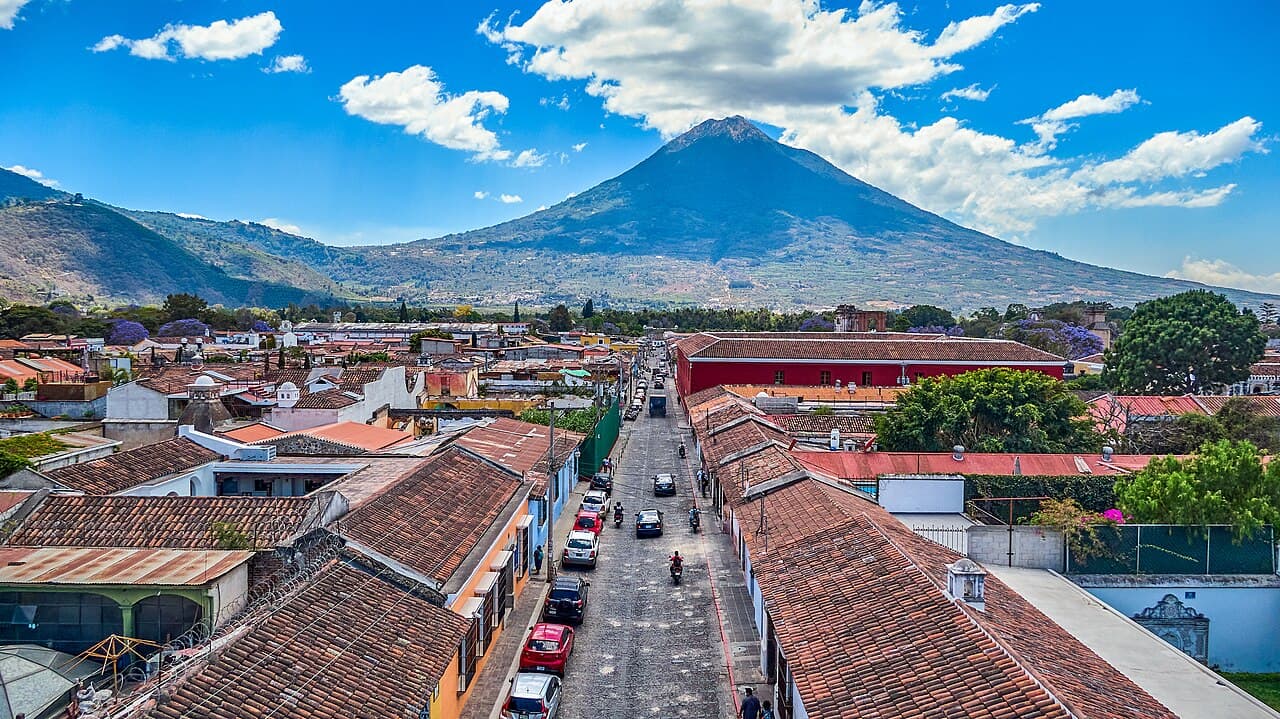
GuatemalaPhoto: Juan Francisco / Wikimedia Commons (CC BY-SA 2.0)

Guatemala

Country · GT · GTQ · America/Guatemala

This information may change. Always check the official source.Last verified: August 2026 by

Ninety days - but they are shared with El Salvador, Honduras and Nicaragua, and the clock does not restart when you cross a border.

  • The 90 days start when you enter the first of the four, whichever it is.
  • Crossing between them does not restart the clock. Six weeks in Guatemala then six weeks in Nicaragua is twelve weeks of the same ninety days, not two fresh allowances.
  • Your passport must be valid at least 6 months from arrival and have 2 blank pages.
  • Guatemala sorts nationalities into categories A, B and C and does not publish them as a usable public list. Category A needs no visa; the others need one arranged in advance, and category C needs prior authorisation from the Interior Ministry, which takes weeks.
More details

The CA-4 clock is the thing to understand

Guatemala, El Salvador, Honduras and Nicaragua share one 90-day allowance under the CA-4 Border Control Agreement. This is the Schengen problem in Central America, and it is the single most common misunderstanding here.

  • The 90 days start when you enter the first of the four, whichever it is.
  • Crossing between them does not restart the clock. Six weeks in Guatemala then six weeks in Nicaragua is twelve weeks of the same ninety days, not two fresh allowances.
  • The stamp you get at an internal CA-4 border is not a new entry. It looks like one, which is precisely why people get caught.
  • Leaving the CA-4 area resets it - Belize, Mexico, Costa Rica and Panama are all outside it. A few days in Belize is the standard reset, and it is legitimate.
  • You can extend by 30 days, applied for and paid before the 90 expire, at the migration office in Guatemala City.
  • Overstaying is fined, payable before you are allowed to leave.

At the border

  • Your passport must be valid at least 6 months from arrival and have 2 blank pages.
  • File the traveller declaration online before you fly. The Declaracion Jurada Regional de Viajero is completed electronically through the SAT portal and takes a few minutes; it replaces the paper form at La Aurora. Carry the confirmation email or a screenshot of the QR code - the airport wi-fi is not to be relied on.
  • There is a 30 US dollar departure tax, payable in dollars or quetzals. It is normally already in the ticket price, but check, because at a land border it is not.

If your passport needs a visa

  • Guatemala sorts nationalities into categories A, B and C and does not publish them as a usable public list. Category A needs no visa; the others need one arranged in advance, and category C needs prior authorisation from the Interior Ministry, which takes weeks.
  • Confirm with the nearest Guatemalan consulate rather than trusting a summary, and start early if you may be in category C.
Sources (2)

Guatemala's allowances are ordinary and its export rules are not: Maya artefacts and colonial religious art are national property.

  • Archaeological objects may not be exported. Anything pre-Columbian is state property regardless of what the market seller in Antigua tells you, and the airport screens for it.
  • Colonial religious art needs a permit, which affects the older santos and paintings sold in the antique shops.
  • The allowance is a carton of cigarettes and a couple of litres of spirits per adult, plus a value cap on other goods.
  • Cash equivalent to USD 10,000 or more must be declared on entry and exit.
  • Plants, seeds and fresh produce are controlled, and the coffee you buy needs to be roasted and packaged rather than green.
More details
  • Archaeological objects may not be exported. Anything pre-Columbian is state property regardless of what the market seller in Antigua tells you, and the airport screens for it.
  • Colonial religious art needs a permit, which affects the older santos and paintings sold in the antique shops.
  • The allowance is a carton of cigarettes and a couple of litres of spirits per adult, plus a value cap on other goods.
  • Cash equivalent to USD 10,000 or more must be declared on entry and exit.
  • Plants, seeds and fresh produce are controlled, and the coffee you buy needs to be roasted and packaged rather than green.
  • The land borders with Mexico, Belize, Honduras and El Salvador are all customs crossings with their own hours and their own fees.
Sources (1)

Private clinics in the cities, altitude everywhere in the highlands, and a British prescription that is not valid here.

  • Much of the country you will visit is high. Guatemala City and Antigua sit above 1,500 m, Quetzaltenango above 2,300 m, and the volcano summits far higher.
  • Private hospitals and clinics in Guatemala City and Antigua are good; outside them, facilities thin out fast.
  • Do not drink the tap water. Bottled or filtered water is universal and cheap; most hotels provide a refill dispenser.
  • Dengue, Zika and chikungunya are present in the lowlands, and the mosquito bites during the day.
  • 122 or 123 for an ambulance.
More details

Altitude

  • Much of the country you will visit is high. Guatemala City and Antigua sit above 1,500 m, Quetzaltenango above 2,300 m, and the volcano summits far higher.
  • Altitude sickness is a real risk here and it catches people who flew in from sea level and went straight up a volcano on day two. Give it a day.

Care

  • Private hospitals and clinics in Guatemala City and Antigua are good; outside them, facilities thin out fast.
  • Take insurance covering treatment and medical evacuation. Semuc Champey and the Peten are a long way from a hospital that can do anything complicated.
  • A prescription written abroad is not valid in Guatemala. Bring what you need, in original packaging, with the prescription as documentation rather than as an instrument.
  • Pharmacies are good and everywhere: Meykos, Cruz Verde, Galeno and Batres are the chains the FCDO names.

Food and water

  • Do not drink the tap water. Bottled or filtered water is universal and cheap; most hotels provide a refill dispenser.
  • Street food is part of the point of Guatemala, and the usual rules apply - busy stalls, hot food, fruit you peel.

Mosquitoes

  • Dengue, Zika and chikungunya are present in the lowlands, and the mosquito bites during the day.
  • The highlands are high enough to be largely free of it, which is one of the compensations for the cold nights.

Numbers

  • 122 or 123 for an ambulance.
Sources (1)

Guatemala City

Long-term averages for Guatemala City: the mean daily high, the mean overnight low and the mean monthly rainfall across 30 years of ERA5 reanalysis data (1995–2024).

DayNight
1015202530°C0200mmJanFebMarAprMayJunJulAugSepOctNovDecJanuary: Day 24 °C, Night 13 °C, Rain 8 mm. February: Day 26 °C, Night 13 °C, Rain 6 mm. March: Day 27 °C, Night 14 °C, Rain 11 mm. April: Day 27 °C, Night 16 °C, Rain 31 mm. May: Day 26 °C, Night 16 °C, Rain 94 mm. June: Day 24 °C, Night 16 °C, Rain 171 mm. July: Day 24 °C, Night 15 °C, Rain 94 mm. August: Day 25 °C, Night 16 °C, Rain 109 mm. September: Day 24 °C, Night 16 °C, Rain 158 mm. October: Day 23 °C, Night 15 °C, Rain 125 mm. November: Day 23 °C, Night 14 °C, Rain 41 mm. December: Day 24 °C, Night 13 °C, Rain 10 mm
Show the monthly table
Guatemala City
MonthDay (°C)Night (°C)Rain (mm)
January24138
February26136
March271411
April271631
May261694
June2416171
July241594
August2516109
September2416158
October2315125
November231441
December241310

Flores

Long-term averages for Flores: the mean daily high, the mean overnight low and the mean monthly rainfall across 30 years of ERA5 reanalysis data (1995–2024).

DayNight
152025303540°C0250mmJanFebMarAprMayJunJulAugSepOctNovDecJanuary: Day 27 °C, Night 19 °C, Rain 36 mm. February: Day 30 °C, Night 20 °C, Rain 20 mm. March: Day 33 °C, Night 21 °C, Rain 22 mm. April: Day 36 °C, Night 23 °C, Rain 32 mm. May: Day 35 °C, Night 24 °C, Rain 99 mm. June: Day 32 °C, Night 24 °C, Rain 218 mm. July: Day 32 °C, Night 24 °C, Rain 155 mm. August: Day 32 °C, Night 24 °C, Rain 198 mm. September: Day 31 °C, Night 23 °C, Rain 235 mm. October: Day 29 °C, Night 23 °C, Rain 192 mm. November: Day 28 °C, Night 21 °C, Rain 97 mm. December: Day 27 °C, Night 20 °C, Rain 57 mm
Show the monthly table
Flores
MonthDay (°C)Night (°C)Rain (mm)
January271936
February302020
March332122
April362332
May352499
June3224218
July3224155
August3224198
September3123235
October2923192
November282197
December272057

Quetzaltenango

Long-term averages for Quetzaltenango: the mean daily high, the mean overnight low and the mean monthly rainfall across 30 years of ERA5 reanalysis data (1995–2024).

DayNight
101520°C0500mmJanFebMarAprMayJunJulAugSepOctNovDecJanuary: Day 19 °C, Night 11 °C, Rain 33 mm. February: Day 20 °C, Night 11 °C, Rain 42 mm. March: Day 20 °C, Night 11 °C, Rain 105 mm. April: Day 20 °C, Night 12 °C, Rain 234 mm. May: Day 19 °C, Night 13 °C, Rain 466 mm. June: Day 19 °C, Night 13 °C, Rain 455 mm. July: Day 19 °C, Night 13 °C, Rain 291 mm. August: Day 19 °C, Night 13 °C, Rain 344 mm. September: Day 19 °C, Night 13 °C, Rain 465 mm. October: Day 18 °C, Night 13 °C, Rain 358 mm. November: Day 18 °C, Night 12 °C, Rain 114 mm. December: Day 18 °C, Night 11 °C, Rain 44 mm
Show the monthly table
Quetzaltenango
MonthDay (°C)Night (°C)Rain (mm)
January191133
February201142
March2011105
April2012234
May1913466
June1913455
July1913291
August1913344
September1913465
October1813358
November1812114
December181144
Sources (1)

Where to stay

Almost nobody stays in Guatemala City, and there is a reason for that.

  • The FCDO says no part of Guatemala City is free of crime, Zone 10 included. Zone 1, the historic centre, carries a particular risk to visitors, and Zones 6, 7, 8 and 18 to 25 warrant caution.
  • If you must stay, stay in Zone 10 or 14 and use cars rather than walking after dark.
  • Antigua - colonial, walkable, volcano views, the best range of accommodation in the country and a real tourist police presence. This is the default.
  • Lake Atitlan - Panajachel is the transport hub, San Pedro the backpacker village, San Marcos the quiet one, Santa Cruz the one you can only reach by boat.
  • Antigua is cold at night. It sits at over 1,500 m and few buildings have heating; ask for blankets rather than assuming.
More details

Guatemala City

  • The FCDO says no part of Guatemala City is free of crime, Zone 10 included. Zone 1, the historic centre, carries a particular risk to visitors, and Zones 6, 7, 8 and 18 to 25 warrant caution.
  • If you must stay, stay in Zone 10 or 14 and use cars rather than walking after dark.
  • Most people do not stay at all - they land and go straight to Antigua.

Where people actually stay

  • Antigua - colonial, walkable, volcano views, the best range of accommodation in the country and a real tourist police presence. This is the default.
  • Lake Atitlan - Panajachel is the transport hub, San Pedro the backpacker village, San Marcos the quiet one, Santa Cruz the one you can only reach by boat.
  • Flores - the island town that is the base for Tikal, and pleasant in its own right.
  • Semuc Champey and Lanquin - remote, basic, and reached by a road that is genuinely rough.

Practical

  • Antigua is cold at night. It sits at over 1,500 m and few buildings have heating; ask for blankets rather than assuming.
  • Book ahead around Semana Santa. Antigua's Holy Week is one of the biggest events in Latin America and the town sells out months in advance.
  • Check the hot water actually exists in cheaper places, and how it is heated.
Sources (1)

Getting online in Guatemala

Two networks, cheap prepaid data, and coverage that is better than the roads.

  • Claro and Tigo are the two networks, and between them they cover the country including Peten and the Atitlan basin.
  • Prepaid SIMs are sold everywhere - network shops, supermarkets, corner shops - and cost very little. Take the passport.
  • The reason to have data from the moment you land is the FCDO's own advice: do not hail a taxi in the street, use Uber or a radio-dispatched cab. Both need a connection.
  • Install and test it before you fly. Both Guatemalan networks are well supported.
  • Antigua is unusually well connected - it is a language-school and remote-work town and cafes there have real internet.
More details

The local SIM

  • Claro and Tigo are the two networks, and between them they cover the country including Peten and the Atitlan basin.
  • Prepaid SIMs are sold everywhere - network shops, supermarkets, corner shops - and cost very little. Take the passport.
  • Coverage follows the population, not the road. You will have signal in Antigua, Panajachel and Flores and lose it on the mountain roads between them.

An eSIM instead

  • The reason to have data from the moment you land is the FCDO's own advice: do not hail a taxi in the street, use Uber or a radio-dispatched cab. Both need a connection.
  • Install and test it before you fly. Both Guatemalan networks are well supported.

Wi-fi

  • Antigua is unusually well connected - it is a language-school and remote-work town and cafes there have real internet.
  • Lake Atitlan villages vary enormously between one another; San Pedro and Panajachel are fine, smaller villages are not.
  • Assume nothing in Peten outside Flores.
Sources (1)

Guatemalan sockets are Type and at 120 V, and older buildings usually have unearthed two-slot outlets.

  • American and Canadian plugs fit straight in. Everyone else needs an adapter.
  • Two-slot unearthed sockets are the norm outside newer hotels, so an earthed American plug sometimes does not fit either.
  • 120 V means European 230 V-only appliances will not run.
  • Supply in the highlands and around Lake Atitlan is unreliable, with cuts most weeks and voltage that sags under evening load.
  • Chargers marked 100-240 V are fine, which covers nearly everything a traveller carries.
More details

Sockets in Guatemala are Type and at 120 V, 60 Hz - the American standard.

  • American and Canadian plugs fit straight in. Everyone else needs an adapter.
  • Two-slot unearthed sockets are the norm outside newer hotels, so an earthed American plug sometimes does not fit either.
  • 120 V means European 230 V-only appliances will not run.
  • Supply in the highlands and around Lake Atitlan is unreliable, with cuts most weeks and voltage that sags under evening load.
  • Chargers marked 100-240 V are fine, which covers nearly everything a traveller carries.
  • Belize, next door, is the odd one out. It mixes American sockets with British Type and runs at both 110 V and 220 V.
Sources (1)

American plugs, an eternal spring at altitude, and Spanish that everyone comes here to learn.

  • Plugs are the American flat two-pin, type and , at 120 V. European appliances with a heating element need a converter, not just an adapter.
  • Spanish is the language, and English is limited outside Antigua and the tourist trade. Twenty-plus Mayan languages are spoken as first languages in the highlands.
  • The highlands are "the land of eternal spring" - warm days, genuinely cold nights, all year.
  • The rainy season runs roughly May to October and means a heavy afternoon downpour, not all-day rain. It also means landslides on mountain roads.
  • Ask before photographing anyone, and accept no for an answer. See the safety section for why this matters more here than almost anywhere.
More details

The basics

  • Plugs are the American flat two-pin, type and , at 120 V. European appliances with a heating element need a converter, not just an adapter.
  • Spanish is the language, and English is limited outside Antigua and the tourist trade. Twenty-plus Mayan languages are spoken as first languages in the highlands.
  • Antigua is one of the cheapest and best places in the world to learn Spanish, which is why half the foreigners there are in a one-to-one class in a courtyard.
  • UTC-6 all year, no daylight saving. Dialling code +502, no area codes.

Climate

  • The highlands are "the land of eternal spring" - warm days, genuinely cold nights, all year.
  • The rainy season runs roughly May to October and means a heavy afternoon downpour, not all-day rain. It also means landslides on mountain roads.
  • The lowlands - Peten, the Caribbean coast - are hot and humid year round.

Conventions

  • Ask before photographing anyone, and accept no for an answer. See the safety section for why this matters more here than almost anywhere.
  • Markets are a working economy, not a display. Chichicastenango on Thursday and Sunday is the big one.
  • Bargaining is normal in markets and not in shops.
  • Sunday is family day and things move slowly.
Sources (2)

Money, cards and cash

The quetzal is cash country outside the cities, and dollars are useful but not currency.

  • The quetzal (GTQ) is the currency and it is a cash economy once you leave Guatemala City and Antigua.
  • US dollars are widely accepted for tourist services - shuttles, tours, the departure tax - but they are not legal tender and change comes in quetzals at a rate that is not in your favour.
  • Cards work in Guatemala City, Antigua and larger hotels and restaurants and almost nowhere else.
  • Cash machines are the risk point. The FCDO's warnings about express kidnapping involve victims being driven to machines - use one inside a bank or a guarded supermarket during the day, never a street-facing machine at night.
  • Tipping is 10% in restaurants where service is not included.
More details

The quetzal

  • The quetzal (GTQ) is the currency and it is a cash economy once you leave Guatemala City and Antigua.
  • US dollars are widely accepted for tourist services - shuttles, tours, the departure tax - but they are not legal tender and change comes in quetzals at a rate that is not in your favour.
  • Carry small notes. A 200 quetzal note is hard to break in a village.

Cards and machines

  • Cards work in Guatemala City, Antigua and larger hotels and restaurants and almost nowhere else.
  • Cash machines are the risk point. The FCDO's warnings about express kidnapping involve victims being driven to machines - use one inside a bank or a guarded supermarket during the day, never a street-facing machine at night.
  • Take out what you need for several days at once when you are somewhere with a reliable bank, especially before heading to Semuc Champey or the smaller Atitlan villages.
  • Decline the offer to be charged in your own currency.

Everyday

  • Tipping is 10% in restaurants where service is not included.
  • Guides, shuttle drivers and boat crews are tipped in small quetzal notes, which is another reason to carry them.
  • Markets are haggled, politely and without drama. Chichicastenango expects it; a shop does not.
Sources (2)

Everyday prices

Typical prices in quetzal (GTQ), averaged across the country by Numbeo and read on 19 August 2026. Tick Convert prices above the table to see every amount in your own currency.

Everyday prices
ItemTypical price
Inexpensive restaurant meal60 GTQ
Dinner for two, mid-range, three courses384 GTQ
Cappuccino27 GTQ
Local draught beer, 0.5 l25 GTQ
Bottled water, 0.33 l8.61 GTQ
Public transport, one-way ticket12 GTQ
Taxi, starting fare40 GTQ
Petrol, 1 litre9.28 GTQ
Cigarettes, pack of 20 (Marlboro)30 GTQ
Average net monthly salary4,500 GTQ

These are country-wide averages, not a price list: tourist districts, airports and islands sit well above them, and small towns below. The salary line is there for proportion - it is what people living here actually earn.

Sources (1)

From La Aurora into the city, and on to Antigua

The airport is inside Guatemala City, and most arrivals do not stay - they get straight into a shuttle to Antigua.

  • La Aurora sits in Zone 13, inside Guatemala City, about 15 minutes from the main hotel zones when the traffic allows.
  • Do not walk out and hail a taxi. The FCDO warns specifically about express kidnappings involving unauthorised taxis. Use the official yellow radio-dispatched taxis from the desk inside, Uber, or a car sent by your hotel.
  • Antigua is about an hour away and is where the majority of arrivals actually sleep on night one.
  • Shuttles are the whole transport system for tourists here - Antigua to Lake Atitlan, Atitlan to Chichicastenango, on to Semuc Champey and Flores. They are booked through any agency or hostel, they leave early, and they take longer than the distance suggests.
More details
The airport is in the city
  • La Aurora sits in Zone 13, inside Guatemala City, about 15 minutes from the main hotel zones when the traffic allows.
  • Do not walk out and hail a taxi. The FCDO warns specifically about express kidnappings involving unauthorised taxis. Use the official yellow radio-dispatched taxis from the desk inside, Uber, or a car sent by your hotel.
  • Zone 10 (Zona Viva) and Zone 14 are where most visitors stay if they stay in the capital at all.
Most people go straight to Antigua
  • Antigua is about an hour away and is where the majority of arrivals actually sleep on night one.
  • Shared shuttles run from the airport to Antigua all day and are booked in advance or at a desk in arrivals. They are the standard route and cost a fraction of a private car.
  • A private transfer is not expensive either, and is worth it on a late arrival.
  • Do not take a public bus from the airport with luggage after dark. The FCDO's warnings about buses are not decorative.
Onward
  • Shuttles are the whole transport system for tourists here - Antigua to Lake Atitlan, Atitlan to Chichicastenango, on to Semuc Champey and Flores. They are booked through any agency or hostel, they leave early, and they take longer than the distance suggests.
  • Flying to Flores for Tikal saves a very long overnight bus.
Sources (1)

Getting around Guatemala

Tourist shuttles, chicken buses you should think twice about, and boats on the lake.

  • Shared tourist shuttles are how visitors move around Guatemala. Every hostel and agency sells the same seats on the same minibuses, so shop on departure time rather than price.
  • The painted "chicken buses" are converted American school buses and are the country's real transport network - and the FCDO is blunt that gang attacks and extortion on bus drivers have caused serious injury and death, and that armed robberies happen on most tourist routes.
  • Public lanchas connect the Atitlan villages and are cheap, frequent until late afternoon, and stop early. Missing the last boat means a long road journey around.
  • Roads are mountainous, unlit and slow. Landslides close them in the rainy season.
More details

The shuttle network

  • Shared tourist shuttles are how visitors move around Guatemala. Every hostel and agency sells the same seats on the same minibuses, so shop on departure time rather than price.
  • They are slow. Antigua to Lake Atitlan is about 90 km and takes three hours.

Buses

  • The painted "chicken buses" are converted American school buses and are the country's real transport network - and the FCDO is blunt that gang attacks and extortion on bus drivers have caused serious injury and death, and that armed robberies happen on most tourist routes.
  • Private intercity coaches - the first-class lines between the big cities - are considerably safer, and are the right choice for a long leg.
  • Do not travel intercity at night.

On the lake

  • Public lanchas connect the Atitlan villages and are cheap, frequent until late afternoon, and stop early. Missing the last boat means a long road journey around.
  • Agree the fare before boarding on a private boat.

Driving

  • Roads are mountainous, unlit and slow. Landslides close them in the rainy season.
  • Roadblocks from protests happen and can close a highway for a day or more.

Apps and platforms

Uber, the declaration portal and one phone number worth more than any app.

  • Uber works in Guatemala City and Antigua and is the FCDO's recommended alternative to a street taxi.
  • The SAT portal for the traveller declaration - file it before you fly.
  • Maps downloaded offline. Signal disappears on the mountain roads, and that is exactly where you want to know where you are.
  • 1500 is the tourist assistance line. It is free, it runs 24 hours a day all year, operators handle English, and it is a direct liaison with embassies, consulates and the security services. It is not a call centre for hotel bookings - it exists to help a foreign visitor in trouble.
  • Save it before you need it. Almost nothing written for visitors to Guatemala mentions it, and it is the single most useful thing in this guide.
More details

Worth having

  • Uber works in Guatemala City and Antigua and is the FCDO's recommended alternative to a street taxi.
  • The SAT portal for the traveller declaration - file it before you fly.
  • Maps downloaded offline. Signal disappears on the mountain roads, and that is exactly where you want to know where you are.

The number to save

  • 1500 is the tourist assistance line. It is free, it runs 24 hours a day all year, operators handle English, and it is a direct liaison with embassies, consulates and the security services. It is not a call centre for hotel bookings - it exists to help a foreign visitor in trouble.
  • Save it before you need it. Almost nothing written for visitors to Guatemala mentions it, and it is the single most useful thing in this guide.
Sources (2)

Guatemalan roads are free, the mountain routes are slow and beautiful, and chicken buses set the pace.

  • Roads are free, and the CA-1 through the highlands is the main route between Guatemala City, Antigua, Lake Atitlan and Quetzaltenango.
  • Chicken buses overtake on blind bends and stop without warning; they set the rhythm of every highland road.
  • Speed bumps (tumulos) are unmarked and frequent through villages, and they damage more hire cars than anything else.
  • Do not drive at night between towns, which is both official advice and local practice.
  • The alcohol limit is 0.08 %, and checkpoints are common at weekends.
More details

Free roads, slow mountain routes, and buses that overtake wherever they like.

  • Roads are free, and the CA-1 through the highlands is the main route between Guatemala City, Antigua, Lake Atitlan and Quetzaltenango.
  • Chicken buses overtake on blind bends and stop without warning; they set the rhythm of every highland road.
  • Speed bumps (tumulos) are unmarked and frequent through villages, and they damage more hire cars than anything else.
  • Do not drive at night between towns, which is both official advice and local practice.
  • The alcohol limit is 0.08 %, and checkpoints are common at weekends.
Sources (1)

Safety and security

One of the highest violent crime rates in Latin America, volcanoes with no rescue service, and a rule about photographing children that is not about manners.

  • Guatemala has one of the highest violent crime rates in Latin America, and serious attacks have happened in tourist areas. That is the FCDO's assessment, not a hedge.
  • Unauthorised taxis and express kidnapping. Victims are picked up and driven between cash machines. Use radio-dispatched yellow taxis, Uber, or a hotel car.
  • People die on Guatemala's volcanoes because they underestimate them, and there is no mountain rescue service. Nobody is coming.
  • Do not photograph people without permission, and especially not children. In remote areas there have been attacks on foreigners driven by rumours of child abduction, and they have been lethal.
More details

The honest picture

  • Guatemala has one of the highest violent crime rates in Latin America, and serious attacks have happened in tourist areas. That is the FCDO's assessment, not a hedge.
  • This does not make it a country to avoid - it makes it a country where the standard precautions are not optional. Most visitors have no trouble at all.

The specific risks

  • Unauthorised taxis and express kidnapping. Victims are picked up and driven between cash machines. Use radio-dispatched yellow taxis, Uber, or a hotel car.
  • Buses. Gang attacks and extortion on drivers have caused deaths, and armed robberies occur on most tourist routes, including around Lake Atitlan. Private coaches are safer.
  • Guatemala City is risky throughout, and the rural departments of Huehuetenango, Chiquimula, Zacapa, Izabal, San Marcos and Peten have elevated crime.
  • Do not travel intercity after dark.

Volcanoes

  • People die on Guatemala's volcanoes because they underestimate them, and there is no mountain rescue service. Nobody is coming.
  • Check the official volcano status before climbing - several are active, and Fuego in particular.
  • Go with a licensed guide, take warm clothing for the summit, and do not overnight on an active cone because a photograph looked good.

The child photography rule

  • Do not photograph people without permission, and especially not children. In remote areas there have been attacks on foreigners driven by rumours of child abduction, and they have been lethal.
  • This is not about etiquette. It is the one piece of advice in this section that has a body count attached and that visitors routinely ignore.

Drugs

  • Penalties are severe, for use as well as trafficking, and the FCDO describes the prisons as overcrowded, violent and dirty.

If something happens

  • Call 1500. English-speaking, 24 hours, and connected directly to the embassies and the tourist police.
Sources (2)

Emergency numbers and what to do

1500 is the number to save. It is free, it is 24 hours, and it answers in English.

  • 1500 is the one to use. ASISTUR runs it free, 24 hours, 365 days a year, it handles English, and it connects directly to embassies, consulates and the security services. If something has gone wrong and you do not know who to call, this is the answer.
  • 122 and 123 reach the bomberos, who run the ambulances as well as the fire service.
  • Report a crime to the police and get the report before you leave the country - no insurer pays without one, and 1500 will help you do it.
  • Contact your insurer quickly if you are referred to a hospital; private hospitals want payment or a guarantee up front.
  • If a roadblock closes the highway, do not attempt to pass it. Wait or turn back.
More details

The numbers

Emergency numbers and what to do
ForCall
Tourist assistance, any emergency1500
Ambulance and fire122 or 123
National police110
  • 1500 is the one to use. ASISTUR runs it free, 24 hours, 365 days a year, it handles English, and it connects directly to embassies, consulates and the security services. If something has gone wrong and you do not know who to call, this is the answer.
  • 122 and 123 reach the bomberos, who run the ambulances as well as the fire service.

If something goes wrong

  • Report a crime to the police and get the report before you leave the country - no insurer pays without one, and 1500 will help you do it.
  • Contact your insurer quickly if you are referred to a hospital; private hospitals want payment or a guarantee up front.
  • Lost passport: 1500 will put you in touch with your embassy, most of which are in Guatemala City.

On the road

  • If a roadblock closes the highway, do not attempt to pass it. Wait or turn back.
  • On a volcano, there is no rescue service. Tell someone where you are going and when you will be back, and turn around when the weather changes.
Sources (3)