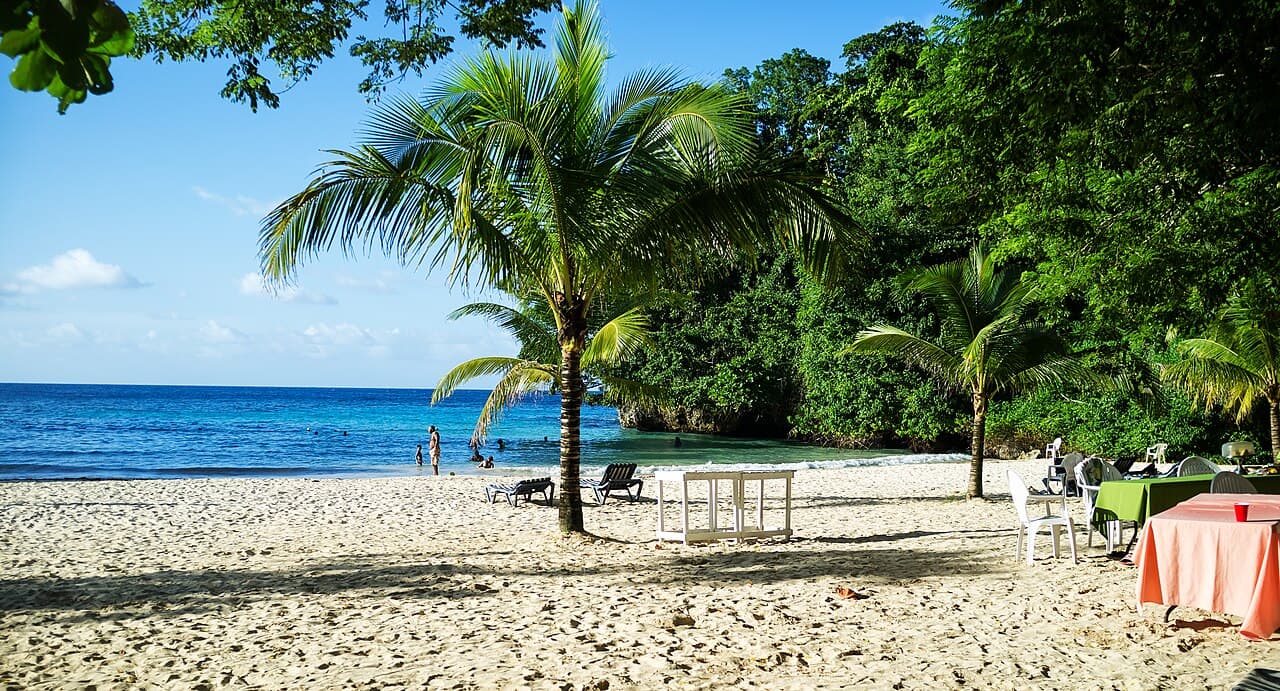
JamaicaPhoto: nigel burgher / Wikimedia Commons (CC BY 2.0)

Jamaica

Country · JM · JMD · America/Jamaica

This information may change. Always check the official source.Last verified: August 2026 by

Most visitors need no visa and get up to 90 days. The C5 form is compulsory and free at enterjamaica.gov.jm, and the sites charging for it are not the government.

  • The C5 immigration and customs form is compulsory and free, and the only official address is enterjamaica.gov.jm. Sites ending .com or .org offering to "process" it are middlemen.
  • File it up to 30 days ahead, ideally 24 to 48 hours before your flight, and keep the confirmation on your phone. One submission covers immigration and customs.
  • The officer writes an actual departure date in your passport, often shorter than the maximum. Check what you were given before you leave the hall - overstaying that date is what gets you fined.
  • Most visitors need no visa and are admitted for up to 90 days, but the durations are genuinely idiosyncratic: the US gets 6 months, Germany 90 days, France and Spain 30.
  • Your passport must be valid for the whole stay with 2 blank pages, and meat and dairy products are prohibited imports.
More details

The C5 form is free

Every arriving passenger must submit an electronic Immigration and Customs Declaration, the C5, before landing. It has been compulsory since 1 September 2023 and it costs nothing.

  • The only official address is enterjamaica.gov.jm, run by PICA, the Passport, Immigration and Citizenship Agency.
  • Private sites with very similar names charge for it. A site ending .org or .com offering to "process" your C5 is a middleman reselling a free government form. Close it.
  • File it up to 30 days ahead, and ideally 24 to 48 hours before your flight.
  • One submission covers immigration and customs together. Keep the confirmation on your phone.
  • Declare cash of USD 10,000 or more on the form. This is where you do it.

What you get at the desk

  • Most visitors need no visa and are admitted for up to 90 days, though some nationalities are listed for longer or shorter periods.
  • The officer writes an actual departure date in your passport, and it is frequently shorter than the maximum. Check what you were given before you leave the hall. Overstaying that date, not the theoretical maximum, is what gets you fined or arrested.
  • Your passport must be valid for the whole stay and have 2 blank pages for the entry and exit stamps.
  • Extensions go through PICA if you want longer than the stamped date.
  • A yellow fever certificate is required only if you are arriving from a country with transmission risk.
  • Meat and dairy products are prohibited imports.

Where your nationality lands

Visa and entry in Jamaica
You holdPermitted without a visa
United States6 months
Canada, UK, Australia, IndiaNo visa, generally up to 180 days
Germany, Italy, Netherlands, South Korea, Russia, Singapore, MalaysiaNo visa, 90 days
Japan, Spain, France, Poland, ChinaNo visa, 30 days
TaiwanVisa required, obtainable at the port of entry with an Affidavit of Identity
Cambodia, Saudi ArabiaVisa required in advance
  • The durations are genuinely idiosyncratic. Spain and France get 30 days while Germany and Italy get 90, which is not a mistake in this table. Check your own nationality on PICA's list rather than assuming the EU is treated as one bloc.
  • China's 30 days is for tourism only.
Sources (4)

Camouflage clothing is confiscated at the airport, meat and dairy are illegal to bring in, and the declaration is filed online before you fly.

  • Camouflage clothing may not be brought in or worn. It is restricted to the security forces, it is taken on arrival, and the rule applies to a toddler's shorts as much as an adult's jacket.
  • Meat and dairy products are illegal to bring in. Bags are searched and banned foodstuffs are destroyed rather than returned.
  • File the C5 immigration and customs form online before you arrive; it is where the declaration is made.
  • Declare cash or travellers cheques worth USD 10,000 or more on the C5, and expect a second form from the Financial Investigation Division asking for the source of the money and what it is for. Not declaring it means seizure and a fine.
More details
  • Camouflage clothing may not be brought in or worn. It is restricted to the security forces, it is taken on arrival, and the rule applies to a toddler's shorts as much as an adult's jacket.
  • Meat and dairy products are illegal to bring in. Bags are searched and banned foodstuffs are destroyed rather than returned.
  • File the C5 immigration and customs form online before you arrive; it is where the declaration is made.
  • Declare cash or travellers cheques worth USD 10,000 or more on the C5, and expect a second form from the Financial Investigation Division asking for the source of the money and what it is for. Not declaring it means seizure and a fine.
  • Cannabis is decriminalised in small amounts but may not leave the country. Taking it to the airport is trafficking, and the dogs are at departures.
  • Coral, turtle shell and wildlife products may not be exported.
Sources (1)

Doctors and hospitals expect cash on the spot, the health system is still strained from Hurricane Melissa, and the ambulance number is 110 rather than the one you would guess.

  • Jamaican doctors and hospitals generally expect immediate cash payment, which is the practical fact that matters most.
  • Travel insurance with medical cover and evacuation is essential, because serious cases are often flown to the United States.
  • Private facilities in Kingston and Montego Bay are the best on the island; public hospitals are nearly free and heavily stretched.
  • Dengue is the main mosquito-borne risk, and the mosquito that carries it bites in daylight - so use repellent by day as well as at night.
  • Bottled water is the sensible default, particularly in rural areas and after storm damage to supply, though ice in hotels and established restaurants is fine.
More details

Money first, treatment second

Jamaican doctors and hospitals generally expect immediate cash payment, and this is the practical fact that matters most.

  • Travel insurance with medical cover and evacuation is essential. Serious cases are often flown to the United States, and that is not affordable without cover.
  • Private facilities in Kingston and Montego Bay are the best on the island. Public hospitals are free or nearly so and are heavily stretched.
  • Carry your policy number and your insurer's 24-hour line offline, and call them before major treatment if you can.
  • Hurricane Melissa strained healthcare in the affected regions, and some areas have relied on field hospitals. Care outside the main towns in the west may be limited.

Mosquitoes and water

  • Dengue is present and is the main mosquito-borne risk. Use repellent by day as well as at night, because the mosquito that carries it bites in daylight.
  • Zika and chikungunya also circulate. Pregnant travellers should take advice before booking.
  • Tap water in Kingston and the main resort areas is generally treated and safe, but bottled water is the sensible default, particularly in rural areas and after storm damage to supply.
  • Ice in hotels and established restaurants is fine.

The rest

  • No vaccinations are required for entry unless you are arriving from a yellow fever risk country. Check routine cover plus hepatitis A and typhoid with a travel clinic 8 weeks ahead.
  • The sun is strong and the sea breeze hides it. High-factor sunscreen, and shade in the middle of the day.
  • Heat and dehydration are the commonest problems visitors actually have.
  • Pharmacies are good and widespread in towns, and many medicines are cheaper than at home. Bring your own regular prescriptions with documentation.
  • Sea urchins and coral cause a fair number of holiday injuries. Water shoes on rocky entries.
Sources (2)

Kingston

Long-term averages for Kingston: the mean daily high, the mean overnight low and the mean monthly rainfall across 30 years of ERA5 reanalysis data (1995–2024).

DayNight
20253035°C0200mmJanFebMarAprMayJunJulAugSepOctNovDecJanuary: Day 28 °C, Night 22 °C, Rain 23 mm. February: Day 28 °C, Night 22 °C, Rain 21 mm. March: Day 29 °C, Night 22 °C, Rain 32 mm. April: Day 30 °C, Night 23 °C, Rain 33 mm. May: Day 30 °C, Night 24 °C, Rain 83 mm. June: Day 31 °C, Night 25 °C, Rain 72 mm. July: Day 31 °C, Night 25 °C, Rain 59 mm. August: Day 31 °C, Night 25 °C, Rain 82 mm. September: Day 31 °C, Night 25 °C, Rain 115 mm. October: Day 30 °C, Night 24 °C, Rain 131 mm. November: Day 29 °C, Night 23 °C, Rain 78 mm. December: Day 28 °C, Night 23 °C, Rain 42 mm
Show the monthly table
Kingston
MonthDay (°C)Night (°C)Rain (mm)
January282223
February282221
March292232
April302333
May302483
June312572
July312559
August312582
September3125115
October3024131
November292378
December282342

Montego Bay

Long-term averages for Montego Bay: the mean daily high, the mean overnight low and the mean monthly rainfall across 30 years of ERA5 reanalysis data (1995–2024).

DayNight
20253035°C0250mmJanFebMarAprMayJunJulAugSepOctNovDecJanuary: Day 27 °C, Night 22 °C, Rain 44 mm. February: Day 28 °C, Night 21 °C, Rain 41 mm. March: Day 28 °C, Night 22 °C, Rain 57 mm. April: Day 29 °C, Night 22 °C, Rain 87 mm. May: Day 30 °C, Night 23 °C, Rain 201 mm. June: Day 30 °C, Night 24 °C, Rain 156 mm. July: Day 31 °C, Night 25 °C, Rain 132 mm. August: Day 31 °C, Night 25 °C, Rain 166 mm. September: Day 30 °C, Night 25 °C, Rain 197 mm. October: Day 29 °C, Night 24 °C, Rain 191 mm. November: Day 28 °C, Night 23 °C, Rain 91 mm. December: Day 27 °C, Night 23 °C, Rain 57 mm
Show the monthly table
Montego Bay
MonthDay (°C)Night (°C)Rain (mm)
January272244
February282141
March282257
April292287
May3023201
June3024156
July3125132
August3125166
September3025197
October2924191
November282391
December272357

Negril

Long-term averages for Negril: the mean daily high, the mean overnight low and the mean monthly rainfall across 30 years of ERA5 reanalysis data (1995–2024).

DayNight
20253035°C0200mmJanFebMarAprMayJunJulAugSepOctNovDecJanuary: Day 28 °C, Night 23 °C, Rain 17 mm. February: Day 28 °C, Night 23 °C, Rain 22 mm. March: Day 29 °C, Night 23 °C, Rain 28 mm. April: Day 29 °C, Night 24 °C, Rain 38 mm. May: Day 30 °C, Night 25 °C, Rain 94 mm. June: Day 30 °C, Night 26 °C, Rain 80 mm. July: Day 31 °C, Night 26 °C, Rain 72 mm. August: Day 31 °C, Night 26 °C, Rain 92 mm. September: Day 30 °C, Night 26 °C, Rain 114 mm. October: Day 29 °C, Night 25 °C, Rain 117 mm. November: Day 29 °C, Night 25 °C, Rain 56 mm. December: Day 28 °C, Night 24 °C, Rain 25 mm
Show the monthly table
Negril
MonthDay (°C)Night (°C)Rain (mm)
January282317
February282322
March292328
April292438
May302594
June302680
July312672
August312692
September3026114
October2925117
November292556
December282425
Sources (1)

Most of the island reopened within weeks of Hurricane Melissa, but a handful of large resorts are still shut into December 2026. Check your specific property.

  • Check your specific hotel's status rather than relying on "Jamaica is open". Most resorts reopened within weeks of Hurricane Melissa, but a few large properties are still closed into December 2026.
  • Both international airports were repaired and back at full capacity by December 2025, and the island passed a million visitors in 2026.
  • The west took the worst of it, and some smaller guesthouses and rural roads are still being repaired.
  • Check whether the rate includes the 10 percent accommodation tax and any service charge, and note it moves to 15 percent on 1 April 2027.
  • Air conditioning and a generator are worth checking. Power cuts happen, and backup power is a materially different experience.
More details

The honest post-Melissa position

Hurricane Melissa hit Jamaica as a category 5 storm on 28 October 2025, killing 45 people. The recovery has been fast, and the tourism industry has passed a million visitors in 2026, but "Jamaica is fully open" is a simplification.

  • Both international airports were repaired and back at full capacity by December 2025.
  • Most resorts in Montego Bay, Ocho Rios, Negril and Kingston reopened within weeks.
  • A few large properties are still closed, with reopenings announced for Royalton Negril on 25 August 2026, Sandals South Coast on 18 November 2026, and Sandals Montego Bay and Royal Caribbean on 18 December 2026.
  • Check your specific hotel's status before booking, rather than relying on a general statement that the island has recovered. Both things are true at once.
  • The west of the island took the worst of it, and some smaller guesthouses and rural roads are still being repaired.

What to expect otherwise

  • All-inclusives dominate the north coast, in Montego Bay, Negril and Ocho Rios, and for a beach week they are usually good value.
  • Check whether the rate includes the 10 percent accommodation tax and any service charge. It moves to 15 percent on 1 April 2027.
  • Villas are a Jamaican speciality, often with staff included, and work out well for groups.
  • Guesthouses and small hotels in Treasure Beach, Port Antonio and the Blue Mountains are where you find the Jamaica that is not a resort.
  • Kingston is business accommodation, and it is where you go for music, food and galleries rather than beaches.

Practical

  • Air conditioning and a generator are worth checking. Power cuts happen, and a property with backup power is a materially different experience.
  • Hurricane season runs June to November, peaking August to October. Book refundable rates in those months and read the cancellation terms properly.
  • Book far ahead for Christmas, New Year and Reggae Sumfest in July, when the north coast fills completely.
Sources (2)

Two networks, and local prepaid is much better value than a tourist eSIM. Flow brought 5G to prepaid customers four days ago.

  • Digicel has the broader rural reach and is what most Jamaicans use; Flow launched the island's first 5G and extended it to prepaid customers on 7 August 2026.
  • Digicel prepaid is about J$ 1,200 for roughly 35 GB over 7 days - a lot of data for around USD 8.
  • A tourist eSIM is worse value here than almost anywhere, because local data is cheap enough that the convenience premium is large in proportion.
  • You need your passport to register, which takes a few minutes at a proper dealer. Top-up credit is sold everywhere in any amount.
  • Coverage is patchy in the Blue Mountains, Cockpit Country and the deep interior, and parts of the west are still recovering from Hurricane Melissa.
More details

Digicel or Flow

Jamaica has two networks and they are genuinely competitive.

  • Digicel has the broader rural reach and is the one most Jamaicans use.
  • Flow launched Jamaica's first 5G network on 11 June 2026, and extended it to prepaid customers on 7 August 2026. If you want 5G on a prepaid SIM, that is now possible and it was not two weeks ago.
  • Digicel prepaid runs about J$ 1,200 for roughly 35 GB over 7 days, which is a lot of data for around USD 8.
  • Both sell at the airports, in every town, and through countless small dealers and top-up agents.

Buy local rather than a travel eSIM

  • A tourist eSIM is worse value here than almost anywhere. Local prepaid data is cheap enough that the convenience premium is large in proportion.
  • You need your passport to register, which takes a few minutes at a proper dealer.
  • Top-up credit is sold everywhere, including tiny shops and street vendors, in any amount you like.
  • An eSIM such as Saily still makes sense if you are staying under three days or cannot face the errand.

Coverage

  • Good along the north coast resort belt, Kingston and the main roads.
  • Patchy in the Blue Mountains, Cockpit Country and the deep rural interior, where terrain does most of the damage.
  • Hurricane Melissa took out large parts of the network in October 2025. Service has been restored, but if you are going somewhere remote in the west, do not assume perfect coverage.
  • WhatsApp is how Jamaica communicates, including with hotels, drivers and tour operators.
Sources (2)

Jamaican sockets are American Type and at 110 V, but the grid runs at 50 Hz - the only common pairing of the two.

  • American and Canadian plugs fit straight in. Everyone else needs an adapter.
  • The 50 Hz supply is the oddity. Electronics do not care; a mains-timed clock or a motor built for 60 Hz runs slow.
  • 110 V means European 230 V-only appliances will not work.
  • Unearthed two-slot sockets are common outside the resort hotels.
  • Resorts often fit both two-slot and earthed outlets, and will lend an adapter at the desk.
More details

Sockets in Jamaica are Type and at 110 V, 50 Hz - American plugs and voltage on a European frequency.

  • American and Canadian plugs fit straight in. Everyone else needs an adapter.
  • The 50 Hz supply is the oddity. Electronics do not care; a mains-timed clock or a motor built for 60 Hz runs slow.
  • 110 V means European 230 V-only appliances will not work.
  • Unearthed two-slot sockets are common outside the resort hotels.
  • Resorts often fit both two-slot and earthed outlets, and will lend an adapter at the desk.
  • The neighbouring islands are all slightly different. Cuba runs 110 V at 60 Hz, the Dominican Republic 120 V at 60 Hz, and Barbados 115 V at 50 Hz - same plug shape, four combinations.
Sources (1)

The sockets look American and run at 50 Hz, ganja is decriminalised but not legal to smoke in public, and public holidays do not all move to the Monday.

  • The sockets look American and run at 50 Hz. Chargers and laptops do not care; anything with a motor or a clock does, so check the label says 50/60 Hz.
  • Ganja is decriminalised, not legal. Possession of up to 2 ounces is a ticketable offence with a fixed penalty of about J$ 500, like a parking fine.
  • Smoking in public remains illegal, beaches, streets and outside bars included - that is the part visitors get wrong. You cannot take any of it out of the country.
  • Jamaica does not move every weekend holiday to the Monday, and visitors assume it does. Check the calendar if a holiday affects your plans.
  • Greet people before asking for anything. "Good morning" first is the basic form here, not optional politeness, and skipping it reads as rude.
More details

Electricity, and the catch

Jamaica runs at 110 V and 220 V, at 50 Hz, with US-style flat two-pin and three-pin sockets.

  • The plug is American and the frequency is not. US and Canadian appliances fit the socket and are designed for 60 Hz.
  • Modern electronics do not care. Phone chargers, laptops and camera chargers are all switched-mode and handle 50 or 60 Hz without noticing.
  • Anything with a motor or a clock does care. Hair dryers, shavers and older travel appliances can run slow, hot or badly.
  • Check the label for "50/60 Hz" before packing something with a motor.
  • Power cuts happen. Keep a power bank charged.

Ganja, precisely

Jamaica decriminalised small amounts in 2015. It did not legalise them.

  • Possession of up to 2 ounces is a ticketable offence with a fixed penalty of about J$ 500, paid like a parking fine. It does not create a criminal record.
  • Smoking in public remains illegal, and that includes beaches, streets and outside bars. This is the part visitors get wrong.
  • Rastafari have a sacramental exemption for religious use.
  • You cannot take any of it out of the country. Airport searches are routine and a possession charge in your home country is a very different matter from a J$ 500 ticket.
  • Buying from a stranger on a beach is the standard way visitors get into trouble. Licensed dispensaries exist for medical use.

Public holidays do not all shift

  • Jamaica does not move every weekend holiday to the following Monday, and visitors assume it does.
  • Labour Day fell on Saturday 23 May 2026 and was observed on Monday 25 May. Emancipation Day fell on Saturday 1 August 2026 and was not moved at all.
  • Check the Jamaica Information Service calendar rather than assuming, if a holiday affects your plans. Banks and government offices close; resorts do not.

Everyday

  • English is the official language, and Jamaican Patois is what people actually speak to each other. You will be spoken to in English and may not follow conversations around you. That is normal.
  • Greet people before asking for anything. "Good morning" or "good evening" first is not optional politeness here, it is the basic form, and skipping it reads as rude.
  • Dress modestly away from the beach. Swimwear is for the beach and pool.
  • Jamaican attitudes to LGBT+ people are conservative and public affection between same-sex couples is likely to draw hostility.
  • Jerk is the food to seek out, cooked over pimento wood at roadside stands. Boston Bay in Portland is the traditional home of it.
  • The pace is unhurried and "soon come" is not a time. Build slack into plans.
Sources (3)

Two currencies circulate and paying in US dollars costs you money. Hotel bills carry a lower tax than everything else, and that changes in 2027.

  • Pay in Jamaican dollars wherever you have the choice. US dollars circulate freely in tourist areas at a rate that is charged for every time.
  • Ask which currency a price is in before agreeing to it. Resort areas quote USD and everywhere else quotes J$, which causes a great many misunderstandings.
  • Hotel rooms currently carry a reduced 10 percent tax, rising to the standard 15 percent on 1 April 2027 - a real difference if you are planning a 2027 trip.
  • Many hotels and restaurants add about 10 percent service on top, so read the bill before adding more.
  • Cards work in hotels, established restaurants and supermarkets, and not much else. Carry cash for route taxis, craft markets and jerk stands.
More details

Two currencies, one of which you should use

The Jamaican dollar (J$) is the currency. US dollars circulate freely in tourist areas, and using them costs you.

  • The Bank of Jamaica rate was around J$ 157 to J$ 160 to the US dollar in early August 2026. Hotels and shops quoting their own rate will be well short of that.
  • Pay in Jamaican dollars wherever you have the choice. The convenience of paying in USD is charged for, every time.
  • Prices are often quoted in USD in resort areas and in J$ everywhere else. Ask which currency a price is in before agreeing to it. This is the source of a great many misunderstandings.
  • Change money at a cambio or a bank, not at the airport and never on the street.
  • ATMs dispense Jamaican dollars and are widespread in towns. Use ones attached to bank branches.

Tax on your bill

Money and payments in Jamaica
WhatRate
General Consumption Tax, most goods and services15 percent
Tourism accommodation10 percent, rising to 15 percent on 1 April 2027
  • Hotel rooms currently carry a reduced 10 percent rate. That concession ends on 1 April 2027, when accommodation moves to the standard 15 percent. If you are planning a 2027 trip, that is a real difference in the total.
  • Many hotels and restaurants add a service charge of around 10 percent on top. Read the bill before adding more.

Tipping and cards

  • Tip 10 to 15 percent in restaurants where no service charge has been added.
  • All-inclusive resorts often say tipping is not required, and staff still appreciate small US or Jamaican notes. Bring small denominations.
  • Cards are accepted in hotels, established restaurants and supermarkets, and not much else.
  • Carry cash for route taxis, roadside vendors, craft markets, jerk stands and small shops.
  • Tell your bank you are travelling to avoid a block, and always choose to be billed in Jamaican dollars rather than your home currency at a terminal.
Sources (2)

Everyday prices

Typical prices in Jamaican dollar (JMD), averaged across the country by Numbeo and read on 12 August 2026. Tick Convert prices above the table to see every amount in your own currency.

Everyday prices
ItemTypical price
Inexpensive restaurant meal1,700 JMD
Dinner for two, mid-range, three courses12,000 JMD
Cappuccino708 JMD
Local draught beer, 0.5 l350 JMD
Bottled water, 0.33 l118 JMD
Public transport, one-way ticket150 JMD
Taxi, starting fare150 JMD
Petrol, 1 litre213 JMD
Cigarettes, pack of 20 (Marlboro)1,600 JMD
Average net monthly salary121,000 JMD

These are country-wide averages, not a price list: tourist districts, airports and islands sit well above them, and small towns below. The salary line is there for proportion - it is what people living here actually earn.

Sources (1)

Airport guides for Jamaica1

One page per airport: the routes into town, what they cost and the trap particular to that arrival.

See all 1 airports

Use a JTB-approved taxi or a pre-booked transfer, and know that the licence plate colour tells you whether a vehicle is legal to carry you.

  • Red licence plates mean a vehicle is licensed to carry paying passengers. A white-plate car offering you a ride is operating illegally and is uninsured for you.
  • JUTA is the tourist board approved operator and works the airport ranks - their vehicles are the safe default.
  • Agree the fare before you get in. Airport taxis do not use meters and rates are by destination.
  • From Montego Bay, Negril is about 90 minutes and Ocho Rios about 2 hours, with private transfers roughly USD 30 to USD 50 per vehicle.
  • Arriving in Kingston, take the Humming Bird route into town rather than Mountain View Avenue, where the FCDO notes sporadic violence. Uber does not operate in Jamaica at all.
More details
The plate colour rule

This is the most useful thing on this page. In Jamaica, red licence plates mean a vehicle is licensed to carry paying passengers. White plates mean private.

  • A white-plate car offering you a ride is operating illegally and is uninsured for you.
  • JUTA is the Jamaica Tourist Board approved operator and works the airport ranks. Their vehicles are the safe default.
  • Agree the fare before you get in. Airport taxis do not use meters, and rates are by destination.
Montego Bay (MBJ, Sangster)
  • The airport most visitors use, and it sits close to the resort strip.
  • Negril is about 90 minutes, Ocho Rios about 2 hours.
  • Private transfers run from roughly USD 30 to USD 50 one way depending on distance, priced per vehicle.
  • If your hotel is an all-inclusive package, the transfer is usually included. Check before booking one.
  • Knutsford Express has a terminal next to the airport, which is by far the cheapest way onward if you are travelling independently.
Kingston (KIN, Norman Manley)
  • Kingston is a working capital rather than a resort town, and arrivals here are usually business or family visits.
  • Take the Humming Bird route into town rather than Mountain View Avenue. The FCDO specifically notes sporadic violence on the Mountain View route, and it is the standard local advice too.
  • Knutsford Connect has a desk at the terminal for onward coach travel.
  • Do not plan to drive yourself out of Kingston airport on arrival day if you do not know the city.
General
  • Route taxis are the local shared transport, running fixed routes and leaving when full. They are cheap, legal if red-plated, and crowded. Fine for short hops in daylight.
  • Uber does not operate in Jamaica. Local apps exist but coverage is thin; a JUTA taxi or a pre-booked transfer is the practical answer.
  • Avoid arriving late at night without a transfer already arranged.
Sources (2)

Getting around the island, and within it

Knutsford Express is genuinely good and cheap. Driving is on the left and the roads are the main hazard in the country.

  • Knutsford Express is the answer for independent travel - scheduled, air conditioned, reserved seating and a fraction of a private transfer, linking all the main towns.
  • Jamaica drives on the left, which surprises North American visitors, and lane discipline is loose with potholes a genuine hazard.
  • Do not drive at night outside towns. Unlit roads, unlit pedestrians and animals make it disproportionately dangerous.
  • A journey that looks short on a map is not. The north coast highway is good; the interior mountain roads are narrow, steep and slow.
  • Uber does not operate here - plan around that rather than discovering it on arrival - and agree every fare before the journey.
More details

Between towns

  • Knutsford Express is the answer for independent travel. Scheduled, air conditioned, reserved seating, reliable, and a fraction of the price of a private transfer. It links Kingston, Montego Bay, Ocho Rios, Negril and Port Antonio.
  • Book online in advance, particularly at weekends and around holidays.
  • The alternative is a route taxi or a minibus, which is cheaper again, much less comfortable, and leaves when it fills rather than at a time.

Driving

Jamaica drives on the left, which surprises North American visitors.

  • Roads are badly maintained with poor signage, and lane discipline is loose. Potholes are a genuine hazard rather than an inconvenience.
  • Do not drive at night outside towns. Unlit roads, unlit pedestrians and animals make it disproportionately dangerous.
  • Hurricane Melissa damaged roads across the west of the island in October 2025. Repairs are well advanced but some rural routes remain rough.
  • The north coast highway is good. The interior mountain roads are narrow, steep and slow, and a journey that looks short on a map is not.
  • You need an International Driving Permit alongside your own licence for stays beyond a short visit, and rental firms will ask.

Apps and practicalities

  • Uber does not operate here. Plan around that rather than discovering it on arrival.
  • Google Maps works for driving and is unreliable for route taxis.
  • WhatsApp is how you book and confirm almost everything, including drivers and tours.
  • Agree every fare before the journey, every time. This is normal and not rude.
  • Carry small cash for route taxis and roadside stops.
Sources (2)

Jamaica drives on the left, Highway 2000 is tolled and quick, and the rest of the network is slow and potholed.

  • Highway 2000 is tolled and turns the Kingston-Ocho Rios and Kingston-May Pen runs into a fraction of the old time.
  • The rest of the network is slow. The north coast road is scenic and heavily potholed, and mountain routes across the island take hours.
  • Traffic drives on the left and local overtaking is assertive, particularly by route taxis.
  • The alcohol limit is 0.035 % - lower than most of the region.
  • Night driving outside the resort corridors is avoided, and unlit pedestrians on the verge are the specific hazard.
More details

Left-hand traffic, one good toll road, and a lot of narrow, potholed alternatives.

  • Highway 2000 is tolled and turns the Kingston-Ocho Rios and Kingston-May Pen runs into a fraction of the old time.
  • The rest of the network is slow. The north coast road is scenic and heavily potholed, and mountain routes across the island take hours.
  • Traffic drives on the left and local overtaking is assertive, particularly by route taxis.
  • The alcohol limit is 0.035 % - lower than most of the region.
  • Night driving outside the resort corridors is avoided, and unlit pedestrians on the verge are the specific hazard.
Sources (1)

Jamaica has a high homicide rate and it is concentrated in places tourists do not go. The risks that actually reach visitors are robbery, roads and the sea.

  • Jamaica's homicide rate is high and overwhelmingly concentrated in specific inner-city communities with gang conflicts. Tourist areas are largely unaffected.
  • Do not walk in isolated areas or on deserted beaches, even during the day. The FCDO is explicit about this and it is the advice most often ignored.
  • Robbery is the realistic risk. Do not display jewellery, cameras or cash, and hand things over without resistance if it happens.
  • Road traffic is the most likely thing to hurt you - bad surfaces, poor signage, loose lane discipline and no night lighting.
  • Do not wear camouflage. Whether or not it is illegal here, it reads as military dress and draws attention you do not want.
More details

Getting the risk in proportion

Jamaica's homicide rate is high, and it is overwhelmingly concentrated in specific inner-city communities with gang conflicts. Tourist areas are largely unaffected, and millions of visitors have entirely uneventful trips.

  • Exercise particular caution in Kingston, Spanish Town, Savanna-la-Mar and parts of Montego Bay away from the resort strip.
  • Zones of Special Operations (ZOSOs) may be declared in specific communities, bringing curfews, cordons and searches. They rarely touch tourist areas, but check locally if you are travelling independently.
  • Do not walk in isolated areas or on deserted beaches, even during the day. The FCDO is explicit about this and it is the advice most often ignored.
  • Do not go out alone at night, and use a red-plate taxi rather than walking between venues.
  • Robbery is the realistic risk. Do not display jewellery, cameras or cash, and hand things over without resistance if it happens.

The camouflage question

You will read in many places that camouflage clothing is illegal in Jamaica. That rule is real in several other Caribbean countries.

  • It does not appear in FCDO, PICA, Jamaica Information Service or Jamaica Constabulary Force material, and this guide will not state it as law when it cannot be found in official sources.
  • The practical advice is the same either way: do not wear camouflage. It reads as military dress, it draws attention you do not want, and there is no cost to leaving it at home.

Roads and water

  • Road traffic is the most likely thing to hurt you. Bad surfaces, poor signage, loose lane discipline and no night lighting.
  • Rip currents and unpatrolled beaches kill swimmers. Many beaches have no lifeguard and no flags. If caught, swim parallel to the shore.
  • Hurricane season is June to November. Follow local warnings and hotel instructions rather than your own reading of the sky.

Scams and hassle

  • Fake C5 sites charging for the free government form.
  • Persistent beach vendors and touts in Negril and Montego Bay, offering everything from braids to ganja. They are a nuisance rather than a danger, and a firm, friendly "no thanks" repeated works.
  • Drug sellers approaching tourists openly. Buying from a stranger on a beach is how visitors end up dealing with police.
  • Taxi overcharging where no fare was agreed first.
  • Card skimming at standalone ATMs. Use machines inside banks.
  • Dating app risks, and the FCDO specifically warns LGBT+ travellers that apps have been used to target people. Jamaican attitudes are conservative and public affection between same-sex couples attracts hostility.
Sources (2)

Police is 119 and ambulance and fire is 110. Neither is the number most visitors would guess, and dialling 911 does not work here.

  • Police is 119 and ambulance and fire is 110. There is no single emergency number, and 911 does not work in Jamaica.
  • North American visitors dial 911 by reflex and lose time. Save both numbers now, and write them somewhere that does not need a battery.
  • In a resort, tell the front desk at the same time as calling. Hotels often have faster private arrangements than the public response.
  • Know the name of the property and the parish you are staying in. Jamaica is organised by parish and a dispatcher will ask.
  • Hurricane season runs June to November, peaking August to October. If a storm is forecast, do not leave your flight to the last minute - airports close and final flights fill days ahead.
More details

The numbers

Emergency information in Jamaica
WhatNumber
Police119
Ambulance and fire110
Tourism Courtesy Corps / visitor assistanceThrough your hotel or the JTB
  • There is no single emergency number here. Police and medical are different numbers, and 911 does not work in Jamaica. Visitors from North America dial it by reflex and lose time.
  • Save both to your phone now, and write them somewhere that does not need a battery.
  • Response times vary a great deal between Kingston, the resort areas and rural parishes. In a resort, tell the front desk at the same time as calling; hotels often have faster private arrangements.

Practicalities

  • Report any theft to the police and get the written report. No insurer pays a claim without one, and obtaining it later from abroad is effectively impossible.
  • Photograph your passport and your C5 confirmation, and keep copies separate from the originals.
  • If you lose your passport, report it to the police, then contact your embassy or high commission. Most are in Kingston, which is a long way from the north coast resorts.
  • Know the name of the property and the parish you are staying in. Jamaica is organised by parish and a dispatcher will ask.

Hurricanes

  • ODPEM is the national disaster agency and issues warnings, evacuation orders and shelter locations. Follow it rather than social media.
  • Season runs June to November, peaking August to October, which is now.
  • Hotels have hurricane procedures and will brief you. Follow them.
  • If a storm is forecast, do not leave your flight to the last minute. Airports close and the final flights fill days ahead.
  • Melissa in October 2025 was the most powerful storm ever to hit the island. The systems worked, the warnings were given, and the people who came to harm were largely those who stayed put in vulnerable places.

Before anything goes wrong

  • Save your insurer's 24-hour line offline.
  • Keep some cash accessible, because a card is useless in a power cut.
  • Tell someone your itinerary if you are travelling independently outside the resort areas.
Sources (3)