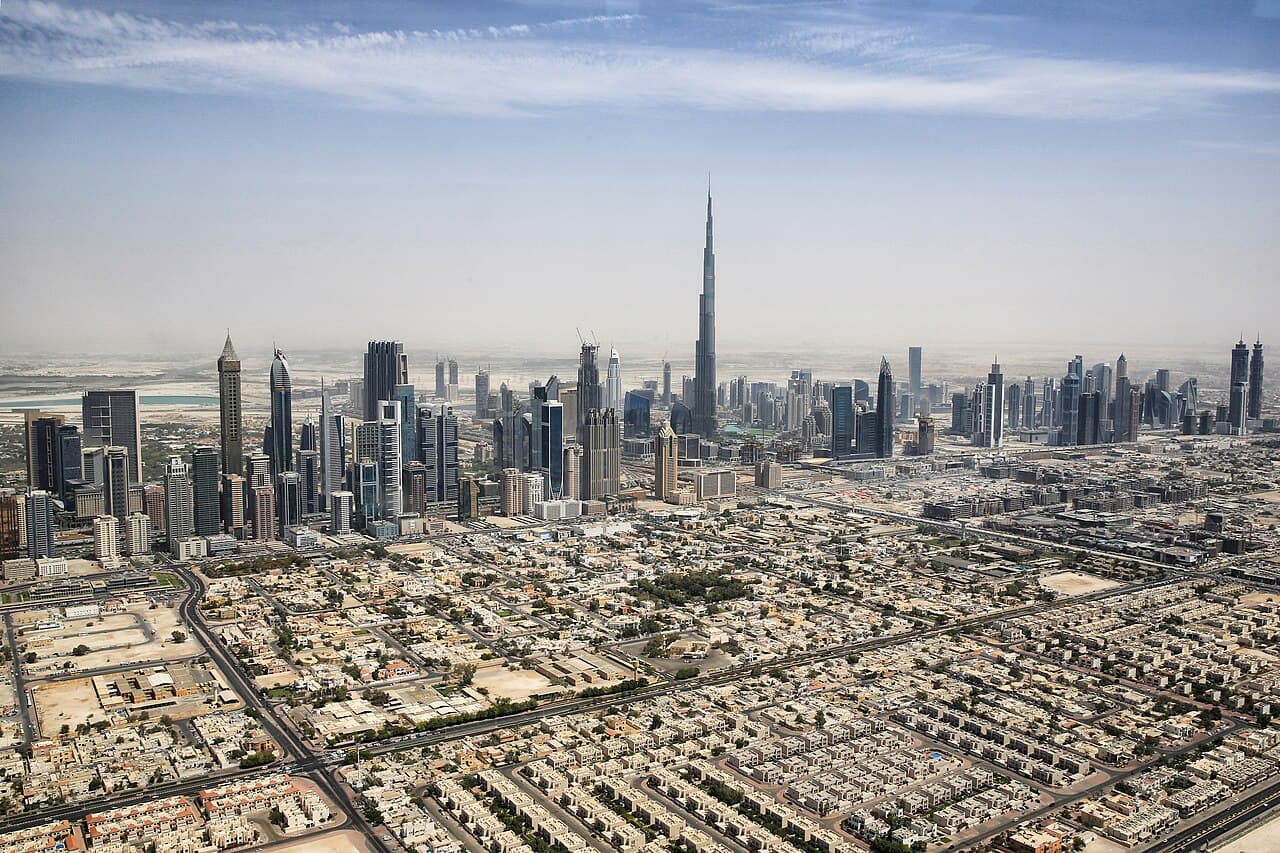
United Arab EmiratesPhoto: Tim Reckmann from Hamm, Deutschland / Wikimedia Commons (CC BY 2.0)

United Arab Emirates

Country · AE · AED · Asia/Dubai

This information may change. Always check the official source.Last verified: August 2026 by

Most visitors now get 90 days in any 180 free on arrival, up from 30 since September 2024. Overstaying costs AED 50 a day and there is no grace.

  • Visa on arrival is 90 days, not 30, since 18 September 2024 - free, stamped at immigration, and usable continuously or split across visits inside a rolling 180-day period. A great deal of published advice has not caught up.
  • Your passport must be valid at least 6 months from arrival, and you may be asked for proof of onward travel and a hotel booking.
  • Overstaying costs AED 50 a day from the first day, paid at the airport before you can leave. There is no grace period and no discretion at the desk.
  • Unpaid bills and debts are criminal matters here - a bounced cheque or an unpaid hotel account has stopped people leaving the country.
  • Controlled medicines need advance Ministry of Health approval, and this is the single most common way ordinary travellers get arrested. CBD is illegal in every form, skincare and vape refills included.
More details

90 days, not 30

The UAE extended the free visa on arrival from 30 days to 90 days on 18 September 2024, and a great deal of published advice has not caught up.

  • 90 days within any rolling 180-day period, counted from your first entry.
  • You can use it continuously or split it across several visits inside the 180 days.
  • It is free and stamped into your passport at immigration. There is nothing to apply for and nothing to pay.
  • Your passport must be valid for at least 6 months from arrival.
  • Extensions of 30 days are available for a fee through the ICP, or through GDRFA in Dubai, and are applied for before the stay expires.

Where your nationality lands

Visa and entry in the United Arab Emirates
You holdWhat you get
USA, Canada, Australia, UK, Germany, France, Italy, Spain, Netherlands, Poland, Japan, South Korea, Singapore, Malaysia, China, RussiaFree visa on arrival, 90 days in any 180
Saudi ArabiaGCC citizen. Free entry, no visa, no time limit
India14-day visa on arrival only if you hold a valid US visa or green card, or UK or EU residence. Otherwise an e-visa in advance
Taiwan, CambodiaVisa required in advance, typically an e-visa for a 30-day stay
  • The visa-on-arrival list keeps growing. On 25 June 2026 the UAE added Indonesia, Vietnam, Thailand, the Philippines, Kenya and South Africa, on condition of holding residence in the US, EU, UK, Singapore, Japan, South Korea, Australia, New Zealand or Canada, with 14-day visas at AED 100 and 60-day visas at AED 250.
  • Check your own position close to departure. This is a country that changes visa policy by announcement rather than by treaty.
  • Sponsored visas are arranged by hotels and airlines for nationalities that need one, and Emirates and Etihad both offer this alongside a ticket.

Overstaying and other ways to get it wrong

  • Overstaying costs AED 50 per day, accumulating from the first day, and you pay it at the airport before you can leave.
  • There is no grace period and no discretion at the desk.
  • Do not let a hotel or employer keep your passport. It is not lawful and you will need it.
  • Unpaid bills and debts are criminal matters here, including a bounced cheque or an unpaid hotel account. People have been stopped from leaving the country over them.
  • Israeli passport stamps are not a problem for entry to the UAE, which is different from several of its neighbours.
  • You may be asked for proof of onward travel and your hotel booking.

What you cannot bring

  • Pork products and pornography are prohibited imports.
  • Narcotic, psychotropic and controlled medicines need advance approval from the Ministry of Health, and this is the single most common way ordinary travellers get arrested here. See the health section.
  • CBD in any form is illegal, including skincare and vape refills.
  • Books, films and magazines may be censored at the border.
  • Weapons and anything resembling them need explicit permission.
Sources (3)

Codeine, tramadol and CBD are controlled substances in the UAE, and a prescription is the difference between a medicine and an arrest.

  • Common painkillers are controlled drugs here. Codeine, tramadol and anything containing CBD need a prescription and a doctor's letter; travellers have been detained at Dubai airport over a blister pack from home.
  • Poppy seeds are prohibited, which catches people carrying bread or baking ingredients rather than anything sinister.
  • The allowance is 400 cigarettes and 4 litres of alcohol for non-Muslim adults arriving by air. Arriving overland from Saudi Arabia or Oman, no alcohol may be brought in at all.
  • AED 60,000 or more in cash must be declared, counting foreign currency and gold at their dirham value.
  • Drones need a permit and are confiscated without one.
More details
  • Common painkillers are controlled drugs here. Codeine, tramadol and anything containing CBD need a prescription and a doctor's letter; travellers have been detained at Dubai airport over a blister pack from home.
  • Poppy seeds are prohibited, which catches people carrying bread or baking ingredients rather than anything sinister.
  • The allowance is 400 cigarettes and 4 litres of alcohol for non-Muslim adults arriving by air. Arriving overland from Saudi Arabia or Oman, no alcohol may be brought in at all.
  • AED 60,000 or more in cash must be declared, counting foreign currency and gold at their dirham value.
  • Drones need a permit and are confiscated without one.
  • Sharjah is dry. Alcohol may not be brought into or consumed in the emirate, which matters if your hotel is on that side of the boundary.
Sources (1)

Excellent hospitals and eye-watering bills. The one thing to do before you fly is check your medication is not a controlled substance here.

  • Check your medicines before you fly. People are arrested at UAE airports every year over medication prescribed to them at home - codeine, tramadol, many sleeping tablets, some ADHD and anxiety medication.
  • Apply online through MOHAP before you travel. It is free, takes a few days, and not knowing has not prevented prosecutions.
  • You may bring 3 months of ordinary prescription medicine, 1 month of restricted ones, in original labelled packaging with the prescription and a doctor's letter.
  • Hospitals are excellent and extremely expensive, expecting payment or insurer confirmation up front, so comprehensive insurance with a high limit is essential.
  • Heat is a medical issue. Summer reaches 45 °C and above, heat exhaustion is the commonest visitor emergency, and when someone stops sweating that is the emergency - plan mornings and evenings outdoors, middle of the day indoors.
More details

Check your medicines before you fly

This is the most important paragraph on this page. People are arrested at UAE airports every year over medication that was prescribed to them at home.

  • Narcotic, psychotropic, controlled and semi-controlled medicines need advance approval from the Ministry of Health.
  • The list is longer than you expect and includes codeine, tramadol, many sleeping tablets, some strong painkillers and some ADHD and anxiety medication.
  • Apply online through MOHAP before you travel. It is free and takes a few days.
  • You may bring up to 3 months of supply of ordinary prescription medicine, reduced to 1 month for restricted medicines.
  • Carry everything in original labelled packaging with a copy of the prescription and a doctor's letter.
  • CBD products of any kind are illegal. This includes oils, gummies, skincare and vape liquid.
  • Not knowing is not a defence and has not prevented prosecutions.

Treatment

  • Hospitals in Dubai and Abu Dhabi are excellent, modern and largely staffed by internationally trained doctors.
  • They are extremely expensive and expect payment or insurer confirmation up front.
  • Comprehensive travel insurance is essential, with a high cover limit.
  • Pharmacies are everywhere, many open 24 hours, and pharmacists are helpful. Many drugs sold over the counter here need a prescription elsewhere, and the reverse is also true.
  • Dental and cosmetic treatment is a large industry and mostly good, but is not covered by travel insurance.

The heat is a medical issue

  • Summer temperatures reach 45 °C and above, with humidity on the coast that makes it feel worse.
  • August, right now, is the hardest month. Outdoor exertion in the middle of the day is genuinely dangerous rather than merely uncomfortable.
  • Heat exhaustion and heatstroke are the commonest visitor emergencies. Symptoms are headache, nausea, confusion and stopping sweating. The last one is an emergency.
  • Drink far more water than you think and add salt or electrolytes.
  • Plan mornings and evenings outdoors, middle of the day indoors. This is how the country actually operates in summer.
  • Cars become lethal within minutes. Never leave anyone in one.
  • The sun is intense even in winter. High-factor sunscreen year round.

The easy parts

  • Tap water is desalinated and safe, though it sits in building tanks and most people drink bottled. Ice in hotels and restaurants is fine.
  • Food hygiene standards are high and enforced, including at the food courts and shawarma stands.
  • No vaccinations are required for entry unless arriving from a yellow fever risk country.
  • There is no malaria risk in the UAE.
Sources (2)

Dubai

Long-term averages for Dubai: the mean daily high, the mean overnight low and the mean monthly rainfall across 30 years of ERA5 reanalysis data (1995–2024).

DayNight
10203040°C020mmJanFebMarAprMayJunJulAugSepOctNovDecJanuary: Day 24 °C, Night 14 °C, Rain 17 mm. February: Day 26 °C, Night 15 °C, Rain 12 mm. March: Day 29 °C, Night 17 °C, Rain 18 mm. April: Day 33 °C, Night 21 °C, Rain 8 mm. May: Day 38 °C, Night 24 °C, Rain 1 mm. June: Day 40 °C, Night 27 °C, Rain 0 mm. July: Day 41 °C, Night 30 °C, Rain 3 mm. August: Day 42 °C, Night 30 °C, Rain 1 mm. September: Day 40 °C, Night 27 °C, Rain 0 mm. October: Day 36 °C, Night 24 °C, Rain 1 mm. November: Day 31 °C, Night 20 °C, Rain 4 mm. December: Day 26 °C, Night 16 °C, Rain 8 mm
Show the monthly table
Dubai
MonthDay (°C)Night (°C)Rain (mm)
January241417
February261512
March291718
April33218
May38241
June40270
July41303
August42301
September40270
October36241
November31204
December26168

Abu Dhabi

Long-term averages for Abu Dhabi: the mean daily high, the mean overnight low and the mean monthly rainfall across 30 years of ERA5 reanalysis data (1995–2024).

DayNight
15202530354045°C020mmJanFebMarAprMayJunJulAugSepOctNovDecJanuary: Day 23 °C, Night 16 °C, Rain 11 mm. February: Day 25 °C, Night 16 °C, Rain 7 mm. March: Day 28 °C, Night 19 °C, Rain 15 mm. April: Day 32 °C, Night 22 °C, Rain 5 mm. May: Day 37 °C, Night 26 °C, Rain 1 mm. June: Day 39 °C, Night 28 °C, Rain 0 mm. July: Day 40 °C, Night 30 °C, Rain 1 mm. August: Day 41 °C, Night 31 °C, Rain 1 mm. September: Day 38 °C, Night 28 °C, Rain 0 mm. October: Day 35 °C, Night 25 °C, Rain 1 mm. November: Day 30 °C, Night 22 °C, Rain 3 mm. December: Day 25 °C, Night 18 °C, Rain 5 mm
Show the monthly table
Abu Dhabi
MonthDay (°C)Night (°C)Rain (mm)
January231611
February25167
March281915
April32225
May37261
June39280
July40301
August41311
September38280
October35251
November30223
December25185

Ras Al Khaimah

Long-term averages for Ras Al Khaimah: the mean daily high, the mean overnight low and the mean monthly rainfall across 30 years of ERA5 reanalysis data (1995–2024).

DayNight
152025303540°C050mmJanFebMarAprMayJunJulAugSepOctNovDecJanuary: Day 23 °C, Night 17 °C, Rain 29 mm. February: Day 25 °C, Night 17 °C, Rain 12 mm. March: Day 28 °C, Night 20 °C, Rain 22 mm. April: Day 32 °C, Night 24 °C, Rain 10 mm. May: Day 37 °C, Night 28 °C, Rain 0 mm. June: Day 39 °C, Night 30 °C, Rain 1 mm. July: Day 39 °C, Night 31 °C, Rain 3 mm. August: Day 39 °C, Night 31 °C, Rain 0 mm. September: Day 37 °C, Night 29 °C, Rain 0 mm. October: Day 35 °C, Night 27 °C, Rain 1 mm. November: Day 29 °C, Night 23 °C, Rain 7 mm. December: Day 25 °C, Night 19 °C, Rain 11 mm
Show the monthly table
Ras Al Khaimah
MonthDay (°C)Night (°C)Rain (mm)
January231729
February251712
March282022
April322410
May37280
June39301
July39313
August39310
September37290
October35271
November29237
December251911
Sources (1)

Summer rates are less than half winter rates for a reason. Unmarried couples sharing a room is no longer prosecuted, and the emirate you book in still matters.

  • November to March is the season, with perfect weather and rates two to three times the summer level.
  • June to September is brutally hot and hotels are cheap - a five-star room in August costs less than a three-star in January. Extraordinary value if you can spend the middle of the day indoors; not if you came for the beach.
  • Cohabitation was decriminalised in 2020 and hotels no longer ask about marital status; an unmarried couple sharing a room is entirely routine. Same-sex sexual activity remains illegal.
  • Deira and Bur Dubai are the old city - much cheaper, more interesting, and where the souks and abras are - while Marina and JBR give you beach with a Metro and tram connection.
  • A deposit of AED 500 to AED 1,000 is taken on a card at check-in, and in summer ask whether the pool is shaded or cooled: uncooled water reaches bath temperature in August.
More details

The seasons are the whole story

  • November to March is the season. Perfect weather, and rates two to three times the summer level.
  • June to September is brutally hot and hotels are cheap. A five-star room in August costs less than a three-star room in January.
  • If you can tolerate spending the middle of the day indoors, summer is extraordinary value. If you came for the beach, it is not.
  • Book far ahead for New Year, the Dubai Shopping Festival in January and any major conference.
  • Rates drop sharply during Ramadan in most years, and the atmosphere is different rather than worse.

Unmarried couples

  • Cohabitation was decriminalised in 2020 and hotels no longer ask about marital status. In practice an unmarried couple sharing a room is entirely routine.
  • Extramarital relations can still be prosecuted on a complaint, typically from a spouse. The realistic risk to a visiting couple is very low, and it is not zero.
  • Same-sex sexual activity remains illegal, and same-sex couples should be aware of that when booking a shared room.

Where to stay

  • Dubai Marina and JBR for beach and restaurants, with a Metro and tram connection.
  • Downtown and Business Bay for the Burj Khalifa and the mall, and heavy traffic.
  • Deira and Bur Dubai are the old city, much cheaper, more interesting, and where the souks and the abras are.
  • Jumeirah for resorts and quiet.
  • Abu Dhabi is calmer, greener and cheaper, with the Grand Mosque and Louvre Abu Dhabi.
  • Sharjah is dry. No alcohol anywhere, including hotels. Book it knowingly.

Practical

  • The Tourism Dirham is paid at checkout, per room per night, and is not in the booking price.
  • A deposit is taken at check-in, usually AED 500 to AED 1,000 on a card.
  • Hotel apartments are good value for families and have kitchens, which matters when eating out costs what it does here.
  • Ask about pool shade and cooled pools in summer. Uncooled pool water reaches bath temperature in August, which is not refreshing.
Sources (2)

Two networks, free tourist SIMs at the airport, and VoIP calling that is still restricted, so WhatsApp voice and FaceTime may not work.

  • WhatsApp, FaceTime, Skype and Messenger voice and video calls are commonly blocked. Text messaging on those apps works normally - it is the calling that is restricted.
  • Licensed alternatives are Botim and C'Me, offered by the operators as paid add-ons. Tell people at home to expect a text rather than a call.
  • A VPN is a grey area - using one is not itself illegal, using one to commit an offence carries heavy penalties, and many hotel networks block them anyway.
  • Free tourist SIMs are handed out at Dubai and Abu Dhabi airports with a little data and credit. Take one and top it up; paid tourist packages run AED 50 to AED 125 for one to four weeks.
  • Coverage is complete across the coastal strip with fast 5G, good in the mountains, but patchy in the deep desert - which matters if you are driving to Liwa or camping.
More details

Internet calling is restricted

This surprises almost every visitor. The UAE regulates voice over internet protocol, and the apps you use at home to call may not work.

  • WhatsApp voice and video calls are commonly blocked, as are FaceTime audio, Skype and Facebook Messenger calls, depending on the network.
  • Text messaging on those apps works normally. It is the calling that is restricted.
  • Licensed alternatives exist, including Botim and C'Me, which the operators offer as paid add-ons.
  • A VPN is a grey area. Using one is not itself illegal, using one to commit an offence carries heavy penalties, and this is not a country in which to test the boundary. Many hotel networks block them anyway.
  • Plan around it. Tell people at home to expect text rather than a call.

Getting a SIM

  • e& (formerly Etisalat) and du are the two networks, both excellent.
  • Free tourist SIMs are handed out at Dubai and Abu Dhabi airports with a small amount of data and credit, as a way of signing you up. Take one, then top it up.
  • Paid tourist packages run roughly AED 50 to AED 125 for one to four weeks with generous data.
  • You must register with your passport, done at the counter in a couple of minutes.
  • eSIM is supported by both networks and by Saily.

Coverage

  • Complete across Dubai, Abu Dhabi, Sharjah and the whole coastal strip, with fast 5G.
  • Good on the highways and in the mountains around Hatta and Ras Al Khaimah.
  • The deep desert is patchy, which matters if you are driving to Liwa or camping.
  • Wifi is free and universal in malls, hotels and cafes.
Sources (2)

Emirati sockets are British Type at 230 V, with low-current shaver outlets in hotel bathrooms.

  • British plugs fit straight in. European, American and Australian ones need an adapter.
  • Hotel bathrooms have a shaver socket that takes a Europlug at very low current: fine for a toothbrush, not for a hair dryer.
  • 230 V matches Europe. Only American 120 V-only equipment needs a converter.
  • Adapters are stocked in every Carrefour and Lulu and cost a few dirhams; the airport charges several times that.
  • The Gulf is not uniform. Saudi Arabia and Bahrain are Type like the Emirates, but Qatar and Kuwait mix in round-pin Type , Schuko and even Italian Type sockets in older buildings.
More details

Sockets in the United Arab Emirates are Type at 230 V, 50 Hz - the British three-pin standard.

  • British plugs fit straight in. European, American and Australian ones need an adapter.
  • Hotel bathrooms have a shaver socket that takes a Europlug at very low current: fine for a toothbrush, not for a hair dryer.
  • 230 V matches Europe. Only American 120 V-only equipment needs a converter.
  • Adapters are stocked in every Carrefour and Lulu and cost a few dirhams; the airport charges several times that.
  • The Gulf is not uniform. Saudi Arabia and Bahrain are Type like the Emirates, but Qatar and Kuwait mix in round-pin Type , Schuko and even Italian Type sockets in older buildings.
Sources (1)

Alcohol got 30 percent dearer on 1 January 2025, Sharjah is completely dry, and the working week runs Monday to Friday with a half day.

  • Alcohol is in licensed hotels, bars and restaurants, the legal age is 21, and Dubai's 30 percent alcohol tax came back on 1 January 2025. Duty free on arrival is the cheap route.
  • Sharjah is completely dry - no alcohol anywhere, hotels included, and possession is an offence. Drinking or being drunk in public is illegal everywhere, including in a taxi home.
  • During Ramadan do not eat, drink or smoke in public in daylight, water and chewing gum included, and note that traffic just before sunset is dangerous because everyone is hurrying home to eat. Iftar is the best food of the year and visitors are welcome.
  • Cover shoulders and knees in public, especially in malls, souks and government buildings - some malls turn people away - and keep swimwear to the beach and the pool.
  • Plugs are UK-style three-pin at 220 to 240 V, the weekend is Saturday and Sunday, and everything indoors is air conditioned and cold, so carry a layer even in August.
More details

Alcohol, and what changed

Dubai suspended its 30 percent alcohol tax through 2023 and 2024, and reinstated it on 1 January 2025. Prices went back up accordingly.

  • You can drink in licensed hotels, bars and restaurants. That is where the alcohol is.
  • The legal age is 21 in most emirates and you will be asked for ID.
  • Sharjah is completely dry. No alcohol anywhere, including hotels, and possession is an offence.
  • Drinking or being drunk in public is illegal everywhere, including in a taxi home.
  • Tourists can obtain a free temporary liquor licence through the two retail chains, which allows buying from a shop for private consumption.
  • Alcohol is expensive. A pint in a Dubai hotel bar costs what a bottle costs elsewhere.
  • Duty free on arrival is the cheap route and there is a generous allowance for non-Muslim visitors.

Ramadan

  • In 2027 Ramadan falls across February and March. The dates move each year.
  • Do not eat, drink or smoke in public during daylight hours. This includes water, in a car, and chewing gum.
  • Restaurants outside hotels are largely closed during the day and hotels screen off dining areas for guests.
  • Live music and dancing stop, and clubs close.
  • Iftar at sunset is the best food of the year and visitors are genuinely welcome at it.
  • Working hours are shortened and traffic just before sunset is dangerous, because everyone is hurrying home to eat.

Dress and conduct

  • Cover shoulders and knees in public, particularly in malls, souks and government buildings. Some malls turn people away.
  • Swimwear is for the beach and the pool only.
  • The Sheikh Zayed Grand Mosque provides abayas and has a firm dress code.
  • Use your right hand for eating, greeting and passing things.
  • Do not photograph local women or families without clear permission.
  • Public displays of affection are an offence. Save it for the room.

Everyday

  • Electricity is 220 to 240 V at 50 Hz with UK-style three-pin plugs. Bring a UK adapter.
  • The weekend is Saturday and Sunday, and the working week is Monday to Friday with a half day on Friday for the midday prayer. Sharjah works a four-day week.
  • Friday midday is quiet for an hour or two while prayers happen.
  • Everything is air conditioned and cold, so carry a layer even in August.
  • Malls are the public space here. They are where people walk, eat and meet, and they are open late.
  • Arabic is the official language and English is the working one. Almost everyone you deal with speaks English, and roughly 88 percent of the population is foreign-born.
  • Tap water is safe, bottled is normal, and both are cheap.
Sources (2)

The dirham is pegged to the dollar so the rate never moves. VAT is 5 percent and refundable, and hotels add a nightly Tourism Dirham on top.

  • The dirham has been pegged to the dollar at 3.6725 since 1997, so there is no exchange rate to time - it is the same today as last year.
  • Change money in the city, not at the airport, where the spread is wide; Al Ansari and UAE Exchange branches are everywhere and near interbank.
  • A quoted hotel rate can grow by 20 percent or more once 5 percent VAT, the municipality fee, the service charge and the Tourism Dirham are added. Ask for the total.
  • The Tourism Dirham is per room per night and paid at checkout, from AED 7 in a hostel to AED 20 in a five-star, and is not in the booking price.
  • Tip in cash: 10 to 15 percent in restaurants without a service charge, AED 5 to AED 10 for a porter. Most service staff are low-paid migrant workers, and cash reaches them where a card tip often does not.
More details

The rate does not move

The dirham has been pegged to the US dollar at 3.6725 since 1997.

  • You cannot time the exchange rate here. It is the same today as it was last year.
  • Change money in the city rather than at the airport, where the spread is wide. Al Ansari and UAE Exchange branches are everywhere and give near-interbank rates.
  • Cards work everywhere, contactless is universal, and Apple Pay and Google Pay are widely accepted.
  • Carry AED 100 to AED 200 in small notes for taxis, abras, souks and tips.
  • Always be charged in dirhams, not your home currency.

What gets added to your bill

Money and payments in the United Arab Emirates
WhatRate
VAT5 percent
Tourism Dirham, 5-starAED 20 per bedroom per night
Tourism Dirham, 4-starAED 15 per bedroom per night
Tourism Dirham, 3 and 2-starAED 10 per bedroom per night
Tourism Dirham, 1-star and hostelsAED 7 per bedroom per night
Municipality fee and service chargeCommonly 7 percent and 10 percent on hotel bills
  • The Tourism Dirham is charged per room per night and is usually paid at checkout, not included in the booking price.
  • A quoted hotel rate can grow by 20 percent or more once VAT, municipality fee, service charge and Tourism Dirham are added. Ask for the total.
  • Restaurant bills in hotels carry the same additions. A standalone restaurant usually does not.

Getting the VAT back

  • Tourists can reclaim VAT on shopping taken out of the country, through the Planet system at the airport.
  • You get 87 percent of the VAT paid, less a fixed fee of AED 3.6 per claim since 12 July 2026, down from AED 4.80.
  • Ask for a tax-free tag at the till and keep the goods accessible for validation.
  • Validate before check-in at the airport kiosks, and allow extra time.

Tipping

  • 10 to 15 percent in restaurants where no service charge has been added. Where one has, rounding up is enough.
  • AED 5 to AED 10 for a porter or a valet.
  • Round up for taxis.
  • Most service staff are low-paid migrant workers for whom tips matter considerably more than they do to a Dubai restaurant's margins. Cash reaches them; a card tip often does not.
Sources (3)

Everyday prices

Typical prices in UAE dirham (AED), averaged across the country by Numbeo and read on 12 August 2026. Tick Convert prices above the table to see every amount in your own currency.

Everyday prices
ItemTypical price
Inexpensive restaurant meal32 AED
Dinner for two, mid-range, three courses200 AED
Cappuccino20 AED
Local draught beer, 0.5 l42 AED
Bottled water, 0.33 l1.83 AED
Public transport, one-way ticket6.00 AED
Taxi, starting fare12 AED
Petrol, 1 litre3.20 AED
Cigarettes, pack of 20 (Marlboro)23 AED
Average net monthly salary10,300 AED

These are country-wide averages, not a price list: tourist districts, airports and islands sit well above them, and small towns below. The salary line is there for proportion - it is what people living here actually earn.

Sources (1)

Airport guides for United Arab Emirates2

One page per airport: the routes into town, what they cost and the trap particular to that arrival.

See all 2 airports

Dubai has a metro station in two of its three terminals and honest metered taxis. The mistake to avoid is booking a hotel in the wrong emirate.

  • Dubai's Metro Red Line has stations inside Terminal 1 and Terminal 3 and runs to Deira, Downtown and Marina - cheap, fast and air conditioned. Terminal 2 has no station at all.
  • You need a Nol card from a machine or counter at the station, and the Metro does not run all night - check the hours if you land at 03:00, as many long-haul flights do.
  • Taxis are metered, regulated and honest, roughly AED 50 to AED 90 to most of Dubai; Abu Dhabi has no metro and its airport is about 30 km out, at AED 70 to AED 100.
  • The UAE is seven emirates and they are separate places. A cheap hotel "in Dubai" is sometimes in Sharjah - a different emirate, with no alcohol at all - so check the actual address before booking on price.
  • Have your hotel address written down including the emirate and the nearest landmark, because addressing here works by landmark rather than street number.
More details
Dubai (DXB)
  • The Metro Red Line has stations inside Terminal 1 and Terminal 3. It is cheap, fast and air conditioned, and it runs to Deira, Downtown and Marina.
  • You need a Nol card, bought from a machine or a counter at the station. A Silver Nol costs a few dirhams and then you load credit.
  • The Metro does not run all night and starts late on Friday mornings. Check the hours if you land at 03:00, which many long-haul flights do.
  • Taxis are metered, regulated and honest, with a fixed airport surcharge. Expect roughly AED 50 to AED 90 to most of the city.
  • Careem and Uber both operate and quote an all-in fare.
  • Terminal 2 has no metro station. It handles flydubai and some regional carriers, and you need a taxi or bus.
Abu Dhabi (AUH)
  • No metro. The airport is about 30 km from the city and a taxi runs roughly AED 70 to AED 100.
  • Public buses are cheap and slow.
  • Many Abu Dhabi hotels include a transfer. Ask.
The emirate mistake

The UAE is seven emirates and they are separate places.

  • A cheap hotel "in Dubai" is sometimes in Sharjah, which is a different emirate with different rules, notably no alcohol at all.
  • Ras Al Khaimah and Ajman are an hour or more from Dubai in traffic that can double it.
  • Check the actual address before booking on price. The commute between emirates at rush hour is genuinely bad.
  • Dubai to Abu Dhabi is about 90 minutes by road, and buses run frequently and cheaply between the two.
Practical
  • DXB is enormous and the walk from gate to immigration can be 20 minutes. Add it to your connection time.
  • Immigration uses smart gates for most nationalities and is quick.
  • Arrivals halls are cold and the outside is not. In summer the temperature difference between the terminal and the taxi rank is startling.
  • Have your hotel address written down including the emirate and the nearest landmark. Addressing in the UAE works by landmark rather than street number.
Sources (2)

The Dubai Metro and cheap regulated taxis cover most of what a visitor needs. Driving is easy, fast and policed by camera.

  • One Nol card can pay for several people on Dubai's Metro, tram and bus, and there is a women and children only carriage at the front of each train.
  • The abras across Dubai Creek cost AED 1 and are the best value in the country.
  • Intercity buses from Al Ghubaiba and Ibn Battuta run frequently and cost very little; Etihad Rail's passenger service is opening in stages, so check whether it is running for your route rather than assuming.
  • Speed cameras are everywhere and the fines are large, following the rental company to your credit card weeks later. Tailgating and lane-weaving are normal and the accident rate reflects it.
  • Any road accident, however minor, needs a police report before an insurer or rental company will do anything, and drink driving is zero tolerance with jail attached.
More details

In Dubai

  • The Metro is clean, cheap and driverless, with two lines covering most of what visitors want. Fares are by zone and a single ride is a few dirhams.
  • One Nol card can pay for several people on the Metro, tram and bus.
  • There is a women and children only carriage at the front of each train, and a Gold Class carriage that costs double and is usually empty.
  • Abras, the wooden boats across Dubai Creek, cost AED 1 and are the best value in the country.
  • The tram serves Dubai Marina and JBR and connects to the Metro.
  • Taxis are cheap by international standards, metered and safe. Careem is the local ride-hailing app, and Uber owns it.

Between the emirates

  • Intercity buses run frequently from Al Ghubaiba and Ibn Battuta to Abu Dhabi, Sharjah and the northern emirates, and cost very little. 12Go covers the main routes if you want to book ahead.
  • The Etihad Rail passenger service is opening in stages, and will eventually link the emirates. Check whether it is running for your route rather than assuming.
  • A taxi between emirates is expensive and metered differently once it crosses the border.

Driving

  • You need an International Driving Permit alongside your licence for most nationalities; some, including UK, US, EU and GCC licences, are accepted directly for short visits. Rental firms will tell you which applies.
  • Roads are excellent, wide and fast. Driving is on the right.
  • Speed cameras are everywhere and the fines are large, and they follow the rental company to your credit card weeks later.
  • Tailgating and lane-weaving are normal and the accident rate reflects it. Keep left only to overtake.
  • Any road accident, however minor, needs a police report before an insurer or rental company will do anything. Do not move the cars if anyone is hurt.
  • Salik is the automatic road toll and is charged through the rental.
  • Drink driving is zero tolerance and carries jail. There is no acceptable amount.

Apps

  • Careem for taxis, food and payments.
  • RTA Dubai for metro and bus times, and S'hail for journey planning.
  • Google Maps works well, and addressing by landmark works better.
  • Botim or C'Me if you need to make internet calls.
Sources (1)

Emirati roads are fast and the enforcement is automated: Salik tolls, radar everywhere, and zero tolerance for alcohol.

  • Salik gates in Dubai charge automatically by plate; the hire company bills them on, usually with a fee per crossing.
  • The alcohol limit is zero. Any measurable reading is a criminal matter and can mean detention, whatever the amount and whatever your own country allows.
  • Radar is constant and the fines are large. Some emirates allow a small margin over the posted limit and others do not; the limit on the sign is the number to drive.
  • Road rage and rude gestures are prosecuted offences here, which is worth knowing on a motorway with heavy lane discipline problems.
  • Fuel is cheap and the distances between cities are short - Dubai to Abu Dhabi is an hour and a half on a twelve-lane road.
More details

Automated tolls, automated speed enforcement, and an absolute rule about alcohol.

  • Salik gates in Dubai charge automatically by plate; the hire company bills them on, usually with a fee per crossing.
  • The alcohol limit is zero. Any measurable reading is a criminal matter and can mean detention, whatever the amount and whatever your own country allows.
  • Radar is constant and the fines are large. Some emirates allow a small margin over the posted limit and others do not; the limit on the sign is the number to drive.
  • Road rage and rude gestures are prosecuted offences here, which is worth knowing on a motorway with heavy lane discipline problems.
  • Fuel is cheap and the distances between cities are short - Dubai to Abu Dhabi is an hour and a half on a twelve-lane road.
Sources (1)

Crime is very low and the law is the hazard. Swearing, a rude gesture, a public kiss or a critical social media post can all end in a police station.

  • The law is the risk here, not the criminals. Street crime is among the lowest in the world; what gets visitors arrested is behaviour that is unremarkable at home.
  • Swearing and rude gestures are criminal obscene acts, including in a WhatsApp message and including in English. A road rage gesture is the classic case - the other driver photographs your car and files a complaint.
  • Drinking or being drunk in public is illegal anywhere in the UAE, even though drinking in a licensed venue is not, and kissing in public can lead to arrest.
  • Drugs are zero tolerance with minimum three-month sentences, and trace amounts in a blood or urine test count as possession - including for something consumed legally in another country before you flew.
  • Posting anything critical of the UAE, its rulers or its institutions is an offence, including a bad restaurant review that names people, and including something written before you arrived.
More details

The law is the risk, not the criminals

The UAE is among the safest countries in the world for street crime. Walking anywhere at any hour is fine, and theft is rare.

What gets visitors arrested is behaviour that is unremarkable at home.

  • Swearing and rude gestures are criminal obscene acts, including in a WhatsApp message or a social media post, and including in English. Prison or deportation follows.
  • A road rage gesture is a genuine arrest risk. This is the classic case: a tourist makes a hand gesture at a driver, the driver photographs the car, and there is a police complaint waiting.
  • Kissing in public can lead to arrest. Holding hands is tolerated for married couples.
  • Drinking or being drunk in a public place is illegal anywhere in the UAE, even though buying and drinking in a licensed venue is not.
  • Posting anything critical of the UAE, its rulers or its institutions is an offence, including something written before you arrived and including a bad restaurant review that names people.
  • Photographing people without consent, government buildings, military sites and airports is prohibited. Plane spotting near an airport attracts a police response.

Drugs and medication

  • Zero tolerance, with minimum three-month sentences for even minimal possession.
  • CBD is illegal in every form, including skincare products and vape refills, whatever the law says where you bought them.
  • Trace amounts found in a blood or urine test count as possession, including for something consumed legally in another country before you flew.
  • Poppy seeds and some herbal supplements have caused arrests.
  • Codeine, tramadol and many sleeping tablets need advance Ministry of Health approval. See the health section, and do this before you travel.

Money and debt

  • Non-payment of a debt is a criminal matter and people have been imprisoned or prevented from leaving over an unpaid hotel bill, a bounced cheque or a defaulted loan.
  • Never leave a bill unresolved on departure.
  • Property investment scams are common enough that the FCDO warns about them. Take independent legal advice, never advice from the seller.

The scams and the real dangers

  • Fake charity collectors and gold "bargains" in the souks. Gold is sold by weight at a posted rate plus making charges; anything much below it is not gold.
  • Unlicensed taxis outside malls and clubs. Use the regulated ones or Careem.
  • Drink spiking is a reported risk in Dubai's nightlife, and the FCDO notes that sexual assault victims face a high evidentiary burden, particularly where alcohol was involved.
  • Desert safaris vary enormously in safety. Dune bashing has caused serious injuries. Choose a licensed operator, and skip it if you have a back or neck problem.
  • The sea has strong rip currents and many beaches have no lifeguard. Flags mean what they say.
  • Heat is the most dangerous thing in the country in summer. See health.
Sources (2)

Four different numbers rather than one: 999 police, 998 ambulance, 997 fire, 996 coastguard. Response is fast and the operators speak English.

  • There is no single emergency number: 999 police, 998 ambulance, 997 fire, 996 coastguard. Remember 999 if you can only remember one - they will transfer you.
  • 911 and 112 do not reliably work here. Save the real ones before you need them, and know your emirate and nearest landmark, because addressing works by landmark.
  • Any road accident needs a police report, however minor, before an insurer or rental company will act.
  • If you are arrested, ask to contact your embassy and do not sign anything you cannot read - documents are often in Arabic and signing one can amount to a confession. A withdrawn complaint ends most minor matters.
  • Winter fog closes roads and causes large pile-ups on the Dubai to Abu Dhabi highway, and flash flooding fills underpasses within an hour, as April 2024 showed.
More details

The numbers

Emergency information in the United Arab Emirates
WhatNumber
Police999
Ambulance998
Fire997
Coastguard996
Police non-emergency901
  • There is no single number. Four services, four numbers, and dialling the wrong one costs time.
  • 999 is the one to remember if you can only remember one; they will transfer you.
  • Operators speak English and response times are fast.
  • 911 and 112 do not reliably work. Save the real ones.
  • Know your emirate and the nearest landmark. Addressing here works by landmark, not street number.

Practicalities

  • Report theft to the police and get the report for your insurer. Police stations handle this efficiently and many have English-speaking staff.
  • Any road accident needs a police report, however minor, before an insurer or rental company will act.
  • Photograph your passport and entry stamp and keep copies separate.
  • If you lose your passport, go to the police, then your embassy or consulate. Most countries have both an embassy in Abu Dhabi and a consulate in Dubai; the Dubai one is usually the useful one.
  • Save your insurer's 24-hour line offline.

If you are arrested

  • Ask to contact your embassy. You have that right.
  • Do not sign anything you cannot read. Documents are often in Arabic and signing one can amount to a confession.
  • Say nothing about the substance of the allegation until your embassy or a lawyer is involved.
  • Cases can take a long time and you may be prevented from leaving while one is open, even without being detained.
  • Reconciliation and dropped complaints matter a great deal here. If the complainant withdraws, most minor matters end.

Weather emergencies

  • The National Center of Meteorology issues heat, fog, sandstorm and rain warnings.
  • Heat is the real danger. In July and August the middle of the day outdoors is hazardous, and warnings are issued regularly.
  • Winter fog closes roads and causes large pile-ups on the Dubai to Abu Dhabi highway. If it is foggy, delay the drive.
  • Flash flooding after heavy rain is a growing problem, as April 2024 showed. Underpasses fill fast, drainage is limited, and roads become impassable within an hour.
  • Sandstorms reduce visibility to a few metres and are hard on anyone with asthma.
Sources (3)