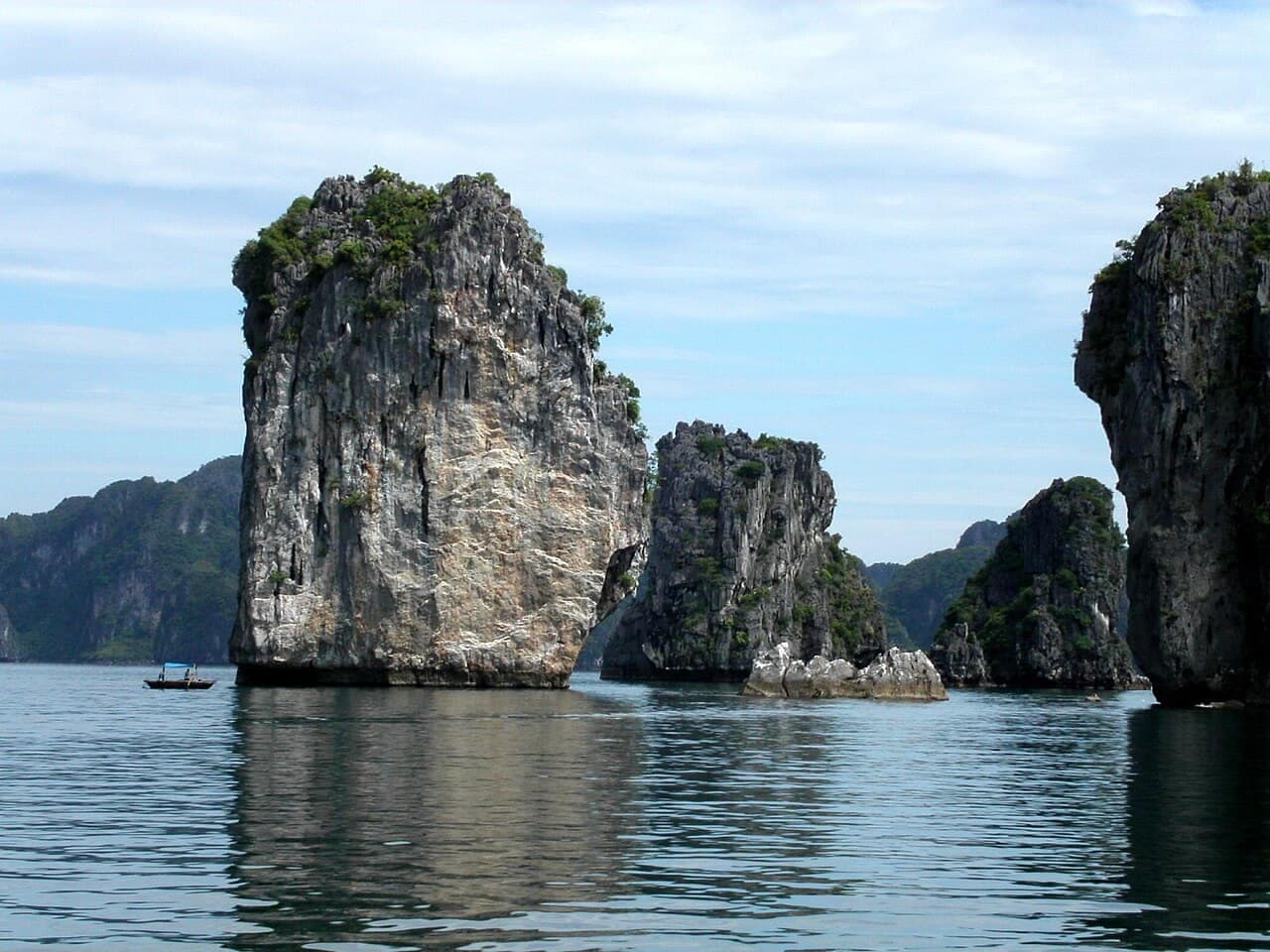
Vietnam

Country · VN · VND · Asia/Ho_Chi_Minh

Visa and entry in Vietnam

This information may change. Always check the official source.

Visa and entry in Vietnam

Warning Important

Passports on Vietnam's visa-exemption list get tourist stays up to 45 days visa-free; other travelers and longer stays up to 90 days use the eVisa (25 USD single entry, 50 USD multiple, typically 3 working days to process). Bring a passport valid at least 6 months with 2 blank pages, and complete the pre-arrival electronic declaration if landing at HAN, DAD, CXR or SGN.

  • Vietnam requires a passport valid at least 6 months from arrival with at least 2 blank pages.
  • If your passport is in the visa-exemption group, stays up to 45 days need no visa.
  • Set your passport above for your exact rule; some nationalities are visa-free for a limited stay, others need an eVisa (up to 90 days).
  • The eVisa gives up to 90 days (single or multiple entry) and processes in about 3 working days.
  • The eVisa fee is 25 USD single entry / 50 USD multiple, non-refundable if refused.
  • Arriving via Hanoi, Da Nang, Cam Ranh or Tan Son Nhat requires the pre-arrival online declaration.
  • Don't treat Visa on Arrival as a walk-up product — verify your case in Timatic.
More details

Who needs what

The guidance below covers tourist travel, with worked examples for a passport on the visa-exemption list, an unspecified EU passport, and a US passport, in typical scenarios of up to 45 days and up to 90 days. Keep in mind that airlines decide whether to board you using Timatic (the tool behind the IATA Travel Centre), so the outcome can depend on your entire route, including transit countries. Official guidance for Vietnam calls for a passport valid at least 6 months from arrival with at least 2 blank pages.

How to decide

  • On a regular tourist trip, first check whether your passport is in Vietnam's current visa-exemption group.
  • In the exemption group and staying up to 45 daysno visa needed.
  • In the exemption group but staying longer than 45 dayseVisa.
  • Not in the exemption group and staying up to 90 dayseVisa.
  • Staying beyond 90 daysclassic visa or a sponsored procedure; verify in Timatic against your full route and purpose.
  • Arriving via HAN, DAD, CXR or SGN → complete the pre-arrival electronic declaration; at other airports this declaration does not apply.

This flow combines the official Vietnamese eVisa portal, the current visa-exemption list, and the IATA Travel Centre — precisely the Timatic-type tool carriers use to decide whether to let you on board.

Personalized matrix for three passport examples

Passport profileTourism up to 45 daysTourism 46–90 daysCostMax lengthProcessingPassport validityReturn/onward ticketAccommodationFundsEntry formVaccinationsSources
Passport on the visa-exemption list (many European countries)Visa-free for tourist stays up to 45 dayseVisavisa-free 0 USD; eVisa 25 USD single / 50 USD multiplevisa-free 45 days; eVisa max 90 dayseVisa usually 3 working daysmin. 6 months + 2 blank pagesnot stated on the official Vietnamese pages found; in practice may depend on Timatic/airlinethe eVisa form requires a planned address of stay in Vietnamthe eVisa form asks about planned expenses, but no fixed public minimum was foundYes, when arriving via HAN/DAD/CXR/SGNno universal vaccination certificate appears in immigration sources; health requirements are Timatic-like and can also depend on your previous routeMOFA visa exemption list, eVisa, Vietnam Airlines travel docs, IATA Travel Centre
Unspecified EU passportCannot be hard-coded: some European passports have the 45-day waiver, others do not; if not in the waiver group, the answer is eVisaeVisa or classic visa depending on purpose0 USD only if on the waiver list; otherwise eVisa 25/50 USD45 days, or max 90 days with eVisaeVisa usually 3 working daysmin. 6 months + 2 blank pagesroute-dependent / Timatic-dependenteVisa: planned address of stay requiredno fixed public limit foundPre-arrival declaration at the 4 main airportsroute-dependent, recheck in TimaticIATA Travel Centre, MOFA visa exemption list, eVisa
USAeVisaeVisa25 USD single / 50 USD multiplemax 90 daysusually 3 working daysvalid passport holderairline/route-dependent; no universal public requirement found for every itineraryeVisa: planned address of stayno public minimum limit foundPre-arrival declaration at the 4 main airportshealth recommendations per CDC/itineraryeVisa, Vietnam Immigration Portal, IATA Travel Centre

The table is built from the official eVisa system, the immigration portal, the visa-exemption list of Vietnam's Ministry of Foreign Affairs, the IATA Travel Centre and the Vietnam Airlines arrival information page. The "return ticket", "proof of funds" and some health-requirement items are deliberately left unconfirmed where no unambiguous, publicly accessible and current Vietnamese primary source exists — these are exactly the items that are typically most Timatic- and route-dependent.

What matters in practice

The eVisa is now the main standard route for most tourists who are not in the visa-free group or who want to stay longer than 45 days. The official immigration portal lists validity of up to 90 days, both single and multiple entry, and standard processing of 3 working days after payment. The fee is 25 USD for single entry and 50 USD for multiple entry; the fee is non-refundable if the application is refused.

A classic visa via an embassy or a sponsor is what to plan for when you fall outside the standard eVisa workflow or travel for a purpose requiring a different category. The official pages of the Vietnamese embassy in London show that both tourist and business processing run with a requirement for a valid passport and, in their process, an approval letter issued by the Vietnamese immigration authority; the embassy lists standard processing of 5–7 working days. That is an important signal for other countries too: if your case is not a standard tourist one, do not automatically count on "visa on arrival".

Visa on arrival should not be understood as an ordinary walk-up tourist product. The official sources found describe a logic of prior authorization or a sponsored procedure rather than a simple universal option for everyone. In practice: if a website promises "VOA for everyone", take it with a grain of salt and compare it against Timatic or an official immigration/embassy source.

The pre-arrival electronic declaration is a new, practically important detail. Vietnam Airlines states that foreign travelers arriving via Nội Bài, Đà Nẵng, Cam Ranh and Tân Sơn Nhất should complete the entry declaration at prearrival.immigration.gov.vn or via QR code; once completed, you can use the priority "Pre-Arrival Info" entry lane.

Be conservative about your passport. Publicly available guidance calls for at least 6 months of validity from the date of arrival and at least 2 blank pages, and warns that a damaged passport can lead to refused entry or departure. Many carriers and Timatic also evaluate transit segments separately, so if you connect outside Vietnam, check the rules of the transit country as well.

This information may change. Always check the official source.

Report a change

Suggest a correction

JPEG, PNG or WebP, up to 5 MB. Location metadata is removed.

Corrections and photos are private and visible only to the review team.

SIM and eSIM in Vietnam

SIM and eSIM in Vietnam

Compares Viettel, the MobiFone Travel eSIM, airport tourist SIMs, international eSIMs (Airalo/Holafly) and roaming for Vietnam. Viettel from an official store offers the best coverage and value (e.g. 60,000 VND 7-day plans), while an eSIM activated before departure is the easiest option for short trips and the first minutes after landing.

  • Viettel has the strongest coverage, including in the mountains, and often the best value.
  • Buy from an official operator counter or store, not the first reseller — airport SIMs carry a markup.
  • A Viettel 7-day bundle (e.g. 5G60T/5G60H) is around 60,000 VND at an official store.
  • For a month, a Viettel 30-day plan (5G120H/5G150T/5G180H) is the recommended default.
  • For a short trip, an international eSIM such as Airalo or Holafly avoids any store visit.
  • A passport is required to register a local SIM/eSIM.
  • At airports, use the operator's official counter in arrivals (Viettel at HAN T2 and SGN).
More details

Comparison table

OptionTypical priceData / validityCoverage and speedHotspotPhone numberPassport registrationWhere to buyVerdict
Official city Viettel SIM/eSIMe.g. 60k VND for 7 days (5G60T 5 GB/day or 5G60H 15 GB total), 120k–180k VND for 30 days depending on plan7–30 daysOpensignal testing rates Viettel the strongest network for coverage/consistency; Reddit reports confirm better signal even in the mountainsyes / usually yesyes with a local SIM/eSIMyes, official materials mention the need for a valid passportofficial Viettel airport kiosk or an authorized/official storebest coverage, often the best price/performance too
MobiFone Travel eSIMthe official travel program advertises 1 free eSIM / 30 days per passport; exact campaign parameters may changepromo / per campaigngood in cities, but trails Viettel in coveragenot clearly documentedthe eSIM may carry a local profile depending on the offeryes, tied to your passportonline / official travel landing pageeasiest if the promo is active, but verify before departure
Airport tourist SIMexperience from HAN/SGN suggests roughly 200k–350k VND for tourist bundles; usually pricier than in townusually 7–30 daysdepends on the operator; best to stick to Viettel/Vina/MobiFoneoften yesusually yesyesarrival hall, airport counter/kioskfastest physical purchase, but often with a markup
International eSIM (Airalo / Holafly)Airalo from ~4 USD for a small bundle; Holafly unlimited is pricierAiralo 1–20 GB / 7–30 days; Holafly unlimitedworks the moment you land, but tends to cost more than a local SIMHolafly explicitly allows sharing up to 1 GB/day; Airalo is data-onlyAiralo Vietnam is data-only; Holafly does not normally include a local Vietnamese numberAiralo states no eKYCbuy before departure, activate via QReasiest option for the first minutes after landing
Roaming with your home operatordepends on your home operatordepends on your plandepends on the partner networkmostly yesyou keep your numberno local registrationnothing to buyemergency backup only, not a recommended default

The comparison rests on a combination of official and quasi-official sources: official Viettel and MobiFone materials, Opensignal measurements, plus fresh Reddit reports from travelers on airport vs. city prices.

Practical recommendation by length of stay

For 3 days, an international eSIM or any activation before departure makes the most sense. The reason is not just convenience: local tourist plans often start at 7 days, so on a three-day trip you are not playing for the lowest absolute price but for zero stress after landing. Airalo lists small Vietnam bundles from 1 GB/7 days; Holafly offers "unlimited" at a noticeably higher price.

For 7 days, Viettel at an official store works out best. A quasi-official overview of current plans lists 5G60T and 5G60H at 60,000 VND — exactly the case where an airport "tourist SIM" mostly buys you a convenience markup. Reddit posts from 2026 confirm it very bluntly: "go to an official store, not the airport".

For 30 days, Viettel is the recommended default if your priority is coverage and minimal trouble outside the big cities. Official and semi-official Viettel materials show plans such as 5G120H, 5G150T and 5G180H with 30-day validity. If maximum simplicity is the priority and you are staying in a city, the MobiFone Travel eSIM or Holafly are also worth considering, but purely on the numbers Viettel wins on coverage.

Where exactly to buy

At airports, stick to the operators' official counters in arrivals, not the first reseller along the way. Viettel's own materials list a concrete presence at the main airports in HAN T2 arrivals and in the SGN international arrival hall after baggage claim. For city stores, the best documented are the MobiFone store locator and the VNPT/VinaPhone store locator; for Viettel, the safest way to find a store is via official channels or maps — a publicly accessible, tourist-friendly locator is harder to find than MobiFone's or VNPT's.

Quick verdict

Cheapest option: an official city store, ideally Viettel. Easiest option: an eSIM activated before you even board the plane. Best coverage: Viettel. Best for 3 days: Airalo/Holafly or another eSIM bought before departure. Best for 7 days: a Viettel 7-day bundle from an official store. Best for 30 days: a Viettel 30-day bundle, or a local eSIM from an official channel.

This information may change. Always check the official source.

Report a change

Suggest a correction

JPEG, PNG or WebP, up to 5 MB. Location metadata is removed.

Corrections and photos are private and visible only to the review team.

Transport from the airport in Vietnam

Transport from the airport in Vietnam

How to get from Nội Bài, Tân Sơn Nhất and Đà Nẵng airports into town — public buses (e.g. Hanoi Bus 86 at 50,000 VND, HCMC Bus 152 at 5,000 VND plus 5,000 VND per large bag) versus Grab and official taxis — plus which SIM or eSIM to buy on arrival, with Viettel and pre-departure eSIMs as the top picks.

  • Noi Bai (Hanoi) has the best public transport: Bus 86 to Hanoi Railway Station is 50,000 VND, 7:00–22:15.
  • In Hanoi, Grab is best for taxi/ride-hailing; an evening ride to the center is about 250,000 VND.
  • At Tan Son Nhat (HCMC), Grab pickup is at Lane D1; Bus 152 to District 1 is 5,000 VND plus bags.
  • A Grab to District 1 in HCMC runs about 110–130k VND and 25–45 minutes depending on traffic.
  • In Da Nang, a taxi to the center is about 80,000–120,000 VND; Grab has a dedicated spot.
  • For 3–4 people with luggage, GrabCar or an official taxi is the lowest-stress choice.
  • After midnight rely on app rides or taxis — night public transport is limited.
  • Watch for fake Grab helpers at SGN; only get into the car matching your app booking.
More details

Nội Bài airport

Of Vietnam's airports, Nội Bài has the best publicly documented public transport. The official airport page lists, among others, these routes: 07 at 12,000 VND, 90 at 15,000 VND, 17 at 15,000 VND, 109 at 12,000 VND, 86 at 50,000 VND, 68 at 55,000 VND and E10 at 20,000 VND. For a tourist heading to the center, the most practical is Bus 86 to Hanoi Railway Station, officially operating 7:00–22:15. For the low-cost option, routes 07/17/90/109 work, but with a less comfortable luggage and stop-pattern setup.

For taxi/ride-hailing in Hanoi, the best choice is Grab. Grab has a dedicated airport rides page for Nội Bài, though it does not pinpoint the pickup point as precisely as for SGN. As a cautious, practical benchmark: a recent traveler experience puts an evening Grab ride to the center at approximately 250,000 VND including tolls, a good order-of-magnitude estimate for the Old Quarter and surroundings. For 3–4 people with suitcases, Bus 86 wins on price, Grab on comfort.

Tân Sơn Nhất airport

At SGN the picture is less tidy: the most detailed how-to materials with prices and boarding points are mostly unofficial, while the most reliable official source is the Grab pickup page. It describes the pickup zones at the domestic terminal very concretely, including Lane D1 and the pillar markings, and confirms a separate pickup point for GrabBike. In practice this is the most important thing today, because SGN has the most recent reports of fake "Grab helpers".

For the cheapest transfer to District 1, Bus 152 remains relevant: a recent practical source lists a 5,000 VND fare plus 5,000 VND per large bag, operation roughly 05:15–19:00, headways of about 12–18 minutes, and boarding opposite signpost 6 at T2 / diagonally opposite Exit D1 at T1. Since this is not a primary airport or city transport source, treat these details as practically useful but worth re-checking on the spot. For most European tourists with luggage, Grab is realistically the better choice; an independent practical benchmark from June 2026 puts District 1 at roughly 110–130k VND and 25–45 minutes depending on traffic.

Đà Nẵng airport

For Đà Nẵng, the official airport guide is strongest on taxis: it states that taxi pick-up is in the second traffic lane at the terminal. There is also an official Grab airport rides page for DAD, and secondary but recent practical sources consistently report that Grab works well and has a dedicated spot/station outside arrivals. Price-wise, a taxi to the center usually runs about 80,000–120,000 VND. For buses, easily accessible official English materials confirm that two city routes serve the airport, but without a table of times and intervals as clean as Hanoi's; that detail remains not fully documented in official sources as of 2026-07-16.

Recommendations by traveler type

Cheapest: in Hanoi, the public bus from the airport; in HCMC, Bus 152 if you travel light and during the day; in Da Nang the price gap between the bus and Grab is often so small that comfort wins.

Fastest: in all three cities usually Grab or an official taxi, but at rush hour traffic decides, not theory. In Hanoi, Bus 86 performs excellently if you are staying along the Lake/Old Quarter corridor.

For 3–4 people with lots of luggage: GrabCar / official taxi. Used correctly, the app is the lowest-stress option in Vietnam. Conversely, avoid people who approach you before you have even opened your own booking.

After midnight: plan primarily on app-based rides or taxis. In Hanoi the official airport bus services end in the evening, and for HCMC and DAD night public transport is either poorly documented or practically unsuitable for a first-time traveller.

This information may change. Always check the official source.

Report a change

Suggest a correction

JPEG, PNG or WebP, up to 5 MB. Location metadata is removed.

Corrections and photos are private and visible only to the review team.

Useful local apps in Vietnam

Useful local apps in Vietnam

The most useful apps for arriving in Vietnam: Grab for rides and food, GoMo by BusMap and BusMap Hanoi for public transport, Vexere for intercity buses, trains and flights, and Booking.com, Agoda, Hostelworld and Traveloka for accommodation — with notes on foreign-card acceptance and phone-number requirements.

  • Grab is the single most important app in Vietnam for taxi, ride-hailing and food.
  • Grab accepts international phone numbers for signup; a foreign-payment fee may apply, so keep cash as backup.
  • Vexere is strong for long-distance buses, trains and flights and takes foreign cards.
  • GoMo/BusMap is the best local app for HCMC public transport.
  • Booking, Agoda and Hostelworld all work well for accommodation.
  • After booking through a third party, confirm arrival with the hotel via an in-app message.
  • Xanh SM is a well-regarded all-electric taxi and scooter app with new cars and foreign-card support.
  • Zalo is the local messaging app most tour operators and landlords use to reach you.
More details

Getting around town and the key apps

Below is a practical table of apps that deliver the most value for arrival and the first days in Vietnam.

AppWhere it worksWhat it's good forForeign cardLocal numberEnglishiOSAndroid
GrabHanoi, HCMC, Da Nang and other big cities in the regiontaxi, ride-hailing, food, groceryyes, but a foreign-payment fee shows up in practice with foreign cards; cash is the fallbacknot necessarily — Grab accepts international numbers for OTP/signupyesApp Store / official Grab VN download hubGoogle Play
GoMo by BusMapprimarily HCMCpublic transport and cashless transit paymentnot clearly documented for foreign cardsnot clearly documentedyesApp StoreGoogle Play
BusMap HanoiHanoibus + metro maps/route lookupnot clearly documentednot clearly documentedyesnot confirmedGoogle Play
Vexerenationwidelong-distance buses, trains, flightsyes, Visa/Mastercard/JCB/Amex without a Vietnamese bank accountnoyesApp StoreGoogle Play
Booking.comnationwidehotels, apartments, taxis, cancellation termsyes; the app declares no booking/credit-card fees on the platformnoyesApp StoreGoogle Play
Agodanationwide, very strong inventory in Vietnamhotels, apartments, promo pricesyes on the platform; but some stays are paid at the propertynoyesApp StoreGoogle Play
Hostelworldnationwide, mainly the backpacker segmenthostels and dormsyesnoyesApp StoreGoogle Play
Travelokanationwide and wider Southeast Asiahotels, flights, attractions, airport transfersusually yesnoyesApp StoreGoogle Play

Four notes matter most. Grab is the single most important app in Vietnam, but be prepared for the fact that some travelers report a foreign payment fee when using a non-Vietnamese card; at the same time, Grab confirms that it accepts international phone numbers for registration. GoMo/BusMap is the best local app for HCMC public transport. Vexere is very strong for domestic transfers and has better international payment usability than some of the directly local transport websites. Booking, Agoda and Hostelworld work in Vietnam without problems, but with third parties it is sensible to confirm your arrival with the hotel via an in-app message right after booking.

This information may change. Always check the official source.

Report a change

Suggest a correction

JPEG, PNG or WebP, up to 5 MB. Location metadata is removed.

Corrections and photos are private and visible only to the review team.

Local transport and booking in Vietnam

Local transport and booking in Vietnam

Grab or official taxis are usually the fastest and lowest-stress way around Hanoi, HCMC and Da Nang, with public buses as the cheapest airport option and app rides the plan after midnight. Also covers the key apps — Grab, GoMo/BusMap, Vexere, Booking.com, Agoda, Hostelworld, Traveloka — with foreign-card and phone-number notes.

  • Grab or an official taxi is usually fastest, but at rush hour traffic decides, not theory.
  • For 3–4 people with luggage, GrabCar or an official taxi is the lowest-stress option.
  • The cheapest option is the airport public bus (Bus 86 in Hanoi, Bus 152 in HCMC).
  • Use Vexere to book intercity buses, trains and flights with a foreign card.
  • Avoid anyone who approaches you before you have opened your own booking.
More details

Recommendations by traveler type

Cheapest: in Hanoi, the public bus from the airport; in HCMC, Bus 152 if you travel light and during the day; in Da Nang the price gap between the bus and Grab is often so small that comfort wins.

Fastest: in all three cities usually Grab or an official taxi, but at rush hour traffic decides, not theory. In Hanoi, Bus 86 performs excellently if you are staying along the Lake/Old Quarter corridor.

For 3–4 people with lots of luggage: GrabCar / official taxi. Used correctly, the app is the lowest-stress option in Vietnam. Conversely, avoid people who approach you before you have even opened your own booking.

After midnight: plan primarily on app-based rides or taxis. In Hanoi the official airport bus services end in the evening, and for HCMC and DAD night public transport is either poorly documented or practically unsuitable for a first-time traveller.

Getting around town and the key apps

Below is a practical table of apps that deliver the most value for arrival and the first days in Vietnam.

AppWhere it worksWhat it's good forForeign cardLocal numberEnglishiOSAndroid
GrabHanoi, HCMC, Da Nang and other big cities in the regiontaxi, ride-hailing, food, groceryyes, but a foreign-payment fee shows up in practice with foreign cards; cash is the fallbacknot necessarily — Grab accepts international numbers for OTP/signupyesApp Store / official Grab VN download hubGoogle Play
GoMo by BusMapprimarily HCMCpublic transport and cashless transit paymentnot clearly documented for foreign cardsnot clearly documentedyesApp StoreGoogle Play
BusMap HanoiHanoibus + metro maps/route lookupnot clearly documentednot clearly documentedyesnot confirmedGoogle Play
Vexerenationwidelong-distance buses, trains, flightsyes, Visa/Mastercard/JCB/Amex without a Vietnamese bank accountnoyesApp StoreGoogle Play
Booking.comnationwidehotels, apartments, taxis, cancellation termsyes; the app declares no booking/credit-card fees on the platformnoyesApp StoreGoogle Play
Agodanationwide, very strong inventory in Vietnamhotels, apartments, promo pricesyes on the platform; but some stays are paid at the propertynoyesApp StoreGoogle Play
Hostelworldnationwide, mainly the backpacker segmenthostels and dormsyesnoyesApp StoreGoogle Play
Travelokanationwide and wider Southeast Asiahotels, flights, attractions, airport transfersusually yesnoyesApp StoreGoogle Play

Four notes matter most. Grab is the single most important app in Vietnam, but be prepared for the fact that some travelers report a foreign payment fee when using a non-Vietnamese card; at the same time, Grab confirms that it accepts international phone numbers for registration. GoMo/BusMap is the best local app for HCMC public transport. Vexere is very strong for domestic transfers and has better international payment usability than some of the directly local transport websites. Booking, Agoda and Hostelworld work in Vietnam without problems, but with third parties it is sensible to confirm your arrival with the hotel via an in-app message right after booking.

This information may change. Always check the official source.

Report a change

Suggest a correction

JPEG, PNG or WebP, up to 5 MB. Location metadata is removed.

Corrections and photos are private and visible only to the review team.

Money and payments in Vietnam

Money and payments in Vietnam

Vietnam runs on the dong (VND) and cash still matters, though Visa/Mastercard are widely accepted at hotels, larger restaurants and supermarkets. Always pay and withdraw in VND and refuse dynamic currency conversion, prefer bank ATMs and check fees before confirming; Apple Pay and Google Wallet are supported but adoption is uneven.

  • The currency is the Vietnamese dong (VND); cash still matters for street food, markets and small services.
  • Cards (Visa/Mastercard) are common at hotels, larger restaurants, supermarkets and spas.
  • Always pay and withdraw in VND and refuse dynamic currency conversion (DCC).
  • ATM fees for foreign cards change often — check the fee before confirming and use bank ATMs.
  • Apple Pay and Google Wallet are supported but uneven; treat them as a bonus, not your only plan.
  • If a service charge is already on the bill, there is no need to add a fixed tip.
More details

Money and payments

The local currency is the Vietnamese dong (VND). In practice it still holds that cash is important in Vietnam, especially for street food, small cafés, markets, local transport and some smaller services; international cards (Visa/Mastercard), however, are commonly accepted by hotels, larger restaurants, supermarkets, spas and more organized tourist services.

The single most useful rule: when paying or withdrawing, always choose the local currency, VND — never the conversion offered by the terminal. Visa and HSBC both explicitly explain that dynamic currency conversion means converting into your home currency right at the point of sale and usually costs you more than paying in the local currency with conversion handled by your card network/bank.

On ATM fees it is important to be honest: there is no single, current, official Vietnamese public overview of bank ATM fees for foreign cards, so here you have to rely on a combination of personal experience and local testing. The most common recent patterns reported on Reddit are these: TPBank is no longer reliably "no-fee", while for VPBank, OCB and sometimes LPBank people still report better terms — but experiences vary by the specific card, the issuing bank and the ATM location. Practical conclusion: withdraw at bank ATMs at larger branches or in shopping centers, check the fee before confirming, refuse DCC, and don't be lulled by old blog posts claiming that "some bank is always free".

Apple Pay officially lists Vietnam as a supported country, and Apple publishes a list of participating banks/issuers. Google Wallet also supports Vietnam and has a country page. That does not mean tap-to-pay will work everywhere: on the ground, adoption is less even than card acceptance, and local wallets like MoMo/ZaloPay still play a significant role. For tourists this means: treat Apple/Google Pay as a bonus, not as your only plan.

For tipping, tourist fees and a single daily budget figure, there are not enough good, current primary sources for a single reliable answer, so no figure is given here rather than manufacturing false precision. In practice, though, if your hotel or restaurant already adds a service charge, there is no reason to automatically add another fixed percentage without checking the bill.

This information may change. Always check the official source.

Report a change

Suggest a correction

JPEG, PNG or WebP, up to 5 MB. Location metadata is removed.

Corrections and photos are private and visible only to the review team.

Accommodation in Vietnam

Accommodation in Vietnam

Booking.com, Agoda and Hostelworld are the most useful booking platforms in Vietnam; your passport is the standard ID at check-in, and from 2026 accommodation providers must electronically register foreigners' temporary stays. Short-term rentals in Ho Chi Minh City were re-permitted in 2026 under strict conditions, so verify your host operates legally.

  • Booking, Agoda and (for hostels) Hostelworld have the strongest inventory in Vietnam.
  • At check-in your passport is standard ID and must match the name on the reservation.
  • From 2026, accommodation must register foreigners' temporary stays electronically.
  • For short-term rentals, be careful in Ho Chi Minh City and confirm the host can handle a legal stay.
  • Confirm your arrival with the property via an in-app message right after booking.
More details

Accommodation

Among platforms, the greatest practical significance in Vietnam belongs to Booking.com, Agoda and, in the hostel segment, Hostelworld. Booking offers a very strong workflow around managing reservations, messaging the property and flexibility; Agoda has long had a strong Vietnam inventory and aggressive pricing. Hostelworld is best for dorms and backpacker hostels.

At check-in, expect that your passport is the standard identification. Agoda explicitly states that presenting a passport at check-in is standard and that the identification must match the name on the reservation. On top of that, from 2026 the temporary registration of foreigners has become more strictly electronic: under the new rules, accommodation providers must report foreigners' temporary stays electronically or via a form, and this also applies to digital accommodation platforms. In other words: a hotel, a hostel and a properly run short-term rental can all ask for your passport and genuinely need it for registration.

With short-term rentals of the Airbnb type, caution is needed mainly in Ho Chi Minh City. Regulations changed between 2025 and 2026: after a tightening, 2026 brought a renewed authorization under new conditions, including business registration, taxes, contracts, temporary-stay registration and compliance with the rules of the specific building. The practical conclusion for travelers: if you book an apartment in HCMC, verify in advance that the host can genuinely handle a legal short stay and that the building allows it.

This information may change. Always check the official source.

Report a change

Suggest a correction

JPEG, PNG or WebP, up to 5 MB. Location metadata is removed.

Corrections and photos are private and visible only to the review team.

Safety and common scams in Vietnam

This information may change. Always check the official source.

Safety and common scams in Vietnam

Warning Important

Vietnam is relatively safe from violent crime, but petty theft, pickpocketing and bag-snatching are regular in crowded tourist areas. The top current scams are fake Grab/taxi 'helpers' at airports, ATM fee/exchange-rate/DCC overcharges, and scooter-rental damage disputes; UK FCDO advice was last updated 2026-06-26.

  • Violent crime against tourists is less common, but pickpocketing and bag-snatching happen in crowds.
  • The most common scam is a fake Grab/taxi helper at the airport who redirects you to a pricier car.
  • Show your booking to no one and only get into the vehicle whose plate matches the app.
  • Refuse DCC, prefer bank ATMs and always pay and withdraw in VND.
  • Scooter rentals cause damage disputes — photograph the bike and never leave your passport as deposit.
  • The UK FCDO advisory is a good live baseline to check before travel.
More details

Safety and the most common scams

Official UK and US travel advice agree that Vietnam is relatively safe for foreigners in the sense that violent crime against tourists is less common, but petty crime, pickpocketing and bag-snatching occur regularly, especially in touristy and crowded parts of cities.

The most common recent scam, repeated on Reddit throughout 2026, is the fake Grab/taxi helper at the airport. Threads from HCMC and from Vietnam in general repeat the same pattern: someone with a badge or a "Grab" look approaches you, "helps" with a supposedly wrong pickup point, redirects you to a different car and raises the price outside the app. The defense is simple and strict: show your booking to no one, don't let anyone "help" with your phone, and only get into the vehicle whose exact license plate and profile match the app.

The second recurring problem is ATM fees / bad exchange rates / DCC. This is not a "romantic" scam but a very common unnecessary overpayment. Recent Reddit threads show that bank terms change quickly and that old "best ATM in Vietnam" articles go stale. So once again: prefer bank ATMs, check the fee before confirming, and always pay and withdraw in VND.

The third realistic problem is scooter rentals and damage disputes. Even when it is not a targeted scam, recent forums and traveler warnings repeatedly describe extra charges for scratches, parts or unclear handover protocols. The practical minimum is to photograph and film the bike at pickup, never hand over your passport as a deposit, and ride only if you genuinely meet the license and insurance conditions.

The official safety baseline worth monitoring: the UK FCDO travel advice for Vietnam was updated on 2026-06-26. For real-time trip planning it is a good master checklist alongside Timatic and the local weather.

This information may change. Always check the official source.

Report a change

Suggest a correction

JPEG, PNG or WebP, up to 5 MB. Location metadata is removed.

Corrections and photos are private and visible only to the review team.

Health in Vietnam

This information may change. Always check the official source.

Health in Vietnam

Warning Important

Emergency numbers in Vietnam are 113 (police), 114 (fire), 115 (ambulance) and the newer 112 line, all operating in Vietnamese. Covers 24/7 international hospitals in Hanoi, HCMC and Da Nang, and key health rules: never drink tap water, follow CDC vaccine guidance, and carry commercial travel insurance since the EHIC does not apply in Vietnam.

  • Emergency numbers: police 113, fire 114, ambulance 115, search-and-rescue 112 — mostly in Vietnamese.
  • Look up your own country's embassy or consulate contact before you travel — it's your first call if you lose your passport.
  • Do not drink tap water anywhere in Vietnam — use bottled or filtered water.
  • 24/7 hospitals: Vinmec Times City and Hanoi French Hospital (Hanoi), FV Hospital (HCMC), Vinmec Da Nang.
  • No blanket vaccination is required, but keep routine vaccines up to date; dengue is a year-round risk.
  • The EHIC does not cover Vietnam — commercial travel insurance is a necessity.
More details

Health and emergencies

The basic emergency numbers in Vietnam are: police 113, fire 114, ambulance 115, plus the newer national search-and-rescue line 112. The official UK source also warns that these lines operate in Vietnamese, so when reporting a problem, a hotel, reception desk or translator helps considerably.

As practical, internationally usable hospitals for travelers, these keep coming up in the available sources: in Hanoi, Vinmec Times City and the Hanoi French Hospital have 24/7 emergency care; in HCMC, FV Hospital has a 24/7 emergency department; in Da Nang, Vinmec Da Nang has a nonstop emergency department and also lists airport patient transport on demand. If you are still at Nội Bài airport, the airport itself has its own 24/7 emergency medical points in both T1 and T2, phone (024) 3587 6601.

On drinking water the answer is simple: do not drink tap water. The US travel.state.gov explicitly states that tap water in Vietnam is not considered safe to drink anywhere, not even in the large cities. Use bottled or safely filtered water.

For vaccinations and health guidance, the most reliable approach has two layers. No universal vaccination requirement appears as a blanket entry condition for every tourist in the immigration sources reviewed, but the CDC recommends, among other things, keeping routine vaccines up to date and highlights measles, a year-round risk of dengue, and in some situations rabies or other vaccines depending on the type of trip. That is exactly why it makes sense to combine official health guidance with Timatic checked against your full route, especially if you fly through countries with different sanitary rules.

The EHIC does not function as a health-care safety net for European travelers in Vietnam, because Vietnam is not an EHIC destination; and even within Europe itself the EHIC is no substitute for travel insurance — it does not cover repatriation, private care or lost belongings. The practical conclusion is straightforward: for Vietnam, standard commercial travel insurance is a necessity, not a "nice to have".

This information may change. Always check the official source.

Report a change

Suggest a correction

JPEG, PNG or WebP, up to 5 MB. Location metadata is removed.

Corrections and photos are private and visible only to the review team.

Everyday practical information in Vietnam

Everyday practical information in Vietnam

Practical ground rules for Vietnam in 2026: vapes are banned, restricted (addictive/psychotropic) medicines are limited to 7 days' supply without proper paperwork, and photographing military or security sites can cause trouble. Power is 220 V/50 Hz (bring a universal adapter), the time zone is ICT/UTC+7 with no DST, and chains like AEON, Co.opmart and WinMart cover first-night supplies.

  • Vapes are banned in Vietnam — don't buy or bring them in.
  • Carrying more than 7 days of addictive/psychotropic prescription medicine needs proper paperwork.
  • Do not photograph anything that could be seen as a military or security site.
  • Vietnam is UTC+7 with no daylight saving; power is 220 V / 50 Hz, so pack a universal adapter.
  • Modern chains (AEON, Co.opmart, WinMart, Lotte Mart) cover first-evening supplies.
  • Climate varies by region — check live weather and air quality on your arrival day.
  • Vietnam only recognizes the 1968-Convention International Driving Permit; a 1949-Convention IDP (common for US, UK and Australia) is not valid and police can seize the scooter.
More details

Local rules and cultural differences

The most practical legal surprise of 2026 is that vapes and related products are banned in Vietnam according to the FCDO; you should neither buy them nor bring them in. If you are used to traveling with an e-cigarette, sort this out before departure, not at security.

The second important rule concerns medicines. The FCDO warns that Vietnam restricts medicines it classifies as addictive or psychotropic, and that it is illegal to carry more than 7 days' worth of such prescribed medication without the proper paperwork; it recommends carrying the prescription and a doctor's letter in English. This is exactly the kind of detail that surprises tourists more often than the "big" safety topics.

For photography, a conservative rule applies: do not photograph anything that could be perceived as a military or security site. The UK source for Vietnam explicitly warns that photographing such places can lead to questioning, fines or travel delays. The same applies to drones and more professional filming: verify in advance, don't improvise.

Everyday practical information

Vietnam is in the ICT / UTC+7 time zone and does not use daylight saving time in 2026. That matters not only for alarms but also for the daily-reset time of data bundles and for planning transfers.

With electricity, be aware that sources differ on the exact list of socket types but agree that Vietnam runs on 220 V / 50 Hz. The most reliable practical advice is to pack a universal adapter, because in real buildings you will encounter at least types A and C, according to some overviews also B, and elsewhere D appears as well. For European travelers the key point is that the voltage is compatible with standard modern EU chargers.

Wi‑Fi is common across the tourist infrastructure. Nội Bài explicitly lists free airport services including free wifi, and fresh Reddit threads about SIM cards note that many public places offer free wifi — though that is certainly no reason to travel without your own data plan.

For basic supplies, modern chains such as AEON, Co.opmart, GO!, Lotte Mart, MM Mega Market, Emart and WinMart serve well; this is especially useful on your first evening after arrival, when you need water, repellent, an adapter or toiletries without haggling at a market.

On weather: Vietnam is climatically divided and cannot be summed up in one sentence. The official tourism page shows that, for example, central Vietnam typically has its rainier, cooler period from September to February and its sunnier, warmer months roughly March to August; in the southern part the usual pattern is a drier November–April and a wetter May–October. As for air quality, conditions vary city by city and day by day; it is worth checking live monitoring on the day you arrive, especially in Hanoi and HCMC.

This information may change. Always check the official source.

Report a change

Suggest a correction

JPEG, PNG or WebP, up to 5 MB. Location metadata is removed.

Corrections and photos are private and visible only to the review team.

Emergency information in Vietnam

This information may change. Always check the official source.

Emergency information in Vietnam

Warning Important

Vietnam's emergency numbers are 113 (police), 114 (fire), 115 (ambulance) and the newer 112 search-and-rescue line, all operating in Vietnamese. Includes the lost-passport procedure, 24/7 hospitals in Hanoi, HCMC and Da Nang, the no-tap-water rule, CDC vaccine notes, and why commercial travel insurance is essential since the EHIC does not apply.

  • Police 113, fire 114, ambulance 115, search-and-rescue 112 — lines operate mainly in Vietnamese.
  • Look up your own country's embassy or consulate contact before you travel — it's your first call if you lose your passport.
  • If you lose your passport, report it to local police, get a confirmation, then contact the mission.
  • 24/7 hospitals: Vinmec Times City, Hanoi French Hospital, FV Hospital (HCMC), Vinmec Da Nang.
  • Noi Bai airport has its own 24/7 medical points: (024) 3587 6601.
  • Do not drink tap water; carry commercial travel insurance details.
More details

Health and emergencies

The basic emergency numbers in Vietnam are: police 113, fire 114, ambulance 115, plus the newer national search-and-rescue line 112. The official UK source also warns that these lines operate in Vietnamese, so when reporting a problem, a hotel, reception desk or translator helps considerably.

As practical, internationally usable hospitals for travelers, these keep coming up in the available sources: in Hanoi, Vinmec Times City and the Hanoi French Hospital have 24/7 emergency care; in HCMC, FV Hospital has a 24/7 emergency department; in Da Nang, Vinmec Da Nang has a nonstop emergency department and also lists airport patient transport on demand. If you are still at Nội Bài airport, the airport itself has its own 24/7 emergency medical points in both T1 and T2, phone (024) 3587 6601.

On drinking water the answer is simple: do not drink tap water. The US travel.state.gov explicitly states that tap water in Vietnam is not considered safe to drink anywhere, not even in the large cities. Use bottled or safely filtered water.

For vaccinations and health guidance, the most reliable approach has two layers. No universal vaccination requirement appears as a blanket entry condition for every tourist in the immigration sources reviewed, but the CDC recommends, among other things, keeping routine vaccines up to date and highlights measles, a year-round risk of dengue, and in some situations rabies or other vaccines depending on the type of trip. That is exactly why it makes sense to combine official health guidance with Timatic checked against your full route, especially if you fly through countries with different sanitary rules.

The EHIC does not function as a health-care safety net for European travelers in Vietnam, because Vietnam is not an EHIC destination; and even within Europe itself the EHIC is no substitute for travel insurance — it does not cover repatriation, private care or lost belongings. The practical conclusion is straightforward: for Vietnam, standard commercial travel insurance is a necessity, not a "nice to have".

This information may change. Always check the official source.

Report a change

Suggest a correction

JPEG, PNG or WebP, up to 5 MB. Location metadata is removed.

Corrections and photos are private and visible only to the review team.

Experiences

Nothing here yet.

General tips

Nothing here yet.

Share a tip

Sign in to continue.