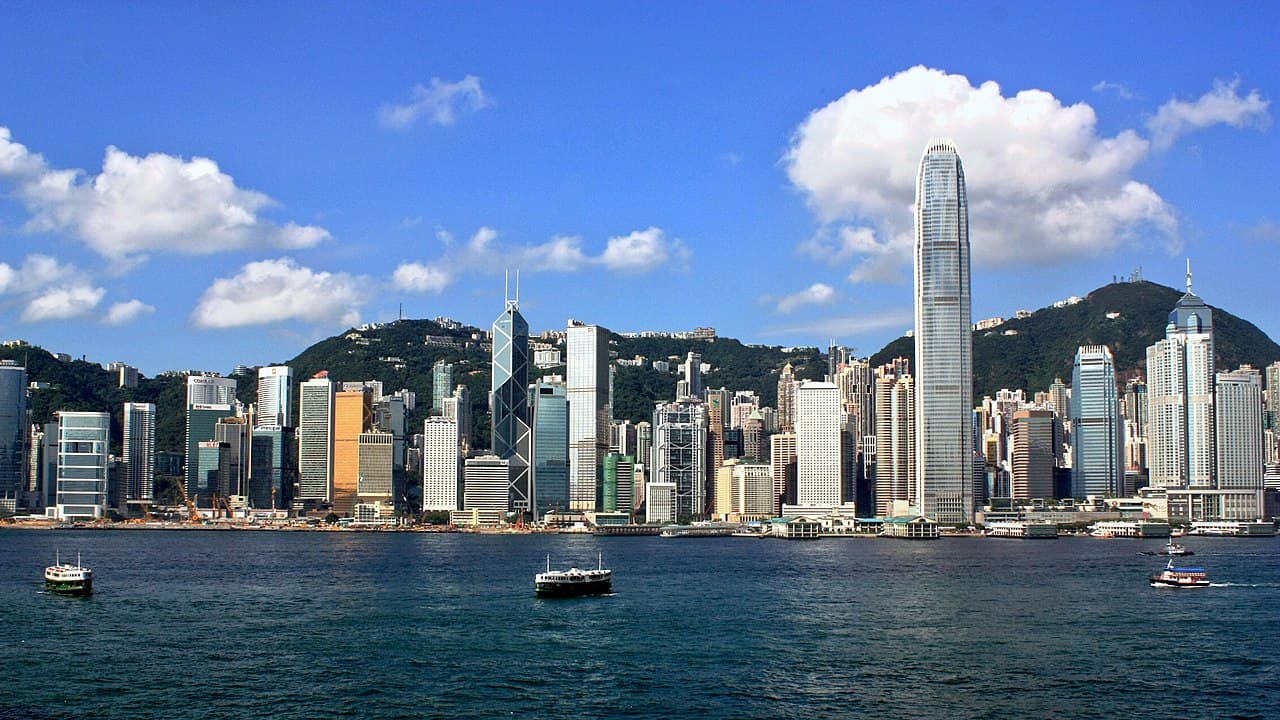
Hong KongPhoto: WiNG / Wikimedia Commons (CC BY-SA 3.0)

Hong Kong

Country · HK · HKD · Asia/Hong_Kong

This information may change. Always check the official source.Last verified: August 2026 by

Hong Kong is not China at the border. A Chinese visa does not work here, most visitors get 90 days free, and there has been no arrival card to fill in since October 2024.

  • A visa for mainland China does not admit you to Hong Kong, and entering Hong Kong does not admit you to the mainland.
  • Indian nationals must complete pre-arrival registration online before flying. It is free, the result comes back instantly, it is valid six months and good for multiple visits of up to 14 days each. Without it you are not admitted, and it cannot be done at the airport.
  • There is no arrival card. The requirement was abolished on 16 October 2024 and there is nothing to fill in on the plane.
  • E-cigarettes and vaping products are illegal to import. They are seized at the airport and the offence is criminal, not a fine to shrug off. This is the single most common way a trip here starts badly.
More details

A Chinese visa is not a Hong Kong visa

Hong Kong runs its own immigration service, its own border and its own visa policy. This is the fact that catches people out more than any other, and it cuts both ways.

  • A visa for mainland China does not admit you to Hong Kong, and entering Hong Kong does not admit you to the mainland.
  • Going on to Shenzhen or Guangzhou means crossing a full international border with full immigration formalities on both sides, and you need a Chinese visa to do it.
  • Leaving Hong Kong for the mainland and coming back uses up an entry on any limited-entry Chinese visa you hold.
  • The same is true of Macao, which is a third immigration jurisdiction again.

How long you get

Visa and entry in Hong Kong
You holdVisa-free stay
United Kingdom (British citizens)180 days
USA, Canada, Australia, Germany, France, Italy, Spain, Netherlands, Poland, Japan, South Korea, Singapore, Malaysia, Saudi Arabia and around 80 more90 days
Indonesia, Thailand, Morocco, Tunisia, South Africa, UAE and around 25 more30 days
India (after pre-arrival registration), Russia, Philippines, Kazakhstan, Mongolia and around 40 more14 days
Cambodia and the nationalities off the list entirelyVisa required in advance
  • Indian nationals must complete pre-arrival registration online before flying. It is free, the result comes back instantly, it is valid six months and good for multiple visits of up to 14 days each. Without it you are not admitted, and it cannot be done at the airport.
  • Taiwan residents register the same way: free, valid two months, two entries, 30 days each.
  • Mainland Chinese residents need an Exit-Entry Permit for Travelling to and from Hong Kong and Macao with a valid endorsement, issued by mainland authorities rather than by Hong Kong.

At the desk

  • There is no arrival card. The requirement was abolished on 16 October 2024 and there is nothing to fill in on the plane.
  • You are handed a paper landing slip instead of a passport stamp. It carries your conditions and limit of stay, and it is the only document that says how long you may remain. Keep it - put it in the passport and do not throw it away with the boarding pass.
  • A passport valid at least one month beyond your departure is what the rules require, which is unusually relaxed. Airlines may still apply a stricter test.
  • BN(O) passports are not accepted for immigration clearance in Hong Kong.
  • Frequent visitors can enrol for e-Channel - self-service gates - free, after two arrivals through the airport in 24 months. The criteria were relaxed on 26 February 2026.

What you cannot bring in

  • E-cigarettes and vaping products are illegal to import. They are seized at the airport and the offence is criminal, not a fine to shrug off. This is the single most common way a trip here starts badly.
  • CBD is a dangerous drug in Hong Kong. Oils, gummies and cosmetics containing it are illegal, whatever they are legal as at home.
  • Stun guns, extendable batons, knuckledusters and martial arts weapons are prohibited weapons.
  • Powdered infant formula is limited to 1.8 kg per person leaving for the mainland - a rule aimed at traders that occasionally catches a family.
Sources (3)

Hong Kong is a free port with almost no duty on anything, and two conspicuous exceptions: cigarettes and vapes.

  • The tobacco allowance is 19 cigarettes. That is not a typo - a single opened packet is inside the limit and a sealed pack of 20 is not, and the fine for an undeclared carton runs into thousands of dollars.
  • Electronic cigarettes and heated tobacco may not be imported at all. The ban has covered personal possession in transit since 2022, and vapes are seized at the airport and at the land crossings.
  • Since 30 April 2026 it is also a criminal offence to carry or use one in any public place, punishable by a fine up to HKD 50,000 and six months in prison. That is a change from an import rule to a possession rule, and it applies to visitors exactly as it does to residents.
More details
  • The tobacco allowance is 19 cigarettes. That is not a typo - a single opened packet is inside the limit and a sealed pack of 20 is not, and the fine for an undeclared carton runs into thousands of dollars.
  • Electronic cigarettes and heated tobacco may not be imported at all. The ban has covered personal possession in transit since 2022, and vapes are seized at the airport and at the land crossings.
  • Since 30 April 2026 it is also a criminal offence to carry or use one in any public place, punishable by a fine up to HKD 50,000 and six months in prison. That is a change from an import rule to a possession rule, and it applies to visitors exactly as it does to residents.
  • Alcohol is 1 litre of spirits over 30 %. Wine and beer carry no duty at all, so there is effectively no limit on them.
  • Almost everything else enters duty-free. Hong Kong charges duty on four categories only: liquor, tobacco, hydrocarbon oil and methyl alcohol.
  • HKD 120,000 or more in cash or bearer instruments must be declared on arrival, and the same rule applies to the boundary crossings with the mainland.
Sources (2)

Care is excellent and, for a visitor without insurance, expensive. The tap water is safe and the air is not always.

  • Hong Kong hospitals are excellent and, for an uninsured visitor, expensive. Public hospitals charge non-residents a high non-eligible-person rate, and private ones charge private rates.
  • Take insurance covering treatment and repatriation, and carry the policy number somewhere you can find it without a phone.
  • Some medicines sold freely at home are controlled here. Anything containing codeine, strong painkillers and some sedatives need care.
  • Tap water is treated to WHO standards and safe to drink. Many locals still boil it out of habit for the plumbing in older buildings, not the supply.
More details

Insurance is not optional

  • Hong Kong hospitals are excellent and, for an uninsured visitor, expensive. Public hospitals charge non-residents a high non-eligible-person rate, and private ones charge private rates.
  • Take insurance covering treatment and repatriation, and carry the policy number somewhere you can find it without a phone.
  • Doctors speak English, and the standard of care is as high as anywhere in the region.

Medicines

  • Some medicines sold freely at home are controlled here. Anything containing codeine, strong painkillers and some sedatives need care.
  • Carry prescriptions in their original packaging with the prescription itself. A prescription written abroad does not automatically authorise use in Hong Kong.
  • CBD is a dangerous drug, not a supplement - see the safety section. This is the single most common medicine mistake made at this border.
  • Pharmacies are everywhere, and a registered pharmacy has a pharmacist on duty behind a counter, not just a shop assistant.

Day to day

  • Tap water is treated to WHO standards and safe to drink. Many locals still boil it out of habit for the plumbing in older buildings, not the supply.
  • The heat is the real health risk in summer - hot and very humid from May to September, with a heat index that makes midday walking genuinely dangerous for the unacclimatised.
  • Air quality varies with wind direction and can be poor for days at a time. If you are asthmatic, check the Air Quality Health Index before planning a long walk.
  • Dial 999 for an ambulance. It is free to call and the service is fast.
Sources (1)

Hong Kong

Long-term averages for Hong Kong: the mean daily high, the mean overnight low and the mean monthly rainfall across 30 years of ERA5 reanalysis data (1995–2024).

DayNight
1015202530°C0500mmJanFebMarAprMayJunJulAugSepOctNovDecJanuary: Day 19 °C, Night 13 °C, Rain 25 mm. February: Day 20 °C, Night 15 °C, Rain 37 mm. March: Day 22 °C, Night 18 °C, Rain 74 mm. April: Day 25 °C, Night 21 °C, Rain 137 mm. May: Day 28 °C, Night 24 °C, Rain 245 mm. June: Day 29 °C, Night 26 °C, Rain 330 mm. July: Day 30 °C, Night 26 °C, Rain 256 mm. August: Day 30 °C, Night 26 °C, Rain 340 mm. September: Day 29 °C, Night 25 °C, Rain 222 mm. October: Day 27 °C, Night 23 °C, Rain 97 mm. November: Day 24 °C, Night 19 °C, Rain 52 mm. December: Day 20 °C, Night 14 °C, Rain 26 mm
Show the monthly table
Hong Kong
MonthDay (°C)Night (°C)Rain (mm)
January191325
February201537
March221874
April2521137
May2824245
June2926330
July3026256
August3026340
September2925222
October272397
November241952
December201426

When to visit

The Observatory's own description of the pleasant part of the year is November and December. May to September takes about 80% of the rain and carries the typhoon season with it.

The Hong Kong Observatory puts the year's shape in one figure: about 80 per cent of the rain falls between May and September, with June and August typically the wettest months. The table above agrees - June takes 330 mm and August 340, against 25 mm in January and 26 in December.

More details

Eighty per cent of the rain falls in five months

The Hong Kong Observatory puts the year's shape in one figure: about 80 per cent of the rain falls between May and September, with June and August typically the wettest months. The table above agrees - June takes 330 mm and August 340, against 25 mm in January and 26 in December.

It also names the good months without hedging. November and December bring "pleasant breezes, plenty of sunshine and comfortable temperatures"; January and February are cloudier, with cold fronts that regularly take urban temperatures below 10 C; March and April are mild but bring "occasional spells of high humidity" with drizzle and fog that can close in visibility. May to August is "hot and humid with occasional showers and thunderstorms", with afternoons often above 31 C.

November to March is what this page picks from the numbers, at 19-24 C by day - and the Observatory's own wording says the front half of that, November and December, is the best of it.

The typhoon season is May to November

The Observatory dates the typhoon season from May to November, with peak activity from July to September. Roughly thirty tropical cyclones form over the western North Pacific in a year and about half reach typhoon strength.

The part worth planning around is not the wind. The Observatory notes that heavy rain from a tropical cyclone can persist for days and that the resulting flooding and landslips can do more damage than the wind itself. For a visitor that means a summer trip carries a real chance of losing a day or two to weather, and of the Peak, the outlying islands and the hiking trails - the things worth coming for - being the first casualties.

Winter has none of that, and the compensation for a January cold front is that it is the clearest air of the year.

Sources (2)

Where to stay, and the tax nobody mentions

Rooms are small in a way photographs do not convey, and a 3% tax came back on to every hotel bill in 2025.

  • Hotel accommodation tax returned at 3% on 1 January 2025, after sixteen years at zero. It applies to hotels and guesthouses and is charged on top of the room rate.
  • Check whether the quoted price includes it. Many booking sites still show the rate without, and it lands with the 10% service charge most hotels add as well - so the bill can arrive 13% above the headline.
  • Hong Kong rooms are small. A standard double in a mid-range hotel is routinely under 20 square metres, and the photograph was taken with a very wide lens. This is not a scam; it is what land costs here.
  • Tsim Sha Tsui - Kowloon side, the harbour view, the widest price range, the best transport.
More details

The tax that came back

  • Hotel accommodation tax returned at 3% on 1 January 2025, after sixteen years at zero. It applies to hotels and guesthouses and is charged on top of the room rate.
  • Check whether the quoted price includes it. Many booking sites still show the rate without, and it lands with the 10% service charge most hotels add as well - so the bill can arrive 13% above the headline.
  • Guesthouses with fewer than ten rooms are exempt, which is a real reason the small places look cheaper than they should.

What the room is actually like

  • Hong Kong rooms are small. A standard double in a mid-range hotel is routinely under 20 square metres, and the photograph was taken with a very wide lens. This is not a scam; it is what land costs here.
  • A window is worth paying for. Many cheaper rooms have none, or face a light well a metre away.
  • Chungking Mansions in Tsim Sha Tsui is the budget end - a genuine institution, safe enough, and nothing like the pictures suggest in either direction. Rooms are tiny and the lifts are a queue.

Where to base yourself

  • Tsim Sha Tsui - Kowloon side, the harbour view, the widest price range, the best transport.
  • Causeway Bay and Wan Chai - Hong Kong Island, busy, well connected, good for eating.
  • Central and Sheung Wan - business district, expensive, quiet at weekends.
  • Anywhere on an MTR line is fine. Distance from the centre matters far less here than distance from a station.
Sources (1)

Getting online in Hong Kong

A tourist SIM is cheap and sold in every 7-Eleven, and Hong Kong has some of the densest free public wi-fi anywhere. An eSIM saves the errand.

  • csl sells the Discover Hong Kong tourist SIM in two useful sizes: HK$88 for 7 days with 50 GB, and HK$118 for 15 days with 80 GB. Both include unlimited local calls, and part of the allowance is shared with Macao, which is worth knowing if you are doing both.
  • 3HK, SmarTone and China Mobile Hong Kong sell comparable tourist prepaid cards.
  • An eSIM is live before you land, which matters here mainly because it lets you order a ride or check a hotel address in the arrivals hall without hunting for a counter.
  • Wi-Fi.HK is the government-backed free network, and it reaches libraries, parks, government buildings, the airport and much of the MTR.
More details

The local SIM

  • csl sells the Discover Hong Kong tourist SIM in two useful sizes: HK$88 for 7 days with 50 GB, and HK$118 for 15 days with 80 GB. Both include unlimited local calls, and part of the allowance is shared with Macao, which is worth knowing if you are doing both.
  • 3HK, SmarTone and China Mobile Hong Kong sell comparable tourist prepaid cards.
  • You do not have to buy it at the airport. The same csl card is sold in 7-Eleven and Circle K, which are on more or less every street, and at the Hong Kong Tourism Board visitor centre in Kowloon.
  • Registration is required for a local SIM under the real-name rules, so carry the passport when you buy one.

An eSIM instead

  • An eSIM is live before you land, which matters here mainly because it lets you order a ride or check a hotel address in the arrivals hall without hunting for a counter.
  • Check your phone is unlocked and eSIM-capable before relying on it. Install over the airport or hotel wi-fi, not over a metered connection.
  • A Hong Kong eSIM will not work in mainland China, and a mainland plan will not work here - the same border that applies to your passport applies to your data.

Free wi-fi is genuinely everywhere

  • Wi-Fi.HK is the government-backed free network, and it reaches libraries, parks, government buildings, the airport and much of the MTR.
  • Every mall, café and 7-Eleven has its own. Between them, going without any SIM at all is more viable in Hong Kong than in most cities.
  • HKeMobility, the government transport app, carries real-time arrivals for the MTR, buses, minibuses, trams and ferries, and is the one app worth installing before you go.
Sources (2)

Hong Kong uses British Type sockets at 220 V, with round-pin legacy outlets surviving in old buildings.

  • British plugs fit straight in. Everyone else needs an adapter, including travellers from mainland China.
  • Round-pin Type and sockets survive in older buildings and on some fixed appliances; they are not something you need to plug into.
  • 220 V rather than the UK's 230 V makes no practical difference - both sit inside the tolerance every appliance is built for.
  • Adapters are sold everywhere in Sham Shui Po and any convenience store, usually cheaper than at the airport.
More details

Sockets in Hong Kong are Type at 220 V, 50 Hz - the British three-pin plug, a legacy of the colonial wiring standard.

  • British plugs fit straight in. Everyone else needs an adapter, including travellers from mainland China.
  • Round-pin Type and sockets survive in older buildings and on some fixed appliances; they are not something you need to plug into.
  • 220 V rather than the UK's 230 V makes no practical difference - both sit inside the tolerance every appliance is built for.
  • Adapters are sold everywhere in Sham Shui Po and any convenience store, usually cheaper than at the airport.
Sources (1)

British plugs, English on every sign, and a set of small conventions that make the first day easier.

  • Plugs are the British three-pin type , 220 V. If you have a UK charger, you need nothing. Everyone else needs an adapter, and hotels will lend one but may run out.
  • English is an official language. Every sign, ticket machine, announcement and menu that matters is in English. Cantonese is the spoken language; Mandarin is understood but is not the local tongue and using it is not neutral.
  • Queue properly. Hong Kong queues for everything, and jumping one is noticed.
  • Stand right on escalators. People walk on the left.
  • Shops open late - 11:00 to 22:00 is normal for malls, and convenience stores run 24 hours.
More details

The basics

  • Plugs are the British three-pin type , 220 V. If you have a UK charger, you need nothing. Everyone else needs an adapter, and hotels will lend one but may run out.
  • English is an official language. Every sign, ticket machine, announcement and menu that matters is in English. Cantonese is the spoken language; Mandarin is understood but is not the local tongue and using it is not neutral.
  • The time zone is UTC+8 year round, with no daylight saving.
  • Air conditioning is set brutally cold indoors. A long-sleeved layer in August is not a joke.

Small conventions

  • Queue properly. Hong Kong queues for everything, and jumping one is noticed.
  • Stand right on escalators. People walk on the left.
  • Eating and drinking on the MTR is prohibited and carries a fine, water included.
  • Do not tip in cash on top of the 10% service charge; round taxi fares up to the dollar.
  • Both hands when passing a business card or receiving change from someone older.
  • Octopus, not coins. Almost nothing needs exact change any more.

Shops and hours

  • Shops open late - 11:00 to 22:00 is normal for malls, and convenience stores run 24 hours.
  • Sunday is the busiest day in the parks and public spaces of Central, where the city's domestic workers spend their day off. It is a Hong Kong institution and not something to be surprised by.
  • Public holidays cluster around Lunar New Year, when a great deal closes for several days - the one period worth checking against your dates.
Sources (2)

Money, cards and the Octopus

The Hong Kong dollar is pegged to the US dollar, cards are accepted almost everywhere, and the Octopus fills the gap where they are not.

  • The Hong Kong dollar is pegged to the US dollar, held in a band of 7.75 to 7.85 HKD to one USD since 17 October 1983. It does not move, which makes budgeting here unusually easy.
  • Cards work nearly everywhere, and contactless is standard. Visa and Mastercard are universal, and UnionPay, Alipay and WeChat Pay are accepted far more widely than in Europe.
  • Octopus is the card that pays for transport and a great deal else - convenience stores, supermarkets, fast food, vending machines, car parks.
  • Restaurants add a 10% service charge, and that is the tip. Rounding up a taxi fare to the next dollar is normal; nothing more is expected.
More details

The currency

  • The Hong Kong dollar is pegged to the US dollar, held in a band of 7.75 to 7.85 HKD to one USD since 17 October 1983. It does not move, which makes budgeting here unusually easy.
  • Three different banks issue the banknotes - HSBC, Standard Chartered and Bank of China - so the same denomination comes in three completely different designs. All are legal tender and all are fine.
  • The 10 dollar note exists in paper and plastic. Both are valid.

Cards

  • Cards work nearly everywhere, and contactless is standard. Visa and Mastercard are universal, and UnionPay, Alipay and WeChat Pay are accepted far more widely than in Europe.
  • Cash still matters at the bottom end: market stalls, dai pai dong food stalls, many taxis and the smaller family restaurants.
  • ATMs are everywhere and reliable. Use a bank's own machine, and always decline the conversion when the screen offers to charge you in your home currency - that is dynamic currency conversion and it is the worst rate in the room.

Octopus

  • Octopus is the card that pays for transport and a great deal else - convenience stores, supermarkets, fast food, vending machines, car parks.
  • A standard adult card costs HK$150, of which HK$50 is a refundable deposit and the rest is usable value. Buy it at any MTR customer service centre; hand it back at the end to get the deposit and any remaining balance.
  • Or skip the plastic. The Octopus App for Tourists puts one on an iPhone or Apple Watch with the same HK$50 deposit, tops up from a foreign Visa, Mastercard or UnionPay card, and holds up to HK$3,000. Cancelling within 90 days costs an HK$11 handling fee.
  • Top up in cash at any 7-Eleven or MTR machine if you have the physical card.

Tipping

  • Restaurants add a 10% service charge, and that is the tip. Rounding up a taxi fare to the next dollar is normal; nothing more is expected.
Sources (3)

Everyday prices

Typical prices in Hong Kong dollar (HKD), averaged across the country by Numbeo and read on 19 August 2026. Tick Convert prices above the table to see every amount in your own currency.

Everyday prices
ItemTypical price
Inexpensive restaurant meal65 HKD
Dinner for two, mid-range, three courses500 HKD
Cappuccino39 HKD
Local draught beer, 0.5 l58 HKD
Bottled water, 0.33 l8.31 HKD
Public transport, one-way ticket10 HKD
Taxi, starting fare29 HKD
Petrol, 1 litre31 HKD
Cigarettes, pack of 20 (Marlboro)105 HKD
Average net monthly salary24,700 HKD

These are country-wide averages, not a price list: tourist districts, airports and islands sit well above them, and small towns below. The salary line is there for proportion - it is what people living here actually earn.

Sources (1)

Airport guides for Hong Kong1

One page per airport: the routes into town, what they cost and the trap particular to that arrival.

See all 1 airports

From Hong Kong International Airport into the city

The Airport Express reaches Central in 24 minutes for HK$120, and the return leg on the same day is free if you use the same card.

  • 24 minutes to Hong Kong station, which is Central, with stops at Tsing Yi and Kowloon on the way.
  • Adult fares, using Octopus, a contactless bank card or a QR code wallet:
  • The A-series airport buses reach almost everywhere for a fraction of the train, and take roughly an hour to central Kowloon. They have proper luggage racks and announce stops in English.
  • The S-series links the airport to Tung Chung, where you can join the ordinary MTR - the cheapest route in, if the slowest.
  • Three colours, three territories, and this is not a preference - a taxi may only work its own area. Red is urban Hong Kong Island and Kowloon, green the New Territories, blue Lantau. The airport rank has separate lines for each.
More details
Airport Express
  • 24 minutes to Hong Kong station, which is Central, with stops at Tsing Yi and Kowloon on the way.
  • Adult fares, using Octopus, a contactless bank card or a QR code wallet:
From Hong Kong International Airport into the city
ToSingle, or same-day returnSmart TicketRound trip, 30 days
Hong Kong (Central)120 HKD130 HKD215 HKD
Kowloon105 HKD115 HKD195 HKD
Tsing Yi73 HKD80 HKD130 HKD
  • The same-day return is free. Travel in and back out to the airport on the same day with the same card and you pay the single fare once. It is not a discount you claim - it just does not charge you twice.
  • Tapping a foreign contactless Visa or Mastercard works and costs the same as Octopus. That is the fastest way through if you have just landed and have no Octopus yet.
  • Free shuttle buses run from Hong Kong and Kowloon stations to the main hotel districts, which removes the last-mile problem the train would otherwise leave you with.
Bus, if you are counting money
  • The A-series airport buses reach almost everywhere for a fraction of the train, and take roughly an hour to central Kowloon. They have proper luggage racks and announce stops in English.
  • The S-series links the airport to Tung Chung, where you can join the ordinary MTR - the cheapest route in, if the slowest.
  • Pay with Octopus or a contactless card. Drivers give no change.
Taxi
  • Three colours, three territories, and this is not a preference - a taxi may only work its own area. Red is urban Hong Kong Island and Kowloon, green the New Territories, blue Lantau. The airport rank has separate lines for each.
  • Fares are metered and set by the government, effective 14 July 2024: red taxis start at HK$29 for the first 2 km, green at HK$25.5, blue at HK$24.
  • Surcharges are legitimate: HK$6 per piece of luggage, HK$5 for a telephone booking, and the tunnel tolls on top.
  • Many taxis are cash only. Carry notes, and do not assume a card reader.
Sources (2)

Getting around Hong Kong

The MTR reaches nearly everything, the Star Ferry costs less than a coffee, and the whole system takes one card.

  • Fast, frequent, air-conditioned and signed in English throughout. Trains run from around 06:00 to just past midnight.
  • Tap in and out with Octopus, a contactless Visa, Mastercard or UnionPay card, or a QR wallet. Contactless bank cards work on a ride-first, pay-later basis and settle daily.
  • Trams - the double-decker "ding dings" - run along the north of Hong Kong Island for a flat fare, board at the back, pay at the front when you get off. Slow, and the top deck front seat is the best value sightseeing in the city.
  • The Star Ferry across the harbour costs a few dollars and is the crossing worth making at least once after dark.
More details

The MTR does most of the work

  • Fast, frequent, air-conditioned and signed in English throughout. Trains run from around 06:00 to just past midnight.
  • Tap in and out with Octopus, a contactless Visa, Mastercard or UnionPay card, or a QR wallet. Contactless bank cards work on a ride-first, pay-later basis and settle daily.
  • Exits are lettered and matter. A big interchange has a dozen, and taking the wrong one can mean a 10-minute walk back underground. The exit letter is usually the most useful part of an address here.

The rest of it

  • Trams - the double-decker "ding dings" - run along the north of Hong Kong Island for a flat fare, board at the back, pay at the front when you get off. Slow, and the top deck front seat is the best value sightseeing in the city.
  • The Star Ferry across the harbour costs a few dollars and is the crossing worth making at least once after dark.
  • Green minibuses are fast and useful but require you to shout for your stop, in Cantonese, at the right moment. Leave them until you know the ground.
  • Buses are extensive and take Octopus. The upper deck front row is again the point.
  • Walking is underrated and vertical. Central and Mid-Levels are linked by the world's longest outdoor covered escalator, and much of the dense area is connected by air-conditioned footbridges rather than pavements.

Apps and platforms

Four apps cover transport, payment and getting a taxi.

  • HKeMobility - the government transport app. Real-time arrivals for MTR, buses, minibuses, trams and ferries, plus route planning across all of them. The one to have.
  • Octopus App for Tourists - puts an Octopus on an iPhone or Apple Watch, tops it up with a foreign Visa, Mastercard or UnionPay card, and saves the errand of buying a plastic one.
  • Uber works in Hong Kong, though its legal position is contested and drivers are less numerous than the app suggests.
  • HKTaxi and Fly Taxi are the local taxi-hailing apps, and are what residents actually use to get a metered cab to come to them.
  • Grab, Bolt and Didi do not operate here. If a guide tells you to use one, it is out of date or written about somewhere else.
More details

Worth installing before you land

  • HKeMobility - the government transport app. Real-time arrivals for MTR, buses, minibuses, trams and ferries, plus route planning across all of them. The one to have.
  • Octopus App for Tourists - puts an Octopus on an iPhone or Apple Watch, tops it up with a foreign Visa, Mastercard or UnionPay card, and saves the errand of buying a plastic one.
  • Uber works in Hong Kong, though its legal position is contested and drivers are less numerous than the app suggests.
  • HKTaxi and Fly Taxi are the local taxi-hailing apps, and are what residents actually use to get a metered cab to come to them.

Skip

  • Grab, Bolt and Didi do not operate here. If a guide tells you to use one, it is out of date or written about somewhere else.
Sources (3)

Hong Kong drives on the left with tolled tunnels and no realistic reason for a visitor to hire a car.

  • The cross-harbour tunnels are tolled and now use a distance-and-time congestion pricing scheme; hire cars carry an autotoll tag.
  • Parking in Hong Kong Island and Kowloon is scarce and expensive, and the streets are steep, narrow and one-way.
  • The Octopus card and the MTR reach everywhere a visitor wants to go, including the outlying islands by ferry.
  • The alcohol limit is 0.05 % with random breath testing.
  • A car earns its place only for the New Territories and the country parks, and even those are served by buses.
More details

Left-hand traffic, tolled harbour tunnels, and a transport system that makes a hire car pointless.

  • The cross-harbour tunnels are tolled and now use a distance-and-time congestion pricing scheme; hire cars carry an autotoll tag.
  • Parking in Hong Kong Island and Kowloon is scarce and expensive, and the streets are steep, narrow and one-way.
  • The Octopus card and the MTR reach everywhere a visitor wants to go, including the outlying islands by ferry.
  • The alcohol limit is 0.05 % with random breath testing.
  • A car earns its place only for the New Territories and the country parks, and even those are served by buses.
Sources (1)

Safety, the law, and typhoons

Street crime is low and the weather and the law are the real risks: a Signal 8 shuts the city, and the national security laws are drawn very broadly.

  • Violent crime is low and Hong Kong is a city you can walk at night. Pickpocketing in crowds - Temple Street, the markets, packed MTR carriages - is the realistic risk.
  • Drink spiking happens in the Lan Kwai Fong and Wan Chai bar districts. Do not leave a glass unattended.
  • The National Security Law of 2020 and the 2024 Safeguarding National Security Ordinance are drawn very broadly and carry penalties up to life imprisonment. They are asserted to apply worldwide.
  • Typhoon season is May to November, worst in September. A warning goes up whenever a cyclone within 800 km threatens.
More details

Ordinary crime

  • Violent crime is low and Hong Kong is a city you can walk at night. Pickpocketing in crowds - Temple Street, the markets, packed MTR carriages - is the realistic risk.
  • Drink spiking happens in the Lan Kwai Fong and Wan Chai bar districts. Do not leave a glass unattended.
  • Hiking is the underrated danger. The trails are beautiful and start at an MTR station, which makes people casual about heat, water and daylight. People need rescuing off them every year.

The law is the thing to read carefully

  • The National Security Law of 2020 and the 2024 Safeguarding National Security Ordinance are drawn very broadly and carry penalties up to life imprisonment. They are asserted to apply worldwide.
  • People have been prosecuted over published statements critical of the Hong Kong or Chinese authorities, including things posted before arriving. This is not theoretical.
  • Drugs carry a zero-tolerance policy and severe sentences. CBD is classed as a dangerous drug here - the oil or gummies that are legal at home are not legal at the airport.
  • Do not photograph military installations.
  • On-the-spot fines apply for littering, spitting and jaywalking, and are actually issued.

Typhoons and rainstorms

  • Typhoon season is May to November, worst in September. A warning goes up whenever a cyclone within 800 km threatens.
  • The signals run 1, 3, 8, 9, 10. Signal 1 is standby, 3 means strong winds. At Signal 8 the city stops: schools shut, offices close, buses and ferries stop, and most flights go. Shops empty of food beforehand.
  • A Signal 8 is not an emergency, it is a day indoors. Hotels stay open and staffed. What it wrecks is a flight, so leave slack in September plans.
  • Rainstorm warnings run amber, red and black: amber for more than 30 mm of rain in an hour, red for more than 50 mm, black above that. Black means serious flooding and landslides, and it means stay where you are.
  • Both are announced everywhere - on every phone, screen and radio - and the Hong Kong Observatory app is the source.
Sources (3)

Emergency numbers and what to do

999 reaches police, fire and ambulance, and the operators speak English.

  • 999 is free from any phone, including one with no SIM, and the operators speak English.
  • Say which of the three services you need first, then the district and street. Hong Kong addresses are dense and the building name matters more than the number.
  • Get a police report for anything you will claim on insurance. Report at any police station; they are marked in English and open around the clock.
  • Stay indoors and stay put. Do not go to the airport during a Signal 8 - flights are already cancelled and the transport to get there is not running.
More details

The numbers

Emergency numbers and what to do
ForCall
Police, fire, ambulance999
Non-emergency police enquiries2527 7177
Hong Kong Observatory weather enquiries1878 200
  • 999 is free from any phone, including one with no SIM, and the operators speak English.
  • Say which of the three services you need first, then the district and street. Hong Kong addresses are dense and the building name matters more than the number.

If something goes wrong

  • Get a police report for anything you will claim on insurance. Report at any police station; they are marked in English and open around the clock.
  • Lost passport: report to the police, then to your consulate. Most countries have a consulate general in Hong Kong, which is a real advantage over most places in the region - you are not dealing with an embassy in another country.
  • Keep the landing slip with the passport. If the passport is lost, the slip is what proves your lawful status and limit of stay.
  • Hospital accident and emergency departments are open around the clock and will treat you first and bill afterwards. Have the insurance details ready.

During a typhoon or rainstorm

  • Stay indoors and stay put. Do not go to the airport during a Signal 8 - flights are already cancelled and the transport to get there is not running.
  • Airlines rebook automatically in most cases, but check the airline app rather than queuing.
  • Hotels will let you stay in the lobby and generally handle it calmly. This is routine here.
Sources (2)