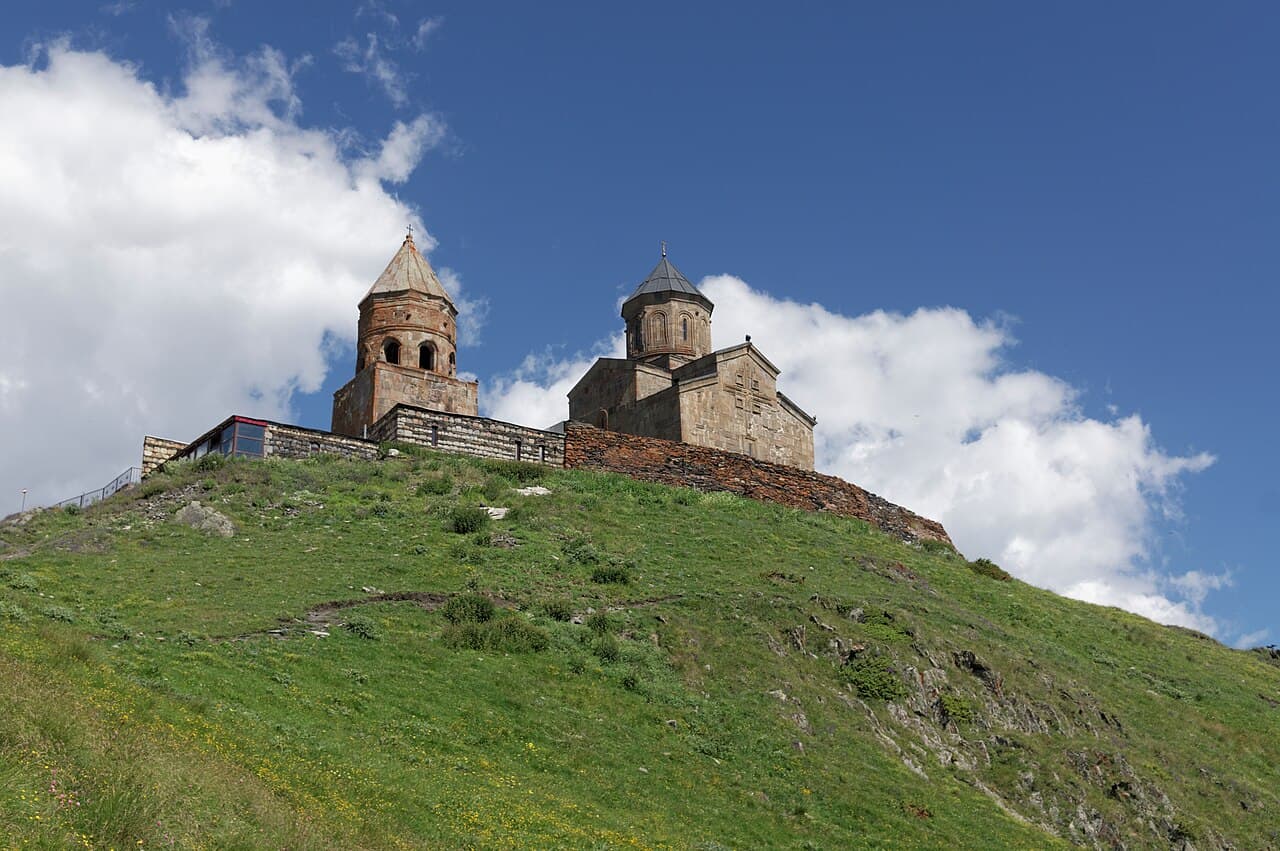
GeorgiaPhoto: Vyacheslav Argenberg / Wikimedia Commons (CC BY 4.0)

Georgia

Country · GE · GEL · Asia/Tbilisi

This information may change. Always check the official source.Last verified: August 2026 by

Georgia gives most nationalities 365 days visa-free, one of the most generous policies anywhere. The catch is new: since 1 January 2026 every tourist must carry health and accident insurance of at least 30,000 GEL for the whole stay.

  • About 98 nationalities get 365 days visa-free, including the whole EU, the UK, the USA, Canada, Australia, Japan and South Korea - one of the most generous policies anywhere.
  • There is no extension mechanism. People reset the clock by leaving across any border and coming back, which starts a new 365 days.
  • Since 1 January 2026 every tourist must hold health and accident insurance of at least 30,000 GEL covering the entire stay, arrival and departure days included.
  • A foreign insurer is fine and electronic copies are accepted, in English or Georgian - so have the certificate on your phone alongside your booking.
  • Overstaying costs 180 GEL up to three months and 360 GEL beyond, payable on departure, and an unpaid fine blocks re-entry.
More details

How your entry route is decided

Georgia lets citizens of about 98 countries stay for a full year without a visa. That includes the whole EU, the United Kingdom, the United States, Canada, Australia, Japan, South Korea, Singapore, Malaysia, Saudi Arabia and Russia.

  1. Visa-free for 365 days in any 12-month period. There is no extension mechanism - the way people reset the clock is to leave across any land or air border and come back, which starts a new 365 days.
  2. EU, Swiss, Liechtenstein, Turkish and Ukrainian citizens may enter on a national identity card, no passport needed.
  3. Chinese citizens enter visa-free for 30 days, for tourism only.
  4. Indian citizens need an e-Visa from the official portal. Others in the same position apply the same way, and the portal is the only legitimate channel.
  5. Cambodian citizens need a visa. Taiwan passports are not on the visa-free list and entry is arranged only case by case - check with a Georgian mission well before booking.

Passport rule: valid at least 3 months beyond the end of your intended stay.

The rule that is new and catches people out

Since 1 January 2026, under Decree No. 602 and the Law on Tourism, every foreign tourist must hold valid health and accident insurance to enter Georgia.

  • Minimum cover is 30,000 GEL per traveller, for medical and accident treatment.
  • It must cover the entire stay, including the day you arrive and the day you leave.
  • A Georgian or a foreign insurer is fine, electronic copies are accepted, and the policy may be in English or Georgian.
  • Exempt: holders of Georgian residence permits, people entering for official employment, and diplomatic staff and their families.
  • A "tourist" here means anyone staying at least one night and less than a year - so this applies to essentially every visitor.

Other formalities

  • Cash declaration: bringing in or taking out more than 30,000 GEL or the equivalent in foreign currency, cheques or securities must be declared at customs. Failing to declare between 30,000 and 50,000 GEL is a 3,000 GEL fine or confiscation; over 100,000 GEL it is 10% of the total.
  • At the desk, the Border Police scan the passport, may ask for your insurance, hotel booking, onward ticket and proof of funds, and stamp you in. It usually takes one to three minutes.
  • Overstaying costs 180 GEL for up to three months and 360 GEL beyond that, payable on departure. An unpaid fine blocks re-entry, and the record damages any later residence application.
Sources (3)

Georgia's customs are among the most relaxed in the region, and the rule that matters is which borders you may legally cross.

  • The allowances are generous by regional standards - several litres of alcohol and a carton of cigarettes per adult - and the airport checks are light.
  • Abkhazia and South Ossetia may not be entered from Russia. Doing so is illegal entry into Georgia and carries a fine or prosecution when you next appear at a Georgian checkpoint.
  • Cash above the declarable threshold must be reported, and the Turkish and Armenian land borders are where this is checked.
  • Wine may be brought out in quantity, which is unusual and deliberate - but the allowance of the country you fly into is what limits you.
More details
  • The allowances are generous by regional standards - several litres of alcohol and a carton of cigarettes per adult - and the airport checks are light.
  • Abkhazia and South Ossetia may not be entered from Russia. Doing so is illegal entry into Georgia and carries a fine or prosecution when you next appear at a Georgian checkpoint.
  • Cash above the declarable threshold must be reported, and the Turkish and Armenian land borders are where this is checked.
  • Wine may be brought out in quantity, which is unusual and deliberate - but the allowance of the country you fly into is what limits you.
  • Antiquities and religious objects need an export permit from the Ministry of Culture. Old icons sold in the Tbilisi flea market are exactly the category that gets stopped.
Sources (1)

Insurance of 30,000 GEL is a legal entry condition since January 2026, not just a good idea. Tap water is safe in Tbilisi and the mountains, and private hospitals in Tbilisi have English-speaking staff.

  • Your insurance is now an entry document - at least 30,000 GEL of health and accident cover, valid for the whole stay, since 1 January 2026.
  • No vaccinations are required, and there is no malaria or dengue anywhere in Georgia.
  • Tap water is safe and genuinely good in Tbilisi, Kutaisi and the mountains. In Batumi most visitors stick to bottled because of variable coastal plumbing.
  • Private hospitals in Tbilisi and Batumi have English-speaking staff - MediClubGeorgia, American Hospital Tbilisi and Evexi are where visitors are usually directed.
  • Georgia restricts more medicines than you would expect. Anything with codeine, tramadol, pseudoephedrine or a psychotropic agent needs a certified prescription translated into English or Georgian.
More details

Your insurance is now an entry document. Since 1 January 2026 every tourist must hold health and accident cover of at least 30,000 GEL valid for the whole stay. Have the certificate on your phone alongside your booking.

  • No vaccinations are required. Keep tetanus, diphtheria, hepatitis A and B, and MMR current.
  • No malaria and no dengue anywhere in Georgia.
  • Tap water is safe in Tbilisi, Kutaisi and the mountain areas, and it is genuinely good. In Batumi, most visitors stick to bottled water because of variable coastal plumbing.
  • Food and ice in licensed urban restaurants are reliable.

Hospitals and pharmacies

  • Private hospitals in Tbilisi and Batumi have English-speaking staff and modern facilities: MediClubGeorgia, American Hospital Tbilisi and Evexi are the ones foreign visitors are usually directed to. Regional public hospitals have older infrastructure and limited English.
  • Pharmacy chains are everywhere: PSP, Aversi, Pharmadepot and GPC all sell paracetamol and ibuprofen over the counter.

Bringing your own medication

Georgia restricts more than you would expect. Medicines containing codeine, tramadol, pseudoephedrine or any psychotropic agent are tightly controlled. Bringing them in without a certified doctor's prescription translated into English or Georgian can lead to detention at customs and criminal prosecution. Pack the paperwork with the pills, not in the hold.

Sources (2)

Tbilisi

Long-term averages for Tbilisi: the mean daily high, the mean overnight low and the mean monthly rainfall across 30 years of ERA5 reanalysis data (1995–2024).

DayNight
-551525°C0200mmJanFebMarAprMayJunJulAugSepOctNovDecJanuary: Day 5 °C, Night -4 °C, Rain 24 mm. February: Day 7 °C, Night -3 °C, Rain 29 mm. March: Day 10 °C, Night 0 °C, Rain 68 mm. April: Day 16 °C, Night 5 °C, Rain 100 mm. May: Day 21 °C, Night 10 °C, Rain 109 mm. June: Day 26 °C, Night 15 °C, Rain 77 mm. July: Day 29 °C, Night 18 °C, Rain 49 mm. August: Day 29 °C, Night 18 °C, Rain 43 mm. September: Day 24 °C, Night 14 °C, Rain 56 mm. October: Day 17 °C, Night 8 °C, Rain 65 mm. November: Day 11 °C, Night 2 °C, Rain 40 mm. December: Day 6 °C, Night -3 °C, Rain 27 mm
Show the monthly table
Tbilisi
MonthDay (°C)Night (°C)Rain (mm)
January5-424
February7-329
March10068
April165100
May2110109
June261577
July291849
August291843
September241456
October17865
November11240
December6-327

Batumi

Long-term averages for Batumi: the mean daily high, the mean overnight low and the mean monthly rainfall across 30 years of ERA5 reanalysis data (1995–2024).

DayNight
051015202530°C0500mmJanFebMarAprMayJunJulAugSepOctNovDecJanuary: Day 9 °C, Night 2 °C, Rain 168 mm. February: Day 10 °C, Night 3 °C, Rain 144 mm. March: Day 13 °C, Night 4 °C, Rain 164 mm. April: Day 17 °C, Night 8 °C, Rain 102 mm. May: Day 21 °C, Night 13 °C, Rain 108 mm. June: Day 24 °C, Night 17 °C, Rain 156 mm. July: Day 26 °C, Night 20 °C, Rain 229 mm. August: Day 26 °C, Night 21 °C, Rain 240 mm. September: Day 24 °C, Night 18 °C, Rain 270 mm. October: Day 21 °C, Night 14 °C, Rain 273 mm. November: Day 16 °C, Night 8 °C, Rain 200 mm. December: Day 12 °C, Night 4 °C, Rain 175 mm
Show the monthly table
Batumi
MonthDay (°C)Night (°C)Rain (mm)
January92168
February103144
March134164
April178102
May2113108
June2417156
July2620229
August2621240
September2418270
October2114273
November168200
December124175

Stepantsminda

Long-term averages for Stepantsminda: the mean daily high, the mean overnight low and the mean monthly rainfall across 30 years of ERA5 reanalysis data (1995–2024).

DayNight
-15-5515°C0250mmJanFebMarAprMayJunJulAugSepOctNovDecJanuary: Day -1 °C, Night -11 °C, Rain 35 mm. February: Day 0 °C, Night -10 °C, Rain 38 mm. March: Day 3 °C, Night -6 °C, Rain 96 mm. April: Day 8 °C, Night -1 °C, Rain 130 mm. May: Day 13 °C, Night 4 °C, Rain 172 mm. June: Day 17 °C, Night 8 °C, Rain 236 mm. July: Day 20 °C, Night 11 °C, Rain 241 mm. August: Day 20 °C, Night 11 °C, Rain 184 mm. September: Day 16 °C, Night 7 °C, Rain 117 mm. October: Day 11 °C, Night 2 °C, Rain 79 mm. November: Day 5 °C, Night -4 °C, Rain 48 mm. December: Day 1 °C, Night -9 °C, Rain 41 mm
Show the monthly table
Stepantsminda
MonthDay (°C)Night (°C)Rain (mm)
January-1-1135
February0-1038
March3-696
April8-1130
May134172
June178236
July2011241
August2011184
September167117
October11279
November5-448
December1-941
Sources (1)

Cheap by European standards - 25 to 50 GEL for a hostel bed, 80 to 180 GEL for a mid-range room - and there is no tourist tax anywhere in the country. Stay in Old Tbilisi or Sololaki for a first visit.

  • There is no tourist or bed tax anywhere in Georgia, so the quoted price is the price.
  • A hostel bed is 25 to 50 GEL and a mid-range room 80 to 180 GEL - one of the cheapest places in the region to sleep well.
  • A physical passport or national ID is required at check-in for identity registration.
  • In Tbilisi stay in Old Tbilisi, Sololaki or Mtatsminda to be inside the historic centre; Vera and Chugureti are the eating and nightlife side, Vake the calm residential option.
  • Mountain guesthouses are frequently cash-only and may not appear on booking sites at all - in Kazbegi, Svaneti and Tusheti, bring lari and arrange the room in person.
More details

Georgia is one of the cheapest places in the region to sleep well, and there is no bed tax on top.

Accommodation in Georgia
TypePrice per night
Hostel dorm or basic guesthouse25 to 50 GEL
Mid-range hotel or private apartment80 to 180 GEL
4-star and 5-star250 to 600 GEL and up
  • No municipal tourist or bed taxes are levied anywhere in Georgia, so the quoted price is the price.
  • A physical passport or national ID card is required at check-in for identity registration.
  • Booking.com dominates for hotels and guesthouses, Airbnb for city apartments. MyHome.ge and Flats.ge are the local portals for longer stays.

Where to stay for a first visit

  • Tbilisi: Old Tbilisi (Kala), Sololaki and Mtatsminda put you inside the historic centre and within walking distance of most of what you came for. Vera and Chugureti around Marjanishvili are the eating and nightlife side. Vake is the calm, upmarket residential option.
  • Batumi: Old Batumi and the strip along Batumi Boulevard by the sea.
  • Kutaisi: the historic centre around the Colchis Fountain and the White Bridge.

Guesthouses in the mountains are frequently cash-only and may not appear on booking sites at all. In Kazbegi, Svaneti and Tusheti, bring lari and expect to arrange the room in person.

Sources (1)

MagtiCom is the one to buy if you are going into the mountains - it is the only network with reliable signal in Kazbegi and Svaneti, and it works in the Tbilisi metro. Kiosks in the arrivals halls at Tbilisi and Kutaisi sell tourist SIMs.

  • Buy MagtiCom unless you are staying strictly in Tbilisi. It is the only network with reliable signal in Kazbegi, Svaneti and Tusheti, and it works inside the metro tunnels.
  • Silknet is solid in the cities and on the main highways with 5G in central Tbilisi; Cellfie is the budget option and weak in the mountains.
  • All three run kiosks in the arrivals halls at Tbilisi and Kutaisi airports, selling pre-packaged tourist SIMs.
  • Passport registration is mandatory for any local SIM or eSIM, whether bought in a shop or online.
  • International eSIMs roam on secondary host networks and degrade noticeably in the mountains. If the trip involves Kazbegi or Svaneti, buy local.
More details

Buy MagtiCom unless you are staying strictly in Tbilisi.

  • MagtiCom is the market leader, with over 90% population coverage, the best reception in the high mountains - Kazbegi, Svaneti, Tusheti - and LTE inside the Tbilisi Metro tunnels. Its eSIM profile costs 10 GEL.
  • Silknet (formerly Geocell) is solid in the cities and along the main highways, with 5G in central Tbilisi. eSIM profile 5 GEL plus a 4 GEL new-number fee.
  • Cellfie (formerly Beeline) is the budget option with 5G in the big cities and Batumi, but weak coverage in the mountains.

Where to buy

  • At the airport: MagtiCom, Silknet and Cellfie all run kiosks in the arrivals halls at Tbilisi International Airport and Kutaisi International Airport, selling pre-packaged tourist SIMs.
  • In town: official operator stores in Tbilisi, Batumi and Kutaisi.
  • Passport registration is mandatory for any local SIM or eSIM, in a shop or online.

International eSIMs

Saily covers Georgia from USD 4.79 for 1 GB over 7 days, and is the fastest option if you land late. One trade-off reported repeatedly by travellers: international profiles roam on secondary host networks and degrade noticeably in the mountains compared with a direct MagtiCom eSIM. If the trip involves Kazbegi or Svaneti, buy local.

Sources (2)

Georgian sockets are Type and at 220 V, the same as most of continental Europe.

  • A Europlug fits every socket, and Schuko plugs fit the earthed ones.
  • British, American and Australian plugs need an adapter.
  • Older Tbilisi housing and guesthouses in the mountains have unearthed sockets, sometimes wired to a supply that dips noticeably when a water heater starts.
  • 220 V behaves as 230 V does for anything built for Europe; American 120 V-only appliances need a converter.
  • Turkey, Armenia and Azerbaijan match, so one adapter covers a Caucasus trip.
More details

Sockets in Georgia are Type and at 220 V, 50 Hz - two round pins in the European pattern.

  • A Europlug fits every socket, and Schuko plugs fit the earthed ones.
  • British, American and Australian plugs need an adapter.
  • Older Tbilisi housing and guesthouses in the mountains have unearthed sockets, sometimes wired to a supply that dips noticeably when a water heater starts.
  • 220 V behaves as 230 V does for anything built for Europe; American 120 V-only appliances need a converter.
  • Turkey, Armenia and Azerbaijan match, so one adapter covers a Caucasus trip.
  • A Europlug is enough for chargers; only appliances with a metal case really need the earthed Type outlet.
Sources (1)

Type and sockets at 220V, UTC+4 with no daylight saving, and a strong drinking culture built around the supra and the tamada that is easy to underestimate.

  • Sockets are type and at 220V, 50Hz, the same as continental Europe.
  • Time is UTC+4 all year with no daylight saving, so the offset from Europe shifts by an hour twice a year.
  • Georgian has its own alphabet you will not be able to read. Russian is widely understood by older people, English by younger people and in tourism.
  • The supra is not just dinner - a feast runs on toasts led by a tamada, each drunk in full, and guests are pressed to keep up. Saying early and clearly that you are not drinking is entirely acceptable.
  • In churches, women cover their heads and wear a skirt - wraps are provided at the door - and men should not wear shorts.
More details
  • Power: Type and sockets, 220V, 50Hz - the same as continental Europe.
  • Time: UTC+4 all year. Georgia does not observe daylight saving, so the offset from Europe shifts by an hour twice a year.
  • Language: Georgian, with its own alphabet, which you will not be able to read. Russian is widely understood by older people, English by younger people and in tourism. Street signs in cities are usually transliterated.
  • Tap water is safe and good in Tbilisi and the mountains.
  • Public holidays: Orthodox Christmas on 7 January, New Year, Easter by the Orthodox calendar, Independence Day on 26 May and Mtskhetoba in October. Government offices and many businesses close.

Things worth knowing socially

  • The supra is not just dinner. A Georgian feast runs on toasts led by a tamada, and each toast is drunk in full. Guests are pressed to keep up. It is entirely acceptable to say you are not drinking - say it early and clearly rather than trying to keep pace.
  • Hospitality is intense and sincere. Being invited home by someone you just met is normal and usually exactly what it appears to be.
  • Churches: women should cover their heads and wear a skirt (wraps are provided at the door), men should not wear shorts.
  • Photographing the occupied-territory boundary lines or military installations is a bad idea.
  • Toilets in public buildings and markets often cost a small amount in cash.
Sources (1)

Cards work across Tbilisi and Batumi, but marshrutkas, markets and mountain guesthouses are cash only. Use Bank of Georgia or TBC Bank machines, and expect a 3 to 10 GEL fee on a foreign card.

  • Cards work across Tbilisi, Batumi and Kutaisi, but marshrutkas, street markets, rural vendors and mountain guesthouses are cash only. Carry lari before leaving a city.
  • Use Bank of Georgia or TBC Bank machines and avoid standalone ATMs in tourist areas, which mark up heavily.
  • Foreign cards pay a local ATM fee of 3 to 10 GEL on top of your own bank's charge, with limits around 1,000 to 2,000 GEL - so fewer, larger withdrawals.
  • Decline dynamic currency conversion: accepting the terminal's rate costs 8% to 15%.
  • Check the bill before tipping. Tbilisi and Batumi restaurants commonly add 10% to 15% service automatically, and where they have, nothing more is expected.
More details

Money and paying for things

Georgia uses the Georgian lari (GEL).

  • Cards work in the cities. Visa and Mastercard are taken in hotels, supermarkets, restaurants and shops across Tbilisi, Batumi and Kutaisi.
  • Cash is still mandatory for marshrutka minibuses, street markets, rural vendors, public toilets and small mountain guesthouses. Carry lari before leaving a city.
  • Use bank ATMs: Bank of Georgia and TBC Bank. Avoid standalone machines in tourist areas, which mark up heavily.
  • Foreign cards pay a local ATM fee of 3 to 10 GEL per withdrawal on top of your own bank's charge, and per-transaction limits are typically 1,000 to 2,000 GEL. Take out more per visit and fewer visits.
  • Decline dynamic currency conversion. Choose "bill in GEL" or "proceed without conversion"; accepting the terminal's rate costs 8% to 15%.
  • Exchange in town, not at the airport. City exchange offices run narrow spreads; the booths at Tbilisi and Kutaisi airports are much wider. Withdrawing lari from an airport bank ATM beats exchanging cash there.

Tipping

Check the bill first. Restaurants in Tbilisi and Batumi commonly add a 10% to 15% service charge automatically. Where they have, nothing more is expected. Where they have not, 5% to 10% in cash is a normal gesture.

What things cost

Money and payments in Georgia
ItemTypical price
Espresso or cappuccino5 to 8 GEL
Khachapuri or shawarma5 to 10 GEL
Mid-range restaurant meal25 to 45 GEL
Bottled water, 1 litre1.50 to 2 GEL
Tbilisi bus or metro ride1 GEL
Batumi bus ride0.30 GEL
Bolt, per kilometre1.50 to 2 GEL
Sources (2)

Everyday prices

Typical prices in Georgian lari (GEL), averaged across the country by Numbeo and read on 12 August 2026. Tick Convert prices above the table to see every amount in your own currency.

Everyday prices
ItemTypical price
Inexpensive restaurant meal28 GEL
Dinner for two, mid-range, three courses100 GEL
Cappuccino8.12 GEL
Local draught beer, 0.5 l6.00 GEL
Bottled water, 0.33 l1.35 GEL
Public transport, one-way ticket1.00 GEL
Taxi, starting fare3.00 GEL
Petrol, 1 litre3.44 GEL
Cigarettes, pack of 20 (Marlboro)8.50 GEL
Average net monthly salary1,470 GEL

These are country-wide averages, not a price list: tourist districts, airports and islands sit well above them, and small towns below. The salary line is there for proportion - it is what people living here actually earn.

Sources (1)

Airport guides for Georgia2

One page per airport: the routes into town, what they cost and the trap particular to that arrival.

See all 2 airports

Bus 337 from Tbilisi airport into the centre costs 1 GEL and cash is not accepted. A Bolt to Freedom Square is 25 to 35 GEL. Anyone approaching you inside the terminal will charge over 100 GEL for the same ride.

  • Bus 337 into central Tbilisi is 1 GEL and runs every 15 to 20 minutes from outside arrivals, via Avlabari metro, Freedom Square and Rustaveli.
  • You cannot pay the driver in cash. It is a Metromoney card or a contactless bank card only, which strands people who land with just notes.
  • Bolt is 25 to 35 GEL and available 24 hours, picked up from the main car park outside the terminal. This is what most visitors should use.
  • The airport train is a curiosity, not a plan - 0.50 GEL to Station Square, but only about three departures a day.
  • The one scam to know: men inside arrivals claiming to be your Bolt driver or offering a "special price", with fares over 100 GEL the usual outcome.
More details
Tbilisi International Airport (TBS)
  • Bus 337 - 1 GEL, 45 to 60 minutes. The municipal bus from directly outside the arrivals hall, every 15 to 20 minutes, running roughly 07:00 to 23:00. It runs via Avlabari metro, Freedom Square and Rustaveli Avenue to Station Square.
  • You cannot pay the driver in cash. It is 1 GEL with a Metromoney card and 1.50 GEL tapping an international contactless card. Cash is not accepted at all - this strands people who land with only notes.
  • Bolt - 25 to 35 GEL, 20 to 30 minutes. Available 24 hours, picked up from the main car park outside the terminal. This is what most visitors should use.
  • Official white airport taxis - 35 to 60 GEL, paid in cash to the driver, from the rank outside arrivals.
  • The train is a curiosity, not a plan. The airport station is 70 metres from the terminal and costs just 0.50 GEL to Station Square in 25 to 35 minutes, but there are only about three departures a day (roughly 04:00, 08:45 and 18:05).
  • Private transfers: GoTrip.ge from 50 GEL, Welcome Pickups around 67 GEL, met inside arrivals with a name board.
Kutaisi International Airport (KUT)
  • Georgian Bus coaches are timed to flight arrivals and go to Kutaisi city (25 to 30 minutes, 5 to 10 GEL), Batumi (2 hours, 15 to 20 GEL) and Tbilisi (3.5 hours, 25 to 30 GEL). Book at tre.ge or at the airport desk.
  • Bolt into Kutaisi is 25 to 35 GEL. Tout taxis charge up to 60 GEL for the same trip.
Batumi International Airport (BUS)
  • Bus 10 / 10a - 0.30 GEL, every 15 to 20 minutes from 07:00 to 23:00, 20 to 30 minutes along Rustaveli Avenue to the central railway station. Contactless card or transport card only.
  • Bolt - 10 to 18 GEL to the Boulevard area, 15 to 20 minutes.
  • Airport taxis quote 25 to 40 GEL and routinely refuse to use a meter. Use Bolt instead.

The one scam to know: men inside the arrivals hall claiming to be your Bolt driver, or offering an unmetered "special price". Fares over 100 GEL into central Tbilisi are the usual outcome. Book in the app and walk to the pickup point, or join the official taxi queue outside.

Sources (2)

Getting around the city, and which apps to install

One Tbilisi fare of 1 GEL covers metro and bus with 90 minutes of transfers. Bolt replaces Uber entirely, and the Stadler double-decker to Batumi is a proper train at 34 GEL in second class.

  • Uber does not operate in Georgia. Bolt is dominant in Tbilisi, Batumi and Kutaisi, with a typical city-centre ride at 6 to 12 GEL.
  • Tbilisi transit is 1 GEL a ride including 90 minutes of unlimited transfers across metro and buses, paid by contactless card or a Metromoney card.
  • Marshrutka minibuses are cash-only everywhere and are how you reach most small towns and trailheads. Keep small notes.
  • Between Tbilisi and Batumi take the Stadler double-decker - five hours, 34 GEL in second class, and your passport number is required to book.
  • Mountain roads close. The Georgian Military Highway over the Jvari Pass blocks with snow in winter and mudslides in spring.
More details

Bolt is the default for everything short, and it is cheap enough that most visitors barely use the buses.

  • Uber does not operate in Georgia. Bolt is dominant in Tbilisi, Batumi and Kutaisi; Yandex Go is the secondary option. A typical city-centre ride is 6 to 12 GEL, at roughly 1.50 to 2 GEL per km.
  • Tbilisi transit costs 1 GEL a ride, including 90 minutes of unlimited transfers across metro and municipal buses. Pay by contactless Visa or Mastercard, or with a rechargeable Metromoney card (2 GEL for the card). Passes: 3 GEL a day, 20 GEL a week, 40 GEL a month, sold at metro stations.
  • Batumi buses are 0.30 GEL by card. Regional marshrutka minibuses are 0.80 GEL, paid in cash as you get off.
  • Marshrutkas are cash-only everywhere, and they are how you reach most small towns and trailheads. Keep small notes.
  • Between Tbilisi and Batumi, take the Stadler double-decker. Five hours, 34 GEL in second class, 74 GEL first, 124 GEL business. Book on gr.com.ge or through TKT.ge or Biletebi.ge, which let you pick a seat on the upper deck and take foreign cards. Your passport number is required to book.
  • Mountain roads close. The Georgian Military Highway to Stepantsminda over the Jvari Pass blocks with snow in winter and mudslides in spring. Check before setting out.

Apps and platforms

Bolt for every ride, TKT.ge for trains and events, and Google Maps, which handles Tbilisi transit better than the local apps.

  • Bolt - https://bolt.eu/en-ge/ - The ride-hailing app in Georgia. Install it before you land; it is how you leave the airport.
  • Yandex Go - https://go.yandex/ - Secondary ride-hailing, useful when Bolt surges.
  • TKT.ge - https://tkt.ge/ - Train tickets, buses and events, with seat selection and foreign card support.
  • Georgian Railway - https://gr.com.ge/en - Official intercity rail booking.
  • Tbilisi Transport Company - http://ttc.com.ge/ - Metro and bus information and passes.
More details
  • Bolt - https://bolt.eu/en-ge/ - The ride-hailing app in Georgia. Install it before you land; it is how you leave the airport.
  • Yandex Go - https://go.yandex/ - Secondary ride-hailing, useful when Bolt surges.
  • TKT.ge - https://tkt.ge/ - Train tickets, buses and events, with seat selection and foreign card support.
  • Georgian Railway - https://gr.com.ge/en - Official intercity rail booking.
  • Tbilisi Transport Company - http://ttc.com.ge/ - Metro and bus information and passes.
  • Google Maps - Reliable for Tbilisi metro and bus routing, and better than anything local.
  • Saily - International eSIM, installed by QR code before you fly, if you would rather not queue at a kiosk.
Sources (3)

Georgian roads are free and the mountain routes are the reason to drive, but local driving standards are the hazard.

  • Overtaking on blind bends is normal and the accident rate is high. Defensive driving here means assuming an oncoming car in your lane on every corner.
  • The Georgian Military Highway to Kazbegi is paved and dramatic; the road to Ushguli in Svaneti and the Tusheti track are not, and the Tusheti road is one of the most dangerous in the world.
  • The alcohol limit is 0.3 g/l and police checkpoints are common on the main routes.
  • Roads are free - there is no vignette or toll network.
  • Winter closes the high passes, and the Jvari Pass on the way to Kazbegi shuts at short notice between November and April.
More details

Free roads, spectacular mountain routes, and driving standards that are the main risk.

  • Overtaking on blind bends is normal and the accident rate is high. Defensive driving here means assuming an oncoming car in your lane on every corner.
  • The Georgian Military Highway to Kazbegi is paved and dramatic; the road to Ushguli in Svaneti and the Tusheti track are not, and the Tusheti road is one of the most dangerous in the world.
  • The alcohol limit is 0.3 g/l and police checkpoints are common on the main routes.
  • Roads are free - there is no vignette or toll network.
  • Winter closes the high passes, and the Jvari Pass on the way to Kazbegi shuts at short notice between November and April.
Sources (1)

Very low violent crime and safe to walk at night in the cities. The two real risks are the Tbilisi bar scam aimed at solo men, and the occupied territories of Abkhazia and South Ossetia, which are a criminal matter, not a border crossing.

  • Georgia has a very low violent crime rate and city centres are comfortable to walk at night, with visible and responsive Patrol Police.
  • The bar scam targets solo men on Shardeni Street and around Perovskaya in Tbilisi: a promoter invites you in, drinks appear, and security presents a bill of hundreds or thousands of GEL and blocks the door.
  • Do not follow a street promoter into a venue you did not choose - and if it happens, call 112 rather than paying.
  • Do not attempt to enter Abkhazia or South Ossetia from the Russian side. That is a criminal offence in Georgia, punishable by prosecution and a permanent entry ban.
  • Drug law is zero-tolerance and severe, cannabis included, with heavy fines and prison sentences - one of the strictest regimes in the region.
More details

Georgia is a safe country with a very low violent crime rate, and city centres in Tbilisi, Batumi and Kutaisi are comfortable to walk at night. Patrol Police are visible and responsive.

The two scams that matter

  • The bar scam. Concentrated on Shardeni Street and around Perovskaya in Tbilisi, and aimed at solo male travellers. A promoter invites you into a bar, drinks appear, and security then presents a bill of several hundred or several thousand GEL and blocks the door. Do not follow a street promoter into a venue you did not choose, and if it happens, call 112 rather than paying.
  • The airport tout. Drivers inside the terminal claiming to be your Bolt or offering a flat rate, charging 100 GEL and up for a 25 GEL ride.

Abkhazia and South Ossetia

Do not attempt to enter the Russian-occupied territories of Abkhazia or South Ossetia from the Russian side. Under the Law on Occupied Territories that is a criminal offence in Georgia, punishable by prosecution and a permanent entry ban. This is not a bureaucratic technicality.

Roads and nature

  • Driving here is genuinely aggressive: hard overtaking, high speeds, sudden lane changes, and livestock on rural roads. If you are not confident, hire a driver rather than a car.
  • Mountain roads: the Georgian Military Highway over the Jvari Pass toward Stepantsminda closes for snow in winter and mudslides in spring.
  • Seasonal hazards: spring flooding and landslides in mountain valleys from April to June, avalanche risk in the alpine areas from December to March, and minor earthquakes - Georgia is a seismic zone.

Law and social climate

  • Drug law is zero-tolerance and severe, cannabis included. Possession brings heavy fines and prison sentences. This is one of the strictest regimes in the region.
  • Solo and female travellers report low levels of street harassment and generally safe conditions.
  • LGBTQ+ travellers: same-sex activity is legal, but social attitudes are conservative and public displays of affection outside a few Tbilisi venues can draw hostility.
Sources (2)

112 is the single number for police, ambulance and fire, with English-speaking operators on request. The Patrol Police handle tourist matters; there is no separate tourist police force.

  • 112 is the single national number for police, ambulance and fire, free from any phone.
  • Ask for an English-speaking operator and you will be transferred.
  • There is no separate tourist police. The Patrol Police handle everything and are generally responsive and used to foreign visitors.
  • A lost passport means a Patrol Police station first for the written incident report, then your embassy in Tbilisi for an emergency travel document.
  • Carry your insurance certificate: cover of at least 30,000 GEL is compulsory, and a private hospital will ask for it before treating anything non-urgent.
More details

Emergency numbers

  • 112 - the single national number for police, ambulance and fire and rescue. Free from any phone. Ask for an English-speaking operator and you will be transferred.

There is no separate tourist police. The Patrol Police handle everything, and they are generally responsive and used to foreign visitors.

If your passport is lost or stolen

  1. Report it at the nearest Patrol Police station and obtain the written incident report.
  2. Take that report to your embassy in Tbilisi for an emergency travel document.

Embassies in Tbilisi

  • United States - 29 Georgian-American Friendship Avenue, Didi Dighomi, Tbilisi 0131 - +995 32 227 7000 - consular hours Monday to Friday 08:30 to 17:30
  • United Kingdom - GMT Plaza, 4 Freedom Square, Tbilisi 0105 - +995 32 274 747
  • Czech Republic - 37 Chavchavadze Avenue, block VI, Tbilisi 0162 - +995 32 291 6740

Remember your insurance certificate. Since January 2026 cover of at least 30,000 GEL is compulsory, and a private hospital will ask for it before treating anything non-urgent.

Sources (2)