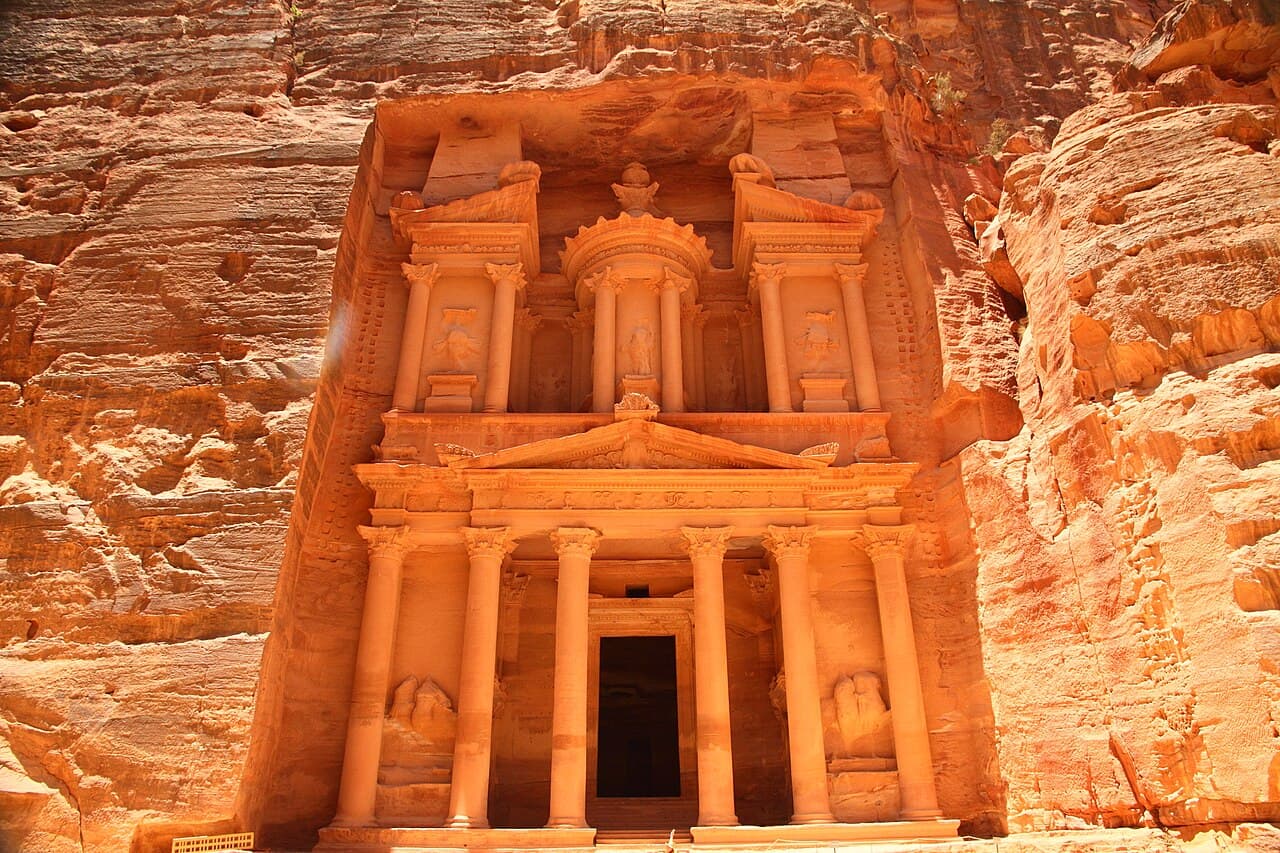
JordanPhoto: Davidchocron / Wikimedia Commons (CC BY-SA 4.0)

Jordan

Country · JO · JOD · Asia/Amman

This information may change. Always check the official source.Last verified: August 2026 by

Buy the Jordan Pass before you fly. It costs JOD 70, waives the JOD 40 visa and includes Petra at JOD 50, so it is cheaper than paying for nothing. Bought after landing it waives nothing.

  • Buy the Jordan Pass online before you fly - it is the single decision that saves the most money on a trip here.
  • It waives the JOD 40 visa and includes Petra, which alone is JOD 50 for one day. Visa plus Petra without the pass is JOD 90, against JOD 70 for the pass.
  • The waiver only works if you bought it before you arrived. They check the purchase date, and a pass bought in the taxi from the airport waives nothing.
  • You must stay at least three nights for the pass to be valid, and it is one QR code per person, children included.
  • Staying more than 14 days means registering at a police station - free, half an hour, and skipping it costs JOD 200 on departure.
More details

The Jordan Pass, and why it is not a souvenir

Buy it online before you fly. It is the single decision that saves the most money on a trip to Jordan.

Visa and entry in Jordan
TierPricePetra
Jordan WandererJOD 701 day
Jordan ExplorerJOD 752 consecutive days
Jordan ExpertJOD 803 consecutive days
  • All three waive the JOD 40 tourist visa fee and include entry to more than 40 sites - Petra, Wadi Rum, Jerash, the Roman theatre, the desert castles.
  • A Petra ticket alone is JOD 50 for one day. Visa plus Petra without the pass is JOD 90, so the JOD 70 pass is cheaper than the two things it replaces.
  • The waiver only works if you bought the pass before you arrived. At the border they check the purchase date, and a pass bought in the taxi from the airport waives nothing.
  • You must stay at least three nights. The pass site words it as three days and the FCDO as three nights; book three nights and the ambiguity never touches you.
  • It is one QR code per person, children included, and it is scanned at immigration and again at every site.

If you are not buying the pass

  • A visa on arrival is JOD 40, single entry, and it is valid for 3 months.
  • It is issued at Queen Alia (Amman), at Aqaba, at the Sheikh Hussein/North crossing and at Wadi Araba.
  • It is not issued at the King Hussein (Allenby) Bridge from the West Bank. Arrive there without a pre-approved visa and you are turned back.
  • Passport valid 6 months beyond arrival.
  • Entering through Aqaba's special economic zone, the visa is free if you stay at least two nights in the zone - a genuine saving for a Red Sea trip, though see the safety section on Aqaba's airport and seaport.

Two rules that catch people on the way out

  • Staying more than 14 days means registering at a police station with a residency extension office. It is free, it takes half an hour, and skipping it costs JOD 200 on departure.
  • There is a JOD 10 departure tax in cash at every land border. Airports do not charge it; the crossing to Israel or Saudi Arabia does.

Where your nationality lands

Visa and entry in Jordan
You holdWhat you need
Saudi Arabia and the other GCC statesNothing. 3 months visa-free
RussiaNothing. 30 days visa-free
USA, Canada, Australia, UK, Germany, France, Italy, Spain, Netherlands, Poland, Japan, South Korea, China, Singapore, TaiwanJordan Pass or JOD 40 on arrival
India, Malaysia, CambodiaPrior approval through the Ministry of Interior e-services portal
  • Get the approval if you are on the last row. Sources disagree about who may still walk up to the counter, and the airport is a bad place to test a disagreement.
  • Tour groups of five or more booked through a Jordanian operator have their visa fee waived as a matter of course, which is why organised trips never mention any of this.
Sources (2)

Drones are confiscated at Jordanian airports, and anything picked up at Petra is an antiquities offence on the way out.

  • Drones are prohibited without prior clearance. They are taken at Queen Alia airport and recovering one is difficult, so leave it at home rather than argue at the desk.
  • Antiquities may not be exported. That includes a stone or a shard from Petra or Jerash, and the airport scanner is looking for exactly that.
  • The allowance is 200 cigarettes and around a litre of spirits per adult, with a value cap on other goods.
  • Cash above the declarable threshold must be reported on entry and on exit.
  • Dead Sea cosmetics travel fine, but the liquid limits of the airline apply and the larger jars need to go in the hold.
More details
  • Drones are prohibited without prior clearance. They are taken at Queen Alia airport and recovering one is difficult, so leave it at home rather than argue at the desk.
  • Antiquities may not be exported. That includes a stone or a shard from Petra or Jerash, and the airport scanner is looking for exactly that.
  • The allowance is 200 cigarettes and around a litre of spirits per adult, with a value cap on other goods.
  • Cash above the declarable threshold must be reported on entry and on exit.
  • Dead Sea cosmetics travel fine, but the liquid limits of the airline apply and the larger jars need to go in the hold.
  • The land crossings from Israel and the West Bank have their own customs procedure and their own hours, which are shorter than you expect.
Sources (1)

Private hospitals in Amman are excellent and are used by the whole region. Drink bottled water, respect the heat, and do not shave the day you go in the Dead Sea.

  • Amman's private hospitals are among the best in the region and treat patients from across the Middle East - but you pay up front and claim back.
  • Tap water is chlorinated and generally safe in Amman, but almost nobody drinks it and neither should you on a short trip.
  • Petra in July is 38 to 42 °C with no shade in the middle of the day. Walk early, rest at noon, drink more than you want to and take salt.
  • Do not shave the day you go in the Dead Sea. Salt in a fresh cut is memorable for the wrong reason.
  • Do not put your face in the Dead Sea or dive. Salt in the eyes is a medical event - 20 minutes is enough, then shower properly.
More details

Medical care

  • Amman's private hospitals are among the best in the region and treat patients from across the Middle East. Care is prompt and good.
  • You pay up front and claim back, so insurance matters. Bring the policy number.
  • Public hospitals are adequate and busy; outside Amman, facilities in the governorates are basic.
  • Pharmacies are everywhere and pharmacists speak English, and much of what needs a prescription at home does not here.

Water and food

  • Tap water is chlorinated and generally safe in Amman, but almost nobody drinks it and neither should you on a short trip. Bottled water is cheap.
  • Refill from big bottles rather than buying small ones, which is what the camps do.
  • Food hygiene is good. Street shawarma and falafel from a busy place is fine and is the best food in the country.
  • Stomach upsets are usually the change of diet, not contamination. Bring rehydration salts.

Heat and the Dead Sea

  • Summer heat is serious. Petra in July is 38 to 42 °C with no shade in the middle of the day; walk early, rest at noon.
  • Drink more than you want to and take salt. Heat exhaustion at Petra is a routine call-out.
  • The Dead Sea is 430 m below sea level and the hottest place in the country.
  • Do not shave the day you go in. The salt in a fresh cut is memorable for the wrong reason.
  • Do not put your face in the water or dive. Salt in the eyes is a medical event, and swallowing it is dangerous.
  • 20 minutes is enough, then shower properly.

Before you go

  • Nothing exotic is required. Hepatitis A and typhoid are the usual recommendations; check tetanus is current.
  • Travel insurance that covers desert activities and diving is worth reading closely if you are going to Wadi Rum or Aqaba.
  • Aqaba has a decompression chamber, which is one reason its dive industry has a good record.
  • Bring your own supply of any prescription medicine, with the prescription, because brand names differ.
Sources (2)

Amman

Long-term averages for Amman: the mean daily high, the mean overnight low and the mean monthly rainfall across 30 years of ERA5 reanalysis data (1995–2024).

DayNight
0102030°C050mmJanFebMarAprMayJunJulAugSepOctNovDecJanuary: Day 12 °C, Night 4 °C, Rain 49 mm. February: Day 13 °C, Night 4 °C, Rain 48 mm. March: Day 17 °C, Night 7 °C, Rain 34 mm. April: Day 22 °C, Night 10 °C, Rain 12 mm. May: Day 27 °C, Night 15 °C, Rain 6 mm. June: Day 31 °C, Night 17 °C, Rain 0 mm. July: Day 32 °C, Night 19 °C, Rain 0 mm. August: Day 32 °C, Night 20 °C, Rain 0 mm. September: Day 30 °C, Night 18 °C, Rain 1 mm. October: Day 26 °C, Night 15 °C, Rain 8 mm. November: Day 19 °C, Night 10 °C, Rain 19 mm. December: Day 14 °C, Night 6 °C, Rain 30 mm
Show the monthly table
Amman
MonthDay (°C)Night (°C)Rain (mm)
January12449
February13448
March17734
April221012
May27156
June31170
July32190
August32200
September30181
October26158
November191019
December14630

Petra

Long-term averages for Petra: the mean daily high, the mean overnight low and the mean monthly rainfall across 30 years of ERA5 reanalysis data (1995–2024).

DayNight
5101520253035°C050mmJanFebMarAprMayJunJulAugSepOctNovDecJanuary: Day 14 °C, Night 5 °C, Rain 28 mm. February: Day 15 °C, Night 6 °C, Rain 24 mm. March: Day 19 °C, Night 8 °C, Rain 16 mm. April: Day 24 °C, Night 12 °C, Rain 6 mm. May: Day 28 °C, Night 16 °C, Rain 4 mm. June: Day 31 °C, Night 19 °C, Rain 0 mm. July: Day 33 °C, Night 21 °C, Rain 0 mm. August: Day 33 °C, Night 21 °C, Rain 0 mm. September: Day 30 °C, Night 19 °C, Rain 0 mm. October: Day 26 °C, Night 16 °C, Rain 5 mm. November: Day 20 °C, Night 11 °C, Rain 9 mm. December: Day 16 °C, Night 7 °C, Rain 13 mm
Show the monthly table
Petra
MonthDay (°C)Night (°C)Rain (mm)
January14528
February15624
March19816
April24126
May28164
June31190
July33210
August33210
September30190
October26165
November20119
December16713

Aqaba

Long-term averages for Aqaba: the mean daily high, the mean overnight low and the mean monthly rainfall across 30 years of ERA5 reanalysis data (1995–2024).

DayNight
10152025303540°C010mmJanFebMarAprMayJunJulAugSepOctNovDecJanuary: Day 20 °C, Night 10 °C, Rain 7 mm. February: Day 22 °C, Night 11 °C, Rain 8 mm. March: Day 26 °C, Night 13 °C, Rain 5 mm. April: Day 30 °C, Night 17 °C, Rain 1 mm. May: Day 35 °C, Night 20 °C, Rain 1 mm. June: Day 37 °C, Night 23 °C, Rain 0 mm. July: Day 39 °C, Night 25 °C, Rain 0 mm. August: Day 39 °C, Night 24 °C, Rain 0 mm. September: Day 36 °C, Night 22 °C, Rain 0 mm. October: Day 32 °C, Night 20 °C, Rain 1 mm. November: Day 26 °C, Night 15 °C, Rain 2 mm. December: Day 22 °C, Night 11 °C, Rain 3 mm
Show the monthly table
Aqaba
MonthDay (°C)Night (°C)Rain (mm)
January20107
February22118
March26135
April30171
May35201
June37230
July39250
August39240
September36220
October32201
November26152
December22113
Sources (1)

Amman has proper hotels, Wadi Musa has a hundred places built for Petra, and a night in a Wadi Rum camp is the one booking worth making in advance.

  • Wadi Musa is the town outside Petra and exists entirely for it. Ask how far the hotel is from the gate - some are a stiff uphill kilometre.
  • Wadi Rum camps run JOD 25 to JOD 150 per person with dinner and breakfast, from bedouin tents with shared bathrooms to air-conditioned bubble domes.
  • Book the Wadi Rum camp ahead and confirm whether the price includes the jeep tour, because it usually does not.
  • Heating in winter is not a given in Wadi Musa, which sits at 1,000 m and gets genuinely cold at night. Desert camps run on generators that go off in the evening.
  • July and August are brutally hot in Petra, Wadi Rum and at the Dead Sea, which is 430 m below sea level. Prices drop for a reason.
More details

Where you actually sleep

  • Amman: Jabal Amman and Jabal Weibdeh for character and walkable evenings, Abdali and Shmeisani for business hotels. Downtown is cheap and loud.
  • Wadi Musa is the town outside Petra and exists entirely for it. Ask how far the hotel is from the gate - some are a stiff uphill kilometre.
  • Wadi Rum camps run from bedouin tents with shared bathrooms to bubble domes with air conditioning, JOD 25 to JOD 150 per person with dinner and breakfast.
  • Dead Sea resorts are the expensive strip, and the alternative is Madaba, half an hour up the hill and half the price.
  • Aqaba is hotels along the shore and a town behind them.

Booking

  • March to May and September to November are peak. Petra hotels fill and prices double.
  • Book the Wadi Rum camp ahead and confirm whether the price includes the jeep tour, because it usually does not.
  • July and August are brutally hot in Petra, Wadi Rum and at the Dead Sea, which is 430 m below sea level. Prices drop for a reason.
  • Ramadan changes everything: restaurants closed by day, hotels quieter, and a very different evening.

Practical

  • Breakfast is nearly always included and is generous.
  • Heating in winter is not a given in Wadi Musa, which sits at 1,000 m and gets genuinely cold at night.
  • Desert camps run on generators that go off at some point in the evening. Charge everything at dinner.
  • A night in the desert is cold from October to April. The camp gives you blankets; bring layers anyway.
  • Flash floods close the Petra siq and the wadis after rain, November to March. If a camp cancels on you in winter, this is why.
Sources (2)

Zain and Umniah have counters in the arrivals hall and want your passport. About JOD 15 buys a tourist bundle with more data than a fortnight needs; coverage in Wadi Rum is patchier than the brochures suggest.

  • Zain has the widest coverage, Umniah is the cheapest, and both have counters in the Queen Alia arrivals hall. Orange does not, so buy it in town.
  • Registration is legally required and needs your passport, done at the counter there and then.
  • Tourist bundles run about JOD 6 to JOD 16, and even the cheap ones carry more data than a two-week trip uses.
  • Wadi Rum has signal at the village and visitor centre and much less in the desert. Camps are usually reachable; a jeep in a canyon is not.
  • A local bundle beats an eSIM if you are here more than a few days, and the counter is 50 m past baggage reclaim.
More details

Buying a SIM

  • Three networks: Zain, Orange and Umniah. Zain has the widest coverage, Umniah is the cheapest, Orange sits between them.
  • Zain and Umniah have counters in the Queen Alia arrivals hall, open from early morning. Orange does not, so buy Orange in town.
  • Registration is legally required and needs your passport. The assistant does it there and then.
  • Tourist bundles run about JOD 6 to JOD 16, and even the cheap ones carry more data than a two-week trip uses. JOD 15 is the usual "everything included" price.
  • Prices carry 16% sales tax on the mainland and none in the Aqaba free zone, which is a curiosity rather than a plan.

Coverage

  • Amman, Petra, Jerash, Madaba, the Dead Sea and Aqaba are all solid 4G.
  • Wadi Rum has signal at the village and the visitor centre and much less of it in the desert. Camps are usually reachable; a jeep in a canyon is not.
  • The Desert Highway and the King's Highway are covered end to end.
  • Roaming from the Gulf is often bundled; from Europe it rarely is.

eSIM

  • Saily's Jordan plans start at USD 4.79 for 1 GB over 7 days, with USD 17.99 for 5 GB over 30 days and USD 29.99 for 10 GB.
  • A local bundle is better value if you are here more than a few days, and the counter is 50 m past baggage reclaim.
  • The eSIM wins if you land at 02:00 and want data before you have found a shop, or if you are crossing straight to another country.
  • All three networks support eSIM in their own stores if you would rather stay on a local network without swapping cards.
Sources (2)

Jordanian sockets come in six types at 230 V, the legacy of British, French and German wiring in different decades.

  • A universal adapter is genuinely necessary. Which socket a room has depends on when the building was wired, not on where you are.
  • British Type is the most common in newer buildings, with round-pin Type and Schuko Type both widespread.
  • A Europlug fits several of them, including the Type , and outlets, which covers most chargers.
  • 230 V, so American 120 V-only appliances need a converter.
  • Desert camps in Wadi Rum run on generators or solar with limited hours, and sockets there are whatever the camp installed.
More details

Sockets in Jordan are Type , , , , and at 230 V, 50 Hz - more socket types in daily use than almost anywhere else.

  • A universal adapter is genuinely necessary. Which socket a room has depends on when the building was wired, not on where you are.
  • British Type is the most common in newer buildings, with round-pin Type and Schuko Type both widespread.
  • A Europlug fits several of them, including the Type , and outlets, which covers most chargers.
  • 230 V, so American 120 V-only appliances need a converter.
  • Desert camps in Wadi Rum run on generators or solar with limited hours, and sockets there are whatever the camp installed.
Sources (1)

The weekend is Friday and Saturday, hospitality is relentless and sincere, and in Ramadan the daylight hours belong to a different country than the evenings.

  • The weekend is Friday and Saturday. Government offices and many businesses close, and Sunday is a normal working day.
  • In Ramadan, eating, drinking and smoking in public during daylight is illegal for everyone, visitors included - hotels serve guests in a screened area.
  • Hospitality is real and constant. Tea will be offered and refusing outright is rude - accept, drink some, thank them.
  • Cover shoulders and knees, men included, away from resorts. Swimwear belongs at hotel pools, the Dead Sea resorts and Aqaba beaches, nowhere else.
  • Sockets are mostly type , the British three-pin, with C and D also about, at 230 V - bring an adaptor for both.
More details

The week

  • The weekend is Friday and Saturday. Government offices and many businesses close; Sunday is a normal working day.
  • Friday morning is quiet everywhere and picks up after midday prayers.
  • Sites and museums keep shorter hours on Fridays and in winter, so check before a long drive.

Ramadan, if your trip lands in it

  • Ramadan moves about 11 days earlier each year and currently falls in late winter.
  • Eating, drinking and smoking in public during daylight is illegal for everyone, visitors included. Hotels serve guests in a screened area.
  • Restaurants outside hotels are largely closed until sunset, then the whole country eats at once and stays up late.
  • Alcohol is much harder to find and many licensed places close for the month.
  • It is a wonderful time to be here if you plan for it and a frustrating one if you do not.

Manners

  • Hospitality is real and constant. Tea will be offered and refusing outright is rude - accept, drink some, thank them.
  • Greet with as-salamu alaykum, and shake hands with the same sex. Wait for a woman to offer her hand first.
  • Use the right hand for eating, giving and receiving.
  • Ask before photographing people, especially women, and never photograph police, soldiers or border posts.
  • Public affection is not done, including between couples.

Dress and alcohol

  • Cover shoulders and knees, men included, away from resorts. Amman's Rainbow Street is relaxed; a village is not.
  • Swimwear belongs at hotel pools, the Dead Sea resorts and Aqaba beaches, and nowhere else.
  • Alcohol is legal and sold in licensed restaurants, hotels and liquor shops, but it is expensive and not drunk in public.
  • Being drunk in public is a serious loss of face and can be an offence.

Small useful things

  • 230 V, and the sockets are mostly type , the British three-pin, with types and also about. Bring an adaptor for both.
  • Tap water is drinkable in Amman and nobody drinks it. Bottled everywhere.
  • Friday and Saturday are the busy days at Petra and the Dead Sea, since that is when Jordanians go.
  • Arabic is the language and English is widely spoken in tourism and by most younger people in Amman.
  • Drones require a permit arranged in advance and are otherwise confiscated on arrival.
  • The country code is +962, and mobile numbers start 07.
Sources (2)

The dinar is pegged to the dollar and does not move. Cards work in hotels and restaurants, cash runs everything else, and ATMs charge JOD 3 to JOD 5 a withdrawal.

  • The dinar has been pegged to the US dollar since 1995, so the rate you see today is the rate you will get next year.
  • It divides into 1,000 fils and prices are written with three decimals - 1.500 is a dinar and a half.
  • ATM fees are JOD 3 to JOD 5 per withdrawal on top of your own bank's charge, so take out a decent amount at a time.
  • Cards work in hotels, restaurants, supermarkets and site entrances. Taxis, market stalls and Wadi Rum camps do not - and nobody at a desert camp has change for a JOD 50.
  • Jordan is more expensive than its neighbours and visitors consistently underestimate it. Site entry is the big line in the budget, which is the whole argument for the pass.
More details

The dinar

  • The Jordanian dinar (JOD) has been pegged to the US dollar since 1995, so the rate you see today is the rate you will get next year.
  • It divides into 1,000 fils, and prices are often written with three decimals: 1.500 is a dinar and a half.
  • Notes are JOD 1, 5, 10, 20 and 50. The 50 is hard to break outside a hotel.
  • Jordan is more expensive than its neighbours and visitors consistently underestimate it.

Cash and cards

  • Hotels, restaurants, supermarkets and site entrances take cards. Taxis, small shops, market stalls, camps in Wadi Rum and most rural business do not.
  • ATM fees are JOD 3 to JOD 5 per withdrawal on top of your own bank's charge, so take out a decent amount at a time.
  • Always decline the ATM's offer to convert to your own currency. Choosing dinars is the cheaper answer, every time.
  • Exchange offices in downtown Amman beat the airport and the hotels and are quick.
  • Carry small notes for tips, taxis and the Wadi Rum entrance. Nobody at a desert camp has change for a JOD 50.

Tipping

  • 10% is normal in restaurants, and a service charge is often already on the bill - check before adding to it.
  • Round up for taxis.
  • A jeep driver or a guide in Wadi Rum: JOD 5 to JOD 10 for a half day is generous and normal.
  • Hotel staff: JOD 1 or JOD 2 for bags.

Costs to expect

Money and payments in Jordan
ItemTypical price
Falafel or shawarma sandwichJOD 1 to JOD 2
Mezze dinner for twoJOD 20 to JOD 35
Local beer in a barJOD 5 to JOD 8
Bottle of waterJOD 0.50
Airport bus into AmmanJOD 3.40
  • Alcohol is heavily taxed and a night out drinking costs European money.
  • Site entry is the big line in a Jordan budget, which is the entire argument for the Jordan Pass.
Sources (2)

Everyday prices

Typical prices in Jordanian dinar (JOD), averaged across the country by Numbeo and read on 13 August 2026. Tick Convert prices above the table to see every amount in your own currency.

Everyday prices
ItemTypical price
Inexpensive restaurant meal4.00 JOD
Dinner for two, mid-range, three courses35 JOD
Cappuccino2.51 JOD
Local draught beer, 0.5 l6.00 JOD
Bottled water, 0.33 l0.29 JOD
Public transport, one-way ticket0.53 JOD
Taxi, starting fare0.40 JOD
Petrol, 1 litre1.10 JOD
Cigarettes, pack of 20 (Marlboro)2.50 JOD
Average net monthly salary518 JOD

These are country-wide averages, not a price list: tourist districts, airports and islands sit well above them, and small towns below. The salary line is there for proportion - it is what people living here actually earn.

Sources (1)

Airport guides for Jordan1

One page per airport: the routes into town, what they cost and the trap particular to that arrival.

See all 1 airports

The Sariyah Airport Express costs JOD 3.40 into Amman and almost nobody in the taxi queue knows it exists. The official airport taxi is a fixed JOD 22.50.

  • The Sariyah Airport Express is JOD 3.40 into Amman - modern, air-conditioned, takes cards, and it stops where the hotels are.
  • The official airport taxi is a fixed JOD 22.50 from the yellow desk in arrivals, with no negotiation. Careem or Uber runs JOD 15 to JOD 25.
  • Taxi drivers will tell you the bus has stopped running. Check the stop yourself - it is directly outside arrivals.
  • The airport is 35 km south of Amman, so nothing is five minutes away, and the bus takes 45 to 60 minutes.
  • Drones are confiscated at the airport unless you have a permit arranged in advance. This is enforced, not theoretical.
More details
Queen Alia (AMM) to Amman
Transport from the airport in Jordan
OptionCostTimeNotes
Sariyah Airport Express busJOD 3.4045 to 60 minEvery 30 min 08:00 to 18:00, hourly otherwise. Stops at the 7th, 6th, 5th and 4th Circles, then North Bus Station
Official airport taxiJOD 22.50 fixed35 to 45 minYellow desk in arrivals, fixed tariff, no negotiation
Careem or UberJOD 15 to JOD 2535 to 45 minCheaper off-peak, and the driver meets you in the car park
Private transferJOD 25 to JOD 3535 to 45 minWorth it after a night flight with luggage
  • The airport is 35 km south of Amman. Nothing is five minutes away.
  • The bus is the traveller's option and it is genuinely good: modern, air-conditioned, takes cards, and it stops where the hotels are.
  • The Circles are how Amman is addressed. Most visitor hotels are near the 1st to 3rd Circles in Jabal Amman, so from the bus you take a short taxi from the 4th.
  • Taxi drivers will tell you the bus has stopped running. Check the stop yourself; it is directly outside arrivals.
Practical on landing
  • There are ATMs and exchange counters in arrivals, and the rate is acceptable rather than good.
  • Change JOD 50 or so for the first day. Cash still runs the small end of everything.
  • The visa counter comes before the ATMs. If you are paying JOD 40 rather than showing a Jordan Pass, have cash or use the card terminal at the counter.
  • Drones are confiscated at the airport unless you have a permit arranged in advance. This is enforced, not theoretical.
Aqaba and the crossings
  • Aqaba's King Hussein International (AQJ) is 10 km from town, about JOD 10 by taxi.
  • The FCDO advises against all but essential travel to Aqaba international airport and seaport, dated 22 July 2026 and driven by the regional strikes since 8 July. The city, the dive sites and Wadi Rum are not covered by that advice - read the safety section before booking a flight into AQJ.
  • From Israel, the Wadi Araba crossing at Aqaba and the Sheikh Hussein crossing in the north both issue visas on arrival. The King Hussein (Allenby) Bridge does not.
  • Land crossings charge JOD 10 to leave Jordan, in cash, in dinars.
Sources (2)

The country is small and the JETT coaches are good: Amman to Petra is about JOD 11 and three and a half hours. Use Careem in the cities and never a yellow taxi without the meter.

  • JETT is the reliable coach operator: Amman to Petra is about JOD 11 to JOD 13 and three and a half hours, Amman to Aqaba JOD 12 to JOD 15.
  • The 06:30 Petra bus is one bus a day. Miss it and you are on a minibus or paying for a car - book a day ahead in season.
  • Say "addad" - meter - as you get into a yellow taxi, or agree the price first. Careem and Uber remove the argument entirely.
  • Petra without the Jordan Pass is JOD 50 for one day, and JOD 90 if you have not spent a night in Jordan - the day-tripper rate from Eilat.
  • A driver for the day is JOD 70 to JOD 120 and is how most people see the King's Highway; split three or four ways it is not extravagant.
More details

Between the cities

Getting around and apps in Jordan
RouteHowCostTime
Amman to PetraJETT coach, 06:30 from 7th CircleJOD 11 to JOD 133h30
Amman to AqabaJETT coach, several dailyJOD 12 to JOD 154h
Aqaba to Wadi RumJETT coach, 08:00JOD 151h30
Amman to the Dead SeaJETT day service or taxiJOD 15 to JOD 401h
Anywhere to anywherePrivate driver for the dayJOD 70 to JOD 120-
  • JETT is the reliable operator and its coaches are modern and air-conditioned. Book a day ahead in season, online or at the office.
  • The 06:30 Petra bus is one bus a day. Miss it and you are on a minibus or paying for a car.
  • Minibuses go everywhere for a couple of dinars and leave when full, which can mean an hour of waiting.
  • A driver for the day is how most people see the King's Highway, and split between three or four it is not extravagant.

In town

  • Yellow taxis have meters and drivers do not always start them. Say "addad" - meter - as you get in, or agree the price first.
  • Careem and Uber both work in Amman and remove the argument entirely. Careem has the deeper local coverage.
  • Amman is built on hills and is not a walking city in the way its map suggests. The stairs between Rainbow Street and downtown are 100 vertical metres.
  • The Amman Bus network is cheap and hard to use without Arabic.

Driving

  • Driving is on the right; an International Driving Permit is expected alongside your own licence.
  • The Desert Highway is fast, dull and where the fatal accidents happen. The King's Highway is slow, spectacular and the reason to have a car.
  • Speed cameras are everywhere and fines run JOD 15 to JOD 150. Rental companies pass them on with a handling fee.
  • Fuel is cheap by European standards and stations are frequent except in the deep south.
  • Sand and flash floods close roads in winter, and mountain roads near Petra get snow in January.

Sites and tickets

  • Petra without the Jordan Pass is JOD 50 for one day, JOD 55 for two, JOD 60 for three, and JOD 90 if you have not spent a night in Jordan - the day-tripper rate for people coming from Eilat.
  • Wadi Rum charges JOD 5 to enter the protected area, included in the Jordan Pass, and everything inside it - jeep, camel, camp - is extra and booked with a local operator.
  • The Dead Sea has no free public shore worth using. Resort day passes run JOD 25 to JOD 40 and include a pool and a shower, which you will want.
  • Jerash, the desert castles and the Roman theatre are all on the Jordan Pass, which is what makes the JOD 70 worthwhile.

Apps worth having

  • Careem and Uber for rides.
  • JETT's own site for coaches.
  • Maps.me offline, because Wadi Rum has no signal to speak of.
  • The Jordan Pass QR code saved offline, not only in an email you need data to open.
Sources (2)

Jordanian roads are free, the Desert Highway is fast and dull, and the King's Highway is the drive worth making.

  • The Desert Highway takes three hours to Aqaba; the King's Highway takes most of a day and passes Madaba, Kerak, Dana and the Wadi Mujib canyon.
  • Roads are free with no tolls or vignettes.
  • Drink-driving is treated severely and alcohol is restricted outside hotels and licensed restaurants.
  • Speed bumps are unmarked and frequent in villages on both routes, and they are the most common cause of damage to hire cars.
  • Wadi Rum is entered with local drivers. Private vehicles do not go beyond the visitor centre, and 4x4 tours are arranged there.
More details

Free roads, one fast route south and one slow one worth the extra hours.

  • The Desert Highway takes three hours to Aqaba; the King's Highway takes most of a day and passes Madaba, Kerak, Dana and the Wadi Mujib canyon.
  • Roads are free with no tolls or vignettes.
  • Drink-driving is treated severely and alcohol is restricted outside hotels and licensed restaurants.
  • Speed bumps are unmarked and frequent in villages on both routes, and they are the most common cause of damage to hire cars.
  • Wadi Rum is entered with local drivers. Private vehicles do not go beyond the visitor centre, and 4x4 tours are arranged there.
Sources (1)

Jordan is calm and crime against visitors is rare. The live issues are the Syrian border, an FCDO warning on Aqaba airport and seaport dated 22 July 2026, and the roads.

  • The FCDO advises against all travel to within 3 km of the Syrian border, and against all but essential travel to Aqaba international airport and seaport as of 22 July 2026.
  • Aqaba the city, the dive sites, Wadi Rum, Petra, the Dead Sea and Amman are not covered by any restriction - but check again before booking a flight into Aqaba, since your insurer follows that line.
  • Serious crime against visitors is rare and Jordan feels safe by any regional standard; persistent selling at Petra and Wadi Rum is the main irritation.
  • Flash floods kill people in wadis between November and March, the Petra siq included. If it has rained anywhere upstream, do not enter, and give it 24 hours.
  • Do not drive at night outside the cities. Unlit vehicles, livestock and sudden speed bumps are all normal, and road accidents are the biggest physical risk here.
More details

What the official advice actually says

  • The FCDO advises against all travel to within 3 km of the border with Syria. Nothing a visitor wants to see is in that strip.
  • It advises against all but essential travel to Aqaba international airport and seaport, updated 22 July 2026 after the regional strikes that began on 8 July.
  • Aqaba the city, the dive sites, Wadi Rum, Petra, the Dead Sea, Madaba, Jerash and Amman are not covered by any restriction.
  • Check the advice again before you book a flight into Aqaba, because that specific line has moved more than once and your insurer follows it.

Crime and hassle

  • Serious crime against visitors is rare and Jordan feels safe by any regional standard.
  • Pickpocketing happens in the Amman souks and at busy sites, and car break-ins happen at trailheads.
  • Persistent selling at Petra and Wadi Rum is the main irritation - guides, donkeys, jewellery, and it is unrelenting. A calm "la shukran" repeated is the tool.
  • Women travelling alone report staring and comments, especially away from tourist areas. Sitting in the back of a taxi and using Careem rather than a hailed cab is the standard advice.
  • Methanol in cheap spirits is a documented risk. Drink at licensed places.

Roads and desert

  • Road accidents are the biggest physical risk here, particularly on the Desert Highway where the trucks run fast.
  • Do not drive at night outside the cities. Unlit vehicles, livestock and sudden speed bumps are all normal.
  • Flash floods kill people in wadis between November and March, including in the Petra siq, which is a narrow slot canyon. If it has rained anywhere upstream, do not enter, and give it 24 hours.
  • Wadi Rum is a desert, not a park. Never walk off alone without water and a phone that has signal where you started.
  • The heat is the summer danger: 40 °C at Petra in July, and the Dead Sea shore is hotter still.

Politics and demonstrations

  • Protests happen in Amman, usually after Friday prayers and usually peaceful. Avoid them anyway - a foreign face in a political crowd is a complication.
  • Regional events change the temperature quickly. Keep an eye on the news and on your embassy's alerts.
  • Photographing military sites, police and border installations is a genuine offence, not an eccentricity.

Practical safety

  • Save your embassy's number and your insurer's before you go.
  • Petra is 8 km of walking and a lot of stairs at altitude in heat, and the ambulance is a donkey. Carry more water than you think.
  • Tell your camp when you set off on any desert walk, and take the guide when one is offered for a canyon.
Sources (2)

911 reaches police, ambulance and fire, and the operators answer in English. Tourist police sit at every major site and are the ones to find first.

  • 911 is the single number for police, ambulance and fire, and the operators answer in English.
  • Tourist Police have posts at Petra, Wadi Rum, Jerash and in central Amman, in distinct uniforms, and exist precisely for visitors' problems.
  • For theft, get a written report - insurers require it, and the tourist police will produce one in English at the major sites.
  • A road accident must be reported before the vehicles are moved, which is why cars sit in traffic lanes after a scrape.
  • Save your Jordan Pass QR code and a photo of your passport offline, where you can reach them without data.
More details

The numbers

Emergency information in Jordan
ServiceNumber
Police, ambulance, fire911
Tourist Police911, or the desk at any major site
Traffic accidents911
Civil Defence911
  • 911 is the single number for everything and operators speak English.
  • Tourist Police have posts at Petra, Wadi Rum, Jerash and in central Amman, in distinct uniforms, and they exist precisely for visitors' problems.
  • Save your hotel's name in Arabic or take a photo of the sign; it makes any taxi conversation easier.

If something goes wrong

  • Theft: report it and get a written report. Insurers require it, and the tourist police will produce one in English at the major sites.
  • A lost passport means the police report first, then your embassy in Amman.
  • A road accident must be reported to the police before the vehicles are moved, which is why cars sit in traffic lanes after a scrape.
  • Hospital treatment is paid up front. Call your insurer's assistance line before a planned admission if you can.

Worth saving now

  • Your insurer's 24-hour number and policy number.
  • Your embassy in Amman. Most are in the Abdoun district.
  • Jordan's country code is +962.
  • A photo of your passport and your Jordan Pass QR code, stored offline where you can reach them without data.
  • The name of the police station you registered at, if you are staying more than 14 days.
Sources (2)