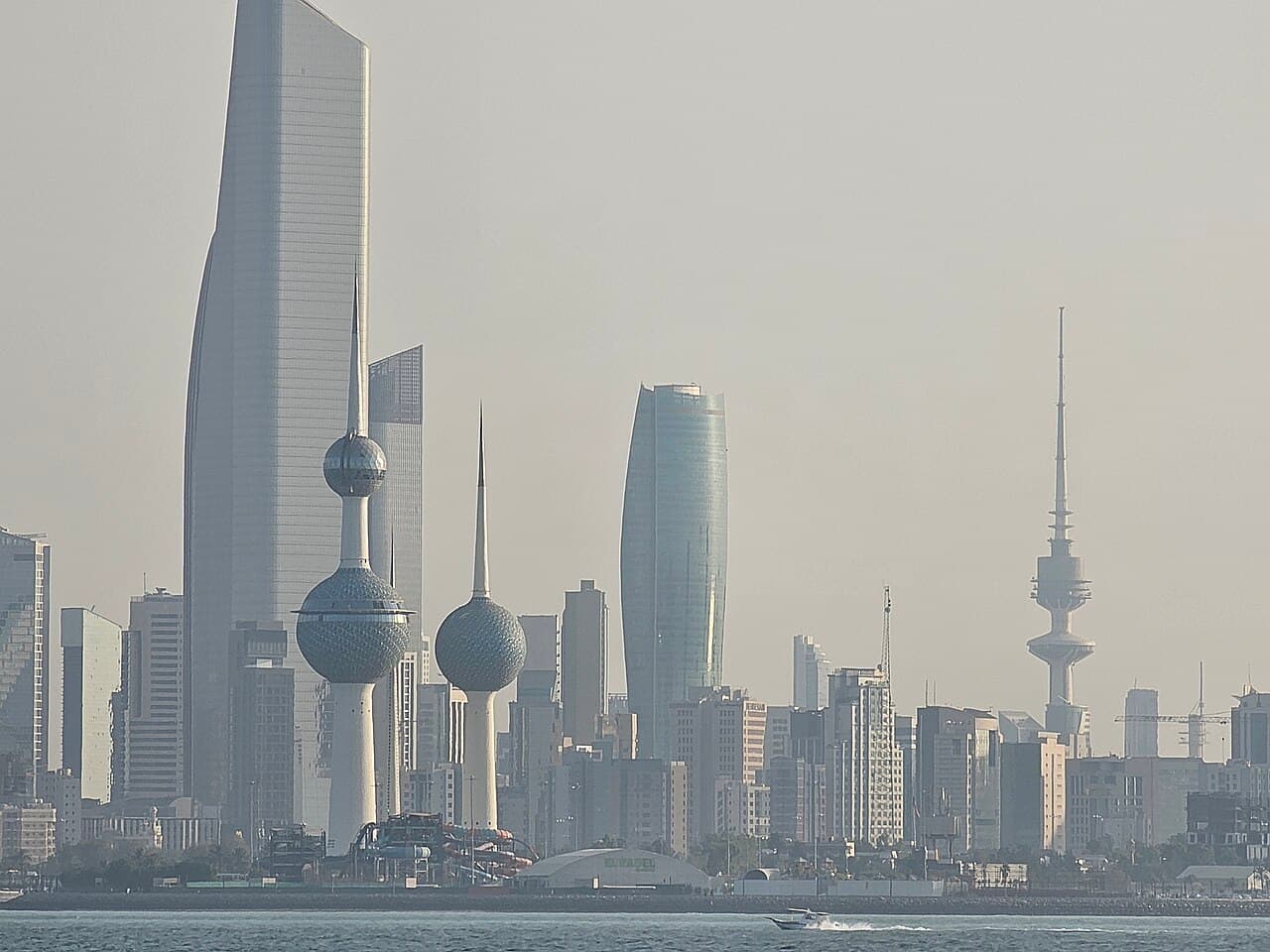
KuwaitPhoto: Mahrs Multiverse / Wikimedia Commons (CC BY-SA 4.0)

Kuwait

Country · KW · KWD · Asia/Kuwait

This information may change. Always check the official source.Last verified: August 2026 by

A visa on arrival for most, but where you were born can disqualify you - and the medicine in your bag may need permission granted before you fly.

  • Everyone needs a visa except GCC citizens. Most Western and East Asian passports can get one on arrival at Kuwait International, or apply online through the Kuwait Ministry of Interior portal beforehand.
  • British citizens born in Afghanistan, Iran, Iraq, Lebanon, Pakistan, Sudan, Syria or Yemen are not eligible for a visa on arrival and must apply in advance.
  • A return or onward ticket must be shown.
  • All visitors must obtain permission from the Kuwaiti authorities to carry certain prescription drugs before arrival. This is the FCDO's account of a rule that is newer than most published advice.
More details

The visa

  • Everyone needs a visa except GCC citizens. Most Western and East Asian passports can get one on arrival at Kuwait International, or apply online through the Kuwait Ministry of Interior portal beforehand.
  • Applying online is the safer route if there is any doubt, because it surfaces a problem before you are at a desk in Kuwait.
  • Your passport must be valid at least 6 months after arrival.

The place-of-birth rule

  • British citizens born in Afghanistan, Iran, Iraq, Lebanon, Pakistan, Sudan, Syria or Yemen are not eligible for a visa on arrival and must apply in advance.
  • This is about where you were born, not what passport you hold. It catches British, and other, citizens who have never thought of themselves as anything else.
  • If it applies to you, allow real time - it is a consular application, not a formality.

At the border

  • A return or onward ticket must be shown.
  • Proof of accommodation, such as a hotel booking.
  • Declare cash or travellers cheques of 3,000 Kuwaiti dinars or more.

The medicines rule - do this before you fly

  • All visitors must obtain permission from the Kuwaiti authorities to carry certain prescription drugs before arrival. This is the FCDO's account of a rule that is newer than most published advice.
  • Many common medications need this authorisation - not just obvious controlled substances.
  • It is a pre-departure task with a lead time. Check your prescription against Kuwait's requirements weeks ahead, and carry the permission with the medicine and the prescription.
  • Turning up with an unauthorised drug is not a paperwork problem at this border.

What you absolutely cannot bring

  • Alcohol. Kuwait prohibits it outright - importing, buying, selling, carrying it, and public intoxication all carry fines, imprisonment and deportation. Do not buy duty-free on the way.
  • Narcotics, pork and pork products, pornographic material, gambling machines.
Sources (2)

Kuwait is dry in the fullest sense: no alcohol enters the country, and pork is prohibited alongside it.

  • Alcohol is prohibited outright. There is no allowance and no duty-free purchase that survives arrival; bottles are confiscated and the offence can mean more than a fine.
  • Pork products may not be brought in, in any form.
  • Medicines containing codeine, tramadol or narcotics need a prescription and the original packaging, and are worth declaring rather than hiding.
  • Cash above the declarable threshold must be reported on arrival and departure.
  • Material considered offensive to Islam is prohibited, and that is applied to printed matter and DVDs in luggage.
More details
  • Alcohol is prohibited outright. There is no allowance and no duty-free purchase that survives arrival; bottles are confiscated and the offence can mean more than a fine.
  • Pork products may not be brought in, in any form.
  • Medicines containing codeine, tramadol or narcotics need a prescription and the original packaging, and are worth declaring rather than hiding.
  • Cash above the declarable threshold must be reported on arrival and departure.
  • Material considered offensive to Islam is prohibited, and that is applied to printed matter and DVDs in luggage.
  • Drug offences carry very heavy penalties, including capital ones for trafficking.
Sources (1)

Health, and the medicines permission

Private fees are high and controlled by the state - and some prescriptions need permission arranged before you arrive.

  • All visitors must obtain permission from the Kuwaiti authorities to carry certain prescription drugs before arrival. This is a newer rule than most published advice reflects, and many common medications require it.
  • Kuwait has state clinics and private hospitals, and the private ones are good.
  • Poor outdoor air quality is a specific risk in Kuwait, which the FCDO flags directly - a combination of dust, oil industry and traffic.
  • Kuwait is one of the hottest inhabited places on earth. Summer regularly passes 50 C and the record is above that.
  • 112 for an ambulance, and it is the general emergency number - not 999.
More details

The medicines rule

  • All visitors must obtain permission from the Kuwaiti authorities to carry certain prescription drugs before arrival. This is a newer rule than most published advice reflects, and many common medications require it.
  • Do this weeks ahead. Check the specific drug with the Kuwaiti embassy or the Ministry of Health, carry the permission, the prescription and the medicine in its original packaging together.
  • There is no way to fix this at the airport.

Care and cost

  • Kuwait has state clinics and private hospitals, and the private ones are good.
  • Private medical fees are high and are set by the government, which has increased them for foreign residents and visitors. This is not a market you can shop around in.
  • Take insurance covering treatment and repatriation, and have accessible funds.

Air quality

  • Poor outdoor air quality is a specific risk in Kuwait, which the FCDO flags directly - a combination of dust, oil industry and traffic.
  • Dust storms can close the airport and make a week outdoors unpleasant.
  • If you are asthmatic, bring what you need - and check whether it is on the permission list.

Heat

  • Kuwait is one of the hottest inhabited places on earth. Summer regularly passes 50 C and the record is above that.
  • Between May and September, outdoor activity in the middle of the day is genuinely dangerous. The country lives indoors and at night.

Numbers

  • 112 for an ambulance, and it is the general emergency number - not 999.
Sources (1)

Kuwait City

Long-term averages for Kuwait City: the mean daily high, the mean overnight low and the mean monthly rainfall across 30 years of ERA5 reanalysis data (1995–2024).

DayNight
10203040°C050mmJanFebMarAprMayJunJulAugSepOctNovDecJanuary: Day 18 °C, Night 10 °C, Rain 28 mm. February: Day 20 °C, Night 11 °C, Rain 12 mm. March: Day 25 °C, Night 15 °C, Rain 18 mm. April: Day 31 °C, Night 20 °C, Rain 6 mm. May: Day 37 °C, Night 26 °C, Rain 2 mm. June: Day 42 °C, Night 30 °C, Rain 0 mm. July: Day 44 °C, Night 32 °C, Rain 0 mm. August: Day 43 °C, Night 32 °C, Rain 0 mm. September: Day 40 °C, Night 28 °C, Rain 0 mm. October: Day 34 °C, Night 24 °C, Rain 2 mm. November: Day 25 °C, Night 17 °C, Rain 32 mm. December: Day 20 °C, Night 12 °C, Rain 28 mm
Show the monthly table
Kuwait City
MonthDay (°C)Night (°C)Rain (mm)
January181028
February201112
March251518
April31206
May37262
June42300
July44320
August43320
September40280
October34242
November251732
December201228

When to visit

Kuwait averages 44 C by day in July and does not drop below 32 C at night. The national met service dates summer from 21 May to 4 November; the season for a visit is what is left.

Kuwait's meteorological service divides the year into four periods with dates attached, and they are worth reading before booking anything. Summer runs from 21 May to 4 November, winter from 6 December to 15 February, spring from 16 February to 20 May and autumn from 5 November to 5 December. By that calendar the hot season is not a couple of months; it is nearly half the year.

More details

Summer is officially half the year

Kuwait's meteorological service divides the year into four periods with dates attached, and they are worth reading before booking anything. Summer runs from 21 May to 4 November, winter from 6 December to 15 February, spring from 16 February to 20 May and autumn from 5 November to 5 December. By that calendar the hot season is not a couple of months; it is nearly half the year.

The numbers behind it are extreme. July averages 44 C by day and 32 C at night, August 43 and 32. June to September record no rain at all, and the whole of April to October totals 10 mm. Kuwait International Airport's highest recorded temperature is 51.3 C, on 20 August 1998.

The service splits that summer in two: a dry summer from 6 June to 19 July with "strong dust storms where the visibility may decrease to few meters, especially at noon", and a wet summer from 20 July to 4 November that adds humidity to the heat - the combination it describes as "exhausting greatly, especially when accompanied by wind stillness".

The window, and the storm season either side of it

November to March is the answer: 18-25 C by day, 10-17 C at night, and what little rain the country gets. January, the coolest month at 18 C by day, is the one that most resembles a normal spring elsewhere.

Spring is not simply a milder version of it. The met service dates thunderstorms to 10 March-8 April, accompanied by "severe dust storms where the visibility drops to zero", and the al-Sarayat thunderstorms to 9 April-13 May. A late-April trip is chasing the edge of both the heat and the dust; late November to February is the clean part of the year.

Sources (2)

Where to stay

Kuwait City and the seafront. There is not much else, and that is fine.

  • Kuwait City centre and Sharq - the business district, the towers, the souq and the Seif Palace. Where most hotels are.
  • Salmiya - the shopping and residential district along the coast, with the Scientific Center and the malls. Livelier in the evening than the centre.
  • This is a business and expatriate destination rather than a tourist one, and hotels are priced and equipped accordingly - good, comfortable, and short on charm.
  • Jahra and Jleeb Al Shuyoukh are named by the FCDO for robbery and petty theft, and neither has anything for a visitor.
  • Everything is air-conditioned and connected by car. Being "central" matters less than being near a road you will use.
More details

The areas

  • Kuwait City centre and Sharq - the business district, the towers, the souq and the Seif Palace. Where most hotels are.
  • Salmiya - the shopping and residential district along the coast, with the Scientific Center and the malls. Livelier in the evening than the centre.
  • The Arabian Gulf Road - the seafront runs the length of the city and the better hotels look at it.
  • Mahboula and Fintas further south are residential and cheaper, and further from everything.

What Kuwait is and is not

  • This is a business and expatriate destination rather than a tourist one, and hotels are priced and equipped accordingly - good, comfortable, and short on charm.
  • Weekend rates are sometimes lower than weekday, which is the reverse of Bahrain, because the demand is corporate.
  • There is no beach-resort economy. The beaches are municipal and the sea is warm to the point of being unrefreshing in summer.

Where not to book

  • Jahra and Jleeb Al Shuyoukh are named by the FCDO for robbery and petty theft, and neither has anything for a visitor.

Practical

  • Everything is air-conditioned and connected by car. Being "central" matters less than being near a road you will use.
  • No hotel serves alcohol, because there is none in the country. Hotel bars do not exist.
Sources (1)

Getting online in Kuwait

Three networks, fast data, and total coverage across a small and heavily urban country.

  • Zain, Ooredoo and stc cover Kuwait, and all sell tourist prepaid SIMs at the airport and in the malls.
  • Registration needs the passport.
  • Straightforward here and all three networks are well supported.
  • Photographing or filming government, military, industrial or oil infrastructure is illegal, and that explicitly includes borders and oil fields.
  • Universal in hotels, malls and cafes, and fast.
More details

The local SIM

  • Zain, Ooredoo and stc cover Kuwait, and all sell tourist prepaid SIMs at the airport and in the malls.
  • Registration needs the passport.
  • Coverage is complete. Kuwait is small, flat and almost entirely urban - there is nowhere with no signal short of the desert border zones, which you should not be near anyway.
  • Data is fast and cheap.

An eSIM instead

  • Straightforward here and all three networks are well supported.
  • A local number is useful if you will use delivery apps, several of which verify by SMS.

What not to point your phone at

  • Photographing or filming government, military, industrial or oil infrastructure is illegal, and that explicitly includes borders and oil fields.
  • Kuwait is an oil country and the installations are visible from the road, which is exactly how people get into trouble - a photograph from a moving car of something that looked like scenery.
  • The Iraqi border area is a restricted zone. Do not drive towards it for a look.

Wi-fi

  • Universal in hotels, malls and cafes, and fast.
Sources (1)

Kuwaiti sockets are British Type at 240 V, with two-pin Europlug outlets surviving in older buildings.

  • British plugs fit straight in. American and Australian ones need an adapter.
  • A Europlug fits the older two-pin sockets where they survive, but not a Type outlet without an adapter.
  • 240 V is the top of the European band and makes no practical difference to a 230 V appliance.
  • American 120 V-only equipment needs a converter, not just a shape adapter.
  • The Gulf is not uniform: Saudi Arabia and Bahrain are Type , Qatar mixes in Type , and , and the UAE is Type with shaver sockets in bathrooms.
More details

Sockets in Kuwait are Type and at 240 V, 50 Hz - the British three-pin plug, with older two-pin outlets still in place in some buildings.

  • British plugs fit straight in. American and Australian ones need an adapter.
  • A Europlug fits the older two-pin sockets where they survive, but not a Type outlet without an adapter.
  • 240 V is the top of the European band and makes no practical difference to a 230 V appliance.
  • American 120 V-only equipment needs a converter, not just a shape adapter.
  • The Gulf is not uniform: Saudi Arabia and Bahrain are Type , Qatar mixes in Type , and , and the UAE is Type with shaver sockets in bathrooms.
Sources (1)

British plugs, a Friday-Saturday weekend, and a country that operates after dark for half the year.

  • Plugs are the British three-pin type , 240 V. UK chargers work as they are.
  • Arabic is the language and English is widely spoken in business, hotels and shops. Signs are bilingual.
  • Summer is extreme even by Gulf standards - over 50 C is not unusual, and the country simply moves indoors.
  • Modest dress, and take the tattoo warning seriously - visible imagery that could be read as religiously offensive can bring legal consequences, which is an unusual rule and a real one.
  • Kuwait is a genuinely good place to eat, with a large Levantine, Iranian and South Asian food culture and a delivery habit to match.
More details

The basics

  • Plugs are the British three-pin type , 240 V. UK chargers work as they are.
  • Arabic is the language and English is widely spoken in business, hotels and shops. Signs are bilingual.
  • UTC+3 all year, no daylight saving.
  • The weekend is Friday and Saturday.

The heat shapes the day

  • Summer is extreme even by Gulf standards - over 50 C is not unusual, and the country simply moves indoors.
  • Malls are the public space. The Avenues is one of the largest in the world and functions as a town centre.
  • Winter, November to March, is genuinely pleasant and is when Kuwaitis go to the desert camps.

Behaviour

  • Modest dress, and take the tattoo warning seriously - visible imagery that could be read as religiously offensive can bring legal consequences, which is an unusual rule and a real one.
  • Ramadan rules apply to visitors: no eating, drinking or smoking in public during daylight.
  • No alcohol anywhere. There is no hotel bar, no restaurant list, no exception.

Small things

  • Kuwait is a genuinely good place to eat, with a large Levantine, Iranian and South Asian food culture and a delivery habit to match.
  • The Kuwait Towers and the Grand Mosque are the two things everyone sees; the Tareq Rajab Museum and the Al Mubarakiya souq are the two most people miss.
  • The 1990 invasion is within living memory and shapes a great deal. The Kuwait House of National Memorial Museum treats it directly.
  • Addresses are block, street and building, not a street number as visitors expect. Share a pin.
Sources (2)

The dinar - the most valuable currency in the world

One Kuwaiti dinar is worth over three US dollars, and it divides into 1,000 fils.

  • The Kuwaiti dinar is the highest-valued currency in the world, pegged to a basket dominated by the US dollar and worth well over three dollars.
  • Cards work everywhere, and Kuwait is close to cashless in practice. KNET is the local network and contactless is universal.
  • Unpaid fines, bills and commercial disputes can stop you leaving the country. The FCDO also notes re-entry visas may be denied.
  • Kuwait is expensive - comparable to the UAE for hotels and eating out, without the tourist infrastructure to show for it.
  • Not expected and not part of the culture. Rounding up is fine; a service charge is often already added.
More details

The dinar

  • The Kuwaiti dinar is the highest-valued currency in the world, pegged to a basket dominated by the US dollar and worth well over three dollars.
  • It divides into 1,000 fils, so prices carry three decimal places. A 2.750 KWD coffee is under three dinars.
  • The decimal point is where people go wrong. A restaurant bill of 18.500 is eighteen and a half dinars - a sum, but not the sum it looks like at a glance.
  • Small notes and fils coins are worth carrying, because a single dinar is a large unit for a small purchase.

Cards and cash

  • Cards work everywhere, and Kuwait is close to cashless in practice. KNET is the local network and contactless is universal.
  • Cash machines are everywhere. Decline the offer to be billed in your home currency.
  • Declare 3,000 KWD or more in cash or travellers cheques on arrival.

The debt rule

  • Unpaid fines, bills and commercial disputes can stop you leaving the country. The FCDO also notes re-entry visas may be denied.
  • This is the same mechanism as Saudi Arabia's exit ban, and it is equally invisible until you are at passport control.
  • Settle everything before departure day: hotel bills, traffic fines on a rental, any dispute with a supplier. A disputed charge you intended to argue about from home is not a plan here.

Costs

  • Kuwait is expensive - comparable to the UAE for hotels and eating out, without the tourist infrastructure to show for it.
  • Fuel and delivery are absurdly cheap; almost everything else is not.

Tipping

  • Not expected and not part of the culture. Rounding up is fine; a service charge is often already added.
Sources (2)

Everyday prices

Typical prices in Kuwaiti dinar (KWD), averaged across the country by Numbeo and read on 19 August 2026. Tick Convert prices above the table to see every amount in your own currency.

Everyday prices
ItemTypical price
Inexpensive restaurant meal2.38 KWD
Dinner for two, mid-range, three courses17 KWD
Cappuccino1.59 KWD
Bottled water, 0.33 l0.11 KWD
Public transport, one-way ticket0.28 KWD
Taxi, starting fare1.00 KWD
Petrol, 1 litre0.11 KWD
Cigarettes, pack of 20 (Marlboro)0.90 KWD
Average net monthly salary964 KWD

These are country-wide averages, not a price list: tourist districts, airports and islands sit well above them, and small towns below. The salary line is there for proportion - it is what people living here actually earn.

Sources (1)

Airport guides for Kuwait1

One page per airport: the routes into town, what they cost and the trap particular to that arrival.

See all 1 airports

From Kuwait International into the city

Fifteen kilometres to the centre, and ride-hailing is the sane way to cover them.

  • Kuwait International (KWI) is about 15 km south of Kuwait City - 20 to 30 minutes in normal traffic, longer at peak.
  • Careem and Uber both operate and are the normal way in. Prices are reasonable and the car is tracked, which matters more than usual in a country where you should not be improvising with strangers.
  • Renting is easy and fuel is close to free, but the FCDO describes driving standards as poor and traffic violations as carrying heavy penalties - including possible imprisonment or deportation.
  • Kuwait is small. The country is about 200 km across and almost everything a visitor would see is within Kuwait City and its suburbs - the towers, the Grand Mosque, the souq, the seafront.
More details
The airport
  • Kuwait International (KWI) is about 15 km south of Kuwait City - 20 to 30 minutes in normal traffic, longer at peak.
  • Visas on arrival are issued here for eligible nationalities.
  • Terminal 4 is the modern one, used by Kuwait Airways; the old terminal handles most other carriers and is less pleasant.
Into the city
  • Careem and Uber both operate and are the normal way in. Prices are reasonable and the car is tracked, which matters more than usual in a country where you should not be improvising with strangers.
  • Airport taxis exist and are fixed-price; agree the figure before setting off, as there are no meters in practice.
  • The bus runs into the city cheaply but is not a sensible first move with luggage.
Driving
  • Renting is easy and fuel is close to free, but the FCDO describes driving standards as poor and traffic violations as carrying heavy penalties - including possible imprisonment or deportation.
  • Third-party insurance is mandatory.
  • This is not a country in which to have a casual accident. Ride-hailing is the low-friction answer for a short visit.
Scale
  • Kuwait is small. The country is about 200 km across and almost everything a visitor would see is within Kuwait City and its suburbs - the towers, the Grand Mosque, the souq, the seafront.
Sources (2)

Getting around Kuwait

A car city with no rail at all, where ride-hailing does the work.

  • There is no rail and no metro in Kuwait. The car is the only real transport.
  • Careem and Uber are what visitors and most residents use. Cheap and reliable.
  • Fuel costs almost nothing and the roads are wide and fast.
  • Jahra and Jleeb Al Shuyoukh are named by the FCDO for robbery and petty theft. Neither is a place a visitor has reason to go.
  • Failaka Island is reached by ferry and is worth the day - the ruins of a Greek settlement and a village abandoned since 1990.
More details

The options

  • There is no rail and no metro in Kuwait. The car is the only real transport.
  • Careem and Uber are what visitors and most residents use. Cheap and reliable.
  • Taxis are unmetered in practice - agree the fare first. Orange taxis are the traditional ones; call-taxi companies are more predictable.
  • Buses exist and are used almost entirely by expatriate workers; they are cheap and slow.

Driving yourself

  • Fuel costs almost nothing and the roads are wide and fast.
  • Driving standards are poor and the FCDO says so directly. Speeding, tailgating and lane discipline are all worse than a visitor expects.
  • Traffic violations carry heavy penalties, up to imprisonment or deportation. Fines are automatic and attach to the vehicle.
  • Never drive after any alcohol - alcohol is illegal in the first place, so the offence compounds.

Where not to go

  • Jahra and Jleeb Al Shuyoukh are named by the FCDO for robbery and petty theft. Neither is a place a visitor has reason to go.
  • The Iraqi border zone is restricted and photographing it is illegal.

Out of the city

  • Failaka Island is reached by ferry and is worth the day - the ruins of a Greek settlement and a village abandoned since 1990.
  • The desert camps in winter are a Kuwaiti institution, and you need to be invited or to book with an operator.

Apps and platforms

Ride-hailing, delivery, and the Ministry of Interior portal for anything official.

  • Careem and Uber - both operate and are the default.
  • The Kuwait Ministry of Interior visa portal for the visa itself and for anything official afterwards. It is a JavaScript application and does not work well on a poor connection, so use it on hotel wi-fi rather than at the airport.
  • The prescription-medicine permission is the one piece of admin that has to happen in advance. There is no app for it and no counter at the airport that will fix it. Contact the Kuwaiti embassy or check the Ministry of Health requirements with your prescription in hand.
  • No transport app for public transport, because there is effectively no public transport worth planning around.
More details

Worth having

  • Careem and Uber - both operate and are the default.
  • The Kuwait Ministry of Interior visa portal for the visa itself and for anything official afterwards. It is a JavaScript application and does not work well on a poor connection, so use it on hotel wi-fi rather than at the airport.
  • Talabat and Deliveroo - Kuwait is one of the most delivery-saturated countries anywhere; almost everything comes to the door.

Before you fly, not an app

  • The prescription-medicine permission is the one piece of admin that has to happen in advance. There is no app for it and no counter at the airport that will fix it. Contact the Kuwaiti embassy or check the Ministry of Health requirements with your prescription in hand.

What does not exist

  • No transport app for public transport, because there is effectively no public transport worth planning around.
  • Google Maps works but addresses in Kuwait are block-and-street based rather than numbered in the way visitors expect; a pin is more useful than an address.
Sources (3)

Kuwaiti roads are free and wide, the driving is fast and undisciplined, and the alcohol rule is zero.

  • The alcohol limit is zero and alcohol is illegal in the country.
  • Roads are free and the network is a grid of six- and eight-lane highways.
  • Kuwait has one of the region's worst road safety records; tailgating and lane weaving at high speed are routine.
  • Speed cameras are fixed and frequent on the ring roads, with automatic fines.
  • Fuel is among the cheapest in the world, which is part of the explanation for everything above.
More details

Free roads, fast traffic, and a zero alcohol rule with criminal penalties.

  • The alcohol limit is zero and alcohol is illegal in the country.
  • Roads are free and the network is a grid of six- and eight-lane highways.
  • Kuwait has one of the region's worst road safety records; tailgating and lane weaving at high speed are routine.
  • Speed cameras are fixed and frequent on the ring roads, with automatic fines.
  • Fuel is among the cheapest in the world, which is part of the explanation for everything above.
  • Parking in Kuwait City is scarce in the souk district and the malls absorb most of it, free of charge.
  • An International Driving Permit is expected alongside your own licence at every hire desk.
Sources (1)

Safety, the law and the exit ban

Very little crime. The risks are alcohol, a camera pointed at the wrong thing, and a bill you left unpaid.

  • Violent crime against foreigners is uncommon and Kuwait is a safe country to walk around.
  • Alcohol is prohibited entirely. Buying, selling, carrying it and public intoxication all carry fines, imprisonment and deportation.
  • Possession carries 5 to 10 years. Trafficking can carry capital punishment.
  • It is illegal to photograph or film government, military, industrial or oil infrastructure, and restricted areas such as borders and oil fields.
  • Modest clothing, particularly in conservative areas. Women should avoid shorts and revealing clothes.
More details

Crime

  • Violent crime against foreigners is uncommon and Kuwait is a safe country to walk around.
  • Robbery and petty theft occur in Jahra and Jleeb Al Shuyoukh, neither of which is a visitor area.

Alcohol - stricter than you expect

  • Alcohol is prohibited entirely. Buying, selling, carrying it and public intoxication all carry fines, imprisonment and deportation.
  • This is stricter than Bahrain, the UAE, Qatar and Oman, and it is the Gulf state most often misjudged by someone who has been to Dubai.
  • Do not buy duty-free on the way in. There is no allowance and no discretion.

Drugs

  • Possession carries 5 to 10 years. Trafficking can carry capital punishment.
  • Trace amounts count. Arriving from a country where cannabis is legal is a genuine risk if you have not been careful about bags and clothing.

Photography

  • It is illegal to photograph or film government, military, industrial or oil infrastructure, and restricted areas such as borders and oil fields.
  • In an oil state, that infrastructure is part of the landscape. A casual shot from the road is how visitors are arrested here.

Dress and behaviour

  • Modest clothing, particularly in conservative areas. Women should avoid shorts and revealing clothes.
  • Visible tattoos or piercings that could be read as offensive - religious imagery especially - can bring legal consequences. This is unusual enough to be worth checking against what is on your own arms.
  • Ramadan: no eating, drinking or smoking in public during daylight, no loud music, no swearing. Driving at dusk during Ramadan is notoriously erratic as people rush home to break the fast.

LGBT+

  • Same-sex relationships are criminalised.

The exit ban

  • Unpaid fines, bills and commercial disputes can stop you leaving the country, and re-entry visas may be denied.
  • Settle everything before departure day. This is the failure mode that turns a good trip into a legal problem, and it is entirely avoidable.
Sources (1)

Emergency numbers and what to do

The number is 112, and it is not the one most visitors try first.

  • It is 112, the European-style number, which is unusual in the Gulf and is why visitors try 999 or 911 first and lose time.
  • Operators generally handle English.
  • Contact your insurer at the same time as the hospital. Private fees are high and set by the government, so there is no cheaper option to find.
  • Settle every outstanding amount. Unpaid fines, bills and commercial disputes can stop you leaving the country, and can also mean a refused re-entry visa later.
  • Do not photograph an incident involving police, military or infrastructure.
More details

The number

Emergency numbers and what to do
ForCall
Police, fire, ambulance112
  • It is 112, the European-style number, which is unusual in the Gulf and is why visitors try 999 or 911 first and lose time.
  • Operators generally handle English.

If something goes wrong

  • Contact your insurer at the same time as the hospital. Private fees are high and set by the government, so there is no cheaper option to find.
  • A road accident: do not move the vehicles, call the police, and understand that traffic offences here can carry imprisonment or deportation rather than a fine.
  • Report a crime and get the report for the claim.

Before you fly home

  • Settle every outstanding amount. Unpaid fines, bills and commercial disputes can stop you leaving the country, and can also mean a refused re-entry visa later.
  • Traffic fines attach to the rental car. Clear them with the rental company, not on the assumption they will follow you harmlessly.
  • If you have a dispute you intend to argue, resolve it before departure day rather than from home.

Things not to do in a difficult moment

  • Do not photograph an incident involving police, military or infrastructure.
  • Do not offer or accept alcohol in any circumstance, including as a gesture in a private home.
Sources (2)