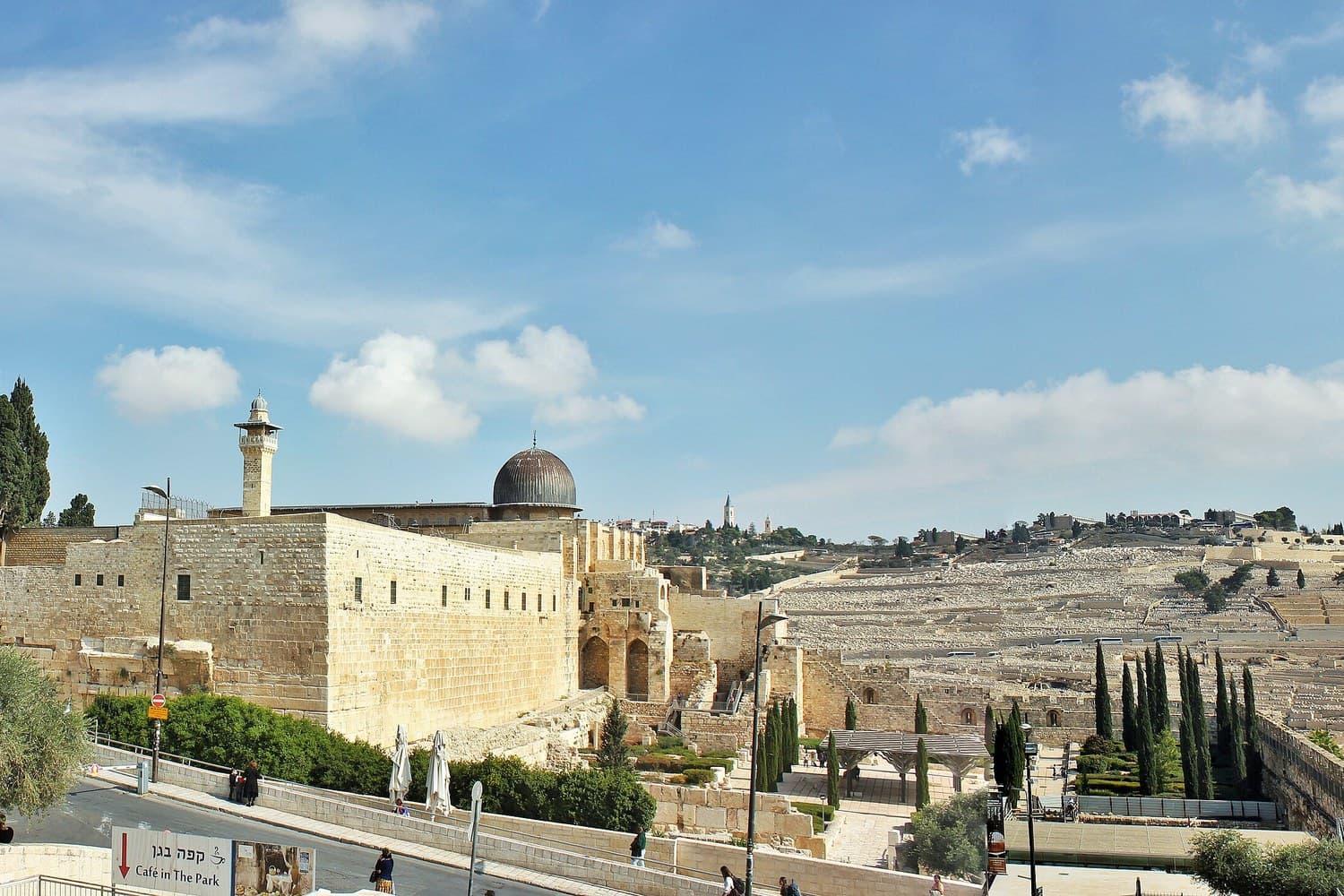
IsraelPhoto: Beko / Wikimedia Commons (CC BY-SA 4.0)

Israel

Country · IL · ILS · Asia/Jerusalem

This information may change. Always check the official source.Last verified: September 2026 by

No visa for a tourist visit, but the ETA-IL is compulsory before you fly, and at Ben Gurion you get an entry card rather than a passport stamp. Keep it.

  • Compulsory since 1 January 2025 for a visit to Israel. It is not a visa; it is an authorisation to board.
  • Visitors arriving at Tel Aviv Ben Gurion get an entry card, not a stamp in the passport. At other entry points you may get either.
  • Some travellers are given entry stamps reading "Palestinian Authority only" or "Judea and Samaria only", at the Allenby Bridge crossing with Jordan and at Ben Gurion.
  • Expect lengthy personal questioning and baggage searches on entry and exit. Allow extra time, especially during Israeli holidays and the summer season.
  • publicly called for a boycott of Israel or Israeli settlements, or belonging to an organisation that has
More details

The ETA-IL

  • Compulsory since 1 January 2025 for a visit to Israel. It is not a visa; it is an authorisation to board.
  • It costs 25 new shekels, is valid for 2 years, and covers a visit of 90 days.
  • Apply through the Israel Population and Immigration Authority, which also runs the eligibility check.
  • You can visit as a tourist without a visa and are normally given permission to stay up to 3 months on entry.
  • The passport must be valid at least 90 days after the day you arrive. That is shorter than the usual six months and easy to misread the other way.

Keep the entry card

  • Visitors arriving at Tel Aviv Ben Gurion get an entry card, not a stamp in the passport. At other entry points you may get either.
  • Keep the card with your passport until you leave. It is the evidence that you entered Israel legally, and you need it particularly when crossing into Palestine.
  • A refusal is marked differently: the passport is stamped and two red lines drawn across it.

Stamps with restrictions

  • Some travellers are given entry stamps reading "Palestinian Authority only" or "Judea and Samaria only", at the Allenby Bridge crossing with Jordan and at Ben Gurion.
  • Anyone entering via Allenby has to pass through Israeli checkpoints and Israeli-controlled territory to reach Jerusalem, so that stamp limits the trip substantially.
  • The FCDO says it is not clear how a traveller given this stamp at Ben Gurion can leave the airport without violating the restriction. If you receive one, ask at the desk before you walk away.

What border control can ask for

  • Expect lengthy personal questioning and baggage searches on entry and exit. Allow extra time, especially during Israeli holidays and the summer season.
  • Israeli security has sometimes requested access to travellers' personal email or social media accounts as a condition of entry. Devices may be searched and withheld.
  • Longer questioning is more likely for travellers with Palestinian or Arab ancestry or ancestry of a predominantly Muslim country, with previous travel that may be considered suspicious, or considered to have publicly criticised the state of Israel.

Grounds on which entry can legally be refused

The FCDO lists these explicitly. A foreign national can be refused for having:

  • publicly called for a boycott of Israel or Israeli settlements, or belonging to an organisation that has
  • publicly denied the Holocaust or the 7 October attack
  • publicly supported the prosecution of Israeli citizens abroad or in an international court for actions taken during military duties

Travellers in these categories may be held at border control for further checks, sometimes for several hours, including in detention facilities.

If you are refused entry

  • You are booked on the next available flight back to where you flew in from, on the same airline.
  • You may be taken to the Immigration Detention Centre, a few minutes' drive from the airport, until the flight departs. There is a telephone, information in English and medical assistance if needed.
  • Your luggage stays at the airport. Tell officials straight away if you need something out of it, medication above all.
  • You can contact the British Embassy from the detention centre. They can help where possible but cannot intervene in an immigration decision.

Dual nationals and children

  • Children with at least one Israeli parent are considered Israeli nationals and must enter and leave Israel on an Israeli passport.
  • Dual nationals holding Iranian, Iraqi, Syrian or Lebanese citizenship have previously been heavily questioned, denied entry and deported, and detained for days when no deportation flight was available. The Israeli authorities advise getting pre-approval from your nearest Israeli embassy, and the same applies if you have close family ties to those countries.
  • British nationals of Palestinian origin on the Palestinian Population Register, or holding a Palestinian ID number, need a Palestinian passport or travel document to leave Gaza or the West Bank.
  • Children aged 17 and under travelling alone or with one parent should carry a letter from their parents or guardians confirming consent, accommodation and contact details.

Crossing to Egypt at Taba

  • Bring at least 170 US dollars in cash per person, plus extra: charges have been increasing at short notice since early March 2026, ATMs at the crossing are unreliable and frequently out of cash, and all payments are in cash. Draw dollars in Eilat before you go.
  • Staying in Taba: a 20 dollar border tax, giving an entry permission stamp for up to 15 days.
  • Elsewhere in Sinai, including Sharm El-Sheikh: 120 dollars.
  • Beyond Sinai: 120 dollars plus a 30 dollar entry visa, plus a "letter of guarantee" costing around 20 dollars.
  • By car, expect 100 dollars and extra for parking.
  • Officials may ask you to remove hats, coats or religious clothing passing through the terminal.
Sources (2)

Good care, and a bill. Hospitals can take legal action to stop you leaving the country until it is paid.

  • Healthcare in Israel and Palestine is not free and treatment can be expensive.
  • The numbers differ between the FCDO's own pages, so know both. Its Getting help page gives ambulance 101, fire 102, police 100. Its Health page says to dial 100 in Israel and 101 in the West Bank and Gaza.
  • The legal status of some medicines differs from the UK. Carry anything you need in its original packaging with the prescription, and check before travelling with controlled drugs.
  • Check the vaccine recommendations at least 8 weeks ahead.
More details

The financial part matters as much as the medical part

  • Healthcare in Israel and Palestine is not free and treatment can be expensive.
  • Hospitals will insist on payment and may take legal action to stop you leaving until bills are paid. That is an unusual and serious consequence, and it is why the insurance has to have accessible funds behind it rather than a reimbursement promise.
  • Call your insurer as soon as you are referred to a facility, before treatment begins if you can.

Getting an ambulance

  • The numbers differ between the FCDO's own pages, so know both. Its Getting help page gives ambulance 101, fire 102, police 100. Its Health page says to dial 100 in Israel and 101 in the West Bank and Gaza.
  • If one does not connect, try the other. Do not spend the time working out which page was right.

Medication

  • The legal status of some medicines differs from the UK. Carry anything you need in its original packaging with the prescription, and check before travelling with controlled drugs.

Before you travel

  • Check the vaccine recommendations at least 8 weeks ahead.
  • Make sure the policy covers the region and is not voided by the FCDO advisory for any part of the trip you plan.
Sources (1)

Tel Aviv

Long-term averages for Tel Aviv: the mean daily high, the mean overnight low and the mean monthly rainfall across 30 years of ERA5 reanalysis data (1995–2024).

DayNight
101520253035°C0200mmJanFebMarAprMayJunJulAugSepOctNovDecJanuary: Day 16.8 °C, Night 10.1 °C, Rain 104 mm. February: Day 17.6 °C, Night 10.1 °C, Rain 74 mm. March: Day 20 °C, Night 11.6 °C, Rain 46 mm. April: Day 23.3 °C, Night 13.9 °C, Rain 23 mm. May: Day 26.8 °C, Night 17.1 °C, Rain 6 mm. June: Day 29 °C, Night 20.3 °C, Rain 2 mm. July: Day 30.7 °C, Night 22.6 °C, Rain 1 mm. August: Day 31.2 °C, Night 23.3 °C, Rain 0 mm. September: Day 30.2 °C, Night 22.2 °C, Rain 2 mm. October: Day 27.7 °C, Night 19.5 °C, Rain 18 mm. November: Day 23.5 °C, Night 15.5 °C, Rain 45 mm. December: Day 19.1 °C, Night 11.9 °C, Rain 83 mm
Show the monthly table
Tel Aviv
MonthDay (°C)Night (°C)Rain (mm)
January16.810.1104
February17.610.174
March20.011.646
April23.313.923
May26.817.16
June29.020.32
July30.722.61
August31.223.30
September30.222.22
October27.719.518
November23.515.545
December19.111.983

Jerusalem

Long-term averages for Jerusalem: the mean daily high, the mean overnight low and the mean monthly rainfall across 30 years of ERA5 reanalysis data (1995–2024).

DayNight
0102030°C0100mmJanFebMarAprMayJunJulAugSepOctNovDecJanuary: Day 12.7 °C, Night 4.8 °C, Rain 68 mm. February: Day 13.9 °C, Night 5.2 °C, Rain 62 mm. March: Day 17.3 °C, Night 7 °C, Rain 42 mm. April: Day 22.4 °C, Night 10.2 °C, Rain 20 mm. May: Day 27.2 °C, Night 13.8 °C, Rain 9 mm. June: Day 30.4 °C, Night 16.7 °C, Rain 1 mm. July: Day 32.4 °C, Night 18.8 °C, Rain 0 mm. August: Day 32.4 °C, Night 19.3 °C, Rain 0 mm. September: Day 30.3 °C, Night 18 °C, Rain 2 mm. October: Day 25.9 °C, Night 15.2 °C, Rain 18 mm. November: Day 19.7 °C, Night 10.8 °C, Rain 32 mm. December: Day 14.9 °C, Night 6.9 °C, Rain 46 mm
Show the monthly table
Jerusalem
MonthDay (°C)Night (°C)Rain (mm)
January12.74.868
February13.95.262
March17.37.042
April22.410.220
May27.213.89
June30.416.71
July32.418.80
August32.419.30
September30.318.02
October25.915.218
November19.710.832
December14.96.946

Eilat

Long-term averages for Eilat: the mean daily high, the mean overnight low and the mean monthly rainfall across 30 years of ERA5 reanalysis data (1995–2024).

DayNight
5152535°C010mmJanFebMarAprMayJunJulAugSepOctNovDecJanuary: Day 19.4 °C, Night 9.4 °C, Rain 7 mm. February: Day 21.3 °C, Night 10.2 °C, Rain 8 mm. March: Day 25 °C, Night 12.4 °C, Rain 5 mm. April: Day 30 °C, Night 16 °C, Rain 1 mm. May: Day 34.4 °C, Night 19.7 °C, Rain 1 mm. June: Day 37.1 °C, Night 21.8 °C, Rain 0 mm. July: Day 38.6 °C, Night 23.9 °C, Rain 0 mm. August: Day 38.3 °C, Night 23.7 °C, Rain 0 mm. September: Day 35.7 °C, Night 21.6 °C, Rain 0 mm. October: Day 31.4 °C, Night 18.9 °C, Rain 1 mm. November: Day 25.9 °C, Night 14.9 °C, Rain 2 mm. December: Day 21.1 °C, Night 10.9 °C, Rain 3 mm
Show the monthly table
Eilat
MonthDay (°C)Night (°C)Rain (mm)
January19.49.47
February21.310.28
March25.012.45
April30.016.01
May34.419.71
June37.121.80
July38.623.90
August38.323.70
September35.721.60
October31.418.91
November25.914.92
December21.110.93
Sources (1)

A working phone is a safety device here: it is how the Home Front Command alerts reach you, and how you find the nearest protected space.

  • Rocket fire can affect most areas of Israel, and interceptions can drop fragments and debris. You are expected to know what to do when a warning siren sounds.
  • Arrange data before you land, or at the airport, rather than waiting until you reach the city. The alerts are the reason.
  • The best shelter is a residential protected space, a Mamad, Mamak or Maman, or a communal shelter. If neither is available, a stairwell without windows or exterior walls, standing at its centre.
  • No warning sirens sound inside Gaza, or in the West Bank outside Israeli settlements.
More details

Why a connection matters more than usual

  • Rocket fire can affect most areas of Israel, and interceptions can drop fragments and debris. You are expected to know what to do when a warning siren sounds.
  • Israel's Home Front Command publishes the guidance on finding a protected space and issues alerts. The FCDO's advice is to sign up for information and alerts through it, and to call 104 in Israel for its information line.
  • The Home Front Command website is available inside Israel only. Set it up once you have arrived and have a connection, not before.

Have the phone working before you need it

  • Arrange data before you land, or at the airport, rather than waiting until you reach the city. The alerts are the reason.
  • Keep local media accessible. The FCDO's repeated instruction is to follow local authorities and monitor local and international media, including for airport and airspace closures.

What the alert asks you to do

  • The best shelter is a residential protected space, a Mamad, Mamak or Maman, or a communal shelter. If neither is available, a stairwell without windows or exterior walls, standing at its centre.
  • The main danger is falling debris from intercepts, so being inside a solid structure is what matters.
  • Do not approach or touch drone or missile fragments or unusual objects.

Two practical notes

  • No warning sirens sound inside Gaza, or in the West Bank outside Israeli settlements.
  • Before travelling within the country, check local measures, that roads are open, and that trains and buses are running.
Sources (2)

A socket type that exists almost nowhere else, a week that ends on Friday afternoon, and ID in your pocket at all times.

  • Type and type sockets, at 230 V and 50 Hz.
  • Shabbat runs from sunset on Friday to nightfall on Saturday, and it shapes the week rather than just the weekend.
  • Cover shoulders, upper arms and legs above the knee in Jerusalem, the West Bank and Gaza.
  • Always carry ID. A copy of the passport personal details page and of the entry card or entry stamp is what the FCDO suggests, so the originals can stay somewhere safe.
  • Take extra care on public transport in Tel Aviv, particularly at transport hubs and on buses in the greater Tel Aviv area, and consider other forms of transport.
More details

Power

  • Type and type sockets, at 230 V and 50 Hz.
  • Type is effectively unique to Israel. A modern Israeli socket takes the round European type plug as well, so a standard European two-pin charger usually works; a UK plug always needs an adapter, and a chunky earthed European plug may not fit.

Shabbat

  • Shabbat runs from sunset on Friday to nightfall on Saturday, and it shapes the week rather than just the weekend.
  • Do not drive into ultra-Orthodox areas of Jerusalem during it. The FCDO's warning is that residents may throw stones at the car.
  • Plan the Friday afternoon of an arrival around things closing rather than opening.

Dress

  • Cover shoulders, upper arms and legs above the knee in Jerusalem, the West Bank and Gaza.
  • Ultra-Orthodox neighbourhoods including Bnei Brak, Modi'in Illit, Beitar Illit, Beit Shemesh and Safed expect more, and reactions can be strong.

Carrying ID

  • Always carry ID. A copy of the passport personal details page and of the entry card or entry stamp is what the FCDO suggests, so the originals can stay somewhere safe.
  • The entry card is not just ID. It is proof you entered legally and is needed to cross into Palestine.

Getting about

  • Take extra care on public transport in Tel Aviv, particularly at transport hubs and on buses in the greater Tel Aviv area, and consider other forms of transport.
  • Check before you travel within the country that roads are open and that scheduled trains and buses are running.
Sources (2)

The shekel, an expensive country, and a healthcare system that will stop you leaving over an unpaid bill.

  • Healthcare is not free and treatment can be expensive. Hospitals insist on payment and may take legal action to stop you leaving the country until the bill is paid.
  • Theft of passports, credit cards and valuables from public beaches is common. Do not take the wallet and the passport to the sea.
  • Take US dollars in cash from Eilat, at least 170 per person plus a margin. ATMs at the Taba crossing are unreliable and frequently run out of cash, and every charge there is payable in cash.
  • The table below is Numbeo's country-wide average. Tel Aviv sits well above it, and Israel is an expensive country by regional standards, so treat these as a floor rather than a guide to the coast.
More details

The one money rule that can trap you

  • Healthcare is not free and treatment can be expensive. Hospitals insist on payment and may take legal action to stop you leaving the country until the bill is paid.
  • That makes insurance with accessible funds a travel-document-level requirement here, not a nicety. Check the policy covers the region and the activities you plan.

Cash, cards and the border

  • Theft of passports, credit cards and valuables from public beaches is common. Do not take the wallet and the passport to the sea.
  • Always carry ID, for example a copy of the personal details page and the entry card or entry stamp page. Keep the originals somewhere secure.

If you are heading to Egypt overland

  • Take US dollars in cash from Eilat, at least 170 per person plus a margin. ATMs at the Taba crossing are unreliable and frequently run out of cash, and every charge there is payable in cash.

Costs

  • The table below is Numbeo's country-wide average. Tel Aviv sits well above it, and Israel is an expensive country by regional standards, so treat these as a floor rather than a guide to the coast.
Sources (3)

Everyday prices

Typical prices in new shekel (ILS), averaged across the country by Numbeo and read on 6 September 2026. Tick Convert prices above the table to see every amount in your own currency.

Everyday prices
ItemTypical price
Inexpensive restaurant meal80 ILS
Dinner for two, mid-range, three courses306 ILS
Cappuccino15 ILS
Local draught beer, 0.5 l32 ILS
Bottled water, 0.33 l9.14 ILS
Public transport, one-way ticket8.00 ILS
Taxi, starting fare13 ILS
Petrol, 1 litre7.91 ILS
Cigarettes, pack of 20 (Marlboro)42 ILS
Average net monthly salary11,200 ILS

These are country-wide averages, not a price list: tourist districts, airports and islands sit well above them, and small towns below. The salary line is there for proportion - it is what people living here actually earn.

Sources (1)

The slow part of this arrival is border control, not the taxi rank. Build hours into the plan, and know that demonstrations have closed the airport road.

  • Allow extra time for increased security measures and checks at airports, and the FCDO singles out Israeli holidays and the summer tourist season.
  • Check what you were given. An entry card, not a stamp, is normal at Ben Gurion. A stamp restricted to "Palestinian Authority only" or "Judea and Samaria only" is not, and the FCDO says it is unclear how somebody holding one can even leave the airport lawfully. Ask at the desk rather than outside.
  • Take extra care using public transport in Tel Aviv, particularly at transport hubs and on buses in the greater Tel Aviv area. The FCDO's own wording is to consider using other forms of transport.
More details
Allow far more time than the flight suggests
  • Allow extra time for increased security measures and checks at airports, and the FCDO singles out Israeli holidays and the summer tourist season.
  • Questioning and baggage searches happen on the way out as well as the way in. A tight connection on departure is a bad idea here.
  • Some travellers are held for several hours. If somebody is meeting you, tell them the arrival time is not the time you will appear.
Before you leave the hall
  • Check what you were given. An entry card, not a stamp, is normal at Ben Gurion. A stamp restricted to "Palestinian Authority only" or "Judea and Samaria only" is not, and the FCDO says it is unclear how somebody holding one can even leave the airport lawfully. Ask at the desk rather than outside.
  • Keep the entry card with the passport for the whole trip.
Getting into Tel Aviv
  • Take extra care using public transport in Tel Aviv, particularly at transport hubs and on buses in the greater Tel Aviv area. The FCDO's own wording is to consider using other forms of transport.
  • That advice follows bombings on three buses in the Tel Aviv area in February, in which two further devices failed to explode and nobody was hurt.
The road to the airport is not always open
  • There have been large political demonstrations in Tel Aviv, and entry to and exit from Ben Gurion has occasionally been affected.
  • Airspace has closed at short notice during periods of regional escalation, and flights have been cancelled or delayed. Keep departure plans under review rather than fixed.
If you are driving
  • You need both the 1968 international driving permit and your UK licence in the car, and you cannot buy an IDP outside the UK.
  • You must carry a green card proving minimum insurance cover.
  • If you plan to drive into the West Bank, check the insurance covers it. Some hire companies do not insure vehicles taken there, and it may be easier to hire a fully insured car from a company in East Jerusalem.
  • Do not drive into ultra-Orthodox areas of Jerusalem on Shabbat, from sunset on Friday to nightfall on Saturday. Residents may throw stones at the car.
Sources (3)

The FCDO advises against all travel to Gaza, the area near it, parts of the north and parts of the West Bank, and against all but essential travel to most of the rest of the West Bank. Read the list before anything else.

  • Gaza, and within 500 m of the border with Gaza
  • The situation in the Middle East remains unpredictable. Since 8 July there have been strikes and retaliatory attacks by Iran in a number of locations across the region, and the FCDO warns of the risk of more attacks and unforeseen escalation.
  • Rocket and drone attacks remain a risk throughout Israel, and shrapnel from intercepted missiles can fall across Israel and Palestine.
  • Thursday and Saturday evenings, and after Friday prayers
  • Be extremely cautious about visiting refugee camps. Hebron and Palestinian refugee camps have been the site of violent clashes.
More details

The travel advisory, stated in full

The FCDO advises against all travel to:

  • Gaza, and within 500 m of the border with Gaza
  • Tulkarm, Jenin and Tubas Governorates in the West Bank, except Route 90
  • Northern Israel and the occupied Golan Heights: areas north of Route 89 between Nahariyya and Dalton, north of a straight eastward line from Dalton to Route 91, and north of Route 91 across the Golan Heights, excluding routes 89 and 91 themselves
  • Within 500 m of the Area of Separation in the occupied Golan Heights, the Alpha line
  • Sheba'a Farms and Ghajja

The FCDO advises against all but essential travel to the rest of the West Bank, except East Jerusalem, Bethlehem Governorate, Ramallah Municipality, Jericho municipality and everything south of it including the Allenby crossing, Highway 1 between Jerusalem and Tel Aviv and the areas south and west of it including Highway 3, and Route 443 and Highway 45.

Travelling against FCDO advice can invalidate your travel insurance.

Regional escalation

  • The situation in the Middle East remains unpredictable. Since 8 July there have been strikes and retaliatory attacks by Iran in a number of locations across the region, and the FCDO warns of the risk of more attacks and unforeseen escalation.
  • Be prepared for flight cancellations, periodic airspace closures and travel disruption. Keep departure plans under review and travel documents current.
  • Stay away from areas around security or military facilities.

Sirens and shelter

  • Rocket and drone attacks remain a risk throughout Israel, and shrapnel from intercepted missiles can fall across Israel and Palestine.
  • If told to take shelter, go to a residential protected space (Mamad, Mamak or Maman) or a communal shelter; failing that, a stairwell without windows or exterior walls, standing at its centre.
  • Call 104 in Israel for Home Front Command guidance, and sign up for its alerts once you are in the country.

When tension rises

The FCDO names the times when demonstrations and clashes are more likely:

  • Thursday and Saturday evenings, and after Friday prayers
  • Jewish high holidays: Passover, Rosh Hashana, Yom Kippur, Succoth
  • Ramadan, in particular Laylat Al Qadr
  • Anniversaries: 7 October, Independence Day, Jerusalem Day, Land Day (30 March), Nakba Day (15 May)
  • Risks increase when religious or national holidays overlap.

Places to be careful

  • Be extremely cautious about visiting refugee camps. Hebron and Palestinian refugee camps have been the site of violent clashes.
  • There have been recent violent incidents in settlements and outposts, including near Beit El, Homesh, Shilo and Evyatar.
  • Foreign nationals may encounter suspicion or hostility at checkpoints and in areas not frequented by foreigners.
  • If security operations or armed clashes are happening near you, stay inside until the authorities confirm it is calm.

Everyday law and custom

  • Always carry ID, for example a copy of the passport details page and the entry card or stamp.
  • Dress: in Jerusalem, the West Bank and Gaza, cover shoulders, upper arms and legs above the knee. In ultra-Orthodox neighbourhoods such as Bnei Brak, Modi'in Illit, Beitar Illit, Beit Shemesh and Safed, locals can react strongly to anyone, particularly women, dressed less conservatively.
  • Do not drive into ultra-Orthodox areas of Jerusalem on Shabbat, sunset Friday to nightfall Saturday. Cars have been stoned.
  • Theft from public beaches is common: passports, credit cards and valuables.
  • Breaking the laws on import and export of wild animals brings a substantial fine and up to 2 years in prison.

Roads and desert

  • Frequent accidents, erratic driving and unreliable vehicle maintenance. Police radar traps issue heavy fines.
  • It is not safe to hitchhike in Israel and Palestine.
  • In the desert: go with others, carry water and a phone, and leave your itinerary and expected return time with someone.
  • Flash flooding is a risk, particularly in the Negev, and earthquakes are a risk across Israel and Palestine.
Sources (3)

Three numbers, plus 104 for Home Front Command. Note that the FCDO publishes two different versions of the ambulance number.

  • The FCDO's own pages disagree. The table above is from its Getting help page. Its Health page instead says to dial 100 in Israel and 101 in the West Bank and Gaza, which swaps ambulance and police for Israel.
  • In an emergency, try one and then the other. Both connect to an emergency service, and an operator will redirect faster than you can resolve the contradiction.
  • Home Front Command runs the siren alerts and the guidance on finding a protected space. Call 104 inside Israel, and sign up for its alerts once you are in the country. Its website is available in Israel only.
  • Save the numbers offline, along with your embassy's, and your insurer's 24-hour line.
More details

The numbers

Emergency numbers in Israel
ServiceNumber
Ambulance101
Fire102
Police100
Home Front Command information104

A caveat worth knowing before you dial

  • The FCDO's own pages disagree. The table above is from its Getting help page. Its Health page instead says to dial 100 in Israel and 101 in the West Bank and Gaza, which swaps ambulance and police for Israel.
  • In an emergency, try one and then the other. Both connect to an emergency service, and an operator will redirect faster than you can resolve the contradiction.

104, and what it is for

  • Home Front Command runs the siren alerts and the guidance on finding a protected space. Call 104 inside Israel, and sign up for its alerts once you are in the country. Its website is available in Israel only.

Before you need them

  • Save the numbers offline, along with your embassy's, and your insurer's 24-hour line.
  • Call the insurer as soon as you are referred anywhere, because hospitals insist on payment and can act to stop you leaving until the bill is settled.
Sources (3)