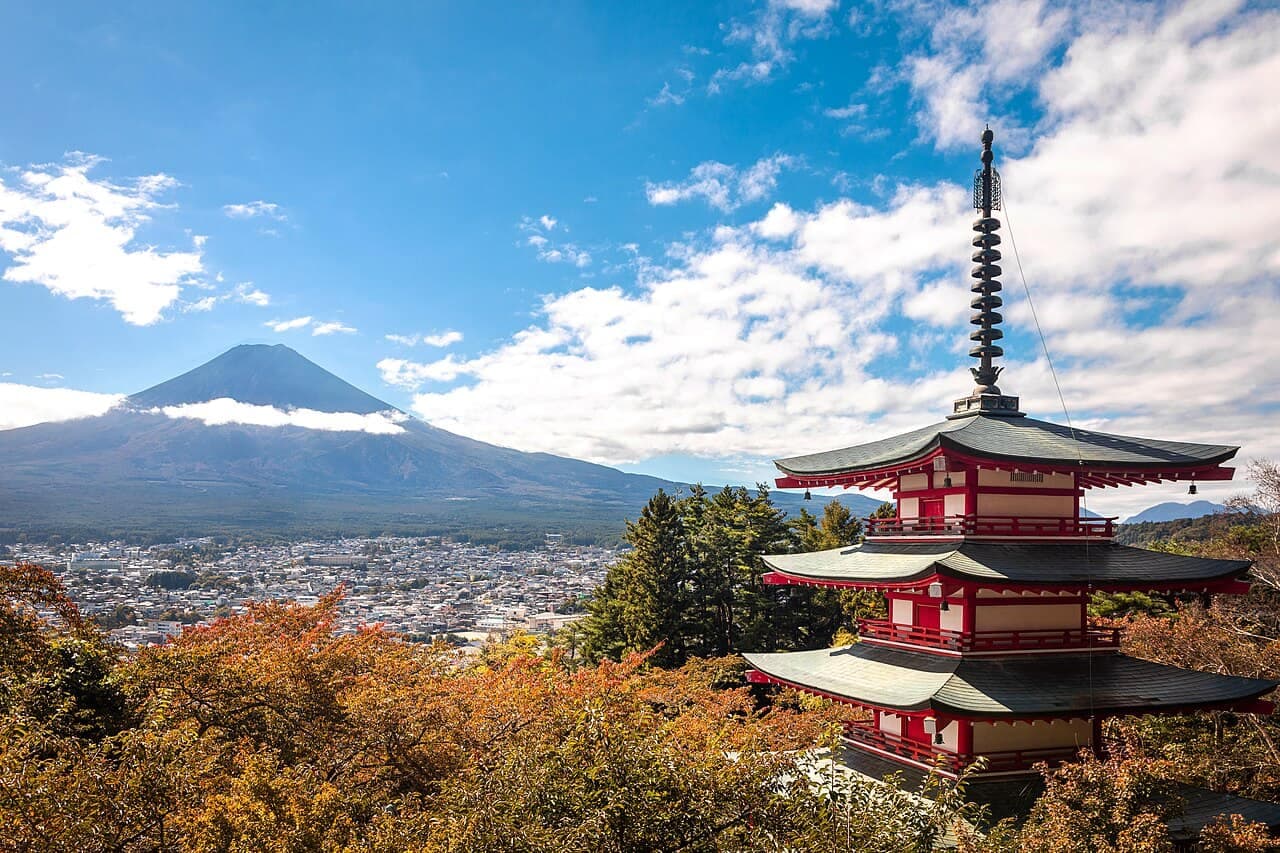
Japan

Country · JP · JPY · Asia/Tokyo

Visa and entry in Japan

This information may change. Always check the official source.

Visa and entry in Japan

Warning Important

How Japan's entry regime is decided (74 visa-free countries, JAPAN eVISA, classic visas), the Visit Japan Web unified QR code everyone should generate 24–48 h before departure, duty-free limits, and the practical pitfalls: individual accounts per adult, per-person QR codes and fake paid apps.

Decision flow

Japan's entry process depends on the traveler's nationality, travel document type and purpose of stay. Use this hierarchy to determine the correct entry regime:

  1. Check visa-free status: first verify whether your country is among the 74 states with a visa-waiver agreement for short tourist stays up to 90 days. If yes, continue to step 2; if not, go to step 3.
  2. Check biometric and technical passport specifications: some visa-free countries have special conditions. Passport holders from Malaysia, Indonesia or Qatar need ICAO-standard biometric passports, and in some cases (Indonesia, Qatar) prior passport registration at a Japanese diplomatic mission is required. Failing this leads to immediate refusal of entry at the airport.
  3. e-Visa option: travelers from visa-required countries (e.g. India, China, Saudi Arabia, Cambodia) should check eligibility for the electronic visa (JAPAN eVISA) via the official portal. It is granted exclusively for a single tourist entry up to 90 days (15 or 30 days for some nationalities) and has strict application conditions (either directly online for residents of selected countries, or via accredited agencies such as VFS Global).
  4. Classic visa obligation: if the country has neither visa-free access nor e-Visa support (e.g. Russia), a physical application at the relevant embassy is required, with an invitation letter, proof of funds and a detailed itinerary.
  5. Proof of onward travel: all visa-free travelers and tourist visa holders must show valid proof of planned departure from Japan (a return ticket or ticket to a third country) within the permitted stay, both at check-in and at immigration.

Entry formalities applicable to everyone

All foreign travelers arriving in Japan must pass immigration and customs control. The process is standardized through the free, official, web-only Visit Japan Web interface (at vjw.digital.go.jp, run by Japan's Digital Agency). There is no fixed legal deadline in hours before departure for completing the form, but the system requires finishing registration and generating the QR codes before starting immigration processing after landing. Registering 24 to 48 hours before departure is recommended. Travelers who skip the system must fill in the physical paper cards handed out on board. Since 25 January 2024 the previously separate immigration and customs QR codes are unified into a single 2D code. At the airport the code is scanned at self-service kiosks together with your passport, fingerprints and a facial photo. Duty-free limits and financial restrictions valid as of 15 May 2026:

CategoryDuty-free limit per adult (20+)Details and penalties
Alcoholic beverages3 bottles (about 760 ml each, max 2.28 litres total).Does not apply to persons under 20. Excess is subject to duty by alcohol type.
Tobacco products200 standard cigarettes, or 50 cigars, or 250 g of loose tobacco.Does not apply to persons under 20. Includes heated tobacco.
Perfume2 ounces (about 56 ml).Personal use only.
Other goods and giftsTotal market value up to 200,000 JPY (~1,240 USD / ~1,160 EUR).If a single item (e.g. a handbag) exceeds 200,000 JPY, duty is assessed on the item's full value, not just the excess.
Cash and valuablesTotal value under 1,000,000 JPY (~6,200 USD / ~5,800 EUR).Amounts at or above 1,000,000 JPY must be declared. Failure to declare can lead to seizure and investigation.
Prohibited itemsStrict import ban (meat, fruit, stimulants).Smuggling meat products carries fines up to 3,000,000 JPY (~18,600 USD / ~17,400 EUR) or up to 3 years imprisonment.

What matters in practice

Traveler experience and immigration-office reports point to several critical issues that can cause delays or refusal of entry:

  • Substitute entry abolished: Japan's Digital Agency completely removed the substitute entry function from Visit Japan Web on 2 June 2025. Every adult traveler must have their own registered account; grouping under one account is allowed only for children or persons needing assistance.
  • Individual QR codes for families: per traveler reports from r/JapanTravelTips (May 2026), a common mistake is assuming one shared account generates one QR code for the whole family. The system requires a specific unified code for each individual. At immigration counters and customs scanners each member passes separately with their own code (screenshots on one phone are fine, but the codes must differ).
  • Scanning glitches: passport registration by camera often fails due to reflections on the laminated page. Photograph the passport under direct light without shadows, or use manual data entry, which is fully equivalent.
  • Fake apps: travelers are warned about app-store scams (e.g. "Visit Japan Web Info"). Visit Japan Web is exclusively a browser-based service at vjw.digital.go.jp and completely free. Any registration fee demand indicates a fraudulent site.

This information may change. Always check the official source.

Report a change

Suggest a correction

JPEG, PNG or WebP, up to 5 MB. Location metadata is removed.

Corrections and photos are private and visible only to the review team.

SIM and eSIM in Japan

SIM and eSIM in Japan

Best options verified 15 May 2026: Ubigi (10 GB / ~1,610 JPY) or Airalo eSIM pre-departure with no passport registration; physical data SIMs (IIJmio, SoftBank) at airports or BIC Camera; Mobal voice SIM needs passport registration; Pocket Wi-Fi suits families.

SIM and eSIM: what to buy immediately after arrival

Getting mobile connectivity is the first critical step after landing. For newer, carrier-unlocked smartphones the best choice is a data eSIM — instant activation with no physical card handling. Older or carrier-locked phones need a physical data SIM card bought at the airport, or a rented Pocket Wi-Fi (portable 4G/5G hotspot), which pays off especially for families and groups sharing one data connection.

Comparison table

Prices and conditions of the main connectivity providers were verified as of 15 May 2026:

Operator / ProviderTourist packagePrice (local + USD/EUR)DataValidityWhere to buyPassport registration
UbigieSIM (data only)~1,610 JPY (~10 USD / ~9.30 EUR)10 GB30 daysOnline / in appNo (data-only services)
Airalo (Moshi Moshi)eSIM (data only)~645 JPY (~4 USD / ~3.70 EUR)1 GB3 daysOnline / in appNo (data-only services)
Sakura MobileeSIM / physical SIM (data)~3,850 JPY (~24 USD / ~22.40 EUR)Unlimited (KDDI 5G, 3 GB/day cap)4 daysOnline / airport / hotelNo (data only)
MobalPhysical SIM (voice + data)~4,730 JPY (~29.40 USD / ~27.50 EUR)Unlimited (Softbank network)8 daysOnline (airport / post office)Yes (required by Japanese law for voice services)
IIJmio (BIC SIM)Physical SIM (Travel SIM)~2,480 JPY (~15.40 USD / ~14.40 EUR)3 GB30 daysAirport / BIC Camera storesNo (data-only card)
SoftBank SIMPhysical SIM (prepaid)~3,500 JPY (~21.70 USD / ~20.30 EUR)Unlimited7 daysAirport kiosks / SoftBank storesNo (data-only card)

Where exactly to buy

How you buy and collect depends on the connectivity format:

  • eSIM: purchase online before departure. Install the data profile at home; the package activates automatically after landing and connecting to the partner network in Japan (NTT Docomo or SoftBank).
  • Physical SIMs and Pocket Wi-Fi at Narita: sales kiosks and pickup counters (e.g. Telecom Wi-Fi, SoftBank Global Rental, Ninja Wi-Fi) are in the arrivals halls of Terminal 1 (1st floor) and Terminal 2 (1st floor).
  • Physical SIMs and Pocket Wi-Fi at Haneda: all main pickup counters (including Sakura Mobile and Japan Wireless) are in the Terminal 3 arrivals hall on the 2nd floor, right after customs.
  • Official city stores: if you skip the airport purchase, the best-value physical data cards (e.g. IIJmio) can be bought without registration at BIC Camera or Yodobashi Camera electronics department stores in major city centres (e.g. Akihabara or Shinjuku in Tokyo).

Brief verdict

For the typical tourist with an unlocked phone the clear recommendation is buying a data eSIM from Ubigi or Airalo before departure. It offers the best price-performance ratio, needs no passport registration and removes the stress of physical shopping and queueing after arrival.

This information may change. Always check the official source.

Report a change

Suggest a correction

JPEG, PNG or WebP, up to 5 MB. Location metadata is removed.

Corrections and photos are private and visible only to the review team.

Transport from the airport in Japan

Transport from the airport in Japan

Narita (60 km): N'EX to Tokyo 3,140 JPY/53–60 min, Skyliner to Nippori 36 min, TYO-NRT bus 1,500 JPY, fixed taxi 23,500–38,500 JPY. Haneda (14 km): Keikyu to Shinagawa 13–15 min for 310–410 JPY, Monorail 500 JPY (JR Pass valid), fixed taxi 6,000–8,000 JPY. Per-type picks included.

Narita Airport

Narita international airport (NRT) lies about 60 km east of central Tokyo. Transfer options span a range of price and comfort levels:

  • JR Narita Express (N'EX): the most comfortable link to the main hubs (Tokyo, Shinagawa, Shinjuku, Shibuya). A single to Tokyo Station costs ~3,140 JPY (~19.50 USD / ~18.20 EUR); journey time 53–60 minutes. All seats are reserved. Foreign tourists can buy the discounted "N'EX Tokyo Round Trip Ticket" for 5,200 JPY (~32.30 USD / ~30.20 EUR), valid 14 days. Platforms are in the basements of Terminal 1 and Terminal 2/3. Operates roughly 6:00–21:45.
  • Keisei Skyliner: the fastest link to northeastern Tokyo (Nippori and Ueno stations). Nippori takes just 36 minutes. Tickets cost 2,580 JPY (~16 USD / ~15 EUR), dropping to 2,310 JPY for foreign tourists buying online in advance. Platforms are in the basements of both main terminals. Operates 5:40–23:00.
  • Keisei Access Express: a cheaper express running along the Narita Sky Access line directly to Asakusa, Ginza and Shinagawa. The trip takes about 60–75 minutes and costs 1,240 to 1,520 JPY (~8–9 USD). No seat reservations — it works like a standard commuter service.
  • Airport Bus TYO-NRT: the best-value direct bus to Tokyo Station and Ginza. A daytime single costs 1,500 JPY (~9.30 USD / ~8.70 EUR); for night and early-morning departures (23:00–5:00) the price rises to 3,000 JPY (~18.60 USD / ~17.40 EUR). Journey time is 70–120 minutes depending on traffic. Board at the marked stands outside the arrivals halls of all terminals.
  • Official taxis: a standard taxi to central Tokyo is extremely expensive and takes 60–120 minutes. A zoned fixed tariff applies, ranging from 23,500 to 38,500 JPY (~145–240 USD) by target district, plus motorway tolls (about 2,000–3,000 JPY). A 20% night surcharge applies 22:00–5:00. Strictly avoid unofficial taxis (so-called "shirotaku", cars with white plates instead of green) — they operate illegally and overcharge.

Haneda Airport

Haneda airport (HND) sits just 14 km south of the city centre, which sharply cuts transfer time and cost.

  • Keikyu Airport Line: the fastest rail link to the southern and western city. Shinagawa (transfer hub for JR Yamanote and Shinkansen) takes 13–15 minutes for 310–410 JPY (~1.90–2.50 USD). Some services continue directly onto the Toei Asakusa subway line (towards Ginza and Asakusa) without changing. Trains run 5:26–23:51.
  • Tokyo Monorail: the elevated monorail from all three terminals to Hamamatsucho station (transfer to the JR Yamanote line). The Airport Rapid express covers the route in 13–14 minutes. Tickets cost 500 JPY. The monorail is fully integrated into the JR network, so it is free for holders of valid JR Pass network tickets. Operates 5:18–23:48. On weekends and holidays a discounted "Monorail & Yamanote Line Ticket" for 590 JPY covers the monorail plus a ride anywhere on the Yamanote loop.
  • Limousine Bus: direct bus service to major hotels and hubs in Tokyo (Shinjuku, Shibuya, Tokyo Station). The trip takes 30–60 minutes depending on traffic and costs 1,000 to 1,400 JPY by destination. Buy tickets at machines or the counter on the 2nd floor of Terminal 3.
  • Taxi (fixed fare): a taxi from Haneda to the centre takes 20–45 minutes. Fixed fares run 6,000–7,000 JPY to Ginza and Tokyo Station, and 7,000–8,000 JPY (~43–50 USD) to Shinjuku and Shibuya, plus tolls and a 20% night surcharge between 22:00 and 5:00.

Recommendations by traveler type

For the optimal transport choice by traveler profile:

Traveler typeRecommended from NaritaRecommended from HanedaReasoning and benefits
Solo traveler / low budgetAirport Bus TYO-NRT.Keikyu Line train to Shinagawa.Lowest possible price (1,500 JPY from Narita / 310 JPY from Haneda) with no complicated transfers.
Family with children and luggageAirport Limousine Bus direct to the hotel.Airport Limousine Bus direct to the hotel.No hauling luggage up and down stairs at subway transfer stations.
Night arrival after 23:30Pre-booked private transfer (shuttle).Fixed-fare licensed taxi with night surcharge.Public transport ends around midnight. A private transfer from Narita costs from 15,000 JPY and guarantees the ride.
Active JR Pass holdersJR Narita Express (N'EX) train.Tokyo Monorail.Both routes are fully covered by the JR Pass, so the trip is completely free.

This information may change. Always check the official source.

Report a change

Suggest a correction

JPEG, PNG or WebP, up to 5 MB. Location metadata is removed.

Corrections and photos are private and visible only to the review team.

Useful local apps in Japan

Useful local apps in Japan

IC cards are the key to Tokyo transit: Suica/PASMO are back in machines, tourist Welcome Suica and Tourist PASMO need no deposit, iPhones ride via Apple Wallet Express Mode while foreign Androids need a physical card. Essential apps: Google Maps, NAVITIME, GO taxi, SmartEX (with the Shinkansen oversized-baggage rule).

Urban transport and apps

Urban transit in Tokyo and other metropolises is run by several independent operators (JR East, Tokyo Metro, Toei Subway and private railways). The cheapest and fastest way through the gates is a contactless IC card. Standard physical Suica and PASMO cards (with a refundable 500 JPY deposit) have been fully available again from ticket machines at most Tokyo stations since March 2025, after the earlier chip shortage. The alternatives are deposit-free tourist versions valid for 28 days: Welcome Suica and Tourist PASMO (launched 20 May 2026 as the replacement for the discontinued PASMO Passport). Neither tourist card refunds unused balance. iPhone users can replace the physical card entirely with a virtual card in Apple Wallet (add a transit card). Express Mode activates automatically, so you pass the gates by simply tapping the phone without unlocking or Face ID — even with a dead battery. The Welcome Suica Mobile app launched for iOS on 6 March 2025. For Android phones bought outside Japan this integration is technically unavailable — foreign Android devices lack the FeliCa hardware chip (the Osaifu-Keitai standard required by Japanese gates). Android users must use a physical card. For navigation and efficient mobility these iOS/Android apps are key:

  • Google Maps: the most accurate navigation for Japanese public transport. Shows the exact departure platform number, the fare and the best subway car for a quick transfer.
  • Japan Travel by NAVITIME: a journey planner built specifically for foreign tourists, able to filter connections by the network passes you hold (e.g. JR Pass).
  • GO: the dominant local app for quickly hailing an official licensed taxi at a fixed price.
  • SmartEX: the official app for booking and buying Shinkansen tickets on the Tokaido/Sanyo/Kyushu line (Tokyo – Kyoto – Osaka). Tickets can be paired directly with the IC card registered in your phone. Under rules effective July 2025, a free oversized-baggage seat reservation is mandatory on Shinkansen (sum of three dimensions 160–250 cm); boarding without one incurs a 1,000 JPY fee.

This information may change. Always check the official source.

Report a change

Suggest a correction

JPEG, PNG or WebP, up to 5 MB. Location metadata is removed.

Corrections and photos are private and visible only to the review team.

Local transport and booking in Japan

Local transport and booking in Japan

Airport-transfer picks by traveler profile (TYO-NRT bus, Keikyu, Limousine Bus, JR Pass routes) plus city mobility: Suica/PASMO IC cards including tourist and Apple Wallet variants, and the Google Maps / NAVITIME / GO / SmartEX app stack.

Recommendations by traveler type

For the optimal transport choice by traveler profile:

Traveler typeRecommended from NaritaRecommended from HanedaReasoning and benefits
Solo traveler / low budgetAirport Bus TYO-NRT.Keikyu Line train to Shinagawa.Lowest possible price (1,500 JPY from Narita / 310 JPY from Haneda) with no complicated transfers.
Family with children and luggageAirport Limousine Bus direct to the hotel.Airport Limousine Bus direct to the hotel.No hauling luggage up and down stairs at subway transfer stations.
Night arrival after 23:30Pre-booked private transfer (shuttle).Fixed-fare licensed taxi with night surcharge.Public transport ends around midnight. A private transfer from Narita costs from 15,000 JPY and guarantees the ride.
Active JR Pass holdersJR Narita Express (N'EX) train.Tokyo Monorail.Both routes are fully covered by the JR Pass, so the trip is completely free.

Urban transport and apps

Urban transit in Tokyo and other metropolises is run by several independent operators (JR East, Tokyo Metro, Toei Subway and private railways). The cheapest and fastest way through the gates is a contactless IC card. Standard physical Suica and PASMO cards (with a refundable 500 JPY deposit) have been fully available again from ticket machines at most Tokyo stations since March 2025, after the earlier chip shortage. The alternatives are deposit-free tourist versions valid for 28 days: Welcome Suica and Tourist PASMO (launched 20 May 2026 as the replacement for the discontinued PASMO Passport). Neither tourist card refunds unused balance. iPhone users can replace the physical card entirely with a virtual card in Apple Wallet (add a transit card). Express Mode activates automatically, so you pass the gates by simply tapping the phone without unlocking or Face ID — even with a dead battery. The Welcome Suica Mobile app launched for iOS on 6 March 2025. For Android phones bought outside Japan this integration is technically unavailable — foreign Android devices lack the FeliCa hardware chip (the Osaifu-Keitai standard required by Japanese gates). Android users must use a physical card. For navigation and efficient mobility these iOS/Android apps are key:

  • Google Maps: the most accurate navigation for Japanese public transport. Shows the exact departure platform number, the fare and the best subway car for a quick transfer.
  • Japan Travel by NAVITIME: a journey planner built specifically for foreign tourists, able to filter connections by the network passes you hold (e.g. JR Pass).
  • GO: the dominant local app for quickly hailing an official licensed taxi at a fixed price.
  • SmartEX: the official app for booking and buying Shinkansen tickets on the Tokaido/Sanyo/Kyushu line (Tokyo – Kyoto – Osaka). Tickets can be paired directly with the IC card registered in your phone. Under rules effective July 2025, a free oversized-baggage seat reservation is mandatory on Shinkansen (sum of three dimensions 160–250 cm); boarding without one incurs a 1,000 JPY fee.

This information may change. Always check the official source.

Report a change

Suggest a correction

JPEG, PNG or WebP, up to 5 MB. Location metadata is removed.

Corrections and photos are private and visible only to the review team.

Money and payments in Japan

Money and payments in Japan

Japan still runs on cash at temples, ramen shops and small stores. Best foreign-card ATMs: Seven Bank (24/7, Mastercard free, 100,000 JPY limit), AEON, Japan Post, Lawson. Always refuse DCC and pay in JPY (4–5% markup); tipping does not exist.

Money and payments

The official currency is the Japanese yen (JPY, ¥). Indicative exchange rates as of 15 May 2026:

  • 100 JPY = 0.62 USD
  • 100 JPY = 0.58 EUR
  • 100 JPY = 14.50 CZK

Despite the growing share of digital payments, Japan retains a strongly cash-based economy. Cash is strictly required at temples and shrines, in traditional ramen restaurants (with ticket vending machines), for topping up IC cards at machines and in smaller shops outside the main metropolises. ATM withdrawals with foreign cards carry specific limits and fees:

ATM networkForeign-card withdrawal fee (VISA / Mastercard)Per-transaction limitDetails and operating hours
Seven Bank (7-Eleven)VISA: 110 JPY (~0.68 USD) up to 10,000 JPY, 220 JPY (~1.37 USD) above 10,000 JPY. Mastercard: 0 JPY.100,000 JPY (~620 USD / ~580 EUR).24/7 availability, the most reliable foreign-card support, English menu.
AEON BankVISA and Mastercard: 0 JPY (or 75 JPY depending on the exact card association).50,000 JPY (~310 USD / ~290 EUR).You must pick "card issued abroad" on the start screen.
Japan Post BankVISA and Mastercard: 220 JPY (~1.37 USD / ~1.28 EUR) flat.50,000 JPY (~310 USD / ~290 EUR).Hours follow post-office opening times; ATMs are usually closed at night.
Lawson BankVISA and Mastercard: flat 110 JPY (~0.68 USD / ~0.64 EUR).50,000 JPY (~310 USD / ~290 EUR).Only in Lawson convenience stores; withdrawals only in 10,000 JPY notes.

The DCC trap (Dynamic Currency Conversion)

When paying by card at terminals and withdrawing from ATMs, the system often offers to settle the transaction in your card's home currency (e.g. USD/EUR/CZK) instead of the local currency (JPY). Always strictly refuse and choose payment/withdrawal in JPY. Choosing the home currency activates an unfavourable DCC rate whose markup typically runs 4% to 5% above the Visa/Mastercard association rate.

Tipping

Tipping does not exist in Japan and is considered insulting or inappropriate. Attempting to leave cash on a restaurant table will result in staff chasing you down the street to return it.

This information may change. Always check the official source.

Report a change

Suggest a correction

JPEG, PNG or WebP, up to 5 MB. Location metadata is removed.

Corrections and photos are private and visible only to the review team.

Accommodation in Japan

Accommodation in Japan

Where to stay in Tokyo (Ueno/Asakusa for budget, Shinjuku/Shibuya for nightlife, Chiyoda for premium), Kyoto and Osaka, plus the 2026 municipal accommodation taxes paid at check-in (Kyoto's new 200–10,000 JPY tiers, Osaka's revised bands, Tokyo's 3% from April 2027) and the legal passport-copy requirement.

Accommodation

Choosing the neighbourhood for the first nights fundamentally affects airport-transfer logistics and your first contact with the city.

Recommended Tokyo neighbourhoods

  • Ueno and Asakusa (best for: budget, historic atmosphere, Narita transfers): Ueno has a direct Keisei Skyliner link from Narita (36 minutes). The area offers cheaper business hotels and hostels. Indicative mid-range price: 10,000–18,000 JPY per room/night (~62–111 USD / ~58–104 EUR).
  • Shinjuku and Shibuya (best for: nightlife, shopping, transport hubs): buzzing centres with countless restaurants and direct Narita Express (NEX) trains. Shinjuku is the ideal base for trips to Hakone or Fujisawa. Indicative price: 18,000–35,000 JPY per room/night (~111–217 USD / ~104–203 EUR).
  • Chiyoda / Tokyo Station (best for: premium travel, families, Shinkansen transit): a calm, extremely clean district with luxury hotels within walking distance of the main station. Indicative price: 30,000–60,000 JPY per room/night (~186–372 USD / ~174–348 EUR).

Recommended Kyoto neighbourhoods

  • Shimogyo (around Kyoto Station): the best choice for fast Shinkansen arrival and immediate access to bus and train lines across the city.
  • Kawaramachi / Gion: the historic centre, ideal for walking to the main temples and evening strolls. Traditional ryokan stays here often exceed 50,000 JPY per night.

Recommended Osaka neighbourhoods

  • Namba / Shinsaibashi (Minami): Osaka's southern centre, famous for its food scene (Dotonbori) and direct trains from Kansai airport (Nankai Rapi:t / Airport Express).
  • Umeda (Kita): the northern business centre with modern architecture and excellent JR connections.

Municipal accommodation taxes

Taxes are paid on site at check-in, in cash or by card, even when the stay was fully prepaid online via Booking.com or Agoda.

  • Kyoto (full revision from 1 March 2026): a new five-tier tax per person per night based on the net room price:
    • Room under 6,000 JPY: tax 200 JPY.
    • Room 6,000–19,999 JPY: tax 400 JPY.
    • Room 20,000–49,999 JPY: tax 1,000 JPY.
    • Room 50,000–99,999 JPY: tax 4,000 JPY.
    • Room 100,000 JPY and above: tax 10,000 JPY.
  • Osaka (revised from 1 September 2025): the exemption threshold dropped from 7,000 to 5,000 JPY:
    • Room under 5,000 JPY: exempt.
    • Room 5,000–14,999 JPY: tax 200 JPY.
    • Room 15,000–19,999 JPY: tax 400 JPY.
    • Room 20,000 JPY and above: tax 500 JPY.
  • Tokyo: the current rate is 100 JPY for stays priced 10,000–14,999 JPY and 200 JPY above 15,000 JPY. From 1 April 2027 an approved reform introduces a flat 3% accommodation tax.

Usual check-in practices

The Hotel Business Act obliges hosts to photocopy the passport of every foreign guest without permanent residence in Japan. Refusing to hand over the passport for copying entitles the host to cancel the booking immediately without compensation. The standard check-in time (usually 15:00) is strictly observed; free early check-in is granted only exceptionally.

This information may change. Always check the official source.

Report a change

Suggest a correction

JPEG, PNG or WebP, up to 5 MB. Location metadata is removed.

Corrections and photos are private and visible only to the review team.

Safety and common scams in Japan

This information may change. Always check the official source.

Safety and common scams in Japan

Warning Important

Japan is extremely safe; the notable scams are bar touts in Roppongi/Kabukicho (drink spiking and card abuse — never follow anyone who approaches you), fake monks pushing amulets for donations, and extra caution advised at night in Kabukicho and Kamagasaki.

Safety and the most common scams

Japan is one of the safest countries in the world, but petty scams occur where tourists concentrate:

  • Touts in nightlife districts (Roppongi, Kabukicho in Tokyo): foreign touts lure tourists into bars with "cheap alcohol" or "free entry". The goal is to get the victim inside, where sedatives are secretly mixed into drinks and the victim's payment card is abused for transactions running into thousands of dollars. The firm rule: never follow anyone who approaches a tourist on the street.
  • Fake monks: men in monk robes roam the tourist areas of Tokyo and Kyoto, pressing small gifts on tourists (amulets, bracelets) and then aggressively demanding donations of thousands of yen. Real monks never collect money on the street.
  • Areas requiring extra alertness: there is no physical danger, but in the night districts of Kabukicho (Tokyo) and Kamagasaki (Osaka) heightened caution is advised due to organized crime and drug activity.

This information may change. Always check the official source.

Report a change

Suggest a correction

JPEG, PNG or WebP, up to 5 MB. Location metadata is removed.

Corrections and photos are private and visible only to the review team.

Health in Japan

This information may change. Always check the official source.

Health in Japan

Warning Important

No vaccinations needed and tap water is safe everywhere, but Japan's medicine import laws are brutal: ADHD stimulants (Adderall, Vyvanse) are banned outright even with a prescription; over 1 month of prescription meds needs a Yunyu Kakunin-sho certificate. English-speaking hospitals listed; emergencies: police 110, fire/ambulance 119, Japan Helpline 0570-000-911.

Health and emergencies

No mandatory vaccination is required for entry. Neither malaria nor dengue fever is registered here. Tap water is 100% drinkable across Japan and meets strict hygiene standards. Japan has extremely strict medicine import laws. Any stimulant medication containing pseudoephedrine, dexamfetamine or methylphenidate (common in ADHD medication such as Adderall or Vyvanse) is strictly prohibited — importing it even with a valid prescription leads to immediate arrest at the airport, detention and deportation. Common painkillers (paracetamol, ibuprofen) are allowed up to a 2-month personal supply. Importing any prescription medication beyond a 1-month supply requires prior online approval and a Yunyu Kakunin-sho certificate. Recommended facilities with English-speaking staff:

  • Tokyo: St. Luke's International Hospital (Chuo-ku), Tokyo Metropolitan Hiroo Hospital (Shibuya-ku).
  • Kyoto: Kyoto University Hospital.
  • Osaka: Osaka University Hospital.

Emergency numbers

  • Police: 110
  • Fire / Ambulance: 119
  • Japan Helpline (24/7 English support for foreigners): 0570-000-911

This information may change. Always check the official source.

Report a change

Suggest a correction

JPEG, PNG or WebP, up to 5 MB. Location metadata is removed.

Corrections and photos are private and visible only to the review team.

Everyday practical information in Japan

Everyday practical information in Japan

Fines that catch tourists: street smoking (1,000–2,000 JPY), Shibuya's evening public-drinking ban, Gion's 10,000 JPY geisha-photo fine, Nara deer protections up to 1,000,000 JPY, and Vienna-Convention driving permits not being valid. Plus type A sockets at 100 V, JST year-round, konbini hours and the famous absence of street bins.

Local rules and cultural differences

While in Japan you must respect local ordinances and unwritten social norms whose violation can carry fines:

  • Street smoking ban: smoking on the street (including IQOS/vape e-cigarettes) is strictly regulated. Osaka prefecture has had a blanket ban on smoking in public spaces outside designated zones since January 2025, fined at 1,000 JPY. In Tokyo (especially Chiyoda, Shibuya and Shinjuku wards) street smoking draws an immediate on-the-spot fine of 2,000 JPY.
  • Public drinking restrictions: drinking alcohol on streets and public spaces around Shibuya Station in Tokyo is banned year-round from 18:00 to 5:00. Police patrols confiscate alcohol without compromise.
  • Gion photography ban (Kyoto): in the historic Gion district a strict ban on photographing geisha and maiko applies on all private streets. Violating it and harassing the performers is punished with an immediate 10,000 JPY fine.
  • Nara deer: the deer of Nara are protected by animal-welfare law. Any physical aggression or feeding them anything other than officially purchased crackers can lead to fines up to 1,000,000 JPY (~6,200 USD / ~5,800 EUR).
  • Shared bikes and cycling rules: rented shared bikes (e.g. via the Luup app) follow the same road rules as motor vehicles. Running red lights, riding on footpaths outside permitted zones or phoning while riding are strictly fined.
  • Invalid driving permits: Japan does not recognize international driving permits issued under the 1968 Vienna Convention. Driving requires an international permit under the 1949 Geneva Convention. Driving on an invalid permit is treated as driving without a licence, with risk of immediate arrest.

Everyday practical information

  • Power sockets: exclusively type A (two flat parallel pins) and marginally type B (with an earth pin). Mains voltage is only 100 V (vs 230 V in Europe); frequency is 50 Hz in eastern Japan (Tokyo) and 60 Hz in western Japan (Osaka). European appliances need an adapter, and high-power devices (e.g. hair dryers) may run noticeably weaker due to the low voltage.
  • Time zone: Japan Standard Time (JST) is UTC+9. Japan has no daylight saving.
  • Opening hours: convenience store chains (7-Eleven, Lawson, FamilyMart) run 24/7. Standard department stores open 10:00–20:00 or 21:00.
  • No public bins: Japanese city streets have no rubbish bins. Pedestrians carry their rubbish back to the hotel. The only exception is bottle/can bins right next to vending machines — dumping general waste in them is considered a serious offence and fined 2,000 JPY for littering in Shibuya Ward.

This information may change. Always check the official source.

Report a change

Suggest a correction

JPEG, PNG or WebP, up to 5 MB. Location metadata is removed.

Corrections and photos are private and visible only to the review team.

Emergency information in Japan

This information may change. Always check the official source.

Emergency information in Japan

Warning Important

No vaccinations needed and tap water is safe everywhere, but Japan's medicine import laws are brutal: ADHD stimulants (Adderall, Vyvanse) are banned outright even with a prescription; over 1 month of prescription meds needs a Yunyu Kakunin-sho certificate. English-speaking hospitals listed; emergencies: police 110, fire/ambulance 119, Japan Helpline 0570-000-911.

Health and emergencies

No mandatory vaccination is required for entry. Neither malaria nor dengue fever is registered here. Tap water is 100% drinkable across Japan and meets strict hygiene standards. Japan has extremely strict medicine import laws. Any stimulant medication containing pseudoephedrine, dexamfetamine or methylphenidate (common in ADHD medication such as Adderall or Vyvanse) is strictly prohibited — importing it even with a valid prescription leads to immediate arrest at the airport, detention and deportation. Common painkillers (paracetamol, ibuprofen) are allowed up to a 2-month personal supply. Importing any prescription medication beyond a 1-month supply requires prior online approval and a Yunyu Kakunin-sho certificate. Recommended facilities with English-speaking staff:

  • Tokyo: St. Luke's International Hospital (Chuo-ku), Tokyo Metropolitan Hiroo Hospital (Shibuya-ku).
  • Kyoto: Kyoto University Hospital.
  • Osaka: Osaka University Hospital.

Emergency numbers

  • Police: 110
  • Fire / Ambulance: 119
  • Japan Helpline (24/7 English support for foreigners): 0570-000-911

This information may change. Always check the official source.

Report a change

Suggest a correction

JPEG, PNG or WebP, up to 5 MB. Location metadata is removed.

Corrections and photos are private and visible only to the review team.

Experiences

Nothing here yet.

General tips

Nothing here yet.

Share a tip

Sign in to continue.