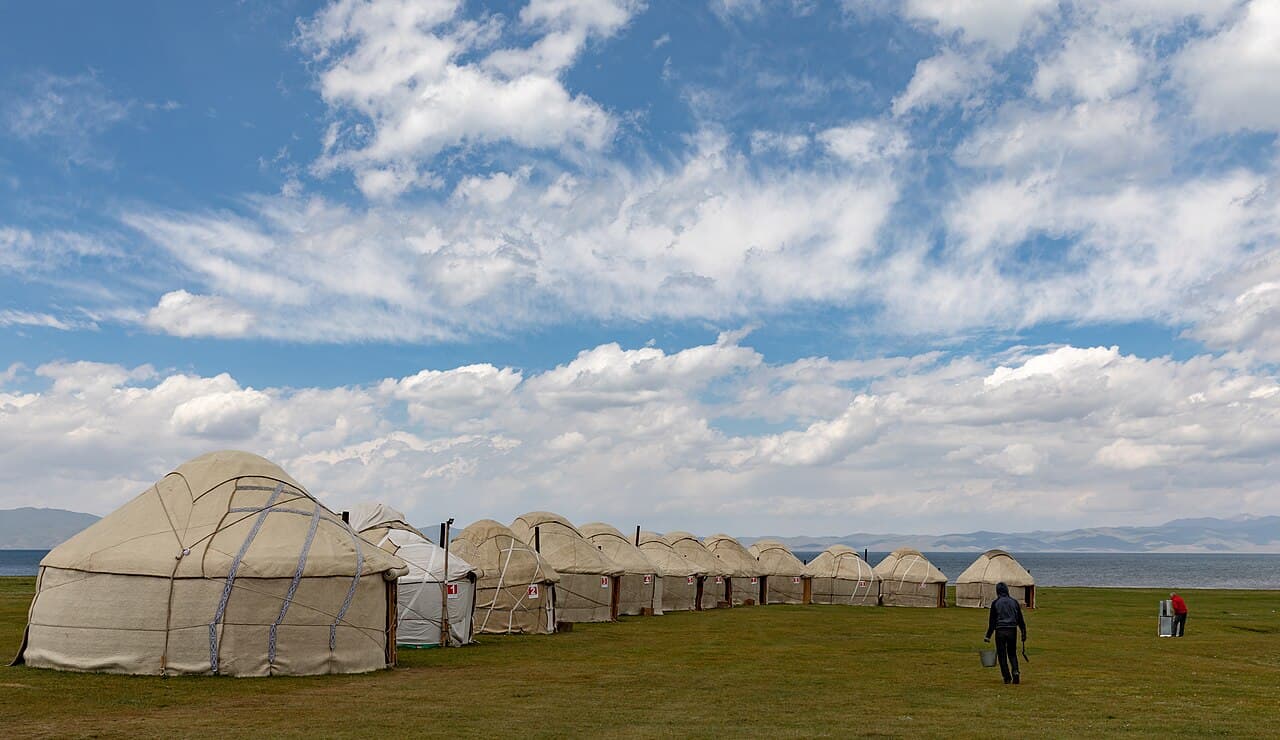
KyrgyzstanPhoto: Ninara from Helsinki, Finland / Wikimedia Commons (CC BY 2.0)

Kyrgyzstan

Country · KG · KGS · Asia/Bishkek

This information may change. Always check the official source.Last verified: August 2026 by

Thirty days in every sixty - a rolling window, not a per-entry allowance - and a registration deadline that falls five days after you land.

  • Most Western passports enter Kyrgyzstan without a visa for up to 30 calendar days in each 60-day period.
  • That is a rolling window, not a per-entry allowance. Thirty days here, a week in Kazakhstan, and back does not give you another thirty. The 60-day clock keeps running.
  • Staying more than 30 calendar days means either leaving before the period ends, or registering online with the State Registration Service.
  • Only use officially recognised border crossings. The FCDO says so explicitly, and Central Asian frontiers have informal crossings that are not legal for foreigners.
  • There is a history of border clashes on the Kyrgyzstan-Tajikistan border and the situation can change at short notice.
More details

Thirty in sixty, and read that carefully

  • Most Western passports enter Kyrgyzstan without a visa for up to 30 calendar days in each 60-day period.
  • That is a rolling window, not a per-entry allowance. Thirty days here, a week in Kazakhstan, and back does not give you another thirty. The 60-day clock keeps running.
  • This is the misreading that gets people fined, because every neighbouring country's rule is shaped differently and the Central Asia loop encourages exactly that pattern of movement.
  • Count the days from your first entry.
  • Your passport must be valid at least 6 months after the day you arrive.

If you want longer, act on day five

  • Staying more than 30 calendar days means either leaving before the period ends, or registering online with the State Registration Service.
  • The registration must be done within 5 days of entry. That is the trap: the paperwork for something you need on day 31 has a deadline on day 5.
  • Decide on arrival, not later. If there is any chance you will stay longer, register in the first week.
  • For a longer or different visit, there is an eVisa at , the official Kyrgyz portal.

At the borders

  • Only use officially recognised border crossings. The FCDO says so explicitly, and Central Asian frontiers have informal crossings that are not legal for foreigners.
  • Border crossings can close at short notice, particularly with Tajikistan. Have a fallback route and slack in the itinerary.
  • The Torugart and Irkeshtam passes to China need arrangements made in advance and are not turn-up-and-cross borders.

The Batken warning

  • There is a history of border clashes on the Kyrgyzstan-Tajikistan border and the situation can change at short notice.
  • There may be unexploded ordnance and mines, particularly in the border areas of Batken region.
  • This is the south-west of the country, on the Pamir Highway approach, and it needs checking against current advice rather than a guidebook.
Sources (2)

Kyrgyzstan shares the Eurasian Economic Union's customs rules, which makes the Kazakh border an internal one and the Chinese border a hard frontier.

  • The EAEU customs code applies here, so the allowances and the USD 10,000 cash declaration threshold are the union's rather than Kyrgyzstan's own.
  • The Kazakh border is an internal EAEU crossing, which is why the road from Bishkek to Almaty moves faster than the map suggests.
  • The Chinese passes at Torugart and Irkeshtam are full customs borders with limited opening hours, permit requirements and a habit of closing for holidays on both calendars.
  • Cash equivalent to USD 10,000 or more must be declared.
  • Antiquities, felt artwork of age and religious objects need an export certificate.
More details
  • The EAEU customs code applies here, so the allowances and the USD 10,000 cash declaration threshold are the union's rather than Kyrgyzstan's own.
  • The Kazakh border is an internal EAEU crossing, which is why the road from Bishkek to Almaty moves faster than the map suggests.
  • The Chinese passes at Torugart and Irkeshtam are full customs borders with limited opening hours, permit requirements and a habit of closing for holidays on both calendars.
  • Cash equivalent to USD 10,000 or more must be declared.
  • Antiquities, felt artwork of age and religious objects need an export certificate.
  • Hunting trophies need CITES paperwork, arranged before rather than after the trip.
Sources (1)

Facilities are often badly equipped and sterilisation cannot be guaranteed. This is a country where evacuation cover is the point of the policy.

  • The FCDO says medical facilities are often badly equipped and unhygienic, and that sterilisation of equipment cannot be guaranteed, particularly in rural hospitals. That is unusually direct language.
  • There is no reciprocal healthcare agreement. You pay.
  • Altitude sickness is a real risk. Song-Kul is at 3,000 m, the Ala-Kul pass at 3,900 m, and people drive or walk up from Bishkek at 800 m within a day or two.
  • Do not drink tap water. Bottled or boiled.
  • 103 for an ambulance.
More details

Be honest about the risk

  • The FCDO says medical facilities are often badly equipped and unhygienic, and that sterilisation of equipment cannot be guaranteed, particularly in rural hospitals. That is unusually direct language.
  • There is no reciprocal healthcare agreement. You pay.
  • Take insurance that covers medical evacuation, and check it covers trekking at the altitude you will actually reach. Standard policies frequently cap at 2,500 or 3,000 m, which is below several of the popular treks.
  • Carry a proper first aid kit, including sterile needles if you are going remote. This is a country where that is a reasonable precaution rather than paranoia.

Altitude

  • Altitude sickness is a real risk. Song-Kul is at 3,000 m, the Ala-Kul pass at 3,900 m, and people drive or walk up from Bishkek at 800 m within a day or two.
  • Ascend gradually, sleep low, and turn back if symptoms do not clear. There is no quick evacuation from a jailoo.

Everyday

  • Do not drink tap water. Bottled or boiled.
  • Air quality in Bishkek deteriorates seasonally - the winter smog from coal heating is severe and genuinely affects people with asthma.
  • Anthrax cases have occurred because of insufficient animal vaccination, which is a reason to be careful with undercooked meat and unpasteurised dairy, both of which are offered generously in the countryside.
  • Kymyz, fermented mare's milk, is a national drink and a national test. It is unpasteurised.

Numbers

  • 103 for an ambulance.
  • Mountain rescue: +996 312 651 404.
Sources (1)

Bishkek

Long-term averages for Bishkek: the mean daily high, the mean overnight low and the mean monthly rainfall across 30 years of ERA5 reanalysis data (1995–2024).

DayNight
-100102030°C0200mmJanFebMarAprMayJunJulAugSepOctNovDecJanuary: Day 1 °C, Night -9 °C, Rain 38 mm. February: Day 3 °C, Night -7 °C, Rain 50 mm. March: Day 10 °C, Night -2 °C, Rain 95 mm. April: Day 17 °C, Night 4 °C, Rain 119 mm. May: Day 22 °C, Night 9 °C, Rain 94 mm. June: Day 27 °C, Night 13 °C, Rain 43 mm. July: Day 29 °C, Night 16 °C, Rain 29 mm. August: Day 29 °C, Night 15 °C, Rain 25 mm. September: Day 24 °C, Night 10 °C, Rain 30 mm. October: Day 16 °C, Night 4 °C, Rain 63 mm. November: Day 9 °C, Night -3 °C, Rain 61 mm. December: Day 3 °C, Night -8 °C, Rain 41 mm
Show the monthly table
Bishkek
MonthDay (°C)Night (°C)Rain (mm)
January1-938
February3-750
March10-295
April174119
May22994
June271343
July291629
August291525
September241030
October16463
November9-361
December3-841

Karakol

Long-term averages for Karakol: the mean daily high, the mean overnight low and the mean monthly rainfall across 30 years of ERA5 reanalysis data (1995–2024).

DayNight
-15-5515°C0200mmJanFebMarAprMayJunJulAugSepOctNovDecJanuary: Day -4 °C, Night -14 °C, Rain 23 mm. February: Day -1 °C, Night -12 °C, Rain 25 mm. March: Day 4 °C, Night -6 °C, Rain 39 mm. April: Day 10 °C, Night -1 °C, Rain 72 mm. May: Day 15 °C, Night 3 °C, Rain 103 mm. June: Day 18 °C, Night 7 °C, Rain 96 mm. July: Day 20 °C, Night 10 °C, Rain 100 mm. August: Day 20 °C, Night 9 °C, Rain 92 mm. September: Day 17 °C, Night 5 °C, Rain 77 mm. October: Day 10 °C, Night -1 °C, Rain 64 mm. November: Day 2 °C, Night -8 °C, Rain 43 mm. December: Day -3 °C, Night -12 °C, Rain 28 mm
Show the monthly table
Karakol
MonthDay (°C)Night (°C)Rain (mm)
January-4-1423
February-1-1225
March4-639
April10-172
May153103
June18796
July2010100
August20992
September17577
October10-164
November2-843
December-3-1228

Osh

Long-term averages for Osh: the mean daily high, the mean overnight low and the mean monthly rainfall across 30 years of ERA5 reanalysis data (1995–2024).

DayNight
-100102030°C0100mmJanFebMarAprMayJunJulAugSepOctNovDecJanuary: Day 3 °C, Night -8 °C, Rain 35 mm. February: Day 6 °C, Night -5 °C, Rain 56 mm. March: Day 12 °C, Night 1 °C, Rain 84 mm. April: Day 18 °C, Night 6 °C, Rain 100 mm. May: Day 22 °C, Night 10 °C, Rain 81 mm. June: Day 28 °C, Night 15 °C, Rain 37 mm. July: Day 31 °C, Night 17 °C, Rain 20 mm. August: Day 30 °C, Night 17 °C, Rain 17 mm. September: Day 25 °C, Night 12 °C, Rain 21 mm. October: Day 18 °C, Night 6 °C, Rain 58 mm. November: Day 11 °C, Night 0 °C, Rain 54 mm. December: Day 5 °C, Night -6 °C, Rain 45 mm
Show the monthly table
Osh
MonthDay (°C)Night (°C)Rain (mm)
January3-835
February6-556
March12184
April186100
May221081
June281537
July311720
August301717
September251221
October18658
November11054
December5-645
Sources (1)

Where to stay

Guesthouses, homestays and yurts - and the yurts are not a gimmick.

  • Guesthouses are the backbone - family-run, in Bishkek, Karakol, Osh and every trekking village. Cheap, warm and the best source of local information you will find.
  • Homestays in the villages, arranged through CBT, put you in a family's house with dinner included.
  • Bishkek - Soviet grid, tree-lined, cheap and functional. A day or two either end.
  • The yurts are up roughly June to September. Outside that the pastures are empty and the passes are closed.
  • Book nothing far ahead outside Bishkek. The system is guesthouses and CBT offices, and it works on arrival.
More details

The three kinds

  • Guesthouses are the backbone - family-run, in Bishkek, Karakol, Osh and every trekking village. Cheap, warm and the best source of local information you will find.
  • Homestays in the villages, arranged through CBT, put you in a family's house with dinner included.
  • Yurts on the summer pastures - Song-Kul, the jailoos above Kochkor, the Ala-Kul approach. These are working herders' yurts in most cases, not a tourist recreation, and they are the reason a lot of people come.

Where to base

  • Bishkek - Soviet grid, tree-lined, cheap and functional. A day or two either end.
  • Karakol - the trekking capital at the east end of Issyk-Kul, with the wooden mosque and the Sunday animal market.
  • Osh - the southern city, older than Bishkek by two millennia, with the sacred mountain in the middle of it.
  • Kochkor and Naryn - the jumping-off points for Song-Kul and the high pastures.

Season

  • The yurts are up roughly June to September. Outside that the pastures are empty and the passes are closed.
  • Winter is for skiing at Karakol, and much of the country is inaccessible.

Practical

  • Book nothing far ahead outside Bishkek. The system is guesthouses and CBT offices, and it works on arrival.
  • Yurts have no electricity, no plumbing and a dung stove. That is the point; bring a power bank and a head torch.
  • If you may stay over 30 days, register in the first five.
Sources (2)

Getting online in Kyrgyzstan

Cheap, fast data in the valleys and nothing at all in the mountains, which is where you will be.

  • Beeline, O! and MegaCom cover the country. Prepaid SIMs are cheap and sold at Manas airport and everywhere in Bishkek.
  • Data prices are among the lowest anywhere.
  • There is no signal in the mountains, and the mountains are 90% of the country and the entire reason to come.
  • Fine for the cities. It changes nothing about the mountains.
  • Mountain rescue: +996 312 651 404. Save it, write it on paper, and give your route and expected return to someone before you set off - because when you need it you will not have signal to look it up.
More details

The local SIM

  • Beeline, O! and MegaCom cover the country. Prepaid SIMs are cheap and sold at Manas airport and everywhere in Bishkek.
  • Data prices are among the lowest anywhere.
  • Registration needs the passport.
  • Coverage is good in Bishkek, Osh, Karakol and along the main roads.

And then it stops

  • There is no signal in the mountains, and the mountains are 90% of the country and the entire reason to come.
  • Song-Kul, the Ala-Kul trek, the jailoo pastures and most of the Tien Shan have nothing.
  • Download offline maps and your route before you leave the last town. This is not a convenience here, it is the safety plan.
  • A power bank matters for the same reason.

An eSIM instead

  • Fine for the cities. It changes nothing about the mountains.
  • A local SIM is marginally better for a driving trip, because a local number is what a guesthouse or a driver will call back on.

The number to write down

  • Mountain rescue: +996 312 651 404. Save it, write it on paper, and give your route and expected return to someone before you set off - because when you need it you will not have signal to look it up.
Sources (1)

Kyrgyz sockets are Type and at 220 V, the Soviet-era European pattern.

  • A Europlug fits every socket in the country.
  • Older sockets are unearthed and narrow, so a chunky Schuko plug sometimes needs pressure to enter.
  • British, American and Australian plugs need an adapter.
  • Yurt camps and mountain guesthouses run on solar or a generator for a few hours in the evening, so charging is opportunistic rather than overnight.
  • Kazakhstan and Uzbekistan match, so one adapter covers a Central Asian route.
More details

Sockets in Kyrgyzstan are Type and at 220 V, 50 Hz - two round pins, the same shape as continental Europe.

  • A Europlug fits every socket in the country.
  • Older sockets are unearthed and narrow, so a chunky Schuko plug sometimes needs pressure to enter.
  • British, American and Australian plugs need an adapter.
  • Yurt camps and mountain guesthouses run on solar or a generator for a few hours in the evening, so charging is opportunistic rather than overnight.
  • Kazakhstan and Uzbekistan match, so one adapter covers a Central Asian route.
  • 220 V behaves as 230 V does for anything built for Europe; American 120 V-only equipment needs a converter.
Sources (1)

European plugs, Russian as the working language, and a country that runs on hospitality rather than infrastructure.

  • Plugs are the European two-pin type and , 220 V.
  • Kyrgyz and Russian are both official. Russian is the working language of Bishkek and of most transactions with visitors; Kyrgyz is what people speak among themselves, more so in the south.
  • June to September is the season. The passes are open, the yurts are up, the pastures are green.
  • Hospitality is a serious obligation here, not a courtesy. A herder will feed you and be offended by payment; a small gift is the graceful answer.
  • Bring what you need. Trekking gear, medicines and anything technical are hard to buy outside Bishkek.
More details

The basics

  • Plugs are the European two-pin type and , 220 V.
  • Kyrgyz and Russian are both official. Russian is the working language of Bishkek and of most transactions with visitors; Kyrgyz is what people speak among themselves, more so in the south.
  • English is limited outside the trekking industry, where it is good.
  • Both languages use Cyrillic, so a camera translation app earns its place.
  • UTC+6 all year. Dialling code +996.

Season is everything

  • June to September is the season. The passes are open, the yurts are up, the pastures are green.
  • Outside that, much of the country is shut. Song-Kul is inaccessible, the jailoos are empty and the high routes are under snow.
  • Winter is for Karakol's ski base and for a very different, colder trip.

Culture

  • Hospitality is a serious obligation here, not a courtesy. A herder will feed you and be offended by payment; a small gift is the graceful answer.
  • Take your shoes off entering a home or a yurt.
  • Bread is treated with respect - never placed face down, never thrown away.
  • The eagle hunters and the horse games are genuine traditions, still practised, and the World Nomad Games grew out of them.
  • Say yes to kymyz once. Then you can say you have.

Practical

  • Bring what you need. Trekking gear, medicines and anything technical are hard to buy outside Bishkek.
  • Cash, small notes, and a power bank.
  • Toilets outside towns are pit latrines. That is simply the standard.
Sources (2)

Som, cash and the exchange offices

One of the cheapest countries in Asia, and cash everywhere once you leave Bishkek.

  • The Kyrgyz som (KGS) is the currency and Kyrgyzstan is one of the cheapest countries in Asia to travel in.
  • Cards work in Bishkek - hotels, restaurants, supermarkets - and in Osh and Karakol to a lesser extent.
  • There is no reciprocal healthcare agreement and you will pay. Insurance covering treatment and repatriation is essential - see the health section, where the reason is starker than usual.
  • A guesthouse, three meals and a shared taxi cost very little. Kyrgyzstan is where a small budget goes a long way.
  • Not deeply expected, but 10% in a Bishkek restaurant is normal and guides and drivers appreciate it.
More details

The som

  • The Kyrgyz som (KGS) is the currency and Kyrgyzstan is one of the cheapest countries in Asia to travel in.
  • Exchange offices are everywhere in Bishkek and give good rates for US dollars and euros. Bring clean, unmarked notes.
  • The FCDO advises care at exchange offices and in the bazaars, particularly Osh Bazaar in Bishkek, where pickpockets target tourists. Count money before you walk away and not on the street.

Cards and cash

  • Cards work in Bishkek - hotels, restaurants, supermarkets - and in Osh and Karakol to a lesser extent.
  • Everything else is cash. Guesthouses, yurt stays, drivers, horses, marshrutkas, village shops.
  • Take out several days' worth before leaving a town with a bank, and considerably more before a trek. There are no machines at Song-Kul.
  • Small notes. Nobody in a village can break a 5,000 som note.

Medical costs

  • There is no reciprocal healthcare agreement and you will pay. Insurance covering treatment and repatriation is essential - see the health section, where the reason is starker than usual.

Costs

  • A guesthouse, three meals and a shared taxi cost very little. Kyrgyzstan is where a small budget goes a long way.
  • Guided treks, horses and drivers are where the money actually goes, and they are worth it.

Tipping

  • Not deeply expected, but 10% in a Bishkek restaurant is normal and guides and drivers appreciate it.
Sources (2)

Everyday prices

Typical prices in som (KGS), averaged across the country by Numbeo and read on 19 August 2026. Tick Convert prices above the table to see every amount in your own currency.

Everyday prices
ItemTypical price
Inexpensive restaurant meal500 KGS
Dinner for two, mid-range, three courses2,150 KGS
Cappuccino193 KGS
Local draught beer, 0.5 l120 KGS
Bottled water, 0.33 l31 KGS
Public transport, one-way ticket20 KGS
Taxi, starting fare85 KGS
Petrol, 1 litre81 KGS
Cigarettes, pack of 20 (Marlboro)180 KGS
Average net monthly salary41,000 KGS

These are country-wide averages, not a price list: tourist districts, airports and islands sit well above them, and small towns below. The salary line is there for proportion - it is what people living here actually earn.

Sources (1)

Airport guides for Kyrgyzstan1

One page per airport: the routes into town, what they cost and the trap particular to that arrival.

See all 1 airports

From Manas into Bishkek

Twenty-five kilometres of straight road, and a firm rule about not taking the first taxi offered.

  • Manas International (FRU) is about 25 km northwest of Bishkek - 30 to 40 minutes on a straight road.
  • It is small. Immigration for visa-free nationalities is quick.
  • Use a licensed, pre-ordered taxi rather than one flagged down. That is the FCDO's advice and it applies most sharply outside an arrivals hall at 04:00.
  • Osh (OSS) is the second airport, in the south, and is the gateway to the Pamir and the Fergana valley side of the country.
  • Bishkek is the base for Ala-Archa, Chon-Kemin and the north.
More details
The airport
  • Manas International (FRU) is about 25 km northwest of Bishkek - 30 to 40 minutes on a straight road.
  • It is small. Immigration for visa-free nationalities is quick.
  • Many flights land in the very early hours, arriving from Istanbul, Dubai and Moscow, which is worth knowing when you book the first night.
Into the city
  • Use a licensed, pre-ordered taxi rather than one flagged down. That is the FCDO's advice and it applies most sharply outside an arrivals hall at 04:00.
  • Yandex Go works in Bishkek and is very cheap; ordering one from inside the terminal is the simplest approach.
  • Marshrutka 380 runs to the centre for a nominal fare in daylight.
  • Guesthouses will arrange a pickup and it is worth it for a night arrival.
Osh
  • Osh (OSS) is the second airport, in the south, and is the gateway to the Pamir and the Fergana valley side of the country.
  • The flight Bishkek to Osh takes 45 minutes; the road takes 12 hours over two 3,000 m passes. Fly.
Onward
  • Bishkek is the base for Ala-Archa, Chon-Kemin and the north.
  • Karakol, at the east end of Lake Issyk-Kul, is the trekking base and is 6 hours from Bishkek by shared taxi or marshrutka.
  • Roads are poorly maintained and badly lit. Do not drive at night.
Sources (1)

Getting around Kyrgyzstan

Marshrutkas, shared taxis and a hired driver - on mountain roads that decide the timetable.

  • Marshrutkas - shared minibuses - run everywhere from the Bishkek terminals. Cheap, cramped, and departing when full.
  • Shared taxis cover the same routes faster for a little more, and are the standard way to reach Karakol or Osh.
  • Poorly maintained and inadequately lit. Mountain passes are unsurfaced in places and close with snow from roughly October to May.
  • Use a reputable agency, take insurance, and do not trek alone. All three are the FCDO's explicit advice, and the third is the one people ignore.
  • Only officially recognised crossings, and expect them to close at short notice.
More details

Between towns

  • Marshrutkas - shared minibuses - run everywhere from the Bishkek terminals. Cheap, cramped, and departing when full.
  • Shared taxis cover the same routes faster for a little more, and are the standard way to reach Karakol or Osh.
  • Hiring a driver with a car for several days is affordable and is how most visitors reach Song-Kul, the jailoos and the remote valleys. Arrange through a guesthouse or a CBT (Community Based Tourism) office.
  • Domestic flights connect Bishkek and Osh in 45 minutes against 12 hours of road.

The roads

  • Poorly maintained and inadequately lit. Mountain passes are unsurfaced in places and close with snow from roughly October to May.
  • Do not drive at night.
  • Four-wheel drive is genuinely required for Song-Kul, the jailoo tracks and most of what makes the country worth visiting.
  • Drink-driving carries fines and licence revocation, and there is no reason to test it.

Trekking

  • Use a reputable agency, take insurance, and do not trek alone. All three are the FCDO's explicit advice, and the third is the one people ignore.
  • CBT and Destination Karakol are the established community networks for guides, horses and yurt stays.
  • Horse trekking is the local mode of travel rather than a novelty, and a horse gets you places a vehicle does not.

Borders

  • Only officially recognised crossings, and expect them to close at short notice.
  • Batken region borders may have unexploded ordnance and mines. Do not wander off a road there.

Apps and platforms

Yandex, offline maps, and the community tourism network that does what an app cannot.

  • Yandex Go - the ride-hailing app, working in Bishkek and Osh and extremely cheap. No Uber or Bolt here.
  • Offline maps - the single most important app in Kyrgyzstan, because the mountains have no signal and the tracks are not on the standard base map. Maps.me and organic-maps both have good Kyrgyz trail data.
  • CBT Kyrgyzstan and the Destination Karakol network are how you find a guide, a horse, a driver or a yurt. They are offices and phone numbers rather than platforms, and they are better than anything online.
  • Guesthouses arrange everything and are the real booking system outside Bishkek.
  • Mountain rescue: +996 312 651 404.
More details

Worth having

  • Yandex Go - the ride-hailing app, working in Bishkek and Osh and extremely cheap. No Uber or Bolt here.
  • Offline maps - the single most important app in Kyrgyzstan, because the mountains have no signal and the tracks are not on the standard base map. Maps.me and organic-maps both have good Kyrgyz trail data.
  • The State Registration Service site for the online registration, if you are staying beyond 30 days - remember the 5-day deadline.
  • for a visa if you need one.

What an app cannot do

  • CBT Kyrgyzstan and the Destination Karakol network are how you find a guide, a horse, a driver or a yurt. They are offices and phone numbers rather than platforms, and they are better than anything online.
  • Guesthouses arrange everything and are the real booking system outside Bishkek.

Written on paper

  • Mountain rescue: +996 312 651 404.
  • Your route and expected return time, left with your guesthouse. Rescue here has limited equipment and no way to find you if nobody knows where you went.
Sources (3)

Kyrgyzstan's roads are free, the mountain passes are the trip, and a 4x4 changes what is reachable.

  • The alcohol limit is zero.
  • Roads are free, and the Bishkek-Osh highway crosses two passes above 3,000 m that close in snow without warning.
  • A 4x4 opens the country. Song-Kul, the Kegeti pass and most of the jailoos are tracks rather than roads; an ordinary hire car is limited to the main valleys.
  • Fuel is available in towns and rarely between them, and octane varies.
  • Livestock on the road is constant in summer when the herds move to the high pastures - horses and sheep have priority in practice.
More details

Free roads, high passes, and a country where the vehicle decides the itinerary.

  • The alcohol limit is zero.
  • Roads are free, and the Bishkek-Osh highway crosses two passes above 3,000 m that close in snow without warning.
  • A 4x4 opens the country. Song-Kul, the Kegeti pass and most of the jailoos are tracks rather than roads; an ordinary hire car is limited to the main valleys.
  • Fuel is available in towns and rarely between them, and octane varies.
  • Livestock on the road is constant in summer when the herds move to the high pastures - horses and sheep have priority in practice.
Sources (1)

Safety, the mountains and the border

Ordinary crime is manageable. The mountains are not forgiving and rescue is thin.

  • Avalanches, landslides, rockfalls, altitude sickness and weather that changes in an hour are the FCDO's list, and it is accurate. Kyrgyzstan is 90% mountain and most of it is above 1,500 m.
  • There is a history of border clashes on the Kyrgyzstan-Tajikistan border, and the situation can change at short notice.
  • Bag-snatching and mugging, particularly at night in Bishkek.
  • Demonstrations happen regularly in Bishkek and elsewhere and are usually peaceful but can turn violent suddenly - 41 people were injured in protests in May 2024.
  • Possession carries a long prison sentence in basic conditions.
More details

The mountains are the real subject

  • Avalanches, landslides, rockfalls, altitude sickness and weather that changes in an hour are the FCDO's list, and it is accurate. Kyrgyzstan is 90% mountain and most of it is above 1,500 m.
  • Mountain rescue exists but with limited equipment. There is no helicopter service standing by and no alpine-club infrastructure. Assume nobody is coming quickly.
  • The emergency number is +996 312 651 404. Write it down.
  • Use reputable agencies, take insurance that covers trekking at altitude, and do not trek alone. All three are explicit FCDO advice.
  • Tell your guesthouse your route and your expected return, every time. This is the single most useful safety habit here.
  • Ala-Kul is the popular trek and it crosses a 3,900 m pass. People underestimate it every summer.

The Tajik border

  • There is a history of border clashes on the Kyrgyzstan-Tajikistan border, and the situation can change at short notice.
  • There may be unexploded ordnance and mines, particularly in Batken region.
  • Use only officially recognised crossings, and expect closures without warning.

Ordinary crime

  • Bag-snatching and mugging, particularly at night in Bishkek.
  • Pickpockets target tourists at Osh Bazaar specifically.
  • Drink spiking happens in nightclubs and bars, and has led to sexual assault. Do not leave a drink.
  • Use licensed pre-ordered taxis, not one flagged in the street.

Protests

  • Demonstrations happen regularly in Bishkek and elsewhere and are usually peaceful but can turn violent suddenly - 41 people were injured in protests in May 2024.
  • Avoid crowds and gatherings entirely.

Drugs

  • Possession carries a long prison sentence in basic conditions.
  • Drug raids on venues are routine, and if you are clean the consequence is an identity check.
Sources (2)

Emergency numbers and what to do

112 for anything, separate numbers for each service, and one for the mountains that you should write on paper.

  • 112 is the unified rescue and emergency line, but the direct numbers are what people actually use - save all of them.
  • Operators speak Russian and Kyrgyz. English is unlikely.
  • Rescue has limited equipment and there is no fast helicopter service. Response is measured in many hours or a day.
  • Contact your insurer immediately if you are referred for treatment, and expect evacuation rather than local surgery for anything serious.
  • Tell people at home you will be out of contact for stretches. Silence in the mountains here is normal and not a signal.
More details

The numbers

Emergency numbers and what to do
ForCall
All emergencies112
Ambulance103
Police102
Fire101
Mountain rescue+996 312 651 404
  • 112 is the unified rescue and emergency line, but the direct numbers are what people actually use - save all of them.
  • Operators speak Russian and Kyrgyz. English is unlikely.
  • Write the mountain rescue number on paper and put it in your pack. You will not have signal to look it up, and a phone with a dead battery is the usual reason people cannot call.

In the mountains

  • Rescue has limited equipment and there is no fast helicopter service. Response is measured in many hours or a day.
  • Leave your route and return time with your guesthouse or agency, every single time. This is what turns a rescue from a search into a collection.
  • Do not trek alone.
  • Carry a first aid kit and a means of keeping warm overnight. Weather turns fast at 3,000 m.

Medical

  • Contact your insurer immediately if you are referred for treatment, and expect evacuation rather than local surgery for anything serious.
  • Sterilisation cannot be guaranteed in rural hospitals - if you have a choice, get to Bishkek.

If communication matters

  • Tell people at home you will be out of contact for stretches. Silence in the mountains here is normal and not a signal.
  • Most embassies are in Bishkek, and several countries cover Kyrgyzstan from Almaty in Kazakhstan - check yours before you go.
Sources (4)