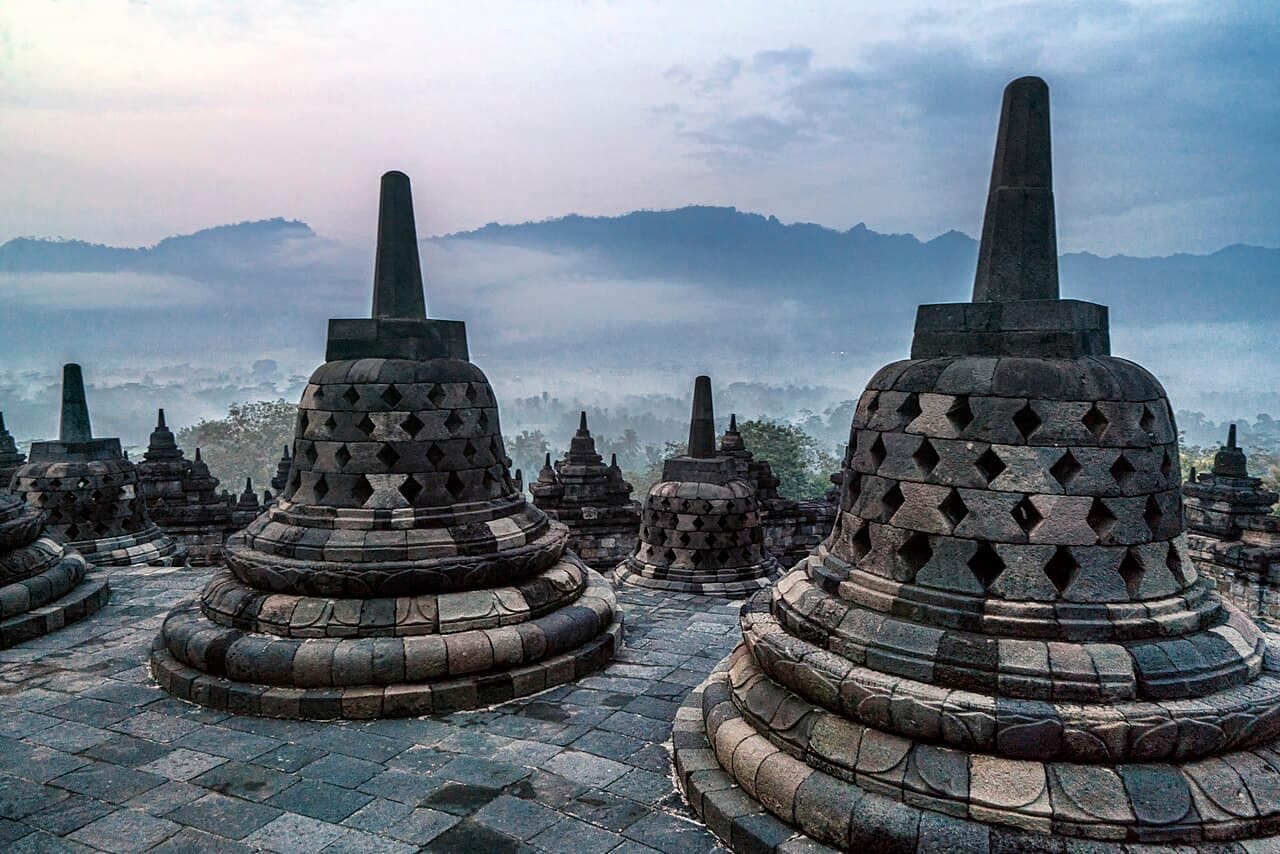
IndonesiaPhoto: Christopher Michel / Wikimedia Commons (CC BY-SA 4.0)

Indonesia

Country · ID · IDR · Asia/Jakarta

This information may change. Always check the official source.Last verified: August 2026 by

One free online form now covers everything: the All Indonesia arrival card carries immigration, customs, health and quarantine, and it replaced the separate e-CD and SATUSEHAT declarations. File it within 72 hours of arrival. Most visitors then buy a visa on arrival for 500,000 IDR, good for 30 days and extendable once. Bali adds a 150,000 IDR levy of its own.

  • The All Indonesia arrival card is one free online form covering immigration, customs, health and quarantine. It replaced the separate Electronic Customs Declaration (e-CD) and the SATUSEHAT health pass - do not go looking for those.
  • File it within 72 hours of arrival, on the website or the app. Everyone arriving files it, Indonesians included.
  • Visa on arrival costs 500,000 IDR, payable in cash or by card, single entry, and gives 30 days.
  • It can be extended once, by another 30 days, at an immigration office inside Indonesia - in person, so budget the time.
  • For longer or multiple entries, apply online before you travel for a multiple-entry or 60-day visa.
  • Your passport needs 6 months validity from the date you arrive and at least 2 blank pages, plus a return or onward ticket.
  • Bali charges its own tourist levy of 150,000 IDR per foreign visitor, separate from the visa.
  • Overstaying costs 1,000,000 IDR for every day. Past 60 days it stops being a fine and becomes deportation and an entry ban.
  • Yellow fever vaccination is required only if you are arriving from a country with yellow fever risk (age 9 months and over). It is not otherwise needed.
More details

One form before you fly

The All Indonesia arrival card is the single arrival declaration. It is run by the Directorate General of Immigration, it is free, and it covers immigration, customs, health and quarantine in one submission - which means the Electronic Customs Declaration (e-CD) and the SATUSEHAT health pass no longer exist as separate steps. Anything telling you to fill in those two forms is out of date.

  • When - within 72 hours of your arrival, via the website or the All Indonesia app.
  • Who - every arriving passenger, foreign national and Indonesian citizen alike.
  • What you get - a QR code to present at the border. It also matters at the autogates, which will not process you without it.

Getting the visa

Most visitors buy the visa on arrival, either at the airport or online in advance as an e-VOA.

  • 500,000 IDR, payable in cash or by card. Single entry only.
  • 30 days, counted from the day you land.
  • Extendable once, by another 30 days, at an immigration office within Indonesia. The extension is done in person - it is not a website transaction, so leave time for it and do not leave it to the last day.
  • Longer stays and multiple entries are applied for online before you travel: the e-visa system issues multiple-entry and 60-day visas.

Check your own nationality before you rely on any of this. Indonesia publishes several overlapping lists - visa on arrival eligibility, a short visa-exemption list, and a calling-visa list - and they are not always in step with one another. The airline checks your case in Timatic at the desk, so confirm yours there too.

What you must be able to show

  • A passport valid at least 6 months from the date you arrive, with at least 2 blank pages.
  • A return or onward ticket out of Indonesia.
  • Proof of funds for some categories.

Bali's own levy

Bali charges a tourist levy of 150,000 IDR per foreign visitor, once per trip, and it is separate from the visa - paying for the VOA does not cover it. Pay it online before you arrive or at the airport.

Overstaying

1,000,000 IDR for each day over. That is the statutory rate and it starts on day one. Beyond 60 days it is no longer a fine: it becomes prosecution, detention, deportation at your own expense, and a ban on returning.

Health

Yellow fever vaccination is required only if you are arriving from a country with yellow fever risk, for travellers aged 9 months and over. Coming directly from Europe or North America it is not required, and the CDC does not otherwise recommend it for Indonesia.

Sources (9)

Indonesia's customs declaration is now part of the single All Indonesia arrival card, and your phone needs registering if you plan to use a local SIM.

  • There is no separate customs form any more. Customs is one of the four sections inside the All Indonesia arrival card, filed free within 72 hours of arrival - it absorbed the old Electronic Customs Declaration and the SATUSEHAT health pass. One submission, one QR code, shown at the gate. Any guide still sending you to fill in an e-CD is describing a form that no longer exists on its own.
  • Phones need IMEI registration. A handset brought in and used with an Indonesian SIM is blocked from the local networks within days unless the IMEI is registered at customs, with duty payable above a small allowance. Roaming on your home SIM avoids the whole thing.
More details
  • There is no separate customs form any more. Customs is one of the four sections inside the All Indonesia arrival card, filed free within 72 hours of arrival - it absorbed the old Electronic Customs Declaration and the SATUSEHAT health pass. One submission, one QR code, shown at the gate. Any guide still sending you to fill in an e-CD is describing a form that no longer exists on its own.
  • Phones need IMEI registration. A handset brought in and used with an Indonesian SIM is blocked from the local networks within days unless the IMEI is registered at customs, with duty payable above a small allowance. Roaming on your home SIM avoids the whole thing.
  • IDR 100,000,000 or more in cash must be declared, and taking that much rupiah out has its own rule.
  • Drug offences carry the death penalty, and the warning at Bali arrivals is not decorative.
  • Pornographic material is prohibited, and the allowance for alcohol is one litre per adult - Bali's duty-free shops sell in quantities well above it.
Sources (2)

BIMC Hospital Kuta and Kasih Ibu Kedonganan are the practical tourist hospitals in south Bali, with Siloam and RSUD Bali Mandara for wider Denpasar. Drink bottled water, use DEET against dengue, and treat insurance as essential: hospitals want payment or a guarantee up front and do not automatically accept a foreign policy.

  • Save the emergency numbers in advance: police 110 and medical emergency / ambulance 118 or 119.
  • Ambulances may be slow, so a car or taxi to hospital can be faster.
  • In southern Bali, BIMC Hospital Kuta and Kasih Ibu Kedonganan are practical for tourists.
  • Look up your own country's embassy or consulate contact before you travel - it's your first call if you lose your passport.
  • Dengue occurs on Bali; drink bottled water, not tap water.
  • Travel insurance is essential - care is not free and hospitals often want payment upfront.
More details

Health, insurance and where to be treated

Hospitals that work for tourists in southern Bali:

  • BIMC Hospital Kuta - officially lists a 24h Accident & Emergency Centre, on the Bypass Ngurah Rai.
  • Kasih Ibu Hospital Kedonganan - confirms an Emergency Unit & Ambulance, in the Kuta tourist zone.
  • Wider Denpasar - Siloam or RSUD Bali Mandara. (BIMC Kuta; BIMC emergency; Kasih Ibu Kedonganan; Kasih Ibu emergency)

Health risks:

  • Yellow fever depends on your route - the CDC states conditions for Indonesia based on where you have been.
  • Dengue occurs on Bali, per Smartraveller.
  • Drink bottled water, not the tap. This is field best practice rather than a legal norm, but for Bali it makes very strong sense. (CDC Indonesia; Smartraveller Indonesia)

Travel insurance is practically a necessity, and not only for the hospital - scooters, evacuation, delays, lost luggage and liability all sit under it.

  • Care is not free, and the US advisory warns that hospitals often require payment or a guarantee upfront, with foreign insurance not automatically accepted without assistance. (US International Travel Info Indonesia; Kasih Ibu international patient info)
Sources (11)

Jakarta

Long-term averages for Jakarta: the mean daily high, the mean overnight low and the mean monthly rainfall across 30 years of ERA5 reanalysis data (1995–2024).

DayNight
20253035°C0500mmJanFebMarAprMayJunJulAugSepOctNovDecJanuary: Day 29 °C, Night 24 °C, Rain 294 mm. February: Day 29 °C, Night 24 °C, Rain 285 mm. March: Day 30 °C, Night 24 °C, Rain 242 mm. April: Day 30 °C, Night 24 °C, Rain 198 mm. May: Day 30 °C, Night 24 °C, Rain 131 mm. June: Day 30 °C, Night 23 °C, Rain 105 mm. July: Day 30 °C, Night 23 °C, Rain 75 mm. August: Day 31 °C, Night 23 °C, Rain 49 mm. September: Day 32 °C, Night 24 °C, Rain 68 mm. October: Day 31 °C, Night 24 °C, Rain 140 mm. November: Day 30 °C, Night 24 °C, Rain 224 mm. December: Day 29 °C, Night 24 °C, Rain 257 mm
Show the monthly table
Jakarta
MonthDay (°C)Night (°C)Rain (mm)
January2924294
February2924285
March3024242
April3024198
May3024131
June3023105
July302375
August312349
September322468
October3124140
November3024224
December2924257

Denpasar (Bali)

Long-term averages for Denpasar (Bali): the mean daily high, the mean overnight low and the mean monthly rainfall across 30 years of ERA5 reanalysis data (1995–2024).

DayNight
202530°C0500mmJanFebMarAprMayJunJulAugSepOctNovDecJanuary: Day 28 °C, Night 24 °C, Rain 363 mm. February: Day 28 °C, Night 24 °C, Rain 353 mm. March: Day 28 °C, Night 24 °C, Rain 303 mm. April: Day 28 °C, Night 25 °C, Rain 199 mm. May: Day 28 °C, Night 25 °C, Rain 114 mm. June: Day 27 °C, Night 24 °C, Rain 78 mm. July: Day 26 °C, Night 23 °C, Rain 61 mm. August: Day 26 °C, Night 23 °C, Rain 37 mm. September: Day 27 °C, Night 23 °C, Rain 57 mm. October: Day 28 °C, Night 24 °C, Rain 98 mm. November: Day 28 °C, Night 24 °C, Rain 225 mm. December: Day 28 °C, Night 24 °C, Rain 345 mm
Show the monthly table
Denpasar (Bali)
MonthDay (°C)Night (°C)Rain (mm)
January2824363
February2824353
March2824303
April2825199
May2825114
June272478
July262361
August262337
September272357
October282498
November2824225
December2824345
Sources (1)

For a first trip, base yourself in Seminyak or Canggu on Bali and add about three nights in Ubud if you have a week. Prices swing 30 to 50 per cent between low season and July, August and December, so any figure is a band rather than a rate. Passports are taken at check-in because providers register foreign guests.

  • Seminyak or Canggu for a first visit - Seminyak is the more polished, with beach clubs and hotels at every price; Canggu is relaxed and café-driven.
  • Add about three nights in Ubud if you have a week or more: temples, rice terraces, and a much quieter evening inland.
  • Kuta is the cheapest and the most party-oriented; Uluwatu on the southern cliffs is the luxury end.
  • Prices rise 30 to 50 per cent in July, August and December. Treat any quoted range as a low-season floor.
  • Many Bali villas quote in US dollars but settle in rupiah. Take rupiah when the card terminal offers you the choice.
  • Your passport is taken at check-in - accommodation providers register foreign guests.
  • Book the first nights before you fly. Arrivals at Ngurah Rai skew heavily to the late evening, which is the worst time to be looking for a room.
  • In Jakarta, stay on the MRT - SCBD/Sudirman or Menteng. Kemang has the dining but no metro.
More details

Where to base yourself

Bali:

  • Seminyak or Canggu for a first visit. Seminyak is the more polished - beach clubs, restaurants, hotels across the whole price range. Canggu is more relaxed and café-driven, where surfers and long-stay remote workers cluster.
  • Ubud, inland, is worth about three nights if you have a week or more: temples, rice terraces and a much quieter evening.
  • Kuta is the cheapest and the most party-oriented - skip it unless that is the point of the trip.
  • Uluwatu, on the southern cliffs, is the luxury end, and the transfers are longer.

Jakarta:

  • SCBD / Sudirman - modern hotels with direct MRT access.
  • Menteng - leafy and central, near the National Monument and walkable to Bundaran HI MRT.
  • Kemang, South Jakarta - the expat dining and nightlife district, but not on the MRT, so everything becomes a ride-hail in Jakarta traffic.

What it costs

Bali accommodation prices move a lot, both by area and by season, so these are bands rather than rates:

Accommodation in Indonesia
TypeTypical band per night
Hostel dorm bed100,000 - 250,000 IDR
Budget guesthouse, private room with air conditioning150,000 - 400,000 IDR
Good guesthouse in Seminyak or Canggu400,000 - 1,000,000 IDR
Private villa with a poolfrom around 500,000 IDR outside the peak, well above that in season
  • Add 30 to 50 per cent in July, August and December. The bands above describe the rest of the year.
  • Seminyak, Canggu and Uluwatu run 20 to 30 per cent above the island average for both rooms and food.

At check-in

  • Check which currency you are being charged in. Many Bali villas and hotels quote in US dollars on international booking sites even though the bill settles in rupiah. Take rupiah when the terminal offers you the choice, so your own bank does the conversion.
  • Your passport is taken and scanned - providers are required to register foreign guests.
  • Carry cash away from the southern strip and Ubud. Smaller guesthouses add a card surcharge or take no card at all.
  • Book the first nights in advance. Flights into Ngurah Rai land disproportionately late in the evening, and arriving at midnight without a room is a bad way to start.
Sources (4)

A local SIM is dramatically cheaper here than an international eSIM - XL's tourist eSIM is 30 GB for 70,000 IDR against Saily's 3 GB for USD 8.99 - and both are bought online before you land. Telkomsel has the widest coverage outside the tourist strips. Any local SIM needs your passport.

  • A local tourist eSIM is far better value than an international one. XL sells 30 GB for 70,000 IDR over 30 days; the international eSIMs charge several times that per gigabyte.
  • XL's tourist eSIM is bought online before you fly - passport, email and your device IMEI, and the QR arrives by email.
  • Telkomsel has the widest coverage, which matters in Ubud, the north of Bali, on boat transfers and away from the tourist strips. Its foreigner SIM is 100,000 IDR for 25 GB over 30 days, but pick-up is only in Bali and Mandalika, Lombok.
  • Saily is the fallback if you want nothing local: 3 GB/30 days for USD 8.99, 5 GB for 13.99, 10 GB for 21.99, or 1 GB/7 days for 4.79.
  • Registration with a passport is required for every Indonesian SIM, physical or eSIM. That is the law, not a shop policy.
  • Buying at the airport buys convenience, not price. The same product costs noticeably less in town.
  • You need data from the moment you land - the ride apps, the maps and your accommodation all depend on it - so arrange the eSIM before departure rather than queueing at a kiosk.
More details

The local options are much cheaper - and you can buy them before you land

This is unusual: in Indonesia the local tourist eSIM beats the international ones outright, and you do not have to be in the country to buy it.

SIM and eSIM in Indonesia
OptionDataValidityPricePassport needed
XL tourist eSIM - M14 GB30 days46,000 IDRyes
XL tourist eSIM - L30 GB30 days70,000 IDRyes
XL tourist eSIM - XL55 GB30 days100,000 IDRyes
XL tourist eSIM - XXL80 GB30 days140,000 IDRyes
XL tourist eSIM - XXXL150 GB30 days168,000 IDRyes
Telkomsel foreigner SIM (physical)25 GB + 25 min local + 25 min international30 days100,000 IDRyes

XL's eSIM is ordered online: pick the plan, enter the details Indonesian law requires - passport, email address and your device's IMEI - pay, and the profile activates within about an hour. All the packages include five minutes of calls.

Telkomsel is the coverage choice. If your trip goes beyond the main tourist areas - Ubud, northern Bali, boat crossings, the smaller islands - it is the network that keeps working. The catch is collection: the foreigner pre-order SIM can currently only be picked up in Bali and in Mandalika, Lombok, so it does not help you land somewhere else.

Saily, if you want nothing local at all

SIM and eSIM in Indonesia
PlanDataValidityPrice
Fixed data1 GB7 days4.79 USD
Fixed data3 GB30 days8.99 USD
Fixed data5 GB30 days13.99 USD
Fixed data10 GB30 days21.99 USD
Fixed data20 GB30 days35.99 USD

It costs several times more per gigabyte than XL, and the reason to choose it anyway is that it needs no Indonesian registration, no passport upload and no local product at all - install it, land, and it works. For a three-day stop that is a fair trade; for two weeks it is not.

Registering, and where not to buy

  • Every SIM sold in Indonesia is registered against a passport. This is a legal requirement, so a seller asking for your passport is following the rules, not running a scam.
  • Airport kiosks charge a premium. The same operator's product is cheaper in town or at an official store. Buy the eSIM before you fly and the question does not arise.
  • You want data in the first ten minutes, not the first hour. Grab, Gojek, the map and the message to your accommodation all need it before you have left the terminal.
Sources (9)

Indonesian sockets are Type and at 230 V, and villa and guesthouse outlets are frequently unearthed.

  • A Europlug fits everywhere. European travellers need no adapter, and Schuko plugs fit the earthed version.
  • British, American and Australian plugs need an adapter, sold in any Indomaret or Alfamart.
  • Unearthed sockets are the norm in guesthouses, villas and older housing: the same two round holes with nothing behind them.
  • 230 V, so American 120 V-only appliances need a converter.
  • Supply on the smaller islands sags under load and cuts are routine, which is a reason to charge a power bank when you can rather than when you need to.
More details

Sockets in Indonesia are Type and at 230 V, 50 Hz - two round pins, the same shape used across continental Europe.

  • A Europlug fits everywhere. European travellers need no adapter, and Schuko plugs fit the earthed version.
  • British, American and Australian plugs need an adapter, sold in any Indomaret or Alfamart.
  • Unearthed sockets are the norm in guesthouses, villas and older housing: the same two round holes with nothing behind them.
  • 230 V, so American 120 V-only appliances need a converter.
  • Supply on the smaller islands sags under load and cuts are routine, which is a reason to charge a power bank when you can rather than when you need to.
Sources (1)

Indonesia spans three time zones, runs on European two-pin sockets at 230 V, and needs a 1968-Convention International Driving Permit for anything with an engine. Bali has an official code of conduct for visitors, and once a year it shuts down completely for Nyepi - 24 hours in which nobody leaves the building, tourists included.

  • Three time zones: WIB (UTC+7) for Jakarta, Java and Sumatra; WITA (UTC+8) for Bali, Lombok and Sulawesi; WIT (UTC+9) for Maluku and Papua.
  • Sockets are type and at 230 V, 50 Hz - continental European plugs fit with no adapter; British, American and Australian ones need one.
  • An International Driving Permit is required, and it must be the 1968-Convention version. A car licence does not cover a scooter.
  • Bali has an official "Do's and Don'ts" card issued by the provincial government - dress modestly away from the beach, behave in temples, do not interrupt or photograph ceremonies without permission.
  • Nyepi shuts Bali down for 24 hours, 06:00 to 06:00: no flights in or out, no traffic, no leaving your accommodation. Check the date before you book.
  • Buying prescription-only medicine without an Indonesian prescription is illegal.
  • Indomaret and Alfamart are everywhere in tourist areas, and are where you buy adapters, SIM top-ups and e-money cards - but not all are 24 hours.
  • Info BMKG is the state meteorological agency's app: forecasts, air quality and earthquake warnings.
More details

Local rules worth knowing

  • Bali publishes an official code of conduct for foreign visitors. The provincial government's "Do's and Don'ts" card covers respect for local culture, dress and behaviour, and the rules have been tightened after several years of visible tourist misbehaviour. In practice: cover up away from the beach, behave inside temples, and do not walk into, interrupt or photograph a ceremony without being invited to.
  • Nyepi is the one date that can wreck an itinerary. Bali's day of silence runs 06:00 to 06:00 the following morning: the airport closes, nothing moves on the roads, shops and restaurants are shut and you are expected to stay inside your accommodation - the rule applies to visitors as well as residents. Check the date before you book, and if you land into it, arrange somewhere you are happy to be confined for a day.
  • Medicines. Buying prescription-only medicine in Indonesia without a valid Indonesian prescription is illegal. Bring what you need, in its original packaging, with the prescription.
  • Driving requires an International Driving Permit, of the 1968 Convention type, and a licence class covering what you are actually riding. See the driving section.

Everyday practicalities

  • Time - Indonesia spans three zones. WIB (UTC+7) covers Jakarta, Java and Sumatra; WITA (UTC+8) covers Bali, Lombok, Sulawesi and southern Kalimantan; WIT (UTC+9) covers Maluku and Papua. A domestic flight can change your watch.
  • Power - type and sockets at 230 V, 50 Hz. A Europlug fits everywhere and needs no adapter. See the sockets section for the detail on unearthed outlets.
  • Convenience stores - Indomaret and Alfamart are on almost every street in a tourist area, and they are where you buy a plug adapter, a SIM top-up or an e-money card. Not all branches are 24 hours.
  • Weather and air quality - Info BMKG, from the national meteorological, climatological and geophysical agency, is the official source, and it carries earthquake warnings as well as forecasts.
  • Food delivery - GoFood inside Gojek has the deepest coverage, with Grab a solid second.
  • Wi-Fi - hotels, cafés and co-working spaces all have it. What they do not cover is the first hour after you land, which is exactly when you need data most: arrive with a working eSIM.

The first-day setup

Four things done before you land remove most of the friction:

  1. The All Indonesia arrival card, filed within 72 hours of arrival.
  2. The visa - the e-VOA bought online, or the VOA at the airport.
  3. The Bali levy, if you are staying on the island.
  4. A working eSIM, and the ride apps installed with a card already added.

Then one rule covers most of the rest: do not take the first offer, do not let yourself be hurried, and do everything through an official counter, an official website or one of the major apps.

Sources (15)

Indonesia runs on the rupiah and cash still matters outside hotels and tourist restaurants. Indonesian banks charge a per-withdrawal access fee on foreign cards - Mandiri added a 50,000 IDR one in February 2026 - and QRIS, the national QR standard, only works cross-border with Thai, Malaysian and Singaporean apps. Apple Pay is not available in Indonesia at all.

  • The currency is the Indonesian rupiah (IDR), and cash still rules at markets, warungs and local transport.
  • Hotels, better restaurants and the ride-hailing apps take cards without trouble.
  • Every withdrawal carries a local access fee on a foreign card, on top of whatever your own bank charges - Mandiri introduced a 50,000 IDR fee on 22 February 2026, and BCA and BNI charge in the region of 25,000-30,000 IDR.
  • The fee is shown on screen before you confirm. Read it, and withdraw larger amounts less often.
  • Refuse dynamic currency conversion and take the amount in rupiah.
  • QRIS is the national QR payment standard, but cross-border QRIS only works from Thai, Malaysian and Singaporean payment apps - a European or American app cannot scan it.
  • Apple Pay is not available in Indonesia. Google Wallet's usefulness is limited too, so carry a physical card.
  • Tipping is voluntary; check whether a service charge is already on the bill.
More details

Cash and cards

The currency is the Indonesian rupiah (IDR). Hotels, the better restaurants and the ride-hailing apps take cards as a matter of course. Markets, warungs, local transport and small businesses want cash, so you cannot travel on plastic alone.

Withdrawing

Budget for two layers of fee: your own bank's, and the Indonesian machine's.

  • The local access fee is real and it has been going up. Bank Mandiri introduced a 50,000 IDR access fee for foreign Visa and Mastercard cards on 22 February 2026, stated as separate from anything your issuer charges. BCA and BNI sit lower, in the region of 25,000 to 30,000 IDR per withdrawal.
  • Because the fee is per transaction, not per amount, fewer and larger withdrawals cost proportionally less - within your card's limit.
  • The machine shows the fee before you confirm. Read that screen; it is the only reliable, current number.
  • Refuse dynamic currency conversion. If the ATM offers to bill you in your home currency, decline and take rupiah, so your own bank does the conversion.

QRIS - and its limit for foreign visitors

QRIS is Indonesia's national QR payment standard, introduced by Bank Indonesia, and it is everywhere. The catch for visitors is that cross-border QRIS only connects to Thailand, Malaysia and Singapore. If your payment app is European, American or Australian, you cannot scan an Indonesian QRIS code, whatever the merchant assumes.

Phone payments

  • Apple Pay is not available in Indonesia. Apple's own list of supported countries covers Japan, Malaysia, Singapore, Taiwan, Vietnam and the Philippines in the region, but not Indonesia.
  • Do not plan around tapping your phone. A physical card, cash, and in-app payment inside Gojek or Grab are what actually work.

Tipping

Not formalised. Rounding up is common in tourist areas and a small tip for a driver or at a spa is normal. Check the bill first - many restaurants add a service charge, in which case nothing further is expected.

Sources (5)

Everyday prices

Typical prices in Indonesian rupiah (IDR), averaged across the country by Numbeo and read on 12 August 2026. Tick Convert prices above the table to see every amount in your own currency.

Everyday prices
ItemTypical price
Inexpensive restaurant meal30,000 IDR
Dinner for two, mid-range, three courses208,000 IDR
Cappuccino27,900 IDR
Local draught beer, 0.5 l40,000 IDR
Bottled water, 0.33 l4,380 IDR
Public transport, one-way ticket5,000 IDR
Taxi, starting fare10,000 IDR
Petrol, 1 litre13,300 IDR
Cigarettes, pack of 20 (Marlboro)45,000 IDR
Average net monthly salary4,670,000 IDR

These are country-wide averages, not a price list: tourist districts, airports and islands sit well above them, and small towns below. The salary line is there for proportion - it is what people living here actually earn.

Sources (1)

Airport guides for Indonesia15

One page per airport: the routes into town, what they cost and the trap particular to that arrival.

See all 15 airports

Transport from the airport in Indonesia

Bali's airport has no train. Grab and Gojek have official lounges, the prepaid taxi counter sells fixed fares by zone (around 150,000 IDR to Kuta, Legian or Seminyak), and the Trans Metro Dewata bus is 4,400 IDR - but it takes no cash at all, which catches most foreign visitors out.

  • DPS has no train or metro. The options are the prepaid taxi counter, a hotel transfer, Grab and Gojek.
  • Grab and Gojek have official lounges in the arrivals pick-up zone: book in the app, wait inside, meet the driver at the assigned bay.
  • The taxi counter sells fixed fares by zone - about 150,000 IDR to Kuta, Legian and Seminyak, and roughly 350,000-500,000 IDR to Ubud. You prepay and get two receipts.
  • Grab or Gojek to Seminyak runs about 100,000-160,000 IDR, usually under the counter price.
  • The Trans Metro Dewata bus is 4,400 IDR flat and stops at both terminals.
  • The bus takes no cash. Payment is QRIS or an Indonesian e-money card (Flazz, e-money, Brizzi) - and cross-border QRIS only works from Singaporean, Malaysian, Thai, Japanese or Chinese apps.
  • Buy an e-money card at the Indomaret or Alfamart in the terminal if you intend to use the bus at all.
  • The bus stops running in the early evening, around 18:30-19:00, so it is no use for a late arrival.
  • Ignore anyone who approaches you inside the terminal. Use the counter or the app lounge.
More details
Getting out of the terminal

Do four things in this order: immigration, baggage, customs, transport. Have the All Indonesia arrival card done before you land - the autogates will not process you without it - and have the Bali levy paid or ready if you are staying on the island.

The options
  • Grab and Gojek - both run official lounges in the arrivals pick-up zone. You book in the app, so the price, the route and the payment are settled before you move, then wait in the lounge and meet the driver at the assigned bay. To Seminyak this typically runs 100,000 to 160,000 IDR, usually less than the counter.
  • The prepaid taxi counter - Bali publishes fixed rates across 12 zones. You pay at the counter and receive two receipts, one for you and one for the driver, so there is no meter argument at the other end. Around 150,000 IDR to Kuta, Legian and Seminyak; Ubud is roughly 350,000 to 500,000 IDR depending on which part of it you want. Available around the clock.
  • A hotel transfer - worth it for three or four people with luggage, where the price gap against two app cars closes and someone is waiting with your name.
  • Trans Metro Dewata, the public bus - a flat 4,400 IDR for a single journey of up to 90 minutes, with stops at both the international and domestic terminals. The airport is served by corridor K2B, running to Terminal Ubung.
The bus has one catch, and it is a big one

Trans Metro Dewata does not accept cash. At all. You pay by scanning QRIS, by tapping an Indonesian e-money card (BCA Flazz, Mandiri e-money, BRI Brizzi), or not at all.

  • Cross-border QRIS only works from Singaporean, Malaysian, Thai, Japanese and Chinese payment apps. A European, British, American or Australian banking app cannot scan the code.
  • So if you want the bus, buy an e-money card first at the Indomaret or Alfamart inside the terminal, and load it there.
  • The airport corridor K2B runs about 05:00 to 18:50, every 10 to 20 minutes depending on the hour. There is no night service, so a late arrival means a taxi or an app car whatever your budget.
The one rule

Do not negotiate with anyone who approaches you inside the building. Everything legitimate happens at the counter or through the app, and both give you a price before you get in.

Recommendations by traveler type

Which way out of Bali's airport suits you: Grab or Gojek from the official lounge for one or two people, the prepaid taxi counter or a hotel transfer for a family with luggage, and the 4,400 IDR bus only if you are travelling light, in daylight, and already carry an Indonesian e-money card.

  • One or two people, light luggage: Grab or Gojek from the official lounge - price and route fixed in the app before you move.
  • Three or four people with luggage: the prepaid taxi counter or a hotel transfer; against two app cars the price gap is small and you avoid splitting the group.
  • Cheapest: the Trans Metro Dewata bus at 4,400 IDR - but only in daylight, and only if you already have an Indonesian e-money card, because it takes no cash.
  • Late arrival: taxi, hotel transfer or an app car. The bus has stopped by early evening and there is no night service.
  • Whatever you choose, arrange it before you walk out - at the counter or in the app, never with someone who approaches you.
More details

Match the transport to your group and the clock.

  • Solo or a couple, travelling light - Grab or Gojek from the official lounge. The fare, the route and the payment are agreed in the app before you leave the building, which removes every argument that airport transport usually involves. Around 100,000-160,000 IDR to Seminyak.
  • Three or four people with luggage - the prepaid taxi counter or a hotel transfer. Once you would need two app cars the price difference narrows, and one vehicle keeps the group and the bags together. Counter fares are fixed by zone: about 150,000 IDR to Kuta, Legian and Seminyak, roughly 350,000-500,000 IDR to Ubud.
  • On the tightest budget - Trans Metro Dewata at 4,400 IDR, stopping at both terminals. Two conditions attach: it runs only until about 18:30-19:00, and it accepts no cash - you need QRIS from a Southeast Asian payment app, or an Indonesian e-money card bought at the terminal's Indomaret or Alfamart.
  • Arriving late at night - taxi, hotel transfer or ride-hailing. Public transport is finished for the day.

In every case, settle the ride at the counter or in the app. The people who approach you inside the terminal are not the cheap option.

Sources (14)

Transport comparison from DPS

Four ways out of DPS and no fifth: Grab or Gojek from the official lounge, the prepaid taxi counter with fixed zone fares, a hotel transfer, or the 4,400 IDR Trans Metro Dewata bus. There is no train or metro, and the bus takes no cash.

  • Grab / Gojek - official lounges in the pick-up zone, price fixed in the app; about 100,000-160,000 IDR to Seminyak. Best for one to three people.
  • Prepaid taxi counter - fixed fares over 12 zones, about 150,000 IDR to Kuta, Legian and Seminyak, roughly 350,000-500,000 IDR to Ubud. Runs around the clock, best with a lot of luggage or late at night.
  • Hotel transfer - the least stressful after a night arrival, and competitive once you are four people.
  • Trans Metro Dewata bus - 4,400 IDR for one journey up to 90 minutes, corridor K2B from both terminals, about 05:00-18:50. No cash accepted.
  • There is no train or metro at DPS, so ignore any itinerary that assumes one.
More details
Transport comparison from DPS
OptionPickup pointPriceHoursHow you payBest for
Grab / Gojekofficial Grab Lounge and Gojek Customer Lounge in the arrivals pick-up zonearound 100,000-160,000 IDR to Seminyak; varies by distance and demanddriver availability, effectively all dayin the app, foreign card accepted1-3 people, best price-to-effort ratio
Official taxiprepaid counter in the terminalfixed by zone - about 150,000 IDR to Kuta, Legian, Seminyak; roughly 350,000-500,000 IDR to Ubudpractically 24/7prepaid at the counter, two receipts issuedheavy luggage, late arrivals
Hotel transferdriver meets you as arrangedvaries by propertyper bookingwith the hotela night arrival, or a family
Trans Metro Dewata bus, corridor K2Bstops at the International and Domestic terminals4,400 IDR flat, one journey up to 90 minabout 05:00-18:50, every 10-20 mincashless only - QRIS, an Indonesian e-money card, or the TMD applight luggage, daylight, tight budget
Train / metro----does not exist at DPS

The bus is cheap and it is also the one you can fail to board. Trans Metro Dewata takes no cash: you scan QRIS or tap an Indonesian e-money card (BCA Flazz, Mandiri e-money, BRI Brizzi). Cross-border QRIS only works from Singaporean, Malaysian, Thai, Japanese and Chinese apps, so a European or American banking app will not scan it. If you want the bus, buy an e-money card at the Indomaret or Alfamart in the terminal first.

Whatever you take, arrange it at the counter or in the app before you walk past the exit.

Apps that make sense after arrival and during your stay

Grab, Gojek and Bluebird cover almost everything you need in Indonesia - rides, taxis, food and delivery - and all three take a foreign card and work in English. Add an Indonesian e-money card if you intend to use public transport, because that runs cashless.

  • Grab - rides, food and delivery, and the app with the official lounge at Bali's airport. Sign-up works with a foreign number.
  • Gojek - the local super-app; often better for food and short motorbike rides, and it fronts Bluebird taxis as GoBluebird.
  • MyBluebird - use it when you specifically want a metered car taxi rather than a moto-taxi.
  • All three accept a foreign card in-app, which keeps you out of cash negotiations entirely.
  • Info BMKG is the state meteorological agency's app - the authoritative source for weather and warnings.
  • For public transport, buy an Indonesian e-money card (BCA Flazz, Mandiri e-money, BRI Brizzi) at any Indomaret or Alfamart. Buses take no cash and a foreign banking app cannot scan QRIS.
More details

The three that matter

  • Grab - ride-hailing, food and deliveries, across Indonesia. At Bali's airport it has an official Grab Lounge in the arrivals pick-up zone. Registration works with an international phone number, and you can add a foreign card in the app.
  • Gojek - the Indonesian super-app. Same ground as Grab plus GoFood, which is where it is strongest, and GoBluebird if you want a Bluebird taxi ordered through it. Card payment is supported for GoRide and GoCar.
  • MyBluebird - the taxi company's own app. Worth having for the times you want a normal metered car and a driver in a company vehicle rather than whoever the algorithm found.

Having two of the ride apps rather than one is the practical move, because coverage and surge differ, and in a few areas one of them has better standing with local drivers than the other.

Two more worth the space

  • Info BMKG - the app of Indonesia's meteorological, climatological and geophysical agency. It carries the official forecasts and the earthquake and weather warnings, which matters in a country this seismically active.
  • An e-money card, not an app - BCA Flazz, Mandiri e-money or BRI Brizzi, bought and topped up at any Indomaret or Alfamart. Public transport such as Trans Metro Dewata is cashless, and cross-border QRIS only reaches Singaporean, Malaysian, Thai, Japanese and Chinese payment apps - so without one of these cards, a European or American visitor cannot pay a bus fare at all.
Sources (8)

Indonesia requires an International Driving Permit, and the police in Bali check it - along with your licence class for a scooter.

  • It must be the 1968-Convention permit. The UK government lists Indonesia as a 1968 country, so the older 1949-Convention IDP that some countries still issue is not the one to bring.
  • Roadside checks in Bali are routine and a permit is what is asked for. Without one the fine is small; the uninsured accident afterwards is not.
  • A car licence does not cover a scooter. Hiring one without the right licence class voids travel insurance, and scooter accidents are the leading cause of large medical claims among visitors here.
  • The alcohol limit is effectively zero and alcohol is heavily restricted in much of the country.
  • Traffic drives on the left and Jakarta's traffic is among the worst in the world; toll roads charge through the e-money card.
More details

An International Driving Permit is required and is genuinely checked, particularly in Bali.

  • It must be the 1968-Convention permit. The UK government lists Indonesia as a 1968 country, so the older 1949-Convention IDP that some countries still issue is not the one to bring.
  • Roadside checks in Bali are routine and a permit is what is asked for. Without one the fine is small; the uninsured accident afterwards is not.
  • A car licence does not cover a scooter. Hiring one without the right licence class voids travel insurance, and scooter accidents are the leading cause of large medical claims among visitors here.
  • The alcohol limit is effectively zero and alcohol is heavily restricted in much of the country.
  • Traffic drives on the left and Jakarta's traffic is among the worst in the world; toll roads charge through the e-money card.
  • Drivers with cars are cheap - a day with a driver in Bali costs less than a day's car hire in Europe - and solve the parking, the language and the traffic at once.
Sources (2)

The real risks are not violent crime: they are the roads, counterfeit alcohol, drug raids and money changers. Bali has seen a large increase in fatal moped accidents, methanol poisoning kills, police raid tourist venues and test for drugs, and 68 illegal money changers were shut down in 2025 alone.

  • Change money only at a licensed exchange. The FCDO's test is a Bank Indonesia logo and a QR code on the door - the QR encodes the licence. Bali had 68 illegal money changers shut down in one 2025 operation.
  • The scams are sleight of hand, not robbery: notes palmed into a gap in the counter and then declared damaged, a miscount of 5,750,000 read back as 5,075,000, a calculator showing a rate you never agreed. Count every note yourself, in front of the teller, and do not hand the stack back.
  • A rate noticeably better than everyone else's is the advertisement for the scam.
  • Moped and motorbike accidents in Bali have risen sharply and some are fatal. Do not learn to ride one here.
  • Traffic discipline is very poor, and foreigners involved in even a minor accident are vulnerable to extortion.
  • Counterfeit alcohol causes methanol poisoning and a small amount can kill. Watch drinks being poured and never leave one unattended.
  • Police raid venues popular with foreigners, especially in Bali, and can require a urine or blood test on suspicion of drug use. Penalties are severe.
  • At the airport, use the official lounges and the taxi counter. Unofficial drivers working the exit are the first pressure point of the trip.
More details

Money changers

This is the scam Indonesia is known for, and it is preventable in one step. The FCDO's instruction is simple: use only licensed currency exchanges, identified by a Bank Indonesia logo and a QR code - the code carries the licence details of that specific operator.

It is not a theoretical problem. Bank Indonesia and the Bali police shut down 68 illegal money changers in a single 2025 operation, and enforcement has continued since.

The methods reported are all sleight of hand at the counter:

  • Notes slipped into a crevice in the counter while counting, then produced as "damaged" to justify a worse rate.
  • A count that lands on a similar-looking number - 5,750,000 handed over as 5,075,000.
  • A calculator worked through at a rate different from the one agreed at the window.
  • The small change simply not returned.

So: count the money yourself, in front of the teller, and do not hand it back once counted. And treat an unusually good rate as the bait it is.

The roads

This is the actual danger, not crime. The FCDO reports a large increase in moped and motorbike accidents in Bali, some of them fatal, and describes traffic discipline as very poor.

  • Do not ride a scooter here if you have not ridden one before. Bali traffic is not where to learn.
  • A minor accident can turn into extortion. Foreign nationals involved in even small traffic incidents are, in the FCDO's words, vulnerable to it.
  • Journey times are longer than the map suggests. Do not plan a first day that depends on crossing the island quickly.

Drink and drugs

  • Counterfeit alcohol causes methanol poisoning, and even a small amount can be fatal. Watch your drink being prepared and never leave it unattended.
  • Police raid venues popular with foreigners, especially in Bali. If drug use is suspected you can be required to give a urine or blood sample. Indonesian drug penalties are among the harshest anywhere.

At the airport

The first pressure point of the trip is the walk out of arrivals. Use the Grab or Gojek lounge, or the prepaid taxi counter. Do not negotiate with anyone who approaches you - the price is always worse and the leverage is all theirs.

Sources (6)

Police 110, fire 113, ambulance 118 or 119, and 112 from a mobile. Ambulances are neither fast nor uniformly equipped, so for anything short of a spinal injury a car to the hospital is often quicker - which is the US State Department's own advice, not a shortcut.

  • Police 110. Ambulance 118 or 119. Fire 113. Search and rescue 115.
  • 112 works from a mobile as a general emergency number.
  • Ambulances may be slow and are not uniformly equipped. For anything short of a spinal injury, a car or taxi to hospital is often faster - this is the US State Department's own advice.
  • Bali tourist police: +62 361 771 234 (Nusa Dua), +62 361 300 7777 (Kuta).
  • Tourist-friendly hospitals in southern Bali: BIMC Hospital Kuta and Kasih Ibu Kedonganan.
  • Hospitals commonly want payment or a guarantee up front, so have your insurance details reachable offline.
  • Find your own embassy's contact before you travel - it is the first call if you lose your passport.
More details

Emergency numbers

Emergency information in Indonesia
ServiceNumber
Police110
Ambulance / medical emergency118 or 119
Fire113
Search and rescue (BASARNAS)115
General emergency from a mobile112

Calling from a foreign phone, dial +62 first.

Bali tourist police: +62 361 771 234 in Nusa Dua, +62 361 300 7777 in Kuta.

Getting to hospital

The US State Department warns that ambulances may not arrive quickly and are not uniformly well equipped, and that it can be faster to reach a hospital by car or taxi. For anything short of a spinal or head injury, that is the practical route - order a car, or ask your accommodation to.

  • Southern Bali has hospitals used to foreign patients: BIMC Hospital Kuta and Kasih Ibu Kedonganan.
  • Expect to pay or guarantee payment before treatment. Keep your insurance policy number and the insurer's emergency line saved offline, not only in an email you need data to open.
  • Look up your own embassy or consulate before you travel. It is the first call if your passport goes missing, and searching for it after the fact is slower than it sounds.
Sources (11)