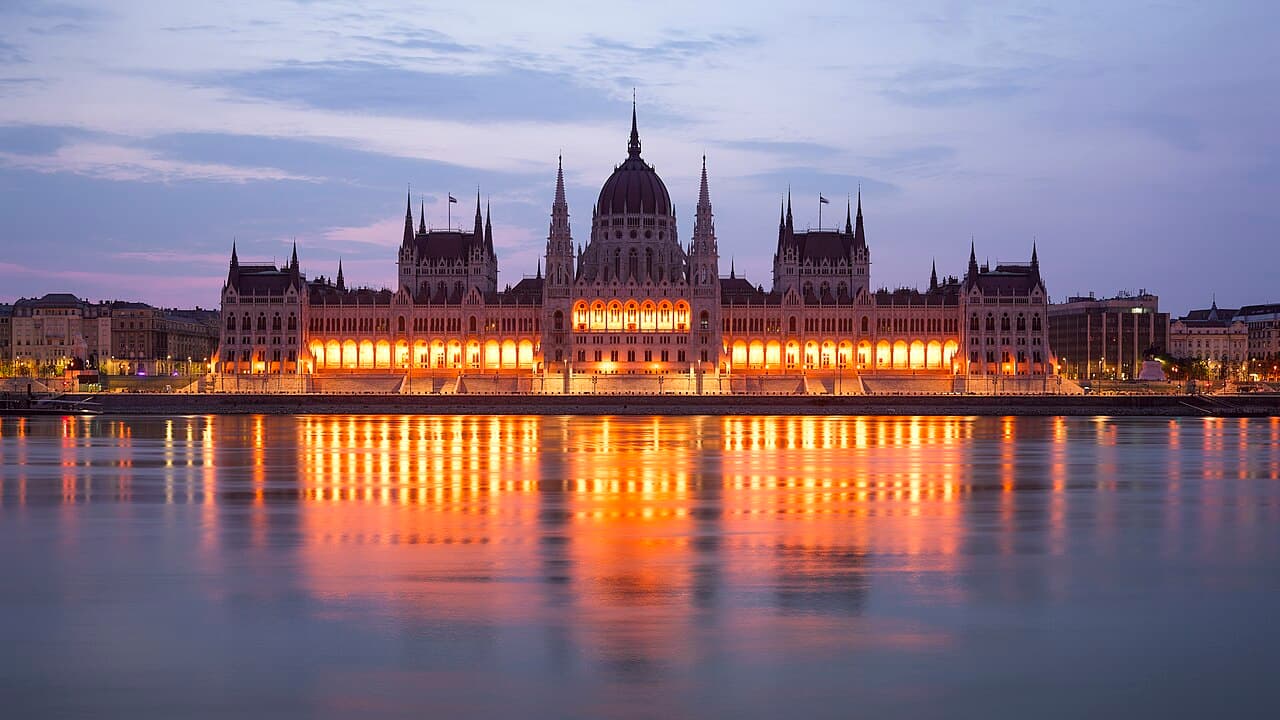
HungaryPhoto: Godot13 / Wikimedia Commons (CC BY-SA 4.0)

Hungary

Country · HU · HUF · Europe/Budapest

This information may change. Always check the official source.Last verified: August 2026 by

Standard Schengen rules, no stamps since April 2026. The thing to plan around is that Hungary borders Serbia and Ukraine, and those crossings are external Schengen borders with long queues.

  • 90 days in any rolling 180, counted across the whole Schengen area, with no routine checks arriving from Austria, Slovakia, Slovenia or Croatia.
  • The borders with Serbia and Ukraine are external Schengen borders. In summer the Röszke crossing from Serbia can take hours, and the bus waits for the slowest passenger.
  • No stamps since 10 April 2026 - face and fingerprints are recorded at the external border instead, so keep your own note of entry and exit dates.
  • ETIAS is not running. The Q4 2026 target was withdrawn in July 2026, and any site selling you one today is a scam.
  • Hungarian law expects you to be able to identify yourself and police do ask. A phone photo covers casual checks; carry the real passport near a border.
More details

The Schengen basics

  • 90 days in any rolling 180 days, counted across the whole Schengen area rather than Hungary alone.
  • Hungary has been in Schengen since 2007 and there are no routine checks arriving from Austria, Slovakia, Slovenia or Croatia.
  • The borders with Serbia and Ukraine are external Schengen borders. Full checks, and in summer the Röszke crossing from Serbia can take hours.
  • Coming in from Serbia by bus or train, budget serious time. Everyone is processed and the bus waits for the slowest passenger.

No stamps since April 2026

  • The Entry/Exit System has been fully operational since 10 April 2026.
  • Your face and fingerprints are recorded at the external border instead of a stamp. Children under 12 give no fingerprints.
  • The first registration adds a few minutes, which is another reason the Serbian crossing is slow this year.
  • Keep your own record of entry and exit dates. Nothing goes in your passport now.

ETIAS is not running

  • The official EU site says ETIAS is not in operation and no applications are being collected.
  • The Q4 2026 target was withdrawn in July 2026.
  • It will cost EUR 20 when it eventually starts, for visa-free visitors aged 18 to 70.
  • Any site selling you one today is a scam.

Where your nationality lands

Visa and entry in Hungary
You holdWhat you need
Germany, France, Italy, Spain, Netherlands, PolandNothing. Free movement, no day limit
USA, Canada, Australia, UK, Japan, South Korea, Malaysia, Singapore, TaiwanNo visa. 90 days in any 180
China, India, Russia, Saudi Arabia, CambodiaSchengen visa in advance
  • The Schengen visa fee rose to EUR 90 on 11 June 2026.
  • Russian applicants inside Russia now get single-entry visas as a rule, following the Commission's decision of 7 November 2025.
  • Travel medical insurance of at least EUR 30,000 is a visa condition.
  • Passport valid 3 months beyond departure and issued within the last 10 years.

Carrying ID

  • Hungarian law expects you to be able to identify yourself. Police can and do ask.
  • A photocopy or a phone photo is usually accepted for casual checks, but carry the real passport if you are near a border.
  • Your accommodation registers you and will take your passport at check-in. That is normal and required.
Sources (4)

Hungary applies the EU's lower 40-cigarette limit at its land borders with Serbia and Ukraine.

  • Between EU countries there is no duty-free limit. Goods bought tax-paid in another member state travel with you; customs may only ask what a very large quantity is for, against indicative figures of 800 cigarettes and 10 litres of spirits.
  • The tobacco allowance is the lower one for land and sea arrivals: 40 cigarettes rather than 200. The rest of the allowance is the EU standard - 1 litre of spirits over 22 % (or 2 litres of fortified or sparkling wine), 4 litres of still wine and 16 litres of beer.
  • Other goods are capped by value - EUR 430 arriving by air or sea, EUR 300 by land - and the allowance cannot be pooled between travellers for a single item.
More details
  • Between EU countries there is no duty-free limit. Goods bought tax-paid in another member state travel with you; customs may only ask what a very large quantity is for, against indicative figures of 800 cigarettes and 10 litres of spirits.
  • The tobacco allowance is the lower one for land and sea arrivals: 40 cigarettes rather than 200. The rest of the allowance is the EU standard - 1 litre of spirits over 22 % (or 2 litres of fortified or sparkling wine), 4 litres of still wine and 16 litres of beer.
  • Other goods are capped by value - EUR 430 arriving by air or sea, EUR 300 by land - and the allowance cannot be pooled between travellers for a single item.
  • Cash of EUR 10,000 or more must be declared, counting notes, coins, cheques and prepaid cards together. The money is seized for not declaring it, not for carrying it.
  • The Serbian and Ukrainian crossings are external EU borders and both are searched thoroughly for tobacco.
Sources (1)

The European card covers state care, and Hungarian private clinics and dentists are good and cheap enough that people fly in for them.

  • EU, EEA and Swiss visitors bring an EHIC, UK visitors a GHIC, for medically necessary state treatment on the same terms as an insured Hungarian.
  • Private clinics in Budapest are modern, English-speaking and fast, at roughly HUF 20,000 to HUF 35,000 for a GP consultation - and the EHIC does not apply there.
  • Dentistry is a Hungarian export. People fly to Budapest specifically for it, at a third of western European prices.
  • The GellĂ©rt Baths are closed for renovation until 2028. If your guidebook says GellĂ©rt, change the plan - SzĂ©chenyi, Rudas and LukĂĄcs are open.
  • Do not stay in the hottest pool more than 20 minutes, and avoid the hot pools if you are pregnant, have heart problems or have been drinking. People do faint in them.
More details

Cover

  • EU, EEA and Swiss visitors: bring the EHIC. UK visitors use the GHIC. Both give medically necessary state treatment on the same terms as an insured Hungarian.
  • A small co-payment applies to some services, as it does for locals.
  • Everyone else needs travel insurance.
  • State hospitals are underfunded but competent. Emergency care is reliable.

Private care is cheap and good

  • Private clinics in Budapest are modern, English-speaking and fast. A GP consultation is roughly HUF 20,000 to HUF 35,000.
  • Dentistry is a Hungarian export. People fly to Budapest specifically for it, and quality at the established clinics is high at a third of western European prices.
  • If you go private, the EHIC does not apply. You pay and claim from your insurer.

Pharmacies

  • "GyĂłgyszertĂĄr" or "Patika", with a green cross.
  • Every district has a 24 hour duty pharmacy, listed on the door of the closed ones.
  • Pharmacists often speak English in Budapest, less so in small towns.
  • Bring your own regular medication with the prescription.

The baths

  • Budapest's thermal baths are a genuine health tradition, not just a tourist attraction, and doctors prescribe courses at them.
  • The GellĂ©rt Baths are closed for renovation until 2028. If your guidebook or your plan says GellĂ©rt, change it.
  • SzĂ©chenyi, Rudas and LukĂĄcs are open and cover everything from the huge outdoor pools to the Ottoman-era ones.
  • Shower before entering, and a swimming cap is required in the lap pools. Caps are sold or hired on site.
  • Avoid the hot pools if you are pregnant, have heart problems, or have been drinking. People do faint in the 40 °C pools.
  • Do not stay in the hottest pool more than 20 minutes and drink water between rounds.

Everyday

  • Tap water is safe throughout the country and Budapest's is good.
  • Summer heat on the Great Plain regularly passes 35 °C.
  • Ticks carry encephalitis in Hungarian forests. Check yourself after walking in woodland.
  • No vaccinations are required to enter.
Sources (2)

Budapest

Long-term averages for Budapest: the mean daily high, the mean overnight low and the mean monthly rainfall across 30 years of ERA5 reanalysis data (1995–2024).

DayNight
-551525°C0100mmJanFebMarAprMayJunJulAugSepOctNovDecJanuary: Day 3 °C, Night -3 °C, Rain 39 mm. February: Day 6 °C, Night -2 °C, Rain 38 mm. March: Day 11 °C, Night 1 °C, Rain 41 mm. April: Day 17 °C, Night 6 °C, Rain 48 mm. May: Day 21 °C, Night 11 °C, Rain 72 mm. June: Day 25 °C, Night 15 °C, Rain 72 mm. July: Day 27 °C, Night 17 °C, Rain 72 mm. August: Day 27 °C, Night 17 °C, Rain 61 mm. September: Day 22 °C, Night 13 °C, Rain 63 mm. October: Day 16 °C, Night 8 °C, Rain 48 mm. November: Day 9 °C, Night 3 °C, Rain 53 mm. December: Day 4 °C, Night -2 °C, Rain 47 mm
Show the monthly table
Budapest
MonthDay (°C)Night (°C)Rain (mm)
January3-339
February6-238
March11141
April17648
May211172
June251572
July271772
August271761
September221363
October16848
November9353
December4-247

Siofok

Long-term averages for Siofok: the mean daily high, the mean overnight low and the mean monthly rainfall across 30 years of ERA5 reanalysis data (1995–2024).

DayNight
-551525°C0100mmJanFebMarAprMayJunJulAugSepOctNovDecJanuary: Day 3 °C, Night -2 °C, Rain 42 mm. February: Day 6 °C, Night -1 °C, Rain 40 mm. March: Day 11 °C, Night 2 °C, Rain 42 mm. April: Day 17 °C, Night 7 °C, Rain 44 mm. May: Day 21 °C, Night 12 °C, Rain 70 mm. June: Day 25 °C, Night 16 °C, Rain 69 mm. July: Day 27 °C, Night 18 °C, Rain 67 mm. August: Day 27 °C, Night 18 °C, Rain 59 mm. September: Day 21 °C, Night 13 °C, Rain 70 mm. October: Day 16 °C, Night 9 °C, Rain 50 mm. November: Day 10 °C, Night 4 °C, Rain 55 mm. December: Day 4 °C, Night -1 °C, Rain 53 mm
Show the monthly table
Siofok
MonthDay (°C)Night (°C)Rain (mm)
January3-242
February6-140
March11242
April17744
May211270
June251669
July271867
August271859
September211370
October16950
November10455
December4-153

Eger

Long-term averages for Eger: the mean daily high, the mean overnight low and the mean monthly rainfall across 30 years of ERA5 reanalysis data (1995–2024).

DayNight
-551525°C0100mmJanFebMarAprMayJunJulAugSepOctNovDecJanuary: Day 2 °C, Night -4 °C, Rain 36 mm. February: Day 5 °C, Night -2 °C, Rain 38 mm. March: Day 10 °C, Night 1 °C, Rain 40 mm. April: Day 16 °C, Night 6 °C, Rain 55 mm. May: Day 21 °C, Night 11 °C, Rain 78 mm. June: Day 25 °C, Night 15 °C, Rain 87 mm. July: Day 27 °C, Night 17 °C, Rain 91 mm. August: Day 26 °C, Night 17 °C, Rain 69 mm. September: Day 21 °C, Night 12 °C, Rain 64 mm. October: Day 15 °C, Night 7 °C, Rain 50 mm. November: Day 9 °C, Night 3 °C, Rain 51 mm. December: Day 3 °C, Night -2 °C, Rain 43 mm
Show the monthly table
Eger
MonthDay (°C)Night (°C)Rain (mm)
January2-436
February5-238
March10140
April16655
May211178
June251587
July271791
August261769
September211264
October15750
November9351
December3-243
Sources (1)

Short-term rentals were banned outright in Budapest District VI on 1 January 2026, which removed about 2,700 listings. Check which district your apartment is in before you book.

  • Short-term rentals were banned outright in Budapest District VI on 1 January 2026, removing about 2,700 listings. Only hotels and guesthouses may operate there now.
  • District VI is central - AndrĂĄssy Ășt, the Opera, the edge of the party district - so this is exactly where visitors used to book. Check the district before you book an apartment.
  • A listing still showing there is a hotel, mislabelled, or illegal, and an illegal one can be shut down while you are in it. Other central districts are debating the same ban.
  • Budapest charges a tourist tax of 4 percent of the net room price per night, usually collected at the property and often not in the online price.
  • Do not book the middle of District VII on a weekend if you want to sleep - it is the party district and it is loud until very late. Buda is quieter and 15 minutes away by tram.
More details

District VI no longer allows short-term rentals

This is new and it is absolute.

  • From 1 January 2026, short-term rental in private and other non-hotel accommodation is prohibited in TerĂ©zvĂĄros, Budapest's District VI.
  • It was decided by a binding local referendum and the ban was upheld by the KĂșria, Hungary's supreme court.
  • About 2,700 listings disappeared, and the district began inspections in the first week of January.
  • Only hotels, guesthouses and community accommodation may operate there now.
  • District VI is central, taking in AndrĂĄssy Ășt, the Opera and the edge of the party district, so this is exactly where visitors used to book.
  • Check the district before you book an apartment. A listing still showing there is either a hotel, mislabelled, or operating illegally, and an illegal one can be shut while you are in it.
  • Other central districts are debating the same thing, so check again close to your trip.

The tourist tax

  • Budapest charges 4 percent of the net room price per night, excluding VAT.
  • Under-18s are exempt.
  • It is usually collected at the property and is often not in the online price.
  • Outside Budapest, towns charge a flat nightly amount, typically HUF 300 to HUF 700 a person.

Registration

  • Your host must register you. They will take your passport at check-in and enter your details in the national system.
  • This applies to apartments as well as hotels. A host who does not ask is not registering you.

Practical notes

  • Districts V, VI and VII are the centre. District VII is the Jewish Quarter and the party district, which is lively and noisy until very late.
  • If you want to sleep, do not book the middle of District VII on a weekend.
  • Buda, across the river, is quieter and greener and still 15 minutes from everything by tram.
  • Book well ahead for the August formula one weekend and the New Year, when prices double.
  • Many older buildings have no lift and the "first floor" is up two flights. Ask if you have heavy bags.
Sources (2)

Cheap and fast, but registration is strict and getting a prepaid SIM on a foreign passport has become fiddly enough that an eSIM is often the easier route.

  • Yettel, Telekom and One are the three operators - One was Vodafone Hungary until it was rebranded. Telekom has the strongest network in eastern and southern Hungary.
  • A tourist prepaid package runs roughly HUF 4,000 to HUF 9,000 for 30 days with generous data, including an EU roaming allowance.
  • Registration against a photo ID is mandatory and must be done in person. Foreign passports cannot be verified through the online portals Hungarians use.
  • Some smaller shops simply refuse to deal with a foreign document. Go to a flagship operator store in Budapest and it is straightforward.
  • That friction is why an eSIM is often easier - all three networks support it, as does Saily, and a travel eSIM skips the shop entirely.
More details

The networks

  • Yettel, Telekom and One are the three operators. One was Vodafone Hungary until it was rebranded.
  • Telekom has the strongest network in eastern and southern Hungary. In Budapest all three are fine.
  • A tourist prepaid package runs roughly HUF 4,000 to HUF 9,000 for 30 days with generous data, and includes an EU roaming allowance.

Registration is mandatory and awkward

  • Hungarian law requires every prepaid SIM to be registered against a photo ID.
  • You must do it in person at a shop. Foreign passports cannot be verified through the online portals, so the self-service route that Hungarians use is not open to you.
  • Some smaller shops will not do it at all rather than deal with a foreign document. Go to a flagship operator store in Budapest and it is straightforward.
  • This friction is why an eSIM is often simply easier. All three networks support eSIM, as does Saily, and a travel eSIM skips the shop entirely.

Coverage

  • 4G everywhere, 5G in Budapest and the larger cities.
  • The Budapest metro has coverage on all four lines.
  • Rural Hungary is well covered, and the Great Plain and Balaton are no trouble.
  • Free wifi is widespread in cafes, on many buses and trains, and across central Budapest.
Sources (2)

Hungarian sockets are Type Schuko at 230 V, the same as Austria and Germany.

  • A Europlug fits every socket in the country.
  • British, American and Australian plugs need an adapter.
  • 230 V, so only American 120 V-only appliances need a converter.
  • Older Budapest apartment buildings frequently have unearthed sockets of the same shape, which take the same plugs and connect no earth.
  • The whole region matches. Austria, Slovakia, Slovenia, Croatia, Serbia and Romania all use the same Schuko socket, so nothing changes at a Hungarian border.
More details

Sockets in Hungary are Type and at 230 V, 50 Hz - the round Schuko outlet used across central Europe.

  • A Europlug fits every socket in the country.
  • British, American and Australian plugs need an adapter.
  • 230 V, so only American 120 V-only appliances need a converter.
  • Older Budapest apartment buildings frequently have unearthed sockets of the same shape, which take the same plugs and connect no earth.
  • The whole region matches. Austria, Slovakia, Slovenia, Croatia, Serbia and Romania all use the same Schuko socket, so nothing changes at a Hungarian border.
  • The earth is a pair of clips on the rim, so a two-pin travel adapter leaves an appliance unearthed even when it fits snugly.
Sources (1)

A language related to nothing you know, a strong cafe and bath culture, and a restaurant bill that often has the tip already on it.

  • Hungarian is unrelated to the languages around it - not Slavic, not Germanic - and you will not guess a single word. Surnames come first here.
  • Check the bill for szervizdĂ­j before tipping, because most Budapest restaurants have already added 10 to 15 percent.
  • Lunch is the main meal and the daily menu is very cheap, often HUF 2,500 for two or three courses. "Not spicy" still means paprika.
  • PĂĄlinka is fruit brandy at 40 to 50 percent and is offered as hospitality, not as a shot to be raced.
  • Plugs are type and at 230 V, and 20 August, Saint Stephen's Day, brings fireworks over the Danube and a closed city.
More details

Language

  • Hungarian is unrelated to the languages around it. It is not Slavic and not Germanic, and you will not guess a single word.
  • "Szia" (see-ya) for hello and goodbye informally, "jĂł napot" formally, "köszönöm" for thank you.
  • English is widely spoken in Budapest and by younger people. Much less so in villages, where German is often the second language.
  • Surnames come first in Hungarian. BartĂłk BĂ©la, not BĂ©la BartĂłk.

Eating and drinking

  • Check the bill for szervizdĂ­j before tipping. Most Budapest restaurants add 10 to 15 percent already.
  • Lunch is the main meal and the daily menu (napi menĂŒ) is very cheap, often HUF 2,500 for two or three courses.
  • Portions are large and paprika is in everything. "Not spicy" still means paprika.
  • PĂĄlinka is fruit brandy at 40 to 50 percent and is offered as hospitality. It is not a shot to be raced.
  • Do not clink beer glasses. The custom traces to 1849 and, while few under 40 care, older Hungarians still notice.
  • Ruin bars are in District VII, built into derelict courtyards. Szimpla Kert is the original and still worth it.

The baths

  • Bring or hire a towel, flip flops and a swimming cap if you plan to use the lap pool.
  • Lockers and cabins are separate ticket options. A cabin costs a little more and is worth it.
  • SzĂ©chenyi is the huge yellow one in the City Park, open all year, and the outdoor pools in the snow are the classic image.
  • Rudas has an Ottoman octagonal pool and a rooftop tub, with some single-sex days. Check before you go.
  • Wednesdays and early mornings are far quieter than weekend afternoons.

Practicalities

  • Plugs are type and , 230 V.
  • Shops open roughly 09:00 to 18:00 on weekdays, shorter on Saturdays. Sunday trading is allowed but many small shops close.
  • Public holidays: 1 January, 15 March, Easter Monday, 1 May, Whit Monday, 20 August, 23 October, 1 November, 25 and 26 December. 20 August, Saint Stephen's Day, brings fireworks over the Danube and a closed city.
  • Smoking is banned indoors in bars and restaurants and at covered public transport stops.
  • Tap water is safe, and asking for it in a restaurant is normal, though a bottle may be brought if you are not clear.
  • Public toilets charge HUF 200 to HUF 400.
  • The Danube separates hilly Buda from flat Pest. Almost everything a visitor wants is in Pest, except the castle and the views, which are in Buda.
Sources (2)

Forints, not euros, and Budapest is full of exchange booths and Euronet machines designed to take a chunk of your money on the way in.

  • Hungary uses the forint and has no target date for adopting the euro. Prices look alarming until you divide - a 6,000 forint dinner is about EUR 16.
  • Avoid the exchange booths around VĂĄci utca, where headline rates hide enormous spreads and the commission appears at the counter. Changing money on the street is illegal and always a swindle.
  • Use a bank ATM - OTP, K&H, Erste or Raiffeisen - and avoid Euronet machines, which default to large withdrawals and push a bad conversion.
  • Most Budapest restaurants add a service charge of 10 to 15 percent automatically. Check the bill before tipping, or you will have tipped 25 to 30 percent.
  • Some places accept euros at a punishing rate and give change in forints. Pay in forints, and always decline conversion into your home currency.
More details

The forint

  • Hungary uses the forint (HUF) and has no target date for adopting the euro.
  • As a rough anchor in late August 2026, EUR 1 is around 360 forints and USD 1 around 310. The forint moves; check the National Bank rate before you change anything rather than trusting a figure in any guide, this one included.
  • Notes run from 500 to 20,000 forints. A 20,000 note is hard to break in a small shop.
  • Prices look alarming until you divide. A 6,000 forint dinner is about EUR 16.

Where not to change money

  • Avoid the exchange booths around VĂĄci utca and the tourist streets. Headline rates hide enormous spreads, and the commission appears at the counter.
  • Never change money with someone on the street. It is illegal in Hungary and it is always a swindle, usually with worthless notes from another country.
  • Avoid Euronet ATMs. They are everywhere in the tourist districts, default to large withdrawals and push a bad conversion at you.
  • Use a bank ATM: OTP, K&H, Erste or Raiffeisen.
  • Always decline conversion into your home currency. Choose forints and let your own bank convert.
  • If you must use a booth, Correct Change and the ones away from the centre are far better than anything on a main tourist street. Check the buy and sell rates on the board before you hand anything over.

Cards

  • Cards work almost everywhere, including markets and taxis, and contactless is standard.
  • Some places accept euros at a punishing rate and give change in forints. Pay in forints.
  • Carry a little cash for market stalls, small bakeries and public toilets.

Tipping, and the double-tip trap

  • Most Budapest restaurants add a service charge (szervizdĂ­j) of 10 to 15 percent automatically.
  • Check the bill before you tip. If szervizdĂ­j is on it, you are done, and adding another 15 percent means you have tipped 25 to 30 percent.
  • If there is no service charge, 10 to 15 percent is normal.
  • Say the total including the tip when you pay by card. Leaving cash on the table is less usual than telling the waiter the figure.
  • Taxis: round up. Thermal bath attendants: a few hundred forints.

What things cost

  • Coffee: HUF 800 to HUF 1,500.
  • A half litre of beer: HUF 1,200 to HUF 2,500, higher in the ruin bars.
  • A main course in an ordinary restaurant: HUF 3,500 to HUF 7,000.
  • A thermal bath day ticket: HUF 9,000 to HUF 13,000 at SzĂ©chenyi, depending on day and locker type.
Sources (2)

Everyday prices

Typical prices in Hungarian forint (HUF), averaged across the country by Numbeo and read on 12 August 2026. Tick Convert prices above the table to see every amount in your own currency.

Everyday prices
ItemTypical price
Inexpensive restaurant meal4,000 HUF
Dinner for two, mid-range, three courses18,000 HUF
Cappuccino847 HUF
Local draught beer, 0.5 l895 HUF
Bottled water, 0.33 l438 HUF
Public transport, one-way ticket450 HUF
Taxi, starting fare1,100 HUF
Petrol, 1 litre598 HUF
Cigarettes, pack of 20 (Marlboro)2,500 HUF
Average net monthly salary432,000 HUF

These are country-wide averages, not a price list: tourist districts, airports and islands sit well above them, and small towns below. The salary line is there for proportion - it is what people living here actually earn.

Sources (1)

Airport guides for Hungary2

One page per airport: the routes into town, what they cost and the trap particular to that arrival.

See all 2 airports

The 100E express bus costs HUF 2,500 on its own airport ticket, or HUF 1,000 as a supplement if you already hold a Budapest pass. The taxi meter changed on 1 August 2026.

  • The 100E airport bus needs its own HUF 2,500 ticket. Ordinary Budapest tickets and travelcards are not valid on it, which catches everyone.
  • The cheap way is bus 200E plus metro M3 for one ordinary ticket at HUF 500 - allow about an hour and expect stairs with luggage.
  • The taxi tariff changed on 1 August 2026: HUF 1,300 to start, HUF 520 per kilometre, plus an HUF 800 airport pickup surcharge, working out around HUF 8,000 to HUF 10,000 into town.
  • All legal Budapest taxis are yellow with a fixed tariff. There is no such thing as a cheaper unmarked one - use the rank, not someone who approaches you.
  • Never accept a fixed price quoted in euros by a stranger in arrivals. That is the classic airport rip-off here.
More details
The 100E Airport Express
  • HUF 2,500 for a dedicated airport shuttle ticket. This is the one fare that catches everyone.
  • Ordinary Budapest tickets and travelcards are not valid on the 100E on their own. But if you already hold a valid Budapest pass, BKK sells a supplementary airport ticket at HUF 1,000 rather than the full 2,500 - so a 24-hour card gets you on for a thousand forints, not nothing and not the full fare.
  • It runs from the airport to DeĂĄk Ferenc tĂ©r via KĂĄlvin tĂ©r, about 40 minutes, and DeĂĄk is the interchange for all three of the old metro lines.
  • Buy from the machine at the stop or in the BudapestGO app before boarding.
The cheap way
  • Bus 200E plus metro M3 costs one ordinary ticket, HUF 500.
  • The 200E runs to KƑbĂĄnya-Kispest, where you change to the M3 metro into the centre.
  • Allow about an hour and expect stairs with luggage.
  • A single ticket covers both legs only if you buy the right one. Simplest is a 24 hour travelcard at HUF 2,750, which then covers your whole first day as well.
Taxis
  • The tariff changed on 1 August 2026. It is now HUF 1,300 to start, HUF 520 per kilometre and HUF 130 per minute of waiting, plus an HUF 800 airport pickup surcharge.
  • A ride to the centre works out around HUF 8,000 to HUF 10,000.
  • All legal Budapest taxis are yellow with a fixed tariff. There is no such thing as a cheaper unmarked one.
  • FƑtaxi holds the airport concession and its cars queue at the Terminal 2 rank. Use the rank, not someone who approaches you.
  • Bolt operates in Budapest and is usually a little cheaper than the rank.
  • Never accept a fixed price quoted in euros by a stranger in arrivals. That is the classic airport rip-off here.
Other arrival points
  • Debrecen airport is small; a bus and taxis serve it.
  • Vienna airport is a common way into western Hungary, with direct buses to GyƑr and Budapest in about 3 hours.
  • International trains arrive at Keleti and Nyugati. Both are on the metro and both attract taxi touts, so use the app or the marked rank.
Sources (4)

Budapest transport is cheap, dense and excellent. Buy in the app, and validate paper tickets before you move or the inspector at the escalator will find you.

  • A single is HUF 500, or HUF 700 bought on the spot, and a 24 hour travelcard is HUF 2,750 - which pays for itself in six rides and removes the validation problem.
  • A paper ticket must be punched in the orange or red box before you travel. An unvalidated ticket is treated as no ticket, and inspectors work the metro escalators in numbers.
  • App tickets and travelcards need no validating, which is the main reason to use them. BudapestGO charges the same prices as the machines.
  • Trams 4 and 6 run all night around the Grand Boulevard and are the backbone of the city; M1 under AndrĂĄssy Ășt is the oldest underground line on the continent.
  • Driving needs a motorway e-vignette, checked by camera with no grace period, and Hungary's drink-drive limit is zero with no allowance whatsoever.
More details

Budapest fares

Getting around and apps in Hungary
TicketPrice
SingleHUF 500
Single bought on the spotHUF 700
Block of 10HUF 4,500
24 hour travelcardHUF 2,750
72 hour travelcardHUF 5,750
Monthly passHUF 8,950
  • The 24 hour travelcard pays for itself in six rides and removes the whole validation problem.
  • The 100E airport bus is excluded from all of these. It needs its own HUF 2,500 ticket.
  • BudapestGO is the official app and charges the same prices as the machines.

Validate, or pay

  • A paper single ticket must be punched in the orange or red box at the metro entrance or on board a tram or bus, before you travel.
  • An unvalidated ticket is treated as no ticket. The penalty is several times the fare and inspectors work the metro escalators in numbers.
  • App tickets and travelcards do not need validating, which is the main reason to use them.
  • Inspectors wear armbands and are often at the bottom of the escalator. They ask everyone.

The network

  • Four metro lines. M1, the little yellow one under AndrĂĄssy Ășt, opened in 1896 and is the oldest underground line on the European continent.
  • Trams 4 and 6 run all night around the Grand Boulevard and are the backbone of the city.
  • Night buses cover the city from midnight to dawn.
  • The suburban HÉV trains reach Szentendre and the outskirts, and need a supplement beyond the city boundary.

Between cities

  • MÁV runs the trains and the network radiates from Budapest. Budapest to Lake Balaton takes 2 to 3 hours, Budapest to Debrecen about 2.5.
  • Trains are cheap and mostly reliable, though the rolling stock is a lottery.
  • Buses (VolĂĄnbusz) reach everywhere the trains do not.
  • FlixBus covers the international routes to Vienna, Bratislava, Prague and Belgrade.
  • 12Go sells Hungarian trains and buses in the same place as the rest of a central European route.

Driving

  • A motorway e-vignette is compulsory, bought online or at petrol stations, and it is checked by camera. A 10 day national one costs around HUF 6,400.
  • Buy it before you join the motorway. There is no grace period and the fine arrives by post.
  • Zero tolerance for alcohol. Hungary's drink drive limit is 0.0, with no allowance whatsoever.
  • Headlights on at all times outside built-up areas.
Sources (3)

Hungary's e-matrica comes in national and county versions, and buying the cheap county one by mistake is the classic tourist fine.

  • The county vignette is a trap for a cross-country drive. It is cheap because it covers one county only; a Budapest-to-Lake-Balaton-to-Debrecen trip needs either several of them or the national one.
  • Nothing goes on the windscreen - the e-matrica is registered to the plate and checked by camera.
  • The alcohol limit is zero. Hungary means it: even a trace reading is an offence.
  • Dipped headlights are compulsory outside built-up areas day and night.
  • Motorway speed is 130 km/h and the M1, M3 and M7 are heavily camera-enforced.
More details

An electronic vignette sold nationally or by county, and zero tolerance for alcohol.

  • The county vignette is a trap for a cross-country drive. It is cheap because it covers one county only; a Budapest-to-Lake-Balaton-to-Debrecen trip needs either several of them or the national one.
  • Nothing goes on the windscreen - the e-matrica is registered to the plate and checked by camera.
  • The alcohol limit is zero. Hungary means it: even a trace reading is an offence.
  • Dipped headlights are compulsory outside built-up areas day and night.
  • Motorway speed is 130 km/h and the M1, M3 and M7 are heavily camera-enforced.
Sources (1)

Hungary is a safe country with one industrial-scale exception: bars that lure tourists in and present a bill for hundreds of euros with men on the door to make sure it gets paid.

  • The bar scam is the one thing to know about Budapest. A friendly stranger near VĂĄci utca or in the Jewish Quarter suggests a bar they like, drinks arrive without prices, and the bill is enormous.
  • One documented case charged a visitor around EUR 630 for a single beer, with men on the door making payment feel non-optional and people walked to an ATM.
  • The rule that defeats it entirely: never go to a bar chosen by someone who approached you. Pick your own place from your own map.
  • If it happens, demand an itemised written receipt and call the tourist police from inside the venue. Pay by card, not cash - a card charge can be disputed.
  • Ruin bars themselves are legitimate and fun. Szimpla Kert and the well-known ones are not scams; the trap is the unnamed place someone walks you to.
More details

The bar scam

This is the one thing to know about Budapest, and it is still running in 2026.

  • How it works: a friendly stranger starts a conversation near VĂĄci utca or in the Jewish Quarter, often a woman alone or a pair, and suggests a bar they like.
  • Inside, drinks arrive without prices. The menu appears late or never.
  • The bill is enormous. One documented case charged a visitor HUF 250,000, around EUR 630, for a single beer.
  • Men on the door make paying feel non-optional, and people have been walked to an ATM.
  • The rule that defeats it entirely: never go to a bar chosen by someone who approached you. Pick your own place, from your own map.
  • Ask for the price list before you order anywhere you do not know. Venues are required to display prices.
  • If it happens: stay calm, demand an itemised written receipt, and call the tourist police on +36 1 438 8080 from inside the venue. Pay by card if you must, since a card payment can be disputed and cash cannot.

Taxis

  • All legal taxis are yellow with the tariff printed on the door.
  • Never take a taxi that approaches you at the airport, at Keleti station or outside a club.
  • Use Bolt or FƑtaxi's own app, or a marked rank.
  • The meter starts at HUF 1,300 with HUF 520 a kilometre since 1 August 2026. Anything wildly above that is a scam.

Pickpockets

  • Trams 4 and 6, the metro, Keleti station and the Christmas markets are the working spots.
  • Standard technique is a crowd surge at the doors.
  • Front pockets, zipped bag in front. That is the whole defence.

Otherwise

  • Violent crime against visitors is rare and Budapest is comfortable to walk at night.
  • Ruin bars are legitimate and fun. Szimpla Kert and the well-known ones are not scams; the trap is the unnamed place someone walks you to.
  • Drink spiking happens, as in any nightlife city. Watch your glass.
  • Demonstrations occur in central Budapest and are usually peaceful. Walk away from them anyway.
  • Cash machines inside bank branches are safer than street ones late at night.
Sources (2)

112 covers everything. Save the tourist police number too, because the most likely emergency here is an outrageous bar bill with someone standing in the doorway.

  • 112 works from any phone, with or without a SIM, and reaches an English-speaking operator. Police are 107, ambulance 104, fire 105.
  • Save the Budapest tourist police number before you go out. It exists precisely because of the bar scam.
  • If a bar hands you an absurd bill, stay calm - the people in the doorway are part of the business - and ask for the itemised printed receipt they are legally required to give.
  • Call the tourist police from inside the venue. That alone ends many of these, and paying by card leaves you something to dispute.
  • Theft means a police station and the written report, which insurers require. Hungary's drink-drive limit is zero, which matters in any accident investigation.
More details

The numbers

Emergency information in Hungary
NumberService
112European emergency number, all services
107Police
104Ambulance
105Fire brigade
+36 1 438 8080Tourist police, Budapest
188Roadside assistance
  • 112 works from any phone, with or without a SIM, and reaches an English-speaking operator.
  • The tourist police number is worth saving before you go out. It exists precisely because of the bar scam.

If a bar hands you an absurd bill

  • Stay calm and do not get into a fight. The people in the doorway are part of the business.
  • Ask for an itemised, printed receipt. They are legally required to give one.
  • Call the tourist police from inside the venue. That alone ends many of these.
  • Pay by card, not cash, if you have to pay. A card charge can be disputed with your bank; cash is gone.
  • Report it afterwards anyway, with the receipt, so the venue can be acted on.

Other things going wrong

  • Theft: report at a police station and get the written report. Insurers require it.
  • Lost passport: your embassy is in Budapest, and most countries have one.
  • Card lost or stolen: freeze it in your banking app first, then call your bank.
  • Road accident: call 112. Hungary's drink drive limit is zero, and this matters for any accident investigation.
  • Medical emergency: 112 or 104. State emergency care will treat you regardless of cover.
Sources (3)