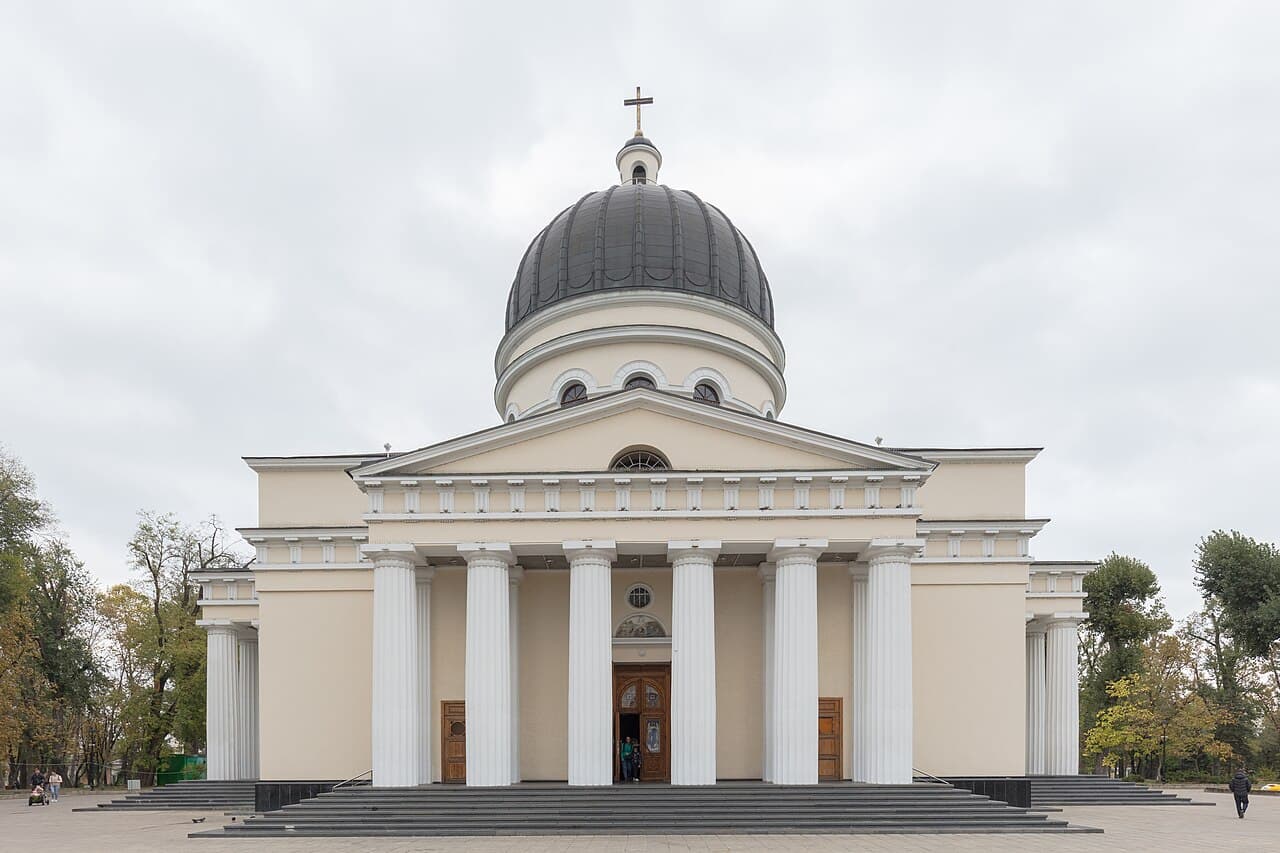
MoldovaPhoto: Diego Delso / Wikimedia Commons (CC BY-SA 4.0)

Moldova

Country · MD · MDL · Europe/Chisinau

This information may change. Always check the official source.Last verified: August 2026 by

Ninety days on Moldova's own clock - and Transnistria, which issues its own entry slip and is not somewhere your embassy can easily reach you.

  • Moldova is outside the Schengen area and outside the EU. Its 90 days in 180 are counted separately.
  • Days spent here do not consume your Schengen allowance - which makes the region genuinely useful if you are close to your 90-day Schengen limit and want to stay in Europe.
  • Transnistria is a breakaway region along the Ukrainian border, outside Moldovan government control and recognised by no UN member state.
  • Entering it is not crossing an international border, but you will be stopped and issued a paper entry slip by its own authorities.
  • Most Western passports get 90 days in 180, on Moldova's own clock.
More details

The allowance is not your Schengen one

  • Moldova is outside the Schengen area and outside the EU. Its 90 days in 180 are counted separately.
  • Days spent here do not consume your Schengen allowance - which makes the region genuinely useful if you are close to your 90-day Schengen limit and want to stay in Europe.
  • Your passport is stamped on entry and exit. This country is outside EES, so the stamps are the record and you should keep the passport pages readable.
  • Crossing back into the EU re-enters Schengen and is an external border: expect the EES biometric check, and a longer queue than the drive suggests.

Transnistria

  • Transnistria is a breakaway region along the Ukrainian border, outside Moldovan government control and recognised by no UN member state.
  • Entering it is not crossing an international border, but you will be stopped and issued a paper entry slip by its own authorities.
  • Keep the slip. Losing it causes trouble on the way out.
  • Consular assistance there is severely limited. Your embassy has very little reach.
  • Most travel insurance excludes it. Check your policy before going rather than after.
  • Check current advice before travelling there at all, given the region's position next to Ukraine.

Practicalities

  • Most Western passports get 90 days in 180, on Moldova's own clock.
  • Your passport is stamped; Moldova is outside EES.
  • Entering from Romania is leaving Schengen - Romania joined in 2025 - so expect an EES check on the way back.
Sources (3)

Moldova's real customs frontier is the internal one: Transnistria runs its own controls and its own paperwork.

  • Transnistria is a separate control zone. Crossing at Bender or Dubasari means an unrecognised checkpoint that issues its own registration slip; keep it, because it is asked for on the way out.
  • Cash above the declarable threshold must be reported at the Moldovan border, and taking undeclared money out is the offence that gets noticed.
  • The Romanian and Ukrainian borders are the international ones. Romania is an EU external border with full customs controls; the Ukrainian crossings are open but slow.
  • Wine is the thing people carry home. There is a quantity you may take out duty-free, and the Cricova and Milestii Mici cellars will tell you what it is - the EU allowance on arrival is what limits you in practice.
More details
  • Transnistria is a separate control zone. Crossing at Bender or Dubasari means an unrecognised checkpoint that issues its own registration slip; keep it, because it is asked for on the way out.
  • Cash above the declarable threshold must be reported at the Moldovan border, and taking undeclared money out is the offence that gets noticed.
  • The Romanian and Ukrainian borders are the international ones. Romania is an EU external border with full customs controls; the Ukrainian crossings are open but slow.
  • Wine is the thing people carry home. There is a quantity you may take out duty-free, and the Cricova and Milestii Mici cellars will tell you what it is - the EU allowance on arrival is what limits you in practice.
  • Animal products may not be taken into the EU, so the Moldovan cheese stops at the Romanian border even when the wine does not.
Sources (1)

No EHIC, limited state care, and insurance that should cover evacuation.

  • The EHIC and GHIC do not apply.
  • Travel insurance is essential and should cover medical evacuation - serious cases are moved to Romania or further.
  • Confirm whether your policy covers Transnistria. Most do not.
  • Tap water is not reliably safe outside Chisinau. Bottled is the default in villages.
  • Pharmacies (farmacie) are well stocked in towns.
More details

Cover

  • The EHIC and GHIC do not apply.
  • Travel insurance is essential and should cover medical evacuation - serious cases are moved to Romania or further.
  • Confirm whether your policy covers Transnistria. Most do not.
  • Private clinics in Chisinau are the practical option.

Everyday health

  • Tap water is not reliably safe outside Chisinau. Bottled is the default in villages.
  • Pharmacies (farmacie) are well stocked in towns.
  • Ticks are present in wooded areas.
  • Rabies exists in wildlife; avoid stray animals and seek treatment immediately after any bite.
Sources (2)

Chisinau

Long-term averages for Chisinau: the mean daily high, the mean overnight low and the mean monthly rainfall across 30 years of ERA5 reanalysis data (1995–2024).

DayNight
-551525°C0100mmJanFebMarAprMayJunJulAugSepOctNovDecJanuary: Day 2 °C, Night -5 °C, Rain 37 mm. February: Day 5 °C, Night -3 °C, Rain 28 mm. March: Day 10 °C, Night 0 °C, Rain 36 mm. April: Day 16 °C, Night 6 °C, Rain 52 mm. May: Day 22 °C, Night 11 °C, Rain 52 mm. June: Day 26 °C, Night 16 °C, Rain 68 mm. July: Day 28 °C, Night 18 °C, Rain 58 mm. August: Day 28 °C, Night 18 °C, Rain 43 mm. September: Day 22 °C, Night 13 °C, Rain 49 mm. October: Day 16 °C, Night 7 °C, Rain 40 mm. November: Day 9 °C, Night 2 °C, Rain 41 mm. December: Day 3 °C, Night -2 °C, Rain 37 mm
Show the monthly table
Chisinau
MonthDay (°C)Night (°C)Rain (mm)
January2-537
February5-328
March10036
April16652
May221152
June261668
July281858
August281843
September221349
October16740
November9241
December3-237

When to visit

Chisinau runs a 33 C swing between a January night and an August afternoon, and its rain falls in summer. May, June and September are the mild months; October is the one the country organises itself around.

Moldova is not a moderate climate wearing a coat. January averages 2 C by day and -5 C at night; July and August average 28 C by day. That is a 33 C spread between a winter night and a summer afternoon, and it is what "continental" means in practice: nothing here is buffered by a sea.

More details

A continental year, with the rain in the summer

Moldova is not a moderate climate wearing a coat. January averages 2 C by day and -5 C at night; July and August average 28 C by day. That is a 33 C spread between a winter night and a summer afternoon, and it is what "continental" means in practice: nothing here is buffered by a sea.

The rain follows the heat rather than the cold. June is the wettest month at 68 mm and July the second at 58, while February, at 28 mm, is the driest - the reverse of the Mediterranean pattern most European trips are planned around. Summer rain of this kind arrives as thunderstorms, not as days of drizzle.

May, June and September average 22-26 C by day and are the months this page picks. September in particular is the sweet spot: 22 C by day, 13 C at night, and 49 mm.

October is the month the country plans around

The one date worth knowing is not a temperature. National Wine Day is held in the first weekend of October, in the Grand National Assembly Square in Chisinau - the country's largest public event, timed to the end of the harvest. October averages 16 C by day and 40 mm, so it is a coat-and-scarf occasion rather than a warm one, and the wineries outside the city are open around it.

If you want the vineyards without the crowd, late September does the same landscape at 22 C.

Sources (2)

Europe's least visited country, so accommodation is cheap and rarely full.

  • Moldova receives fewer visitors than any other European country.
  • Accommodation is correspondingly cheap and you will rarely find anything full.
  • Village guesthouses (pensiuni) are the interesting option and are extremely inexpensive.
  • Wine estates offer rooms - Chateau Purcari and others - and are the most comfortable way to see the wine country.
  • You will be asked for your passport at check-in.
More details

The quietest country in Europe

  • Moldova receives fewer visitors than any other European country.
  • Accommodation is correspondingly cheap and you will rarely find anything full.
  • Chisinau has a normal city hotel market, mostly business-oriented.

Rural guesthouses

  • Village guesthouses (pensiuni) are the interesting option and are extremely inexpensive.
  • Wine estates offer rooms - Chateau Purcari and others - and are the most comfortable way to see the wine country.
  • Orheiul Vechi has guesthouses near the cave monastery and is the country's most striking landscape.

Practicalities

  • You will be asked for your passport at check-in.
  • English is less widely spoken than in the Balkans; Romanian and Russian dominate.
  • Cash is often expected in rural accommodation.
Sources (2)

EU roaming applies here since 1 January 2026, and Moldovan data is among the cheapest and fastest in Europe anyway.

  • Moldova joined the EU's roam-like-at-home area on 1 January 2026. A SIM from any EU or EEA country now works here at your domestic rates, on your domestic allowance.
  • Orange Moldova and Moldcell cover the country.
  • Moldovan networks work patchily and you may roam onto the region's own operator at foreign rates. Another reason to check before crossing.
  • An eSIM is live before you land and skips the shop entirely, which on a short trip is the whole argument for it.
  • Keep your home number reachable for two-factor codes. If you swap in a local SIM as your only card, bank apps that text a code to your home number stop working at the worst possible moment. A dual-SIM phone, or an eSIM alongside your home SIM, solves it.
More details

Your EU plan does cover you here

  • Moldova joined the EU's roam-like-at-home area on 1 January 2026. A SIM from any EU or EEA country now works here at your domestic rates, on your domestic allowance.
  • Almost everything written before 2026 says the opposite and tells you to expect non-EU roaming charges. That advice is now out of date.
  • UK plans are a separate question. Several UK networks reintroduced European roaming charges after Brexit, so check yours rather than assuming.

Local prepaid SIM

  • Orange Moldova and Moldcell cover the country.
  • Moldovan mobile data is among the cheapest and fastest in Europe - genuinely so, not as a figure of speech.
  • Prepaid packs cost very little and are sold at the airport and in every town.
  • Bring your passport.

In Transnistria

  • Moldovan networks work patchily and you may roam onto the region's own operator at foreign rates. Another reason to check before crossing.

eSIM

  • An eSIM is live before you land and skips the shop entirely, which on a short trip is the whole argument for it.
  • Check your phone takes one. Most flagship phones since 2019 do; most budget models do not.

Practical points

  • Keep your home number reachable for two-factor codes. If you swap in a local SIM as your only card, bank apps that text a code to your home number stop working at the worst possible moment. A dual-SIM phone, or an eSIM alongside your home SIM, solves it.
  • Wi-fi is widespread in cafes, hotels and stations.
Sources (3)

Moldovan sockets are Type and at 230 V, the same as Romania next door.

  • A Europlug fits every socket in the country.
  • Romania and Ukraine both match, so the plug does not change at either border.
  • British, American and Australian plugs need an adapter.
  • Soviet-era housing has unearthed sockets that take the same plugs with nothing behind the clips.
  • 230 V, so only American 120 V-only appliances need a converter.
More details

Sockets in Moldova are Type and at 230 V, 50 Hz - two round pins, the European pattern.

  • A Europlug fits every socket in the country.
  • Romania and Ukraine both match, so the plug does not change at either border.
  • British, American and Australian plugs need an adapter.
  • Soviet-era housing has unearthed sockets that take the same plugs with nothing behind the clips.
  • 230 V, so only American 120 V-only appliances need a converter.
  • Transnistria uses the same sockets, as does the whole former Soviet grid, so the plug is not what changes when you cross.
  • The earth is a pair of clips on the rim, so a two-pin travel adapter fits and earths nothing.
Sources (1)

Romanian and Russian side by side, type sockets, and wine at the centre of everything.

  • Romanian is the state language and is what is written on official signage.
  • Russian is very widely spoken, particularly in Chisinau, Gagauzia and Transnistria, and the balance between the two is politically charged.
  • 230 V, 50 Hz, sockets type and .
  • Moldova's wine industry is the country's identity and is far older and better than its profile suggests.
  • Hospitality is emphatic and homemade wine will be offered.
More details

Language

  • Romanian is the state language and is what is written on official signage.
  • Russian is very widely spoken, particularly in Chisinau, Gagauzia and Transnistria, and the balance between the two is politically charged.
  • English is less common than in the Balkans - younger people in Chisinau, less so elsewhere.
  • "Buna ziua" is hello, "multumesc" is thank you - the same as Romanian.

Power

  • 230 V, 50 Hz, sockets type and .

Wine

  • Moldova's wine industry is the country's identity and is far older and better than its profile suggests.
  • Milestii Mici holds the Guinness record for the world's largest wine collection.
  • National Wine Day, in early October, is the one weekend the country genuinely fills with visitors.

Manners

  • Hospitality is emphatic and homemade wine will be offered.
  • Take your shoes off indoors.
  • Gagauzia, in the south, is an autonomous Turkic-speaking Christian region and is unlike anywhere else in Europe.
Sources (2)

The leu, cash outside Chisinau, and a separate currency in Transnistria that is worthless anywhere else.

  • The currency is the Moldovan leu (MDL). It is unrelated to the Romanian leu despite the name.
  • Cards work in Chisinau, much less reliably outside it.
  • Transnistria issues its own currency, the Transnistrian rouble.
  • It is not convertible anywhere else on earth - not in Chisinau, not in a bank, nowhere.
  • Always refuse the machine's offer to charge you in your own currency. Dynamic currency conversion at an ATM or a card terminal costs several per cent, every time, and the offer is worded to sound helpful. Choose the local currency and let your own bank convert.
More details

The Moldovan leu

  • The currency is the Moldovan leu (MDL). It is unrelated to the Romanian leu despite the name.
  • Cards work in Chisinau, much less reliably outside it.
  • Carry cash for villages, markets and wineries.
  • Moldova is among the cheapest countries in Europe.

The Transnistrian rouble

  • Transnistria issues its own currency, the Transnistrian rouble.
  • It is not convertible anywhere else on earth - not in Chisinau, not in a bank, nowhere.
  • Spend it before you leave or accept that it is a souvenir. The plastic coins are collectable and that is about the extent of their value.
  • Foreign cards generally do not work in Transnistria. Take cash in.

ATMs

  • Always refuse the machine's offer to charge you in your own currency. Dynamic currency conversion at an ATM or a card terminal costs several per cent, every time, and the offer is worded to sound helpful. Choose the local currency and let your own bank convert.
  • Use bank ATMs rather than the independent machines in tourist areas, which add their own fee on top.
Sources (2)

Everyday prices

Typical prices in Moldovan leu (MDL), averaged across the country by Numbeo and read on 19 August 2026. Tick Convert prices above the table to see every amount in your own currency.

Everyday prices
ItemTypical price
Inexpensive restaurant meal170 MDL
Dinner for two, mid-range, three courses600 MDL
Cappuccino33 MDL
Local draught beer, 0.5 l30 MDL
Bottled water, 0.33 l13 MDL
Public transport, one-way ticket6.50 MDL
Taxi, starting fare40 MDL
Petrol, 1 litre27 MDL
Cigarettes, pack of 20 (Marlboro)61 MDL
Average net monthly salary13,600 MDL

These are country-wide averages, not a price list: tourist districts, airports and islands sit well above them, and small towns below. The salary line is there for proportion - it is what people living here actually earn.

Sources (1)

Airport guides for Moldova2

One page per airport: the routes into town, what they cost and the trap particular to that arrival.

See all 2 airports

Chisinau airport is close to the city, the bus is trivially cheap, and the taxi should be booked on an app.

  • The airport is about 13 km southeast of the city.
  • Trolleybus 30 runs into the centre for a token fare - a few lei.
  • Chisinau is Moldova's only significant airport.
  • The terminal is small and arrivals move quickly through it.
  • A large share of flights into Chisinau land late in the evening, when the trolleybus service has thinned or stopped.
More details
Chisinau (KIV)
  • The airport is about 13 km southeast of the city.
  • Trolleybus 30 runs into the centre for a token fare - a few lei.
  • Bus 165 also serves it.
  • Taxis are cheap but the rank is a negotiation; use an app.
  • Yandex Go and iTaxi both operate and fix the price.
Regional context
  • Chisinau is Moldova's only significant airport.
  • Iasi in Romania is about three hours away and is a common alternative, especially since Romania joined Schengen.
  • Odesa is closed to civil aviation, so the Ukrainian option that used to exist does not.
Practicalities at the airport
  • The terminal is small and arrivals move quickly through it.
  • Change money or withdraw lei before you leave the building. Taxi drivers and trolleybus conductors want cash in lei, and card acceptance drops sharply outside central Chisinau.
  • The trolleybus stop is a short walk from the terminal, signposted, and the ride into the centre takes around half an hour.
  • Buy the trolleybus ticket from the conductor on board - it is a token amount and exact change is appreciated.
Late arrivals
  • A large share of flights into Chisinau land late in the evening, when the trolleybus service has thinned or stopped.
  • Order a car in the app before you clear the terminal rather than walking out to the rank, where arriving foreigners start a negotiation from a poor position.
  • Most Chisinau accommodation arranges an airport pickup for a fixed price, which on a first visit and after midnight is worth the small premium.
Sources (2)

Marshrutky minibuses do everything, and the wine cellars are the reason to hire a driver.

  • The marshrutka - a shared minibus - is the national transport.
  • They leave from bus stations when full and cost very little.
  • The railway is slow and limited. The Chisinau to Bucharest sleeper exists and takes a long time.
  • Cricova and Milestii Mici are the reason many people come. Milestii Mici holds the world's largest wine collection and its cellars run for over 200 km underground - you tour them by car.
  • Roads on the main corridors are adequate, rural roads poor.
More details

Marshrutky

  • The marshrutka - a shared minibus - is the national transport.
  • They leave from bus stations when full and cost very little.
  • They are cramped and fast, and they reach every village.

Trains

  • The railway is slow and limited. The Chisinau to Bucharest sleeper exists and takes a long time.
  • Buses beat trains everywhere domestically.

The wineries

  • Cricova and Milestii Mici are the reason many people come. Milestii Mici holds the world's largest wine collection and its cellars run for over 200 km underground - you tour them by car.
  • You cannot drive yourself around a wine tour, for obvious reasons.
  • Hiring a driver for the day is inexpensive and is the standard way to do it. Most Chisinau accommodation arranges one.

Driving

  • Roads on the main corridors are adequate, rural roads poor.
  • Police checks are routine and paperwork should be in order.
Sources (2)

Moldova charges foreign cars a vignette, and the Transnistria crossing has its own rules.

  • The vignette is required for foreign cars and is bought online or at the border; it is checked on exit as well as on entry.
  • Transnistria operates its own checks. A hire car crossing into it usually breaches the rental agreement, and the registration slip issued at the entry point must be kept for the exit.
  • The alcohol limit is 0.3 g/l.
  • Rural roads are in poor condition away from the main routes, and unlit horse carts after dark are common.
  • Chisinau to the wine cellars at Cricova and Milestii Mici is the usual reason to have a car, and both offer transfers instead.
More details

A vignette for foreign-registered cars, and a breakaway region with a separate set of formalities.

  • The vignette is required for foreign cars and is bought online or at the border; it is checked on exit as well as on entry.
  • Transnistria operates its own checks. A hire car crossing into it usually breaches the rental agreement, and the registration slip issued at the entry point must be kept for the exit.
  • The alcohol limit is 0.3 g/l.
  • Rural roads are in poor condition away from the main routes, and unlit horse carts after dark are common.
  • Chisinau to the wine cellars at Cricova and Milestii Mici is the usual reason to have a car, and both offer transfers instead.
Sources (1)

Safe for ordinary travel, with Transnistria and the Ukrainian border as the two real considerations.

  • See the entry section. Consular help is very limited, insurance usually excludes it, and you are issued a paper slip you must keep.
  • Photographing military or government installations there is a genuinely bad idea and people have been detained for it.
  • Moldova borders Ukraine and the war next door has practical effects - airspace routing, occasional debris incidents near the border, and a large refugee population.
  • Violent crime against visitors is rare and Chisinau is a comfortable city.
  • Rural road quality is poor and unlit.
More details

Transnistria

  • See the entry section. Consular help is very limited, insurance usually excludes it, and you are issued a paper slip you must keep.
  • Photographing military or government installations there is a genuinely bad idea and people have been detained for it.
  • Check current advice before deciding to go.

The Ukrainian border

  • Moldova borders Ukraine and the war next door has practical effects - airspace routing, occasional debris incidents near the border, and a large refugee population.
  • Check current travel advice before travelling to the eastern border regions.

Crime

  • Violent crime against visitors is rare and Chisinau is a comfortable city.
  • Pickpocketing at markets and the bus station is the usual level.
  • Taxi overcharging is the standard complaint - use an app.

Roads

  • Rural road quality is poor and unlit.
  • Drink-driving enforcement is strict.
Sources (1)

112 for everything - and in Transnistria your embassy may not be able to reach you.

  • 112 works from any phone, free, with no credit and no SIM, and operators handle English.
  • Report a theft to the police and get a written record. No insurer will pay a claim without one, and obtaining it later from another country is close to impossible.
  • A lost passport means the police first, then your embassy.
  • Save 112 in your phone now, and write your accommodation's address somewhere that does not depend on a charged battery.
  • Not every country keeps an embassy in Moldova. Several cover it from a neighbouring capital - check yours before you need to know.
More details

The numbers

Emergency numbers in Moldova
ServiceNumber
All emergencies112
Ambulance, fire, police112
  • 112 works from any phone, free, with no credit and no SIM, and operators handle English.

If you need help

  • Report a theft to the police and get a written record. No insurer will pay a claim without one, and obtaining it later from another country is close to impossible.
  • A lost passport means the police first, then your embassy.
  • Your embassy cannot pay your bills or get you out of jail, but it can issue emergency travel documents, contact your family and provide lists of local lawyers and doctors.

Before you need them

  • Save 112 in your phone now, and write your accommodation's address somewhere that does not depend on a charged battery.

  • Not every country keeps an embassy in Moldova. Several cover it from a neighbouring capital - check yours before you need to know.

  • Consular assistance is severely limited in Transnistria. If something goes wrong there, your embassy's ability to help is much smaller than it would be elsewhere in Moldova. Factor that in before crossing.

Sources (2)