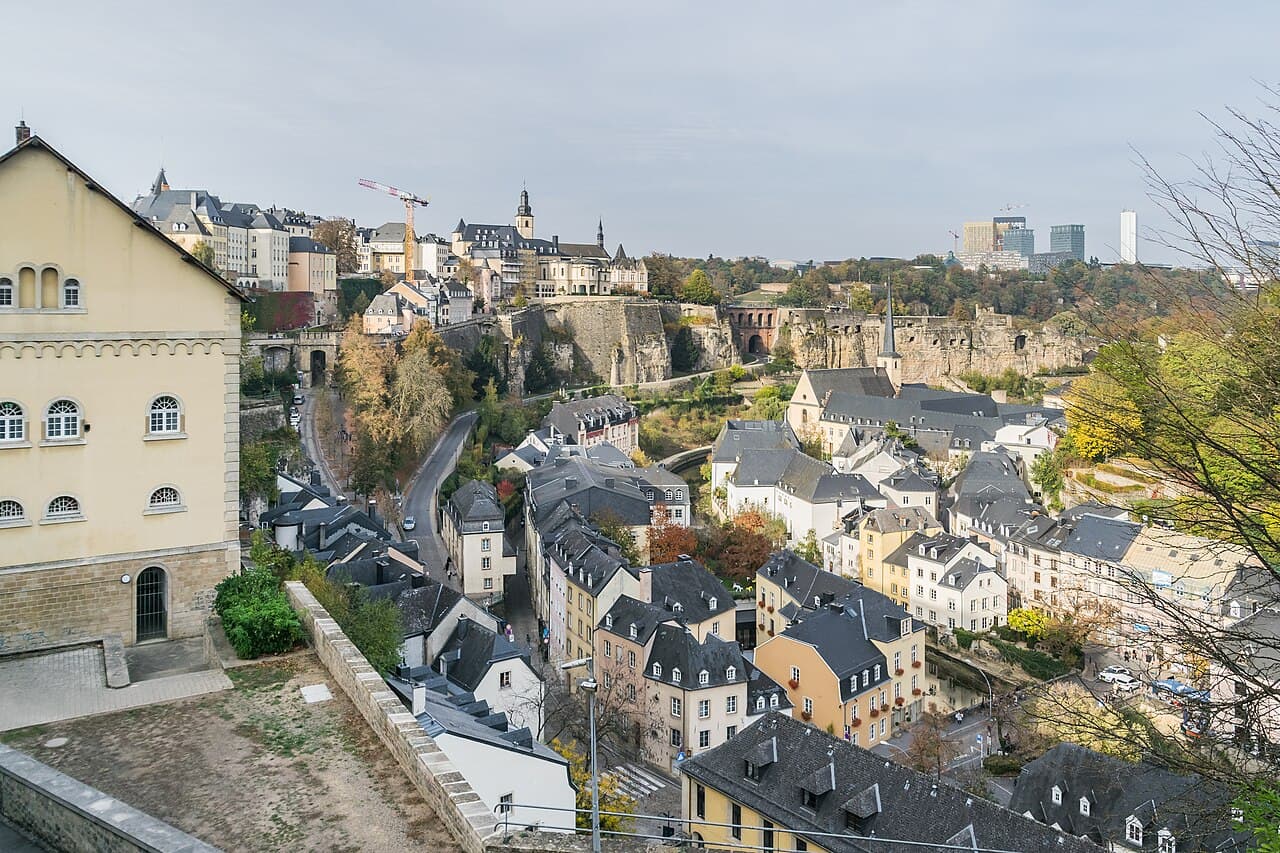
LuxembourgPhoto: Krzysztof Golik / Wikimedia Commons (CC BY-SA 4.0)

Luxembourg

Country · LU · EUR · Europe/Luxembourg

This information may change. Always check the official source.Last verified: August 2026 by

Full Schengen member and a founding one - the agreement was signed in a Luxembourgish village.

  • 90 days in any rolling 180. Not 90 days per visit and not 90 days per country. Every day anywhere in the Schengen area counts against the same allowance.
  • Luxembourg is a founding Schengen member. The agreement was signed in 1985 at Schengen, a village on the Moselle in the south-east of the country, which you can visit - there is a museum.
  • The EU Entry/Exit System has been fully operational since 10 April 2026.
  • ETIAS has not launched and there is no announced launch date. The Q4 2026 target that circulated through 2025 was removed from the official pages in July 2026.
  • The Schengen short stay visa fee is EUR 90, EUR 45 for children aged 6 to 11.
More details

The Schengen arithmetic

  • 90 days in any rolling 180. Not 90 days per visit and not 90 days per country. Every day anywhere in the Schengen area counts against the same allowance.
  • Luxembourg is a founding Schengen member. The agreement was signed in 1985 at Schengen, a village on the Moselle in the south-east of the country, which you can visit - there is a museum.
  • Arriving from Belgium, France or Germany involves nothing at all, and the borders are genuinely invisible.
  • The rolling window is the part people get wrong. On any given day, count back 180 days and add up your Schengen days in that period.
  • The passport must have been issued within the last 10 years and be valid for 3 months beyond your intended departure.

EES: no more stamps

  • The EU Entry/Exit System has been fully operational since 10 April 2026.
  • Your face and fingerprints are registered on first entry at a Schengen external border, and reused on later trips.
  • No stamp goes in your passport. The system computes your 90/180 balance itself.
  • Keep your own record of entry and exit dates. If the system's view and yours differ, you want the evidence.

ETIAS: not yet, and no date

  • ETIAS has not launched and there is no announced launch date. The Q4 2026 target that circulated through 2025 was removed from the official pages in July 2026.
  • Applications are not open. Any website selling you an ETIAS today is a scam.
  • When it comes, the fee is EUR 20, free for under-18s and over-70s. The old EUR 7 figure is obsolete.
  • It will be a travel authorisation, not a visa, valid three years or until the passport expires.

Where your nationality lands

Visa and entry in Luxembourg
You holdWhat you need
Germany, France, Italy, Spain, Netherlands, PolandNothing. EU freedom of movement
USA, Canada, Australia, UK, Japan, South Korea, Malaysia, Singapore, TaiwanNo visa. 90/180, EES registration
China, India, Cambodia, Saudi ArabiaSchengen visa in advance
RussiaSchengen visa in advance, single entry as a rule
  • The Schengen short stay visa fee is EUR 90, EUR 45 for children aged 6 to 11.

  • Many people who work in Luxembourg live in France, Belgium or Germany and cross daily. If you are staying near the border, you may cross countries several times a day without noticing.

Sources (3)

Luxembourg applies the EU allowance, and its cheap tobacco and fuel are what fill the car parks at the border.

  • Between EU countries there is no duty-free limit. Goods bought tax-paid in another member state travel with you; customs may only ask what a very large quantity is for, against indicative figures of 800 cigarettes and 10 litres of spirits.
  • Arriving from outside the EU the allowance is one set of numbers: 200 cigarettes, 1 litre of spirits over 22 % (or 2 litres of fortified or sparkling wine), 4 litres of still wine and 16 litres of beer.
  • Other goods are capped by value - EUR 430 arriving by air or sea, EUR 300 by land - and the allowance cannot be pooled between travellers for a single item.
More details
  • Between EU countries there is no duty-free limit. Goods bought tax-paid in another member state travel with you; customs may only ask what a very large quantity is for, against indicative figures of 800 cigarettes and 10 litres of spirits.
  • Arriving from outside the EU the allowance is one set of numbers: 200 cigarettes, 1 litre of spirits over 22 % (or 2 litres of fortified or sparkling wine), 4 litres of still wine and 16 litres of beer.
  • Other goods are capped by value - EUR 430 arriving by air or sea, EUR 300 by land - and the allowance cannot be pooled between travellers for a single item.
  • Cash of EUR 10,000 or more must be declared, counting notes, coins, cheques and prepaid cards together. The money is seized for not declaring it, not for carrying it.
  • Cigarettes and fuel are cheaper here than in all three neighbours, and the indicative intra-EU quantities are what stop a shopping trip becoming a smuggling charge.
Sources (1)

Excellent healthcare, EHIC accepted, and a reimbursement model like Belgium's.

  • EU and EEA visitors: carry your EHIC. It gives access to state healthcare on the same terms as a resident.
  • UK visitors: the GHIC does the same job. Neither card is travel insurance, and neither covers repatriation or a private clinic.
  • Travel insurance still matters for anything the state system does not cover.
  • Tap water is excellent everywhere.
  • Pharmacies are well stocked with a duty rota posted for nights and weekends.
More details

Cover

  • EU and EEA visitors: carry your EHIC. It gives access to state healthcare on the same terms as a resident.
  • UK visitors: the GHIC does the same job. Neither card is travel insurance, and neither covers repatriation or a private clinic.
  • Travel insurance still matters for anything the state system does not cover.
  • Luxembourg reimburses rather than exempts, as Belgium does: you may pay the doctor and claim it back. Keep every receipt.
  • Standards are very high and waiting times short.

Everyday health

  • Tap water is excellent everywhere.
  • Pharmacies are well stocked with a duty rota posted for nights and weekends.
  • Ticks are present in the Ardennes forests - the usual precautions.
  • Doctors commonly speak French, German and English.
Sources (2)

Luxembourg City

Long-term averages for Luxembourg City: the mean daily high, the mean overnight low and the mean monthly rainfall across 30 years of ERA5 reanalysis data (1995–2024).

DayNight
-50510152025°C0100mmJanFebMarAprMayJunJulAugSepOctNovDecJanuary: Day 4 °C, Night -1 °C, Rain 74 mm. February: Day 6 °C, Night 0 °C, Rain 65 mm. March: Day 9 °C, Night 1 °C, Rain 65 mm. April: Day 13 °C, Night 4 °C, Rain 55 mm. May: Day 17 °C, Night 8 °C, Rain 73 mm. June: Day 21 °C, Night 11 °C, Rain 62 mm. July: Day 22 °C, Night 13 °C, Rain 64 mm. August: Day 22 °C, Night 13 °C, Rain 67 mm. September: Day 18 °C, Night 10 °C, Rain 60 mm. October: Day 14 °C, Night 7 °C, Rain 72 mm. November: Day 8 °C, Night 3 °C, Rain 74 mm. December: Day 5 °C, Night 0 °C, Rain 82 mm
Show the monthly table
Luxembourg City
MonthDay (°C)Night (°C)Rain (mm)
January4-174
February6065
March9165
April13455
May17873
June211162
July221364
August221367
September181060
October14772
November8374
December5082

When to visit

Luxembourg's rain barely changes across the year - what changes is the light. The national service records under 52 hours of sunshine in each of November, December and January, against 258 in July.

Luxembourg's monthly rainfall runs from 55 mm in April to 82 mm in December. Every month of the year lands somewhere in that narrow band, which means there is no wet season to dodge and no dry one to aim for. Anyone planning around rainfall here is planning around noise.

More details

There is no rainy season, and that is the point

Luxembourg's monthly rainfall runs from 55 mm in April to 82 mm in December. Every month of the year lands somewhere in that narrow band, which means there is no wet season to dodge and no dry one to aim for. Anyone planning around rainfall here is planning around noise.

The temperature does the sorting instead. June to September average 18-22 C by day and are the four months in the comfortable band; the rest of the year sits between 4 and 17 C, with January at 4 C by day and -1 C at night.

The number that actually decides a date is sunshine

MeteoLux's 1991-2020 normals for Luxembourg-Findel put it plainly. December gets 41.9 hours of sunshine, November 51.1 and January 52.0 - against 257.6 hours in July and 241.2 in June. That is under two hours of sun a day for three months straight, in a country where the days are short to begin with.

It is why a November visit and a June visit are not the same trip with different coats. The old town and the casemates are worth walking in either, but the Ardennes in the north and the Moselle valley in the east are landscapes, and a landscape under 1.7 hours of daily sun is a different proposition.

The exception people travel for deliberately is the Christmas market season, which is priced into the darkness rather than spoiled by it. Otherwise the light argues for May to September, and September - 174.9 hours, 18 C by day - is the last month that still has plenty of it.

Sources (2)

A business-driven hotel market that empties at weekends - the opposite of most of Europe.

  • Luxembourg City is a financial and institutional centre and its hotels are priced for that.
  • Midweek is expensive; weekends are much cheaper - the reverse of most European city breaks.
  • The Mullerthal ("Little Switzerland") and the Ardennes north have guesthouses and are the reason to stay more than two nights.
  • The Moselle valley is wine country and quiet.
  • You will be asked for your passport at check-in.
More details

The weekday city

  • Luxembourg City is a financial and institutional centre and its hotels are priced for that.
  • Midweek is expensive; weekends are much cheaper - the reverse of most European city breaks.
  • Book a Friday or Saturday night and the same room can be half the price.

Beyond the capital

  • The Mullerthal ("Little Switzerland") and the Ardennes north have guesthouses and are the reason to stay more than two nights.
  • The Moselle valley is wine country and quiet.
  • Free transport makes staying outside the capital genuinely practical - a village 40 minutes away costs nothing extra to reach.

Practicalities

  • You will be asked for your passport at check-in.
  • A small city tax applies in the capital.
Sources (2)

EU visitors need nothing, and the country is small enough that you will roam onto a neighbour's network without trying.

  • Roam-like-at-home applies. A SIM from any EU or EEA country works here at your domestic rates, with your domestic allowance. Buying anything local is money wasted.
  • Luxembourg is 82 km long. Near the borders your phone will happily connect to a French, Belgian or German mast.
  • POST and Tango cover the country and coverage is complete.
  • An eSIM is live before you land and skips the shop entirely, which on a short trip is the whole argument for it.
  • Keep your home number reachable for two-factor codes. If you swap in a local SIM as your only card, bank apps that text a code to your home number stop working at the worst possible moment. A dual-SIM phone, or an eSIM alongside your home SIM, solves it.
More details

If you have an EU plan, stop reading

  • Roam-like-at-home applies. A SIM from any EU or EEA country works here at your domestic rates, with your domestic allowance. Buying anything local is money wasted.
  • UK plans are not covered any more. Several UK networks reintroduced EU roaming charges after Brexit - check yours before you land rather than after.

The border-hopping quirk

  • Luxembourg is 82 km long. Near the borders your phone will happily connect to a French, Belgian or German mast.
  • Within the EU this costs you nothing thanks to roam-like-at-home - but if you are on a non-EU plan with a Luxembourg-only package, it matters.

Local prepaid SIM

  • POST and Tango cover the country and coverage is complete.
  • Prepaid packs are sold at the airport, the station and in shops.
  • Bring your passport.

eSIM

  • An eSIM is live before you land and skips the shop entirely, which on a short trip is the whole argument for it.
  • Check your phone takes one. Most flagship phones since 2019 do; most budget models do not.

Practical points

  • Keep your home number reachable for two-factor codes. If you swap in a local SIM as your only card, bank apps that text a code to your home number stop working at the worst possible moment. A dual-SIM phone, or an eSIM alongside your home SIM, solves it.
  • Wi-fi is widespread in cafes, hotels and stations.
Sources (2)

Luxembourg sockets are Type Schuko at 230 V, unlike Belgium and France next door.

  • A Europlug fits every socket in the country, which covers most chargers.
  • Belgium and France use the earth-pin Type socket instead. A hybrid European plug works in all three; a bare Schuko plug can fail once you cross.
  • British, American and Australian plugs need an adapter.
  • 230 V, so only American 120 V-only appliances need a converter.
  • Germany, the third border, matches exactly, so a plug bought in Trier works in Luxembourg City and one bought in Metz may not.
More details

Sockets in Luxembourg are Type and at 230 V, 50 Hz - the German Schuko outlet, not the French one used across two of its three borders.

  • A Europlug fits every socket in the country, which covers most chargers.
  • Belgium and France use the earth-pin Type socket instead. A hybrid European plug works in all three; a bare Schuko plug can fail once you cross.
  • British, American and Australian plugs need an adapter.
  • 230 V, so only American 120 V-only appliances need a converter.
  • Germany, the third border, matches exactly, so a plug bought in Trier works in Luxembourg City and one bought in Metz may not.
  • Older buildings have unearthed sockets of the same shape, with nothing behind the clips.
Sources (1)

Three official languages, half the workforce commuting in from three countries, and type sockets.

  • Luxembourgish, French and German are all official.
  • Luxembourgish is the national language and what people speak among themselves.
  • 230 V, 50 Hz, sockets type and .
  • Nearly half the workforce lives in France, Belgium or Germany and commutes in daily.
  • Shops close on Sundays and early on Saturdays outside the centre.
More details

Three languages, and which to use

  • Luxembourgish, French and German are all official.
  • Luxembourgish is the national language and what people speak among themselves.
  • French dominates in shops, restaurants and administration - it is the safest opener for a visitor.
  • German is used in the press and in schools.
  • English is very widely spoken, particularly in the capital, where a large share of the workforce is international.
  • Menus are often in French, signage in French and German, and nobody expects a visitor to attempt Luxembourgish.

Power

  • 230 V, 50 Hz, sockets type and .

The commuting country

  • Nearly half the workforce lives in France, Belgium or Germany and commutes in daily.
  • This shapes everything - the roads at rush hour, the emptiness of the capital in August, the multilingualism.

Practicalities

  • Shops close on Sundays and early on Saturdays outside the centre.
  • Public holidays are numerous and things genuinely shut.
  • The Grand Duchy is a monarchy and National Day on 23 June is the one day the country is unmistakably lively.
Sources (2)

The euro, cards everywhere, and one of the most expensive countries in Europe for everything except transport.

  • Luxembourg uses the euro and was a founding member of the eurozone.
  • Cards work everywhere and contactless is standard.
  • Luxembourg is among the most expensive countries in Europe - accommodation and restaurants in particular.
  • Always refuse the machine's offer to charge you in your own currency. Dynamic currency conversion at an ATM or a card terminal costs several per cent, every time, and the offer is worded to sound helpful. Choose the local currency and let your own bank convert.
  • Service is included by law. Rounding up is normal, 5 to 10 per cent for good service is generous.
More details

The currency

  • Luxembourg uses the euro and was a founding member of the eurozone.
  • Cards work everywhere and contactless is standard.

Prices

  • Luxembourg is among the most expensive countries in Europe - accommodation and restaurants in particular.
  • Transport is free, which is a genuine and unusual offset.
  • Eating across the border in Germany or France is a normal local economy measure and is easy from anywhere in the country.

ATMs

  • Always refuse the machine's offer to charge you in your own currency. Dynamic currency conversion at an ATM or a card terminal costs several per cent, every time, and the offer is worded to sound helpful. Choose the local currency and let your own bank convert.
  • Use bank ATMs rather than the independent machines in tourist areas, which add their own fee on top.

Tipping

  • Service is included by law. Rounding up is normal, 5 to 10 per cent for good service is generous.
Sources (2)

Everyday prices

Typical prices in euro (EUR), averaged across the country by Numbeo and read on 19 August 2026. Tick Convert prices above the table to see every amount in your own currency.

Everyday prices
ItemTypical price
Inexpensive restaurant meal22 EUR
Dinner for two, mid-range, three courses90 EUR
Cappuccino3.94 EUR
Local draught beer, 0.5 l5.00 EUR
Bottled water, 0.33 l3.60 EUR
Public transport, one-way ticket (free nationwide)0.00 EUR
Taxi, starting fare4.50 EUR
Petrol, 1 litre1.66 EUR
Cigarettes, pack of 20 (Marlboro)6.50 EUR
Average net monthly salary4,950 EUR

These are country-wide averages, not a price list: tourist districts, airports and islands sit well above them, and small towns below. The salary line is there for proportion - it is what people living here actually earn.

Sources (1)

Airport guides for Luxembourg1

One page per airport: the routes into town, what they cost and the trap particular to that arrival.

See all 1 airports

The bus from the airport into the city is free, like every other bus, tram and train in the country.

  • The airport is about 6 km from the city centre - among the shortest transfers in Europe.
  • Bus lines 16 and 29 run into the city and to the station, taking around 20 to 25 minutes.
  • They are free. So is everything else - see the transport section. There is no ticket to buy, no card to tap and no machine to find.
  • The airport is a short bus ride from Luxembourg station, which puts Trier, Metz, Brussels and Paris within easy reach.
  • Frankfurt-Hahn, despite the name, is about 120 km away in Germany and is a separate proposition entirely - see its own page.
More details
Findel (LUX)
  • The airport is about 6 km from the city centre - among the shortest transfers in Europe.
  • Bus lines 16 and 29 run into the city and to the station, taking around 20 to 25 minutes.
  • They are free. So is everything else - see the transport section. There is no ticket to buy, no card to tap and no machine to find.
  • Taxis are available and expensive, which in a country with free buses is a hard sell.
Getting further
  • The airport is a short bus ride from Luxembourg station, which puts Trier, Metz, Brussels and Paris within easy reach.
  • Frankfurt-Hahn, despite the name, is about 120 km away in Germany and is a separate proposition entirely - see its own page.
Sources (2)

All public transport in the country has been free to everyone since 2020 - the only country in the world where that is true.

  • Since 1 March 2020, all public transport in Luxembourg is free of charge - buses, trams and trains, nationwide, for residents and visitors alike.
  • Luxembourg is the only country in the world to have done this.
  • The tram runs through Luxembourg City from the airport road to the station via the Kirchberg institutions.
  • Trains reach the country's corners in under an hour - Ettelbruck, Clervaux, Wiltz, and the Moselle.
  • Fuel is noticeably cheaper than in the neighbouring countries, which is why so many Belgian, French and German cars fill up here.
More details

Everything is free

  • Since 1 March 2020, all public transport in Luxembourg is free of charge - buses, trams and trains, nationwide, for residents and visitors alike.
  • Luxembourg is the only country in the world to have done this.
  • There is no ticket, no card and no validation. You get on.
  • It applies in second class. First class on trains still costs money, and cross-border journeys are only free to the border.

Practically: budget nothing for local transport here. It is the one country in this guide where that line is zero.

The network

  • The tram runs through Luxembourg City from the airport road to the station via the Kirchberg institutions.
  • Trains reach the country's corners in under an hour - Ettelbruck, Clervaux, Wiltz, and the Moselle.
  • Buses fill in the rest, including the villages.
  • Timetables are on mobiliteit.lu, which is the single national planner.

Driving

  • Fuel is noticeably cheaper than in the neighbouring countries, which is why so many Belgian, French and German cars fill up here.
  • Parking in Luxembourg City is expensive and scarce, which combined with free transport makes driving in pointless.
Sources (2)

Luxembourg has free motorways, the cheapest fuel in western Europe, and a country you can cross in an hour.

  • Fuel is materially cheaper than in Belgium, France and Germany, which is why the border stations are busy and why locals fill up before crossing back.
  • Public transport across the whole country is free - buses, trams and trains - which makes a hire car a convenience rather than a necessity.
  • The alcohol limit is 0.5 g/l, and 0.2 g/l for new and professional drivers.
  • Motorways are free and the network is short: nowhere in the country is more than an hour from the capital.
  • All three neighbours differ. Belgium and Germany are free, France charges tolls, and the Crit'Air sticker is needed the moment you cross into Metz or Thionville.
More details

Free motorways, cheap fuel, and distances short enough that a car is optional.

  • Fuel is materially cheaper than in Belgium, France and Germany, which is why the border stations are busy and why locals fill up before crossing back.
  • Public transport across the whole country is free - buses, trams and trains - which makes a hire car a convenience rather than a necessity.
  • The alcohol limit is 0.5 g/l, and 0.2 g/l for new and professional drivers.
  • Motorways are free and the network is short: nowhere in the country is more than an hour from the capital.
  • All three neighbours differ. Belgium and Germany are free, France charges tolls, and the Crit'Air sticker is needed the moment you cross into Metz or Thionville.
Sources (1)

One of the safest countries in the world; the station district is the only place anyone mentions.

  • Luxembourg is consistently among the safest countries in the world and violent crime against visitors is very rare.
  • The area immediately around the railway station (Gare) has a visible drug scene and is the one place residents will tell you to be aware at night. It is unpleasant rather than dangerous, and a great many hotels are there.
  • The city is built on cliffs and gorges and the Chemin de la Corniche and Grund paths are steep and slippery in the wet.
  • Roads are excellent and Luxembourg's road safety record is good.
  • There is genuinely little to warn about, which is unusual enough to say plainly rather than padding this section out.
More details

Crime

  • Luxembourg is consistently among the safest countries in the world and violent crime against visitors is very rare.
  • The area immediately around the railway station (Gare) has a visible drug scene and is the one place residents will tell you to be aware at night. It is unpleasant rather than dangerous, and a great many hotels are there.
  • Pickpocketing is at a low level, mainly in the station area and at markets.

Practical hazards

  • The city is built on cliffs and gorges and the Chemin de la Corniche and Grund paths are steep and slippery in the wet.
  • Roads are excellent and Luxembourg's road safety record is good.

Everything else

  • There is genuinely little to warn about, which is unusual enough to say plainly rather than padding this section out.
Sources (1)

112 for ambulance and fire, 113 for police.

  • 112 works from any phone, free, with no credit and no SIM, and operators handle English.
  • Report a theft to the police and get a written record. No insurer will pay a claim without one, and obtaining it later from another country is close to impossible.
  • A lost passport means the police first, then your embassy.
  • Save 112 in your phone now, and write your accommodation's address somewhere that does not depend on a charged battery.
  • Not every country keeps an embassy in Luxembourg. Several cover it from a neighbouring capital - check yours before you need to know.
More details

The numbers

Emergency numbers in Luxembourg
ServiceNumber
Ambulance and fire112
Police113
  • 112 works from any phone, free, with no credit and no SIM, and operators handle English.

If you need help

  • Report a theft to the police and get a written record. No insurer will pay a claim without one, and obtaining it later from another country is close to impossible.
  • A lost passport means the police first, then your embassy.
  • Your embassy cannot pay your bills or get you out of jail, but it can issue emergency travel documents, contact your family and provide lists of local lawyers and doctors.

Before you need them

  • Save 112 in your phone now, and write your accommodation's address somewhere that does not depend on a charged battery.

  • Not every country keeps an embassy in Luxembourg. Several cover it from a neighbouring capital - check yours before you need to know.

  • Operators handle French, German, Luxembourgish and English.

  • Note your address in French - the German and Luxembourgish forms of a place name can differ.

Sources (2)