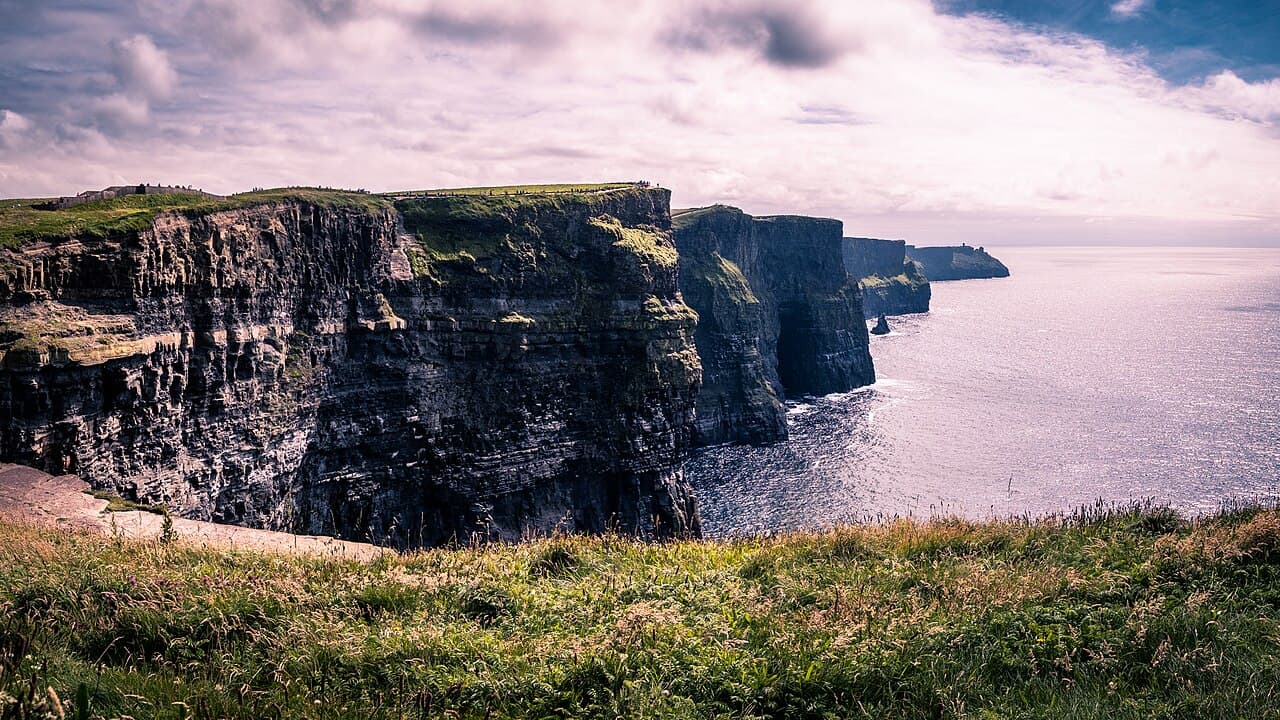
IrelandPhoto: Giuseppe Milo / Wikimedia Commons (CC BY 3.0)

Ireland

Country · IE · EUR · Europe/Dublin

This information may change. Always check the official source.Last verified: August 2026 by

Ireland is not in Schengen. There is no EES biometric registration, no ETIAS, and your Irish days do not count against a Schengen 90/180 allowance. Most Western passports get 90 days on arrival.

  • Ireland is not in Schengen and never has been. There is no EES biometric registration and no ETIAS - anyone selling you an Irish ETIAS is selling you nothing.
  • Your Irish days are free. Time here does not count against the Schengen 90 days in any 180, in either order.
  • The border with Northern Ireland is invisible. There is no checkpoint - you will know you crossed because the speed limit signs change from km/h to mph.
  • 90 days is the maximum for a visitor and it is not a rolling window. Dublin officers ask what you are here for and where you are staying, and they do turn people around.
  • British citizens legally need no passport, but every airline and ferry operator demands photo ID and most accept only a passport. Bring one.
More details

The rule that surprises people

Ireland is not in the Schengen area, and it never has been.

  • No EES. The EU Entry/Exit System that has been registering fingerprints and face scans at Schengen borders since April 2026 does not operate here. You get an ordinary ink stamp, or with some passports no stamp at all.
  • No ETIAS. When the EU travel authorisation eventually launches it will not cover Ireland. Anyone selling you an Irish ETIAS is selling you nothing.
  • Your Irish days are free. Time in Ireland does not count against the Schengen 90 days in any 180. A month in Ireland followed by three months in France is legal; three months in France followed by a month in Ireland is fine too.
  • The border with Northern Ireland is invisible. There is no checkpoint. You will know you crossed because the speed limit signs change from km/h to mph.

Where your nationality lands

Visa and entry in Ireland
You holdWhat you need
USA, Canada, Australia, UK, Germany, France, Italy, Spain, Netherlands, Poland, Japan, South Korea, Malaysia, Singapore, TaiwanNo visa. 90 days
China, India, Russia, Saudi Arabia, CambodiaShort stay C visa before travel, applied for through AVATS
  • EU, EEA, Swiss and UK citizens have their own right of entry and are not counted as visitors at all. British citizens travel under the Common Travel Area and may stay indefinitely.
  • 90 days is the maximum for a visitor, and it is not a rolling window. Immigration officers at Dublin ask what you are here for and where you are staying, and they do turn people around.
  • Staying beyond 90 days means registering for an Irish Residence Permit before the 90 days expire, not afterwards.

What to have ready at the desk

  • A passport valid for the whole of your stay. Ireland does not require the extra three or six months that many countries do.
  • The address of your first night's accommodation. This is the question you will actually be asked.
  • A return or onward ticket, which is asked for less often than in some countries but is still the fastest way to end the conversation.
  • British citizens legally need no passport, but every airline and ferry operator demands photo ID and most will only accept a passport. Bring one.

Applying for a C visa

  • AVATS is the only official route, at visas.inis.gov.ie, and the fee is EUR 60 for a single entry or EUR 100 for multiple entry.
  • Apply well ahead. Processing regularly runs to eight weeks in the summer.
  • Since 1 June 2026 most refused C visa applications can no longer be appealed. A fresh application is the only remedy, so a thin first application is now an expensive mistake.
  • An Irish visa is not a Schengen visa and does not admit you to any other country.
Sources (3)

Ireland applies the EU allowance, and the border that matters is with the UK - Northern Ireland included.

  • Between EU countries there is no duty-free limit. Goods bought tax-paid in another member state travel with you; customs may only ask what a very large quantity is for, against indicative figures of 800 cigarettes and 10 litres of spirits.
  • Arriving from outside the EU the allowance is one set of numbers: 200 cigarettes, 1 litre of spirits over 22 % (or 2 litres of fortified or sparkling wine), 4 litres of still wine and 16 litres of beer.
  • Other goods are capped by value - EUR 430 arriving by air or sea, EUR 300 by land - and the allowance cannot be pooled between travellers for a single item.
More details
  • Between EU countries there is no duty-free limit. Goods bought tax-paid in another member state travel with you; customs may only ask what a very large quantity is for, against indicative figures of 800 cigarettes and 10 litres of spirits.
  • Arriving from outside the EU the allowance is one set of numbers: 200 cigarettes, 1 litre of spirits over 22 % (or 2 litres of fortified or sparkling wine), 4 litres of still wine and 16 litres of beer.
  • Other goods are capped by value - EUR 430 arriving by air or sea, EUR 300 by land - and the allowance cannot be pooled between travellers for a single item.
  • Cash of EUR 10,000 or more must be declared, counting notes, coins, cheques and prepaid cards together. The money is seized for not declaring it, not for carrying it.
  • Great Britain is outside the EU, so a flight or ferry from Liverpool or Holyhead is an arrival from a third country with the full allowance and the full check.
  • The land border with Northern Ireland has no routine customs controls, but the legal limits still apply to what you carry across.
Sources (1)

No vaccinations, safe tap water and a good health service that will still bill you EUR 100 for walking into an emergency department without a referral. An EHIC or GHIC waives that charge.

  • No vaccinations are required beyond being up to date with routine ones, and the tap water is safe everywhere.
  • Walking into a public emergency department without a GP referral costs EUR 100, and the charge applies even if you are then admitted.
  • An EHIC or GHIC waives that charge. Everyone else needs travel insurance - Ireland has no reciprocal arrangement with the USA, Canada, Australia or most of Asia.
  • An emergency ambulance is free with no call-out charge; a GP visit is EUR 50 to EUR 70 paid on the day.
  • The pharmacist is the right first stop for anything minor, and the HSE runs a live pharmacy finder for out of hours.
More details

Before you go

  • No vaccinations are required or recommended beyond being up to date with routine ones.
  • Bring an EHIC if you are from the EU or EEA, or a GHIC if you are from the UK. It is the difference between free emergency treatment and a bill.
  • Everyone else needs travel insurance. Ireland has no reciprocal arrangement with the USA, Canada, Australia or most of Asia, and private treatment is expensive.
  • Bring prescription medicines in their original packaging with the prescription. Some medicines available over the counter elsewhere are prescription-only here.

If something happens

  • 112 or 999 reaches everything, free from any phone including one with no credit or no SIM.
  • An emergency ambulance is free. There is no call-out charge.
  • Walking into a public emergency department without a GP referral costs EUR 100. Presenting a valid EHIC or GHIC waives it. The charge applies even if you are then admitted.
  • A GP visit costs EUR 50 to EUR 70 paid on the day. Many practices will see a visitor the same day if you phone in the morning.
  • VHI SwiftCare, Dublin, and similar private urgent care clinics handle sprains, stitches and X-rays without the emergency department wait, for about EUR 125 to EUR 200.

Pharmacies

  • The pharmacist is the right first stop for anything minor. Irish pharmacists advise and dispense a wide range without a prescription.
  • Boots and McCabes are everywhere, and most towns have a late-opening pharmacy.
  • The HSE runs a live pharmacy finder on hse.ie if you need one out of hours.

Everyday health

  • Tap water is safe everywhere, including rural supplies, though local boil notices are occasionally issued and posted publicly.
  • Ireland is very far north. In December daylight is 08:40 to 16:10, and vitamin D and mood take a hit on a long stay.
  • Sunburn is a real risk on the coast in summer despite the temperature, because the wind hides it.
  • Ticks carrying Lyme disease exist in wooded and upland areas. Check yourself after a walk in long grass.
Sources (2)

Dublin

Long-term averages for Dublin: the mean daily high, the mean overnight low and the mean monthly rainfall across 30 years of ERA5 reanalysis data (1995–2024).

DayNight
05101520°C0100mmJanFebMarAprMayJunJulAugSepOctNovDecJanuary: Day 8 °C, Night 4 °C, Rain 69 mm. February: Day 9 °C, Night 4 °C, Rain 59 mm. March: Day 10 °C, Night 4 °C, Rain 63 mm. April: Day 12 °C, Night 6 °C, Rain 63 mm. May: Day 15 °C, Night 8 °C, Rain 68 mm. June: Day 17 °C, Night 11 °C, Rain 74 mm. July: Day 19 °C, Night 13 °C, Rain 77 mm. August: Day 19 °C, Night 13 °C, Rain 81 mm. September: Day 17 °C, Night 11 °C, Rain 71 mm. October: Day 14 °C, Night 9 °C, Rain 88 mm. November: Day 10 °C, Night 6 °C, Rain 87 mm. December: Day 8 °C, Night 4 °C, Rain 77 mm
Show the monthly table
Dublin
MonthDay (°C)Night (°C)Rain (mm)
January8469
February9459
March10463
April12663
May15868
June171174
July191377
August191381
September171171
October14988
November10687
December8477

Galway

Long-term averages for Galway: the mean daily high, the mean overnight low and the mean monthly rainfall across 30 years of ERA5 reanalysis data (1995–2024).

DayNight
05101520°C0200mmJanFebMarAprMayJunJulAugSepOctNovDecJanuary: Day 8 °C, Night 4 °C, Rain 103 mm. February: Day 9 °C, Night 4 °C, Rain 93 mm. March: Day 10 °C, Night 4 °C, Rain 84 mm. April: Day 12 °C, Night 6 °C, Rain 72 mm. May: Day 15 °C, Night 8 °C, Rain 84 mm. June: Day 17 °C, Night 11 °C, Rain 82 mm. July: Day 18 °C, Night 12 °C, Rain 95 mm. August: Day 18 °C, Night 12 °C, Rain 103 mm. September: Day 17 °C, Night 11 °C, Rain 83 mm. October: Day 14 °C, Night 9 °C, Rain 116 mm. November: Day 10 °C, Night 6 °C, Rain 109 mm. December: Day 8 °C, Night 4 °C, Rain 113 mm
Show the monthly table
Galway
MonthDay (°C)Night (°C)Rain (mm)
January84103
February9493
March10484
April12672
May15884
June171182
July181295
August1812103
September171183
October149116
November106109
December84113

Cork

Long-term averages for Cork: the mean daily high, the mean overnight low and the mean monthly rainfall across 30 years of ERA5 reanalysis data (1995–2024).

DayNight
05101520°C0200mmJanFebMarAprMayJunJulAugSepOctNovDecJanuary: Day 9 °C, Night 4 °C, Rain 84 mm. February: Day 9 °C, Night 4 °C, Rain 74 mm. March: Day 10 °C, Night 5 °C, Rain 74 mm. April: Day 12 °C, Night 6 °C, Rain 71 mm. May: Day 15 °C, Night 9 °C, Rain 75 mm. June: Day 17 °C, Night 11 °C, Rain 70 mm. July: Day 19 °C, Night 13 °C, Rain 74 mm. August: Day 19 °C, Night 13 °C, Rain 77 mm. September: Day 17 °C, Night 11 °C, Rain 72 mm. October: Day 14 °C, Night 9 °C, Rain 109 mm. November: Day 11 °C, Night 6 °C, Rain 89 mm. December: Day 9 °C, Night 5 °C, Rain 94 mm
Show the monthly table
Cork
MonthDay (°C)Night (°C)Rain (mm)
January9484
February9474
March10574
April12671
May15975
June171170
July191374
August191377
September171172
October149109
November11689
December9594
Sources (1)

Dublin is one of the most expensive hotel markets in Europe and books out entirely around rugby internationals and big concerts. Outside Dublin the B&B is still the best value in the country.

  • Check the Aviva Stadium and 3Arena calendars before booking Dublin. A rugby international or a stadium concert empties the city's rooms and doubles what is left.
  • Dublin prices swing by a factor of three between a midweek November night and a Six Nations Saturday in the same hotel.
  • Temple Bar is loud until three in the morning every night of the week. Stay one street back from it, not in it.
  • Outside Dublin the family-run B&B is the best value in Ireland, usually EUR 90 to EUR 130 for a double with a breakfast that removes the need for lunch.
  • Ask about parking before you drive to a Dublin hotel. Most city-centre hotels have none and the multi-storey car parks run EUR 25 to EUR 35 for 24 hours.
More details

Booking

  • Dublin prices swing violently by date. A midweek night in November and a Saturday during a Six Nations weekend can differ by a factor of three in the same hotel.
  • Check the Aviva Stadium and 3Arena calendars before you book Dublin. A rugby international or a stadium concert empties the city's rooms and doubles what is left.
  • Book Kerry, Galway and Donegal early for July and August. The good guesthouses in Dingle and Doolin sell out months ahead.
  • Short term lets have been squeezed hard. Since 2024 Dublin and other rent pressure zones require registration for lettings under 14 days, so the Airbnb stock is a fraction of what it was and the legal listings are pricier.

Where to stay in Dublin

  • South of the river, Dublin 2 and Dublin 4 put you in walking distance of Grafton Street, Trinity, Merrion Square and the good restaurants.
  • Temple Bar is loud until three in the morning every night of the week. Stay one street back from it, not in it.
  • Around Heuston or Smithfield is cheaper, on the red Luas line and perfectly fine.
  • Avoid a room on the far side of the north inner city around Sheriff Street and upper Gardiner Street unless you know the area.

The B&B, which is the real thing

  • Outside Dublin the family-run B&B is the best value in Ireland, usually EUR 90 to EUR 130 for a double with a full Irish breakfast that removes the need for lunch.
  • They are still often cash-preferred and some want you to phone rather than book online.
  • Failte Ireland approval on the door means the place is inspected and registered.
  • Hostels are good and well run, particularly in Dublin, Galway, Killarney and Westport.

On arrival

  • Check-in is usually 15:00, check-out 11:00. Bags can nearly always be left before and after.
  • Bring photo ID. Even at a B&B you will be asked to sign the register.
  • Ask about parking before you drive to a Dublin hotel. Most city-centre hotels have none, and the multi-storey car parks run EUR 25 to EUR 35 for 24 hours.
Sources (2)

Three networks own the towers: Three, Vodafone and Eir. Everything else is an MVNO reselling one of them. There is no registration requirement, so a physical SIM is quick, and an eSIM bought before you fly is quicker still.

  • Ireland does not register prepaid SIMs against a document. Walk into a shop, pay, and the line works - no passport, no form, no waiting.
  • Three, Vodafone and Eir own the networks, and everyone else resells one of them. A tourist prepaid bundle is about EUR 20 for 28 days.
  • For a week's trip an international eSIM usually wins - not on price per gigabyte, but because it is live before you land and there is nothing to buy in the terminal.
  • For a month or more, buy local. An Irish number is what car hire desks, B&Bs and taxi apps want to text.
  • The Wild Atlantic Way has real dead zones and data on the Dublin to Cork and Galway trains is patchy. Save maps and tickets offline.
More details

No paperwork, which is the main thing

Ireland does not register prepaid SIM cards against an identity document. Walk into a phone shop or a supermarket, pay, and the line works. No passport, no form, no waiting.

  • Three, Vodafone and Eir own the networks. Everyone else, including 48, GoMo and Lycamobile, rents capacity from one of them and resells it.
  • Three and Vodafone have the broadest 4G and 5G footprint, with Eir close behind. On the west coast and in the mountains all three thin out, and no operator has meaningful coverage in parts of Connemara or Donegal.
  • A tourist prepaid bundle runs about EUR 20 for 28 days, typically with 10 GB to unlimited data plus Irish calls and texts.
  • Eir sells a straightforward tourist eSIM at about EUR 20 for 28 days with unlimited data and unlimited calls and texts.
  • 48 and GoMo are the value plays if you are staying longer, from around EUR 15 a month, but both are ordered online and expect an Irish address.

eSIM

  • All three networks support eSIM, and so does Saily: USD 3.99 for 1 GB over 7 days, USD 10.99 for 5 GB over 30 days, USD 17.99 for 10 GB over 30 days.
  • For a week's trip the international eSIM usually wins, not on price per gigabyte but because it is live before you land and there is nothing to buy in the terminal.
  • For a month or more, buy local. An Irish prepaid line is cheap, gives you an Irish number, and an Irish number is what car hire desks, B&Bs and taxi apps want to text.

Coverage worth knowing about

  • Data on intercity trains is patchy on the Dublin to Cork and Dublin to Galway lines. Download maps and tickets before you board.
  • The Wild Atlantic Way has real dead zones. If your day depends on a booking or a map, save it offline.
  • Roaming from the EU is free under EU rules, at your home allowance, and that includes Ireland.
Sources (1)

Irish sockets are Type at 230 V, identical to the UK, with fused plugs and shaver-only bathroom outlets.

  • Every plug carries its own fuse, the distinguishing feature of this standard.
  • Nothing else fits, including a Europlug. A trip from Dublin to anywhere on the continent, or the other way, needs an adapter.
  • Bathrooms have shaver sockets and no other outlet. The two-pin socket by the mirror takes a Europlug at low current only.
  • 230 V matches Britain and the continent. Only American 120 V-only appliances need a converter.
  • Many sockets are switched, so check the rocker beside the outlet before deciding a charger has died.
More details

Sockets in Ireland are Type at 230 V, 50 Hz - the same British three-pin plug used across the water, and the only socket type in general use.

  • Every plug carries its own fuse, the distinguishing feature of this standard.
  • Nothing else fits, including a Europlug. A trip from Dublin to anywhere on the continent, or the other way, needs an adapter.
  • Bathrooms have shaver sockets and no other outlet. The two-pin socket by the mirror takes a Europlug at low current only.
  • 230 V matches Britain and the continent. Only American 120 V-only appliances need a converter.
  • Many sockets are switched, so check the rocker beside the outlet before deciding a charger has died.
Sources (1)

Type plugs at 230 V, pubs that stop serving earlier than you think, shops that shut on Sunday afternoon outside Dublin, and a smoking ban that has been in force since 2004.

  • Plug type at 230 V - the same three rectangular pins as the UK, and a European two-pin will not fit. Buy the adapter before you fly, not at Dublin Airport.
  • Pubs serve until 23:30 Monday to Thursday and 00:30 on Friday and Saturday, with thirty minutes drinking-up time. Restaurants stop taking orders earlier than in southern Europe.
  • In Gaeltacht areas of Kerry, Galway, Mayo and Donegal the road signs are in Irish only. Know the Irish name of your destination before you drive into Connemara.
  • Ordering a round is a genuine social obligation. If someone buys you a drink, you buy the next one.
  • St Patrick's Day is not a normal day out - Dublin is full, hotels triple, and the parade shuts the centre to traffic.
More details

Power and connectivity

  • Plug type at 230 V, 50 Hz, the same three rectangular pins as the UK. A European two-pin plug will not fit and there is no workaround but an adapter.
  • Buy the adapter before you fly. At Dublin Airport it is EUR 15 for what costs EUR 3 at home.
  • Free public Wi-Fi is normal in cafes, pubs, hotels and on most intercity trains and buses.

Hours

  • Pubs serve until 23:30 Monday to Thursday, 00:30 Friday and Saturday, and 23:00 on Sunday, with thirty minutes drinking-up time. Late bars and clubs go on to 02:30 with a special licence.
  • Shops open around 09:00 and close at 18:00, later on Thursdays in Dublin. Sunday trading is typically 12:00 to 18:00 and much reduced in small towns.
  • Good Friday is no longer dry but many pubs still close, and Christmas Day closes essentially everything including public transport.
  • Restaurants stop taking orders earlier than in southern Europe. A 21:30 booking in a small town is optimistic.

Language and manners

  • English is universal. Irish is the first official language and appears on every road sign, and in Gaeltacht areas of Kerry, Galway, Mayo and Donegal the road signs are in Irish only. Know the Irish name of your destination before you drive into Connemara.
  • Ordering a round is a genuine social obligation in a pub. If someone buys you a drink, you buy the next one.
  • Nobody tips at the bar and doing so marks you out immediately.
  • Smoking has been banned indoors since 2004, including pubs. Vaping follows the same rule in most places.

Public holidays

  • Ireland has ten: 1 January, the first Monday of February (St Brigid's Day), 17 March (St Patrick's Day), Easter Monday, the first Monday of May, June and August, the last Monday of October, 25 December and 26 December (St Stephen's Day).
  • St Patrick's Day is not a normal day out. Dublin is full, hotels triple, and the parade shuts the city centre to traffic.
  • Bank holiday Mondays fill the west coast. Book anything in Kerry, Clare or Galway well ahead of them.

Small things that help

  • Distances are in kilometres and speed in km/h in the Republic, and in miles north of the border.
  • "How are you?" is a greeting, not a question. The answer is "grand".
  • The weather forecast is on met.ie and is accurate to about six hours, which is as good as it gets here.
  • VAT is 23% on most goods and non-EU visitors can reclaim it on purchases taken home, through the retailer's tax-free scheme at the airport.
Sources (2)

Euro, cards everywhere, contactless capped at EUR 50 without a PIN. Carry EUR 30 to EUR 50 in cash for the handful of places that still want it. Dublin is expensive and the pint is the fastest way to find that out.

  • Ireland uses the euro; Northern Ireland uses pounds sterling, and the two are not interchangeable an hour up the road.
  • Cards work everywhere, small pubs and rural shops included, and surcharging a consumer card is illegal - so the price you see is the price you pay.
  • Contactless is capped at EUR 50 per tap, above which you insert and enter a PIN. Phone payments have no cap.
  • Carry EUR 30 to EUR 50 in cash anyway for tips, a couple of rural pubs and the occasional car park.
  • Nobody tips at the bar - doing so marks you out immediately. Restaurants get 10%, but check whether a service charge is already on the bill.
More details

Cards

  • Ireland uses the euro. Northern Ireland uses pounds sterling, and the two are not interchangeable an hour up the road.
  • Cards work everywhere, including small pubs, market stalls and rural shops. Apple Pay and Google Pay are ubiquitous.
  • Contactless is capped at EUR 50 per tap. Above that you insert the card and enter a PIN. Phone payments have no cap because they authenticate biometrically.
  • Surcharging a card payment is illegal for consumer cards, so the price you see is the price you pay.
  • Carry EUR 30 to EUR 50 in cash anyway for tips, a couple of rural pubs, church candles and the occasional car park.

ATMs

  • Bank ATMs are free to use with an ordinary EU card. Look for AIB, Bank of Ireland, PTSB or Ulster Bank machines.
  • Standalone machines in shops and pubs may charge, and they will say so on screen before you commit.
  • Always decline the machine's own currency conversion. Choosing to be billed in euro rather than your home currency saves several percent every time.
  • Revolut is close to universal among Irish people for splitting bills, and if you already have one it works perfectly here.

What things cost

Money and payments in Ireland
ItemTypical price
Pint of Guinness, ordinary Dublin pubEUR 6.00 to EUR 8.00
Pint in Temple BarEUR 9.00 and up
Main course, mid-range restaurantEUR 18 to EUR 30
CoffeeEUR 3.50 to EUR 4.50
Dublin bus journey with LeapEUR 2.00, capped at EUR 6.00 a day
Hostel dorm bed, DublinEUR 30 to EUR 50

Tipping

  • Restaurants: 10%, and check the bill first because a service charge is increasingly added for larger tables.
  • Pubs: nothing. You do not tip for a pint at the bar. Table service in a gastropub is a different matter and 10% is fine.
  • Taxis: round up, or 10% on a long fare.
  • Hotel housekeeping: EUR 2 to EUR 5 a night if you feel like it. Cash reaches the person; a card tip may not.
Sources (2)

Everyday prices

Typical prices in euro (EUR), averaged across the country by Numbeo and read on 12 August 2026. Tick Convert prices above the table to see every amount in your own currency.

Everyday prices
ItemTypical price
Inexpensive restaurant meal20 EUR
Dinner for two, mid-range, three courses80 EUR
Cappuccino3.95 EUR
Local draught beer, 0.5 l6.00 EUR
Bottled water, 0.33 l1.94 EUR
Public transport, one-way ticket2.00 EUR
Taxi, starting fare4.75 EUR
Petrol, 1 litre1.79 EUR
Cigarettes, pack of 20 (Marlboro)18 EUR
Average net monthly salary3,060 EUR

These are country-wide averages, not a price list: tourist districts, airports and islands sit well above them, and small towns below. The salary line is there for proportion - it is what people living here actually earn.

Sources (1)

Airport guides for Ireland5

One page per airport: the routes into town, what they cost and the trap particular to that arrival.

See all 5 airports

The Airlink 747 no longer exists. From Dublin Airport the real choices are the TFI 16 and 41 city buses at EUR 2 with a Leap card, Dublin Express and Aircoach coaches at about EUR 9 to EUR 12, or a taxi at EUR 30 to EUR 40.

  • Ignore any guide that tells you to take the Airlink 747 - the bus is gone.
  • TFI bus 16 or 41 is EUR 2.00 with a Leap card and takes 50 to 70 minutes; cash needs exact change and the machine gives none back.
  • Dublin Express is about EUR 12 return and non-stop in 25 to 35 minutes, Aircoach about EUR 9 for the southside - and neither takes a Leap card.
  • A taxi is EUR 30 to EUR 40 from the regulated ranks outside both terminals, and Uber here dispatches licensed taxis at the same metered fare.
  • A Leap card caps Dublin spending at EUR 6.00 a day and EUR 24.00 a week, which beats the 1-day and 3-day Visitor Cards unless you are moving constantly.
More details
Dublin Airport, which is where almost everyone lands

Ignore any guide that tells you to take the Airlink 747. DoDublin turned Airlink Express into an online booking hub and the bus itself is gone. These are the options that exist.

Transport from the airport in Ireland
OptionCostTime to the centreNotes
TFI bus 16 or 41EUR 2.00 with a Leap card, EUR 2.60 cash50 to 70 minOrdinary city bus, many stops, cheapest by a distance
Dublin Express (782, 784)about EUR 12 return, from EUR 9 one way online25 to 35 minNon-stop to the quays, Heuston or Camden Street. No Leap card
Aircoach (700, 703)about EUR 930 to 45 minSouthside hotels, Donnybrook, UCD, Leopardstown. No Leap card
TaxiEUR 30 to EUR 40 to the centre25 to 40 minMetered and regulated. Ranks outside both terminals
Uber / FREE NOWsame as a taxias aboveUber in Ireland dispatches licensed taxis at the metered fare
  • Buses leave from Zones 11, 13 and 15, signed from both terminals. Route 41 runs through Swords and Drumcondra to O'Connell Street; route 16 runs via Drumcondra to O'Connell Street and on to Rathfarnham.
  • Cash on a TFI bus needs exact change and the machine gives no change back. Get a card instead.
  • The private coaches do not take Leap. Buy from the driver, the machine or online; online is cheaper.
The card decision, made once
  • A TFI Leap card costs EUR 5 refundable deposit and caps your Dublin spending at EUR 6.00 a day and EUR 24.00 a week. Every journey on bus, Luas, DART and commuter rail comes off the same card.
  • The TFI 90 minute fare is EUR 2.00. Tap on for a first journey and every further journey inside 90 minutes is free, across bus, tram and city rail.
  • The Leap Visitor Card is unlimited travel for a fixed price: EUR 8.00 for 24 hours, EUR 18.00 for 72 hours, EUR 24.00 for 168 hours, and it covers your airport trips at both ends.
  • Buy the Visitor Card at the airport, at WHSmith in Terminal 1 or Spar in Terminal 2, before you get on anything.
  • Do the arithmetic. At the EUR 6.00 daily cap an ordinary Leap card beats the 1 day Visitor Card, and beats the 3 day card too unless you are moving constantly. The 7 day Visitor Card at EUR 24.00 exactly matches the weekly cap, so it wins only because it needs no deposit and no top up.
The other airports
  • Shannon (SNN) has Bus Eireann route 51 to Limerick, about 45 minutes, and route 343 to Ennis. Most arrivals here pick up a hire car.
  • Cork (ORK) has bus 226 to Cork city centre roughly every half hour, about 25 minutes, and it takes Leap.
  • Knock (NOC) and Kerry (KIR) have thin bus service timed to flights. Book a transfer or hire a car.
Sources (3)

Trains and buses cover the cities well and the countryside badly. If your trip is the Wild Atlantic Way, the Ring of Kerry or Connemara, you are hiring a car, and the excess on that car is the number that matters.

  • Book train tickets online in advance and it is dramatically cheaper - walk-up Dublin to Cork can be EUR 70 or more against an advance fare often under EUR 25.
  • FREE NOW is the app locals use and has far better coverage outside Dublin than Uber, which dispatches the same licensed taxis at the meter anyway.
  • Hiring a car? The excess is the number that matters - typically EUR 1,500 to EUR 2,500, or EUR 3,000 to EUR 4,000 under 25.
  • Most non-European credit card rental cover explicitly excludes the Republic of Ireland. Bring a printed letter from the issuer naming Ireland, or the desk will refuse the card.
  • The M50 around Dublin is barrier free and you must pay by 20:00 the following day at eflow.ie. Miss it and the fine escalates, plus a rental admin fee.
More details

Public transport

  • Iarnrod Eireann runs the trains, radiating from Dublin to Cork, Galway, Limerick, Belfast, Sligo and Waterford. Dublin to Cork is about 2h30, Dublin to Galway about 2h20.
  • Book online in advance and it is dramatically cheaper. Walk-up Dublin to Cork can be EUR 70 or more; the advance fare is often under EUR 25. There are only so many cheap seats per train.
  • Bus Eireann covers what the railway does not, which is most of the country. It is slower and much cheaper.
  • Dublin has the DART along the coast and two Luas tram lines, green and red, which do not usefully interchange. Leap works on all of it.
  • Download TFI Live and the Irish Rail app. Real-time bus information in Ireland is genuinely useful and printed timetables are not.

Ride hailing and taxis

  • Uber exists but dispatches licensed taxis at the regulated meter fare, so there is no saving, only convenience.
  • FREE NOW is the app locals use and has far better coverage outside Dublin.
  • Taxis are metered and honest by international standards. Every legal taxi shows a roof sign and a driver ID card on the dashboard.
  • Book ahead on a Friday or Saturday night. In Dublin after midnight the wait can be 40 minutes and in smaller towns there may be two cars working.

Hiring a car, and the thing that catches people

This is the most expensive decision on an Irish trip and it is made at the counter, tired, after a flight.

  • Collision Damage Waiver is included in the headline price, but the excess left on you is typically EUR 1,500 to EUR 2,500, and EUR 3,000 to EUR 4,000 if you are under 25.
  • The rental desk sells Super CDW at EUR 15 to EUR 30 a day to remove it. Standalone excess insurance bought before you travel does the same job for about EUR 3 a day.
  • Most non-European credit card rental cover explicitly excludes the Republic of Ireland. If you plan to rely on your card, bring a printed letter from the issuer that names Ireland. Desks in Dublin and Shannon ask for it and refuse the card without it.
  • A large deposit is held on a credit card, not a debit card, for the amount of the excess.
  • Under 25 costs an extra EUR 15 to EUR 35 a day on top of everything else.

Driving

  • Ireland drives on the left, in right-hand drive cars, with roundabouts taken clockwise.
  • Speed limits are in km/h in the Republic and mph in Northern Ireland. The signs change at an unmarked border.
  • Rural roads are narrower than you expect. A road marked yellow on the map can be one car wide with stone walls on both sides and a 80 km/h limit that nobody sane uses.
  • The M50 around Dublin is barrier free. Cameras read the plate and you must pay by 20:00 the following day at eflow.ie or a Payzone shop. Miss it and the fine escalates, and the rental company will bill you an administration fee on top.
  • Every other toll road takes cash or card at a barrier.
Sources (3)

Ireland drives on the left, and the M50 around Dublin is a barrier-free toll that must be paid online by 8pm the next day.

  • The M50 has no barriers. A camera reads the plate and the toll must be paid by 8pm the following day at eflow.ie. Miss it and it becomes a penalty, then a bigger one; hire companies pass it on with a fee.
  • Every other toll has a booth and takes cards.
  • The alcohol limit is 0.5 g/l, and 0.2 g/l for learner and professional drivers.
  • Speeds are in kilometres per hour here and miles per hour in Northern Ireland, on the same island and with no border check to remind you.
  • Rural roads are narrow, walled and fast. The national speed limit on a boreen that fits one car is 80 km/h, which is a limit and never a target.
More details

Left-hand traffic, distances in kilometres, and one toll that catches almost every visitor.

  • The M50 has no barriers. A camera reads the plate and the toll must be paid by 8pm the following day at eflow.ie. Miss it and it becomes a penalty, then a bigger one; hire companies pass it on with a fee.
  • Every other toll has a booth and takes cards.
  • The alcohol limit is 0.5 g/l, and 0.2 g/l for learner and professional drivers.
  • Speeds are in kilometres per hour here and miles per hour in Northern Ireland, on the same island and with no border check to remind you.
  • Rural roads are narrow, walled and fast. The national speed limit on a boreen that fits one car is 80 km/h, which is a limit and never a target.
Sources (1)

Ireland is among the safest countries in the world for a visitor, and Dublin has a genuine phone-snatching and pickpocketing problem in a small, well-defined set of streets. Both things are true.

  • Ireland sits near the top of the Global Peace Index and violent crime against visitors is genuinely rare - and Dublin has a real phone-snatching problem. Both are true.
  • The hotspots are specific: Grafton Street, Temple Bar, O'Connell Street, Henry Street, the Luas at rush hour and the queues outside busy pubs.
  • The technique is distraction - someone asks for directions while a second person works. Take a step back from anyone who approaches you.
  • Do not put a phone on a pub table. That is where most of them go.
  • The Cliffs of Moher and the coastal paths kill people every year. The barriers are there because the edges are undercut and the grass is slippery.
More details

The real picture

Ireland sits near the top of the Global Peace Index and violent crime against visitors is genuinely rare. What is not rare is having a phone taken out of your hand on a Dublin street.

  • Phone snatching and pickpocketing rose sharply in central Dublin in 2026. It is organised, it works in pairs and threes, and it happens in daylight.
  • The hotspots are specific: Grafton Street, Temple Bar, O'Connell Street, Henry Street, the Luas at rush hour and the queues outside busy pubs.
  • The technique is distraction. Someone asks for directions or the time while a second person works. Take one step back from anyone who approaches you and keep your hands on your things.
  • Do not put a phone on a pub table. This is where most of them go.

Scams

  • Fake charity collectors with clipboards and laminated badges work Grafton Street and O'Connell Street. Real Irish charities do not take cash on the street from tourists.
  • The "I just need the bus fare home" approach is a standing fixture around Temple Bar. It is not a bus fare.
  • A handful of taxi drivers take the scenic route from the airport. Every legal taxi is metered; if the meter is not running, get out.
  • Card machines turned to face away from you in a busy bar are worth a second look, as is any offer to charge you in your home currency.

At night

  • The centre is busy and lit until late and walking Grafton Street or the south quays at midnight is unremarkable.
  • Late-night trouble clusters around the north inner city: Sheriff Street, upper Gardiner Street, Dorset Street and the far end of Talbot Street. Take a taxi after 23:00 rather than walking those.
  • Drink-related aggression is the commonest thing that goes wrong. It is almost always between locals and almost always avoidable by walking away.

Outdoors

  • The Cliffs of Moher and the coastal paths kill people every year. The barriers are there because the edges are undercut and the grass is slippery.
  • Irish weather changes inside an hour. A hill walk in Kerry or Wicklow needs a waterproof and a charged phone even in July.
  • Swim only on a lifeguarded beach. Atlantic rip currents on the west coast are severe and most beaches have no cover outside July and August.
Sources (2)

112 and 999 both work for everything, free, from any phone. The Garda are approachable and unarmed. Coast Guard and mountain rescue are reached through the same number.

  • 112 and 999 work identically, free from any phone including a locked one, one with no credit and one with no SIM.
  • Say which service you need first, then the location. If you do not know where you are, say so - the operator can locate a mobile.
  • Ordinary Gardai are unarmed and used to being asked for directions, so approaching one is normal and safe.
  • Report a theft in person at a Garda station and ask for the incident number in writing. No insurer will pay without it.
  • On the coast ask for the Coast Guard, in the hills ask for mountain rescue - both through the same number, and calling early costs nothing.
More details

The numbers

Emergency information in Ireland
ServiceNumber
All emergencies112 or 999
Garda (police), ambulance, fire, Coast Guard, mountain rescuevia 112 or 999
Garda confidential line1800 666 111
HSE Live (health information)1800 700 700
Women's Aid national helpline1800 341 900
Samaritans116 123
  • Both 112 and 999 work identically and both are free from any phone, including a locked one, one with no credit and one with no SIM card.
  • Say which service you need first, then the location. If you do not know where you are, say so; the operator can locate a mobile.
  • 112 works across the whole EU and reaches an English-speaking operator in every member state.

Dealing with the Garda

  • Ordinary Gardai are unarmed and are used to being asked for directions. Approaching one is normal and safe.
  • Report a theft in person at a Garda station and ask for the incident number in writing. No insurer will pay without it.
  • A stolen passport also needs your embassy, and most embassies are in Dublin 4 around Ballsbridge.

Specific situations

  • On the coast or on water, ask for the Coast Guard. Ireland has a dedicated marine rescue service and calling it early costs nothing.
  • In the hills, ask for mountain rescue, through 112. Give a grid reference or a what3words location if you have it.
  • A car breakdown on a motorway: get everyone behind the barrier before you call anyone. The AA roadside number is 01 617 9560 and rental companies have their own.
  • Lost your passport? Report it to the Garda first, then your embassy. Replacements for most nationalities take a few working days in Dublin.

Worth saving now

  • Your accommodation's address and phone number, written down, not only in the booking app.
  • Your insurer's 24 hour assistance number, which is the one that authorises private treatment.
  • The Irish country code is +353, and Irish mobile numbers begin 08. Drop the leading 0 when dialling from abroad.
Sources (2)