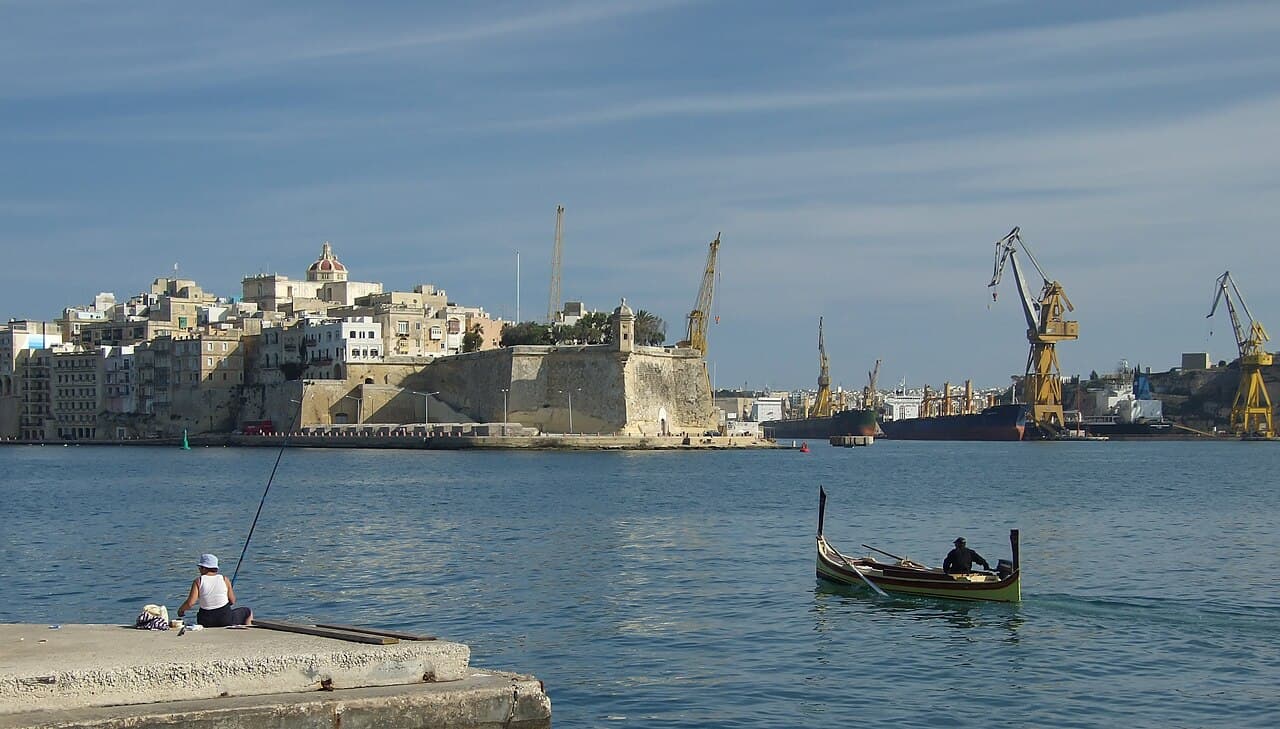
MaltaPhoto: MrPanyGoff / Wikimedia Commons (CC BY-SA 3.0)

Malta

Country · MT · EUR · Europe/Malta

This information may change. Always check the official source.Last verified: August 2026 by

Full Schengen member: 90 days in any 180, counted automatically by EES.

  • 90 days in any rolling 180. Not 90 days per visit and not 90 days per country. Every day anywhere in the Schengen area counts against the same allowance.
  • Malta is a full Schengen member, so a flight from anywhere else in the area is a domestic arrival with no passport check.
  • The EU Entry/Exit System has been fully operational since 10 April 2026.
  • ETIAS has not launched and there is no announced launch date. The Q4 2026 target that circulated through 2025 was removed from the official pages in July 2026.
  • The Schengen short stay visa fee is EUR 90, EUR 45 for children aged 6 to 11.
More details

The Schengen arithmetic

  • 90 days in any rolling 180. Not 90 days per visit and not 90 days per country. Every day anywhere in the Schengen area counts against the same allowance.
  • Malta is a full Schengen member, so a flight from anywhere else in the area is a domestic arrival with no passport check.
  • Arriving from outside Schengen, the airport is an external border and EES applies - which on a small island with concentrated arrival times can mean a long queue.
  • The rolling window is the part people get wrong. On any given day, count back 180 days and add up your Schengen days in that period.
  • The passport must have been issued within the last 10 years and be valid for 3 months beyond your intended departure.

EES: no more stamps

  • The EU Entry/Exit System has been fully operational since 10 April 2026.
  • Your face and fingerprints are registered on first entry at a Schengen external border, and reused on later trips.
  • No stamp goes in your passport. The system computes your 90/180 balance itself.
  • Keep your own record of entry and exit dates. If the system's view and yours differ, you want the evidence.

ETIAS: not yet, and no date

  • ETIAS has not launched and there is no announced launch date. The Q4 2026 target that circulated through 2025 was removed from the official pages in July 2026.
  • Applications are not open. Any website selling you an ETIAS today is a scam.
  • When it comes, the fee is EUR 20, free for under-18s and over-70s. The old EUR 7 figure is obsolete.
  • It will be a travel authorisation, not a visa, valid three years or until the passport expires.

Where your nationality lands

Visa and entry in Malta
You holdWhat you need
Germany, France, Italy, Spain, Netherlands, PolandNothing. EU freedom of movement
USA, Canada, Australia, UK, Japan, South Korea, Malaysia, Singapore, TaiwanNo visa. 90/180, EES registration
China, India, Cambodia, Saudi ArabiaSchengen visa in advance
RussiaSchengen visa in advance, single entry as a rule
  • The Schengen short stay visa fee is EUR 90, EUR 45 for children aged 6 to 11.

  • The ferry to Sicily is an internal Schengen crossing. The one to Tunisia is not, and is an external border in both directions.

Sources (3)

Malta applies the EU allowance, and being an island means almost every arrival is by air with the higher value limit.

  • Between EU countries there is no duty-free limit. Goods bought tax-paid in another member state travel with you; customs may only ask what a very large quantity is for, against indicative figures of 800 cigarettes and 10 litres of spirits.
  • Arriving from outside the EU the allowance is one set of numbers: 200 cigarettes, 1 litre of spirits over 22 % (or 2 litres of fortified or sparkling wine), 4 litres of still wine and 16 litres of beer.
  • Other goods are capped by value - EUR 430 arriving by air or sea, EUR 300 by land - and the allowance cannot be pooled between travellers for a single item.
More details
  • Between EU countries there is no duty-free limit. Goods bought tax-paid in another member state travel with you; customs may only ask what a very large quantity is for, against indicative figures of 800 cigarettes and 10 litres of spirits.
  • Arriving from outside the EU the allowance is one set of numbers: 200 cigarettes, 1 litre of spirits over 22 % (or 2 litres of fortified or sparkling wine), 4 litres of still wine and 16 litres of beer.
  • Other goods are capped by value - EUR 430 arriving by air or sea, EUR 300 by land - and the allowance cannot be pooled between travellers for a single item.
  • Cash of EUR 10,000 or more must be declared, counting notes, coins, cheques and prepaid cards together. The money is seized for not declaring it, not for carrying it.
  • Nearly every arrival is by air or sea, so the EUR 430 value limit applies rather than the EUR 300 one for land crossings.
Sources (1)

EHIC and GHIC both work, care is good and in English, and the heat is the main hazard.

  • EU and EEA visitors: carry your EHIC. It gives access to state healthcare on the same terms as a resident.
  • UK visitors: the GHIC does the same job. Neither card is travel insurance, and neither covers repatriation or a private clinic.
  • This is the practical health risk. Maltese summers are severe and there is very little shade.
  • Heat exhaustion and sunburn are what actually put visitors in clinics here.
  • Tap water is safe but tastes strongly of desalination. Most residents drink bottled or filtered.
More details

Cover

  • EU and EEA visitors: carry your EHIC. It gives access to state healthcare on the same terms as a resident.
  • UK visitors: the GHIC does the same job. Neither card is travel insurance, and neither covers repatriation or a private clinic.
  • Travel insurance still matters for anything the state system does not cover.
  • Care is delivered in English, which removes the usual friction entirely.
  • Mater Dei is the main hospital; Gozo has a general hospital at Victoria.

The heat

  • This is the practical health risk. Maltese summers are severe and there is very little shade.
  • Heat exhaustion and sunburn are what actually put visitors in clinics here.
  • Drink far more water than feels necessary, and treat the middle of the day as indoor time in July and August.

Everyday health

  • Tap water is safe but tastes strongly of desalination. Most residents drink bottled or filtered.
  • Pharmacies are well stocked and pharmacists advise in English.
  • Jellyfish appear seasonally; local advice at the beach is reliable.
Sources (2)

Valletta

Long-term averages for Valletta: the mean daily high, the mean overnight low and the mean monthly rainfall across 30 years of ERA5 reanalysis data (1995–2024).

DayNight
1015202530°C0100mmJanFebMarAprMayJunJulAugSepOctNovDecJanuary: Day 15 °C, Night 12 °C, Rain 51 mm. February: Day 15 °C, Night 11 °C, Rain 48 mm. March: Day 16 °C, Night 12 °C, Rain 33 mm. April: Day 18 °C, Night 14 °C, Rain 14 mm. May: Day 21 °C, Night 17 °C, Rain 7 mm. June: Day 25 °C, Night 21 °C, Rain 2 mm. July: Day 28 °C, Night 24 °C, Rain 0 mm. August: Day 29 °C, Night 25 °C, Rain 4 mm. September: Day 26 °C, Night 23 °C, Rain 33 mm. October: Day 23 °C, Night 20 °C, Rain 51 mm. November: Day 20 °C, Night 17 °C, Rain 68 mm. December: Day 16 °C, Night 14 °C, Rain 62 mm
Show the monthly table
Valletta
MonthDay (°C)Night (°C)Rain (mm)
January151251
February151148
March161233
April181414
May21177
June25212
July28240
August29254
September262333
October232051
November201768
December161462

When to visit

Malta's summer is a genuine drought - July averages nothing at all - and August nights hold at 25 C. April to June is the stretch this page picks, with September the warm-sea alternative.

Malta's dry season is not a figure of speech. July averages 0 mm and August 4 mm; June manages 2 mm. Nothing else in the Mediterranean basin is quite this categorical, and it shapes the island: there is no summer river, no green hillside and very little natural shade, which is why a July afternoon outdoors is harder work than 28 C sounds.

More details

A summer with no rain in it

Malta's dry season is not a figure of speech. July averages 0 mm and August 4 mm; June manages 2 mm. Nothing else in the Mediterranean basin is quite this categorical, and it shapes the island: there is no summer river, no green hillside and very little natural shade, which is why a July afternoon outdoors is harder work than 28 C sounds.

The heat itself is moderate by Mediterranean standards, because the sea moderates it. August, the hottest month, averages 29 C by day - but 25 C at night, and July 28 and 24. The island stays warm around the clock rather than spiking and cooling, which is comfortable if you are swimming and less so if you are trying to sleep without air conditioning.

April to June, and the case for September

April to June averages 18-25 C by day and is what this page picks: warm, effectively dry, and ahead of the peak. April at 18 C and May at 21 C are walking weather for Valletta, Mdina and the cliffs, which is what most of the island's sightseeing actually is.

September is the other answer and a different one. At 26 C by day and 23 C at night it is still summer, and the sea has had all of August to warm up - it is the month people who come for the water pick over July. October, at 23 C, is the last of it.

One caveat on the numbers above: these are gridded reanalysis figures, and on a small island the grid cell is mostly sea, which damps the extremes and understates winter rainfall in particular. The summer drought and the flat day-night spread are the robust part of this table; treat the winter totals as an underestimate.

Sources (1)

A summer that is genuinely too hot, a party strip that is genuinely too loud, and a tourist tax per night.

  • Paceville, in St Julian's, is the nightlife district and is extremely loud until very late.
  • Booking sites describe it as "St Julian's" without distinguishing, and people arrive expecting a seaside town.
  • July and August are very hot - regularly over 35 C with no relief at night - and the island fills.
  • May, June, September and October are the best months by a wide margin.
  • A nightly eco-contribution (tourist tax) applies per person, capped per stay.
More details

Where not to book by accident

  • Paceville, in St Julian's, is the nightlife district and is extremely loud until very late.
  • Booking sites describe it as "St Julian's" without distinguishing, and people arrive expecting a seaside town.
  • Sliema is calmer, Valletta quieter still, and the Three Cities across the harbour quietest of all.

The season

  • July and August are very hot - regularly over 35 C with no relief at night - and the island fills.
  • May, June, September and October are the best months by a wide margin.
  • Winter is mild, cheap and windy, and a good time for the historical sights.

Practicalities

  • A nightly eco-contribution (tourist tax) applies per person, capped per stay.
  • Gozo is a different pace entirely and is worth staying on rather than day-tripping.
  • Air conditioning is essential in summer - confirm the listing has it.
Sources (2)

EU visitors need nothing at all, and the island is small enough that coverage is never a question.

  • Roam-like-at-home applies. A SIM from any EU or EEA country works here at your domestic rates, with your domestic allowance. Buying anything local is money wasted.
  • Epic and GO cover the islands and coverage is total - Malta is 27 km long.
  • An eSIM is live before you land and skips the shop entirely, which on a short trip is the whole argument for it.
  • Keep your home number reachable for two-factor codes. If you swap in a local SIM as your only card, bank apps that text a code to your home number stop working at the worst possible moment. A dual-SIM phone, or an eSIM alongside your home SIM, solves it.
More details

If you have an EU plan, stop reading

  • Roam-like-at-home applies. A SIM from any EU or EEA country works here at your domestic rates, with your domestic allowance. Buying anything local is money wasted.
  • UK plans are not covered any more. Several UK networks reintroduced EU roaming charges after Brexit - check yours before you land rather than after.

Local prepaid SIM

  • Epic and GO cover the islands and coverage is total - Malta is 27 km long.
  • Prepaid packs are sold at the airport and in every town.
  • Bring your passport.

eSIM

  • An eSIM is live before you land and skips the shop entirely, which on a short trip is the whole argument for it.
  • Check your phone takes one. Most flagship phones since 2019 do; most budget models do not.

Practical points

  • Keep your home number reachable for two-factor codes. If you swap in a local SIM as your only card, bank apps that text a code to your home number stop working at the worst possible moment. A dual-SIM phone, or an eSIM alongside your home SIM, solves it.
  • Wi-fi is widespread in cafes, hotels and stations.
Sources (2)

Maltese sockets are British Type at 230 V, the only socket type in general use.

  • Nothing from continental Europe fits. A Europlug needs an adapter here, unlike almost everywhere else in the Mediterranean.
  • British plugs fit straight in, and Maltese plugs work in the UK and Ireland.
  • Bathrooms have shaver sockets taking a Europlug at low current.
  • 230 V matches Europe. American 120 V-only appliances need a converter.
  • Only Ireland and Cyprus share this in the EU. An adapter that worked in Italy or Greece will not help in Valletta.
More details

Sockets in Malta are Type at 230 V, 50 Hz - the British three-pin plug, from the years under British administration.

  • Nothing from continental Europe fits. A Europlug needs an adapter here, unlike almost everywhere else in the Mediterranean.
  • British plugs fit straight in, and Maltese plugs work in the UK and Ireland.
  • Bathrooms have shaver sockets taking a Europlug at low current.
  • 230 V matches Europe. American 120 V-only appliances need a converter.
  • Only Ireland and Cyprus share this in the EU. An adapter that worked in Italy or Greece will not help in Valletta.
  • Every plug carries its own fuse, as in Britain, which is why they are so much bigger than continental ones.
Sources (1)

English is official, sockets are British, and the island is far more Catholic than a beach holiday suggests.

  • 230 V, 50 Hz, socket type - the British three-pin plug.
  • This is the only country in this European batch that uses it. Continental European visitors need an adapter; British visitors, unusually, do not.
  • Maltese and English are both official. Everything is signed in both and you can conduct an entire trip in English.
  • Malta is strongly Catholic and village feasts (festi) run through the summer, with fireworks that are extremely loud and go on late.
  • Everything is close. Nowhere on Malta is more than about 45 minutes from anywhere else by bus.
More details

Power: British plugs

  • 230 V, 50 Hz, socket type - the British three-pin plug.
  • This is the only country in this European batch that uses it. Continental European visitors need an adapter; British visitors, unusually, do not.

Language

  • Maltese and English are both official. Everything is signed in both and you can conduct an entire trip in English.
  • Maltese is Semitic - descended from Arabic, written in Latin script, with heavy Italian and English borrowing. It is the only Semitic language written in Latin script and an official EU language.
  • Italian is widely understood.

Religion and custom

  • Malta is strongly Catholic and village feasts (festi) run through the summer, with fireworks that are extremely loud and go on late.
  • Churches expect covered shoulders and knees; some lend shawls.
  • Sunday morning is quiet and shops in villages close.

Practicalities

  • Everything is close. Nowhere on Malta is more than about 45 minutes from anywhere else by bus.
  • Gozo runs slower and closes earlier.
Sources (2)

The euro, cards everywhere, and prices that have risen a long way in a decade.

  • Malta uses the euro and has since 2008.
  • Cards work everywhere and contactless is standard.
  • Malta is no longer the cheap Mediterranean option it was a decade ago. Accommodation in particular has risen sharply.
  • Always refuse the machine's offer to charge you in your own currency. Dynamic currency conversion at an ATM or a card terminal costs several per cent, every time, and the offer is worded to sound helpful. Choose the local currency and let your own bank convert.
  • Around 10 per cent in restaurants where service is not included.
More details

The currency

  • Malta uses the euro and has since 2008.
  • Cards work everywhere and contactless is standard.

Prices

  • Malta is no longer the cheap Mediterranean option it was a decade ago. Accommodation in particular has risen sharply.
  • Eating away from the Sliema and St Julian's waterfront cuts the bill substantially.
  • Buses and ferries remain very cheap, which makes the Explore card good value.

ATMs

  • Always refuse the machine's offer to charge you in your own currency. Dynamic currency conversion at an ATM or a card terminal costs several per cent, every time, and the offer is worded to sound helpful. Choose the local currency and let your own bank convert.
  • Use bank ATMs rather than the independent machines in tourist areas, which add their own fee on top.

Tipping

  • Around 10 per cent in restaurants where service is not included.
  • Check the bill - some tourist restaurants add service and leave the tip line blank as well.
Sources (2)

Everyday prices

Typical prices in euro (EUR), averaged across the country by Numbeo and read on 19 August 2026. Tick Convert prices above the table to see every amount in your own currency.

Everyday prices
ItemTypical price
Inexpensive restaurant meal15 EUR
Dinner for two, mid-range, three courses75 EUR
Cappuccino2.48 EUR
Local draught beer, 0.5 l4.00 EUR
Bottled water, 0.33 l1.51 EUR
Public transport, one-way ticket2.00 EUR
Taxi, starting fare5.00 EUR
Petrol, 1 litre1.34 EUR
Cigarettes, pack of 20 (Marlboro)6.00 EUR
Average net monthly salary1,590 EUR

These are country-wide averages, not a price list: tourist districts, airports and islands sit well above them, and small towns below. The salary line is there for proportion - it is what people living here actually earn.

Sources (1)

Airport guides for Malta1

One page per airport: the routes into town, what they cost and the trap particular to that arrival.

See all 1 airports

The X4 bus runs to Valletta 24 hours a day for a couple of euros, and the Explore card pays for itself in three days.

  • The airport is about 8 km from Valletta - nowhere in Malta is far from anywhere.
  • Route X4 runs directly to Valletta in roughly 25 to 45 minutes, 24 hours a day, seven days a week. A late arrival is never stranded.
  • Kiosks in the arrivals hall sell tourist cards 24 hours a day.
  • The 7-day Explore card is around EUR 21 for unlimited travel and pays for itself in about three days of ordinary use.
  • Bolt and eCabs both operate and are cheap over these distances.
More details
Malta International (MLA)
  • The airport is about 8 km from Valletta - nowhere in Malta is far from anywhere.
  • Route X4 runs directly to Valletta in roughly 25 to 45 minutes, 24 hours a day, seven days a week. A late arrival is never stranded.
  • A single fare is around EUR 2.50 in cash.
  • X1, X2 and X3 serve the other side of the island - Cirkewwa for the Gozo ferry, St Julian's and Sliema, and Bugibba.
Buy the card at the airport
  • Kiosks in the arrivals hall sell tourist cards 24 hours a day.
  • The 7-day Explore card is around EUR 21 for unlimited travel and pays for itself in about three days of ordinary use.
  • Buses are the whole transport system here - there is no rail, no metro, and the bus network genuinely reaches everywhere.
  • Note that Tallinja Direct (TD) routes are not covered by the free-travel concessions and charge a fare of their own.
Taxis and ride-hailing
  • Bolt and eCabs both operate and are cheap over these distances.
  • The airport has a fixed-fare taxi desk with prices by destination, posted.
Sources (2)

Buses go everywhere, ferries link the islands, and everyone drives on the left.

  • Malta drives on the left, a British legacy, and it is the only country in this European batch that does.
  • Junctions and roundabouts run the British way, which catches out drivers from the continent far more than the other way round.
  • The bus network reaches every village and is cheap, especially with the Explore card.
  • Buses fill in summer and pass full stops; allow margin.
  • Gozo Channel runs the Cirkewwa to Mgarr ferry roughly every 45 minutes, taking about 25 minutes. You pay on the return leg from Gozo, not on the way out.
More details

Driving on the left

  • Malta drives on the left, a British legacy, and it is the only country in this European batch that does.
  • Junctions and roundabouts run the British way, which catches out drivers from the continent far more than the other way round.
  • Maltese driving is assertive and the roads are narrow, with poor lane discipline and frequent potholes.
  • Parking in Valletta and Sliema is close to impossible. The bus is genuinely better.

Buses

  • The bus network reaches every village and is cheap, especially with the Explore card.
  • Buses fill in summer and pass full stops; allow margin.
  • The Valletta bus terminus outside the city gate is the hub for almost everything.

Ferries

  • Gozo Channel runs the Cirkewwa to Mgarr ferry roughly every 45 minutes, taking about 25 minutes. You pay on the return leg from Gozo, not on the way out.
  • The Valletta to Sliema and Valletta to Three Cities ferries are quick, cheap and much nicer than the bus.
  • Comino and the Blue Lagoon are served by small operators from Cirkewwa and Marfa.
Sources (3)

Malta drives on the left, the roads are free and narrow, and the buses reach almost everything.

  • Traffic drives on the left, another British legacy, and the roads are the narrowest in the EU.
  • There are no tolls, and no motorways worth the name - the island is 27 km long.
  • Parking in Valletta and Sliema is genuinely difficult and the historic streets are one-way mazes. Many visitors use the bus network, which reaches nearly everywhere for very little.
  • The alcohol limit is 0.05 %.
  • Local driving is assertive and roundabout discipline is loose; a small car and patience are worth more than a powerful one.
More details

Left-hand traffic, no tolls, and streets that were laid out for carts.

  • Traffic drives on the left, another British legacy, and the roads are the narrowest in the EU.
  • There are no tolls, and no motorways worth the name - the island is 27 km long.
  • Parking in Valletta and Sliema is genuinely difficult and the historic streets are one-way mazes. Many visitors use the bus network, which reaches nearly everywhere for very little.
  • The alcohol limit is 0.05 %.
  • Local driving is assertive and roundabout discipline is loose; a small car and patience are worth more than a powerful one.
Sources (1)

One of the safest countries in Europe; the sea and the roads are the real risks.

  • Malta's coast is mostly rock, not sand, and shelves steeply.
  • Currents around Comino and the Blue Lagoon are strong and boats are numerous - a bad combination for swimmers.
  • Driving on the left, narrow roads and assertive driving combine badly - see the transport section.
  • Pedestrian crossings are treated as advisory by some drivers.
  • Malta is among the safest countries in Europe and violent crime against visitors is very rare.
More details

The sea

  • Malta's coast is mostly rock, not sand, and shelves steeply.
  • Currents around Comino and the Blue Lagoon are strong and boats are numerous - a bad combination for swimmers.
  • Beaches fly warning flags and they mean it; the north-westerly gregale makes the sea genuinely dangerous some days.
  • Cliff paths at Dingli and elsewhere are unfenced.

Roads

  • Driving on the left, narrow roads and assertive driving combine badly - see the transport section.
  • Pedestrian crossings are treated as advisory by some drivers.
  • Hired scooters and quad bikes account for a large share of visitor injuries.

Crime

  • Malta is among the safest countries in Europe and violent crime against visitors is very rare.
  • Pickpocketing in Valletta and the Sliema promenade is at the usual low level.
  • Paceville at night is the one place where drink-related trouble and inflated bar bills occur.
Sources (1)

112 for everything, answered in English.

  • 112 works from any phone, free, with no credit and no SIM, and operators handle English.
  • Report a theft to the police and get a written record. No insurer will pay a claim without one, and obtaining it later from another country is close to impossible.
  • A lost passport means the police first, then your embassy.
  • Save 112 in your phone now, and write your accommodation's address somewhere that does not depend on a charged battery.
  • Not every country keeps an embassy in Malta. Several cover it from a neighbouring capital - check yours before you need to know.
More details

The numbers

Emergency numbers in Malta
ServiceNumber
All emergencies112
Ambulance, fire, police112
  • 112 works from any phone, free, with no credit and no SIM, and operators handle English.

If you need help

  • Report a theft to the police and get a written record. No insurer will pay a claim without one, and obtaining it later from another country is close to impossible.
  • A lost passport means the police first, then your embassy.
  • Your embassy cannot pay your bills or get you out of jail, but it can issue emergency travel documents, contact your family and provide lists of local lawyers and doctors.

Before you need them

  • Save 112 in your phone now, and write your accommodation's address somewhere that does not depend on a charged battery.

  • Not every country keeps an embassy in Malta. Several cover it from a neighbouring capital - check yours before you need to know.

  • Calls are answered in English, which makes this one of the easiest countries in Europe in which to deal with an emergency.

Sources (2)