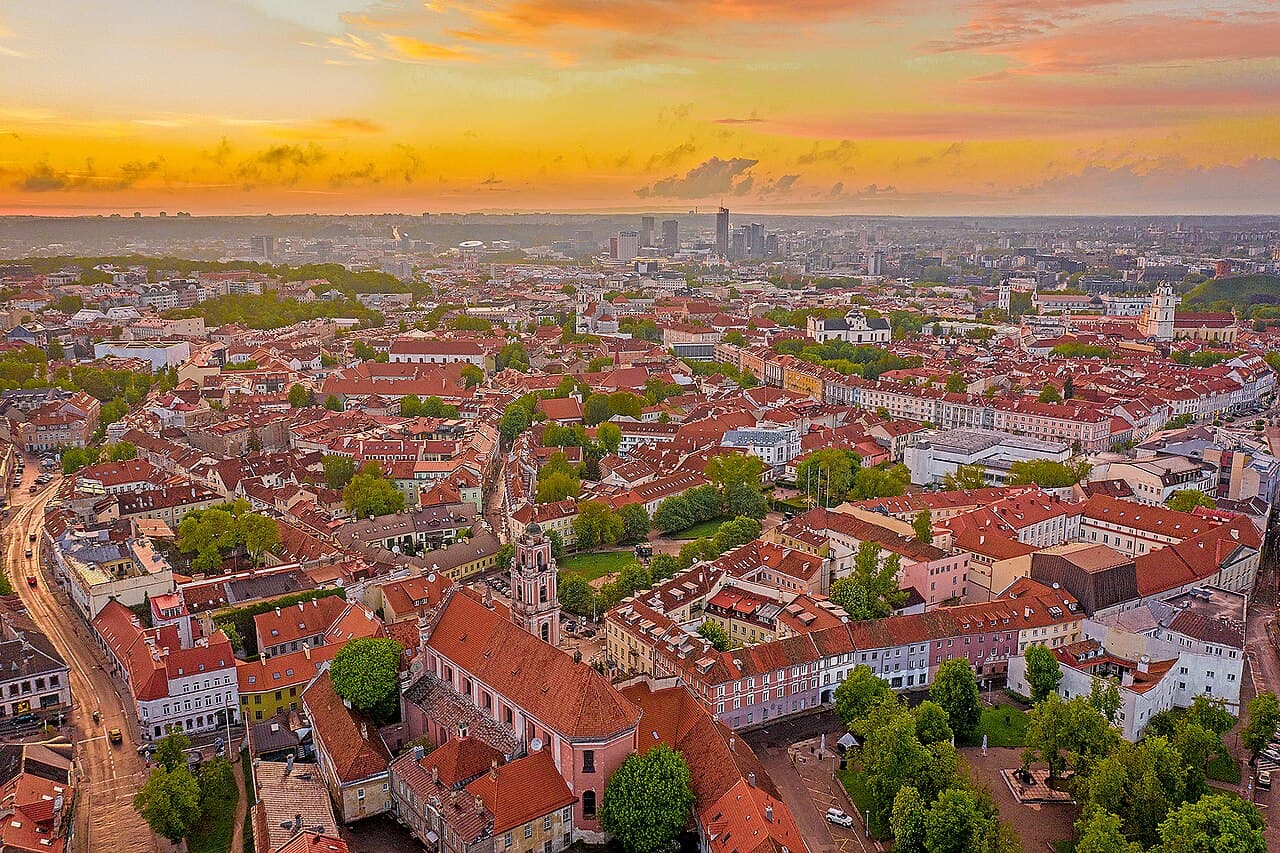
LithuaniaPhoto: Augustas Didzgalvis / Wikimedia Commons (CC BY-SA 4.0)

Lithuania

Country · LT · EUR · Europe/Vilnius

This information may change. Always check the official source.Last verified: August 2026 by

Schengen: 90 days in any 180, counted automatically by EES. The Belarus border is not a route and the Kaliningrad transit is not what it was.

  • 90 days in any rolling 180. Not 90 days per visit and not 90 days per country. Every day anywhere in the Schengen area counts against the same allowance.
  • The border with Belarus is not a practical route. Crossings have been progressively restricted and the FCDO advises against all travel to Belarus in any case.
  • The EU Entry/Exit System has been fully operational since 10 April 2026.
  • ETIAS has not launched and there is no announced launch date.
  • The Schengen short stay visa fee is EUR 90, EUR 45 for children aged 6 to 11.
More details

The Schengen arithmetic

  • 90 days in any rolling 180. Not 90 days per visit and not 90 days per country. Every day anywhere in the Schengen area counts against the same allowance.
  • Lithuania is a full Schengen member. Arriving from Latvia or Poland involves no passport check at all.
  • The Baltic states are one trip for most visitors and they share your 90 days between them.
  • The passport must have been issued within the last 10 years and be valid for 3 months beyond your intended departure.

The eastern borders

  • The border with Belarus is not a practical route. Crossings have been progressively restricted and the FCDO advises against all travel to Belarus in any case.
  • Kaliningrad transit is heavily restricted. The old road and rail transit arrangements across Lithuania have been curtailed; do not plan on them.
  • The Polish border is the working land route in and out, and it is an ordinary Schengen internal crossing.
  • The border regions themselves are safe to visit. It is the crossings that have stopped functioning normally.

EES: no more stamps

  • The EU Entry/Exit System has been fully operational since 10 April 2026.
  • Your face and fingerprints are registered on first entry at a Schengen external border, and reused on later trips.
  • No stamp goes in your passport. The system computes your 90/180 balance itself.

ETIAS: not yet, and no date

  • ETIAS has not launched and there is no announced launch date.
  • Applications are not open. Any website selling you an ETIAS today is a scam.
  • When it comes, the fee is EUR 20, free for under-18s and over-70s.

Where your nationality lands

Visa and entry in Lithuania
You holdWhat you need
Germany, France, Italy, Spain, Netherlands, PolandNothing. EU freedom of movement
USA, Canada, Australia, UK, Japan, South Korea, Malaysia, Singapore, TaiwanNo visa. 90/180, EES registration
China, India, Cambodia, Saudi ArabiaSchengen visa in advance
RussiaSchengen visa in advance, with significant additional restrictions
  • The Schengen short stay visa fee is EUR 90, EUR 45 for children aged 6 to 11.
Sources (4)

Lithuania applies the EU's lower 40-cigarette limit at its borders with Belarus and Kaliningrad.

  • Between EU countries there is no duty-free limit. Goods bought tax-paid in another member state travel with you; customs may only ask what a very large quantity is for, against indicative figures of 800 cigarettes and 10 litres of spirits.
  • The tobacco allowance is the lower one for land and sea arrivals: 40 cigarettes rather than 200. The rest of the allowance is the EU standard - 1 litre of spirits over 22 % (or 2 litres of fortified or sparkling wine), 4 litres of still wine and 16 litres of beer.
  • Other goods are capped by value - EUR 430 arriving by air or sea, EUR 300 by land - and the allowance cannot be pooled between travellers for a single item.
More details
  • Between EU countries there is no duty-free limit. Goods bought tax-paid in another member state travel with you; customs may only ask what a very large quantity is for, against indicative figures of 800 cigarettes and 10 litres of spirits.
  • The tobacco allowance is the lower one for land and sea arrivals: 40 cigarettes rather than 200. The rest of the allowance is the EU standard - 1 litre of spirits over 22 % (or 2 litres of fortified or sparkling wine), 4 litres of still wine and 16 litres of beer.
  • Other goods are capped by value - EUR 430 arriving by air or sea, EUR 300 by land - and the allowance cannot be pooled between travellers for a single item.
  • Cash of EUR 10,000 or more must be declared, counting notes, coins, cheques and prepaid cards together. The money is seized for not declaring it, not for carrying it.
  • The Belarus and Kaliningrad crossings are external EU borders, and tobacco is the specific thing checked at both.
Sources (1)

EHIC works, care is good in the cities, and tick-borne encephalitis is at one of the highest incidence rates in Europe here.

  • EU and EEA visitors: carry your EHIC. UK visitors: the GHIC does the same job. Neither is travel insurance.
  • Travel insurance still matters for repatriation and private clinics.
  • Lithuania has one of the highest rates of tick-borne encephalitis in Europe. This is not a marginal risk here, and it is the single most useful thing on this page if you are going anywhere green.
  • The season runs roughly April to October and the whole country is a risk area.
  • Tap water is safe to drink.
More details

Cover

  • EU and EEA visitors: carry your EHIC. UK visitors: the GHIC does the same job. Neither is travel insurance.
  • Travel insurance still matters for repatriation and private clinics.
  • Private clinics in Vilnius are quick and inexpensive by western European standards if you would rather not wait.

Ticks: the one to take seriously

  • Lithuania has one of the highest rates of tick-borne encephalitis in Europe. This is not a marginal risk here, and it is the single most useful thing on this page if you are going anywhere green.
  • The season runs roughly April to October and the whole country is a risk area.
  • The vaccine is genuinely worth having if you are hiking, camping, cycling the spit or spending any real time outdoors. Discuss it with a travel clinic well before you go - the course takes weeks.
  • Lyme disease is the commoner infection. Cover up in long grass and woodland, use repellent, and check yourself every evening.
  • Remove a tick promptly with fine tweezers, straight out, without twisting or burning.

Everyday health

  • Tap water is safe to drink.
  • Pharmacies (vaistine) are well stocked and pharmacists advise on minor problems.
  • Care is good in Vilnius, Kaunas and Klaipeda, thinner in rural areas.
  • Bring enough prescription medicine for the trip plus a margin, in original packaging with a copy of the prescription.
Sources (2)

Vilnius

Long-term averages for Vilnius: the mean daily high, the mean overnight low and the mean monthly rainfall across 30 years of ERA5 reanalysis data (1995–2024).

DayNight
-1001020°C0100mmJanFebMarAprMayJunJulAugSepOctNovDecJanuary: Day -2 °C, Night -6 °C, Rain 50 mm. February: Day 0 °C, Night -6 °C, Rain 43 mm. March: Day 4 °C, Night -3 °C, Rain 40 mm. April: Day 12 °C, Night 2 °C, Rain 48 mm. May: Day 17 °C, Night 8 °C, Rain 70 mm. June: Day 21 °C, Night 12 °C, Rain 76 mm. July: Day 23 °C, Night 14 °C, Rain 95 mm. August: Day 22 °C, Night 14 °C, Rain 85 mm. September: Day 17 °C, Night 10 °C, Rain 50 mm. October: Day 10 °C, Night 5 °C, Rain 59 mm. November: Day 4 °C, Night 1 °C, Rain 48 mm. December: Day 0 °C, Night -4 °C, Rain 49 mm
Show the monthly table
Vilnius
MonthDay (°C)Night (°C)Rain (mm)
January-2-650
February0-643
March4-340
April12248
May17870
June211276
July231495
August221485
September171050
October10559
November4148
December0-449

Kaunas

Long-term averages for Kaunas: the mean daily high, the mean overnight low and the mean monthly rainfall across 30 years of ERA5 reanalysis data (1995–2024).

DayNight
-50510152025°C0100mmJanFebMarAprMayJunJulAugSepOctNovDecJanuary: Day -1 °C, Night -5 °C, Rain 48 mm. February: Day 1 °C, Night -5 °C, Rain 40 mm. March: Day 5 °C, Night -2 °C, Rain 39 mm. April: Day 12 °C, Night 2 °C, Rain 45 mm. May: Day 18 °C, Night 8 °C, Rain 60 mm. June: Day 21 °C, Night 12 °C, Rain 72 mm. July: Day 23 °C, Night 15 °C, Rain 89 mm. August: Day 23 °C, Night 14 °C, Rain 83 mm. September: Day 18 °C, Night 10 °C, Rain 47 mm. October: Day 11 °C, Night 5 °C, Rain 58 mm. November: Day 5 °C, Night 1 °C, Rain 47 mm. December: Day 1 °C, Night -3 °C, Rain 47 mm
Show the monthly table
Kaunas
MonthDay (°C)Night (°C)Rain (mm)
January-1-548
February1-540
March5-239
April12245
May18860
June211272
July231589
August231483
September181047
October11558
November5147
December1-347

Klaipeda

Long-term averages for Klaipeda: the mean daily high, the mean overnight low and the mean monthly rainfall across 30 years of ERA5 reanalysis data (1995–2024).

DayNight
-50510152025°C0100mmJanFebMarAprMayJunJulAugSepOctNovDecJanuary: Day 1 °C, Night -3 °C, Rain 63 mm. February: Day 1 °C, Night -3 °C, Rain 50 mm. March: Day 4 °C, Night -1 °C, Rain 41 mm. April: Day 10 °C, Night 3 °C, Rain 36 mm. May: Day 16 °C, Night 8 °C, Rain 43 mm. June: Day 19 °C, Night 12 °C, Rain 61 mm. July: Day 21 °C, Night 15 °C, Rain 80 mm. August: Day 21 °C, Night 15 °C, Rain 89 mm. September: Day 17 °C, Night 12 °C, Rain 69 mm. October: Day 11 °C, Night 7 °C, Rain 85 mm. November: Day 6 °C, Night 3 °C, Rain 70 mm. December: Day 3 °C, Night -1 °C, Rain 69 mm
Show the monthly table
Klaipeda
MonthDay (°C)Night (°C)Rain (mm)
January1-363
February1-350
March4-141
April10336
May16843
June191261
July211580
August211589
September171269
October11785
November6370
December3-169
Sources (1)

Vilnius old town is enormous and cheap; the coast is a two-month season that sells out and then closes.

  • The old town is one of the largest in eastern Europe and staying inside it is affordable in a way that Prague or Tallinn no longer are.
  • Uzupis, the self-declared artists' republic across the river, is walking distance and quieter.
  • Nida and the Curonian Spit are a July and August proposition. Prices double in season and much of it closes out of it.
  • Book months ahead for the season - the spit has limited accommodation and it is protected land, so no more is being built.
  • You will be asked for your passport at check-in.
More details

Vilnius

  • The old town is one of the largest in eastern Europe and staying inside it is affordable in a way that Prague or Tallinn no longer are.
  • Uzupis, the self-declared artists' republic across the river, is walking distance and quieter.
  • Vilnius does not have Riga's stag-party problem to anything like the same degree, so old town noise is less of a booking risk.

The coast

  • Nida and the Curonian Spit are a July and August proposition. Prices double in season and much of it closes out of it.
  • Book months ahead for the season - the spit has limited accommodation and it is protected land, so no more is being built.
  • Palanga is the busier, louder resort; Nida is the quiet, expensive one.

Practicalities

  • You will be asked for your passport at check-in.
  • Rural homesteads (sodybos) are a real category and often include a sauna and a lake, at prices that seem improbable.
  • Winter is very cheap and Vilnius is genuinely atmospheric under snow.
Sources (2)

EU visitors need nothing. Everyone else should note that a local number is worth more here than usual, because several apps demand one.

  • Roam-like-at-home applies. A SIM from any EU or EEA country works in Lithuania at your domestic rates.
  • Several Lithuanian apps require a Lithuanian phone number, including the m.Ticket and Trafi transport ticketing apps that every guide recommends.
  • Three networks: Telia, Bite and Tele2. Coverage is good nationwide.
  • An eSIM is live before you land and is the right answer if you only need data.
  • Free wi-fi is widespread in cafes, hotels and public transport.
More details

If you have an EU plan, stop reading

  • Roam-like-at-home applies. A SIM from any EU or EEA country works in Lithuania at your domestic rates.
  • UK plans are not covered any more. Check whether your network reintroduced EU roaming charges.

The reason a local number is useful here

  • Several Lithuanian apps require a Lithuanian phone number, including the m.Ticket and Trafi transport ticketing apps that every guide recommends.
  • A local prepaid SIM solves it, and it is cheap. If you were on the fence about buying one, this is the argument.
  • If you would rather not, contactless bank cards on the validators work perfectly - see the airport section.

Local prepaid SIM

  • Three networks: Telia, Bite and Tele2. Coverage is good nationwide.
  • Starter packs are sold in kiosks, supermarkets and operator shops and cost very little.
  • Bring your passport - registration applies.

eSIM

  • An eSIM is live before you land and is the right answer if you only need data.
  • It will not give you a Lithuanian number for app registration unless the plan explicitly includes one, which most do not. That is the trade-off.

Practical points

  • Free wi-fi is widespread in cafes, hotels and public transport.
  • Keep your home number reachable for two-factor codes.
Sources (4)

Lithuanian sockets are Type Schuko at 230 V, the same as its Baltic neighbours.

  • A Europlug fits every socket in the country.
  • Latvia, Estonia and Poland match for a two-pin plug; Poland's earthed sockets use the French earth pin instead of clips.
  • British, American and Australian plugs need an adapter.
  • 230 V, so only American 120 V-only equipment needs a converter.
  • Unearthed sockets are still common in Soviet-era housing, identical from the front to the earthed version.
More details

Sockets in Lithuania are Type and at 230 V, 50 Hz - the round Schuko outlet.

  • A Europlug fits every socket in the country.
  • Latvia, Estonia and Poland match for a two-pin plug; Poland's earthed sockets use the French earth pin instead of clips.
  • British, American and Australian plugs need an adapter.
  • 230 V, so only American 120 V-only equipment needs a converter.
  • Unearthed sockets are still common in Soviet-era housing, identical from the front to the earthed version.
  • A trip on to Poland needs nothing extra for a Europlug, but a bare Schuko plug can fail on a Polish earthed socket, which has a pin in the middle instead of clips on the rim.
Sources (1)

Type sockets, one of Europe's oldest living languages, and a Catholic country where the church is a national institution rather than a museum.

  • 230 V, 50 Hz, sockets type (Schuko). The same round two-pin plugs as Germany and most of continental Europe.
  • Lithuanian is one of the most archaic living Indo-European languages and is related only to Latvian. It is not Slavic.
  • Lithuania is strongly Catholic and the church is a living institution. Dress respectfully in churches, which are working buildings rather than exhibits.
  • Shops open late and on Sundays in the cities.
  • Lithuanians are reserved at first and warm once you are past that.
More details

Power

  • 230 V, 50 Hz, sockets type (Schuko). The same round two-pin plugs as Germany and most of continental Europe.
  • UK, US, Irish and Australian plugs need an adapter.

Language

  • Lithuanian is one of the most archaic living Indo-European languages and is related only to Latvian. It is not Slavic.
  • English is widely spoken by younger people and throughout Vilnius.
  • Russian is understood by older people, Polish in the southeast, but English is the neutral choice.
  • "Labas" is hello, "aciu" is thank you - pronounced roughly "ah-choo", which is easy to remember.

Religion and history

  • Lithuania is strongly Catholic and the church is a living institution. Dress respectfully in churches, which are working buildings rather than exhibits.
  • The Hill of Crosses near Siauliai is a genuine pilgrimage site, not a tourist curiosity.
  • The Soviet occupation is living memory. The Museum of Occupations in Vilnius is the KGB's own former building. Treat the subject seriously.

Practicalities

  • Shops open late and on Sundays in the cities.
  • Basketball is the national obsession and mentioning it is an instant conversation.
  • Restaurants serve early by southern European standards; kitchens close around 22:00.

Manners

  • Lithuanians are reserved at first and warm once you are past that.
  • Take your shoes off indoors in someone's home.
  • Shake hands on meeting, and do not do it across a threshold - it is a genuine superstition here.
Sources (2)

The euro, cards nearly everywhere, and one of the cheapest capitals in the eurozone once you leave the old town square.

  • Lithuania uses the euro and has since 2015 - the last of the three Baltic states to adopt it. The litas is gone.
  • Cards work nearly everywhere and contactless is standard, including on public transport.
  • Always refuse the machine's offer to charge you in your own currency. Dynamic currency conversion costs several per cent every time.
  • Vilnius is among the cheapest eurozone capitals, and the gap between the old town square and a street two blocks away is large.
  • Around ten per cent in a restaurant for good service. Service is not usually added, and rounding up is fine elsewhere.
More details

The currency

  • Lithuania uses the euro and has since 2015 - the last of the three Baltic states to adopt it. The litas is gone.

Cards and cash

  • Cards work nearly everywhere and contactless is standard, including on public transport.
  • Carry a little cash for markets, small rural shops and the Curonian Spit ferry booths.
  • Lithuania is a fintech hub and card acceptance is better than the country's income levels would suggest.

ATMs

  • Always refuse the machine's offer to charge you in your own currency. Dynamic currency conversion costs several per cent every time.
  • Use bank ATMs - Swedbank, SEB, Luminor - rather than independent machines in tourist areas.

Prices

  • Vilnius is among the cheapest eurozone capitals, and the gap between the old town square and a street two blocks away is large.
  • Eat where the queue is Lithuanian. The cepelinai in a cafeteria costs a third of what the same dish costs on Pilies Street.

Tipping

  • Around ten per cent in a restaurant for good service. Service is not usually added, and rounding up is fine elsewhere.
Sources (2)

Everyday prices

Typical prices in euro (EUR), averaged across the country by Numbeo and read on 19 August 2026. Tick Convert prices above the table to see every amount in your own currency.

Everyday prices
ItemTypical price
Inexpensive restaurant meal12 EUR
Dinner for two, mid-range, three courses60 EUR
Cappuccino3.22 EUR
Local draught beer, 0.5 l5.00 EUR
Bottled water, 0.33 l2.13 EUR
Public transport, one-way ticket1.00 EUR
Taxi, starting fare2.75 EUR
Petrol, 1 litre1.62 EUR
Cigarettes, pack of 20 (Marlboro)5.50 EUR
Average net monthly salary1,380 EUR

These are country-wide averages, not a price list: tourist districts, airports and islands sit well above them, and small towns below. The salary line is there for proportion - it is what people living here actually earn.

Sources (1)

Airport guides for Lithuania3

One page per airport: the routes into town, what they cost and the trap particular to that arrival.

See all 3 airports

A 30-minute ticket into Vilnius costs EUR 0.65 - but the apps everyone recommends need a Lithuanian phone number, so tap a bank card instead.

  • The airport is about 6 km from the centre and the transfer is short and cheap.
  • Bus 88 runs from the terminal into the centre in about 20 minutes, every 20 to 30 minutes.
  • These are among the cheapest airport transfers in Europe.
  • The m.Ticket and Trafi apps require a Lithuanian phone number. This is the trap: they are what every guide recommends and what residents use, and a visitor with a foreign number cannot register.
  • Bolt is ubiquitous and cheap and is what residents use.
More details
Vilnius Airport (VNO)
  • The airport is about 6 km from the centre and the transfer is short and cheap.
  • Bus 88 runs from the terminal into the centre in about 20 minutes, every 20 to 30 minutes.
  • Bus 3G is the express and the fastest option, running every 10 minutes and also taking about 20 minutes.
  • Buses 1 and 2 connect to the railway station and the bus station.
  • Bus 88N covers the night, running 22:30 to 05:30, so a late arrival has a public option.
The fares, and the app trap
Transport from the airport in Lithuania
TicketPrice
30 minutesEUR 0.65
60 minutesEUR 0.90
One dayEUR 5.00
JUDU cardEUR 1.50
  • These are among the cheapest airport transfers in Europe.
  • The m.Ticket and Trafi apps require a Lithuanian phone number. This is the trap: they are what every guide recommends and what residents use, and a visitor with a foreign number cannot register.
  • Tap a contactless bank card on the validator instead. It works, it needs nothing installed, and it is what you should plan to do.
  • The Narvesen shop in the airport also sells tickets if you would rather hold something physical.
Taxis and ride-hailing
  • Bolt is ubiquitous and cheap and is what residents use.
  • Use the app rather than a rank taxi. Airport ranks in the region have a reputation for opportunistic pricing, and the app removes the argument.
Sources (1)

A small country where buses beat trains for coverage, and the Curonian Spit needs a ferry and a national park fee.

  • Buses cover more of the country than trains and are the default for intercity travel.
  • LTG Link runs the railways and the main line Vilnius to Kaunas to Klaipeda is comfortable and cheap. Vilnius to Kaunas takes about an hour.
  • Klaipeda to Neringa is a ferry crossing - there is no bridge, and the ferry is the only way on with a vehicle.
  • Winter tyres are compulsory from 10 November to 1 April.
  • Vilnius, Kaunas and Klaipeda all run on JUDU-style contactless ticketing.
More details

Buses and trains

  • Buses cover more of the country than trains and are the default for intercity travel.
  • LTG Link runs the railways and the main line Vilnius to Kaunas to Klaipeda is comfortable and cheap. Vilnius to Kaunas takes about an hour.
  • Book online for the coach network through the national system; walk-up is possible but weekend services fill.
  • Vilnius to Riga or Warsaw is a straightforward coach journey of four to six hours.

The Curonian Spit

  • Klaipeda to Neringa is a ferry crossing - there is no bridge, and the ferry is the only way on with a vehicle.
  • The Curonian Spit National Park charges a vehicle entry fee. Pay it at the barrier; enforcement is real.
  • Book the ferry ahead in July and August if you are taking a car. Foot passengers and cyclists rarely have a problem.
  • Cycling the spit is the better option anyway - it is flat, forested and the road is quiet.

Driving

  • Winter tyres are compulsory from 10 November to 1 April.
  • Headlights on at all times, all year.
  • The drink-drive limit is effectively zero and enforcement is strict.
  • Speed cameras are common on the Vilnius to Kaunas and Kaunas to Klaipeda motorways.
  • There is no motorway vignette for cars - unlike Slovakia, Czechia or Austria, Lithuania does not charge private cars for motorway use.

In the cities

  • Vilnius, Kaunas and Klaipeda all run on JUDU-style contactless ticketing.
  • Vilnius old town is walkable end to end and is a UNESCO site; you will not need a bus inside it.
Sources (3)

Lithuanian roads are free for cars, winter tyres run from November to April, and the limit is 0.4 g/l.

  • There is no car vignette; the road charge applies to heavy vehicles.
  • Winter tyres are compulsory from 10 November to 1 April, one of the longest seasons in Europe.
  • The alcohol limit is 0.4 g/l, and zero for professional and new drivers.
  • Dipped headlights are compulsory day and night, all year.
  • The Hill of Crosses, the Curonian Spit and the lakes are the reason to have a car; Vilnius old town is not, and its streets are narrow and one-way.
More details

Free for cars, a long winter tyre season, and a limit lower than most of Europe.

  • There is no car vignette; the road charge applies to heavy vehicles.
  • Winter tyres are compulsory from 10 November to 1 April, one of the longest seasons in Europe.
  • The alcohol limit is 0.4 g/l, and zero for professional and new drivers.
  • Dipped headlights are compulsory day and night, all year.
  • The Hill of Crosses, the Curonian Spit and the lakes are the reason to have a car; Vilnius old town is not, and its streets are narrow and one-way.
  • A green card is not needed inside the EU, but the Kaliningrad and Belarus borders are a different matter and hire cars are barred from both.
Sources (1)

A safe country. The practical hazards are a phone that cannot find itself, ticks in the forest, and a Belarus border that is not a route.

  • Satellite navigation is unreliable across the region and Lithuania has publicly attributed a large rise in GPS jamming incidents to Russia.
  • It affects your phone, not just aircraft. Map apps can misplace you or refuse to lock on, particularly near the Kaliningrad and Belarus borders and on the coast.
  • Lithuania is a low-crime country and violent crime against visitors is rare.
  • Do not attempt to travel to or through Belarus. The FCDO advises against all travel there and there are no consular services.
  • Ticks are a genuine risk - see the health section. Lithuania is heavily forested and the season runs spring to autumn.
More details

GPS interference

  • Satellite navigation is unreliable across the region and Lithuania has publicly attributed a large rise in GPS jamming incidents to Russia.
  • It affects your phone, not just aircraft. Map apps can misplace you or refuse to lock on, particularly near the Kaliningrad and Belarus borders and on the coast.
  • Download offline maps before you travel, and carry a paper map if you are cycling the spit or walking in the forests.
  • Do not build a route that depends on live GPS in the national parks.

Crime

  • Lithuania is a low-crime country and violent crime against visitors is rare.
  • Pickpocketing happens in Vilnius old town, at the bus and railway stations and in crowds. Ordinary precautions are enough.
  • Vilnius station area is scruffier than the rest of the city at night, though not dangerous.
  • Card skimming has been reported at independent ATMs - use bank machines.

The borders

  • Do not attempt to travel to or through Belarus. The FCDO advises against all travel there and there are no consular services.
  • Kaliningrad transit is heavily restricted and is not a route you should plan.
  • The border regions of Lithuania itself are safe to visit - it is the crossings that no longer work.

Nature

  • Ticks are a genuine risk - see the health section. Lithuania is heavily forested and the season runs spring to autumn.
  • Winter cold is serious, with weeks below freezing and a hard wind off the Baltic.
  • The Baltic has rip currents on the open coast. Beaches are flagged; take the flags seriously.
  • The Curonian Spit is a protected dune system. Walking off the boardwalks is both damaging and fineable.
Sources (1)

112 for everything, and an address written down because your phone may not be able to tell anyone where you are.

  • 112 is the only number. Lithuania consolidated police, ambulance and fire onto it, and operators handle English.
  • It works from any phone, free, with no credit and no SIM.
  • GPS interference is a live problem in Lithuania - see the safety section - so do not assume your phone can report your position.
  • Note your accommodation's address and the nearest junction.
  • Report a theft to the police and get a written record. Your insurer will require it.
More details

The numbers

Emergency numbers in Lithuania
ServiceNumber
All emergencies112
Police, ambulance, fire, rescue112
  • 112 is the only number. Lithuania consolidated police, ambulance and fire onto it, and operators handle English.
  • It works from any phone, free, with no credit and no SIM.
  • You can also reach 112 by SMS if you cannot speak - useful and not widely known.

Say where you are

  • GPS interference is a live problem in Lithuania - see the safety section - so do not assume your phone can report your position.
  • Note your accommodation's address and the nearest junction.
  • Lithuanian place names are long and hard to relay if you have not written them down. Have the address in text, not in memory.

If you need help

  • Report a theft to the police and get a written record. Your insurer will require it.
  • A lost passport means the police first, then your embassy.
  • Your embassy cannot pay your bills or get you out of jail, but it can issue emergency travel documents and provide lists of lawyers and doctors.
  • Several countries cover Lithuania from Warsaw or Riga rather than having an embassy in Vilnius - check before you need to know.
Sources (2)