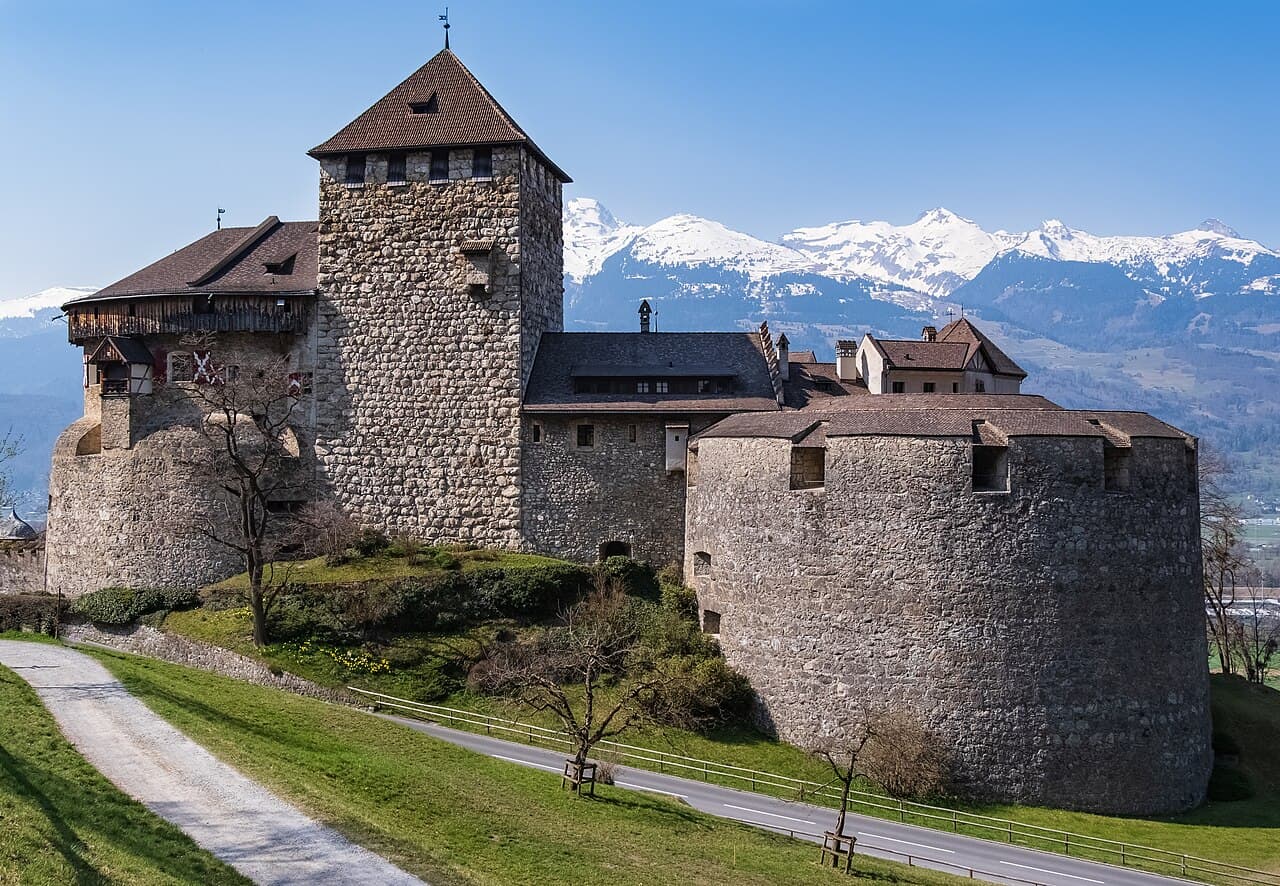
LiechtensteinPhoto: Christian David / Wikimedia Commons (CC BY-SA 4.0)

Liechtenstein

Country · LI · CHF · Europe/Vaduz

This information may change. Always check the official source.Last verified: August 2026 by

In Schengen, not in the EU - so your Schengen days count here, and there is no border control at all.

  • 90 days in any rolling 180. Not 90 days per visit and not 90 days per country. Every day anywhere in the Schengen area counts against the same allowance.
  • Liechtenstein is in the Schengen area but not in the EU. It joined Schengen in 2011 through its customs union with Switzerland.
  • The EU Entry/Exit System has been fully operational since 10 April 2026.
  • ETIAS has not launched and there is no announced launch date. The Q4 2026 target that circulated through 2025 was removed from the official pages in July 2026.
  • The Schengen short stay visa fee is EUR 90, EUR 45 for children aged 6 to 11.
More details

The Schengen arithmetic

  • 90 days in any rolling 180. Not 90 days per visit and not 90 days per country. Every day anywhere in the Schengen area counts against the same allowance.
  • Liechtenstein is in the Schengen area but not in the EU. It joined Schengen in 2011 through its customs union with Switzerland.
  • There is no border control with Switzerland or Austria. You cross the Rhine on a bus and nothing happens.
  • Your Schengen 90/180 applies here and days spent in Liechtenstein count against it.
  • The rolling window is the part people get wrong. On any given day, count back 180 days and add up your Schengen days in that period.
  • The passport must have been issued within the last 10 years and be valid for 3 months beyond your intended departure.

EES: no more stamps

  • The EU Entry/Exit System has been fully operational since 10 April 2026.
  • Your face and fingerprints are registered on first entry at a Schengen external border, and reused on later trips.
  • No stamp goes in your passport. The system computes your 90/180 balance itself.
  • Keep your own record of entry and exit dates. If the system's view and yours differ, you want the evidence.

ETIAS: not yet, and no date

  • ETIAS has not launched and there is no announced launch date. The Q4 2026 target that circulated through 2025 was removed from the official pages in July 2026.
  • Applications are not open. Any website selling you an ETIAS today is a scam.
  • When it comes, the fee is EUR 20, free for under-18s and over-70s. The old EUR 7 figure is obsolete.
  • It will be a travel authorisation, not a visa, valid three years or until the passport expires.

Where your nationality lands

Visa and entry in Liechtenstein
You holdWhat you need
Germany, France, Italy, Spain, Netherlands, PolandNothing. EU freedom of movement
USA, Canada, Australia, UK, Japan, South Korea, Malaysia, Singapore, TaiwanNo visa. 90/180, EES registration
China, India, Cambodia, Saudi ArabiaSchengen visa in advance
RussiaSchengen visa in advance, single entry as a rule
  • The Schengen short stay visa fee is EUR 90, EUR 45 for children aged 6 to 11.

  • The souvenir passport stamp is a paid service. The tourist office in Vaduz will stamp your passport for a small fee - it has no legal effect whatsoever and is purely a souvenir. Do not expect anyone at a border to do it.

Sources (2)

Liechtenstein is inside the Swiss customs union, so Swiss customs rules and Swiss officers apply.

  • Swiss customs law applies in full. Liechtenstein has been in a customs and monetary union with Switzerland since 1923, and the Swiss federal customs administration runs the border on its behalf.
  • That means the Swiss numbers: CHF 300 of goods per person per day free of tax, 5 litres of alcohol up to 18 % plus 1 litre above it, 250 cigarettes.
  • The Austrian border is the customs border, not the Swiss one. Coming from Feldkirch you are leaving the EU customs territory; coming from Buchs you are not crossing one at all.
  • There is no passport or customs post between Liechtenstein and Switzerland, which is why almost nobody notices they have changed country at Schaan.
More details
  • Swiss customs law applies in full. Liechtenstein has been in a customs and monetary union with Switzerland since 1923, and the Swiss federal customs administration runs the border on its behalf.
  • That means the Swiss numbers: CHF 300 of goods per person per day free of tax, 5 litres of alcohol up to 18 % plus 1 litre above it, 250 cigarettes.
  • The Austrian border is the customs border, not the Swiss one. Coming from Feldkirch you are leaving the EU customs territory; coming from Buchs you are not crossing one at all.
  • There is no passport or customs post between Liechtenstein and Switzerland, which is why almost nobody notices they have changed country at Schaan.
  • The cash question follows Swiss practice: no declaration form, but an obligation to answer when asked about CHF 10,000 or more.
Sources (1)

Vaduz

Long-term averages for Vaduz: the mean daily high, the mean overnight low and the mean monthly rainfall across 30 years of ERA5 reanalysis data (1995–2024).

DayNight
-50510152025°C0250mmJanFebMarAprMayJunJulAugSepOctNovDecJanuary: Day 5 °C, Night -4 °C, Rain 119 mm. February: Day 7 °C, Night -3 °C, Rain 111 mm. March: Day 10 °C, Night 1 °C, Rain 127 mm. April: Day 13 °C, Night 4 °C, Rain 133 mm. May: Day 18 °C, Night 8 °C, Rain 189 mm. June: Day 22 °C, Night 12 °C, Rain 205 mm. July: Day 24 °C, Night 14 °C, Rain 208 mm. August: Day 24 °C, Night 14 °C, Rain 220 mm. September: Day 20 °C, Night 10 °C, Rain 149 mm. October: Day 17 °C, Night 7 °C, Rain 121 mm. November: Day 10 °C, Night 2 °C, Rain 127 mm. December: Day 6 °C, Night -3 °C, Rain 130 mm
Show the monthly table
Vaduz
MonthDay (°C)Night (°C)Rain (mm)
January5-4119
February7-3111
March101127
April134133
May188189
June2212205
July2414208
August2414220
September2010149
October177121
November102127
December6-3130

When to visit

Liechtenstein's rain peaks in summer, not winter - the opposite of the Mediterranean pattern - and no month is dry. May to September is the comfortable stretch, at 18-24 C.

Most European trips are planned on the assumption that summer is the dry part of the year. In the Alpine Rhine valley it is the wet one. June, July and August take 205, 208 and 220 mm - the three wettest months - while January and February take 119 and 111. Nothing here is dry: the lowest month of the year still runs over 110 mm.

More details

The wet season is the summer

Most European trips are planned on the assumption that summer is the dry part of the year. In the Alpine Rhine valley it is the wet one. June, July and August take 205, 208 and 220 mm - the three wettest months - while January and February take 119 and 111. Nothing here is dry: the lowest month of the year still runs over 110 mm.

Alpine summer rain is convective. It builds through the afternoon and breaks as a thunderstorm, which is why a wet month in these numbers does not mean a lost day - it means mornings are the reliable half of it, and that a walk planned for 2 p.m. is a different bet from the same walk at 9 a.m.

May to September averages 18-24 C by day and 8-14 C at night, and is the stretch this page picks. September, at 20 C and 149 mm, is the quietest of the five.

Read the rainfall column as the region's, not Vaduz's

One honest caveat about the table above. These are gridded reanalysis values, and the grid cell over Vaduz is tens of kilometres across - far wider than the Rhine valley itself, so it takes in the mountains on both sides. Mountains catch more precipitation than the valley floor between them, and the rainfall column here is correspondingly high for the valley floor.

The temperature column is the reliable half: inland valley temperatures come out close to station records. Treat the millimetres as the shape of the year - summer-peaked, never dry - rather than as what a gauge in Vaduz would collect.

Sources (1)

Data in Liechtenstein

Liechtenstein is in the EEA, so an EU SIM works at home rates - but Switzerland next door is not, and phones do not respect borders.

  • Liechtenstein is an EEA state, and the European Commission names it alongside Iceland and Norway as a country where roam-like-at-home applies.
  • Switzerland is not in the EEA and is not covered by the regime.
  • Most visitors need no local SIM at all, and there is little point buying one for a country this size.
  • An eSIM is live before you land and skips the shop entirely, which on a short trip is the whole argument for it.
  • Keep your home number reachable for two-factor codes. If you swap in a local SIM as your only card, bank apps that text a code to your home number stop working at the worst possible moment. A dual-SIM phone, or an eSIM alongside your home SIM, solves it.
More details

Good news: you are covered

  • Liechtenstein is an EEA state, and the European Commission names it alongside Iceland and Norway as a country where roam-like-at-home applies.
  • An EU or EEA SIM therefore works here at your domestic rates, on your domestic allowance. Buying anything local is money wasted.
  • UK plans are a separate question. Several UK networks reintroduced European roaming charges after Brexit, so check yours rather than assuming.

The Swiss trap

  • Switzerland is not in the EEA and is not covered by the regime.
  • Liechtenstein is 25 km long and the Swiss border is the Rhine, a few minutes' walk from much of the country. A phone left on automatic network selection can settle on a Swiss network without telling you.
  • Being billed as Switzerland for a day in Vaduz is a real way to lose money here, and it does not require you to leave the country.
  • If the bill matters, select the network manually or watch what the status bar says. The Austrian border to the east is the harmless one - Austria is in the EU.

What to actually do

  • Most visitors need no local SIM at all, and there is little point buying one for a country this size.
  • On a non-European plan, an eSIM before you land is simplest, and covers the Swiss and Austrian legs of the same trip if you pick a regional plan.

eSIM

  • An eSIM is live before you land and skips the shop entirely, which on a short trip is the whole argument for it.
  • Check your phone takes one. Most flagship phones since 2019 do; most budget models do not.

Practical points

  • Keep your home number reachable for two-factor codes. If you swap in a local SIM as your only card, bank apps that text a code to your home number stop working at the worst possible moment. A dual-SIM phone, or an eSIM alongside your home SIM, solves it.
  • Wi-fi is widespread in cafes, hotels and stations.
Sources (1)

Liechtenstein uses the hexagonal Swiss Type socket, so a Schuko plug from Austria will not fit.

  • A Schuko plug does not fit. The Austrian border is minutes away and the German plug is too wide for the Swiss recess, which catches out people driving in from Feldkirch.
  • A Europlug fits fine. Chargers and laptop bricks need no adapter.
  • Swiss plugs work here and nowhere else except Switzerland.
  • British, American and Australian plugs need an adapter.
  • 230 V, so only American 120 V-only equipment needs a converter.
More details

Sockets in Liechtenstein are Type and at 230 V, 50 Hz - the Swiss standard, the hexagonal socket with an offset earth hole.

  • A Schuko plug does not fit. The Austrian border is minutes away and the German plug is too wide for the Swiss recess, which catches out people driving in from Feldkirch.
  • A Europlug fits fine. Chargers and laptop bricks need no adapter.
  • Swiss plugs work here and nowhere else except Switzerland.
  • British, American and Australian plugs need an adapter.
  • 230 V, so only American 120 V-only equipment needs a converter.
  • The Swiss socket takes a Europlug because its holes are 19 mm apart, exactly like a Type outlet - the third, offset hole is the only difference.
Sources (1)

German-speaking, Swiss-plugged, and small enough to walk across in a morning.

  • 230 V, 50 Hz, socket type - the Swiss three-pin.
  • Type (two round pins) fits the Swiss socket, so most European chargers work.
  • German is the official language, spoken locally as an Alemannic dialect close to Swiss German.
  • Population is around 40,000 - fewer people than a small town.
  • A day is enough for Vaduz; two if you go up to Malbun.
More details

Power: Swiss sockets

  • 230 V, 50 Hz, socket type - the Swiss three-pin.
  • Type (two round pins) fits the Swiss socket, so most European chargers work.
  • Type (Schuko) does not fit reliably - the Swiss socket is narrower. If you have a German-style plug, bring an adapter. This catches people who assume Switzerland and Germany are the same.

Language

  • German is the official language, spoken locally as an Alemannic dialect close to Swiss German.
  • English is widely spoken.
  • Standard German works everywhere.

The country

  • Population is around 40,000 - fewer people than a small town.
  • The Prince still holds real constitutional power, unusually among European monarchies, including a veto.
  • Vaduz is not really a city - it is a village with a castle above it and a pedestrian street of museums and banks. The castle is the Prince's home and is not open to visitors.

Practicalities

  • A day is enough for Vaduz; two if you go up to Malbun.
  • Everything closes early and Sunday is quiet.
Sources (2)

Swiss francs, not euros, and Swiss prices to match.

  • Liechtenstein uses the Swiss franc (CHF), under a customs union signed with Switzerland in 1923 and in force since 1 January 1924; the franc became the currency in 1924 too.
  • It is not in the eurozone and not in the EU.
  • Swiss prices apply. Liechtenstein is expensive, and eating out in Vaduz costs what it would in Zurich.
  • There is no cheap option in a country this small - crossing into Austria at Feldkirch is the local move for a cheaper shop.
  • Always refuse the machine's offer to charge you in your own currency. Dynamic currency conversion at an ATM or a card terminal costs several per cent, every time, and the offer is worded to sound helpful. Choose the local currency and let your own bank convert.
More details

The Swiss franc

  • Liechtenstein uses the Swiss franc (CHF), under a customs union signed with Switzerland in 1923 and in force since 1 January 1924; the franc became the currency in 1924 too.
  • It is not in the eurozone and not in the EU.
  • Euros are accepted in many shops at a rate that favours the seller. Pay in francs.
  • Cards work everywhere and contactless is standard.

Prices

  • Swiss prices apply. Liechtenstein is expensive, and eating out in Vaduz costs what it would in Zurich.
  • There is no cheap option in a country this small - crossing into Austria at Feldkirch is the local move for a cheaper shop.

ATMs

  • Always refuse the machine's offer to charge you in your own currency. Dynamic currency conversion at an ATM or a card terminal costs several per cent, every time, and the offer is worded to sound helpful. Choose the local currency and let your own bank convert.
  • Use bank ATMs rather than the independent machines in tourist areas, which add their own fee on top.
Sources (2)

Everyday prices

Typical prices in Swiss franc (CHF), averaged across the country by Numbeo and read on 19 August 2026. Tick Convert prices above the table to see every amount in your own currency.

Everyday prices
ItemTypical price
Inexpensive restaurant meal30 CHF
Dinner for two, mid-range, three courses100 CHF
Cappuccino5.22 CHF
Local draught beer, 0.5 l6.00 CHF
Bottled water, 0.33 l4.38 CHF
Public transport, one-way ticket2.20 CHF
Taxi, starting fare1.52 CHF
Petrol, 1 litre2.00 CHF
Cigarettes, pack of 20 (Marlboro)10 CHF
Average net monthly salary7,710 CHF

These are country-wide averages, not a price list: tourist districts, airports and islands sit well above them, and small towns below. The salary line is there for proportion - it is what people living here actually earn.

Sources (1)

Zurich is the airport; a train to Sargans and a bus over the Rhine takes about ninety minutes in total.

  • Zurich (ZRH) is the airport, about 100 km away.
  • The route is train then bus, and it is straightforward:
  • Buchs SG is the other Swiss railhead, with buses into Schaan.
  • Feldkirch in Austria is close and connected by bus - useful if you are coming from Innsbruck or Munich.
  • Swiss rail tickets and LIEmobil buses are separate, though some through tickets exist.
More details
There is no Liechtenstein airport
  • Zurich (ZRH) is the airport, about 100 km away.
  • The route is train then bus, and it is straightforward:
  1. Zurich Hauptbahnhof to Sargans by train - about one hour, several an hour.
  2. Sargans station to Vaduz by LIEmobil bus 11 or 12E - about 20 to 30 minutes.
  • Total: roughly an hour and a half from Zurich airport, including the transfer at Zurich HB.
  • The Swiss train from the airport to Zurich HB takes 12 minutes - see the Zurich airport page.
The other approaches
  • Buchs SG is the other Swiss railhead, with buses into Schaan.
  • Feldkirch in Austria is close and connected by bus - useful if you are coming from Innsbruck or Munich.
  • Friedrichshafen and St Gallen-Altenrhein are small airports nearer than Zurich but with very few flights.
Tickets
  • Swiss rail tickets and LIEmobil buses are separate, though some through tickets exist.
  • The Swiss Travel Pass covers the trains to Sargans and, usefully, LIEmobil buses within Liechtenstein.
Sources (2)

One bus company covers the whole country, and the whole country is 25 km long.

  • One operator runs every bus in the country.
  • Liechtenstein is about 25 km long and 12 km wide - the network covers all of it and buses are frequent.
  • The mountain village of Malbun is the ski area and is reached by bus from Vaduz in about half an hour.
  • It is small - a handful of lifts - and quiet.
  • The Rhine cycle path runs the length of the country and is flat and easy.
More details

LIEmobil

  • One operator runs every bus in the country.
  • Liechtenstein is about 25 km long and 12 km wide - the network covers all of it and buses are frequent.
  • There is no railway station inside the country worth using. Two Austrian trains stop at Schaan-Vaduz, but the service is minimal; the bus is the transport system.
  • Buses connect to Sargans, Buchs and Feldkirch across both borders.

Malbun

  • The mountain village of Malbun is the ski area and is reached by bus from Vaduz in about half an hour.
  • It is small - a handful of lifts - and quiet.

Walking and cycling

  • The Rhine cycle path runs the length of the country and is flat and easy.
  • The mountain trails above Triesenberg and Malbun are the serious walking.
Sources (2)

Liechtenstein has no motorway of its own, and the Swiss vignette covers the road you arrive on.

  • The Swiss A13 runs along the Rhine beside the country and needs the Swiss annual vignette; the roads inside Liechtenstein are free.
  • The country is 25 km long. Vaduz to Malbun, the ski village at the top, takes half an hour.
  • The alcohol limit is 0.5 g/l, as in Switzerland and Austria.
  • Swiss speed enforcement standards apply and the fines match: the tolerance either side of the border is minimal.
  • Winter equipment is needed for the Malbun road from November, which climbs to 1,600 m.
More details

No motorway, no toll of its own, and Swiss rules on the road that brings you in.

  • The Swiss A13 runs along the Rhine beside the country and needs the Swiss annual vignette; the roads inside Liechtenstein are free.
  • The country is 25 km long. Vaduz to Malbun, the ski village at the top, takes half an hour.
  • The alcohol limit is 0.5 g/l, as in Switzerland and Austria.
  • Swiss speed enforcement standards apply and the fines match: the tolerance either side of the border is minimal.
  • Winter equipment is needed for the Malbun road from November, which climbs to 1,600 m.
Sources (1)

112 works, and the Swiss numbers 117, 118 and 144 work too.

  • 112 works from any phone, free, with no credit and no SIM, and operators handle English.
  • Report a theft to the police and get a written record. No insurer will pay a claim without one, and obtaining it later from another country is close to impossible.
  • A lost passport means the police first, then your embassy.
  • Save 112 in your phone now, and write your accommodation's address somewhere that does not depend on a charged battery.
  • Not every country keeps an embassy in Liechtenstein. Several cover it from a neighbouring capital - check yours before you need to know.
More details

The numbers

Emergency numbers in Liechtenstein
ServiceNumber
All emergencies112
Police117
Fire118
Ambulance144
  • 112 works from any phone, free, with no credit and no SIM, and operators handle English.

If you need help

  • Report a theft to the police and get a written record. No insurer will pay a claim without one, and obtaining it later from another country is close to impossible.
  • A lost passport means the police first, then your embassy.
  • Your embassy cannot pay your bills or get you out of jail, but it can issue emergency travel documents, contact your family and provide lists of local lawyers and doctors.

Before you need them

  • Save 112 in your phone now, and write your accommodation's address somewhere that does not depend on a charged battery.

  • Not every country keeps an embassy in Liechtenstein. Several cover it from a neighbouring capital - check yours before you need to know.

  • The Swiss three-digit numbers work here because the two countries share emergency infrastructure.

  • Almost no country has an embassy in Vaduz. Consular assistance comes from Bern or Zurich.

Sources (2)