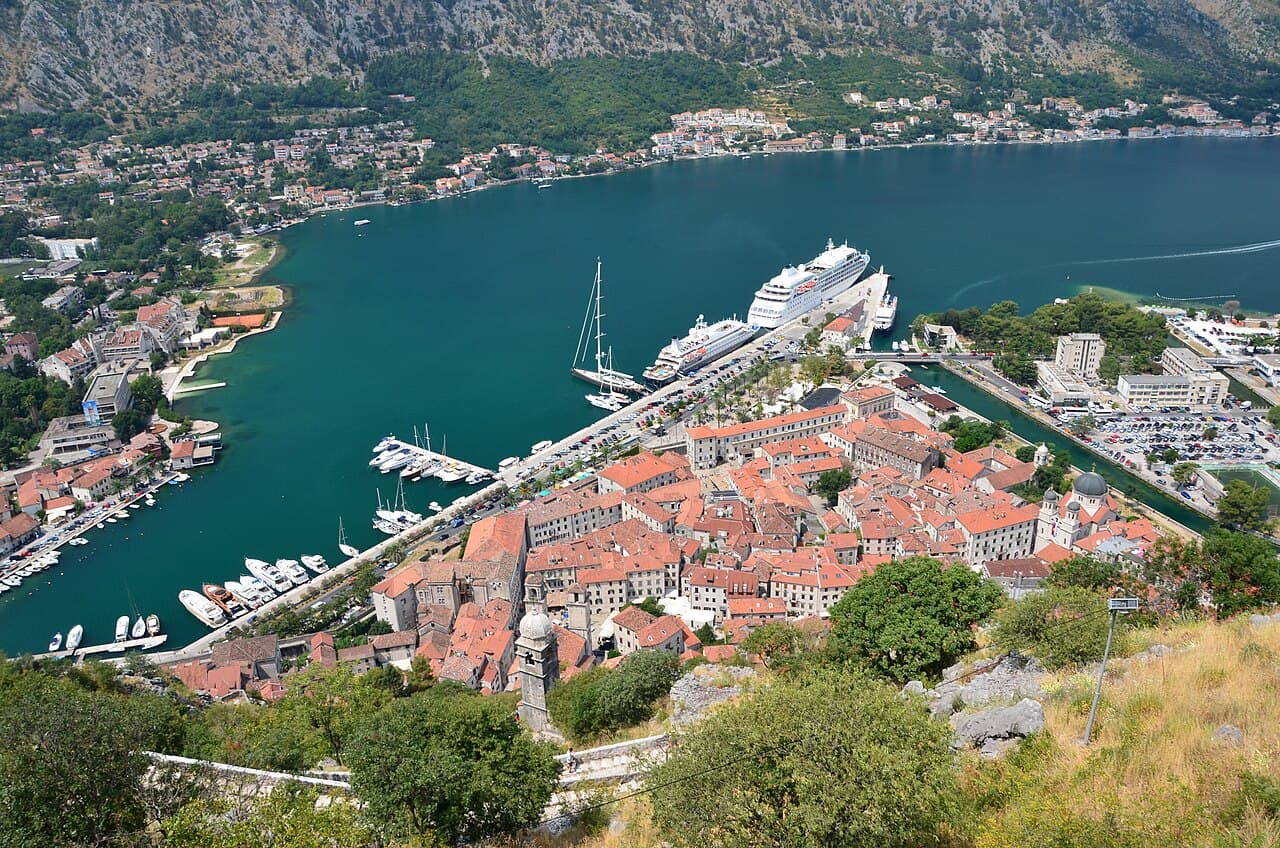
MontenegroPhoto: Gzzz / Wikimedia Commons (CC BY-SA 4.0)

Montenegro

Country · ME · EUR · Europe/Podgorica

This information may change. Always check the official source.Last verified: August 2026 by

Ninety days on Montenegro's own clock, and a registration requirement within 24 hours that private landlords sometimes ignore.

  • Montenegro is outside the Schengen area and outside the EU. Its 90 days in 180 are counted separately.
  • Days spent here do not consume your Schengen allowance - which makes the region genuinely useful if you are close to your 90-day Schengen limit and want to stay in Europe.
  • Every foreign visitor must be registered with the police within 24 hours of arrival.
  • Hotels and licensed accommodation do it automatically and give you a slip (the bijeli karton). Keep it.
  • Most Western passports get 90 days.
More details

The allowance is not your Schengen one

  • Montenegro is outside the Schengen area and outside the EU. Its 90 days in 180 are counted separately.
  • Days spent here do not consume your Schengen allowance - which makes the region genuinely useful if you are close to your 90-day Schengen limit and want to stay in Europe.
  • Your passport is stamped on entry and exit. This country is outside EES, so the stamps are the record and you should keep the passport pages readable.
  • Crossing back into the EU re-enters Schengen and is an external border: expect the EES biometric check, and a longer queue than the drive suggests.

Registration within 24 hours

  • Every foreign visitor must be registered with the police within 24 hours of arrival.
  • Hotels and licensed accommodation do it automatically and give you a slip (the bijeli karton). Keep it.
  • Private apartments and informal rentals sometimes do not. If your host does not mention it, ask - the obligation is yours, not theirs, and fines are issued on departure.
  • Moving between towns means re-registering at each new address, which again the accommodation normally handles.

Practicalities

  • Most Western passports get 90 days.
  • Montenegro is a candidate for EU membership and has aligned much of its visa policy with the EU, but it is not in Schengen and its clock is separate.
Sources (2)

Montenegro uses the euro without being in the EU, so every land border is a customs border with a cash declaration on both sides.

  • The euro is the currency but Montenegro is not in the EU, and it is not in the eurozone either - it adopted the euro unilaterally.
  • Cash of EUR 10,000 or more must be declared on entry and on exit. The exit declaration is the one travellers forget, and the money is seized rather than fined.
  • The allowance from outside is the regional one: a carton of cigarettes and a litre or two of spirits per adult, checked on the coastal road from Croatia and at Bozaj coming up from Albania.
  • Taking animal products into the EU is prohibited, so the cheese from the Durmitor markets does not come home with you through Croatia.
  • Exporting cultural objects and antiquities needs a permit. Old icons in particular are controlled.
More details
  • The euro is the currency but Montenegro is not in the EU, and it is not in the eurozone either - it adopted the euro unilaterally.
  • Cash of EUR 10,000 or more must be declared on entry and on exit. The exit declaration is the one travellers forget, and the money is seized rather than fined.
  • The allowance from outside is the regional one: a carton of cigarettes and a litre or two of spirits per adult, checked on the coastal road from Croatia and at Bozaj coming up from Albania.
  • Taking animal products into the EU is prohibited, so the cheese from the Durmitor markets does not come home with you through Croatia.
  • Exporting cultural objects and antiquities needs a permit. Old icons in particular are controlled.
Sources (1)

No EHIC; travel insurance is essential and the good hospitals are in Podgorica.

  • The EHIC and GHIC do not apply - Montenegro is outside the EU and EEA.
  • Travel insurance is essential, including repatriation.
  • Tap water is safe in the towns.
  • Podgorica has the Clinical Centre of Montenegro, the country's main hospital and the referral point for anything serious.
  • Heat and sun are what actually affect visitors. The coast is exposed and August routinely passes 35 C.
More details

Cover

  • The EHIC and GHIC do not apply - Montenegro is outside the EU and EEA.
  • Travel insurance is essential, including repatriation.
  • The main hospitals are in Podgorica. Coastal towns have clinics that handle routine problems and refer anything serious inland.

Everyday health

  • Tap water is safe in the towns.
  • Pharmacies (apoteka) are well stocked.
  • Ticks are present in the forests; the usual precautions apply.
  • Summer heat on the coast is severe - the practical health risk for most visitors is sunburn and dehydration, not anything exotic.

Getting treated

  • Podgorica has the Clinical Centre of Montenegro, the country's main hospital and the referral point for anything serious.
  • Kotor, Budva and Herceg Novi have clinics that handle routine problems and refer inland.
  • Pharmacies (apoteka) are open long hours in the coastal towns in season and there is a duty rota out of it.
  • Doctors in the tourist areas commonly speak English; inland, less so.

The summer risks

  • Heat and sun are what actually affect visitors. The coast is exposed and August routinely passes 35 C.
  • Sea urchins are common on the rocky coves - swim shoes prevent the commonest injury on this coast.
  • Jellyfish appear in some seasons; local advice at the beach is reliable.
  • Mosquitoes are persistent on the coast in the evening.
Sources (2)

Podgorica

Long-term averages for Podgorica: the mean daily high, the mean overnight low and the mean monthly rainfall across 30 years of ERA5 reanalysis data (1995–2024).

DayNight
0102030°C0500mmJanFebMarAprMayJunJulAugSepOctNovDecJanuary: Day 9 °C, Night 1 °C, Rain 209 mm. February: Day 10 °C, Night 2 °C, Rain 199 mm. March: Day 14 °C, Night 4 °C, Rain 185 mm. April: Day 18 °C, Night 9 °C, Rain 142 mm. May: Day 23 °C, Night 13 °C, Rain 122 mm. June: Day 27 °C, Night 18 °C, Rain 63 mm. July: Day 31 °C, Night 20 °C, Rain 36 mm. August: Day 31 °C, Night 20 °C, Rain 43 mm. September: Day 25 °C, Night 16 °C, Rain 174 mm. October: Day 20 °C, Night 11 °C, Rain 189 mm. November: Day 15 °C, Night 7 °C, Rain 293 mm. December: Day 10 °C, Night 2 °C, Rain 281 mm
Show the monthly table
Podgorica
MonthDay (°C)Night (°C)Rain (mm)
January91209
February102199
March144185
April189142
May2313122
June271863
July312036
August312043
September2516174
October2011189
November157293
December102281

Kotor

Long-term averages for Kotor: the mean daily high, the mean overnight low and the mean monthly rainfall across 30 years of ERA5 reanalysis data (1995–2024).

DayNight
51015202530°C0500mmJanFebMarAprMayJunJulAugSepOctNovDecJanuary: Day 11 °C, Night 5 °C, Rain 246 mm. February: Day 12 °C, Night 5 °C, Rain 225 mm. March: Day 14 °C, Night 7 °C, Rain 207 mm. April: Day 18 °C, Night 10 °C, Rain 174 mm. May: Day 23 °C, Night 15 °C, Rain 154 mm. June: Day 27 °C, Night 19 °C, Rain 95 mm. July: Day 30 °C, Night 22 °C, Rain 63 mm. August: Day 30 °C, Night 22 °C, Rain 85 mm. September: Day 25 °C, Night 18 °C, Rain 207 mm. October: Day 21 °C, Night 14 °C, Rain 230 mm. November: Day 16 °C, Night 10 °C, Rain 355 mm. December: Day 12 °C, Night 7 °C, Rain 313 mm
Show the monthly table
Kotor
MonthDay (°C)Night (°C)Rain (mm)
January115246
February125225
March147207
April1810174
May2315154
June271995
July302263
August302285
September2518207
October2114230
November1610355
December127313
Sources (1)

A two-month coastal season that doubles prices, and a registration slip you should make sure you get.

  • July and August are a different country. The coast fills, prices double or more, and the Kotor bay road becomes a queue.
  • June and September are the sweet spot - warm sea, half the crowds.
  • Confirm your accommodation registers you - see the entry section. A hotel will; a private apartment may not.
  • Keep the slip. It is checked on departure at the land borders more often than at the airport.
  • Kotor is the postcard and is small. It fills with cruise passengers by day and empties at night.
More details

The season

  • July and August are a different country. The coast fills, prices double or more, and the Kotor bay road becomes a queue.
  • June and September are the sweet spot - warm sea, half the crowds.
  • Out of season much of the coast closes.

Registration again

  • Confirm your accommodation registers you - see the entry section. A hotel will; a private apartment may not.
  • Keep the slip. It is checked on departure at the land borders more often than at the airport.

Where

  • Kotor is the postcard and is small. It fills with cruise passengers by day and empties at night.
  • Perast and Herceg Novi are calmer.
  • Budva is the party coast and is loud in season.
  • The north - Durmitor, Zabljak - is a different country again, cheap and empty, with a short summer.
Sources (2)

EU roaming does NOT apply here - Montenegro is outside the EU, so a European SIM roams at foreign rates unless your operator includes the Western Balkans.

  • Montenegro is outside the EU, so roam-like-at-home does not apply. A European SIM roams at whatever your operator charges for a non-EU country, which can be brutal.
  • Crnogorski Telekom - https://www.telekom.me/
  • An eSIM is live before you land and skips the shop entirely, which on a short trip is the whole argument for it.
  • Keep your home number reachable for two-factor codes. If you swap in a local SIM as your only card, bank apps that text a code to your home number stop working at the worst possible moment. A dual-SIM phone, or an eSIM alongside your home SIM, solves it.
More details

Your EU plan does not cover you here

This is the trap, and it is the reverse of everywhere else in this part of Europe.

  • Montenegro is outside the EU, so roam-like-at-home does not apply. A European SIM roams at whatever your operator charges for a non-EU country, which can be brutal.
  • Some EU operators now include the Western Balkans in their roaming zones - a regional agreement has pushed prices down - but it is opt-in by operator, not automatic. Check yours before you land.
  • Turn off data roaming on arrival until you have checked.

Local prepaid SIM

eSIM

  • An eSIM is live before you land and skips the shop entirely, which on a short trip is the whole argument for it.
  • Check your phone takes one. Most flagship phones since 2019 do; most budget models do not.

Practical points

  • Keep your home number reachable for two-factor codes. If you swap in a local SIM as your only card, bank apps that text a code to your home number stop working at the worst possible moment. A dual-SIM phone, or an eSIM alongside your home SIM, solves it.
  • Wi-fi is widespread in cafes, hotels and stations.
Sources (3)

Montenegrin sockets are Type Schuko at 230 V, the same as the rest of the western Balkans.

  • A Europlug fits every socket in the country.
  • Croatia, Bosnia, Serbia and Albania all match, so a coastal road trip needs one adapter at most.
  • British, American and Australian plugs need an adapter.
  • Older stone houses on the coast are often wired with unearthed sockets and one circuit per floor.
  • 230 V, so only American 120 V-only equipment needs a converter.
More details

Sockets in Montenegro are Type and at 230 V, 50 Hz - the round Schuko outlet.

  • A Europlug fits every socket in the country.
  • Croatia, Bosnia, Serbia and Albania all match, so a coastal road trip needs one adapter at most.
  • British, American and Australian plugs need an adapter.
  • Older stone houses on the coast are often wired with unearthed sockets and one circuit per floor.
  • 230 V, so only American 120 V-only equipment needs a converter.
  • Ferries to Bari and Ancona land in Type territory, where an Italian socket needs its own adapter for a Schuko plug.
Sources (1)

Type sockets, two alphabets, and a coastline that runs on a Mediterranean clock.

  • 230 V, 50 Hz, sockets type and .
  • Montenegrin is written in both Latin and Cyrillic, with Latin dominant on the coast.
  • The coast runs on Mediterranean time - a long lunch, a late dinner, an evening promenade.
  • Inland is different, more austere and more mountainous in every sense.
  • Orthodox monasteries expect covered shoulders and knees; Ostrog in particular is a working pilgrimage site, not an attraction.
More details

Power and language

  • 230 V, 50 Hz, sockets type and .
  • Montenegrin is written in both Latin and Cyrillic, with Latin dominant on the coast.
  • English is widely spoken in tourist areas, less so inland.
  • "Dobar dan" is hello, "hvala" is thank you.

The rhythm

  • The coast runs on Mediterranean time - a long lunch, a late dinner, an evening promenade.
  • Inland is different, more austere and more mountainous in every sense.
  • Coffee is a social institution as it is across the region.

Practicalities

  • Orthodox monasteries expect covered shoulders and knees; Ostrog in particular is a working pilgrimage site, not an attraction.
  • Cash is still needed inland.
Sources (2)

Montenegro uses the euro without being in the eurozone, so there is nothing to change and nothing to calculate.

  • Montenegro uses the euro - and is not a member of the eurozone.
  • It adopted the currency unilaterally in 2002, and along with Kosovo is one of only two territories using the euro with no monetary agreement with the EU.
  • Always refuse the machine's offer to charge you in your own currency. Dynamic currency conversion at an ATM or a card terminal costs several per cent, every time, and the offer is worded to sound helpful. Choose the local currency and let your own bank convert.
  • Use bank ATMs rather than the independent machines in tourist areas, which add their own fee on top.
  • Rounding up is normal, 10 per cent for good restaurant service.
More details

The euro, without the eurozone

  • Montenegro uses the euro - and is not a member of the eurozone.
  • It adopted the currency unilaterally in 2002, and along with Kosovo is one of only two territories using the euro with no monetary agreement with the EU.
  • Practically this means nothing changes for you: prices are in euro, cards work, no exchange needed.
  • It does mean Montenegro has no central bank monetary policy of its own, which is a live economic subject locally.
  • Cards work in tourist areas and less reliably inland; carry cash for the north.

ATMs

  • Always refuse the machine's offer to charge you in your own currency. Dynamic currency conversion at an ATM or a card terminal costs several per cent, every time, and the offer is worded to sound helpful. Choose the local currency and let your own bank convert.
  • Use bank ATMs rather than the independent machines in tourist areas, which add their own fee on top.
  • Beware the standalone Euronet machines in tourist areas across the region. They add a large fee and push dynamic currency conversion hard. Use a bank's own machine.

Tipping

  • Rounding up is normal, 10 per cent for good restaurant service.
Sources (2)

Everyday prices

Typical prices in euro (EUR), averaged across the country by Numbeo and read on 19 August 2026. Tick Convert prices above the table to see every amount in your own currency.

Everyday prices
ItemTypical price
Inexpensive restaurant meal10 EUR
Dinner for two, mid-range, three courses45 EUR
Cappuccino2.25 EUR
Local draught beer, 0.5 l2.80 EUR
Bottled water, 0.33 l1.39 EUR
Public transport, one-way ticket1.50 EUR
Taxi, starting fare1.00 EUR
Petrol, 1 litre1.53 EUR
Cigarettes, pack of 20 (Marlboro)3.80 EUR
Average net monthly salary903 EUR

These are country-wide averages, not a price list: tourist districts, airports and islands sit well above them, and small towns below. The salary line is there for proportion - it is what people living here actually earn.

Sources (1)

Airport guides for Montenegro2

One page per airport: the routes into town, what they cost and the trap particular to that arrival.

See all 2 airports

Tivat is the airport for the Bay of Kotor and Podgorica is for everything else; neither has useful public transport.

  • Tivat (TIV) is on the Bay of Kotor - about 5 km from Tivat town, 20 minutes from Kotor, 40 from Budva. This is the airport for the coast.
  • Podgorica (TGD) is the capital's airport, about 12 km out, and is better for the north and for onward travel inland.
  • Neither airport has meaningful public transport. There is no airport bus worth planning around at Tivat.
  • Taxis wait at both. Agree the fare before you set off; Montenegro is not a metered-taxi culture at airports.
  • The bay road is single carriageway and jams badly in summer.
More details
Two airports, and they are not interchangeable
  • Tivat (TIV) is on the Bay of Kotor - about 5 km from Tivat town, 20 minutes from Kotor, 40 from Budva. This is the airport for the coast.
  • Podgorica (TGD) is the capital's airport, about 12 km out, and is better for the north and for onward travel inland.
  • Dubrovnik (DBV) in Croatia is 25 km from the Montenegrin border and is often the cheapest way to the Bay of Kotor - but it means an external Schengen crossing in both directions.
Getting from them
  • Neither airport has meaningful public transport. There is no airport bus worth planning around at Tivat.
  • Taxis wait at both. Agree the fare before you set off; Montenegro is not a metered-taxi culture at airports.
  • Pre-booked transfers are the norm and most accommodation arranges them.
  • Hire cars are collected at the airport and are how most visitors get around - the coast road is the point of the trip.
The Kotor bottleneck
  • The bay road is single carriageway and jams badly in summer.
  • The Verige strait ferry (Kamenari-Lepetane) cuts the corner and saves a long drive around the bay - it runs frequently and takes minutes.
  • In July and August, allow far more time than the distance suggests.
Sources (2)

One extraordinary railway, one crowded coast road, and a car for everything else.

  • One of the great rail journeys of Europe, crossing the Mala Rijeka viaduct - for years the highest railway bridge in the world - and descending from the mountains to the Adriatic.
  • It is slow, old and frequently late, and worth doing anyway.
  • The intercity bus network covers the country and is the practical way to move without a car.
  • Buses to Kotor, Budva and Herceg Novi are frequent in season.
  • The coast road is beautiful and slow.
More details

The Belgrade to Bar railway

  • One of the great rail journeys of Europe, crossing the Mala Rijeka viaduct - for years the highest railway bridge in the world - and descending from the mountains to the Adriatic.
  • It is slow, old and frequently late, and worth doing anyway.
  • Podgorica to Bar takes about an hour and is a pleasant, cheap way to reach the coast.

Buses

  • The intercity bus network covers the country and is the practical way to move without a car.
  • Buses to Kotor, Budva and Herceg Novi are frequent in season.

Driving

  • The coast road is beautiful and slow.
  • The Sozina tunnel between Podgorica and the coast is tolled and saves a mountain pass.
  • The Verige ferry across the bay saves an hour in traffic.
  • Mountain roads in the north are narrow and unguarded - the Durmitor and Tara canyon roads are spectacular and demand attention.
Sources (2)

Montenegro's roads are slow and spectacular, the Sozina tunnel is the one toll, and the bay ferry saves an hour.

  • The Sozina tunnel between Podgorica and the coast is the country's main toll and saves a long mountain climb.
  • The Kamenari-Lepetane ferry across the Bay of Kotor runs constantly, costs little and cuts an hour off the drive around the bay in summer.
  • The alcohol limit is 0.3 g/l.
  • The coast road in July and August is a queue. The Budva-Kotor stretch can take three times as long as the map suggests.
  • The mountain roads to Durmitor and the Tara canyon are narrow, unbarriered and worth doing in daylight.
More details

One tolled tunnel, one useful ferry, and roads that take much longer than their length.

  • The Sozina tunnel between Podgorica and the coast is the country's main toll and saves a long mountain climb.
  • The Kamenari-Lepetane ferry across the Bay of Kotor runs constantly, costs little and cuts an hour off the drive around the bay in summer.
  • The alcohol limit is 0.3 g/l.
  • The coast road in July and August is a queue. The Budva-Kotor stretch can take three times as long as the map suggests.
  • The mountain roads to Durmitor and the Tara canyon are narrow, unbarriered and worth doing in daylight.
Sources (1)

Safe for visitors; the roads and the sea are the actual risks.

  • This is the real hazard in Montenegro. Mountain roads are narrow, unguarded and shared with buses that use the whole width.
  • The Tara canyon and Durmitor roads are spectacular and unforgiving.
  • The Adriatic is calm but the beaches shelve steeply in places.
  • Violent crime against visitors is rare.
  • Durmitor is serious walking country with fast weather.
More details

Roads

  • This is the real hazard in Montenegro. Mountain roads are narrow, unguarded and shared with buses that use the whole width.
  • The Tara canyon and Durmitor roads are spectacular and unforgiving.
  • Do not drive them tired or at night.
  • Coastal traffic in August is dense and overtaking on the bay road is how accidents happen.

The sea

  • The Adriatic is calm but the beaches shelve steeply in places.
  • Rocky coves have sea urchins - swim shoes are worth having.

Crime

  • Violent crime against visitors is rare.
  • Pickpocketing in Kotor and Budva in season is the usual level.
  • Organised crime exists and is well publicised - it does not touch visitors.

Mountains

  • Durmitor is serious walking country with fast weather.
  • Rescue is coordinated through 112.
Sources (1)

112 works, and the old 122/123/124 numbers are still in use.

  • 112 works from any phone, free, with no credit and no SIM, and operators handle English.
  • Report a theft to the police and get a written record. No insurer will pay a claim without one, and obtaining it later from another country is close to impossible.
  • A lost passport means the police first, then your embassy.
  • Save 112 in your phone now, and write your accommodation's address somewhere that does not depend on a charged battery.
  • Not every country keeps an embassy in Montenegro. Several cover it from a neighbouring capital - check yours before you need to know.
More details

The numbers

Emergency numbers in Montenegro
ServiceNumber
All emergencies112
Police122
Fire123
Ambulance124
  • 112 works from any phone, free, with no credit and no SIM, and operators handle English.

If you need help

  • Report a theft to the police and get a written record. No insurer will pay a claim without one, and obtaining it later from another country is close to impossible.
  • A lost passport means the police first, then your embassy.
  • Your embassy cannot pay your bills or get you out of jail, but it can issue emergency travel documents, contact your family and provide lists of local lawyers and doctors.

Before you need them

  • Save 112 in your phone now, and write your accommodation's address somewhere that does not depend on a charged battery.
  • Not every country keeps an embassy in Montenegro. Several cover it from a neighbouring capital - check yours before you need to know.
Sources (3)