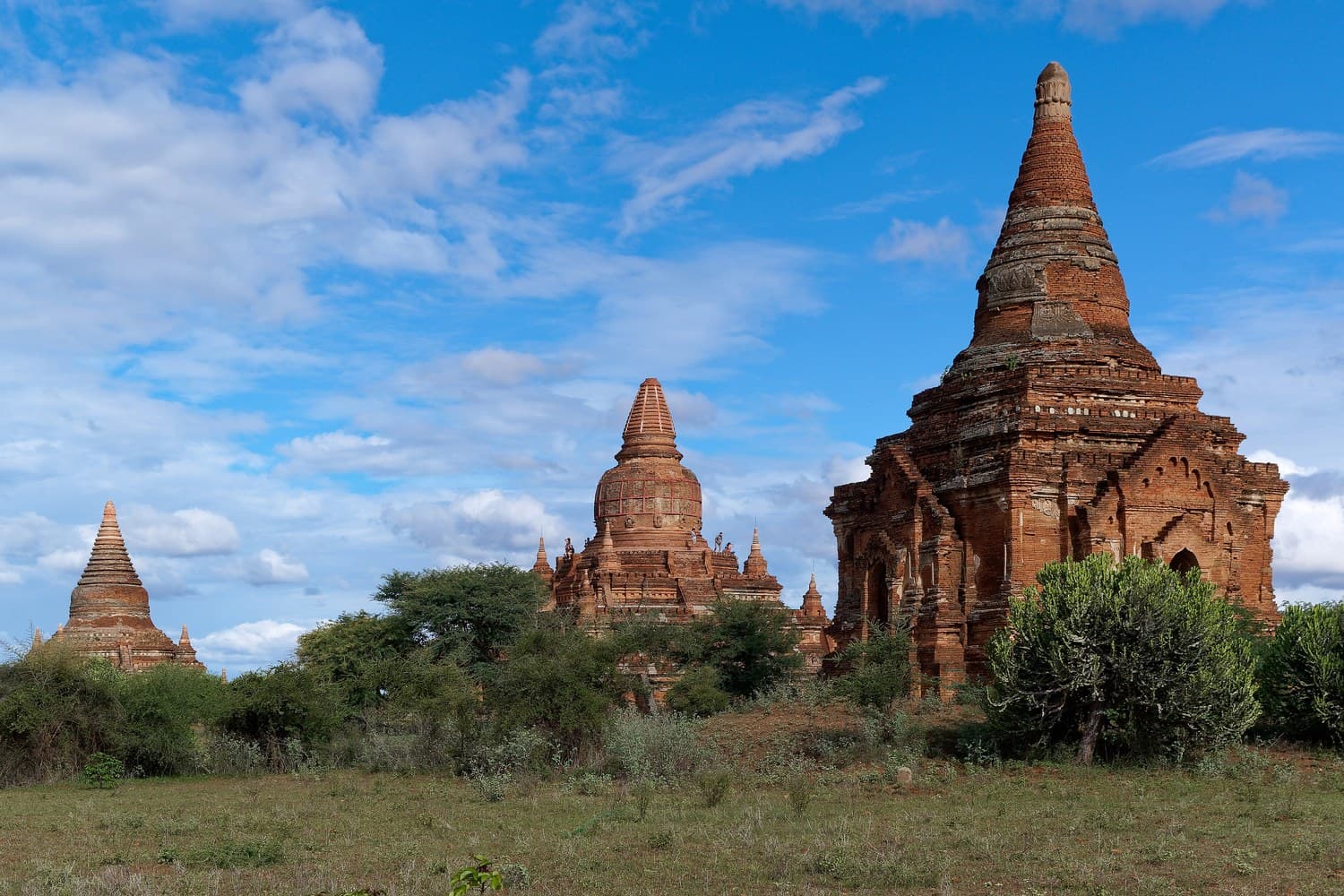
MyanmarPhoto: Jakub Hałun / Wikimedia Commons (CC BY-SA 4.0)

Myanmar

Country · MM · MMK · Asia/Yangon

This information may change. Always check the official source.Last verified: September 2026 by

There is no visa on arrival except for two nationalities. Everyone else holds an e-visa before boarding, and dual nationality is not recognised at all.

  • You must have a visa to enter Myanmar and you cannot obtain one on arrival. For British citizens that is absolute.
  • Visa on arrival for tourism is open to holders of Chinese and Indian passports only.
  • Myanmar does not recognise dual nationality. If you hold it, the authorities may treat you as a Myanmar citizen.
  • Every passenger needs a Passenger's Customs Declaration Form. Airlines issue it on board, or you can pick one up at the airport.
More details

The visa has to exist before you fly

  • You must have a visa to enter Myanmar and you cannot obtain one on arrival. For British citizens that is absolute.
  • Apply for the tourist e-visa online before travelling. A business e-visa needs sponsorship by a registered Myanmar company or chamber of commerce, with an invitation letter addressed to you personally and a copy of the company's registration certificate. Non-governmental organisations cannot sponsor visas.
  • The passport must be valid at least 6 months after the day you arrive.
  • Overstaying means a fine and possible detention, and the fine is payable in US dollars.

The exceptions, so you can rule yourself out of them

Yangon airport publishes the actual lists, and they are narrower than most summaries suggest.

  • Visa on arrival for tourism is open to holders of Chinese and Indian passports only.
  • A 14 day visa exemption applies to ordinary passport holders from Brunei, Cambodia, Indonesia, Laos, the Philippines and Thailand, and 30 days for Vietnam, Singapore and Malaysia.
  • Those exemptions only work if you enter and leave through Yangon, Mandalay or Naypyidaw international airports. Staying longer, or using a land border, means an e-visa regardless of nationality.
  • Russian ordinary passport holders have a one year entry visa exemption.

Dual nationality is not recognised

  • Myanmar does not recognise dual nationality. If you hold it, the authorities may treat you as a Myanmar citizen.
  • That limits British consular assistance, and if you are arrested or detained as a dual national the authorities may refuse consular staff permission to visit you at all.
  • It also matters for conscription. See the safety section: a British passport may not exempt a British-Myanmar dual national from the military service law.

On arrival

  • Every passenger needs a Passenger's Customs Declaration Form. Airlines issue it on board, or you can pick one up at the airport.
  • A yellow fever certificate is required if you are arriving from a country listed as a transmission risk.
  • Declare any gold, gems and jewellery. Importing gold or bullion for trading is prohibited and carries a risk of arrest.
Sources (2)

The public health system is under severe strain, competent care is unlikely outside Yangon and Mandalay, and a serious case means evacuation to Thailand.

  • The public health sector is under severe strain. Private facilities continue to operate.
  • Outside Yangon and Mandalay you are unlikely to find competent medical advice and treatment easily, and what there is will not be to UK standards.
  • You usually need to pay cash up front to get treated. Insurance that reimburses later does not open the door.
  • UK prescriptions are not accepted in Myanmar pharmacies.
  • Schistosomiasis from fresh water, so get local advice before swimming or bathing in a river.
More details

Where care exists

  • The public health sector is under severe strain. Private facilities continue to operate.
  • Outside Yangon and Mandalay you are unlikely to find competent medical advice and treatment easily, and what there is will not be to UK standards.
  • In areas with an overnight curfew, such as Yangon, you may struggle to reach emergency healthcare at night. That is worth planning around rather than discovering.
  • For serious illness or injury you may need transfer to a neighbouring country, most likely Thailand.

Paying for it

  • You usually need to pay cash up front to get treated. Insurance that reimburses later does not open the door.
  • Insurance must cover treatment, evacuation and repatriation, with accessible funds.
  • Call the insurer as soon as you are referred.

Medicines

  • UK prescriptions are not accepted in Myanmar pharmacies.
  • Pharmaceutical products for sale could be counterfeit. Bring enough of anything you take regularly for the entire trip, in its original packaging.

The named risks

  • Schistosomiasis from fresh water, so get local advice before swimming or bathing in a river.
  • Contaminated food and water: hepatitis A, cholera, typhoid.
  • Mosquito-borne: chikungunya, dengue, malaria, Zika.
  • Altitude sickness in parts of the country.
  • See a travel clinic at least 8 weeks before departure.
Sources (2)

Yangon

Long-term averages for Yangon: the mean daily high, the mean overnight low and the mean monthly rainfall across 30 years of ERA5 reanalysis data (1995–2024).

DayNight
152025303540°C0500mmJanFebMarAprMayJunJulAugSepOctNovDecJanuary: Day 30.8 °C, Night 18.6 °C, Rain 7 mm. February: Day 33.4 °C, Night 19.6 °C, Rain 2 mm. March: Day 35.9 °C, Night 22.3 °C, Rain 11 mm. April: Day 36.9 °C, Night 25.3 °C, Rain 47 mm. May: Day 33 °C, Night 25.8 °C, Rain 281 mm. June: Day 29.8 °C, Night 24.9 °C, Rain 445 mm. July: Day 29.3 °C, Night 24.5 °C, Rain 482 mm. August: Day 29.2 °C, Night 24.4 °C, Rain 486 mm. September: Day 29.6 °C, Night 24.4 °C, Rain 390 mm. October: Day 30.4 °C, Night 24.2 °C, Rain 200 mm. November: Day 30.9 °C, Night 22.7 °C, Rain 49 mm. December: Day 30.4 °C, Night 20 °C, Rain 6 mm
Show the monthly table
Yangon
MonthDay (°C)Night (°C)Rain (mm)
January30.818.67
February33.419.62
March35.922.311
April36.925.347
May33.025.8281
June29.824.9445
July29.324.5482
August29.224.4486
September29.624.4390
October30.424.2200
November30.922.749
December30.420.06

Mandalay

Long-term averages for Mandalay: the mean daily high, the mean overnight low and the mean monthly rainfall across 30 years of ERA5 reanalysis data (1995–2024).

DayNight
152025303540°C0250mmJanFebMarAprMayJunJulAugSepOctNovDecJanuary: Day 27.6 °C, Night 15.1 °C, Rain 9 mm. February: Day 31.2 °C, Night 16.9 °C, Rain 3 mm. March: Day 35.5 °C, Night 21.4 °C, Rain 10 mm. April: Day 37.5 °C, Night 25.6 °C, Rain 28 mm. May: Day 34.7 °C, Night 26.4 °C, Rain 159 mm. June: Day 32.6 °C, Night 26 °C, Rain 124 mm. July: Day 32 °C, Night 25.7 °C, Rain 133 mm. August: Day 31.1 °C, Night 25.3 °C, Rain 184 mm. September: Day 30.8 °C, Night 24.8 °C, Rain 218 mm. October: Day 30.2 °C, Night 23.6 °C, Rain 177 mm. November: Day 29.1 °C, Night 20.4 °C, Rain 45 mm. December: Day 27.3 °C, Night 16.8 °C, Rain 11 mm
Show the monthly table
Mandalay
MonthDay (°C)Night (°C)Rain (mm)
January27.615.19
February31.216.93
March35.521.410
April37.525.628
May34.726.4159
June32.626.0124
July32.025.7133
August31.125.3184
September30.824.8218
October30.223.6177
November29.120.445
December27.316.811

Bagan

Long-term averages for Bagan: the mean daily high, the mean overnight low and the mean monthly rainfall across 30 years of ERA5 reanalysis data (1995–2024).

DayNight
152025303540°C0250mmJanFebMarAprMayJunJulAugSepOctNovDecJanuary: Day 27.9 °C, Night 16 °C, Rain 6 mm. February: Day 31.5 °C, Night 17.9 °C, Rain 1 mm. March: Day 35.7 °C, Night 21.7 °C, Rain 5 mm. April: Day 38.2 °C, Night 25.6 °C, Rain 12 mm. May: Day 36 °C, Night 26.8 °C, Rain 122 mm. June: Day 33.2 °C, Night 26.2 °C, Rain 117 mm. July: Day 32.7 °C, Night 25.8 °C, Rain 109 mm. August: Day 31.8 °C, Night 25.5 °C, Rain 154 mm. September: Day 31.4 °C, Night 25.2 °C, Rain 232 mm. October: Day 30.6 °C, Night 24 °C, Rain 160 mm. November: Day 29.4 °C, Night 20.7 °C, Rain 32 mm. December: Day 27.7 °C, Night 17.4 °C, Rain 7 mm
Show the monthly table
Bagan
MonthDay (°C)Night (°C)Rain (mm)
January27.916.06
February31.517.91
March35.721.75
April38.225.612
May36.026.8122
June33.226.2117
July32.725.8109
August31.825.5154
September31.425.2232
October30.624.0160
November29.420.732
December27.717.47
Sources (1)

A local SIM is cheap, but your handset is blocked after 30 days unless you register its IMEI, and the authorities cut the internet off periodically.

  • Visitors get a 30-day grace period for a mobile device when it first connects to a local SIM network.
  • For a longer stay you must register the phone's IMEI through the Central Equipment Identity Register's official portal, or the device is automatically blocked from local networks.
  • Foreign mobile phone SIM cards do not reliably work in Myanmar. Roaming is not a plan.
  • The Myanmar authorities have influence over the mobile networks and coverage is subject to disruption. It is good in urban areas and some rural ones.
  • Do not rely on a messaging app to stay in contact. If your family expects a daily WhatsApp message, agree in advance what silence means, because an outage is a normal event here rather than a sign of trouble.
More details

The 30 day rule that blocks your phone

  • Visitors get a 30-day grace period for a mobile device when it first connects to a local SIM network.
  • For a longer stay you must register the phone's IMEI through the Central Equipment Identity Register's official portal, or the device is automatically blocked from local networks.
  • This is the single most consequential piece of admin in the country for anyone staying more than a month, and there is no warning on the handset when the clock runs out.

Your own SIM will probably not work

  • Foreign mobile phone SIM cards do not reliably work in Myanmar. Roaming is not a plan.
  • Visitors can buy a local SIM for a nominal fee on arrival, topped up as needed with cards from kiosks and supermarkets.

The network is controlled

  • The Myanmar authorities have influence over the mobile networks and coverage is subject to disruption. It is good in urban areas and some rural ones.
  • The authorities control internet access and periodically cut it off entirely.
  • Some services are blocked, including Facebook and WhatsApp, and are inaccessible without a VPN.
  • Wifi is widely available in Yangon, in hotels and malls, and the internet service is generally good when it is on.

A practical consequence

  • Do not rely on a messaging app to stay in contact. If your family expects a daily WhatsApp message, agree in advance what silence means, because an outage is a normal event here rather than a sign of trouble.
Sources (1)

Universal sockets at 230 V, checkpoints on every road, and a rule about what you may photograph that is worth memorising.

  • 230 V at 50 Hz.
  • Any road journey is likely to pass police or military checkpoints.
  • Police, demonstrations, military installations and military personnel. All four, all the time.
  • Myanmar is a party to CITES, and over 800 species are banned from international trade with a further 30,000 strictly controlled. That covers souvenirs such as anything made from turtle shell.
  • Railway safety standards are significantly below UK levels and timetables are unreliable. Ask at the station rather than trusting a published time.
More details

Power

  • 230 V at 50 Hz.
  • Most sockets in Myanmar are universal ones, accepting several plug shapes, so a European or British plug will usually physically fit. Voltage, not shape, is the thing to check on the device.

Checkpoints

  • Any road journey is likely to pass police or military checkpoints.
  • Always carry the passport with the visa in it.
  • Most checkpoint personnel, including in cities, do not speak English. Have the document ready rather than trying to explain.

What not to point a camera at

  • Police, demonstrations, military installations and military personnel. All four, all the time.
  • Photographing a protest can get you arrested, regardless of what you intended to do with the picture.

Trade in souvenirs

  • Myanmar is a party to CITES, and over 800 species are banned from international trade with a further 30,000 strictly controlled. That covers souvenirs such as anything made from turtle shell.
  • Gold, gems and jewellery are monitored on the way in and the way out. Get the permits before you travel with any.

Rail and river

  • Railway safety standards are significantly below UK levels and timetables are unreliable. Ask at the station rather than trusting a published time.
  • Check life jackets are available before a boat or ferry journey, especially in the May to October monsoon.
Sources (2)

Bring US dollars in perfect condition. Exchange counters inspect every note, prefer big denominations and may refuse serial numbers beginning AB or CB.

  • Myanmar is largely a cash-based society and there is significant disruption to banking services. Expect to rely on cash for most of the trip.
  • Many ATMs do not accept UK or international bank cards, and some banks cap daily withdrawals.
  • You can change US dollars into kyat, including at banks, though some money changers have closed under pressure from the authorities.
  • A visa overstay fine must be paid in US dollars.
  • More than 10,000 US dollars' worth of any foreign currency must be declared to customs on arrival, and the FCDO's stated consequence of not doing so is imprisonment, not a fine.
More details

Cash, and specifically dollars

  • Myanmar is largely a cash-based society and there is significant disruption to banking services. Expect to rely on cash for most of the trip.
  • Many ATMs do not accept UK or international bank cards, and some banks cap daily withdrawals.
  • Visa is more widely accepted than Mastercard, and even then, phone ahead to check a hotel or restaurant can actually take a card before you rely on it.
  • Electronic payments and transfers mostly work, but many commercial outlets take cash only.

The condition of your notes is not a detail

  • You can change US dollars into kyat, including at banks, though some money changers have closed under pressure from the authorities.
  • Check your dollars are in good condition: no pen marks, no folds, no tears. Counters inspect notes carefully.
  • High denomination bills are preferred.
  • Counters may refuse dollars whose serial number begins with the letters AB or CB, in the top left corner of the note, because of counterfeit concerns. That is a specific, checkable thing to do before you leave home.

Two payments you cannot make in kyat

  • A visa overstay fine must be paid in US dollars.
  • Excess baggage on departure must be paid in US dollars.
  • Keep enough dollars back for the airport rather than changing everything into kyat on arrival.

Declaring money and valuables

  • More than 10,000 US dollars' worth of any foreign currency must be declared to customs on arrival, and the FCDO's stated consequence of not doing so is imprisonment, not a fine.
  • Declare gold, gems and jewellery on arrival. Local authorities actively monitor the import, export, possession and trading of these, and you risk arrest.
  • Do not buy gems, gold or semi-precious stones from an unlicensed source. You could lose the money or be drawn into an illegal act.
Sources (1)

Drop-off and pick-up use different gates, the first half hour of parking is free, and the shuttle between the two terminals is free but stops at nine in the evening.

  • Drop-offs are only at the kerb by gates 1, 2, 3 and 4.
  • Pick-ups are only at the kerb by gates 5, 6, 7 and 8.
  • The taxi pools are opposite the International Terminal, alongside Parking A and B, the coach parking and the night parking.
  • A free shuttle runs between the Domestic and International Terminals.
  • Have cash. Myanmar is largely a cash society and many ATMs will not take your card, so arriving with nothing and expecting to draw kyat at the airport is a plan that can fail.
More details
The kerb is split in two
  • Drop-offs are only at the kerb by gates 1, 2, 3 and 4.
  • Pick-ups are only at the kerb by gates 5, 6, 7 and 8.
  • Do not leave a vehicle unattended at the front of the terminal. The airport says it may be fined and towed away, and it gives security as the reason.
  • If you are meeting somebody, use the car parks opposite the International Terminal. The first 30 minutes are free; beyond that the published charges apply.
Taxis
  • The taxi pools are opposite the International Terminal, alongside Parking A and B, the coach parking and the night parking.
  • Loyar Taxi serves the airport as a bookable option for arrivals and departures.
  • Domestic Terminal parking is next to the Domestic Terminal, not with the others.
Changing terminals
  • A free shuttle runs between the Domestic and International Terminals.
  • It operates 05:30 to 21:00, every 15 to 20 minutes. Outside those hours there is no shuttle, which matters for an early domestic connection or a late international arrival.
  • It stops opposite Gate 3 at the International Terminal and opposite Departure Door 1 at the Domestic Terminal.
  • Eating, drinking and smoking are not allowed on the shuttle.
Before you leave the terminal
  • Have cash. Myanmar is largely a cash society and many ATMs will not take your card, so arriving with nothing and expecting to draw kyat at the airport is a plan that can fail.
  • Expect police or military checkpoints on any road journey, and carry the passport with the visa in it. The FCDO notes most checkpoint personnel, including in cities, do not speak English.
Sources (3)

The FCDO advises against all travel to a long list of states and regions and against all but essential travel to much of the rest. Read that list before anything else on this page.

  • Chin State, Kachin State, Kayah State, Kayin State, Mon State, Rakhine State
  • The military took control by force in February 2021 and declared a state of emergency. Thousands of civilians have died and fighting continues across much of the country.
  • In February 2024 the authorities announced that Myanmar men and women could be required by law to serve in the armed forces, and conscription has since started.
  • There is a risk of arbitrary detention and arrest, particularly for journalists and activists, and the criminal process falls below international standards. The death penalty is in place.
More details

The travel advisory, stated in full

The FCDO advises against all travel to:

  • Chin State, Kachin State, Kayah State, Kayin State, Mon State, Rakhine State
  • Sagaing and Magway regions
  • Tanintharyi Region, excluding Myeik township and the archipelago and townships south of Tanintharyi township
  • Shan State North
  • North Mandalay Region, the townships north of Mandalay City and Pyin Oo Lwin
  • East of the Yangon to Mandalay Expressway in Bago region

The FCDO advises against all but essential travel to:

  • Shan State South and East
  • Mandalay Region
  • Tanintharyi Region south of Tanintharyi township
  • the rest of Bago region
  • the townships of Kyangin, Myanaung, Ingapu, Lemyethna, Yegyi, Thabaung and Pathein in Ayeyarwady region

Travelling against FCDO advice can invalidate your travel insurance. The FCDO also warns that the conflict is increasingly volatile, that the security situation may deteriorate at short notice, and that the military regime can introduce travel restrictions at any time.

The conflict

  • The military took control by force in February 2021 and declared a state of emergency. Thousands of civilians have died and fighting continues across much of the country.
  • The military is highly likely to target opposition-controlled areas, including with airstrikes.
  • Opposition groups target military and government buildings, checkpoints, police stations, ward administrators' offices and businesses, hotels and restaurants linked to the military or seen as such, including with small explosives. There have also been attacks on schools and hospitals.
  • Attacks are more likely after sunset, and security is heavier on dates of national significance: 4 January, 1 February, 12 February, 2 March, 27 March, mid-April, 19 July, 8 August and 25 November.
  • Some areas are under martial law; others have curfews or stay-at-home orders. Ignoring military instructions or a curfew can mean detention and a long sentence.
  • Do not photograph demonstrations or protests. You risk arrest for trying.

Conscription, and why a second passport does not help

  • In February 2024 the authorities announced that Myanmar men and women could be required by law to serve in the armed forces, and conscription has since started.
  • Holding a British passport may not exempt a British-Myanmar dual national, because Myanmar does not recognise dual nationality.

The legal system

  • There is a risk of arbitrary detention and arrest, particularly for journalists and activists, and the criminal process falls below international standards. The death penalty is in place.
  • Defamation law is broad. Foreigners have been criminally investigated for things like posting a critical review of a hotel online.
  • A conviction means a long sentence, detention conditions are extremely poor, and pre-trial detention can last many months.

Landmines

  • The landmine risk in rural areas is serious, particularly in northern and central Rakhine, northern Shan and Kachin. Use has spread to other areas since 2021. Some mined areas are signed, but that is not widespread. Be extremely cautious about leaving main roads.

Drones and cameras

  • Do not photograph police, demonstrations, military installations or military personnel.
  • Drone rules are strict. Flying one near government buildings, religious buildings or even tourist sites can bring criminal penalties including prison. Do not bring a drone in without permits arranged in advance.
  • Drone warfare is widespread, and anyone using one risks being associated with a party to the conflict.

Everyday crime and scams

  • The common crimes are non-violent and opportunistic: bag snatching, pickpocketing, theft from hotel rooms, and gem or confidence scams. Thieves distract by asking questions, begging, offering items or jostling.
  • Cyber scam centres operate across the country, particularly in Myawaddy district in eastern Kayin and Tachileik township in eastern Shan. Victims are trafficked in on false job offers, held in poor conditions and mistreated, some with passports confiscated and held to ransom. Treat any too-good job offer in Myanmar or its neighbours as a trap.

Religion and custom

  • Insulting religion is a prosecutable offence, broadly defined, and it includes disrespectful images of the Buddha and tattoos of the Buddha.
  • Remove shoes and socks before entering a pagoda or monastery, and avoid shorts, short skirts and sleeveless tops at religious sites.

Drugs

  • Trafficking carries a minimum 15 years or the death penalty. Possession carries 5 to 10 years regardless of quantity.

LGBT+ travellers

  • Same-sex sexual activity is illegal for men and women, with a possible sentence of life imprisonment, although the laws are not consistently enforced. There are reports of police using threats of prosecution to extort bribes, allegedly including arbitrary arrest and detention.
  • Visibility has reduced since the coup, and public displays of affection of any kind are frowned upon.

Roads, rivers and weather

  • Road safety is significantly below UK standards and serious accidents are common. Under Myanmar law, the driver is always at fault in an accident with a pedestrian. Driving is on the right but most cars are right-hand drive.
  • Carry both the 1969 international driving permit and your UK licence, and note that an IDP cannot be bought outside the UK.
  • Overland travel is hazardous in the rainy season from May to October and can be restricted at short notice by either side.
  • River transport may not meet international safety standards and search and rescue is limited. Check for life jackets.
  • Cyclones come mid-April to mid-May and in October and November.
  • Earthquakes are a risk. The 7.7 magnitude earthquake of March 2025 caused heavy damage to infrastructure including hospitals and roads in Naypyitaw, Sagaing and Mandalay regions.
Sources (2)

Three numbers, and an honest caveat: the system behind them is under strain and may not answer the way you expect.

  • The public health sector is under severe strain, so an ambulance is not the reliable resource it is elsewhere. Private facilities in Yangon and Mandalay are the realistic destination.
  • Under an overnight curfew, reaching emergency healthcare at night can be difficult.
  • Call your insurer as soon as you are referred anywhere, because payment is usually demanded up front in cash.
  • Save the numbers offline, and your embassy's too. The authorities cut internet access periodically, and a contact list in the cloud is not a contact list then.
  • Agree a check-in routine with someone at home that survives an outage, since Facebook and WhatsApp are blocked without a VPN and the network can go down entirely.
More details

The numbers

Emergency numbers in Myanmar
ServiceNumber
Ambulance192
Fire191
Police199

What to expect

  • The public health sector is under severe strain, so an ambulance is not the reliable resource it is elsewhere. Private facilities in Yangon and Mandalay are the realistic destination.
  • Under an overnight curfew, reaching emergency healthcare at night can be difficult.
  • Call your insurer as soon as you are referred anywhere, because payment is usually demanded up front in cash.

Before you need them

  • Save the numbers offline, and your embassy's too. The authorities cut internet access periodically, and a contact list in the cloud is not a contact list then.
  • Agree a check-in routine with someone at home that survives an outage, since Facebook and WhatsApp are blocked without a VPN and the network can go down entirely.
Sources (2)