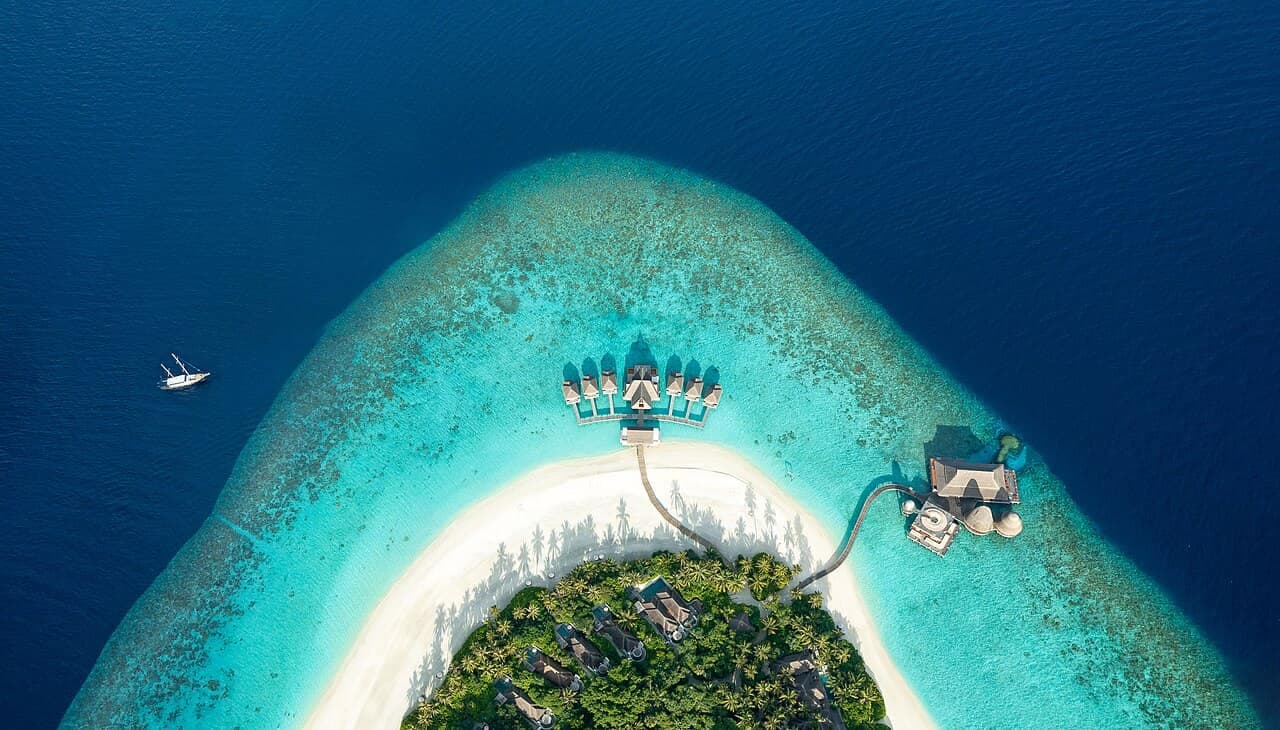
Maldives

Country · MV · MVR · Indian/Maldives

Visa and entry in Maldives

This information may change. Always check the official source.

Visa and entry in Maldives

Warning Important

The Maldives gives most nationalities, including EU citizens, a free 30-day visa on arrival, but everyone must submit the IMUGA Traveller Declaration online within 96 hours before arrival. Israeli passport holders are banned from entry; airlines usually demand 6 months of passport validity even though the law requires only 1 month.

Decision flow

Every foreign tourist goes through the following decision scheme to verify their entry regime and obtain permission to stay in the Maldives:

  1. Nationality restrictions: Travelers must first check that they do not hold an Israeli passport. Since 15 April 2025 such persons are under an absolute ban on entering the territory of the Maldives.
  2. Visa-free assessment (VF): Check whether your country has a valid bilateral visa-waiver agreement. Citizens of India, Russia, Malaysia, Pakistan and Azerbaijan (from 29 April 2026) qualify for visa-free stays of up to 90 days. Citizens of China, Kazakhstan, Mongolia, Cambodia, Kyrgyzstan and the Seychelles (from 15 May 2026) qualify for visa-free stays of up to 30 days.
  3. Visa on arrival (VOA): If the traveler's country is not covered by a visa-waiver agreement (which is the case for most nationalities), a free visa on arrival applies, valid for a maximum of 30 days.
  4. Purpose check (Meeting Visa): If the primary purpose is a conference, seminar or business meeting, a free 14-day visa on arrival (Meeting Visa) can be granted since 14 May 2023. It requires an official invitation and confirmed accommodation in a registered facility.
  5. Passport technical requirements: The passport must have a machine-readable zone (MRZ). Passports with artificially extended validity are not accepted. Minimum passport validity is 1 month from the date of entry.

Entry formalities common to everyone

Every arriving foreigner must complete the following official procedures without exception:

  • IMUGA registration: All travelers (including children and infants) must electronically submit the Traveller Declaration form. It is filled in exclusively on the official government site imuga.immigration.gov.mv. The submission deadline is strictly 96 hours before arrival in the Maldives. The system generates a QR code that must be shown digitally or printed at flight check-in and at immigration. The service is entirely free.
  • Proof of accommodation: Travelers must show a booking confirmation for a registered tourist facility (resort, hotel, guesthouse or safari boat) covering the entire planned stay. Staying with local residents without an approved sponsored visa from the immigration office is prohibited.
  • Funds: On request, travelers must show they hold at least 100 to 150 USD per person per day of stay. Cash, payment cards or a bank statement count as proof.
  • Yellow fever vaccination: An international vaccination certificate is required from everyone older than 1 year who, in the 6 days before arrival, stayed in areas with endemic yellow fever or transited through them for more than 12 hours.
  • Currency Declaration: All travelers must complete a customs declaration on the IMUGA portal before arrival; importing or exporting cash above the equivalent of 10,000 USD (about 154,200 MVR) must be declared. Importing alcohol, pork, pornography, weapons and religious symbols intended for public promotion is strictly prohibited, and customs confiscates such items without compensation.

What matters in practice

Travelers most often run into the following snags and risks when entering the Maldives:

  • Fake IMUGA websites: Deceptive commercial sites visually imitate the state portal and charge fees for the free Traveller Declaration. Fill in the form only via the .gov.mv domain.
  • Recommended six-month passport validity: Although Maldivian immigration rules allow entry with a passport valid just 1 month beyond arrival, most international airlines apply the general 6-month rule. Travelers with shorter validity are frequently denied boarding at the departure airport.
  • Passport condition: Maldivian officials are extremely uncompromising about physical damage. Torn pages, a split binding or a damaged machine-readable zone (MRZ) lead to immediate refusal of entry and deportation. Traveling on a passport once reported lost or stolen and later found is also banned.
  • Overstay consequences: Staying illegally after the visa expires is punished severely. The fine is 500 to 3000 MVR (about 30–200 USD) depending on the overstay length, and in serious cases the very first day of overstay can be penalized with a fine of up to 1,000 USD (about 15,420 MVR). Deportation at your own expense and a long entry ban follow.

This information may change. Always check the official source.

Report a change

Suggest a correction

JPEG, PNG or WebP, up to 5 MB. Location metadata is removed.

Corrections and photos are private and visible only to the review team.

SIM and eSIM in Maldives

SIM and eSIM in Maldives

Buy an international eSIM (Airalo, SimCorner, Yesim) before departure to skip airport queues, or get a physical Dhiraagu/Ooredoo tourist SIM at the Velana arrivals hall — passport registration required, 20 GB from about 40 USD. Dhiraagu has the best coverage on outer atolls; roaming is prohibitively expensive.

SIM and eSIM: what to buy right after arrival

Getting connected within the first 24 hours after arrival is key to coordinating transfers and accommodation. Tourists have three main options:

  1. Physical SIM card at the airport: Technically the most stable option with full access to the local 4G and 5G networks. It pays off for longer stays, but requires in-person registration with a passport at the counter and, at peak arrival times, a 30–50 minute wait in the queue.
  2. International travel eSIM: Services such as Airalo, SimCorner and Yesim let you buy and configure a profile before departure. They activate the moment you land and register on the network. SimCorner additionally offers data plans without uploading a passport scan.
  3. Roaming: Using home-network roaming is completely unsuitable in the Maldives because of extreme data charges. Keep roaming active only to receive free authorization SMS messages.

Comparison table

The following table compares the most relevant mobile plans available to tourists as of July 2026:

Operator / ProviderTourist packagePriceDataValidityWhere to buyPassport registration
OoredooTourist Pack $4040 USD (~617 MVR)20 GB10 daysAirport, brand storesYes, in person at the counter
OoredooTourist Pack $5050 USD (~771 MVR)100 GB (30 GB standard + 70 GB social media)30 daysAirport, onlineYes, in person or online
DhiraaguTraveler Lite40 USD (~617 MVR)20 GB10 daysAirport, brand storesYes, in person at the counter
DhiraaguTraveler Premium50 USD (~771 MVR)30 GB30 daysAirport, onlineYes, in person or online
Airalo (eSIM)Ooredoo Plan30 USD (~462 MVR)17 GB30 daysOnline (Airalo app)Yes, digital passport scan
SimCorner (eSIM)Maldives Flexi200 AUD (~133 USD)20 GB30 daysOnline (SimCorner site)Not required
Airhub (eSIM)Ooredoo Plan39.50 USD (~609 MVR)20 GB10 daysOnline (Airhub app)Yes, digital passport scan
Yesim (eSIM)Maldives Basic11 USD (~170 MVR)1 GB7 daysOnline (Yesim app)Not required
Holafly (eSIM)Maldives Data50.90 USD (~785 MVR)6 GB15 daysOnline (Holafly site)Not required

Where exactly to buy

SIM cards and eSIM profiles are distributed at these locations:

  • Velana International Airport (MLE): The official sales stands are in the arrivals hall immediately past the customs zone. The Ooredoo kiosk sits in the central part of the hall; the Dhiraagu kiosk is to the right of the exit. Both airport branches match their opening hours to the flight schedule and serve late-night arrivals. You can pay in USD, MVR or by card.
  • Brand stores in town: The flagship Experience Centers are in the capital Malé on the Majeedhee Magu shopping street and on the neighboring island of Hulhumalé. Buying there takes longer because of resident-registration paperwork, but standard non-tourist plans can be cheaper.
  • Online eSIM platforms: Purchases go directly through the providers' apps or websites (Airalo, SimCorner, Airhub, Yesim). After payment, a configuration QR code arrives by e-mail.

Short verdict

For a typical tourist staying up to 7 days the best solution is buying an international eSIM before departure (e.g. Airalo). It completely removes queueing after a long flight and enables immediate communication with your hotel or transfer. For demanding users, digital nomads or anyone heading to remote atolls for more than 10 days, the best pick is a physical Dhiraagu SIM bought at the airport, since it has the most stable and fastest infrastructure in the country's outlying regions.

This information may change. Always check the official source.

Report a change

Suggest a correction

JPEG, PNG or WebP, up to 5 MB. Location metadata is removed.

Corrections and photos are private and visible only to the review team.

Transport from the airport in Maldives

Transport from the airport in Maldives

From Velana airport, official taxis to Malé cost a fixed 70 MVR and to Hulhumalé 80–85 MVR — book via the Avas Ride app to avoid drivers demanding 200 MVR or dollar fares. The R4 public bus and the airport dhoni ferry each cost 15 MVR. At GAN, HAQ and NMF airports, transfers are mostly arranged by hotels.

Velana International Airport (MLE)

Velana International Airport (MLE) sits on Hulhulé island, connected to the capital Malé and the Hulhumalé transit district by the Sinamalé road bridge. Transfer options are:

  • Official road taxi: The licensed-vehicle rank is directly in front of the arrivals hall. The Ministry of Transport sets fixed fares for standard vehicles up to 6 seats:
  • Airport -> Malé: 70 MVR (~4.50 USD / 4.20 EUR).
  • Airport -> Hulhumalé Phase 1: 80 MVR (~5.20 USD / 4.80 EUR).
  • Airport -> Hulhumalé Phase 2: 85 MVR (~5.50 USD / 5.10 EUR).
  • Surcharge for a detour to the domestic terminal: 10 MVR.
  • Fee for each bag beyond the 3-piece group limit: 5 MVR.
  • Larger vans with 7–10 seats: Airport -> Malé 110 MVR, Airport -> Hulhumalé Phase 1 125 MVR, Airport -> Hulhumalé Phase 2 130 MVR. Important warning: drivers at the airport terminals very often ignore these official limits and demand around 200 MVR from foreigners, or even euros/dollars (up to 65 USD). Insist on the official fare before getting into the car.
  • Ride-hailing (Avas Ride): The Avas Ride or Malé Taxi Line (MTCC) apps are the safest way to book. Prices in the app are fixed to the official tariffs. Drivers pull up at the designated pick-up point by the arrivals hall.
  • Public airport bus (MTCC): Route R4 departs from the stop by the domestic terminal towards Hulhumalé (Fehires Park / Cemetery).
  • Hours: Runs 24 hours a day, every 30 minutes.
  • Price: A one-way ticket costs 15 MVR (~1 USD / 0.90 EUR). The ride takes 8–10 minutes.
  • Public airport ferry (Airport Express): Fast wooden dhonis link the airport with the Malé harbor.
  • Hours: Departs every 15 minutes.
  • Price: A one-way ticket costs 15 to 20 MVR (~1 to 1.30 USD / 0.90 to 1.20 EUR). The crossing takes about 15 minutes.

Gan International Airport (GAN)

Gan International Airport (GAN) is on the southernmost island of Addu Atoll. Unlike other atolls, the local islands are linked by causeways and the 16 km Addu Link Road.

  • Taxi: Licensed cars meet arrivals.
  • Price: A transfer from the airport to the farthest center, Hithadhoo, costs a fixed 150 MVR (~10 USD / 9.20 EUR) as of February 2023. Short hops between neighboring islands cost a flat 25 MVR (~1.60 USD / 1.50 EUR).
  • Buses (MTCC Southern Transport Link): Bus services connect the airport with all inhabited islands of the atoll.
  • Price: A flat fare of 15 MVR (~1 USD / 0.90 EUR).
  • Speedboats: Tourists heading to resorts (e.g. Canareef Resort) are picked up at the airport jetty by hotel speedboats; the ride takes 10 minutes.

Hanimaadhoo International Airport (HAQ)

Hanimaadhoo International Airport (HAQ) lies on the northern Haa Dhaalu Atoll and serves as the country's northern gateway.

  • Land transfer: The airport sits directly on the inhabited island of Hanimaadhoo. The drive to the local village takes 5 minutes.
  • Taxi: Local street taxis carry tourists for a fixed 5 to 7 USD (~80–100 MVR / 4.60–6.40 EUR) as of July 2026. The vast majority of guesthouses and hotels on the island, however, provide a free transfer included in the room rate.
  • Public transport: There are no buses, no trains and no tourist car rentals on the island. Inter-island transport is by speedboat.

Maafaru International Airport (NMF)

Maafaru International Airport (NMF) in Noonu Atoll opened in December 2019 and mostly serves charter flights and private jets bound for luxury resorts.

  • Ground transfer: Maafaru island has no public bus service and no regular street taxis for tourists. Given the island's tiny size, everything is within walking distance.
  • Resort transfers: The airport connects directly to a speedboat jetty. The transfer to luxury resorts (e.g. Soneva Jani) takes 15 minutes by speedboat and is organized and fully covered as part of the accommodation package.

Recommendation by traveler type

  • Solo traveler on a low budget: The best value is the public R4 airport bus to Hulhumalé for 15 MVR or the airport dhoni ferry to Malé for 15 MVR.
  • Family with children: Download the Avas Ride app and order a Van (7–10 seats). The official 125–130 MVR fare guarantees a safe, spacious transfer with no haggling with drivers at the airport ranks.
  • Late-night arrival (after 22:00): A road taxi (ideally via Avas Ride) is the only realistic option. Ferry and bus frequencies drop sharply at night and long waits are likely.
  • Low budget: For moving between Malé and Hulhumalé, the regular MTCC bus (routes R2 or R8) at a flat 15 MVR is the best deal.

This information may change. Always check the official source.

Report a change

Suggest a correction

JPEG, PNG or WebP, up to 5 MB. Location metadata is removed.

Corrections and photos are private and visible only to the review team.

Useful local apps in Maldives

Useful local apps in Maldives

Avas Ride is the dominant taxi app with state-regulated fares (cash payment in MVR or USD); Malé Taxi Line is MTCC's official app with card payment. MTCC buses and ferries between Malé and Hulhumalé cost a flat 15 MVR.

City transport and apps

  • Public transport: Between Malé, Hulhumalé Phase 1 and Phase 2 the state company MTCC runs a dense network of bus routes and ferries. The fare on both buses and ferries is 15 MVR (~1 USD / 0.90 EUR). Pay cash to the driver or buy a QR ticket at the terminal.
  • Ride-hailing apps:
  • Avas Ride (iOS, Android): The dominant local app. Registration needs a phone number (international prefixes are supported for receiving the SMS). You enter a destination, the app finds the nearest free taxi and shows the state-regulated price. Payment is cash only, to the driver at the end of the ride, in MVR or USD.
  • Malé Taxi Line (iOS): The official app launched by MTCC in April 2026. It works the same way and books MTCC state vehicles directly; payment can also be made by card online in the app.

This information may change. Always check the official source.

Report a change

Suggest a correction

JPEG, PNG or WebP, up to 5 MB. Location metadata is removed.

Corrections and photos are private and visible only to the review team.

Local transport and booking in Maldives

Local transport and booking in Maldives

Budget travelers should use the R4 bus or dhoni ferry for 15 MVR; families are best served by an Avas Ride van at the official 125–130 MVR fare. At night only taxis run reliably. MTCC buses and ferries connect Malé with Hulhumalé at a flat 15 MVR fare.

Recommendation by traveler type

  • Solo traveler on a low budget: The best value is the public R4 airport bus to Hulhumalé for 15 MVR or the airport dhoni ferry to Malé for 15 MVR.
  • Family with children: Download the Avas Ride app and order a Van (7–10 seats). The official 125–130 MVR fare guarantees a safe, spacious transfer with no haggling with drivers at the airport ranks.
  • Late-night arrival (after 22:00): A road taxi (ideally via Avas Ride) is the only realistic option. Ferry and bus frequencies drop sharply at night and long waits are likely.
  • Low budget: For moving between Malé and Hulhumalé, the regular MTCC bus (routes R2 or R8) at a flat 15 MVR is the best deal.

City transport and apps

  • Public transport: Between Malé, Hulhumalé Phase 1 and Phase 2 the state company MTCC runs a dense network of bus routes and ferries. The fare on both buses and ferries is 15 MVR (~1 USD / 0.90 EUR). Pay cash to the driver or buy a QR ticket at the terminal.
  • Ride-hailing apps:
  • Avas Ride (iOS, Android): The dominant local app. Registration needs a phone number (international prefixes are supported for receiving the SMS). You enter a destination, the app finds the nearest free taxi and shows the state-regulated price. Payment is cash only, to the driver at the end of the ride, in MVR or USD.
  • Malé Taxi Line (iOS): The official app launched by MTCC in April 2026. It works the same way and books MTCC state vehicles directly; payment can also be made by card online in the app.

This information may change. Always check the official source.

Report a change

Suggest a correction

JPEG, PNG or WebP, up to 5 MB. Location metadata is removed.

Corrections and photos are private and visible only to the review team.

Money and payments in Maldives

Money and payments in Maldives

The rufiyaa is pegged at about 15.42 MVR per USD and dollars are accepted almost everywhere in tourism. Bank of Maldives ATMs charge a fixed 10 USD per foreign-card withdrawal; always refuse DCC conversion. A 10% service charge replaces tipping; carry cash outside resorts.

Money and payments

  • Currency and rates: The official currency is the Maldivian rufiyaa (MVR). The official Bank of Maldives rate as of July 2026 is 1 USD = 15.42 MVR (the EUR rate is roughly 1 EUR = 16.50 MVR, unverified in the provided sources). The US dollar (USD) is universally accepted as a parallel currency in all resorts, hotels, restaurants and by service providers.
  • ATM withdrawals: ATMs of the largest network, Bank of Maldives (BML), are available at the airport, in Malé and in Hulhumalé. All transactions with foreign cards (debit and credit) carry a fixed fee of 10 USD (about 154 MVR) per withdrawal. The single-withdrawal limit is capped at 3000 MVR (about 200 USD, unverified) for security and liquidity reasons.
  • DCC warning (Dynamic Currency Conversion): Card terminals in resorts and transit hotels often offer to settle in the card's home currency (e.g. CZK). Strictly decline and choose payment in the local currency (USD or MVR) — DCC conversion rates carry a hidden 5–8% markup (unverified in the provided sources).
  • Exchanging cash: Change cash only at licensed bank counters at the airport or at brick-and-mortar branches in Malé. Unofficial street changers offer poor rates and there is a risk of receiving invalid banknotes.
  • Cashless payments: Cards are standard in resorts and transit hotels. On inhabited islands (outside the main tourist centers) and in small local shops, cash in USD or MVR is indispensable.
  • Tipping: Tipping is not expected in the Maldives, because a mandatory 10% service charge is added to every bill in restaurants, cafés and accommodation by law. For luggage porters the unwritten standard is 1 to 2 USD per bag.

This information may change. Always check the official source.

Report a change

Suggest a correction

JPEG, PNG or WebP, up to 5 MB. Location metadata is removed.

Corrections and photos are private and visible only to the review team.

Accommodation in Maldives

Accommodation in Maldives

For the first night, Hulhumalé is the practical base — transit hotels for 50–150 USD connected to the airport by bridge — while local islands like Maafushi offer guesthouses from 40 USD. Add 17% TGST, a 10% service charge and Green Tax of 6–12 USD per person per night to advertised prices; alcohol is banned outside licensed resorts.

Accommodation

  • Hulhumalé (Phase 1 & Phase 2): An artificial island connected to the airport by bridge. The ideal spot for the first night after arrival, especially when the plane lands after 15:30 and onward seaplanes no longer fly that day. The district offers a calm environment, a city beach and a wide choice of transit hotels. The ban on selling and consuming alcohol fully applies here, except for the licensed Hulhulé Island Hotel on airport grounds.
  • Price level: 50 to 150 USD (about 770 to 2300 MVR) per night in a standard three-star hotel with an airport transfer included.
  • Malé (center): The extremely densely populated capital. Suitable only for travelers with meetings or a quick sightseeing plan. It suffers from heavy noise and traffic jams.
  • Price level: 70 to 180 USD (about 1080 to 2770 MVR) per night.
  • Inhabited islands (e.g. Maafushi, Thulusdhoo): Suited to independent, low-budget travelers who want to move straight from the airport to a local island by cheap MTCC ferry.
  • Price level: 40 to 100 USD (about 615 to 1540 MVR) per night in family-run guesthouses.

Accommodation law and taxes: At check-in the host must scan your passport and register you in the immigration system. On top of the advertised base room price (e.g. on Booking.com), hotels are legally obliged to add:

  1. Tourism GST (TGST): Raised to 17% of the price of accommodation and all services from 1 July 2025.
  2. Service Charge: A mandatory 10% service fee.
  3. Green Tax: An environmental tax effective from 1 January 2025 of 12 USD per person per night for all resorts, resort hotels and safari boats. For guesthouses on inhabited islands with up to 50 rooms the tax is 6 USD per person per night. It applies to children and infants as well.

This information may change. Always check the official source.

Report a change

Suggest a correction

JPEG, PNG or WebP, up to 5 MB. Location metadata is removed.

Corrections and photos are private and visible only to the review team.

Safety and common scams in Maldives

This information may change. Always check the official source.

Safety and common scams in Maldives

Warning Important

The Maldives is very safe, but watch for airport taxi drivers ignoring the fixed 70–85 MVR fares, fake IMUGA websites charging for the free arrival form, and scooter-rental damage claims on local islands. Book taxis through Avas Ride and avoid political gatherings in Malé.

Safety and the most common scams

The Maldives shows an exceptionally high level of safety and violent crime is almost unheard of. Specific property scams do occur in tourist areas:

  • Taxi scams at Velana airport: Drivers at the arrivals terminal ignore the state-mandated fares (80 MVR to Hulhumalé Phase 1) and demand unofficial surcharges from foreigners, or payment in dollars at an extreme rate. Defense: book taxis exclusively through the Avas Ride app, which guarantees the regulated price.
  • Fake IMUGA portals: Fraudulent websites charge for submitting the mandatory Traveller Declaration. The official registration is always free and happens exclusively via the .gov.mv domain.
  • Scooter rental scams on local islands: On some inhabited islands (e.g. Maafushi) operators demand high compensation on return for alleged mechanical damage or scratches that existed before the rental (indicative information, unverified in the provided sources). Photograph the scooter in detail before taking it.
  • Higher-risk areas: In the capital Malé, avoid any political gatherings or street protests, which can end in police intervention.

This information may change. Always check the official source.

Report a change

Suggest a correction

JPEG, PNG or WebP, up to 5 MB. Location metadata is removed.

Corrections and photos are private and visible only to the review team.

Health in Maldives

This information may change. Always check the official source.

Health in Maldives

Warning Important

Tap water is not drinkable anywhere — use bottled water even for brushing teeth — and dengue is present year-round, so use DEET repellent. ADK Hospital in Malé and Tree Top Hospital in Hulhumalé (+960 335 1610) serve foreigners; travel insurance is essential because atoll evacuations are extremely expensive.

Health and emergencies

  • Vaccinations and diseases: Only yellow-fever vaccination is mandatory, and only when arriving from an endemic area. Standard travel vaccinations are recommended (hepatitis A and B, tetanus, typhoid). Mosquito-borne dengue fever occurs year-round, so repellents with a high DEET content are essential. No malaria cases have been recorded in recent years (unverified).
  • Drinking water: Tap water on all islands comes from desalination plants and is not drinkable. Drinking it causes severe intestinal problems. Use only bottled water for drinking and hygiene (including brushing teeth).
  • Medical facilities for foreigners:
  • ADK Hospital (Malé): The largest and best-equipped private hospital in the capital, with a 24/7 emergency department, modern cardiology, orthopedics and intensive care.
  • Tree Top Hospital (Hulhumalé): A top private hospital of European standard, close to the airport, offering the full spectrum of care including an emergency department. The reception phone number is +960 335 1610.
  • Emergency numbers:
  • Police: 119 (unverified in the provided sources).
  • Ambulance: 102 (unverified).
  • Fire brigade: 118 (unverified).
  • Immigration emergency line (visa matters): 1434 (or hotlines 9199157 and 9919153).
  • Travel insurance: The Maldives does not require insurance as an entry condition. A solid policy covering medical costs and repatriation is nonetheless absolutely essential — evacuation from outer atolls to Malé hospitals by seaplane or speedboat is extremely expensive and will not happen without a payment guarantee.

This information may change. Always check the official source.

Report a change

Suggest a correction

JPEG, PNG or WebP, up to 5 MB. Location metadata is removed.

Corrections and photos are private and visible only to the review team.

Everyday practical information in Maldives

Everyday practical information in Maldives

The Maldives is a strict Islamic country: no alcohol imports or drinking outside licensed resorts, covered shoulders and knees on inhabited islands, and bikinis only on marked Bikini Beaches. Sockets are UK type G at 230 V, the time zone is UTC+5 (resorts often shift it), and the weekend falls on Friday and Saturday.

Local rules and cultural differences

The Maldives is a strictly Islamic country where sharia shapes everyday legislation. Breaking the rules is punished hard:

  • Importing and consuming alcohol: Importing any amount of alcohol for personal use is illegal. Alcohol is strictly prohibited on all inhabited islands (including Malé and Hulhumalé). Its sale and consumption are legal only in international resorts on uninhabited islands holding a special state license.
  • Dress and conduct: In public spaces on inhabited islands, both men and women must cover shoulders and knees. Swimming in bikinis and regular swimwear is allowed only on beaches marked Bikini Beach. Topless sunbathing and nudism are illegal everywhere in the country without exception. Public displays of affection (hugging, kissing) are banned and fined as public indecency.
  • Photography and drones: Photographing military installations, government buildings and mosques is prohibited. Any journalism or commercial filming/photography on a tourist visa is illegal and leads to deportation. Drone use is tightly regulated and no-fly zones apply around airports and many resorts.
  • Places of worship: Mosques may be entered only with a guide and outside prayer times, with the body fully covered and shoes removed.

Everyday practical information

  • Power sockets: The standard is Type G (British standard with three flat pins) at 230 V / 50 Hz (unverified in the provided sources). In guesthouses on local islands you will need an adapter; hotels lend them only in limited numbers.
  • Time zone: The official time zone of the Maldives is UTC+5 (unverified in the provided sources). Many luxury resorts run their own unofficial Resort Island Time, shifted 1 to 2 hours ahead of Malé to give guests more afternoon daylight.
  • Working week and holidays: The official working week runs Sunday to Thursday; Friday and Saturday are the weekend. State offices are open Sunday to Thursday between 8:30 and 13:30. During the holy month of Ramadan, shop and restaurant hours on inhabited islands are sharply reduced.
  • Public toilets: The airport and larger hotels have European-standard toilets. On local islands and in harbors, simple Asian squat toilets with a bidet spray prevail.
  • Wi-Fi availability: Free Wi-Fi is commonly offered in hotels and cafés, but its speed and stability outside the main atolls tend to be very low.

This information may change. Always check the official source.

Report a change

Suggest a correction

JPEG, PNG or WebP, up to 5 MB. Location metadata is removed.

Corrections and photos are private and visible only to the review team.

Emergency information in Maldives

This information may change. Always check the official source.

Emergency information in Maldives

Warning Important

Emergency numbers: police 119, ambulance 102, fire 118, immigration hotline 1434. ADK Hospital in Malé and Tree Top Hospital in Hulhumalé (+960 335 1610) provide 24/7 emergency care; medical evacuation from outer atolls requires insurance or upfront payment guarantees.

Health and emergencies

  • Vaccinations and diseases: Only yellow-fever vaccination is mandatory, and only when arriving from an endemic area. Standard travel vaccinations are recommended (hepatitis A and B, tetanus, typhoid). Mosquito-borne dengue fever occurs year-round, so repellents with a high DEET content are essential. No malaria cases have been recorded in recent years (unverified).
  • Drinking water: Tap water on all islands comes from desalination plants and is not drinkable. Drinking it causes severe intestinal problems. Use only bottled water for drinking and hygiene (including brushing teeth).
  • Medical facilities for foreigners:
  • ADK Hospital (Malé): The largest and best-equipped private hospital in the capital, with a 24/7 emergency department, modern cardiology, orthopedics and intensive care.
  • Tree Top Hospital (Hulhumalé): A top private hospital of European standard, close to the airport, offering the full spectrum of care including an emergency department. The reception phone number is +960 335 1610.
  • Emergency numbers:
  • Police: 119 (unverified in the provided sources).
  • Ambulance: 102 (unverified).
  • Fire brigade: 118 (unverified).
  • Immigration emergency line (visa matters): 1434 (or hotlines 9199157 and 9919153).
  • Travel insurance: The Maldives does not require insurance as an entry condition. A solid policy covering medical costs and repatriation is nonetheless absolutely essential — evacuation from outer atolls to Malé hospitals by seaplane or speedboat is extremely expensive and will not happen without a payment guarantee.

This information may change. Always check the official source.

Report a change

Suggest a correction

JPEG, PNG or WebP, up to 5 MB. Location metadata is removed.

Corrections and photos are private and visible only to the review team.

Experiences

Nothing here yet.

General tips

Nothing here yet.

Share a tip

Sign in to continue.