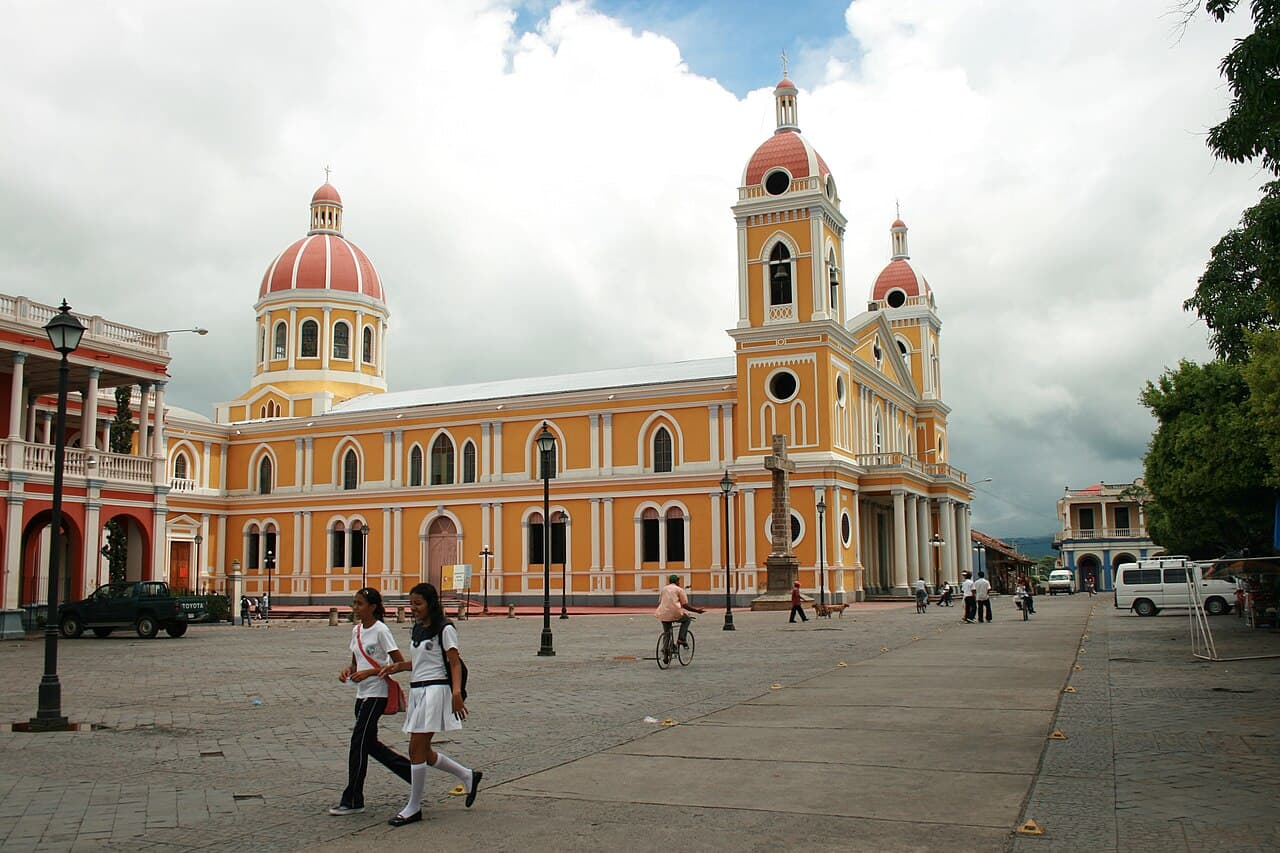
NicaraguaPhoto: ruben i / Wikimedia Commons (CC BY 2.0)

Nicaragua

Country · NI · NIO · America/Managua

This information may change. Always check the official source.Last verified: August 2026 by

Ninety CA-4 days, ten dollars cash on the way in and thirty-five on the way out - and an entry decision that is more discretionary than most.

  • 10 US dollars, in cash, on arrival. This is the tourist card and it is not in your ticket. Have a clean, unfolded 10 dollar note - worn notes are refused.
  • 35 US dollars departure tax, normally already inside an air ticket but payable separately at a land border.
  • 90 days without a visa for most Western passports, under the CA-4 agreement.
  • You may be refused entry without an onward ticket. Have one bookable and printable.
  • It is illegal for a foreigner to take part in any political activity in Nicaragua. The FCDO's list is explicit: taking part in a protest, a breach of the peace, or any activity seen as acting against the government, including political meetings and campaigns.
More details

The money at the border

  • 10 US dollars, in cash, on arrival. This is the tourist card and it is not in your ticket. Have a clean, unfolded 10 dollar note - worn notes are refused.
  • 35 US dollars departure tax, normally already inside an air ticket but payable separately at a land border.
  • Neither is negotiable and neither takes a card. Between them, arriving without US dollars in cash is the most common avoidable problem here.

How long you get

  • 90 days without a visa for most Western passports, under the CA-4 agreement.
  • The 90 days are shared with Guatemala, El Salvador and Honduras. They start at the first of the four you enter and do not restart when you cross an internal border, even though you are stamped.
  • Leaving the CA-4 area resets it - Costa Rica, Panama, Belize and Mexico are all outside.
  • A 30-day extension can be bought at a migration office before the 90 days expire.
  • Your passport must be valid at least 6 months from arrival.

Entry is more discretionary here than elsewhere

  • You may be refused entry without an onward ticket. Have one bookable and printable.
  • Border officials ask more questions than the regional norm, about your itinerary, your accommodation and your work. Answer plainly, have the bookings, and do not improvise.
  • Journalists, researchers and anyone with an obvious political or NGO connection have been refused entry. If that describes you, understand the risk before you fly, not at the desk.

The rule that matters more than any of this

  • It is illegal for a foreigner to take part in any political activity in Nicaragua. The FCDO's list is explicit: taking part in a protest, a breach of the peace, or any activity seen as acting against the government, including political meetings and campaigns.
  • The consequence is arrest, detention or deportation.
  • "Seen as" is doing a lot of work in that sentence, and the definition is not yours to make. See the safety section.
Sources (2)

Nicaragua bans e-cigarettes outright and charges an arrival tax in cash, which is the pair of surprises at Managua.

  • Electronic smoking devices are banned. You may not import, export, sell, store or use them, with or without nicotine, and customs confiscates them at the border.
  • There is a USD 10 arrival tax, payable in cash. The USD 35 departure tax is normally inside your ticket price, but the arrival one is not - have the note ready.
  • US dollars are the only foreign currency that changes freely. Banks will not take pounds, and cash is worth bringing in dollars rather than converting twice.
  • The allowance is a carton of cigarettes and a couple of litres of spirits per adult, plus personal effects.
  • Archaeological objects may not be exported, and professional camera equipment is examined on arrival.
More details
  • Electronic smoking devices are banned. You may not import, export, sell, store or use them, with or without nicotine, and customs confiscates them at the border.
  • There is a USD 10 arrival tax, payable in cash. The USD 35 departure tax is normally inside your ticket price, but the arrival one is not - have the note ready.
  • US dollars are the only foreign currency that changes freely. Banks will not take pounds, and cash is worth bringing in dollars rather than converting twice.
  • The allowance is a carton of cigarettes and a couple of litres of spirits per adult, plus personal effects.
  • Archaeological objects may not be exported, and professional camera equipment is examined on arrival.
  • The land borders with Costa Rica and Honduras charge their own fees in cash, and Peñas Blancas is slow in both directions.
Sources (1)

Private hospitals want cash before treatment, and the good ones are all in Managua.

  • Public hospitals outside Managua are poorly equipped. Some Managua facilities are considerably better.
  • Drink bottled or filtered water. It is cheap and universal.
  • Dengue, Zika and malaria are all present. Dengue is the common one and the mosquito bites in daylight.
  • Nicaragua is hot. Leon and Granada in the dry season are genuinely punishing in the middle of the day, and the colonial architecture provides very little shade.
  • 911 for an ambulance, and it is the general emergency number.
More details

Care, and paying for it

  • Public hospitals outside Managua are poorly equipped. Some Managua facilities are considerably better.
  • Private healthcare is the safer option and demands payment up front, typically in cash. That is the FCDO's own wording, and it is the practical reason to carry a reserve of dollars and to know your insurer's number.
  • Take insurance covering treatment and medical evacuation. Evacuation from the Corn Islands or the Caribbean coast is slow and expensive.
  • Contact the insurer immediately if you are referred anywhere.

Water and food

  • Drink bottled or filtered water. It is cheap and universal.
  • Ice in tourist places is generally purified; elsewhere, ask.

Mosquitoes

  • Dengue, Zika and malaria are all present. Dengue is the common one and the mosquito bites in daylight.
  • Repellent during the day, and a net or a fan at night.

The heat

  • Nicaragua is hot. Leon and Granada in the dry season are genuinely punishing in the middle of the day, and the colonial architecture provides very little shade.
  • Volcano climbs start early for this reason, not for the view.

Numbers

  • 911 for an ambulance, and it is the general emergency number.
Sources (1)

Managua

Long-term averages for Managua: the mean daily high, the mean overnight low and the mean monthly rainfall across 30 years of ERA5 reanalysis data (1995–2024).

DayNight
20253035°C0500mmJanFebMarAprMayJunJulAugSepOctNovDecJanuary: Day 32 °C, Night 23 °C, Rain 5 mm. February: Day 33 °C, Night 23 °C, Rain 5 mm. March: Day 34 °C, Night 23 °C, Rain 8 mm. April: Day 35 °C, Night 24 °C, Rain 32 mm. May: Day 33 °C, Night 25 °C, Rain 219 mm. June: Day 30 °C, Night 24 °C, Rain 269 mm. July: Day 31 °C, Night 24 °C, Rain 174 mm. August: Day 31 °C, Night 24 °C, Rain 223 mm. September: Day 30 °C, Night 24 °C, Rain 305 mm. October: Day 30 °C, Night 24 °C, Rain 334 mm. November: Day 30 °C, Night 23 °C, Rain 121 mm. December: Day 31 °C, Night 23 °C, Rain 17 mm
Show the monthly table
Managua
MonthDay (°C)Night (°C)Rain (mm)
January32235
February33235
March34238
April352432
May3325219
June3024269
July3124174
August3124223
September3024305
October3024334
November3023121
December312317

Granada

Long-term averages for Granada: the mean daily high, the mean overnight low and the mean monthly rainfall across 30 years of ERA5 reanalysis data (1995–2024).

DayNight
20253035°C0500mmJanFebMarAprMayJunJulAugSepOctNovDecJanuary: Day 30 °C, Night 23 °C, Rain 7 mm. February: Day 30 °C, Night 23 °C, Rain 5 mm. March: Day 31 °C, Night 24 °C, Rain 8 mm. April: Day 32 °C, Night 25 °C, Rain 28 mm. May: Day 31 °C, Night 25 °C, Rain 190 mm. June: Day 30 °C, Night 25 °C, Rain 226 mm. July: Day 29 °C, Night 25 °C, Rain 148 mm. August: Day 30 °C, Night 25 °C, Rain 176 mm. September: Day 29 °C, Night 25 °C, Rain 239 mm. October: Day 29 °C, Night 24 °C, Rain 276 mm. November: Day 29 °C, Night 24 °C, Rain 101 mm. December: Day 29 °C, Night 24 °C, Rain 16 mm
Show the monthly table
Granada
MonthDay (°C)Night (°C)Rain (mm)
January30237
February30235
March31248
April322528
May3125190
June3025226
July2925148
August3025176
September2925239
October2924276
November2924101
December292416

San Juan del Sur

Long-term averages for San Juan del Sur: the mean daily high, the mean overnight low and the mean monthly rainfall across 30 years of ERA5 reanalysis data (1995–2024).

DayNight
20253035°C0500mmJanFebMarAprMayJunJulAugSepOctNovDecJanuary: Day 29 °C, Night 24 °C, Rain 12 mm. February: Day 29 °C, Night 24 °C, Rain 6 mm. March: Day 31 °C, Night 24 °C, Rain 6 mm. April: Day 32 °C, Night 25 °C, Rain 17 mm. May: Day 31 °C, Night 25 °C, Rain 173 mm. June: Day 29 °C, Night 25 °C, Rain 230 mm. July: Day 29 °C, Night 25 °C, Rain 169 mm. August: Day 29 °C, Night 25 °C, Rain 193 mm. September: Day 29 °C, Night 25 °C, Rain 276 mm. October: Day 28 °C, Night 25 °C, Rain 323 mm. November: Day 28 °C, Night 25 °C, Rain 124 mm. December: Day 28 °C, Night 24 °C, Rain 32 mm
Show the monthly table
San Juan del Sur
MonthDay (°C)Night (°C)Rain (mm)
January292412
February29246
March31246
April322517
May3125173
June2925230
July2925169
August2925193
September2925276
October2825323
November2825124
December282432
Sources (1)

Where to stay

Granada and Leon are the two colonial cities, the Pacific coast is the surf, and almost nobody stays in Managua.

  • Granada - colonial, colourful, on Lake Nicaragua, the most visited town in the country and the easiest first stop.
  • Leon - the other colonial city, hotter, younger, more student and less polished, and the base for the volcanoes.
  • Almost nobody stays here voluntarily. It is a spread-out city without a real centre - it never fully rebuilt after the 1972 earthquake - and there is little for a visitor.
  • A night near the airport before an early flight is the usual reason.
  • Robbery risk is in markets, bus stations and poorer urban areas rather than in the visitor districts.
More details

The main places

  • Granada - colonial, colourful, on Lake Nicaragua, the most visited town in the country and the easiest first stop.
  • Leon - the other colonial city, hotter, younger, more student and less polished, and the base for the volcanoes.
  • San Juan del Sur - the Pacific surf town, with the quieter beaches spread out north and south of it.
  • Ometepe - two volcanoes rising out of the lake, an island of farms and small hotels, and one of the genuinely distinctive places in Central America.
  • The Corn Islands - Caribbean, remote, English-speaking Creole, and reached by air or a long haul.

Managua

  • Almost nobody stays here voluntarily. It is a spread-out city without a real centre - it never fully rebuilt after the 1972 earthquake - and there is little for a visitor.
  • A night near the airport before an early flight is the usual reason.

Practical

  • Robbery risk is in markets, bus stations and poorer urban areas rather than in the visitor districts.
  • The FCDO flags sexual assault as a risk for women travellers. The usual precautions, and San Juan del Sur's bar scene is where the reports cluster.
  • Demonstrations can turn violent - and see the safety section for why a foreigner near one is in a different position from a local.
  • Book ahead for Semana Santa, when Nicaraguans go to the beach in force.
Sources (1)

Getting online in Nicaragua

Two networks, cheap data, decent coverage - and a good reason to think about what is on your phone.

  • Claro and Tigo cover the country and prepaid data is cheap. Take the passport to register.
  • Coverage is good on the Pacific side - Managua, Granada, Leon, San Juan del Sur - and thin on the Caribbean coast and in the north.
  • Useful because the FCDO tells you not to use unauthorised taxis, and arranging a proper one from the airport needs a connection.
  • Given that political activity by foreigners is illegal and broadly defined, it is worth thinking about what is visible on your phone before you reach the border - the way you would in any country where that rule exists.
  • Granada, Leon and San Juan del Sur have plenty, and a small remote-work crowd to go with it.
More details

The local SIM

  • Claro and Tigo cover the country and prepaid data is cheap. Take the passport to register.
  • Coverage is good on the Pacific side - Managua, Granada, Leon, San Juan del Sur - and thin on the Caribbean coast and in the north.
  • The Corn Islands have signal but not much bandwidth.

An eSIM instead

  • Useful because the FCDO tells you not to use unauthorised taxis, and arranging a proper one from the airport needs a connection.
  • Check the plan covers Nicaragua specifically; some Central America regional plans stop at Costa Rica.

A word about your phone

  • Given that political activity by foreigners is illegal and broadly defined, it is worth thinking about what is visible on your phone before you reach the border - the way you would in any country where that rule exists.
  • This is not a warning that phones are routinely searched. It is a reason not to be careless about it.
  • Do not photograph police, military or government buildings. That is the standard rule anywhere with this legal framework, and there is no upside to testing it.

Wi-fi

  • Granada, Leon and San Juan del Sur have plenty, and a small remote-work crowd to go with it.
  • The Corn Islands and Ometepe are slow. Plan for that rather than around it.
Sources (1)

Nicaraguan sockets are Type and at 120 V, the American standard, mostly unearthed.

  • American and Canadian plugs fit straight in. Everyone else needs an adapter.
  • Two-slot unearthed sockets dominate outside newer hotels in Managua and Granada.
  • 120 V means European 230 V-only appliances will not run.
  • Cuts are routine outside the cities, and Ometepe and the Corn Islands run on their own supply.
  • Costa Rica, Honduras and El Salvador match, so one adapter covers a Central American trip.
More details

Sockets in Nicaragua are Type and at 120 V, 60 Hz - the American standard.

  • American and Canadian plugs fit straight in. Everyone else needs an adapter.
  • Two-slot unearthed sockets dominate outside newer hotels in Managua and Granada.
  • 120 V means European 230 V-only appliances will not run.
  • Cuts are routine outside the cities, and Ometepe and the Corn Islands run on their own supply.
  • Costa Rica, Honduras and El Salvador match, so one adapter covers a Central American trip.
  • A Europlug fits nothing here, so European travellers need both an adapter and 100-240 V equipment.
Sources (1)

American plugs, Spanish everywhere except the Caribbean coast, and the cheapest country in the region.

  • Plugs are the American flat two-pin, type and , at 120 V.
  • Spanish is the language. English is limited on the Pacific side and is a first language on the Caribbean coast and the Corn Islands, where an English Creole is spoken.
  • Dry season December to April, wet May to November with heavy afternoon rain.
  • It is hot all year on both coasts and in the colonial cities; the northern highlands around Matagalpa and Esteli are cooler and are where the coffee grows.
  • Do not discuss politics. Not because it is impolite but because of the legal position described in the safety section - and because a Nicaraguan drawn into that conversation is far more exposed than you are.
More details

The basics

  • Plugs are the American flat two-pin, type and , at 120 V.
  • Spanish is the language. English is limited on the Pacific side and is a first language on the Caribbean coast and the Corn Islands, where an English Creole is spoken.
  • UTC-6 all year. Dialling code +505, eight-digit numbers.
  • WhatsApp is how everything is arranged - hotels, shuttles, tours, taxis. Have it working.

Climate

  • Dry season December to April, wet May to November with heavy afternoon rain.
  • It is hot all year on both coasts and in the colonial cities; the northern highlands around Matagalpa and Esteli are cooler and are where the coffee grows.
  • Hurricane season June to November affects the Caribbean side.

Conventions

  • Do not discuss politics. Not because it is impolite but because of the legal position described in the safety section - and because a Nicaraguan drawn into that conversation is far more exposed than you are.
  • Gallo pinto is breakfast and is everywhere.
  • Things are cheap enough that haggling over small amounts reads badly. Markets, yes; a fruit seller, no.
  • Sunday is family day at the lake and the beach.
Sources (2)

Cordobas, dollars and a lot of cash

The cordoba slides against the dollar by design, dollars are accepted everywhere, and cards mostly are not.

  • The cordoba (NIO) is the currency, and it depreciates against the dollar in a managed, published way - so a rate quoted in a guidebook is always slightly stale.
  • US dollars are accepted almost everywhere for tourist services, and change comes in cordobas.
  • Cards work in Managua, Granada, Leon and the larger hotels and not much beyond.
  • Nicaragua is the cheapest country in Central America by some distance, and food, transport and accommodation all reflect it.
  • 10% is often added in restaurants. If not, 10% is right.
More details

The currency

  • The cordoba (NIO) is the currency, and it depreciates against the dollar in a managed, published way - so a rate quoted in a guidebook is always slightly stale.
  • US dollars are accepted almost everywhere for tourist services, and change comes in cordobas.
  • Bring clean US dollar notes. Torn, marked or heavily folded notes are refused, including at the border for the arrival tax.
  • Small denominations. A hundred dollar note is a problem outside a bank.

Cards

  • Cards work in Managua, Granada, Leon and the larger hotels and not much beyond.
  • Cash rules everywhere else, absolutely on Ometepe, the Corn Islands and in markets.
  • Take out cordobas in the cities before heading anywhere small - island cash machines run out, and there are places with none at all.
  • This is the country where "private hospitals require immediate payment, typically in cash" is the FCDO's own phrasing. That is a reason to hold a reserve, not just a card.

Costs

  • Nicaragua is the cheapest country in Central America by some distance, and food, transport and accommodation all reflect it.

Tipping

  • 10% is often added in restaurants. If not, 10% is right.
  • Guides and boat crews are tipped in small notes.
Sources (2)

Everyday prices

Typical prices in cordoba (NIO), averaged across the country by Numbeo and read on 19 August 2026. Tick Convert prices above the table to see every amount in your own currency.

Everyday prices
ItemTypical price
Inexpensive restaurant meal184 NIO
Dinner for two, mid-range, three courses1,210 NIO
Cappuccino84 NIO
Local draught beer, 0.5 l50 NIO
Bottled water, 0.33 l25 NIO
Public transport, one-way ticket5.03 NIO
Taxi, starting fare55 NIO
Petrol, 1 litre49 NIO
Cigarettes, pack of 20 (Marlboro)129 NIO
Average net monthly salary12,300 NIO

These are country-wide averages, not a price list: tourist districts, airports and islands sit well above them, and small towns below. The salary line is there for proportion - it is what people living here actually earn.

Sources (1)

Airport guides for Nicaragua1

One page per airport: the routes into town, what they cost and the trap particular to that arrival.

See all 1 airports

From Managua airport

The airport is close to the city, and the one firm rule is which taxi you get into.

  • The airport is about 11 km from central Managua, which is unusually close, and the drive is short.
  • Most visitors do not stay in Managua. Granada is an hour away, Leon about 90 minutes, San Juan del Sur two and a half hours - and a great many arrivals head straight out.
  • Use only an official airport taxi from the desk inside, or a pre-booked transfer. The FCDO records express kidnapping involving unauthorised taxis, and the airport is exactly where that starts.
  • Agree the price before getting in. There are no meters.
  • Do not travel by road at night. Poor vehicle condition, minimal street lighting on the highways, and the FCDO notes that a serious accident can mean detention while it is investigated.
More details
Augusto C. Sandino, Managua
  • The airport is about 11 km from central Managua, which is unusually close, and the drive is short.
  • Most visitors do not stay in Managua. Granada is an hour away, Leon about 90 minutes, San Juan del Sur two and a half hours - and a great many arrivals head straight out.
Getting a car
  • Use only an official airport taxi from the desk inside, or a pre-booked transfer. The FCDO records express kidnapping involving unauthorised taxis, and the airport is exactly where that starts.
  • Agree the price before getting in. There are no meters.
  • Shuttles to Granada, Leon and San Juan del Sur are booked in advance through hostels and hotels and are the standard route.
  • Have the 10 dollars for the tourist card ready before you reach immigration, in cash, unfolded.
Onward
  • Do not travel by road at night. Poor vehicle condition, minimal street lighting on the highways, and the FCDO notes that a serious accident can mean detention while it is investigated.
  • Bus stations are named as a robbery risk, so arrive with your bag on you and not on the ground.
Sources (2)

Getting around Nicaragua

Shuttles between the towns visitors use, chicken buses everywhere else, and boats to the islands.

  • Tourist shuttles connect Managua, Granada, Leon, San Juan del Sur and Ometepe and are what most visitors use. Booked through accommodation, they leave early.
  • Chicken buses go everywhere for very little, and they are slow, full and hot. They are also how the country actually moves.
  • Ferries to Ometepe leave from San Jorge near Rivas. The crossing is short and can be rough; the larger ferry is worth waiting for over the small one.
  • Do not drive at night - vehicles in poor condition, no street lighting on the highways.
  • Do not hike a volcano without an experienced guide. That is the FCDO's advice, and Nicaragua has a lot of active ones.
More details

Shuttles and buses

  • Tourist shuttles connect Managua, Granada, Leon, San Juan del Sur and Ometepe and are what most visitors use. Booked through accommodation, they leave early.
  • Chicken buses go everywhere for very little, and they are slow, full and hot. They are also how the country actually moves.
  • Express minibuses between the main towns are the middle option and are good value.

Boats

  • Ferries to Ometepe leave from San Jorge near Rivas. The crossing is short and can be rough; the larger ferry is worth waiting for over the small one.
  • The Corn Islands are reached by a flight from Managua to Big Corn, or a long bus plus a rough boat from Bluefields. Take the flight unless the journey is the point.

Driving

  • Do not drive at night - vehicles in poor condition, no street lighting on the highways.
  • A serious accident can mean detention while it is investigated, which is a materially different risk from a fender bender at home. This is the strongest argument against renting a car here.
  • Roads on the Pacific side are decent; the Caribbean side is another matter.

Volcanoes

  • Do not hike a volcano without an experienced guide. That is the FCDO's advice, and Nicaragua has a lot of active ones.
  • Cerro Negro boarding and Telica are the standard tourist climbs and are done with operators from Leon.

Apps and platforms

Fewer than you would expect, and none of them a substitute for cash.

  • InDrive operates in Managua and is the closest thing to ride-hailing here. Uber does not operate in Nicaragua.
  • La Costena flies domestically to the Corn Islands and Bluefields, and books online.
  • Offline maps. Coverage away from the Pacific corridor is unreliable.
  • No Uber, no Grab, no Bolt.
  • Very little books online. Shuttles, boats and small hotels are arranged by phone, WhatsApp or in person, and the country runs on WhatsApp more than on anything else.
More details

What exists

  • InDrive operates in Managua and is the closest thing to ride-hailing here. Uber does not operate in Nicaragua.
  • La Costena flies domestically to the Corn Islands and Bluefields, and books online.
  • Offline maps. Coverage away from the Pacific corridor is unreliable.

What does not

  • No Uber, no Grab, no Bolt.
  • Very little books online. Shuttles, boats and small hotels are arranged by phone, WhatsApp or in person, and the country runs on WhatsApp more than on anything else.
  • Cash is the platform. No app removes the need for it here.
Sources (2)

Nicaraguan roads are free, the main highways are decent, and night driving is what locals avoid.

  • Roads are free with no tolls anywhere.
  • The Panamericana and the road to Granada and Leon are paved and fine; the routes to the Caribbean coast and Ometepe are not.
  • The alcohol limit is 0.05 %.
  • Night driving is avoided by residents: unlit carts, cyclists without lights, and cattle on the road.
  • Police checkpoints are frequent and licence, registration and insurance are checked; keep them in the car rather than the hotel.
More details

Free roads, a reasonable main network, and hazards that appear after dark.

  • Roads are free with no tolls anywhere.
  • The Panamericana and the road to Granada and Leon are paved and fine; the routes to the Caribbean coast and Ometepe are not.
  • The alcohol limit is 0.05 %.
  • Night driving is avoided by residents: unlit carts, cyclists without lights, and cattle on the road.
  • Police checkpoints are frequent and licence, registration and insurance are checked; keep them in the car rather than the hotel.
  • Fuel is served by attendants and cash is easier than a card outside Managua and Granada.
Sources (1)

Safety, politics and the missing embassy

Political activity by foreigners is illegal and broadly defined, and there is no British embassy in the country to help if it goes wrong.

  • It is illegal for foreigners to take part in any political activity in Nicaragua. The FCDO lists what that covers: taking part in a protest, breach of the peace, or any activity seen as acting against the government, including political meetings and campaigns.
  • There is no resident British diplomatic mission in Nicaragua, and the FCDO says plainly it cannot give in-person support. Support is provided remotely, from elsewhere.
  • Express kidnapping through unauthorised taxis - use official or pre-booked cars only.
  • Do not drive at night. Vehicles in poor condition, no lighting on the highways.
More details

The political rule, and why it comes first

  • It is illegal for foreigners to take part in any political activity in Nicaragua. The FCDO lists what that covers: taking part in a protest, breach of the peace, or any activity seen as acting against the government, including political meetings and campaigns.
  • The penalty is arrest, detention or deportation.
  • "Any activity seen as acting against the government" is not a line you get to draw. Standing at the edge of a demonstration to watch, filming one, or posting about one are all inside the risk.
  • If you come across a protest, leave. Not to the other side of the street - away.

There is no embassy to call

  • There is no resident British diplomatic mission in Nicaragua, and the FCDO says plainly it cannot give in-person support. Support is provided remotely, from elsewhere.
  • Check where your own country's nearest mission is before you go. For many, it is in San Jose, Costa Rica.
  • This changes the calculation on everything above. A detention that would be a phone call in most countries is a much slower problem here.

Ordinary crime

  • Express kidnapping through unauthorised taxis - use official or pre-booked cars only.
  • Robbery in markets, bus stations and poorer urban areas.
  • Attacks on vehicles have occurred; keep doors locked in traffic.
  • Sexual assault is flagged as a risk for women travellers.

The roads and the volcanoes

  • Do not drive at night. Vehicles in poor condition, no lighting on the highways.
  • A serious road accident may mean detention while it is investigated.
  • Do not hike a volcano without an experienced guide. Several are active and conditions change.

Photography

  • Do not photograph police, military or government buildings. In a country where political activity by foreigners is a criminal matter, this is not a minor rule.
Sources (2)

Emergency numbers and what to do

911 works - but know in advance where your nearest consulate actually is, because it is probably in another country.

  • 911 works nationally and operators speak Spanish.
  • Find out where your nearest consulate is before you travel. There is no resident British diplomatic mission in Nicaragua and the FCDO cannot give in-person support; for many nationalities the nearest mission is in San Jose, Costa Rica.
  • Ask for consular contact immediately and keep asking, understanding that it will be handled remotely.
  • Private hospitals want payment before treatment, usually in cash. Have the insurer's number and a cash reserve.
  • Leave the area. Do not film it, do not stand and watch, and do not post about it while you are still in the country.
More details

The numbers

Emergency numbers and what to do
ForCall
Police, fire, ambulance911
Red Cross128
Fire (bomberos)115
  • 911 works nationally and operators speak Spanish.
  • Response outside Managua and the main towns is slow.

The call that is different here

  • Find out where your nearest consulate is before you travel. There is no resident British diplomatic mission in Nicaragua and the FCDO cannot give in-person support; for many nationalities the nearest mission is in San Jose, Costa Rica.
  • Save that number offline, along with your insurer's assistance line.
  • This is the single most important piece of preparation for Nicaragua, and it takes five minutes before you fly.

If you are detained

  • Ask for consular contact immediately and keep asking, understanding that it will be handled remotely.
  • Do not sign anything you cannot read.
  • If it is connected to a protest or anything political, say nothing beyond your identity until you have consular contact. The legal exposure for a foreigner here is real.

Medical

  • Private hospitals want payment before treatment, usually in cash. Have the insurer's number and a cash reserve.
  • Evacuation from the Corn Islands or Bluefields means a flight, and that takes time to arrange.

If a protest starts

  • Leave the area. Do not film it, do not stand and watch, and do not post about it while you are still in the country.
Sources (3)