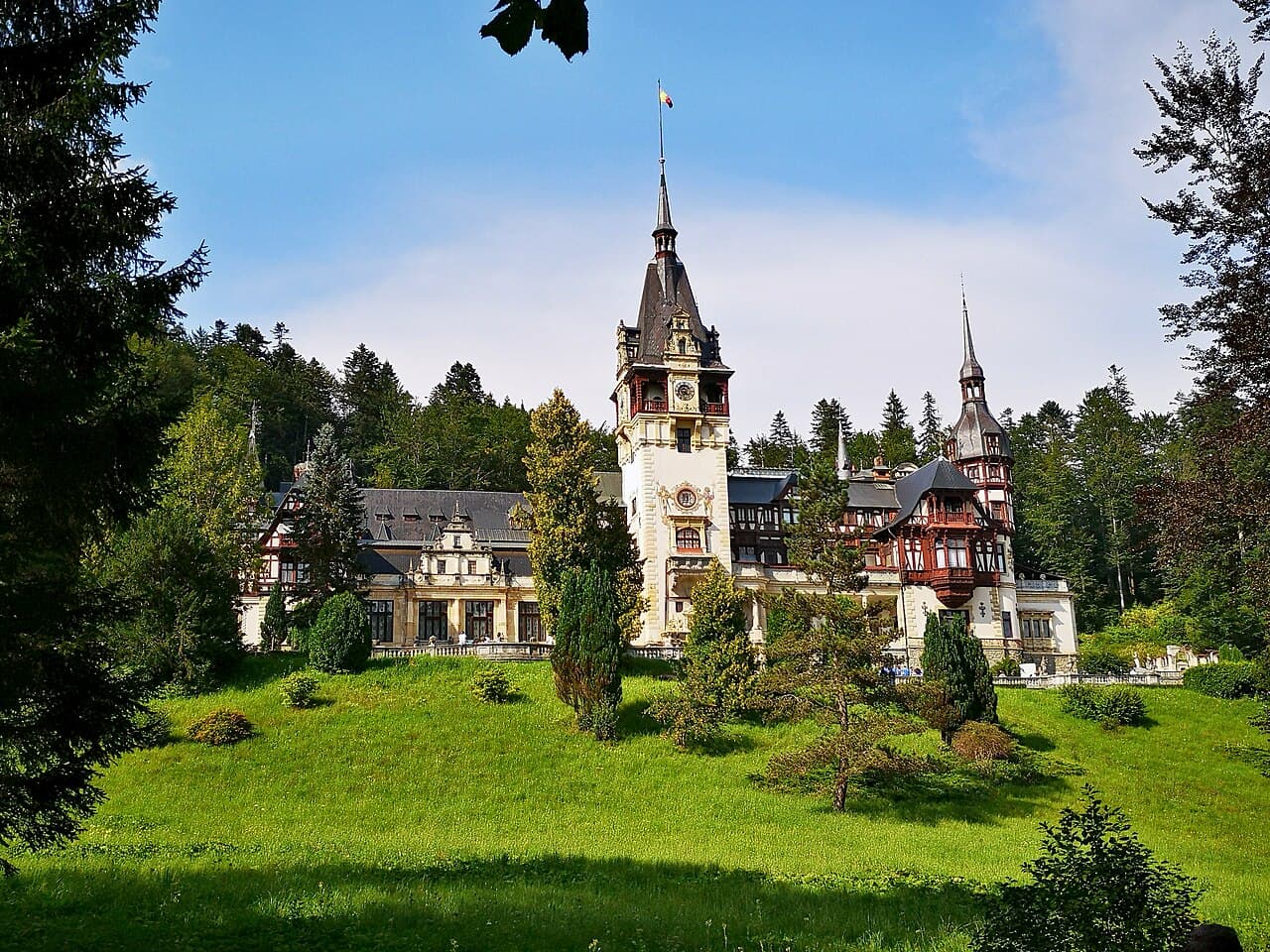
RomaniaPhoto: Nicubunu / Wikimedia Commons (CC BY-SA 4.0)

Romania

Country · RO · RON · Europe/Bucharest

This information may change. Always check the official source.Last verified: August 2026 by

Romania has been a full Schengen member since 1 January 2025, so the land border checks older guides describe are gone - and your days here count against the same 90/180 allowance.

  • 90 days in any rolling 180. Not 90 days per visit and not 90 days per country. Every day anywhere in the Schengen area counts against the same allowance.
  • Romania has been a full Schengen member since 1 January 2025. Air and sea controls went on 31 March 2024 and the land borders followed on 1 January 2025, so arriving from Hungary or Bulgaria by road is no longer a border check.
  • The EU Entry/Exit System has been fully operational since 10 April 2026.
  • ETIAS has not launched and there is no announced launch date. The Q4 2026 target that circulated through 2025 was removed from the official pages in July 2026.
  • The Schengen short stay visa fee is EUR 90, EUR 45 for children aged 6 to 11.
More details

The Schengen arithmetic

  • 90 days in any rolling 180. Not 90 days per visit and not 90 days per country. Every day anywhere in the Schengen area counts against the same allowance.
  • Romania has been a full Schengen member since 1 January 2025. Air and sea controls went on 31 March 2024 and the land borders followed on 1 January 2025, so arriving from Hungary or Bulgaria by road is no longer a border check.
  • This changes your day count. Romania used to be outside the 90/180 clock; it is now inside it, and a long stay here eats the same allowance as France or Germany.
  • The rolling window is the part people get wrong. On any given day, count back 180 days and add up your Schengen days in that period.
  • The passport must have been issued within the last 10 years and be valid for 3 months beyond your intended departure.

EES: no more stamps

  • The EU Entry/Exit System has been fully operational since 10 April 2026.
  • Your face and fingerprints are registered on first entry at a Schengen external border, and reused on later trips.
  • No stamp goes in your passport. The system computes your 90/180 balance itself.
  • Keep your own record of entry and exit dates. If the system's view and yours differ, you want the evidence.

ETIAS: not yet, and no date

  • ETIAS has not launched and there is no announced launch date. The Q4 2026 target that circulated through 2025 was removed from the official pages in July 2026.
  • Applications are not open. Any website selling you an ETIAS today is a scam.
  • When it comes, the fee is EUR 20, free for under-18s and over-70s. The old EUR 7 figure is obsolete.
  • It will be a travel authorisation, not a visa, valid three years or until the passport expires.

Where your nationality lands

Visa and entry in Romania
You holdWhat you need
Germany, France, Italy, Spain, Netherlands, PolandNothing. EU freedom of movement
USA, Canada, Australia, UK, Japan, South Korea, Malaysia, Singapore, TaiwanNo visa. 90/180, EES registration
China, India, Cambodia, Saudi ArabiaSchengen visa in advance
RussiaSchengen visa in advance, single entry as a rule
  • The Schengen short stay visa fee is EUR 90, EUR 45 for children aged 6 to 11.

  • Moldova is not in Schengen. The Iasi and Galati crossings are external borders, so a day trip to Chisinau leaves and re-enters the area - and your EES record with it.

Sources (4)

Romania applies the EU's lower 40-cigarette limit to all arrivals from outside the EU, including flights.

  • Between EU countries there is no duty-free limit. Goods bought tax-paid in another member state travel with you; customs may only ask what a very large quantity is for, against indicative figures of 800 cigarettes and 10 litres of spirits.
  • The tobacco allowance is the lower one for every arrival: 40 cigarettes rather than 200. The rest of the allowance is the EU standard - 1 litre of spirits over 22 % (or 2 litres of fortified or sparkling wine), 4 litres of still wine and 16 litres of beer.
  • Other goods are capped by value - EUR 430 arriving by air or sea, EUR 300 by land - and the allowance cannot be pooled between travellers for a single item.
More details
  • Between EU countries there is no duty-free limit. Goods bought tax-paid in another member state travel with you; customs may only ask what a very large quantity is for, against indicative figures of 800 cigarettes and 10 litres of spirits.
  • The tobacco allowance is the lower one for every arrival: 40 cigarettes rather than 200. The rest of the allowance is the EU standard - 1 litre of spirits over 22 % (or 2 litres of fortified or sparkling wine), 4 litres of still wine and 16 litres of beer.
  • Other goods are capped by value - EUR 430 arriving by air or sea, EUR 300 by land - and the allowance cannot be pooled between travellers for a single item.
  • Cash of EUR 10,000 or more must be declared, counting notes, coins, cheques and prepaid cards together. The money is seized for not declaring it, not for carrying it.
  • The limit applies at Otopeni as well as at the Moldovan and Serbian borders, which is unusual within the EU.
Sources (1)

EHIC works in the state system, private clinics are cheap and quick, and ticks are a real risk in the Carpathians.

  • EU and EEA visitors: carry your EHIC. It gives access to state healthcare on the same terms as a resident.
  • UK visitors: the GHIC does the same job. Neither card is travel insurance, and neither covers repatriation or a private clinic.
  • Tick-borne encephalitis is present in Romanian forests, and the season runs roughly April to October. The vaccine is worth discussing if you are hiking or camping.
  • Rabies exists in wildlife and in stray dogs. Do not approach stray animals, and seek treatment immediately after any bite or scratch - post-exposure treatment is effective but time-critical.
  • Tap water is safe in cities and generally safe elsewhere; in villages with private wells, ask.
More details

Cover

  • EU and EEA visitors: carry your EHIC. It gives access to state healthcare on the same terms as a resident.
  • UK visitors: the GHIC does the same job. Neither card is travel insurance, and neither covers repatriation or a private clinic.
  • Travel insurance still matters for anything the state system does not cover.
  • Private clinics in the cities are inexpensive and fast by western European standards, and are what many Romanians use.

Ticks and rabies

  • Tick-borne encephalitis is present in Romanian forests, and the season runs roughly April to October. The vaccine is worth discussing if you are hiking or camping.
  • Rabies exists in wildlife and in stray dogs. Do not approach stray animals, and seek treatment immediately after any bite or scratch - post-exposure treatment is effective but time-critical.
  • Stray dogs are less of a problem than they were but are still around outside the cities.

Everyday health

  • Tap water is safe in cities and generally safe elsewhere; in villages with private wells, ask.
  • Pharmacies (farmacie) are well stocked and pharmacists advise on minor problems.
  • Bring enough prescription medicine for the trip plus a margin, in original packaging with a copy of the prescription.
Sources (2)

Bucharest

Long-term averages for Bucharest: the mean daily high, the mean overnight low and the mean monthly rainfall across 30 years of ERA5 reanalysis data (1995–2024).

DayNight
-551525°C0100mmJanFebMarAprMayJunJulAugSepOctNovDecJanuary: Day 3 °C, Night -4 °C, Rain 46 mm. February: Day 7 °C, Night -2 °C, Rain 32 mm. March: Day 11 °C, Night 1 °C, Rain 48 mm. April: Day 17 °C, Night 6 °C, Rain 59 mm. May: Day 23 °C, Night 12 °C, Rain 65 mm. June: Day 27 °C, Night 16 °C, Rain 82 mm. July: Day 29 °C, Night 19 °C, Rain 68 mm. August: Day 29 °C, Night 19 °C, Rain 50 mm. September: Day 24 °C, Night 14 °C, Rain 62 mm. October: Day 17 °C, Night 8 °C, Rain 49 mm. November: Day 11 °C, Night 3 °C, Rain 49 mm. December: Day 5 °C, Night -2 °C, Rain 48 mm
Show the monthly table
Bucharest
MonthDay (°C)Night (°C)Rain (mm)
January3-446
February7-232
March11148
April17659
May231265
June271682
July291968
August291950
September241462
October17849
November11349
December5-248

Constanta

Long-term averages for Constanta: the mean daily high, the mean overnight low and the mean monthly rainfall across 30 years of ERA5 reanalysis data (1995–2024).

DayNight
051015202530°C0100mmJanFebMarAprMayJunJulAugSepOctNovDecJanuary: Day 5 °C, Night 0 °C, Rain 47 mm. February: Day 7 °C, Night 1 °C, Rain 34 mm. March: Day 10 °C, Night 3 °C, Rain 42 mm. April: Day 14 °C, Night 7 °C, Rain 44 mm. May: Day 20 °C, Night 13 °C, Rain 46 mm. June: Day 25 °C, Night 18 °C, Rain 56 mm. July: Day 27 °C, Night 20 °C, Rain 39 mm. August: Day 27 °C, Night 20 °C, Rain 36 mm. September: Day 23 °C, Night 16 °C, Rain 54 mm. October: Day 17 °C, Night 11 °C, Rain 45 mm. November: Day 12 °C, Night 6 °C, Rain 47 mm. December: Day 7 °C, Night 2 °C, Rain 48 mm
Show the monthly table
Constanta
MonthDay (°C)Night (°C)Rain (mm)
January5047
February7134
March10342
April14744
May201346
June251856
July272039
August272036
September231654
October171145
November12647
December7248
Sources (1)

Guesthouses (pensiuni) are the national format and are often better value than hotels, particularly in the mountains.

  • The pensiune - a family-run guesthouse - is the Romanian standard outside the cities, and is frequently better than a hotel at the same price.
  • Half board is common and cheap. In the mountains it is often the only food for miles.
  • Brasov is the base for Transylvania and books out in summer and around Christmas.
  • Sibiu and Sighisoara are smaller and quieter.
  • You will be asked for your passport at check-in.
More details

Pensiuni

  • The pensiune - a family-run guesthouse - is the Romanian standard outside the cities, and is frequently better than a hotel at the same price.
  • Half board is common and cheap. In the mountains it is often the only food for miles.
  • They are graded in daisies rather than stars, which is charming and means nothing to a foreign booking site.

Where people actually stay

  • Brasov is the base for Transylvania and books out in summer and around Christmas.
  • Sibiu and Sighisoara are smaller and quieter.
  • Bucharest is a business city with the usual weekday pricing, and its old town is loud at weekends.
  • The Danube Delta needs planning - accommodation is limited, reached by boat, and booked well ahead.

Practicalities

  • You will be asked for your passport at check-in.
  • Air conditioning is not universal and Romanian summers are hot; check the listing rather than assuming.
  • Heating in winter is generally excellent, sometimes aggressively so.
Sources (2)

Romania has some of the fastest and cheapest mobile data in Europe, and EU visitors need nothing at all.

  • Roam-like-at-home applies. A SIM from any EU or EEA country works here at your domestic rates, with your domestic allowance. Buying anything local is money wasted.
  • Orange, Vodafone and Digi cover the country. Coverage is good even in the Carpathians, and Romanian mobile data is among the fastest and cheapest in Europe.
  • An eSIM is live before you land and skips the shop entirely, which on a short trip is the whole argument for it.
  • Keep your home number reachable for two-factor codes. If you swap in a local SIM as your only card, bank apps that text a code to your home number stop working at the worst possible moment. A dual-SIM phone, or an eSIM alongside your home SIM, solves it.
More details

If you have an EU plan, stop reading

  • Roam-like-at-home applies. A SIM from any EU or EEA country works here at your domestic rates, with your domestic allowance. Buying anything local is money wasted.
  • UK plans are not covered any more. Several UK networks reintroduced EU roaming charges after Brexit - check yours before you land rather than after.

Local prepaid SIM

  • Orange, Vodafone and Digi cover the country. Coverage is good even in the Carpathians, and Romanian mobile data is among the fastest and cheapest in Europe.
  • Digi is the budget option and is what price-conscious Romanians use.
  • Bring your passport. Prepaid SIMs are registered to a person.
  • Buy in an operator shop or a mall kiosk - supermarket top-ups are everywhere once you have the SIM.

eSIM

  • An eSIM is live before you land and skips the shop entirely, which on a short trip is the whole argument for it.
  • Check your phone takes one. Most flagship phones since 2019 do; most budget models do not.

Practical points

  • Keep your home number reachable for two-factor codes. If you swap in a local SIM as your only card, bank apps that text a code to your home number stop working at the worst possible moment. A dual-SIM phone, or an eSIM alongside your home SIM, solves it.
  • Wi-fi is widespread in cafes, hotels and stations.
Sources (3)

Romanian sockets are Type Schuko at 230 V, the same as Germany and its neighbours.

  • A Europlug fits every socket in the country.
  • British, American and Australian plugs need an adapter.
  • Bulgaria, Serbia, Hungary and Moldova all match, so a road trip through the region needs one adapter at most.
  • 230 V, so American 120 V-only appliances need a converter.
  • Older blocks still have unearthed sockets of the same shape - the plug fits and the earth clips connect to nothing.
More details

Sockets in Romania are Type and at 230 V, 50 Hz - Schuko, the standard used across most of continental Europe.

  • A Europlug fits every socket in the country.
  • British, American and Australian plugs need an adapter.
  • Bulgaria, Serbia, Hungary and Moldova all match, so a road trip through the region needs one adapter at most.
  • 230 V, so American 120 V-only appliances need a converter.
  • Older blocks still have unearthed sockets of the same shape - the plug fits and the earth clips connect to nothing.
  • A Europlug is all most travellers need, because phone, laptop and camera chargers all end in one and none of them wants an earth.
Sources (1)

Type sockets, a Latin language among Slavic neighbours, and a country that is far more modern than its reputation abroad.

  • 230 V, 50 Hz, sockets type and . The same round two-pin plugs as Germany and most of continental Europe.
  • UK, US, Irish and Australian plugs need an adapter.
  • Romanian is a Romance language - closer to Italian than to anything Slavic, despite the map. If you read Italian or Spanish you will guess a surprising amount.
  • Shops open late and on Sundays in cities.
  • Take your shoes off indoors in someone's home.
More details

Power

  • 230 V, 50 Hz, sockets type and . The same round two-pin plugs as Germany and most of continental Europe.
  • UK, US, Irish and Australian plugs need an adapter.

Language

  • Romanian is a Romance language - closer to Italian than to anything Slavic, despite the map. If you read Italian or Spanish you will guess a surprising amount.
  • English is widely spoken by younger people and throughout the tourist economy; French among older, educated Romanians.
  • "Buna ziua" is hello, "multumesc" is thank you.
  • Hungarian is widely spoken in parts of Transylvania, which is a live political subject - as a visitor, stay out of it.

Practicalities

  • Shops open late and on Sundays in cities.
  • Romanian coffee culture is excellent in Bucharest and Cluj, and the country's internet is genuinely world-class.
  • Orthodox churches expect covered shoulders, and in monasteries, covered knees for both sexes.

Manners

  • Take your shoes off indoors in someone's home.
  • Hospitality is emphatic. Refusing food or drink outright reads as rejection; take a little.
  • Do not call the country "Eastern Europe" as a synonym for backward - Romanians are quick to point out that Bucharest has faster internet than most of the west, and they are right.
Sources (2)

Romania is in Schengen but not in the euro - the leu is the currency, and paying in euro is a markup rather than a convenience.

  • Romania uses the Romanian leu (RON). Joining Schengen did not change that, and there is no adoption date.
  • Places that quote prices in euro are quoting a tourist rate. Pay in lei and you will pay less.
  • Always refuse the machine's offer to charge you in your own currency. Dynamic currency conversion at an ATM or a card terminal costs several per cent, every time, and the offer is worded to sound helpful. Choose the local currency and let your own bank convert.
  • Use bank ATMs rather than the independent machines in tourist areas, which add their own fee on top.
  • Romania is inexpensive by EU standards, and noticeably cheaper outside Bucharest.
More details

The currency is the leu, not the euro

  • Romania uses the Romanian leu (RON). Joining Schengen did not change that, and there is no adoption date.
  • Places that quote prices in euro are quoting a tourist rate. Pay in lei and you will pay less.
  • Cards work nearly everywhere, contactless is standard, and Romania's banking is more modern than its reputation.

ATMs and exchange

  • Always refuse the machine's offer to charge you in your own currency. Dynamic currency conversion at an ATM or a card terminal costs several per cent, every time, and the offer is worded to sound helpful. Choose the local currency and let your own bank convert.
  • Use bank ATMs rather than the independent machines in tourist areas, which add their own fee on top.
  • Exchange offices (casa de schimb) are common and the rate is displayed. Read the commission line, not just the rate.
  • Avoid changing money at the airport beyond what you need for the train.

Everyday costs

  • Romania is inexpensive by EU standards, and noticeably cheaper outside Bucharest.
  • Tipping is around 10 per cent in restaurants where service is not included.
  • Carry small notes. A 200-lei note is hard to break in a village shop.
Sources (2)

Everyday prices

Typical prices in Romanian leu (RON), averaged across the country by Numbeo and read on 19 August 2026. Tick Convert prices above the table to see every amount in your own currency.

Everyday prices
ItemTypical price
Inexpensive restaurant meal50 RON
Dinner for two, mid-range, three courses204 RON
Cappuccino13 RON
Local draught beer, 0.5 l11 RON
Bottled water, 0.33 l8.05 RON
Public transport, one-way ticket3.50 RON
Taxi, starting fare3.75 RON
Petrol, 1 litre8.20 RON
Cigarettes, pack of 20 (Marlboro)29 RON
Average net monthly salary4,670 RON

These are country-wide averages, not a price list: tourist districts, airports and islands sit well above them, and small towns below. The salary line is there for proportion - it is what people living here actually earn.

Sources (1)

Airport guides for Romania14

One page per airport: the routes into town, what they cost and the trap particular to that arrival.

See all 14 airports

Bucharest airport has a train to Gara de Nord for about a euro, and a taxi problem that the official touch-screen terminals exist to solve.

  • The train reaches Gara de Nord in about 25 minutes for a handful of lei - a euro or so. It is the cheapest and most predictable way into the city.
  • Express buses run to the centre on ordinary city fares, taking longer and stopping more.
  • Order from the terminal, which prints a ticket with the company, the car and the per-kilometre rate.
  • Read the rate on the car door. Legitimate Bucharest taxis display a per-kilometre price; a suspiciously high one is legal to display and ruinous to ride.
  • Regional airports are small and close to their cities. Cluj-Napoca's is about 8 km out with a city bus; Timisoara and Iasi are similar.
More details
Bucharest Henri Coanda (OTP)
  • The train reaches Gara de Nord in about 25 minutes for a handful of lei - a euro or so. It is the cheapest and most predictable way into the city.
  • Express buses run to the centre on ordinary city fares, taking longer and stopping more.
  • Both leave from the terminal. The rail halt is connected to the building.
The taxi rule

Bucharest airport taxis have a long and well-earned reputation, and the airport's answer is a set of touch-screen ordering terminals in the arrivals hall.

  • Order from the terminal, which prints a ticket with the company, the car and the per-kilometre rate.
  • Read the rate on the car door. Legitimate Bucharest taxis display a per-kilometre price; a suspiciously high one is legal to display and ruinous to ride.
  • Do not accept a ride from anyone who approaches you. This is the specific thing the FCDO warns about here.
  • Bolt and Uber both operate and remove the question entirely.
Cluj, Iasi, Timisoara
  • Regional airports are small and close to their cities. Cluj-Napoca's is about 8 km out with a city bus; Timisoara and Iasi are similar.
  • Wizz Air and Ryanair fly heavily into all three, and for most of Transylvania, Cluj is a far better arrival than Bucharest.
Sources (3)

Trains are slow and cheap, the motorway network has gaps, and the vignette is electronic and tied to your plate.

  • The rovinieta is electronic and tied to your number plate. There is no sticker.
  • Buy it online, at a petrol station or at the border before you use a national road - it is required on most of the network, not only motorways.
  • CFR Calatori runs the network. It is cheap, comfortable enough and slow - Bucharest to Brasov takes around three hours for a distance a motorway would cover in two.
  • The motorway network is incomplete and the gaps are where the accidents are. A journey that looks short on a map can be a long day on a two-lane road behind lorries.
  • Maxitaxi minibuses cover what the trains do not, leaving from bus stations rather than to a published timetable you can rely on.
More details

The road vignette

  • The rovinieta is electronic and tied to your number plate. There is no sticker.
  • Buy it online, at a petrol station or at the border before you use a national road - it is required on most of the network, not only motorways.
  • Rental cars usually include one, but confirm it in writing rather than taking a desk agent's word.
  • Cameras check plates automatically.

Trains

  • CFR Calatori runs the network. It is cheap, comfortable enough and slow - Bucharest to Brasov takes around three hours for a distance a motorway would cover in two.
  • The scenery on the Prahova valley line is the point, not the speed.
  • Buy at the station or online. Reservations are included on InterRegio services.

Roads

  • The motorway network is incomplete and the gaps are where the accidents are. A journey that looks short on a map can be a long day on a two-lane road behind lorries.
  • Horse carts still use rural roads in parts of the country, unlit at night.
  • Do not drive tired at night on secondary roads. This is the single most useful piece of Romanian driving advice.

Buses and minibuses

  • Maxitaxi minibuses cover what the trains do not, leaving from bus stations rather than to a published timetable you can rely on.
  • Autogari.ro is the aggregator Romanians use to find them.
Sources (3)

Romania's rovinieta is electronic and camera-checked, and the alcohol limit is zero.

  • The rovinieta covers the national road network, not just motorways. Hire cars normally include it; confirm at the desk rather than assume.
  • The alcohol limit is zero. A positive test above a low threshold is a criminal matter, not a fine.
  • Dipped headlights are compulsory outside built-up areas.
  • The mountain roads are the point and the risk. The Transfagarasan and Transalpina open only in summer - roughly July to October - and are closed by snow the rest of the year.
  • Horse carts and unlit vehicles on rural roads at night are the reason locals avoid driving after dark outside the cities.
More details

An electronic road vignette checked by camera, and zero tolerance for alcohol.

  • The rovinieta covers the national road network, not just motorways. Hire cars normally include it; confirm at the desk rather than assume.
  • The alcohol limit is zero. A positive test above a low threshold is a criminal matter, not a fine.
  • Dipped headlights are compulsory outside built-up areas.
  • The mountain roads are the point and the risk. The Transfagarasan and Transalpina open only in summer - roughly July to October - and are closed by snow the rest of the year.
  • Horse carts and unlit vehicles on rural roads at night are the reason locals avoid driving after dark outside the cities.
Sources (1)

A safe country where the real risks are the roads, the bears and a taxi meter - not crime.

  • Romania has the largest brown bear population in Europe outside Russia, and encounters near mountain towns are not rare.
  • Never leave food in a car or a tent, and do not stop to photograph a bear by the roadside - this is how people are hurt here every year.
  • Salvamont is the mountain rescue service and the emergency number is 0725 826 668, alongside 112.
  • Violent crime against visitors is rare and Romania is a low-crime country by European standards.
  • Romania has one of the worst road safety records in the EU.
More details

Bears

  • Romania has the largest brown bear population in Europe outside Russia, and encounters near mountain towns are not rare.
  • Never leave food in a car or a tent, and do not stop to photograph a bear by the roadside - this is how people are hurt here every year.
  • Bears raid bins in Brasov county and there are official warnings in the affected towns. Take them seriously.

The mountains

  • Salvamont is the mountain rescue service and the emergency number is 0725 826 668, alongside 112.
  • The Carpathians turn violent quickly and the marked trails close in winter.
  • Check your insurance covers mountain rescue if you are walking above the tree line.

Crime

  • Violent crime against visitors is rare and Romania is a low-crime country by European standards.
  • Pickpocketing happens in Bucharest's crowds, on the metro and at Gara de Nord.
  • Taxi overcharging is the classic Bucharest problem - see the airport section, and read the rate on the door.
  • Card skimming has been reported at independent ATMs; use bank machines.

Roads

  • Romania has one of the worst road safety records in the EU.
  • Overtaking on two-lane roads is the specific danger.
  • Do not drive at night on rural roads if you can avoid it - unlit carts, pedestrians and animals are all normal.
Sources (2)

112 for everything, and Salvamont on 0725 826 668 for the mountains.

  • 112 works from any phone, free, with no credit and no SIM, and operators handle English.
  • Report a theft to the police and get a written record. No insurer will pay a claim without one, and obtaining it later from another country is close to impossible.
  • A lost passport means the police first, then your embassy.
  • Save 112 in your phone now, and write your accommodation's address somewhere that does not depend on a charged battery.
  • Not every country keeps an embassy in Romania. Several cover it from a neighbouring capital - check yours before you need to know.
More details

The numbers

Emergency numbers in Romania
ServiceNumber
All emergencies112
Ambulance, fire, police112
Mountain rescue (Salvamont)0725 826 668
  • 112 works from any phone, free, with no credit and no SIM, and operators handle English.

If you need help

  • Report a theft to the police and get a written record. No insurer will pay a claim without one, and obtaining it later from another country is close to impossible.
  • A lost passport means the police first, then your embassy.
  • Your embassy cannot pay your bills or get you out of jail, but it can issue emergency travel documents, contact your family and provide lists of local lawyers and doctors.

Before you need them

  • Save 112 in your phone now, and write your accommodation's address somewhere that does not depend on a charged battery.

  • Not every country keeps an embassy in Romania. Several cover it from a neighbouring capital - check yours before you need to know.

  • Salvamont is the number to save before walking in the Carpathians. It reaches mountain rescue directly rather than through the general system.

Sources (3)