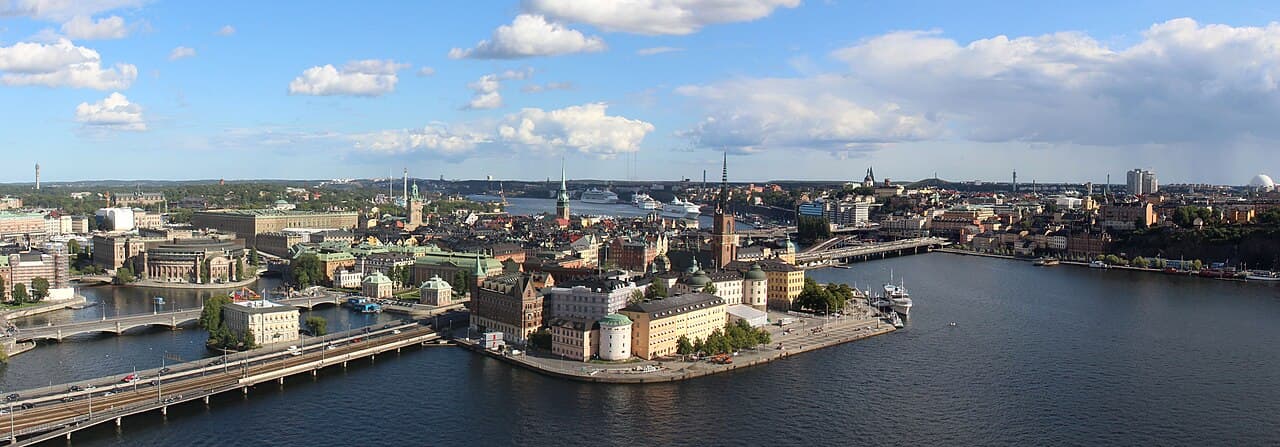
SwedenPhoto: Nordenfan / Wikimedia Commons (CC BY-SA 4.0)

Sweden

Country · SE · SEK · Europe/Stockholm

This information may change. Always check the official source.Last verified: August 2026 by

Schengen: 90 days in any 180, now counted automatically by the EES biometric system rather than by passport stamps. ETIAS has not launched and has no date, so anyone selling you one is selling nothing.

  • Sweden is full Schengen, so the allowance is 90 days in any rolling 180 across the whole area, not per country and not per visit.
  • Since 10 April 2026 there is no stamp - the Entry/Exit System takes your face and fingerprints on first entry and computes the balance itself.
  • Keep your own record of entry and exit dates anyway, because if the system's view and yours differ you want the evidence.
  • ETIAS has not launched and there is no announced date, so any website selling you one today is a scam. When it comes the fee is EUR 20.
  • EU nationals need nothing; Americans, Canadians, Australians, Brits and Japanese need no visa; Chinese, Indian and Russian nationals apply in advance, at EUR 90 and about three weeks.
More details

The Schengen arithmetic

  • 90 days in any rolling 180. Not 90 days per visit and not 90 days per country. Every day you spend anywhere in the Schengen area counts against the same allowance.
  • Sweden is a full Schengen member, so a flight from Germany or Denmark is a domestic arrival with no passport check at all.
  • The rolling window is the part people get wrong. On any given day, count backwards 180 days and add up your Schengen days in that period.
  • The passport must be issued within the last 10 years and valid for 3 months beyond your intended departure.

EES: no more stamps

  • The EU Entry/Exit System has been fully operational since 10 April 2026.
  • Your face and fingerprints are registered on first entry at a Schengen external border, and the record is reused on later trips.
  • No stamp goes in your passport. The system computes your 90/180 balance itself.
  • Keep your own record of entry and exit dates. If the system's view and yours differ, you want the evidence.
  • First registration adds time at the border. Arriving at Arlanda from outside Schengen for the first time since April 2026, allow longer than you used to.

ETIAS: not yet, and no date

  • ETIAS has not launched and there is no announced launch date. The Q4 2026 target that circulated through 2025 was removed from the official pages in July 2026.
  • Applications are not open. Any website selling you an ETIAS today is a scam.
  • When it comes, the fee is EUR 20, under Regulation (EU) 2025/1411, free for under-18s and over-70s. The old EUR 7 figure is obsolete.
  • It will be a travel authorisation, not a visa, valid three years or until the passport expires.

Where your nationality lands

Visa and entry in Sweden
You holdWhat you need
Germany, France, Italy, Spain, Netherlands, PolandNothing. EU freedom of movement
USA, Canada, Australia, UK, Japan, South Korea, Malaysia, Singapore, TaiwanNo visa. 90/180, EES registration
China, India, Cambodia, Saudi ArabiaSchengen visa in advance
RussiaSchengen visa in advance, single entry as a rule
  • The Schengen short stay visa fee is EUR 90 since 11 June 2026, EUR 45 for children aged 6 to 11.
  • Russian nationals applying inside Russia are issued single-entry visas as a rule since 7 November 2025.
  • Apply through the Swedish embassy or its visa centre in your country of residence, usually via VFS Global, and allow at least three weeks.
Sources (3)

Sweden applies the EU allowance, and the state alcohol monopoly means the rules on bringing your own are more interesting than the duty-free numbers.

  • Between EU countries there is no duty-free limit. Goods bought tax-paid in another member state travel with you; customs may only ask what a very large quantity is for, against indicative figures of 800 cigarettes and 10 litres of spirits.
  • Arriving from outside the EU the allowance is one set of numbers: 200 cigarettes, 1 litre of spirits over 22 % (or 2 litres of fortified or sparkling wine), 4 litres of still wine and 16 litres of beer.
  • Other goods are capped by value - EUR 430 arriving by air or sea, EUR 300 by land - and the allowance cannot be pooled between travellers for a single item.
More details
  • Between EU countries there is no duty-free limit. Goods bought tax-paid in another member state travel with you; customs may only ask what a very large quantity is for, against indicative figures of 800 cigarettes and 10 litres of spirits.
  • Arriving from outside the EU the allowance is one set of numbers: 200 cigarettes, 1 litre of spirits over 22 % (or 2 litres of fortified or sparkling wine), 4 litres of still wine and 16 litres of beer.
  • Other goods are capped by value - EUR 430 arriving by air or sea, EUR 300 by land - and the allowance cannot be pooled between travellers for a single item.
  • Cash of EUR 10,000 or more must be declared, counting notes, coins, cheques and prepaid cards together. The money is seized for not declaring it, not for carrying it.
  • Alcohol is sold only through Systembolaget outside bars and restaurants, and importing your own from another EU country for personal use is legal within the indicative quantities.
  • Norway is outside the EU and its own limits are much lower.
Sources (1)

Excellent healthcare, safe tap water, no required vaccinations. EHIC and GHIC holders pay the same small patient fee as Swedes; everyone else needs insurance. Call 1177 before turning up anywhere.

  • Call 1177 first. It is the national health advice line, answers in English and tells you where to go - turning up at an emergency department for something minor wastes a day.
  • Bring an EHIC from the EU or EEA, or a GHIC from the UK. It gets you treated on the same terms as a Swede at the same patient fee.
  • A vardcentral visit is typically SEK 200 to SEK 300 with an EHIC, an emergency department around SEK 400, and several thousand kronor without one.
  • Bring your prescription medicines with the prescription - a foreign prescription cannot normally be dispensed in Sweden.
  • Tap water is excellent everywhere, and mosquitoes in Lapland from June to August are legendary enough that head nets are sold locally.
More details

Before you go

  • No vaccinations are required. Be up to date with routine ones.
  • Consider TBE (tick-borne encephalitis) vaccination if you will be hiking or camping in the south or along the coast between spring and autumn. It is endemic here.
  • Bring an EHIC if you are from the EU or EEA, or a GHIC if from the UK. It gets you treated on the same terms as a Swede, paying the same patient fee.
  • Everyone else needs travel insurance. Sweden's care is excellent and, without a card, billed in full.

Getting seen

  • Call 1177 first. It is the national healthcare advice line, answers in English, and tells you where to go. Turning up at an emergency department for something minor wastes a day.
  • A vardcentral is the local health centre and handles most things. The patient fee is typically SEK 200 to SEK 300 with an EHIC.
  • Emergency departments (akutmottagning) charge around SEK 400 with an EHIC and have long waits for non-urgent problems.
  • Without an EHIC or insurance, expect several thousand kronor for the same visit.

Pharmacies

  • Apotek is the word. Apoteket, Kronans and Apotek Hjartat are the main chains.
  • Pharmacists advise well and speak English.
  • Painkillers are sold in supermarkets in small packs; anything stronger is pharmacy-only.
  • Bring your own prescription medicines with the prescription. A foreign prescription cannot normally be dispensed in Sweden.

Everyday

  • Tap water is excellent everywhere and is often better than the bottled version.
  • Winter dryness and darkness hit harder than people expect. Vitamin D is what every Swede takes from October to March.
  • Sunburn in summer is easy to get, because the temperature hides it and the days are 18 hours long.
  • Mosquitoes in Lapland from June to August are legendary. Head nets are sold locally and are not a joke.
Sources (2)

Stockholm

Long-term averages for Stockholm: the mean daily high, the mean overnight low and the mean monthly rainfall across 30 years of ERA5 reanalysis data (1995–2024).

DayNight
-50510152025°C0100mmJanFebMarAprMayJunJulAugSepOctNovDecJanuary: Day 0 °C, Night -4 °C, Rain 40 mm. February: Day 1 °C, Night -4 °C, Rain 34 mm. March: Day 4 °C, Night -2 °C, Rain 32 mm. April: Day 9 °C, Night 1 °C, Rain 33 mm. May: Day 14 °C, Night 6 °C, Rain 48 mm. June: Day 19 °C, Night 11 °C, Rain 63 mm. July: Day 21 °C, Night 14 °C, Rain 68 mm. August: Day 20 °C, Night 14 °C, Rain 70 mm. September: Day 16 °C, Night 10 °C, Rain 48 mm. October: Day 10 °C, Night 6 °C, Rain 52 mm. November: Day 5 °C, Night 2 °C, Rain 48 mm. December: Day 1 °C, Night -2 °C, Rain 46 mm
Show the monthly table
Stockholm
MonthDay (°C)Night (°C)Rain (mm)
January0-440
February1-434
March4-232
April9133
May14648
June191163
July211468
August201470
September161048
October10652
November5248
December1-246

Gothenburg

Long-term averages for Gothenburg: the mean daily high, the mean overnight low and the mean monthly rainfall across 30 years of ERA5 reanalysis data (1995–2024).

DayNight
-505101520°C0200mmJanFebMarAprMayJunJulAugSepOctNovDecJanuary: Day 2 °C, Night -2 °C, Rain 76 mm. February: Day 3 °C, Night -2 °C, Rain 64 mm. March: Day 6 °C, Night -1 °C, Rain 53 mm. April: Day 11 °C, Night 3 °C, Rain 54 mm. May: Day 15 °C, Night 7 °C, Rain 79 mm. June: Day 19 °C, Night 11 °C, Rain 96 mm. July: Day 20 °C, Night 14 °C, Rain 103 mm. August: Day 20 °C, Night 14 °C, Rain 115 mm. September: Day 16 °C, Night 11 °C, Rain 92 mm. October: Day 11 °C, Night 7 °C, Rain 102 mm. November: Day 6 °C, Night 3 °C, Rain 73 mm. December: Day 3 °C, Night -1 °C, Rain 78 mm
Show the monthly table
Gothenburg
MonthDay (°C)Night (°C)Rain (mm)
January2-276
February3-264
March6-153
April11354
May15779
June191196
July2014103
August2014115
September161192
October117102
November6373
December3-178

Kiruna

Long-term averages for Kiruna: the mean daily high, the mean overnight low and the mean monthly rainfall across 30 years of ERA5 reanalysis data (1995–2024).

DayNight
-20-1001020°C0200mmJanFebMarAprMayJunJulAugSepOctNovDecJanuary: Day -10 °C, Night -16 °C, Rain 33 mm. February: Day -10 °C, Night -16 °C, Rain 29 mm. March: Day -5 °C, Night -12 °C, Rain 24 mm. April: Day 0 °C, Night -7 °C, Rain 31 mm. May: Day 6 °C, Night -2 °C, Rain 58 mm. June: Day 13 °C, Night 5 °C, Rain 79 mm. July: Day 16 °C, Night 9 °C, Rain 109 mm. August: Day 14 °C, Night 7 °C, Rain 80 mm. September: Day 8 °C, Night 3 °C, Rain 69 mm. October: Day 1 °C, Night -3 °C, Rain 55 mm. November: Day -5 °C, Night -10 °C, Rain 39 mm. December: Day -9 °C, Night -14 °C, Rain 36 mm
Show the monthly table
Kiruna
MonthDay (°C)Night (°C)Rain (mm)
January-10-1633
February-10-1629
March-5-1224
April0-731
May6-258
June13579
July169109
August14780
September8369
October1-355
November-5-1039
December-9-1436
Sources (1)

Expensive, spotless and reliable. Stockholm hotels drop their prices at weekends because the market is business travel, which is the reverse of most of Europe.

  • City hotels are cheaper at weekends - the market is corporate, so Friday and Saturday can be 30% to 40% below a Tuesday.
  • Midsummer week in late June fills everything outside the cities and empties the cities themselves, and July is the Swedish holiday month when small businesses close for weeks.
  • Allemansratten is a real legal right: you may walk, cycle and camp on uncultivated land anywhere, private land included, for one or two nights out of sight of a house.
  • The stuga is the Swedish institution - a red wooden cabin by water, rented by the week, and very good value for a group.
  • Blackout curtains matter in June - Stockholm never truly gets dark and above the Arctic Circle the sun does not set at all.
More details

Booking

  • Stockholm and Gothenburg hotels are cheaper at weekends. The market is corporate, so Friday and Saturday nights can be 30% to 40% below a Tuesday.
  • Midsummer week in late June fills everything outside the cities, and empties the cities themselves.
  • July is the Swedish holiday month. Many small restaurants and shops close entirely for several weeks.
  • The Lapland winter season, December to March, books far ahead, especially anywhere marketed for northern lights.

Types

  • Hotels are expensive and consistently good. Breakfast is nearly always included and is a substantial buffet.
  • Hostels (vandrarhem) are excellent and used by all ages. STF is the national network.
  • The stuga is the Swedish institution: a red wooden cabin, rented by the week, usually near water. This is how Swedes holiday and it is very good value for a group.
  • Cabins on campsites are a cheap version of the same idea and are everywhere.

Allemansratten, the right of public access

  • You may walk, cycle, ride and camp on uncultivated land anywhere in Sweden, including private land, without asking.
  • One or two nights in one spot, out of sight of a house, leaving no trace.
  • You may pick berries and mushrooms freely.
  • You may not light a fire on bare rock, camp in a garden or on a field in use, or disturb wildlife. Fire bans are common in dry summers and are taken seriously.
  • This is a real legal right, not a tolerance, and it makes Sweden one of the cheapest countries in Europe to travel through with a tent.

Practical

  • Check-in is usually 15:00, check-out 11:00 or 12:00.
  • Rooms are warm in winter and often have no air conditioning in summer, which matters in a July heatwave.
  • Blackout curtains matter in June. In Stockholm it never truly gets dark, and above the Arctic Circle the sun does not set at all.
  • Almost everywhere accepts card only, including small guesthouses.
Sources (2)

Excellent coverage, no registration requirement, and prepaid SIMs sold in every Pressbyran kiosk. EU visitors roam free; everyone else should decide between a SEK 149 local top-up and an eSIM bought before departure.

  • No registration is required - Sweden does not tie prepaid SIMs to an ID document, so it is a two-minute purchase at any Pressbyran or 7-Eleven.
  • Telia has the best coverage in the far north, which is the one thing that matters if you are going to Kiruna, Abisko or the Lapland fells.
  • Reckon on SEK 149 for 5 GB from Telia or SEK 250 for 10 GB from Telenor, both around a month.
  • EU and EEA visitors need neither a SIM nor an eSIM - roam-like-at-home covers Sweden at no extra cost. UK visitors should check, as some operators reintroduced daily fees.
  • Sweden runs on apps: tickets, parking, menus and museum entry all assume a working phone, and paper tickets barely exist on Stockholm transport.
More details

Buying a SIM

  • No registration is required. Sweden does not tie prepaid SIMs to an identity document, so it is a two-minute purchase.
  • Pressbyran and 7-Eleven kiosks sell them in every station and city centre, as do the operator shops and supermarkets.
  • Telia, Telenor and Tre own the networks; Comviq, Halebop and Hallon resell them.
  • Telia has the best coverage in the far north, which matters if you are going to Kiruna, Abisko or the Lapland fells.

What a local SIM costs

SIM and eSIM in Sweden
OperatorTypical prepaid top-up
Teliafrom SEK 149 for 5 GB over 30 days
TelenorSEK 100 for 1 GB, SEK 250 for 10 GB, both 31 days with unlimited Swedish calls and texts
Treabout SEK 199 for 10 GB
Comviqabout SEK 175 for 8 GB over 31 days
  • Coverage is outstanding by any standard, including on trains and in most of the countryside.
  • The far north is the exception. Above the Arctic Circle, away from the E10, there are long gaps and you should treat offline maps as essential.

eSIM

  • All the networks support eSIM and so does Saily: USD 3.99 for 1 GB over 7 days, USD 9.99 for 5 GB over 30 days, USD 15.99 for 10 GB over 30 days.
  • For a week in Stockholm the eSIM is the least effort and the price gap with a local kontantkort is small.
  • EU and EEA visitors need neither. Roam-like-at-home means your domestic allowance works in Sweden at no extra cost, which covers most European visitors entirely.
  • UK visitors should check. Post-Brexit UK roaming charges vary by operator and some have reintroduced daily fees.

Why connectivity matters more here

  • Sweden runs on apps. Tickets, parking, restaurant menus, museum entry and increasingly payment all assume a working phone.
  • Paper tickets barely exist on Stockholm public transport.
  • BankID is the national identity app and underpins Swish and most Swedish services. Visitors cannot get one, which is why a foreign card matters.
Sources (2)

Swedish sockets are Type Schuko at 230 V, and bathrooms have shaver units rather than ordinary outlets.

  • A Europlug fits every socket in the country.
  • British, American and Australian plugs need an adapter.
  • Bathrooms are wired with shaver supply units rather than ordinary sockets, and they are rated for very little current.
  • Norway, Finland and Denmark are next door and not identical: Denmark's Type socket takes a Schuko plug without earthing it, which is a real hazard rather than an inconvenience.
  • 230 V, so only American 120 V-only equipment needs a converter.
More details

Sockets in Sweden are Type and at 230 V, 50 Hz - the round Schuko outlet used across most of Europe.

  • A Europlug fits every socket in the country.
  • British, American and Australian plugs need an adapter.
  • Bathrooms are wired with shaver supply units rather than ordinary sockets, and they are rated for very little current.
  • Norway, Finland and Denmark are next door and not identical: Denmark's Type socket takes a Schuko plug without earthing it, which is a real hazard rather than an inconvenience.
  • 230 V, so only American 120 V-only equipment needs a converter.
Sources (1)

Type and plugs at 230 V, alcohol only from the state monopoly and only until 18:00 on weekdays, shoes off indoors, and a coffee break with its own name and social rules.

  • Anything above 3.5% alcohol comes only from Systembolaget, the state monopoly, which shuts around 19:00 on weekdays, 15:00 on Saturdays and all day Sunday. If you want wine for a Sunday dinner, buy it on Friday.
  • Supermarkets sell only folkol up to 3.5%, and the age limit is 20 in Systembolaget against 18 in bars.
  • Take your shoes off when entering a Swedish home - always, without being asked.
  • Queueing is by numbered ticket in pharmacies, post offices and Systembolaget. Take a number on the way in or you will never be served.
  • Midsummer, the Friday between 19 and 25 June, is the biggest day of the year: cities empty and everything closes. Plugs are types and at 230 V.
More details

Alcohol, which needs planning

Anything above 3.5% must be bought from Systembolaget, the state monopoly. This catches people out every single weekend.

  • Systembolaget opens roughly 10:00 to 19:00 on weekdays, 10:00 to 15:00 on Saturdays, and is closed on Sundays and public holidays. Regional hours vary; check before you rely on it.
  • Supermarkets sell only folkol, beer up to 3.5%.
  • The age limit is 20 in Systembolaget and 18 in bars and restaurants.
  • Bars and restaurants are unaffected and serve normally, at Swedish prices.
  • If you want wine for a Sunday dinner, buy it on Friday.

Power and connectivity

  • Plug types and at 230 V, 50 Hz, the standard European two-pin. UK, US and Australian plugs need an adapter.
  • Free Wi-Fi is universal in cafes, hotels, trains and public buildings.
  • Sweden is close to fully digital. Museum tickets, parking and restaurant menus are increasingly QR codes.

Customs and manners

  • Take your shoes off when entering a Swedish home. Always, without being asked.
  • Fika is a real institution, not just a coffee break: a pause with coffee and something sweet, taken with other people, often twice a day.
  • Personal space is larger than you are used to. Do not sit next to someone on an empty bus.
  • Queueing is by numbered ticket in pharmacies, post offices, Systembolaget and many shops. Take a number on the way in or you will never be served.
  • Lagom means "just the right amount" and explains a surprising amount about the country.
  • English is spoken at near-native level by almost everyone under 60.

The calendar

  • Midsummer, the Friday between 19 and 25 June, is the biggest day of the year. Cities empty, everything closes, and if you have no invitation to a country house you will find Stockholm shut.
  • July is the holiday month and small businesses close for weeks.
  • Public holidays: New Year, Epiphany, Good Friday, Easter Monday, 1 May, Ascension, National Day (6 June), Midsummer, All Saints, and Christmas from the 24th to the 26th.
  • Christmas Eve, not Christmas Day, is the main event.

Small things

  • Sweden uses the krona, not the euro, and always has.
  • Recycling is taken seriously and bins are sorted everywhere.
  • The pant is a deposit on cans and bottles, reclaimed at supermarket machines.
  • Smoking is banned in outdoor restaurant seating, on station platforms and at playgrounds, not just indoors.
Sources (2)

Sweden is the closest thing to a cashless country on earth. Shops may legally refuse cash and many do. Bring two cards, because a card failure here is not an inconvenience, it is a dead stop.

  • Swedish law lets a shop refuse cash if it displays a sign, and a great many do - "Vi tar ej kontanter" is the phrase. Do not change money before you come.
  • Bring two cards from different networks. Visa and Mastercard work everywhere, Amex does not, and a card failure here strands you because there is no cash fallback.
  • Contactless and phone payments are universal with no meaningful tap limit, and ATMs (Bankomat) are few and mostly in city centres.
  • The dagens lunch is the trick: a weekday main with salad, bread and coffee for around SEK 130, at restaurants charging triple in the evening.
  • Tipping is not expected - service is included, and zero is a normal answer when a terminal prompts you.
More details

The cashless reality

Swedish contract law lets a shop refuse cash if it displays a sign saying so, and a great many do.

  • Cash is used for well under a tenth of payments and has been falling for a decade.
  • Cafes, restaurants, buses, museums and even some banks are card only. "Vi tar ej kontanter" means they do not take cash.
  • Do not change money before you come. You will struggle to spend it and lose on the rate twice.
  • There are very few ATMs, branded Bankomat, and they are mostly in city centres.

What to bring instead

  • Two cards from different networks. Visa and Mastercard both work everywhere; Amex does not.
  • Contactless and phone payments are universal and there is no meaningful tap limit.
  • A card failure here strands you, because there is no cash fallback. This is the whole reason for the second card.
  • Since 1 July 2026 Swedish card terminals must be able to take offline payments, a Riksbank-brokered change made in case of a cyber attack or network failure. It helps, but it is not a reason to travel with one card.
  • Swish, the app everyone uses, is closed to visitors because it requires a Swedish bank account and BankID.

Costs

Money and payments in Sweden
ItemTypical price
Coffee and a cinnamon bun (fika)SEK 60 to SEK 90
Lunch special (dagens lunch)SEK 110 to SEK 145
Dinner main courseSEK 200 to SEK 350
Beer in a barSEK 70 to SEK 95
Stockholm single transit fareSEK 43
  • The dagens lunch is the trick. Weekday lunchtime, a main plus salad, bread and coffee for around SEK 130, at restaurants that charge triple in the evening.
  • Alcohol is the expensive part, deliberately, through tax.

Tipping

  • Tipping is not expected. Service is included and Swedes typically round up or leave nothing.
  • Card terminals sometimes prompt for a tip, which is a recent import. Zero is a normal answer.
  • 10% for exceptional restaurant service is generous and appreciated, not required.
  • Taxis: round up. Nothing in bars or cafes.
Sources (2)

Everyday prices

Typical prices in Swedish krona (SEK), averaged across the country by Numbeo and read on 12 August 2026. Tick Convert prices above the table to see every amount in your own currency.

Everyday prices
ItemTypical price
Inexpensive restaurant meal145 SEK
Dinner for two, mid-range, three courses800 SEK
Cappuccino46 SEK
Local draught beer, 0.5 l80 SEK
Bottled water, 0.33 l22 SEK
Public transport, one-way ticket37 SEK
Taxi, starting fare61 SEK
Petrol, 1 litre18 SEK
Cigarettes, pack of 20 (Marlboro)78 SEK
Average net monthly salary30,300 SEK

These are country-wide averages, not a price list: tourist districts, airports and islands sit well above them, and small towns below. The salary line is there for proportion - it is what people living here actually earn.

Sources (1)

Airport guides for Sweden8

One page per airport: the routes into town, what they cost and the trap particular to that arrival.

See all 8 airports

The SL commuter train looks cheapest and then adds a SEK 147 station passage fee at the barrier. Flygbussarna at SEK 119 is the honest cheap option; the Arlanda Express at 18 minutes is the fast one.

  • The Arlanda Express is 18 minutes, SEK 299 walk-up but SEK 149 to SEK 199 booked online, every 15 minutes until midnight.
  • Arlanda Central station is privately owned and adds a SEK 147 passage fee per person each way on top of your SL ticket - journey planners do not show it, so the "cheap" commuter train ends up at about SEK 190.
  • SL bus 583 to Marsta sits outside the paid zone: about SEK 45 all in, half an hour slower, and the fee disappears.
  • Swedish taxi fares are unregulated. Check the yellow comparison-price sticker on the rear window and agree a fixed price before you get in - SEK 545 to SEK 745 is normal.
  • Skavsta and Vasteras are marketed as Stockholm and are 100 km away, 80 minutes by coach, so check which airport your budget flight actually uses.
More details
Arlanda (ARN) to Stockholm
Transport from the airport in Sweden
OptionCostTimeNotes
Arlanda ExpressSEK 299 walk-up, SEK 149 to SEK 199 booked online18 minEvery 15 min, 05:00 to 24:00, direct to Stockholm Central
Flygbussarna coachSEK 119 one way, SEK 219 return45 minEvery 15 to 30 min to Cityterminalen
SL commuter trainSL ticket plus a SEK 147 station passage fee38 minSee the trap below
SL bus 583 then commuter train from Marstaabout SEK 45 total60 to 70 minAvoids the passage fee entirely
TaxiSEK 545 to SEK 745 fixed35 to 50 minAgree the fixed price before you get in
The station passage fee, which is the actual trap
  • Arlanda Central station is privately owned and charges a SEK 147 passage fee on top of your SL ticket, per person, each way. A government inquiry has proposed scrapping it; until that happens it is charged.
  • Journey planners show you the SL fare and not the fee, so the commuter train looks like the cheap option and then costs about SEK 190 at the barrier.
  • SL bus 583 from Arlanda to Marsta station sits outside the paid zone. From Marsta the commuter train into Stockholm is an ordinary SL journey. Total is about SEK 45 and it takes about half an hour longer.
  • This only matters for the SL train. Flygbussarna and the Arlanda Express include everything in their fares.
Taxis, which are unregulated
  • Swedish taxi fares are not regulated and the horror stories are real.
  • Every taxi must display its comparison price (jamforpris) on a yellow sticker on the rear window. Anything much above SEK 500 for that figure is a rip-off waiting to happen.
  • Agree a fixed price to the city before you get in. SEK 545 to SEK 745 is the normal range from Arlanda.
  • Taxi Stockholm, Taxi Kurir and Sverigetaxi are the reputable firms, and Uber and Bolt both operate.
The other airports
  • Bromma (BMA) is 8 km from the centre with a Flygbussarna coach, about 20 minutes.
  • Skavsta (NYO) and Vasteras (VST) are marketed as Stockholm and are 100 km away. Flygbussarna meets the flights and takes 80 minutes; there is no other sensible option.
  • Gothenburg Landvetter (GOT) has Flygbussarna to the centre in 30 minutes.
  • Check which airport your budget flight actually uses before booking anything else.
Stockholm transport
  • SL runs the metro (tunnelbana), buses, trams and commuter trains on one ticket.
  • A single is SEK 43 and lasts 75 minutes; 24 hours is SEK 180 and 72 hours SEK 360.
  • Buy through the SL app or tap a contactless card directly at the barrier, which charges the single fare.
  • There is no cash on board anything.
Sources (4)

SJ trains link the south efficiently and get slow and beautiful going north. Book advance fares. Everything is an app and almost nothing takes cash.

  • SJ runs the intercity network - Stockholm to Gothenburg in about 3 hours, to Malmo in about 4h30 - and advance fares can be a third of the walk-up price.
  • The night train to Lapland, Stockholm to Abisko and Narvik, takes about 18 hours and is a destination in itself.
  • Headlights on day and night is the law, winter tyres are mandatory from 1 December to 31 March, and the alcohol limit of 0.02% is effectively zero.
  • Elk and reindeer collisions are a real hazard at dawn and dusk in the north - the warning signs are not decorative.
  • Swish is the national payment app and needs a Swedish bank account, so visitors cannot use it. Worth knowing before someone asks you to Swish them.
More details

Trains

  • SJ runs the intercity network. Stockholm to Gothenburg is about 3 hours, Stockholm to Malmo about 4h30, and both are frequent.
  • Book ahead. Advance fares can be a third of the walk-up price and the cheap seats genuinely run out.
  • The night train to Lapland goes Stockholm to Abisko and Narvik and takes about 18 hours. It is a destination in itself.
  • MTRX and Snalltaget compete on some routes and are usually cheaper.
  • Everything is booked in an app and the ticket is a QR code. No paper.

Buses and ferries

  • Flixbus and Vy Bus4You cover the long routes cheaply and slowly.
  • Ferries matter here. Stockholm's archipelago is served by Waxholmsbolaget; Gotland by Destination Gotland from Nynashamn; Finland and Estonia by the big overnight boats from Stockholm's Varta terminal.
  • The Stockholm archipelago boats are public transport, not tours, and are the best value day out in the city.

Driving

  • Sweden drives on the right. Roads are excellent and empty outside the cities.
  • Headlights on at all times, day and night, is the law.
  • Winter tyres are mandatory from 1 December to 31 March when winter conditions exist, and rental cars have them fitted.
  • Elk and reindeer collisions are a real hazard at dawn and dusk, especially in the north. The warning signs are not decorative.
  • Congestion charges apply in Stockholm and Gothenburg automatically by camera; rental companies bill them on.
  • Alcohol limit is 0.02%, effectively zero, and enforcement is strict.

Apps worth having

  • SL for Stockholm, Vasttrafik for Gothenburg, Skanetrafiken for Malmo.
  • SJ for trains.
  • Parkster or EasyPark for parking, because most parking machines have gone.
  • Swish is the national payment app and needs a Swedish bank account, so visitors cannot use it. This is worth knowing before someone asks you to Swish them.
Sources (2)

Swedish motorways are free, but Stockholm and Gothenburg charge congestion tax by camera and elk are a genuine hazard at dusk.

  • Congestion tax applies in Stockholm and Gothenburg on weekdays, charged by camera and billed to the owner - which for a hire car means the rental company plus a fee.
  • The alcohol limit is 0.2 g/l, and Sweden enforces it with roadside tests as a matter of routine.
  • Dipped headlights are compulsory day and night.
  • Elk and deer collisions peak at dawn and dusk in spring and autumn. A warning sign on a Swedish road is a statement of fact, not decoration.
  • Winter tyres are compulsory from 1 December to 31 March when winter conditions prevail, and studded tyres are permitted.
More details

Free motorways, camera-charged city centres, and wildlife that is a real risk rather than a postcard.

  • Congestion tax applies in Stockholm and Gothenburg on weekdays, charged by camera and billed to the owner - which for a hire car means the rental company plus a fee.
  • The alcohol limit is 0.2 g/l, and Sweden enforces it with roadside tests as a matter of routine.
  • Dipped headlights are compulsory day and night.
  • Elk and deer collisions peak at dawn and dusk in spring and autumn. A warning sign on a Swedish road is a statement of fact, not decoration.
  • Winter tyres are compulsory from 1 December to 31 March when winter conditions prevail, and studded tyres are permitted.
Sources (1)

One of the safest countries in the world for a visitor. The real dangers here are the weather, the water and the winter roads, not people.

  • Violent crime against visitors is very rare. The gang violence Sweden is known for is concentrated in specific suburbs that no visitor has reason to be in.
  • Pickpocketing is the realistic risk in Gamla Stan, Drottninggatan, T-Centralen and on the airport trains, and ordinary care defeats it.
  • Taxi overcharging is the main scam, because fares are unregulated - check the yellow comparison-price sticker or use an app.
  • Ice on pavements injures more visitors than anything else. Buy studded ice grips (broddar), sold in every supermarket for about SEK 150.
  • Ticks carrying TBE and Lyme disease are common in the south and along the coast from spring to autumn - discuss the TBE vaccination if you are hiking or camping.
More details

Crime

  • Violent crime against visitors is very rare and Sweden consistently ranks among the safest countries in the world.
  • Pickpocketing exists in central Stockholm: Gamla Stan, Drottninggatan, T-Centralen and the airport trains. It is opportunistic and ordinary care defeats it.
  • Sweden has a serious gang violence problem concentrated in specific suburbs of Stockholm, Gothenburg and Malmo. It is between organised groups and does not touch tourist areas, and there is no reason for a visitor to be in those suburbs.
  • Bicycle theft is the crime you are most likely to meet. Lock it properly.
  • Report crime to the police on 114 14, the non-emergency number, or online at polisen.se.

Scams

  • Taxi overcharging is the main one, because fares are unregulated. Check the yellow comparison-price sticker or use an app.
  • Fake charity clipboards appear on Drottninggatan in summer.
  • Card skimming is rare but declining the machine's own currency conversion is still free money.

The weather, which is the real risk

  • Winter darkness is severe. In Stockholm in December the sun rises at 08:45 and sets at 14:45; in Kiruna it does not rise at all for a month.
  • Ice on pavements causes more visitor injuries than anything else. Buy studded ice grips (broddar) for your shoes, sold in every supermarket for about SEK 150.
  • Falling ice and snow from roofs is genuinely dangerous in a thaw. The cordons on pavements are there for a reason.
  • Dress for the actual temperature. Minus 20 in Lapland is fine in the right clothes and dangerous in the wrong ones. Rental of proper gear is normal and cheap.

Water and wilderness

  • Swimming in lakes and the archipelago is a national pastime and the water is cold enough to cause cold shock into June.
  • Ice on lakes is not automatically safe. Do not walk on it without local advice.
  • Hiking in the fells needs real preparation. The Kungsleden and the Abisko area have no phone coverage, weather that turns in an hour, and huts a day's walk apart.
  • Ticks carrying TBE and Lyme disease are common in the south and along the coast from spring to autumn. A TBE vaccination is worth discussing if you are hiking or camping.
Sources (2)

112 for emergencies, 1177 for health advice, 114 14 for non-urgent police. All three answer in English and the first is free from any phone.

  • 112 covers every emergency, free from any phone including one with no SIM or credit, with operators answering in English.
  • 1177 is the number you will actually use - the 24-hour health advice line that decides whether you need a doctor, and where.
  • 114 14 is for reporting a theft or anything not currently happening; report online at polisen.se and you get a case number by email, which is what your insurer needs.
  • In the mountains call 112 and ask for fjallraddningen, mountain rescue, which is free to the person rescued; on the water ask for sjoraddningen.
  • Tell someone your route before a fell hike, because phone coverage disappears and the huts are far apart.
More details

The numbers

Emergency information in Sweden
ServiceNumber
All emergencies112
Healthcare advice, 24 hours1177
Police, non-emergency114 14
Poison information010 456 6700
Mountain rescue and sea rescuevia 112
  • 112 is free from any phone, including one with no SIM or no credit, and operators answer in English.
  • 112 works across the whole EU with the same number and the same guarantee of an English-speaking operator.
  • 1177 is the number you will actually use. It is the health advice line and it decides whether you need a doctor, and where.
  • 114 14 is for reporting a theft or anything not currently happening.

Practical

  • Report a theft online at polisen.se or by phone on 114 14; you get a case number by email, which is what your insurer needs.
  • A stolen passport means the police first, then your embassy, and most embassies are in Stockholm.
  • The SOS Alarm app (112 Sverige) transmits your position when you call, which matters in the fells where you may not know where you are.

Outdoors

  • In the mountains, call 112 and ask for fjallraddningen (mountain rescue). It is free to the person rescued.
  • On the water, ask for sjoraddningen (sea rescue). The archipelago and the big lakes are covered.
  • Tell someone your route before a fell hike, because coverage disappears and the huts are far apart.
  • Fire bans (eldningsforbud) are announced by county in dry summers and carry real penalties. Check before lighting anything.

Worth saving now

  • Your accommodation's address and the nearest metro or bus stop.
  • Your insurer's 24 hour assistance number.
  • Sweden's country code is +46, and Swedish numbers drop the leading 0 when dialled from abroad.
  • The 1177 website in English has a symptom checker and a map of open health centres, which is faster than phoning at 03:00.
Sources (2)