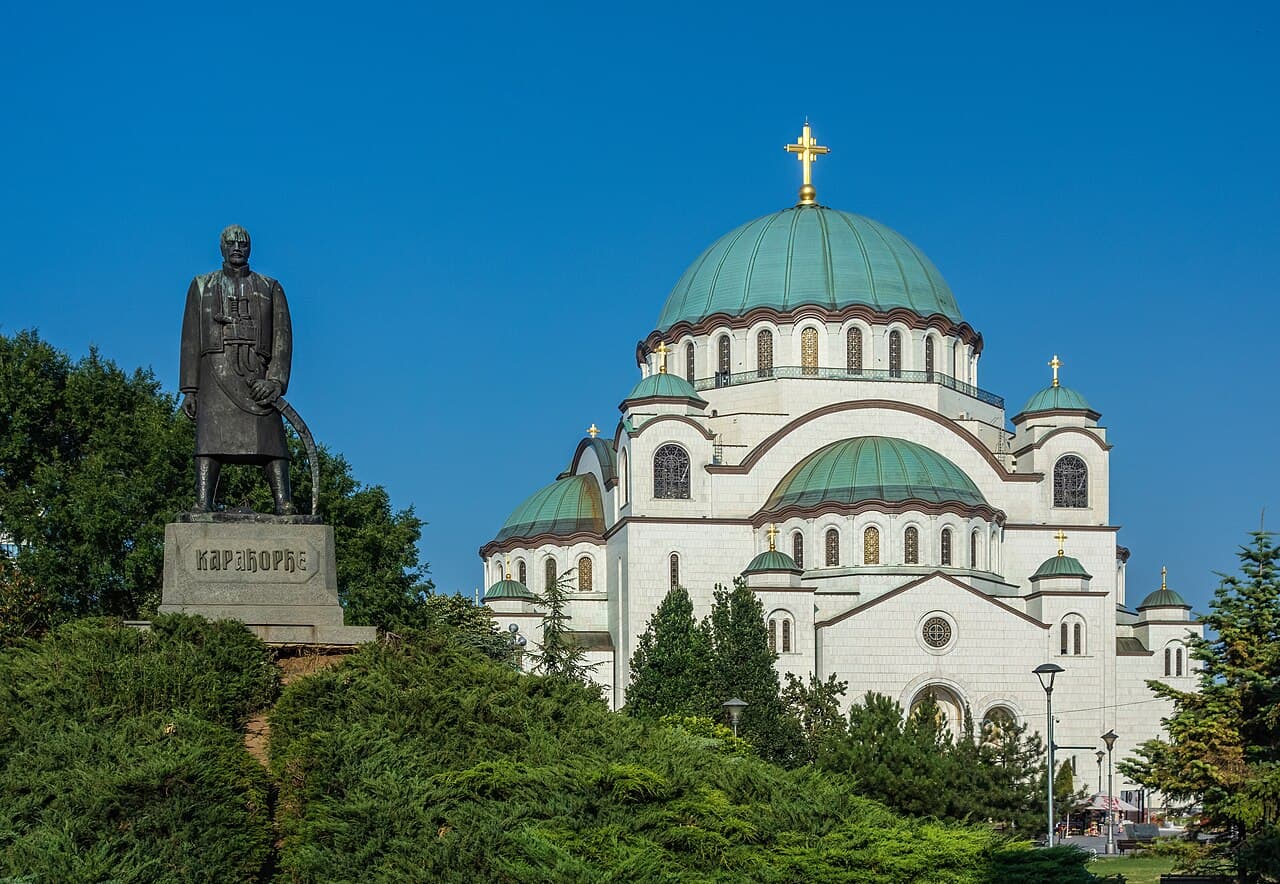
SerbiaPhoto: Petar Milošević / Wikimedia Commons (CC BY-SA 4.0)

Serbia

Country · RS · RSD · Europe/Belgrade

This information may change. Always check the official source.Last verified: August 2026 by

Serbia keeps its own 90/180 clock, separate from Schengen - and a Kosovo entry stamp without a Serbian one can get you refused.

  • Serbia is outside the Schengen area and outside the EU. Its 90 days in 180 are counted separately.
  • Days spent here do not consume your Schengen allowance - which makes the region genuinely useful if you are close to your 90-day Schengen limit and want to stay in Europe.
  • Serbia does not recognise Kosovo as a separate country. It regards Kosovo as Serbian territory.
  • If you enter Kosovo from Albania, Montenegro or North Macedonia, Serbia considers that you entered Serbian territory through a crossing it does not treat as an international border.
  • Most Western passports get 90 days visa-free.
More details

The allowance is not your Schengen one

  • Serbia is outside the Schengen area and outside the EU. Its 90 days in 180 are counted separately.
  • Days spent here do not consume your Schengen allowance - which makes the region genuinely useful if you are close to your 90-day Schengen limit and want to stay in Europe.
  • Your passport is stamped on entry and exit. This country is outside EES, so the stamps are the record and you should keep the passport pages readable.
  • Crossing back into the EU re-enters Schengen and is an external border: expect the EES biometric check, and a longer queue than the drive suggests.

The Kosovo stamp problem

This is the one thing that can actually stop your trip, and it catches people every year.

  • Serbia does not recognise Kosovo as a separate country. It regards Kosovo as Serbian territory.
  • If you enter Kosovo from Albania, Montenegro or North Macedonia, Serbia considers that you entered Serbian territory through a crossing it does not treat as an international border.
  • Trying to enter Serbia afterwards, directly from Kosovo, without an existing Serbian entry stamp, can be refused as illegal entry.

How to avoid it:

  • Enter Serbia first, get the stamp, then go to Kosovo and come back - that works.
  • Or leave Kosovo the way you came into Albania, Montenegro or North Macedonia, and enter Serbia from there at a crossing Serbia recognises.
  • In practice most travellers are waved through, especially at Belgrade airport, but enforcement is inconsistent and the downside is a refused entry in the middle of a trip.

Practicalities

  • Most Western passports get 90 days visa-free.
  • Registration with the police used to be required within 24 hours of arrival; hotels do it automatically and the requirement has been relaxed, but keep any slip a hotel gives you.
Sources (3)

Serbia's customs are unremarkable until you leave with cash: undeclared money is confiscated on the way out, not the way in.

  • Cash of EUR 10,000 or more must be declared on entry, and you can only take out what you declared coming in. Travellers who arrive without declaring and leave with the money find it seized at the airport.
  • The allowance from outside is the regional one: a carton of cigarettes, a litre or two of spirits, and personal effects.
  • All borders are customs borders. Hungary, Croatia, Romania and Bulgaria are EU crossings; Bosnia, Montenegro, North Macedonia and Kosovo are not.
  • Entering Serbia from Kosovo can be refused if you first entered Kosovo from a third country - a border question rather than a customs one, but it strands people at the same booth.
More details
  • Cash of EUR 10,000 or more must be declared on entry, and you can only take out what you declared coming in. Travellers who arrive without declaring and leave with the money find it seized at the airport.
  • The allowance from outside is the regional one: a carton of cigarettes, a litre or two of spirits, and personal effects.
  • All borders are customs borders. Hungary, Croatia, Romania and Bulgaria are EU crossings; Bosnia, Montenegro, North Macedonia and Kosovo are not.
  • Entering Serbia from Kosovo can be refused if you first entered Kosovo from a third country - a border question rather than a customs one, but it strands people at the same booth.
  • Animal products may not be taken into the EU, so the kajmak and the smoked meats stop at the Hungarian border.
Sources (1)

EHIC does not apply; some countries have reciprocal agreements, and travel insurance is essential.

  • The EHIC and GHIC do not apply. Serbia is outside the EU and outside the EEA.
  • Some countries have bilateral healthcare agreements with Serbia which give access to state care - the UK is one - but they cover less than an EHIC would and never cover repatriation.
  • Tick-borne encephalitis is present and the season runs spring to autumn. The vaccine is worth discussing if you are hiking.
  • Tap water is safe in Belgrade and the main cities; in villages, ask.
  • Pharmacies (apoteka) are well stocked and pharmacists advise on minor problems.
More details

Cover

  • The EHIC and GHIC do not apply. Serbia is outside the EU and outside the EEA.
  • Some countries have bilateral healthcare agreements with Serbia which give access to state care - the UK is one - but they cover less than an EHIC would and never cover repatriation.
  • Travel insurance is essential here, more so than in the EU part of this region.

Ticks

  • Tick-borne encephalitis is present and the season runs spring to autumn. The vaccine is worth discussing if you are hiking.

Everyday health

  • Tap water is safe in Belgrade and the main cities; in villages, ask.
  • Pharmacies (apoteka) are well stocked and pharmacists advise on minor problems.
  • Private clinics in Belgrade are inexpensive and quick.
Sources (2)

Belgrade

Long-term averages for Belgrade: the mean daily high, the mean overnight low and the mean monthly rainfall across 30 years of ERA5 reanalysis data (1995–2024).

DayNight
-551525°C0100mmJanFebMarAprMayJunJulAugSepOctNovDecJanuary: Day 5 °C, Night -2 °C, Rain 50 mm. February: Day 8 °C, Night -1 °C, Rain 45 mm. March: Day 12 °C, Night 2 °C, Rain 52 mm. April: Day 17 °C, Night 7 °C, Rain 55 mm. May: Day 22 °C, Night 12 °C, Rain 74 mm. June: Day 26 °C, Night 16 °C, Rain 76 mm. July: Day 28 °C, Night 18 °C, Rain 68 mm. August: Day 28 °C, Night 18 °C, Rain 56 mm. September: Day 23 °C, Night 14 °C, Rain 60 mm. October: Day 18 °C, Night 9 °C, Rain 46 mm. November: Day 12 °C, Night 4 °C, Rain 53 mm. December: Day 6 °C, Night -1 °C, Rain 56 mm
Show the monthly table
Belgrade
MonthDay (°C)Night (°C)Rain (mm)
January5-250
February8-145
March12252
April17755
May221274
June261676
July281868
August281856
September231460
October18946
November12453
December6-156

When to visit

Belgrade's two shoulders - May to June and September to October - are the months in the 18-27 C band. June is also the wettest month of the Serbian year, and the cold half belongs to the kosava.

Belgrade's year has two comfortable stretches, May to June and September to October, at 18-26 C by day. The catch sits inside the first one: the national meteorological service records June as the rainiest month of the Serbian year, and February and October as the ones with the least precipitation, and Belgrade's own table agrees, with 76 mm in June against 46 mm in October.

More details

The best month and the wettest month are neighbours

Belgrade's year has two comfortable stretches, May to June and September to October, at 18-26 C by day. The catch sits inside the first one: the national meteorological service records June as the rainiest month of the Serbian year, and February and October as the ones with the least precipitation, and Belgrade's own table agrees, with 76 mm in June against 46 mm in October.

That makes October the quiet favourite. It averages 18 C by day, 9 C at night and the lowest rainfall of the four, and it is the tail of the season rather than the middle of it.

July and August sit just outside the band at 28 C, with warm nights at 18 C and moderate rain. They are perfectly travellable; they are simply not the months the numbers point at.

Winter, snow and the kosava

Snow cover is characteristic of the colder part of the year, from November to March, with the most days of it in January, on the meteorological service's own description. January in Belgrade averages 5 C by day and -2 C at night, so this is a city that gets winter properly rather than as an occasional event.

The other winter fact is a wind. In the colder half of the year the east and south-east wind, the kosava, dominates - a dry, persistent wind off the Carpathian basin that makes a 5 C afternoon feel a good deal less than 5 C. It is the reason a Belgrade January needs a windproof layer more than a thick one.

Sources (2)

Cheap by European standards, and Belgrade fills for its own festivals rather than for a tourist season.

  • Prices are low by European standards and the city has a large supply of apartments.
  • It fills around EXIT festival in Novi Sad in July and around Belgrade's own events, not to a conventional tourist season.
  • The riverside splavovi (floating clubs) are loud - check what your apartment overlooks before booking a summer stay.
  • Novi Sad is calmer and closer to Fruska Gora, and is 35 minutes away by fast train.
  • The spa towns (banje) are a real domestic tradition and are cheap and quiet.
More details

Belgrade

  • Prices are low by European standards and the city has a large supply of apartments.
  • It fills around EXIT festival in Novi Sad in July and around Belgrade's own events, not to a conventional tourist season.
  • The riverside splavovi (floating clubs) are loud - check what your apartment overlooks before booking a summer stay.

Elsewhere

  • Novi Sad is calmer and closer to Fruska Gora, and is 35 minutes away by fast train.
  • The spa towns (banje) are a real domestic tradition and are cheap and quiet.
  • You will be asked for your passport at check-in, and accommodation registers guests with the police.
Sources (2)

EU roaming does NOT apply here - Serbia is outside the EU, so a European SIM roams at foreign rates unless your operator includes the Western Balkans.

  • Serbia is outside the EU, so roam-like-at-home does not apply. A European SIM roams at whatever your operator charges for a non-EU country, which can be brutal.
  • Telekom Srbija - https://mts.rs/
  • An eSIM is live before you land and skips the shop entirely, which on a short trip is the whole argument for it.
  • Keep your home number reachable for two-factor codes. If you swap in a local SIM as your only card, bank apps that text a code to your home number stop working at the worst possible moment. A dual-SIM phone, or an eSIM alongside your home SIM, solves it.
More details

Your EU plan does not cover you here

This is the trap, and it is the reverse of everywhere else in this part of Europe.

  • Serbia is outside the EU, so roam-like-at-home does not apply. A European SIM roams at whatever your operator charges for a non-EU country, which can be brutal.
  • Some EU operators now include the Western Balkans in their roaming zones - a regional agreement has pushed prices down - but it is opt-in by operator, not automatic. Check yours before you land.
  • Turn off data roaming on arrival until you have checked.

Local prepaid SIM

eSIM

  • An eSIM is live before you land and skips the shop entirely, which on a short trip is the whole argument for it.
  • Check your phone takes one. Most flagship phones since 2019 do; most budget models do not.

Practical points

  • Keep your home number reachable for two-factor codes. If you swap in a local SIM as your only card, bank apps that text a code to your home number stop working at the worst possible moment. A dual-SIM phone, or an eSIM alongside your home SIM, solves it.
  • Wi-fi is widespread in cafes, hotels and stations.
Sources (3)

Serbian sockets are Type Schuko at 230 V, the same as the whole region.

  • A Europlug fits every socket in the country.
  • Hungary, Romania, Bulgaria, North Macedonia, Bosnia, Croatia and Montenegro all match, which makes Serbia the easiest hub in the Balkans for anyone carrying one adapter.
  • British, American and Australian plugs need an adapter.
  • Older Belgrade blocks have unearthed sockets identical from the front to the earthed ones.
  • 230 V, so only American 120 V-only appliances need a converter.
More details

Sockets in Serbia are Type and at 230 V, 50 Hz - the round Schuko outlet.

  • A Europlug fits every socket in the country.
  • Hungary, Romania, Bulgaria, North Macedonia, Bosnia, Croatia and Montenegro all match, which makes Serbia the easiest hub in the Balkans for anyone carrying one adapter.
  • British, American and Australian plugs need an adapter.
  • Older Belgrade blocks have unearthed sockets identical from the front to the earthed ones.
  • 230 V, so only American 120 V-only appliances need a converter.
  • 230 V is the same as the whole of Europe, so the only question crossing a Serbian border is whether the socket is earthed, not what shape it is.
Sources (1)

Two alphabets in daily use, type sockets, and rakija you will not be allowed to refuse.

  • Serbian is written in both Cyrillic and Latin, and both are in everyday use - often on the same street.
  • Official signage tends to Cyrillic, commercial signage to Latin.
  • 230 V, 50 Hz, sockets type and .
  • English is widely spoken by younger people and in Belgrade generally.
  • Rakija is offered as hospitality and refusing outright reads as a rejection of the host. Accept, sip, and it need go no further.
More details

Two alphabets

  • Serbian is written in both Cyrillic and Latin, and both are in everyday use - often on the same street.
  • Official signage tends to Cyrillic, commercial signage to Latin.
  • Learning the Cyrillic alphabet takes an hour and makes station boards and street names readable. It is the highest-return preparation for this trip.

Power

  • 230 V, 50 Hz, sockets type and .

Language

  • English is widely spoken by younger people and in Belgrade generally.
  • "Dobar dan" is hello, "hvala" is thank you.

Manners

  • Rakija is offered as hospitality and refusing outright reads as a rejection of the host. Accept, sip, and it need go no further.
  • Take your shoes off indoors.
  • Coffee is a social event, not a transaction. An invitation for coffee means an hour.
Sources (2)

The dinar, not the euro - euro cash is accepted informally at a rate that favours the seller, so pay in dinars.

  • Serbia uses the Serbian dinar (RSD). It is not in the eurozone and has no adoption date.
  • Euro cash is widely accepted informally in tourist places - at a rate that favours the seller. Pay in dinars.
  • Always refuse the machine's offer to charge you in your own currency. Dynamic currency conversion at an ATM or a card terminal costs several per cent, every time, and the offer is worded to sound helpful. Choose the local currency and let your own bank convert.
  • Use bank ATMs rather than the independent machines in tourist areas, which add their own fee on top.
  • Rounding up is normal, 10 per cent for good restaurant service.
More details

The dinar, not the euro

  • Serbia uses the Serbian dinar (RSD). It is not in the eurozone and has no adoption date.
  • Euro cash is widely accepted informally in tourist places - at a rate that favours the seller. Pay in dinars.
  • Cards work in cities, less reliably in villages and at market stalls.
  • Change money at a bank or a licensed exchange office (menjacnica), which are everywhere and post their rates.

ATMs

  • Always refuse the machine's offer to charge you in your own currency. Dynamic currency conversion at an ATM or a card terminal costs several per cent, every time, and the offer is worded to sound helpful. Choose the local currency and let your own bank convert.
  • Use bank ATMs rather than the independent machines in tourist areas, which add their own fee on top.
  • Beware the standalone Euronet machines in tourist areas across the region. They add a large fee and push dynamic currency conversion hard. Use a bank's own machine.

Tipping

  • Rounding up is normal, 10 per cent for good restaurant service.
Sources (2)

Everyday prices

Typical prices in Serbian dinar (RSD), averaged across the country by Numbeo and read on 19 August 2026. Tick Convert prices above the table to see every amount in your own currency.

Everyday prices
ItemTypical price
Inexpensive restaurant meal1,000 RSD
Dinner for two, mid-range, three courses5,000 RSD
Cappuccino242 RSD
Local draught beer, 0.5 l300 RSD
Bottled water, 0.33 l183 RSD
Public transport, one-way ticket80 RSD
Taxi, starting fare200 RSD
Petrol, 1 litre190 RSD
Cigarettes, pack of 20 (Marlboro)460 RSD
Average net monthly salary101,000 RSD

These are country-wide averages, not a price list: tourist districts, airports and islands sit well above them, and small towns below. The salary line is there for proportion - it is what people living here actually earn.

Sources (1)

Airport guides for Serbia2

One page per airport: the routes into town, what they cost and the trap particular to that arrival.

See all 2 airports

Belgrade airport has a cheap city bus and a long-standing taxi problem the official desk exists to solve.

  • City bus 72 and the A1 minibus both run into Belgrade on ordinary fares - the cheapest way in by a wide margin.
  • Bus 72 goes to Zeleni Venac and the A1 to Slavija, both central.
  • Take a numbered fare voucher from the official taxi desk inside arrivals. Belgrade divides the city into zones and the voucher fixes the price for your zone.
  • Hand the voucher to the driver. You pay the printed amount, nothing more.
  • Nis has a small international airport with Wizz Air services, about 4 km from the city.
More details
Belgrade Nikola Tesla (BEG)
  • City bus 72 and the A1 minibus both run into Belgrade on ordinary fares - the cheapest way in by a wide margin.
  • Bus 72 goes to Zeleni Venac and the A1 to Slavija, both central.
  • The airport is about 18 km west of the centre.
The taxi desk
  • Take a numbered fare voucher from the official taxi desk inside arrivals. Belgrade divides the city into zones and the voucher fixes the price for your zone.
  • Hand the voucher to the driver. You pay the printed amount, nothing more.
  • Do not accept a ride from anyone in the hall. This is a long-standing Belgrade problem and the voucher system exists because of it.
  • CarGo is the local ride-hailing app and works well.
Nis and Kraljevo
  • Nis has a small international airport with Wizz Air services, about 4 km from the city.
  • For much of southern Serbia, Sofia or Skopje are closer than Belgrade - worth checking before booking.
Sources (2)

Buses do the work; the Soko to Novi Sad and Subotica is the exception and it is very good.

  • Belgrade to Novi Sad takes about 35 minutes on the high-speed Soko service - genuinely modern, cheap and worth using.
  • It now runs all the way to Subotica. The rebuilt Novi Sad - Subotica section opened to 200 km/h traffic on 12 October 2025, so Belgrade to Subotica is a little over an hour.
  • Everything else is a bus. Serbia's intercity network is comprehensive and cheap, run from bus stations rather than to a single timetable.
  • Buy at the station. Some stations charge a small platform fee on top of the ticket, which is normal and not a scam.
  • Motorway tolls are paid at booths - keep cash or a card handy.
More details

The Soko train

  • Belgrade to Novi Sad takes about 35 minutes on the high-speed Soko service - genuinely modern, cheap and worth using.
  • It now runs all the way to Subotica. The rebuilt Novi Sad - Subotica section opened to 200 km/h traffic on 12 October 2025, so Belgrade to Subotica is a little over an hour.
  • The through train to Budapest is still not running. Signalling problems have pushed it back from March 2026 to early autumn at the earliest; until it starts, Budapest means changing at Subotica and using the Szeged connection.
  • Book online or at the station. It fills at weekends.

Buses

  • Everything else is a bus. Serbia's intercity network is comprehensive and cheap, run from bus stations rather than to a single timetable.
  • Buy at the station. Some stations charge a small platform fee on top of the ticket, which is normal and not a scam.

Driving

  • Motorway tolls are paid at booths - keep cash or a card handy.
  • A green card may be required for insurance depending on your policy; check before driving in.
  • Roads are good on the corridors and poor off them.
Sources (5)

Serbian motorways are tolled at booths, and a foreign car needs a green card insurance certificate.

  • A green card is required for a foreign-registered car. Without one, insurance is sold at the border crossing at a price that is not competitive.
  • The E75 and E70 motorways are tolled at conventional booths taking cash and cards.
  • The alcohol limit is 0.2 g/l, and zero for professional and new drivers.
  • Dipped headlights are compulsory day and night, all year.
  • Winter equipment is required from 1 November to 1 April - winter tyres, plus chains carried for mountain roads.
More details

Toll booths on the corridor motorways, and green card insurance at the border.

  • A green card is required for a foreign-registered car. Without one, insurance is sold at the border crossing at a price that is not competitive.
  • The E75 and E70 motorways are tolled at conventional booths taking cash and cards.
  • The alcohol limit is 0.2 g/l, and zero for professional and new drivers.
  • Dipped headlights are compulsory day and night, all year.
  • Winter equipment is required from 1 November to 1 April - winter tyres, plus chains carried for mountain roads.
  • Belgrade parking works by SMS in zoned streets, and a foreign number often cannot use it - the machines and kiosks are the alternative.
Sources (1)

A safe country for visitors where the sensitive ground is political, not criminal.

  • Violent crime against visitors is rare and Belgrade is a comfortable city to walk at night by European standards.
  • Pickpocketing happens in crowds and at the bus and train stations.
  • Kosovo is not a neutral topic. Serbs do not accept its independence, and calling it a country in conversation will land badly.
  • Large protests occur in Belgrade and are usually peaceful. Walk away from any that is not.
  • Serbian road safety is poor by EU standards and overtaking on two-lane roads is the specific danger.
More details

Crime

  • Violent crime against visitors is rare and Belgrade is a comfortable city to walk at night by European standards.
  • Pickpocketing happens in crowds and at the bus and train stations.
  • Taxi overcharging is the standard complaint - see the airport section, and use CarGo in the city.

Sensitive subjects

  • Kosovo is not a neutral topic. Serbs do not accept its independence, and calling it a country in conversation will land badly.
  • The 1990s wars and the 1999 NATO bombing are living memory and the damaged buildings in central Belgrade are deliberately left standing.
  • You are not obliged to have an opinion. Listening is fine; arguing is not useful.

Demonstrations

  • Large protests occur in Belgrade and are usually peaceful. Walk away from any that is not.

Roads

  • Serbian road safety is poor by EU standards and overtaking on two-lane roads is the specific danger.
Sources (1)

192 police, 193 fire, 194 ambulance - and 112 works too.

  • 112 works from any phone, free, with no credit and no SIM, and operators handle English.
  • Report a theft to the police and get a written record. No insurer will pay a claim without one, and obtaining it later from another country is close to impossible.
  • A lost passport means the police first, then your embassy.
  • Save 112 in your phone now, and write your accommodation's address somewhere that does not depend on a charged battery.
  • Not every country keeps an embassy in Serbia. Several cover it from a neighbouring capital - check yours before you need to know.
More details

The numbers

Emergency numbers in Serbia
ServiceNumber
All emergencies112
Police192
Fire193
Ambulance194
  • 112 works from any phone, free, with no credit and no SIM, and operators handle English.

If you need help

  • Report a theft to the police and get a written record. No insurer will pay a claim without one, and obtaining it later from another country is close to impossible.
  • A lost passport means the police first, then your embassy.
  • Your embassy cannot pay your bills or get you out of jail, but it can issue emergency travel documents, contact your family and provide lists of local lawyers and doctors.

Before you need them

  • Save 112 in your phone now, and write your accommodation's address somewhere that does not depend on a charged battery.

  • Not every country keeps an embassy in Serbia. Several cover it from a neighbouring capital - check yours before you need to know.

  • Serbia keeps the old three-digit numbers alongside 112, and locals use them.

Sources (2)