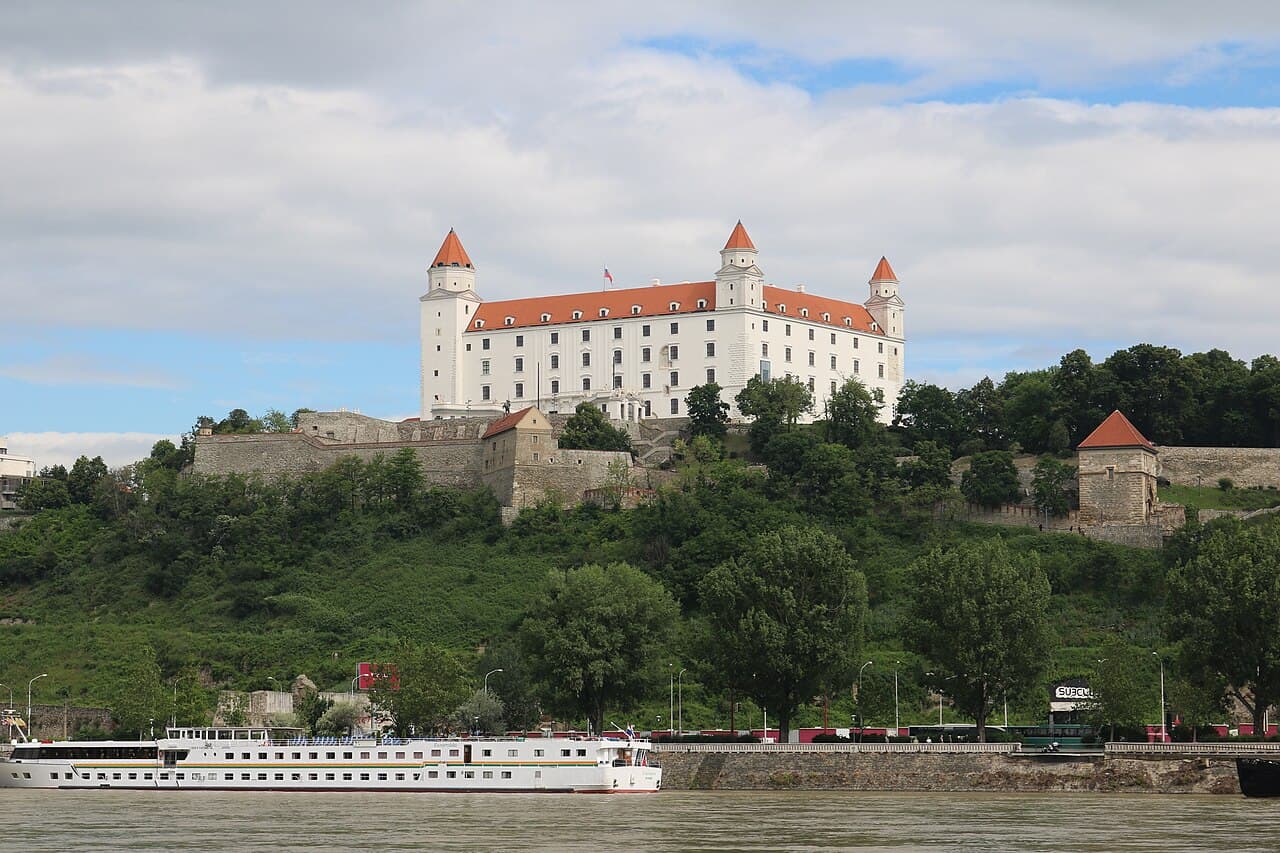
SlovakiaPhoto: Ingo Mehling / Wikimedia Commons (CC BY-SA 4.0)

Slovakia

Country · SK · EUR · Europe/Bratislava

This information may change. Always check the official source.Last verified: August 2026 by

Schengen: 90 days in any 180, counted automatically by the EES biometric system rather than by passport stamps. ETIAS has not launched and has no date, so anyone selling you one is selling nothing.

  • 90 days in any rolling 180. Not 90 days per visit and not 90 days per country. Every day anywhere in the Schengen area counts against the same allowance.
  • Slovakia is a full Schengen member, so arriving from Austria, Czechia, Poland or Hungary involves no passport check at all - and the land borders are genuinely invisible.
  • The EU Entry/Exit System has been fully operational since 10 April 2026.
  • ETIAS has not launched and there is no announced launch date. The Q4 2026 target that circulated through 2025 was removed from the official pages in July 2026.
  • The Schengen short stay visa fee is EUR 90, EUR 45 for children aged 6 to 11.
More details

The Schengen arithmetic

  • 90 days in any rolling 180. Not 90 days per visit and not 90 days per country. Every day anywhere in the Schengen area counts against the same allowance.
  • Slovakia is a full Schengen member, so arriving from Austria, Czechia, Poland or Hungary involves no passport check at all - and the land borders are genuinely invisible.
  • The rolling window is the part people get wrong. On any given day, count back 180 days and add up your Schengen days in that period.
  • The passport must have been issued within the last 10 years and be valid for 3 months beyond your intended departure.
  • Bratislava is 60 km from Vienna, so a great many visitors enter the Schengen area in Austria and reach Slovakia by road. The clock started at the Austrian border.

EES: no more stamps

  • The EU Entry/Exit System has been fully operational since 10 April 2026.
  • Your face and fingerprints are registered on first entry at a Schengen external border, and reused on later trips.
  • No stamp goes in your passport. The system computes your 90/180 balance itself.
  • Keep your own record of entry and exit dates. If the system's view and yours differ, you want the evidence.

ETIAS: not yet, and no date

  • ETIAS has not launched and there is no announced launch date. The Q4 2026 target that circulated through 2025 was removed from the official pages in July 2026.
  • Applications are not open. Any website selling you an ETIAS today is a scam.
  • When it comes, the fee is EUR 20, free for under-18s and over-70s. The old EUR 7 figure is obsolete.
  • It will be a travel authorisation, not a visa, valid three years or until the passport expires.

Where your nationality lands

Visa and entry in Slovakia
You holdWhat you need
Germany, France, Italy, Spain, Netherlands, PolandNothing. EU freedom of movement
USA, Canada, Australia, UK, Japan, South Korea, Malaysia, Singapore, TaiwanNo visa. 90/180, EES registration
China, India, Cambodia, Saudi ArabiaSchengen visa in advance
RussiaSchengen visa in advance, single entry as a rule
  • The Schengen short stay visa fee is EUR 90, EUR 45 for children aged 6 to 11.
  • Apply through the Slovak embassy or its visa centre in your country of residence, and allow at least three weeks.
  • A Schengen visa issued by any member state admits you to Slovakia. You do not need a Slovak one specifically, but your main destination should be Slovakia if that is where you are spending most of the trip.
Sources (3)

Slovakia applies the EU's lower 40-cigarette limit at its Ukrainian border.

  • Between EU countries there is no duty-free limit. Goods bought tax-paid in another member state travel with you; customs may only ask what a very large quantity is for, against indicative figures of 800 cigarettes and 10 litres of spirits.
  • The tobacco allowance is the lower one for land and sea arrivals: 40 cigarettes rather than 200. The rest of the allowance is the EU standard - 1 litre of spirits over 22 % (or 2 litres of fortified or sparkling wine), 4 litres of still wine and 16 litres of beer.
  • Other goods are capped by value - EUR 430 arriving by air or sea, EUR 300 by land - and the allowance cannot be pooled between travellers for a single item.
More details
  • Between EU countries there is no duty-free limit. Goods bought tax-paid in another member state travel with you; customs may only ask what a very large quantity is for, against indicative figures of 800 cigarettes and 10 litres of spirits.
  • The tobacco allowance is the lower one for land and sea arrivals: 40 cigarettes rather than 200. The rest of the allowance is the EU standard - 1 litre of spirits over 22 % (or 2 litres of fortified or sparkling wine), 4 litres of still wine and 16 litres of beer.
  • Other goods are capped by value - EUR 430 arriving by air or sea, EUR 300 by land - and the allowance cannot be pooled between travellers for a single item.
  • Cash of EUR 10,000 or more must be declared, counting notes, coins, cheques and prepaid cards together. The money is seized for not declaring it, not for carrying it.
  • The Ukrainian border is the country's only external EU frontier, and the lower tobacco limit applies there. Vysne Nemecke is the main crossing and Ubla the second, both open around the clock to cars, buses, cyclists and people on foot.
Sources (2)

EU visitors are covered by EHIC for state care; nobody is covered for a mountain rescue. Tap water is safe and tick-borne encephalitis is the one vaccination worth a conversation.

  • EU and EEA visitors: carry your EHIC. It gives access to state healthcare on the same terms as a Slovak resident, which means the same modest co-payments they pay.
  • UK visitors: the GHIC does the same job. It is not travel insurance and never has been.
  • Tick-borne encephalitis is present in Slovak forests and the country is a recognised risk area. The tick season runs roughly April to October.
  • A vaccine exists and is worth discussing with a travel clinic if you are hiking, camping or working outdoors, and especially if you are here repeatedly.
  • Tap water is safe to drink across the country.
More details

Cover

  • EU and EEA visitors: carry your EHIC. It gives access to state healthcare on the same terms as a Slovak resident, which means the same modest co-payments they pay.
  • UK visitors: the GHIC does the same job. It is not travel insurance and never has been.
  • Neither card covers mountain rescue, repatriation or private clinics. For the Tatras specifically, see the safety section - this is the gap that catches people.

Ticks

  • Tick-borne encephalitis is present in Slovak forests and the country is a recognised risk area. The tick season runs roughly April to October.
  • A vaccine exists and is worth discussing with a travel clinic if you are hiking, camping or working outdoors, and especially if you are here repeatedly.
  • Lyme disease is the commoner tick infection. Cover up in long grass and woodland, use repellent, and check yourself at the end of a day outdoors.
  • Remove a tick promptly with fine tweezers, straight out, without twisting or burning it.

Everyday health

  • Tap water is safe to drink across the country.
  • Pharmacies (lekaren) are well stocked and pharmacists are qualified to advise on minor problems. Larger towns have a rota for out-of-hours cover.
  • Standards of care are good in cities, more variable in rural areas. Bratislava and Kosice have the major hospitals.
  • Bring enough of any prescription medicine for the trip plus a margin, in its original packaging, with a copy of the prescription.
Sources (2)

Bratislava

Long-term averages for Bratislava: the mean daily high, the mean overnight low and the mean monthly rainfall across 30 years of ERA5 reanalysis data (1995–2024).

DayNight
-551525°C0100mmJanFebMarAprMayJunJulAugSepOctNovDecJanuary: Day 3 °C, Night -3 °C, Rain 38 mm. February: Day 6 °C, Night -2 °C, Rain 35 mm. March: Day 10 °C, Night 1 °C, Rain 38 mm. April: Day 16 °C, Night 6 °C, Rain 46 mm. May: Day 20 °C, Night 11 °C, Rain 71 mm. June: Day 24 °C, Night 15 °C, Rain 74 mm. July: Day 26 °C, Night 17 °C, Rain 75 mm. August: Day 26 °C, Night 16 °C, Rain 68 mm. September: Day 21 °C, Night 12 °C, Rain 74 mm. October: Day 15 °C, Night 8 °C, Rain 47 mm. November: Day 9 °C, Night 3 °C, Rain 46 mm. December: Day 4 °C, Night -1 °C, Rain 40 mm
Show the monthly table
Bratislava
MonthDay (°C)Night (°C)Rain (mm)
January3-338
February6-235
March10138
April16646
May201171
June241574
July261775
August261668
September211274
October15847
November9346
December4-140

Kosice

Long-term averages for Kosice: the mean daily high, the mean overnight low and the mean monthly rainfall across 30 years of ERA5 reanalysis data (1995–2024).

DayNight
-551525°C0200mmJanFebMarAprMayJunJulAugSepOctNovDecJanuary: Day 1 °C, Night -5 °C, Rain 36 mm. February: Day 4 °C, Night -3 °C, Rain 39 mm. March: Day 9 °C, Night 0 °C, Rain 41 mm. April: Day 15 °C, Night 5 °C, Rain 59 mm. May: Day 20 °C, Night 10 °C, Rain 94 mm. June: Day 24 °C, Night 14 °C, Rain 94 mm. July: Day 26 °C, Night 16 °C, Rain 114 mm. August: Day 25 °C, Night 15 °C, Rain 86 mm. September: Day 20 °C, Night 11 °C, Rain 70 mm. October: Day 14 °C, Night 6 °C, Rain 54 mm. November: Day 7 °C, Night 1 °C, Rain 50 mm. December: Day 2 °C, Night -3 °C, Rain 40 mm
Show the monthly table
Kosice
MonthDay (°C)Night (°C)Rain (mm)
January1-536
February4-339
March9041
April15559
May201094
June241494
July2616114
August251586
September201170
October14654
November7150
December2-340

Poprad

Long-term averages for Poprad: the mean daily high, the mean overnight low and the mean monthly rainfall across 30 years of ERA5 reanalysis data (1995–2024).

DayNight
-1001020°C0200mmJanFebMarAprMayJunJulAugSepOctNovDecJanuary: Day 0 °C, Night -7 °C, Rain 40 mm. February: Day 2 °C, Night -6 °C, Rain 44 mm. March: Day 6 °C, Night -3 °C, Rain 44 mm. April: Day 12 °C, Night 2 °C, Rain 63 mm. May: Day 16 °C, Night 7 °C, Rain 94 mm. June: Day 20 °C, Night 11 °C, Rain 100 mm. July: Day 22 °C, Night 13 °C, Rain 117 mm. August: Day 22 °C, Night 12 °C, Rain 97 mm. September: Day 17 °C, Night 8 °C, Rain 72 mm. October: Day 12 °C, Night 4 °C, Rain 53 mm. November: Day 6 °C, Night 0 °C, Rain 47 mm. December: Day 1 °C, Night -5 °C, Rain 39 mm
Show the monthly table
Poprad
MonthDay (°C)Night (°C)Rain (mm)
January0-740
February2-644
March6-344
April12263
May16794
June2011100
July2213117
August221297
September17872
October12453
November6047
December1-539
Sources (1)

Booking a room in the High Tatras does more than give you a bed: registration and the local tax bring collective mountain rescue insurance with them.

  • Accommodation in Slovakia registers your stay and collects a local tourist tax. It is a couple of euros a night and appears on the bill.
  • In the town of Vysoke Tatry that registration carries collective mountain rescue insurance. Visitors written into the register of accommodated persons who have paid the local tax are covered collectively for search and rescue by the Mountain Rescue Service.
  • Mountain huts (chaty) in the Tatras must be booked well ahead for the summer season, and many take payment in cash only on arrival.
  • You will be asked for your passport or ID at check-in. Registration of guests is a legal requirement, not a formality the receptionist invented.
More details

The Tatras registration that pays for itself

  • Accommodation in Slovakia registers your stay and collects a local tourist tax. It is a couple of euros a night and appears on the bill.
  • In the town of Vysoke Tatry that registration carries collective mountain rescue insurance. Visitors written into the register of accommodated persons who have paid the local tax are covered collectively for search and rescue by the Mountain Rescue Service.
  • That matters because ordinary travel insurance does not cover HZS callouts - see the safety section. Staying in registered accommodation in the High Tatras is the cheapest rescue cover you will ever buy, and it is automatic.
  • Keep the receipt. It is the evidence that you paid the tax.

What to book

  • Mountain huts (chaty) in the Tatras must be booked well ahead for the summer season, and many take payment in cash only on arrival.
  • Bratislava fills for events and long weekends, and its stag-party reputation means some Old Town flats are noisy in a way the listing does not mention.
  • Spa towns are a genuine category here. Piestany, Bardejovske Kupele and others run on a treatment-and-stay model rather than as ordinary hotels.

Practicalities

  • You will be asked for your passport or ID at check-in. Registration of guests is a legal requirement, not a formality the receptionist invented.
  • Outside the cities, expect breakfast to be included and dinner to be available on request rather than assumed.
Sources (2)

EU visitors need do nothing at all. Everyone else picks between a local prepaid SIM, which by law needs your passport, and an eSIM bought before landing.

  • Roam-like-at-home applies. A SIM from any EU or EEA country works in Slovakia at your domestic rates, with your domestic allowance. Buying anything local is money wasted.
  • UK plans are not covered any more. Several UK networks reintroduced EU roaming charges after Brexit - check yours before you land rather than after.
  • Three networks cover the country: Orange, Telekom and O2. Coverage is near-universal on 4G, including the mountains, and there is little to choose between them for a short visit.
  • An eSIM avoids the registration counter entirely and is live before you land, which is the real argument for it on a short trip.
  • Wi-fi is everywhere and usually free - cafes, restaurants, city buses in Bratislava, and the trains.
More details

If you have an EU plan, stop reading

  • Roam-like-at-home applies. A SIM from any EU or EEA country works in Slovakia at your domestic rates, with your domestic allowance. Buying anything local is money wasted.
  • UK plans are not covered any more. Several UK networks reintroduced EU roaming charges after Brexit - check yours before you land rather than after.

Local prepaid SIM

  • Three networks cover the country: Orange, Telekom and O2. Coverage is near-universal on 4G, including the mountains, and there is little to choose between them for a short visit.
  • Orange has the widest rural reach, which matters if you are heading into the Tatras or the east rather than staying in Bratislava.
  • You must show a passport or national ID. Slovak law requires prepaid SIMs to be registered to a person; it takes five to ten minutes in an operator's shop and cannot be skipped by buying in a supermarket.
  • Reckon on the low tens of euros for a tourist data bundle. Operators change these constantly, so compare in the shop rather than trusting a figure from a blog.

eSIM

  • An eSIM avoids the registration counter entirely and is live before you land, which is the real argument for it on a short trip.
  • It is the sensible choice for a weekend, when queueing in an operator's shop costs more than the price difference.
  • Check your phone takes one before you buy - most flagship phones since 2019 do, most budget models do not.

Practical points

  • Wi-fi is everywhere and usually free - cafes, restaurants, city buses in Bratislava, and the trains.
  • Keep your home number reachable for two-factor codes. If you swap in a local SIM as your only card, bank apps that text a code to your home number stop working at the worst moment. A dual-SIM phone, or an eSIM alongside your home SIM, solves it.
Sources (3)

Slovak sockets are Type at 230 V, with the French earth pin, though Schuko outlets appear in newer buildings.

  • A Europlug fits every socket in the country.
  • A bare Schuko plug can fail on an older Type socket because there is no hole in it for the socket's earth pin. The hybrid CEE 7/7 plug on most European appliance leads fits both.
  • British, American and Australian plugs need an adapter.
  • Austria, Hungary, Poland and Czechia are all one adapter away from nothing - the region shares the same two patterns.
  • 230 V, so only American 120 V-only equipment needs a converter.
More details

Sockets in Slovakia are Type , and at 230 V, 50 Hz - mostly the French pattern, where the earth is a pin standing out of the socket.

  • A Europlug fits every socket in the country.
  • A bare Schuko plug can fail on an older Type socket because there is no hole in it for the socket's earth pin. The hybrid CEE 7/7 plug on most European appliance leads fits both.
  • British, American and Australian plugs need an adapter.
  • Austria, Hungary, Poland and Czechia are all one adapter away from nothing - the region shares the same two patterns.
  • 230 V, so only American 120 V-only equipment needs a converter.
Sources (1)

Type and sockets, 230 V, shops shut on public holidays, and a language where the greeting changes depending on how well you know someone.

  • 230 V, 50 Hz, sockets type and . The same round two-pin plugs as Germany, France, Poland and most of continental Europe.
  • UK, US, Irish and Australian plugs need an adapter. US and Canadian devices also need to handle 230 V - most laptop and phone chargers do, most hair dryers do not.
  • Slovak is the language, and it is close enough to Czech that the two are mutually intelligible. Hungarian is widely spoken in the south.
  • Public holidays close nearly everything, including supermarkets - Slovakia restricts retail trading on a list of holidays. Check the date before you plan a shopping day or assume you can buy food.
  • Take your shoes off in someone's home. This is not negotiable and slippers will usually be offered.
More details

Power

  • 230 V, 50 Hz, sockets type and . The same round two-pin plugs as Germany, France, Poland and most of continental Europe.
  • UK, US, Irish and Australian plugs need an adapter. US and Canadian devices also need to handle 230 V - most laptop and phone chargers do, most hair dryers do not.

Language

  • Slovak is the language, and it is close enough to Czech that the two are mutually intelligible. Hungarian is widely spoken in the south.
  • English is common among younger people and in Bratislava, less so in villages and among older people, where German or Russian may get further.
  • "Dobry den" is the all-purpose greeting in shops, restaurants and lifts, and it is expected rather than optional. "Dakujem" is thank you; "prosim" covers both please and you're welcome.

Shops and opening hours

  • Public holidays close nearly everything, including supermarkets - Slovakia restricts retail trading on a list of holidays. Check the date before you plan a shopping day or assume you can buy food.
  • Sunday is a normal trading day outside those holidays, though smaller shops may not open.
  • Supermarkets are cheap and the ones on the edges of towns are cheaper than the small city-centre branches.

Manners

  • Take your shoes off in someone's home. This is not negotiable and slippers will usually be offered.
  • Table manners are formal by British or American standards - wait for everyone to be served, and "dobru chut" before eating.
  • Queues are respected, and pushing in gets a reaction.
Sources (2)

Slovakia uses the euro, cards work nearly everywhere, and the one thing to get right is refusing the ATM's own exchange rate.

  • Slovakia uses the euro and has since 2009. It is not one of the central European countries where you need to change money on arrival.
  • Cards work nearly everywhere, including small shops, cafes and public transport machines. Contactless is standard.
  • Always refuse the machine's offer to charge you in your own currency. Dynamic currency conversion at an ATM or a card terminal costs several per cent, every time, and the machine words the offer to sound helpful. Choose euro and let your own bank convert.
  • Bratislava is not cheap by regional standards and its Old Town is priced for visitors. The rest of the country is markedly cheaper.
More details

The currency

  • Slovakia uses the euro and has since 2009. It is not one of the central European countries where you need to change money on arrival.
  • The old Slovak koruna is long gone. Anyone offering to change your money into korunas is running a scam on a currency that has not existed for well over a decade.

Cards and cash

  • Cards work nearly everywhere, including small shops, cafes and public transport machines. Contactless is standard.
  • Carry some cash anyway for mountain huts, small village shops, farmers' markets and the occasional rural bus - the places where a card reader is not a given.
  • Tipping is around 10 per cent in restaurants, and rounding up is normal for a coffee or a taxi.

ATMs and the one trap

  • Always refuse the machine's offer to charge you in your own currency. Dynamic currency conversion at an ATM or a card terminal costs several per cent, every time, and the machine words the offer to sound helpful. Choose euro and let your own bank convert.
  • Use bank ATMs - Slovenska sporitelna, VUB, Tatra banka - rather than the independent machines in tourist areas, which charge their own fee on top.
  • Withdraw larger amounts less often if your home bank charges a flat fee per withdrawal.

Cost of living

  • Bratislava is not cheap by regional standards and its Old Town is priced for visitors. The rest of the country is markedly cheaper.
  • Check the price before you order in an Old Town club. The FCDO's Slovakia advice names overcharging in Bratislava's Old Town clubs specifically.
Sources (2)

Everyday prices

Typical prices in euro (EUR), averaged across the country by Numbeo and read on 19 August 2026. Tick Convert prices above the table to see every amount in your own currency.

Everyday prices
ItemTypical price
Inexpensive restaurant meal8.00 EUR
Dinner for two, mid-range, three courses44 EUR
Cappuccino2.57 EUR
Local draught beer, 0.5 l2.00 EUR
Bottled water, 0.33 l1.39 EUR
Public transport, one-way ticket1.00 EUR
Taxi, starting fare3.00 EUR
Petrol, 1 litre1.61 EUR
Cigarettes, pack of 20 (Marlboro)5.50 EUR
Average net monthly salary1,160 EUR

These are country-wide averages, not a price list: tourist districts, airports and islands sit well above them, and small towns below. The salary line is there for proportion - it is what people living here actually earn.

Sources (1)

Airport guides for Slovakia3

One page per airport: the routes into town, what they cost and the trap particular to that arrival.

See all 3 airports

Bratislava airport is small and 9 km from town on bus 61. A great many visitors actually land at Vienna, 60 km away in another country, and the bus from there is the one worth knowing about.

  • The airport is about 9 km northeast of the centre - genuinely close, which is unusual and pleasant.
  • City bus 61 runs from the stop in front of the Arrivals terminal to the Main Railway Station (Hlavna stanica), taking roughly 25 minutes. From there the Old Town is a fifteen-minute walk or one tram stop.
  • Direct coaches run between Vienna Airport and Bratislava roughly hourly through the day, operated by Slovak Lines, RegioJet and FlixBus among others.
  • The journey takes about 40 to 50 minutes - less than getting from Vienna airport into Vienna itself on a bad day.
  • Bolt works in Bratislava and is what most residents use. Uber operates too.
More details
Bratislava Airport (BTS)
  • The airport is about 9 km northeast of the centre - genuinely close, which is unusual and pleasant.
  • City bus 61 runs from the stop in front of the Arrivals terminal to the Main Railway Station (Hlavna stanica), taking roughly 25 minutes. From there the Old Town is a fifteen-minute walk or one tram stop.
  • N61 covers the night, so a late arrival is not automatically a taxi.
  • Tickets can be bought from the driver, from machines at the stop, or in the IDS BK app. The app fare is cheaper than paper, and buying from the driver is the most expensive way.
  • Bratislava is a single fare zone for visitors' purposes - zones 100 and 101 cover the city, and the airport is inside them.
Vienna Airport (VIE) is the other Bratislava airport

This is the part worth planning around. Vienna's airport is about 60 km from Bratislava, has vastly more flights, and is often the cheaper way in.

  • Direct coaches run between Vienna Airport and Bratislava roughly hourly through the day, operated by Slovak Lines, RegioJet and FlixBus among others.
  • The journey takes about 40 to 50 minutes - less than getting from Vienna airport into Vienna itself on a bad day.
  • Buy online rather than at the desk. Fares are low but walk-up prices are not.
  • Crossing into Austria and back is not a border check. Both are in Schengen; you will not notice you have changed country except that the road signs change language.
Taxis and ride-hailing
  • Bolt works in Bratislava and is what most residents use. Uber operates too.
  • Use a licensed taxi from the rank if you are hailing at all - the FCDO's advice for Slovakia is specifically to use officially licensed taxis with displayed credentials.
  • Agree the fare or use the app. A metered ride from the airport to the centre should be a short, cheap trip; anything quoted at a flat rate well above that is an airport premium you do not have to pay.
Sources (2)

The motorway vignette is electronic and tied to your number plate. There is no sticker to display, cameras read every plate, and the on-the-spot fine is EUR 150.

  • The e-vignette is registered against your licence plate. Buy it at eznamka.sk, in the official app, at petrol stations or from machines near the border.
  • Check the plate before you pay, including the country code. A typo buys a valid vignette for a car that is not yours, and there is no sticker to reveal the mistake.
  • ZSSK runs the trains and they are cheap, punctual enough and comfortable on the main Bratislava to Kosice line.
  • Bratislava's transport is trams, trolleybuses and buses under IDS BK, one integrated ticket across all of them.
  • Drive on the right. Dipped headlights are required at all times, all year.
More details

The vignette is not a sticker

Slovakia went fully electronic in 2016. There is nothing to buy at the border and nothing to stick on the windscreen, and guidance telling you otherwise - including some official-looking pages - has not caught up.

  • The e-vignette is registered against your licence plate. Buy it at eznamka.sk, in the official app, at petrol stations or from machines near the border.
  • Check the plate before you pay, including the country code. A typo buys a valid vignette for a car that is not yours, and there is no sticker to reveal the mistake.
  • Cameras at motorway entry points read every plate automatically. There are no toll booths for cars, and no moment where somebody checks and waves you through.
  • The on-the-spot fine is EUR 150, against a full sanction several times higher if you do not settle it.
  • Motorcycles are exempt on all motorways and expressways.
  • Rental cars usually come with one, but confirm it in writing. "It's included" from a desk agent is not a defence to a camera.

Trains and buses

  • ZSSK runs the trains and they are cheap, punctual enough and comfortable on the main Bratislava to Kosice line.
  • RegioJet competes on the same route with its own trains and buses, often cheaper and with seat reservations that actually mean something.
  • Buses reach where trains do not, which in Slovakia is most of the mountains and the villages. Slovak Lines and FlixBus cover the intercity network.
  • Book the Bratislava to Kosice run ahead in summer and at holidays. It is the country's one long domestic journey and it fills.

In the cities

  • Bratislava's transport is trams, trolleybuses and buses under IDS BK, one integrated ticket across all of them.
  • Buy in the app. It is cheaper than paper and much cheaper than the driver, and it removes the coins problem.
  • Validate a paper ticket when you board. An unvalidated ticket is an unpaid fare as far as an inspector is concerned.

Driving

  • Drive on the right. Dipped headlights are required at all times, all year.
  • The drink-drive limit is zero. Not low - zero. Fines run to EUR 1,300, with licence confiscation and the possibility of imprisonment.
  • Foreign-registered cars are targeted for vehicle crime. The FCDO warns about punctured tyres at petrol stations and staged breakdowns; stop only at well-lit service stations at night and leave nothing visible.
Sources (2)

Slovakia uses an electronic vignette registered to the plate, and the alcohol limit is zero.

  • The vignette is bought online or at a petrol station and is checked automatically; there is no sticker.
  • The alcohol limit is zero, and it is enforced with random breath tests.
  • Dipped headlights are compulsory day and night.
  • Winter tyres are required in wintry conditions between November and March.
  • Motorway speed is 130 km/h, dropping to 90 in towns on the same road, which is where cameras sit.
More details

An electronic vignette registered to the plate, and zero tolerance for alcohol.

  • The vignette is bought online or at a petrol station and is checked automatically; there is no sticker.
  • The alcohol limit is zero, and it is enforced with random breath tests.
  • Dipped headlights are compulsory day and night.
  • Winter tyres are required in wintry conditions between November and March.
  • Motorway speed is 130 km/h, dropping to 90 in towns on the same road, which is where cameras sit.
  • The High Tatras roads close in bad weather and the passes above Zilina and Poprad are the first to go; the motorway D1 is the reliable route east.
Sources (1)

Slovakia is a low-crime country where the real risk is the mountains: a rescue costs up to EUR 1,000, ordinary travel insurance does not cover it, and the high trails are legally shut from 1 November to 15 June.

  • A Mountain Rescue Service callout costs up to EUR 1,000 and the bill comes to you.
  • Ordinary travel insurance does not cover it. Standard health and travel policies exclude HZS rescue and search costs, so check for an explicit mountain rescue extension before you go up.
  • There are brown bears, wolves and lynx. Encounters are uncommon and the animals avoid people.
  • Make noise on wooded and lakeside trails, never leave food unattended at huts or picnic spots, and keep your distance if you do see something.
  • Slovakia is a low-crime country and violent crime against visitors is rare.
More details

The mountains are the actual risk

  • A Mountain Rescue Service callout costs up to EUR 1,000 and the bill comes to you.
  • Ordinary travel insurance does not cover it. Standard health and travel policies exclude HZS rescue and search costs, so check for an explicit mountain rescue extension before you go up.
  • Staying in registered accommodation in the High Tatras covers you collectively - see the accommodation section. It is the simplest route to being insured.
  • The high trails are closed from 1 November to 15 June. Tatra National Park shuts the higher marked trails, saddles and peaks over winter and spring for avalanche safety and wildlife. This is a legal closure, not a suggestion.
  • Breaking HZS rules carries fines up to EUR 3,320.
  • The emergency number for mountain rescue is 18 300. Save it before you set off, along with 112.
  • Weather in the Tatras turns fast. These are high, steep, exposed mountains despite the modest altitude figures, and summer storms arrive in the afternoon.

Wildlife

  • There are brown bears, wolves and lynx. Encounters are uncommon and the animals avoid people.
  • Make noise on wooded and lakeside trails, never leave food unattended at huts or picnic spots, and keep your distance if you do see something.

Crime

  • Slovakia is a low-crime country and violent crime against visitors is rare.
  • Pickpocketing happens in Bratislava, especially in crowds and at the Christmas markets. The usual precautions are enough.
  • Old Town clubs are the specific warning. The FCDO names drink spiking and overcharging in Bratislava's Old Town nightlife - check prices before you order and do not leave a drink unattended.
  • Never hand over your passport as a deposit for anything.
  • Foreign-registered vehicles are targeted. Punctured tyres at petrol stations and staged breakdowns are used to rob drivers; stop only at well-lit service stations after dark.
Sources (3)

112 for everything, and 18 300 for mountain rescue - the one number that is not obvious and the one you may actually need.

  • 112 works from any phone, free, with no credit and no SIM, and operators handle English.
  • 18 300 is the mountain rescue number and it is the one to save before you go walking. It reaches HZS directly rather than through the general emergency system.
  • Your embassy cannot pay your bills or get you out of jail, but it can issue emergency travel documents, contact your family and provide a list of local lawyers and doctors.
  • Report a theft to the police and get a written record. No insurer will pay a claim without one, and getting it afterwards from another country is close to impossible.
  • Save 112 and 18 300 in your phone now, and write them somewhere that does not depend on a charged battery.
More details

The numbers

Emergency numbers in Slovakia
ServiceNumber
All emergencies112
Ambulance155
Fire150
Police158
Mountain Rescue Service (HZS)18 300
  • 112 works from any phone, free, with no credit and no SIM, and operators handle English.
  • 18 300 is the mountain rescue number and it is the one to save before you go walking. It reaches HZS directly rather than through the general emergency system.
  • The HZS app is worth installing if you are hiking - it transmits your position to rescuers, which in the Tatras is the difference between a search and a rescue.

If you need help

  • Your embassy cannot pay your bills or get you out of jail, but it can issue emergency travel documents, contact your family and provide a list of local lawyers and doctors.
  • Report a theft to the police and get a written record. No insurer will pay a claim without one, and getting it afterwards from another country is close to impossible.
  • A lost passport means the police first, then your embassy.

Before you need them

  • Save 112 and 18 300 in your phone now, and write them somewhere that does not depend on a charged battery.
  • Tell somebody your route if you are walking in the mountains, and when you expect to be back.
  • Note your accommodation's address in Slovak. Reading it out to an operator matters more than you would think when you are shaken.
Sources (4)