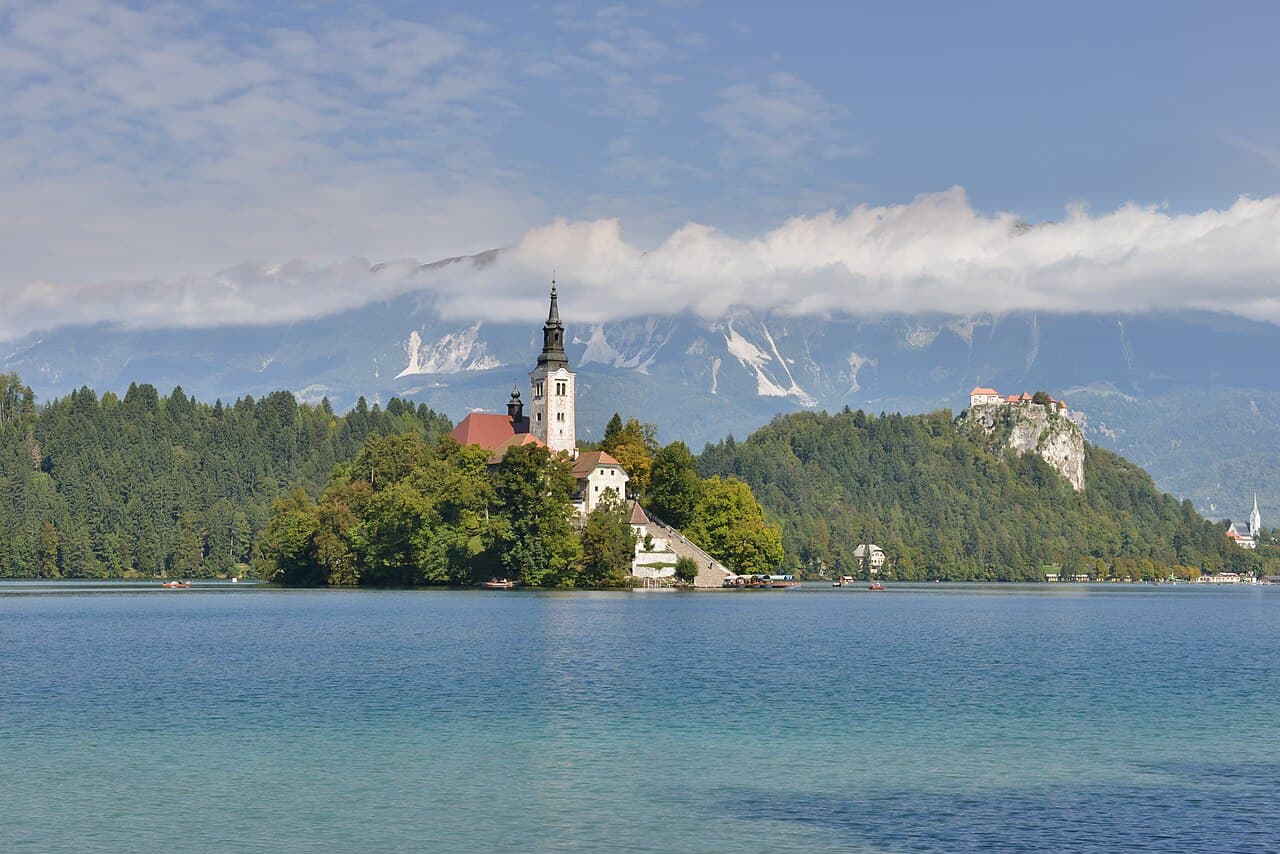
SloveniaPhoto: Abrget47j / Wikimedia Commons (CC BY-SA 3.0)

Slovenia

Country · SI · EUR · Europe/Ljubljana

This information may change. Always check the official source.Last verified: August 2026 by

Schengen: 90 days in any 180, counted automatically by EES. Croatia is now in Schengen too, so the old summer border queues are gone.

  • 90 days in any rolling 180. Not 90 days per visit and not 90 days per country. Every day anywhere in the Schengen area counts against the same allowance.
  • Slovenia is a full Schengen member, and so is Croatia since 2023 - so the notorious summer queues on the road to the Adriatic are no longer a border check.
  • The EU Entry/Exit System has been fully operational since 10 April 2026.
  • ETIAS has not launched and there is no announced launch date. The Q4 2026 target that circulated through 2025 was removed from the official pages in July 2026.
  • The Schengen short stay visa fee is EUR 90, EUR 45 for children aged 6 to 11.
More details

The Schengen arithmetic

  • 90 days in any rolling 180. Not 90 days per visit and not 90 days per country. Every day anywhere in the Schengen area counts against the same allowance.
  • Slovenia is a full Schengen member, and so is Croatia since 2023 - so the notorious summer queues on the road to the Adriatic are no longer a border check.
  • Arriving from Austria, Italy or Hungary involves nothing at all.
  • The rolling window is the part people get wrong. On any given day, count back 180 days and add up your Schengen days in that period.
  • The passport must have been issued within the last 10 years and be valid for 3 months beyond your intended departure.

EES: no more stamps

  • The EU Entry/Exit System has been fully operational since 10 April 2026.
  • Your face and fingerprints are registered on first entry at a Schengen external border, and reused on later trips.
  • No stamp goes in your passport. The system computes your 90/180 balance itself.
  • Keep your own record of entry and exit dates. If the system's view and yours differ, you want the evidence.

ETIAS: not yet, and no date

  • ETIAS has not launched and there is no announced launch date. The Q4 2026 target that circulated through 2025 was removed from the official pages in July 2026.
  • Applications are not open. Any website selling you an ETIAS today is a scam.
  • When it comes, the fee is EUR 20, free for under-18s and over-70s. The old EUR 7 figure is obsolete.
  • It will be a travel authorisation, not a visa, valid three years or until the passport expires.

Where your nationality lands

Visa and entry in Slovenia
You holdWhat you need
Germany, France, Italy, Spain, Netherlands, PolandNothing. EU freedom of movement
USA, Canada, Australia, UK, Japan, South Korea, Malaysia, Singapore, TaiwanNo visa. 90/180, EES registration
China, India, Cambodia, Saudi ArabiaSchengen visa in advance
RussiaSchengen visa in advance, single entry as a rule
  • The Schengen short stay visa fee is EUR 90, EUR 45 for children aged 6 to 11.

  • Bosnia, Serbia and Montenegro are outside Schengen. A drive down the Adriatic that dips into Bosnia at Neum crosses an external border twice - which now means EES, not a wave-through.

Sources (3)

Slovenia applies the EU allowance, and the Croatian border stopped being a customs border in 2023.

  • Between EU countries there is no duty-free limit. Goods bought tax-paid in another member state travel with you; customs may only ask what a very large quantity is for, against indicative figures of 800 cigarettes and 10 litres of spirits.
  • Arriving from outside the EU the allowance is one set of numbers: 200 cigarettes, 1 litre of spirits over 22 % (or 2 litres of fortified or sparkling wine), 4 litres of still wine and 16 litres of beer.
  • Other goods are capped by value - EUR 430 arriving by air or sea, EUR 300 by land - and the allowance cannot be pooled between travellers for a single item.
More details
  • Between EU countries there is no duty-free limit. Goods bought tax-paid in another member state travel with you; customs may only ask what a very large quantity is for, against indicative figures of 800 cigarettes and 10 litres of spirits.
  • Arriving from outside the EU the allowance is one set of numbers: 200 cigarettes, 1 litre of spirits over 22 % (or 2 litres of fortified or sparkling wine), 4 litres of still wine and 16 litres of beer.
  • Other goods are capped by value - EUR 430 arriving by air or sea, EUR 300 by land - and the allowance cannot be pooled between travellers for a single item.
  • Cash of EUR 10,000 or more must be declared, counting notes, coins, cheques and prepaid cards together. The money is seized for not declaring it, not for carrying it.
  • Croatia joined Schengen in 2023 and the crossings are internal now; the external border here is with Bosnia and Serbia further south.
Sources (1)

Good healthcare, EHIC accepted, and one of Europe's higher tick-borne encephalitis rates.

  • EU and EEA visitors: carry your EHIC. It gives access to state healthcare on the same terms as a resident.
  • UK visitors: the GHIC does the same job. Neither card is travel insurance, and neither covers repatriation or a private clinic.
  • Slovenia has one of the highest incidences of tick-borne encephalitis in Europe. This is not a marginal warning here.
  • The season runs roughly April to October and the whole country is a risk area.
  • Tap water is excellent and drinkable everywhere, including from mountain springs marked as potable.
More details

Cover

  • EU and EEA visitors: carry your EHIC. It gives access to state healthcare on the same terms as a resident.
  • UK visitors: the GHIC does the same job. Neither card is travel insurance, and neither covers repatriation or a private clinic.
  • Travel insurance still matters for anything the state system does not cover.

Ticks

  • Slovenia has one of the highest incidences of tick-borne encephalitis in Europe. This is not a marginal warning here.
  • The season runs roughly April to October and the whole country is a risk area.
  • The vaccine is genuinely worth having if you are hiking, camping or spending time in forests - which in Slovenia, over half of which is forested, is most outdoor activity. The course takes weeks, so discuss it well before you travel.
  • Lyme disease is the commoner infection. Cover up, use repellent, check yourself every evening.

Everyday health

  • Tap water is excellent and drinkable everywhere, including from mountain springs marked as potable.
  • Pharmacies (lekarna) are well stocked.
  • Care is good throughout, with the main hospitals in Ljubljana and Maribor.
Sources (2)

Ljubljana

Long-term averages for Ljubljana: the mean daily high, the mean overnight low and the mean monthly rainfall across 30 years of ERA5 reanalysis data (1995–2024).

DayNight
-551525°C0200mmJanFebMarAprMayJunJulAugSepOctNovDecJanuary: Day 4 °C, Night -3 °C, Rain 71 mm. February: Day 6 °C, Night -2 °C, Rain 79 mm. March: Day 11 °C, Night 1 °C, Rain 77 mm. April: Day 15 °C, Night 5 °C, Rain 89 mm. May: Day 19 °C, Night 10 °C, Rain 111 mm. June: Day 24 °C, Night 14 °C, Rain 99 mm. July: Day 26 °C, Night 16 °C, Rain 100 mm. August: Day 25 °C, Night 16 °C, Rain 114 mm. September: Day 20 °C, Night 11 °C, Rain 130 mm. October: Day 15 °C, Night 7 °C, Rain 109 mm. November: Day 9 °C, Night 3 °C, Rain 124 mm. December: Day 5 °C, Night -2 °C, Rain 94 mm
Show the monthly table
Ljubljana
MonthDay (°C)Night (°C)Rain (mm)
January4-371
February6-279
March11177
April15589
May1910111
June241499
July2616100
August2516114
September2011130
October157109
November93124
December5-294

Piran

Long-term averages for Piran: the mean daily high, the mean overnight low and the mean monthly rainfall across 30 years of ERA5 reanalysis data (1995–2024).

DayNight
051015202530°C0200mmJanFebMarAprMayJunJulAugSepOctNovDecJanuary: Day 8 °C, Night 4 °C, Rain 81 mm. February: Day 9 °C, Night 4 °C, Rain 84 mm. March: Day 12 °C, Night 6 °C, Rain 83 mm. April: Day 16 °C, Night 9 °C, Rain 90 mm. May: Day 20 °C, Night 14 °C, Rain 105 mm. June: Day 25 °C, Night 19 °C, Rain 77 mm. July: Day 27 °C, Night 21 °C, Rain 69 mm. August: Day 27 °C, Night 21 °C, Rain 91 mm. September: Day 23 °C, Night 17 °C, Rain 149 mm. October: Day 18 °C, Night 13 °C, Rain 137 mm. November: Day 14 °C, Night 9 °C, Rain 157 mm. December: Day 10 °C, Night 5 °C, Rain 115 mm
Show the monthly table
Piran
MonthDay (°C)Night (°C)Rain (mm)
January8481
February9484
March12683
April16990
May2014105
June251977
July272169
August272191
September2317149
October1813137
November149157
December105115
Sources (1)

A tourist tax on every night, a tiny capital that fills, and farm stays that are the country at its best.

  • A nightly tourist tax applies per person, set by the municipality, and is usually charged separately from the room rate.
  • Ljubljana and Bled charge at the top of the range.
  • Ljubljana is very small - the old town is walkable end to end in twenty minutes - and it fills in summer.
  • Bled is beautiful and busy. Bohinj, half an hour further, is quieter, cheaper and arguably better.
  • You will be asked for your passport at check-in.
More details

The tourist tax

  • A nightly tourist tax applies per person, set by the municipality, and is usually charged separately from the room rate.
  • Ljubljana and Bled charge at the top of the range.
  • Ask whether it is included when booking so the checkout bill is not a surprise.

Where to stay

  • Ljubljana is very small - the old town is walkable end to end in twenty minutes - and it fills in summer.
  • Bled is beautiful and busy. Bohinj, half an hour further, is quieter, cheaper and arguably better.
  • Tourist farms (turisticne kmetije) are a genuine category and are excellent value, often with meals included.
  • The coast is short - about 47 km of it - so Piran books out entirely in season.

Practicalities

  • You will be asked for your passport at check-in.
  • Air conditioning is not universal in older buildings and Slovenian summers are hot.
Sources (2)

EU visitors need nothing; the country is small enough that coverage is a solved problem.

  • Roam-like-at-home applies. A SIM from any EU or EEA country works here at your domestic rates, with your domestic allowance. Buying anything local is money wasted.
  • Telekom Slovenije, A1 and Telemach cover the country, and Slovenia is small and densely covered - including the Julian Alps and the Karst.
  • An eSIM is live before you land and skips the shop entirely, which on a short trip is the whole argument for it.
  • Keep your home number reachable for two-factor codes. If you swap in a local SIM as your only card, bank apps that text a code to your home number stop working at the worst possible moment. A dual-SIM phone, or an eSIM alongside your home SIM, solves it.
More details

If you have an EU plan, stop reading

  • Roam-like-at-home applies. A SIM from any EU or EEA country works here at your domestic rates, with your domestic allowance. Buying anything local is money wasted.
  • UK plans are not covered any more. Several UK networks reintroduced EU roaming charges after Brexit - check yours before you land rather than after.

Local prepaid SIM

  • Telekom Slovenije, A1 and Telemach cover the country, and Slovenia is small and densely covered - including the Julian Alps and the Karst.
  • Prepaid packs are sold in operator shops, petrol stations and kiosks.
  • Bring your passport.

eSIM

  • An eSIM is live before you land and skips the shop entirely, which on a short trip is the whole argument for it.
  • Check your phone takes one. Most flagship phones since 2019 do; most budget models do not.

Practical points

  • Keep your home number reachable for two-factor codes. If you swap in a local SIM as your only card, bank apps that text a code to your home number stop working at the worst possible moment. A dual-SIM phone, or an eSIM alongside your home SIM, solves it.
  • Wi-fi is widespread in cafes, hotels and stations.
Sources (3)

Slovenian sockets are Type Schuko at 230 V, matching Austria, Croatia and Italy's non-Italian outlets.

  • A Europlug fits every socket in the country.
  • Austria, Croatia and Hungary match. Italy, an hour from Ljubljana, adds its own three-in-line Type socket, which a Schuko plug does not fit without an adapter.
  • British, American and Australian plugs need an adapter.
  • 230 V, so only American 120 V-only appliances need a converter.
  • The coast is an hour from three different standards: Italian Type to the west, Croatian Schuko to the south, Austrian Schuko to the north.
More details

Sockets in Slovenia are Type and at 230 V, 50 Hz - the Schuko outlet used across central Europe.

  • A Europlug fits every socket in the country.
  • Austria, Croatia and Hungary match. Italy, an hour from Ljubljana, adds its own three-in-line Type socket, which a Schuko plug does not fit without an adapter.
  • British, American and Australian plugs need an adapter.
  • 230 V, so only American 120 V-only appliances need a converter.
  • The coast is an hour from three different standards: Italian Type to the west, Croatian Schuko to the south, Austrian Schuko to the north.
  • Unearthed sockets survive in older housing and look identical to the earthed ones from the front.
Sources (1)

Type sockets, near-universal English, and a country that will correct you if you call it Slovakia.

  • 230 V, 50 Hz, sockets type and .
  • Slovene is a South Slavic language with a rare feature - the dual, a grammatical number for exactly two things. Nobody expects you to learn it.
  • English is spoken to a very high standard, especially by anyone under fifty. Slovenia is among the best non-native English-speaking countries in Europe.
  • Slovenia is not Slovakia. They are different countries 400 km apart, their embassies famously used to redirect each other's mail, and Slovenes are tired of it.
  • Slovenes take hiking and skiing seriously and the trail network is superb and well marked.
More details

Power

  • 230 V, 50 Hz, sockets type and .

Language

  • Slovene is a South Slavic language with a rare feature - the dual, a grammatical number for exactly two things. Nobody expects you to learn it.
  • English is spoken to a very high standard, especially by anyone under fifty. Slovenia is among the best non-native English-speaking countries in Europe.
  • Italian and Hungarian are co-official in the border regions; German is widely understood.
  • "Dober dan" is hello, "hvala" is thank you.

Practicalities

  • Slovenia is not Slovakia. They are different countries 400 km apart, their embassies famously used to redirect each other's mail, and Slovenes are tired of it.
  • Shops close on Sundays outside tourist areas.
  • The country is genuinely small - you can drive from the Alps to the Adriatic in under two hours, which changes how you plan a trip.

Outdoors

  • Slovenes take hiking and skiing seriously and the trail network is superb and well marked.
  • Mountain huts (koce) require booking in season and often take cash only.
Sources (2)

The euro since 2007, cards everywhere, and prices closer to Austria than to the Balkans.

  • Slovenia uses the euro and has since 2007 - the first of the 2004 accession countries to adopt it.
  • Cards work nearly everywhere and contactless is standard.
  • Slovenia is not a cheap Balkan country. Prices are closer to Austria than to Serbia, particularly in Ljubljana, Bled and on the coast.
  • Always refuse the machine's offer to charge you in your own currency. Dynamic currency conversion at an ATM or a card terminal costs several per cent, every time, and the offer is worded to sound helpful. Choose the local currency and let your own bank convert.
  • Rounding up is normal, 10 per cent for good restaurant service.
More details

The currency

  • Slovenia uses the euro and has since 2007 - the first of the 2004 accession countries to adopt it.
  • Cards work nearly everywhere and contactless is standard.

Prices

  • Slovenia is not a cheap Balkan country. Prices are closer to Austria than to Serbia, particularly in Ljubljana, Bled and on the coast.
  • Bled in particular is priced for its visitors.
  • Eating where locals eat cuts the bill sharply - look for a gostilna rather than a restaurant on a lakefront.

ATMs

  • Always refuse the machine's offer to charge you in your own currency. Dynamic currency conversion at an ATM or a card terminal costs several per cent, every time, and the offer is worded to sound helpful. Choose the local currency and let your own bank convert.
  • Use bank ATMs rather than the independent machines in tourist areas, which add their own fee on top.

Tipping

  • Rounding up is normal, 10 per cent for good restaurant service.
  • Service is not usually added.
Sources (2)

Everyday prices

Typical prices in euro (EUR), averaged across the country by Numbeo and read on 19 August 2026. Tick Convert prices above the table to see every amount in your own currency.

Everyday prices
ItemTypical price
Inexpensive restaurant meal12 EUR
Dinner for two, mid-range, three courses50 EUR
Cappuccino2.20 EUR
Local draught beer, 0.5 l3.00 EUR
Bottled water, 0.33 l1.76 EUR
Public transport, one-way ticket1.50 EUR
Taxi, starting fare1.95 EUR
Petrol, 1 litre1.53 EUR
Cigarettes, pack of 20 (Marlboro)5.40 EUR
Average net monthly salary1,520 EUR

These are country-wide averages, not a price list: tourist districts, airports and islands sit well above them, and small towns below. The salary line is there for proportion - it is what people living here actually earn.

Sources (1)

Airport guides for Slovenia1

One page per airport: the routes into town, what they cost and the trap particular to that arrival.

See all 1 airports

The public bus from Ljubljana airport is EUR 3.30 on weekdays and EUR 1.30 at weekends - the opposite of what anyone expects.

  • Public bus 28 runs between the airport and Ljubljana bus station, taking about 45 minutes.
  • The fare is EUR 3.30 on weekdays and EUR 1.30 at weekends. That is not a typo and it is the reverse of the usual pattern - if you are arriving on a Saturday, the cheap fare is the normal one.
  • Buses are timed loosely to flights but the service is not frequent. Check the departure before you settle in with a coffee.
  • Venice Marco Polo and Treviso are two to three hours from Ljubljana by coach and often much cheaper.
  • Trieste is closer to the Slovenian coast than Ljubljana is.
More details
Ljubljana (LJU)
  • Public bus 28 runs between the airport and Ljubljana bus station, taking about 45 minutes.
  • The fare is EUR 3.30 on weekdays and EUR 1.30 at weekends. That is not a typo and it is the reverse of the usual pattern - if you are arriving on a Saturday, the cheap fare is the normal one.
  • Buses are timed loosely to flights but the service is not frequent. Check the departure before you settle in with a coffee.
  • Shuttle minibuses (Nomago and others) run door to door for more money and are worth it in a group.
  • Taxis are metered and the airport is about 25 km from the city.
The airports you might actually use

Slovenia is small, and three foreign airports serve it as well as its own.

  • Venice Marco Polo and Treviso are two to three hours from Ljubljana by coach and often much cheaper.
  • Trieste is closer to the Slovenian coast than Ljubljana is.
  • Klagenfurt and Zagreb both work for parts of the country.
  • Compare total cost including the transfer before assuming Ljubljana is the right arrival - for the coast or the Julian Alps it frequently is not.
Sources (1)

The motorway vignette is electronic, compulsory and enforced by camera - and Slovenia is a country most people drive through.

  • An e-vignette is compulsory on motorways and expressways for vehicles under 3.5 tonnes.
  • It is electronic and registered to your number plate. There is no sticker.
  • The country is small - Ljubljana to the coast or to Maribor is around two hours.
  • Bled has no railway station of its own worth the name - Lesce-Bled is a few kilometres away.
  • Winter equipment is compulsory from 15 November to 15 March and whenever conditions require it.
More details

The vignette

Slovenia sits on the road between Austria and Croatia, and a very large number of visitors are simply driving through. The vignette catches them.

  • An e-vignette is compulsory on motorways and expressways for vehicles under 3.5 tonnes.
  • It is electronic and registered to your number plate. There is no sticker.
  • Buy it before you join the motorway - online at the DARS portal, at petrol stations near the border, or at kiosks.
  • Check the plate you enter, including the country letters.
  • Cameras enforce it automatically and the fine is substantial.
  • Rental cars usually have one, but confirm it in writing.
  • Vehicles over 3.5 tonnes pay tolls instead, on a different system.

Trains and buses

  • The country is small - Ljubljana to the coast or to Maribor is around two hours.
  • Buses often beat trains for speed and frequency, particularly to Bled and the coast.
  • Slovenske zeleznice runs the trains, cheap and pleasant, with a scenic line through the Bohinj tunnel to the Soca valley.

Bled and the Alps

  • Bled has no railway station of its own worth the name - Lesce-Bled is a few kilometres away.
  • Buses from Ljubljana are the practical route and run frequently.
  • Vintgar gorge and the Julian Alps require timed entry in season; book ahead.

Driving in the mountains

  • Winter equipment is compulsory from 15 November to 15 March and whenever conditions require it.
  • The Vrsic pass is spectacular and closes in winter.
Sources (3)

Slovenia's e-vinjeta is electronic and camera-enforced, and the country is small enough to cross on one tank.

  • Buy the e-vinjeta before the first motorway. Weekly, monthly and annual versions exist, and the weekly one covers most visits.
  • The alcohol limit is 0.5 g/l, and zero for drivers with less than three years' experience.
  • Winter equipment is compulsory from 15 November to 15 March - winter tyres, or summer tyres with chains on board.
  • Dipped headlights are compulsory day and night.
  • The country is 250 km across. A hire car from Ljubljana reaches Piran, Bled and the Vipava valley inside a day each, which is why the weekly vignette usually suffices.
More details

An electronic vignette with no sticker and no barrier, enforced entirely by camera.

  • Buy the e-vinjeta before the first motorway. Weekly, monthly and annual versions exist, and the weekly one covers most visits.
  • The alcohol limit is 0.5 g/l, and zero for drivers with less than three years' experience.
  • Winter equipment is compulsory from 15 November to 15 March - winter tyres, or summer tyres with chains on board.
  • Dipped headlights are compulsory day and night.
  • The country is 250 km across. A hire car from Ljubljana reaches Piran, Bled and the Vipava valley inside a day each, which is why the weekly vignette usually suffices.
Sources (1)
  • DARS evinjeta.dars.si

One of the safest countries in Europe; the mountains are the only real hazard.

  • The Julian Alps are serious mountains despite Slovenia's size. Triglav is not a walk.
  • Mountain rescue is GRZS, reached through 112.
  • The Soca and other alpine rivers are cold and fast, and drownings happen every summer.
  • The gorges are slippery - Vintgar and Tolmin both have marked paths for a reason.
  • Slovenia consistently ranks among the safest countries in Europe and violent crime against visitors is very rare.
More details

The mountains

  • The Julian Alps are serious mountains despite Slovenia's size. Triglav is not a walk.
  • Mountain rescue is GRZS, reached through 112.
  • Check your insurance covers mountain rescue and helicopter evacuation.
  • Via ferrata and high routes need equipment and experience, and the weather changes fast.
  • Register your route with your accommodation if you are going high alone.

Water

  • The Soca and other alpine rivers are cold and fast, and drownings happen every summer.
  • The gorges are slippery - Vintgar and Tolmin both have marked paths for a reason.
  • The Adriatic is calm and the coast is short and safe.

Crime

  • Slovenia consistently ranks among the safest countries in Europe and violent crime against visitors is very rare.
  • Ordinary precautions in Ljubljana's crowds are enough.
  • Bears and wolves exist in the forests but encounters are extremely rare; the guidance is the same as Slovakia's - make noise, do not leave food.
Sources (2)

112 for rescue and medical, 113 for police.

  • 112 works from any phone, free, with no credit and no SIM, and operators handle English.
  • Report a theft to the police and get a written record. No insurer will pay a claim without one, and obtaining it later from another country is close to impossible.
  • A lost passport means the police first, then your embassy.
  • Save 112 in your phone now, and write your accommodation's address somewhere that does not depend on a charged battery.
  • Not every country keeps an embassy in Slovenia. Several cover it from a neighbouring capital - check yours before you need to know.
More details

The numbers

Emergency numbers in Slovenia
ServiceNumber
Ambulance, fire, rescue112
Police113
Mountain rescue (GRZS)112
  • 112 works from any phone, free, with no credit and no SIM, and operators handle English.

If you need help

  • Report a theft to the police and get a written record. No insurer will pay a claim without one, and obtaining it later from another country is close to impossible.
  • A lost passport means the police first, then your embassy.
  • Your embassy cannot pay your bills or get you out of jail, but it can issue emergency travel documents, contact your family and provide lists of local lawyers and doctors.

Before you need them

  • Save 112 in your phone now, and write your accommodation's address somewhere that does not depend on a charged battery.

  • Not every country keeps an embassy in Slovenia. Several cover it from a neighbouring capital - check yours before you need to know.

  • 113 is the police and Slovenia keeps it separate from 112. Either reaches help; 113 is faster for a purely police matter.

Sources (2)