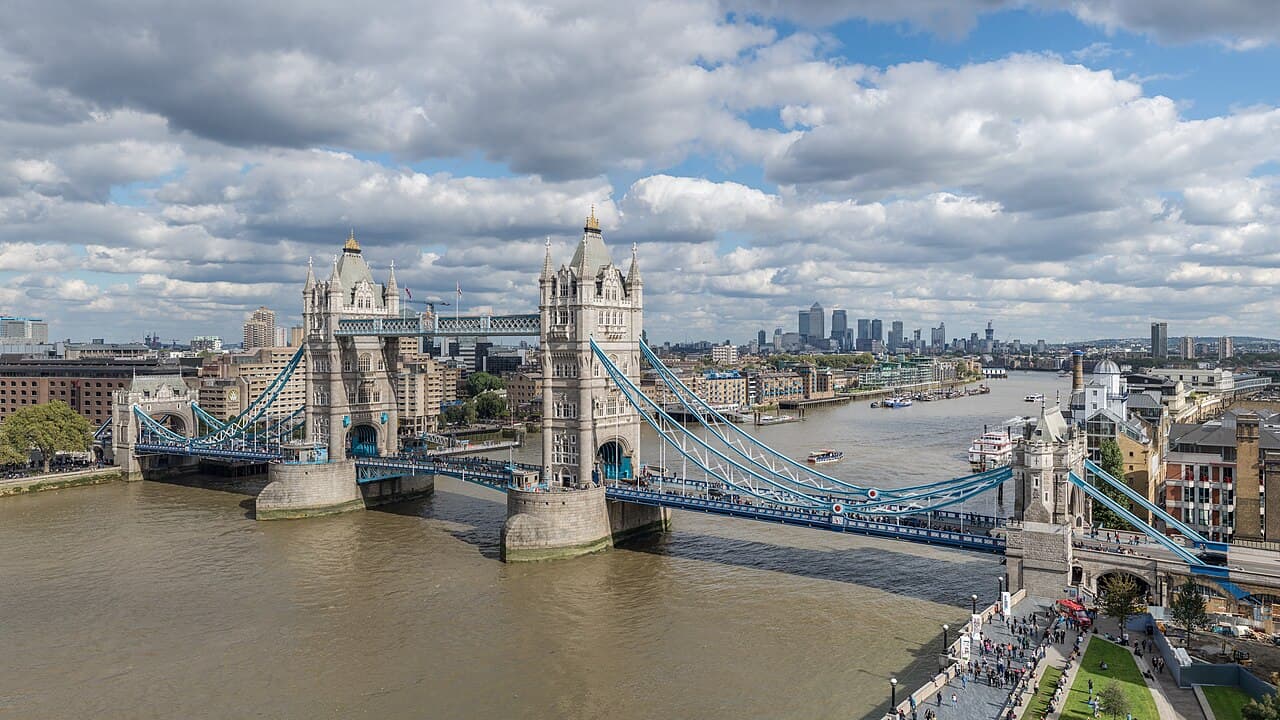
United KingdomPhoto: Colin / Wikimedia Commons (CC BY-SA 4.0)

United Kingdom

Country · GB · GBP · Europe/London

This information may change. Always check the official source.Last verified: August 2026 by

Visa and entry in the United Kingdom

Most visitors now need an ETA, it costs GBP 20 since April 2026, and Europeans have only needed one since 2025. It covers 6 months a visit and lasts 2 years.

  • An Electronic Travel Authorisation is now required before you board, and it costs GBP 20 since it rose from GBP 16 on 8 April 2026 - anything quoting GBP 10 is out of date.
  • It is valid 2 years or until your passport expires, allows multiple entries of up to 6 months, and covers the UK, Jersey, Guernsey and the Isle of Man on one authorization.
  • Everyone needs their own, babies included - there is no family application.
  • European travellers are the group most likely to be caught out. EU, EEA and Swiss passports have needed an ETA since 2 April 2025, national ID cards are no longer accepted, and airlines refuse boarding without one.
  • Apply on GOV.UK or the official app and pay GBP 20, no more. Copycat sites charge several times the fee for the identical form and rank well in search results.
More details

The authorization almost everyone needs now

The UK spent decades letting most Western visitors turn up with just a passport. That ended. An Electronic Travel Authorisation is now required before you board.

  • The ETA costs GBP 20. It rose from GBP 16 on 8 April 2026, so anything quoting GBP 10 or GBP 16 is out of date.
  • It is valid for 2 years or until your passport expires, whichever comes first, and allows multiple entries with up to 6 months in the UK each visit.
  • Everyone needs their own, including babies. There is no family application.
  • It covers the UK, Jersey, Guernsey and the Isle of Man on one authorization.
  • Most applications come back within minutes, though the Home Office asks for up to 3 working days. Apply when you book, not the night before.

Who needs what

Visa and entry in the United Kingdom
You holdWhat you need
British or Irish passportNothing
EU, EEA and Swiss passportsETA since 2 April 2025
US, Canada, Australia, Japan, South Korea, Singapore, Taiwan, Malaysia, Saudi ArabiaETA
China, India, Cambodia, RussiaStandard visitor visa, GBP 135
  • European travellers are the group most likely to be caught out. Before 2025 an EU passport was enough on its own. It is not any more, and airlines will refuse boarding without an approved ETA.
  • National identity cards are no longer accepted from EU citizens. You need a passport.
  • Saudi and Gulf nationals use the ETA now, which replaced the older and more expensive Electronic Visa Waiver.
  • The standard visitor visa costs GBP 135 for 6 months, up from GBP 127 on 8 April 2026, and takes about 3 weeks in normal conditions.

Two traps

  • Transiting counts. If you pass through UK border control to change flights, you need an ETA. Some airside transfers do not, but the rule depends on the airport and your route, so confirm with the airline rather than guessing.
  • Pay GBP 20 and no more. The official route is the GOV.UK site or the official ETA app. Copycat sites charge several times the fee to submit the identical form, and they rank well in search results.

The border, and what has changed about it

Passports are scanned at eGates rather than stamped, so there is often no record in your passport of when you arrived. Keep your own.

  • The UK has largely stopped stamping passports - eGates read the chip, which is fast and leaves you no evidence of your arrival date.
  • Keep your own proof of when you arrived: boarding passes, bookings, card transactions. If a question about your stay arises later, the burden is yours.
  • An ETA is permission to travel, not permission to enter. An officer can still refuse you, and a valid ETA changes nothing about that.
  • Visitors may not work, and the definition is broader than people expect - remote work for a foreign employer is tolerated, taking on UK clients is not.
  • Do not bring meat or dairy from outside the UK. Personal imports from most countries are banned outright and confiscated at the border, and cash over GBP 10,000 must be declared.
More details

No stamp, no argument

The UK has largely stopped stamping passports. eGates read the chip and let you through, which is fast and leaves you with no evidence of your arrival date.

  • Keep your own proof of when you arrived. Boarding passes, booking confirmations and card transactions all serve. If a later question arises about how long you stayed, the burden is yours.
  • eGates are open to British, Irish, EU, EEA, Swiss, US, Canadian, Australian, New Zealand, Japanese, South Korean and Singaporean passport holders, among others, from age 10 upwards.
  • An ETA is permission to travel, not permission to enter. An officer can still refuse you, and holding a valid ETA changes nothing about that.

What they may ask

  • Where you are staying, how long, and how you are paying for it. Have an address and a return booking.
  • Whether you intend to work. Visitors may not work in the UK, and the definition is broader than people expect: remote work for a foreign employer is tolerated, but taking on UK clients is not.
  • Cash over GBP 10,000 must be declared when entering from outside the UK. Undeclared cash is seized.
  • Do not bring meat or dairy from outside the UK. Personal imports from most non-UK countries are banned outright and are confiscated at the border.
Sources (4)

The UK allowance is generous on alcohol and unforgiving about going over it: exceed the wine limit by a litre and duty is charged on the whole eighteen.

  • The alcohol allowance is 42 litres of beer and 18 litres of still wine, plus either 4 litres of spirits over 22 % or 9 litres of sparkling or fortified wine. You can split that last one - two litres of gin and four and a half of port.
  • Go over and you pay on everything in that category, not on the excess. Nineteen litres of wine is duty on nineteen litres.
  • Tobacco is 200 cigarettes or 250 g of loose tobacco or 50 cigars, and the same either-or split applies.
  • Other goods are capped at GBP 390, dropping to GBP 270 if you arrive by private plane or boat. Allowances cannot be pooled between travellers.
  • GBP 10,000 or more in cash must be declared when you travel between Great Britain and any other country, and that includes the EU.
More details
  • The alcohol allowance is 42 litres of beer and 18 litres of still wine, plus either 4 litres of spirits over 22 % or 9 litres of sparkling or fortified wine. You can split that last one - two litres of gin and four and a half of port.
  • Go over and you pay on everything in that category, not on the excess. Nineteen litres of wine is duty on nineteen litres.
  • Tobacco is 200 cigarettes or 250 g of loose tobacco or 50 cigars, and the same either-or split applies.
  • Other goods are capped at GBP 390, dropping to GBP 270 if you arrive by private plane or boat. Allowances cannot be pooled between travellers.
  • GBP 10,000 or more in cash must be declared when you travel between Great Britain and any other country, and that includes the EU.
  • Meat and dairy from most non-EU countries are banned outright, along with self-defence sprays and flick knives. Northern Ireland follows the EU rules instead, not these.
Sources (1)

Emergency care is free to everyone, including you. What follows admission is not, and is billed at 150 percent of the NHS rate.

  • A and E treatment, the ambulance and the 111 advice line are free to everyone, but the free part stops the moment you are admitted.
  • Being kept in overnight, or any planned hospital care, is charged at 150 percent of the NHS tariff, and you will be asked where you have lived for the past 6 months.
  • EU, EEA and Swiss visitors are covered with a valid EHIC or GHIC for medically necessary treatment - bring the card, and keep travel insurance anyway for repatriation and cancellation.
  • 111 is the number that saves you a wasted evening - free, 24 hours, and it tells you whether you need A and E, an urgent appointment or a pharmacy.
  • Pharmacies handle much more than they used to. Under Pharmacy First a pharmacist in England can assess and prescribe for several common conditions free of charge.
More details

What is free and what is not

This is the part visitors get wrong in both directions. The NHS is not free to everyone for everything, and it is not closed to you either.

Health in the United Kingdom
ServiceCost to a visitor
Accident and Emergency treatmentFree to everyone
Calling 999 and the ambulanceFree
NHS 111 advice lineFree
Treatment of some infectious diseasesFree
Family planningFree
Being admitted to hospital from A and ECharged at 150 percent of the NHS tariff
Planned or follow-up hospital careCharged at 150 percent
GP appointmentsUsually free to register and be seen, though practices vary
  • The free part stops the moment you are admitted. Walking into A and E costs nothing; being kept in overnight generates a bill, and it is charged at 150 percent of what the NHS itself pays.
  • You will be asked where you have lived for the past 6 months. Answer honestly; the hospital decides chargeability, not you.
  • EU, EEA and Swiss visitors with a valid EHIC or GHIC are covered for medically necessary treatment. Bring the card.
  • Travel insurance is still worth having even with a GHIC, because it covers repatriation, cancellation and the things the NHS never pays for.

Getting seen

  • 999 for an emergency, and 112 works identically.
  • 111 is the number that saves you a wasted evening. It is a free, 24-hour NHS advice line that tells you whether you need A and E, an urgent appointment, or a pharmacy. Use it before defaulting to hospital.
  • A and E waits are long. Four hours is the target and it is frequently missed by a lot. You are triaged by severity, not arrival time.
  • Pharmacies handle much more than they used to. Under Pharmacy First, a pharmacist in England can assess and prescribe for several common conditions without a doctor, free of charge.
  • Walk-in centres and urgent treatment centres deal with sprains, cuts and infections faster than A and E.

Practicalities

  • Tap water is safe everywhere and free in any pub or restaurant on request.
  • There are no required vaccinations and no endemic tropical disease.
  • Ticks carry Lyme disease in parts of Scotland, the New Forest and other woodland. Cover up and check yourself after walking in long grass.
  • Bring your own prescription medication with a copy of the prescription. Some drugs sold over the counter elsewhere are prescription-only here, and vice versa.
  • Hay fever season is severe from late spring into summer if you are susceptible.
Sources (3)

London

Long-term averages for London: the mean daily high, the mean overnight low and the mean monthly rainfall across 30 years of ERA5 reanalysis data (1995–2024).

DayNight
0510152025°C0100mmJanFebMarAprMayJunJulAugSepOctNovDecJanuary: Day 7 °C, Night 2 °C, Rain 57 mm. February: Day 8 °C, Night 2 °C, Rain 50 mm. March: Day 11 °C, Night 3 °C, Rain 47 mm. April: Day 14 °C, Night 5 °C, Rain 46 mm. May: Day 17 °C, Night 8 °C, Rain 55 mm. June: Day 20 °C, Night 11 °C, Rain 57 mm. July: Day 22 °C, Night 13 °C, Rain 57 mm. August: Day 22 °C, Night 13 °C, Rain 60 mm. September: Day 19 °C, Night 11 °C, Rain 50 mm. October: Day 15 °C, Night 9 °C, Rain 65 mm. November: Day 11 °C, Night 5 °C, Rain 66 mm. December: Day 8 °C, Night 3 °C, Rain 60 mm
Show the monthly table
London
MonthDay (°C)Night (°C)Rain (mm)
January7257
February8250
March11347
April14546
May17855
June201157
July221357
August221360
September191150
October15965
November11566
December8360

Edinburgh

Long-term averages for Edinburgh: the mean daily high, the mean overnight low and the mean monthly rainfall across 30 years of ERA5 reanalysis data (1995–2024).

DayNight
05101520°C0100mmJanFebMarAprMayJunJulAugSepOctNovDecJanuary: Day 6 °C, Night 2 °C, Rain 74 mm. February: Day 7 °C, Night 2 °C, Rain 66 mm. March: Day 8 °C, Night 3 °C, Rain 61 mm. April: Day 11 °C, Night 4 °C, Rain 54 mm. May: Day 13 °C, Night 7 °C, Rain 66 mm. June: Day 16 °C, Night 10 °C, Rain 67 mm. July: Day 18 °C, Night 12 °C, Rain 78 mm. August: Day 18 °C, Night 12 °C, Rain 78 mm. September: Day 16 °C, Night 10 °C, Rain 63 mm. October: Day 12 °C, Night 8 °C, Rain 90 mm. November: Day 9 °C, Night 4 °C, Rain 73 mm. December: Day 6 °C, Night 2 °C, Rain 81 mm
Show the monthly table
Edinburgh
MonthDay (°C)Night (°C)Rain (mm)
January6274
February7266
March8361
April11454
May13766
June161067
July181278
August181278
September161063
October12890
November9473
December6281

Manchester

Long-term averages for Manchester: the mean daily high, the mean overnight low and the mean monthly rainfall across 30 years of ERA5 reanalysis data (1995–2024).

DayNight
05101520°C0200mmJanFebMarAprMayJunJulAugSepOctNovDecJanuary: Day 7 °C, Night 2 °C, Rain 92 mm. February: Day 8 °C, Night 2 °C, Rain 86 mm. March: Day 9 °C, Night 3 °C, Rain 77 mm. April: Day 12 °C, Night 4 °C, Rain 65 mm. May: Day 15 °C, Night 7 °C, Rain 77 mm. June: Day 18 °C, Night 10 °C, Rain 84 mm. July: Day 19 °C, Night 12 °C, Rain 93 mm. August: Day 19 °C, Night 12 °C, Rain 94 mm. September: Day 17 °C, Night 10 °C, Rain 79 mm. October: Day 13 °C, Night 8 °C, Rain 100 mm. November: Day 9 °C, Night 4 °C, Rain 89 mm. December: Day 7 °C, Night 2 °C, Rain 101 mm
Show the monthly table
Manchester
MonthDay (°C)Night (°C)Rain (mm)
January7292
February8286
March9377
April12465
May15777
June181084
July191293
August191294
September171079
October138100
November9489
December72101
Sources (1)

Edinburgh started charging the UK's first city tourist tax three weeks ago, and more cities are following. Otherwise the quoted price is the price.

  • Edinburgh became the first UK city to charge a visitor levy on 24 July 2026 - 5 percent of the accommodation cost, capped at 5 consecutive nights, on hotels, B&Bs and short-term rentals alike.
  • It caught bookings made from 1 October 2025 for stays on or after that date, so a booking you made last year is very likely subject to it.
  • Outside Edinburgh the price you see is the price you pay, since VAT is in the quoted rate - though breakfast is often not included and is frequently poor value against a café.
  • Book far ahead for Edinburgh in August, when the Festival and Fringe fill the city and prices triple.
  • Pubs with rooms are among the best value in the country, especially in the countryside, and Premier Inn and Travelodge are frequently cheaper than hostels for two people sharing.
More details

Edinburgh now has a tourist tax

On 24 July 2026 Edinburgh became the first city in the UK to charge a visitor levy. If you booked before you read this, check what your accommodation is collecting.

  • The rate is 5 percent of the accommodation cost, capped at 5 consecutive nights.
  • It applies to hotels, B&Bs, guesthouses, self-catering flats and short-term rentals alike.
  • It is calculated on the room only. Meals, drinks, parking and transport are excluded.
  • It caught bookings made from 1 October 2025 for stays on or after 24 July 2026, so a booking you made last year for this summer is very likely subject to it.
  • Glasgow and other Scottish councils are following, and several English cities already levy a small charge through business-improvement districts. Manchester has charged roughly GBP 1 a night since 2023.

What to expect otherwise

  • VAT is included in quoted room rates, so the price you see is the price you pay outside Edinburgh.
  • Breakfast is often not included and is frequently poor value compared with a café.
  • British hotel rooms are small, particularly in London and in converted period buildings. This is not a scam, it is the building stock.
  • Book far ahead for Edinburgh in August. The Festival and Fringe fill the entire city and prices triple. The same is true of any city on a major football weekend.

Beyond hotels

  • Pubs with rooms are one of the best value options in the country, especially in the countryside, and usually include a good breakfast.
  • B&Bs remain a genuine British institution and are often cheaper and warmer than a chain hotel.
  • Premier Inn and Travelodge are the reliable budget chains, frequently cheaper than hostels for two people sharing.
  • YHA and Hostelling Scotland run hostels in places commercial operators do not go, including some remarkable rural buildings.
  • Short-term rentals need a licence in Scotland, and London caps entire-home lettings at 90 nights a year. Listings that ignore these rules do get pulled.
Sources (2)

Cheap, competitive and no registration required. The one thing to check before you buy is whether the plan includes EU roaming, because since Brexit it often does not.

  • The easiest SIM market in Europe: no registration, no passport, no forms. Walk into any supermarket or phone shop, or install an eSIM before you land.
  • giffgaff on O2 is the default recommendation; Smarty on Three has the best price per gigabyte and EE costs most but has the best rural coverage.
  • Budget GBP 10 to GBP 20 a month for a plan with plenty of data - the UK is one of the cheapest places in Europe for it.
  • Coverage fails in the obvious places: the Scottish Highlands, mid Wales, the Pennines and long stretches of rural railway.
  • Check EU roaming before you buy if your trip continues into Europe. Free roaming ended with Brexit, several plans reintroduced charges of around GBP 2 a day, and giffgaff's standard plans do not include it.
More details

Four networks, and the cheap brands that ride on them

The UK has the easiest SIM market in Europe. No registration, no passport, no forms. Walk into any supermarket or phone shop, or order a Saily eSIM before you land.

SIM and eSIM in the United Kingdom
BuyRuns onWhy
giffgaffO2The default recommendation. Cheap, month by month, no contract
SmartyThreeBest price per gigabyte, refunds unused data
LebaraVodafoneGood value bundles, strong international calling
EEEEMost expensive, best rural coverage
  • Budget GBP 10 to GBP 20 a month for a plan with plenty of data. The UK is one of the cheapest places in Europe for mobile data.
  • eSIMs are widely supported by all four networks and most of the budget brands, so you can arrive already connected.
  • Coverage is good across the country and poor in the obvious places: the Scottish Highlands, mid Wales, the Pennines and long stretches of rural railway. EE is measurably the best outside cities.

The Brexit catch

Check EU roaming before you buy if your trip continues into Europe.

  • Free EU roaming ended with Brexit. Some UK plans still include it, many do not, and several reintroduced daily charges of around GBP 2 a day.
  • giffgaff does not include EU roaming on its standard plans, which surprises people who bought it precisely because it was cheap.
  • If you are touring Britain and Ireland, note that the Republic of Ireland is a separate country and a separate roaming question. Northern Ireland is part of the UK and covered normally, though phones near the border hop onto Irish networks and can charge you for it.
Sources (2)

The UK uses Type only, at 230 V: a big three-pin plug with a fuse in it, and nothing else fits a British socket.

  • Every British plug carries its own fuse. That is unique to this standard, and it is why UK plugs are so much larger than European ones.
  • Nothing else fits, including a Europlug. A Schuko or French plug will not enter a British socket, so an adapter is not optional for anything brought from the continent.
  • Bathrooms have shaver sockets, not power sockets. The two-pin outlet by the mirror takes a Europlug at 2.5 A - fine for a toothbrush, useless for a hair dryer, and by design there is no other outlet in a UK bathroom.
  • 230 V is the same as continental Europe. A German or French appliance runs perfectly here on an adapter; only American 120 V equipment needs a converter.
More details

Sockets in the United Kingdom are Type at 230 V, 50 Hz, and no other plug fits one.

  • Every British plug carries its own fuse. That is unique to this standard, and it is why UK plugs are so much larger than European ones.
  • Nothing else fits, including a Europlug. A Schuko or French plug will not enter a British socket, so an adapter is not optional for anything brought from the continent.
  • Bathrooms have shaver sockets, not power sockets. The two-pin outlet by the mirror takes a Europlug at 2.5 A - fine for a toothbrush, useless for a hair dryer, and by design there is no other outlet in a UK bathroom.
  • 230 V is the same as continental Europe. A German or French appliance runs perfectly here on an adapter; only American 120 V equipment needs a converter.
  • Many sockets have their own switch. If a charger seems dead, check the little rocker beside the outlet before blaming the cable.
Sources (1)

Three-pin plugs, four countries, one weather forecast that is always wrong, and a set of pub conventions nobody will ever explain to you.

  • The UK is four countries - England, Scotland, Wales and Northern Ireland - and calling the whole thing England lands badly in three of them. Bank holidays differ between them too.
  • In a pub you order at the bar and pay when you order. There is no queue but there is an order, and the bar staff know it: make eye contact and wait your turn rather than waving money.
  • Buying in rounds is the convention in a group, and leaving before your round is a genuine social offence.
  • Plugs are the chunky three-pin BS 1363 at 230 V, so everyone needs an adapter, Irish and European visitors included - and UK sockets have individual switches, which defeats a surprising number of visitors.
  • Queuing is real - enforced socially and silently - and the weather changes constantly, so carry a layer and something waterproof whatever the month says.
More details

Four countries, not one

  • The United Kingdom is England, Scotland, Wales and Northern Ireland, and calling the whole thing England will land badly in three of them.
  • Scotland has its own legal system, its own banknotes, its own bank holidays and free prescriptions. Wales has its own language and bilingual signage. Northern Ireland shares a land border with the Republic of Ireland.
  • Bank holidays differ between the nations, so a public holiday in London is an ordinary working day in Edinburgh and the reverse.

The pub, explained

Nobody will tell you these, and everyone will notice.

  • You order at the bar and pay when you order. Table service is the exception, not the rule, though it has spread.
  • There is no queue at the bar, but there is an order, and the bar staff know it. Do not wave money or shout. Make eye contact and wait your turn.
  • Buying in rounds is the convention in a group: one person buys for everyone, and it comes round to you. Leaving before your round is a genuine social offence.
  • You do not tip the bartender. See the money section.
  • Last orders are called before closing, often with a bell, and drinking-up time is about 20 minutes.

Practical bits

  • Electricity is 230 V, 50 Hz, with the chunky three-pin BS 1363 plug. You need an adapter for essentially every other country's plug, European ones included - but not for an Irish one: the Republic uses the same BS 1363 socket, so a trip that takes in Dublin needs no second adapter.
  • UK sockets have individual switches, and the appliance will not work if the switch is off. This defeats a surprising number of visitors.
  • Bathrooms often have no shaver socket and no light switch inside, because of old electrical safety rules. The switch is a pull cord or outside the door.
  • The country runs on both systems of measurement: road distances in miles, beer in pints, milk in litres, body weight in stones, and nobody finds this strange.
  • Drive on the left, and remember it as a pedestrian too.
  • Shops open Sunday but for shorter hours, with large stores in England and Wales limited to six hours by law. Scotland has no such restriction.
  • The weather changes constantly and the forecast is a suggestion. Carry a layer and something waterproof whatever the month says.
  • Queuing is real. It is not a stereotype, it is enforced socially and silently, and jumping one is the fastest way to be disliked.
Sources (2)

The price on the label is the price you pay, which is a relief after North America. Tipping is modest and the service charge is usually already on the bill.

  • VAT is already in every advertised price - a GBP 10 item costs GBP 10 at the till and a menu price is what you pay.
  • Contactless works up to GBP 100 without a PIN, and cash is genuinely optional - many cafés, buses and even some pubs no longer take it at all.
  • Always choose to be billed in pounds when a terminal offers your home currency, and avoid airport bureaux de change entirely.
  • Bank ATMs are free; machines in corner shops and pubs often charge GBP 1.50 to GBP 2 and warn you on screen first.
  • Tipping is modest: 10 percent in a restaurant, or nothing extra where a service charge is already on the bill. You do not tip in pubs - you order at the bar and pay there.
More details

Prices are honest

VAT is already included in every advertised price. A GBP 10 item costs GBP 10 at the till, and a menu price is what you pay. Visitors arriving from the United States or Canada find this disorienting in a good way.

  • Cards work everywhere, and contactless up to GBP 100 without a PIN. Above that you insert and enter the PIN.
  • Cash is genuinely optional. Many cafés, buses and even some pubs no longer take it at all.
  • Use a card with no foreign transaction fee, and always choose to be billed in pounds when a terminal offers your home currency. That offer is dynamic currency conversion and the rate is bad.
  • Avoid airport bureaux de change entirely. The rates are the worst you will see in the country.
  • ATMs at banks are free. Machines in corner shops and pubs often charge GBP 1.50 to GBP 2, and they warn you on screen before you commit.

Scottish and Northern Irish notes

  • Scotland and Northern Ireland issue their own banknotes, and you will get them as change in Edinburgh or Belfast.
  • They are valid throughout the UK, but they are not technically legal tender in England and some English shops refuse them out of unfamiliarity. Spend them before you leave, or swap them at a bank.

Tipping, briefly

Tipping in Britain is modest and never aggressive. Nobody will chase you down the street.

  • 10 percent in a restaurant is normal, or nothing extra if a service charge is already on the bill. 12.5 percent is the usual discretionary service charge in London.
  • The service charge is optional and you may ask for it to be removed. Since October 2024 the law requires that tips and service charges go to staff in full, so leaving it on is more meaningful than it used to be.
  • You do not tip in pubs. You order at the bar and pay there. If you want to be generous, the phrase is "and one for yourself", which historically buys the bartender a drink.
  • You do not tip in cafés, at counters, or for a pint. Round up a taxi fare, tip a hairdresser if you like, and that is broadly the whole of it.
Sources (2)

Everyday prices

Typical prices in pound sterling (GBP), averaged across the country by Numbeo and read on 12 August 2026. Tick Convert prices above the table to see every amount in your own currency.

Everyday prices
ItemTypical price
Inexpensive restaurant meal16 GBP
Dinner for two, mid-range, three courses65 GBP
Cappuccino3.58 GBP
Local draught beer, 0.5 l5.00 GBP
Bottled water, 0.33 l1.36 GBP
Public transport, one-way ticket2.50 GBP
Taxi, starting fare4.00 GBP
Petrol, 1 litre1.46 GBP
Cigarettes, pack of 20 (Marlboro)18 GBP
Average net monthly salary2,480 GBP

These are country-wide averages, not a price list: tourist districts, airports and islands sit well above them, and small towns below. The salary line is there for proportion - it is what people living here actually earn.

Sources (1)

Airport guides for United Kingdom27

One page per airport: the routes into town, what they cost and the trap particular to that arrival.

See all 27 airports

At Heathrow the same journey costs GBP 5.90 or GBP 25 depending on which train you board. Knowing which is which is the single most useful thing on this page.

  • Three trains leave Heathrow for roughly the same place at wildly different prices: the Piccadilly line at GBP 5.90, the Elizabeth line at GBP 15.50, the Heathrow Express at about GBP 25 on the day.
  • The Piccadilly line is the answer for most people - a third of the Elizabeth line price, 20 minutes slower, and it runs into the middle of town rather than to Paddington.
  • Heathrow journeys are always charged at the peak rate if they touch Zone 1, whatever the time, so there is no off-peak saving to wait for.
  • Gatwick, Stansted and Luton each have a branded express and an ordinary train on the same tracks, and the ordinary one is usually half the price.
  • Never accept a ride from someone approaching you in the terminal. Licensed private hire cannot legally be hailed on the spot, so anyone touting is operating illegally and uninsured.
More details
Heathrow: three trains, three very different prices

They go to roughly the same place. The price gap is enormous.

Transport from the airport in the United Kingdom
ServiceTo central LondonTime
Piccadilly lineGBP 5.90About 50 minutes
Elizabeth lineGBP 15.50About 30 minutes
Heathrow ExpressAbout GBP 25 on the day15 minutes to Paddington
  • The Piccadilly line is the answer for most people. It costs a third of the Elizabeth line and takes 20 minutes longer. It also runs into the middle of town rather than to Paddington.
  • Heathrow journeys are always charged at the peak rate if they start, end or pass through Zone 1, whatever the time of day. There is no off-peak saving to wait for.
  • Heathrow Express is worth it only if someone else is paying or you are very short of time. Booked well in advance it drops considerably, but walk-up fares are punishing.
  • Tap in and out with the same contactless card or phone. Do not buy a paper ticket and do not tap one card in and another out.
The other airports
  • Gatwick, Stansted and Luton all have a branded express and a slower ordinary train on the same tracks. The ordinary one is usually half the price. At Gatwick, Southern and Thameslink services run alongside the Gatwick Express to the same London terminals.
  • Luton has a shuttle to the station, which is included in a through ticket but catches people who buy only the rail leg.
  • Manchester, Birmingham, Edinburgh and Glasgow airports all have a direct tram or train into the city, and all are straightforward.
  • Edinburgh's tram runs from the terminal to the city centre in about 30 minutes and is far cheaper than a taxi.
  • Coaches are the budget option everywhere. National Express and Megabus serve every major airport, are slower, and cost a fraction of the train if booked ahead.
Taxis and ride-hailing
  • Uber and Bolt operate at most UK airports but Heathrow, Gatwick and others confine them to specific pick-up zones that can be a long walk.
  • Black cabs are metered and honest and expensive. Heathrow to central London is comfortably over GBP 100.
  • Never accept a ride from someone approaching you in the terminal. Licensed private hire cannot legally be hailed on the spot, so anyone offering is operating illegally and uninsured.
Sources (2)

Getting around the country, and within it

Train tickets can cost four times more bought on the day than in advance, and the bus fare in England is capped at GBP 3 until the end of the year.

  • British rail pricing is close to airline pricing. Advance tickets go on sale around 12 weeks ahead: London to Edinburgh can be GBP 30 booked early and GBP 180 on the day.
  • Split ticketing is legal and often much cheaper - London to York plus York to Edinburgh, on the same train, can beat the through ticket, and apps do it automatically.
  • A railcard pays for itself fast: GBP 30 a year for a third off most fares, with versions for under 30s, over 60s, pairs and families.
  • In London just tap a contactless card or phone - no Oyster needed, identical fares, automatic daily and weekly caps at GBP 8.90 for Zones 1 to 2. Use the same card all day or you pay several separate caps.
  • Hire cars are overwhelmingly manual, so book an automatic explicitly, and remember London's Congestion Charge is over GBP 15 a day paid online, not at a barrier.
More details

Trains: the price depends entirely on when you buy

British rail pricing is close to airline pricing, and walking up to buy a ticket is the expensive way to travel.

  • Advance tickets go on sale around 12 weeks ahead and are tied to a specific train. London to Edinburgh can be GBP 30 booked early and GBP 180 on the day.
  • Off-peak and super off-peak fares are flexible but restricted by time of day. Avoid Friday afternoons and anything arriving in London before 09:30.
  • Split ticketing is legal and often much cheaper. Buying London to York and York to Edinburgh separately, on the same train, can cost less than the through ticket. Apps such as Trainline and Split My Fare do it automatically.
  • A railcard pays for itself fast. GBP 30 for a year gets a third off most fares, and there are versions for under 30s, over 60s, two people travelling together and families.
  • Strikes and engineering works are a fact of life. Check the day before, and expect replacement buses on Sundays.

Buses and coaches

  • Single bus fares in England are capped at GBP 3 until the end of 2026, dropping to GBP 2 from 1 January 2027. Scotland, Wales and Northern Ireland set their own.
  • London is outside the cap and cheaper. A bus is GBP 1.75, expected to rise to GBP 1.85 on 1 November 2026, and the Hopper fare gives you unlimited buses and trams within an hour for that one payment.
  • London buses do not take cash at all. Contactless card, phone or Oyster only.
  • National Express and Megabus run long-distance coaches for a fraction of rail fares, taking about twice as long.

London specifically

  • Just tap a contactless bank card or phone. You do not need an Oyster card, the fares are identical, and daily and weekly caps apply automatically.
  • Adult daily caps are GBP 8.90 for Zones 1 to 2 and GBP 12.80 for Zones 1 to 4, frozen for 2026.
  • Use the same card all day or you will pay several separate caps.
  • Buy an Oyster only if you want a railcard discount loaded onto it, which contactless cannot do.
  • The Elizabeth line to Heathrow sits outside normal capping, with its own separate cap.

Driving

  • Drive on the left, and hire cars are overwhelmingly manual. Book an automatic explicitly.
  • London's ULEZ and Congestion Charge apply to most hire cars. The Congestion Charge is over GBP 15 a day and is not collected at a barrier; you pay online or are fined.
  • Rural roads are narrow, hedged and faster than they look. A national speed limit sign on a single-track lane means 60 mph, which does not mean you should.
  • Parking in cities is expensive and heavily enforced, usually through an app rather than a meter.

Apps and platforms

Citymapper for cities, National Rail for trains, and a contactless card instead of most ticketing apps.

  • Citymapper is better than Google Maps in London, Manchester and Birmingham, and handles live disruption well.
  • National Rail or Trainline for train times and tickets. Trainline charges a small booking fee; the individual train operators do not.
  • Uber and Bolt work in most large cities. Addison Lee is the London minicab firm, and Free Now covers black cabs.
  • You do not need a transport app for London. A contactless bank card does everything an Oyster card does at the same price, with the same caps.
  • You do not need cash. The UK is close to cashless, and a card works on buses, in markets and at the smallest village pub.
More details

Worth installing

  • Citymapper is better than Google Maps in London, Manchester and Birmingham, and handles live disruption well.
  • National Rail or Trainline for train times and tickets. Trainline charges a small booking fee; the individual train operators do not.
  • Uber and Bolt work in most large cities. Addison Lee is the London minicab firm, and Free Now covers black cabs.
  • Deliveroo, Uber Eats and Just Eat all operate nationally.
  • What3Words is used by UK emergency services and is genuinely worth having before a walk in the hills.

What you do not need

  • You do not need a transport app for London. A contactless bank card does everything an Oyster card does at the same price, with the same caps.
  • You do not need cash. The UK is close to cashless, and a card works on buses, in markets and at the smallest village pub.
Sources (3)

Britain drives on the left with almost no motorway tolls, but London's charges and the Dartford Crossing are paid online or become fines.

  • The Dartford Crossing has no booths. Pay online by midnight the day after, or it becomes a penalty charge.
  • London charges twice. The Congestion Charge applies in the centre on weekdays and part of the weekend, and ULEZ applies to older vehicles across all London boroughs, every day. Both are camera-enforced and both are paid online.
  • The M6 Toll north of Birmingham is the only tolled motorway and it has ordinary barriers.
  • The alcohol limit is 0.8 g/l in England, Wales and Northern Ireland, and 0.5 g/l in Scotland - the same island, two limits.
  • Speed limits are in miles per hour, 70 on motorways and dual carriageways, 60 on single carriageways, 30 in built-up areas unless signed otherwise. Wales uses 20 mph as its default urban limit.
More details

Left-hand traffic, free motorways almost everywhere, and a handful of charges that are paid online rather than at a barrier.

  • The Dartford Crossing has no booths. Pay online by midnight the day after, or it becomes a penalty charge.
  • London charges twice. The Congestion Charge applies in the centre on weekdays and part of the weekend, and ULEZ applies to older vehicles across all London boroughs, every day. Both are camera-enforced and both are paid online.
  • The M6 Toll north of Birmingham is the only tolled motorway and it has ordinary barriers.
  • The alcohol limit is 0.8 g/l in England, Wales and Northern Ireland, and 0.5 g/l in Scotland - the same island, two limits.
  • Speed limits are in miles per hour, 70 on motorways and dual carriageways, 60 on single carriageways, 30 in built-up areas unless signed otherwise. Wales uses 20 mph as its default urban limit.
Sources (1)

The UK is safe and the threat level was raised to SEVERE in April 2026. The crime you are actually likely to meet is someone taking your phone out of your hand.

  • Phone snatching is the real risk. Thieves on e-bikes take phones out of people's hands on the pavement, and just over 71,000 were reported stolen in London in 2025.
  • Do not stand at the kerb using your phone, especially at a crossing or outside a station. Step back from the road and put your back to a wall if you must look at it.
  • Turn on Find My iPhone or Find My Device before you travel, and require a passcode rather than only a fingerprint for changing settings.
  • Unlicensed minicabs outside clubs and stations are illegal and uninsured - a private hire vehicle must be booked in advance, so use an app or a black cab.
  • Look right first when crossing the road. Traffic comes from a direction your body does not expect, which is why London paints reminders on the tarmac.
More details

Phone snatching is the real risk

If something happens to you in London, this is what it will be. Thieves on e-bikes and mopeds take phones out of people's hands on the pavement, usually in one pass, usually while the phone is being used.

  • The numbers are enormous. Just over 71,000 phones were reported stolen in London in 2025, down about 12 percent from more than 81,000 in 2024. That is still a phone every few minutes.
  • Oxford Street, Westminster, the West End and the busier Underground stations are the hotspots.
  • Do not stand at the kerb using your phone, especially not at a crossing or outside a station. Step back from the road and put your back to a wall if you must look at it.
  • Turn on Find My iPhone or Find My Device before you travel, and set your phone to require a passcode rather than only a fingerprint for changing settings.
  • Pickpocketing is common in tourist crowds: Camden Market, Borough Market, the South Bank and busy escalators.

The terror threat level

  • The national threat level was raised from SUBSTANTIAL to SEVERE on 30 April 2026, which means an attack is assessed as highly likely. It has not been lowered since.
  • The practical advice is unchanged: be aware, know where the exits are, and report anything genuinely suspicious. Millions of people go about London daily without incident.
  • Expect visible security at stations and major events, and bag checks at museums and stadiums.

Scams

  • Fake ETA and visa websites charging many times the GBP 20 fee. Only GOV.UK is official.
  • Unlicensed minicabs outside clubs and stations. A private hire vehicle must be booked in advance; anyone touting for a fare on the street is illegal and uninsured. Use an app or a black cab.
  • The "charity clipboard" and fake petition in tourist areas, which is usually a distraction while a companion works your pockets.
  • Ticket resale scams for football and concerts. Buy from the official box office or an authorised resale platform; a face-value ticket from a stranger is very often a screenshot sold to five people.
  • Card machine switching in taxis and bars, where you are shown a wrong amount or an unexpected currency conversion. Read the screen before you tap.
  • Courier and bank fraud by phone or text, telling you your account is compromised and asking you to move money. No British bank ever asks for that.

Everything else

  • Look right first when crossing the road. Traffic comes from a direction your body does not expect, and London paints reminders on the tarmac for good reason.
  • Nightlife trouble is concentrated and avoidable, mostly around closing time in city centres on Friday and Saturday.
  • Rural walking is the underrated hazard. Scottish and Welsh hills produce genuine mountain weather, and people die every year in trainers on a mild-looking afternoon.
Sources (3)

999 or 112 for an emergency, 111 for everything medical that is not one, and 101 for police matters that can wait. Knowing the middle two saves hours.

  • 999 and 112 are identical, both free, both working from a locked phone with no credit, and the operator asks which service you need.
  • 111 is the one visitors do not know about and should - free 24-hour NHS advice for anything medical that is not immediately life-threatening, and it can book you an urgent care slot directly.
  • 101 is for a theft, a lost passport or a non-urgent crime, and the crime reference number it gives you is what any insurance claim needs.
  • If you call 999 and cannot talk, cough or tap the handset, then press 55 when prompted - the Silent Solution system connects you to police.
  • What3Words is used by UK emergency services and is the fastest way to give a location in open country. Install it before a hike, not during one.
More details

The numbers

Emergency information in the United Kingdom
WhatNumber
Police, fire, ambulance, coastguard, mountain rescue999 or 112
NHS medical advice, 24 hours111
Police, non-emergency101
Gas leak0800 111 999
Samaritans, emotional distress116 123
  • 999 and 112 are identical. Both are free, both work from a locked phone with no credit, and the operator asks which service you need.
  • 111 is the one visitors do not know about and should. It handles anything medical that is not immediately life-threatening, in the middle of the night, free, and it can book you into an urgent care slot directly.
  • 101 is for reporting a theft, a lost passport or a non-urgent crime. You will need the crime reference number it gives you for any insurance claim.
  • Text 999 works if you register your phone in advance, which matters if you are deaf or unable to speak.

If you cannot speak or cannot be found

  • Call 999, and if you cannot talk, cough or tap the handset, then press 55 when prompted. The Silent Solution system connects you to police.
  • What3Words is used by UK emergency services and is the fastest way to give a location in open country. Install it before a hike, not during one.
  • Mountain rescue is reached through 999, asking for police and then mountain rescue. It is free and staffed by volunteers.

Emergency Alerts

  • The UK sends emergency alerts to every mobile phone in an affected area when there is a danger to life, such as severe flooding. It is loud, it overrides silent mode, and it lasts about 10 seconds.
  • A national test happens occasionally. It is not a malfunction and you do not need to do anything.

Before you need any of it

  • Save your insurer's 24-hour assistance number somewhere reachable without data.
  • Photograph your passport and store it separately from the passport.
  • Know where your embassy is. Nearly all are in London, with some consulates in Edinburgh, Manchester and Belfast.
  • If your passport is lost or stolen, report it to police on 101 for the reference number, then contact your embassy.
Sources (3)