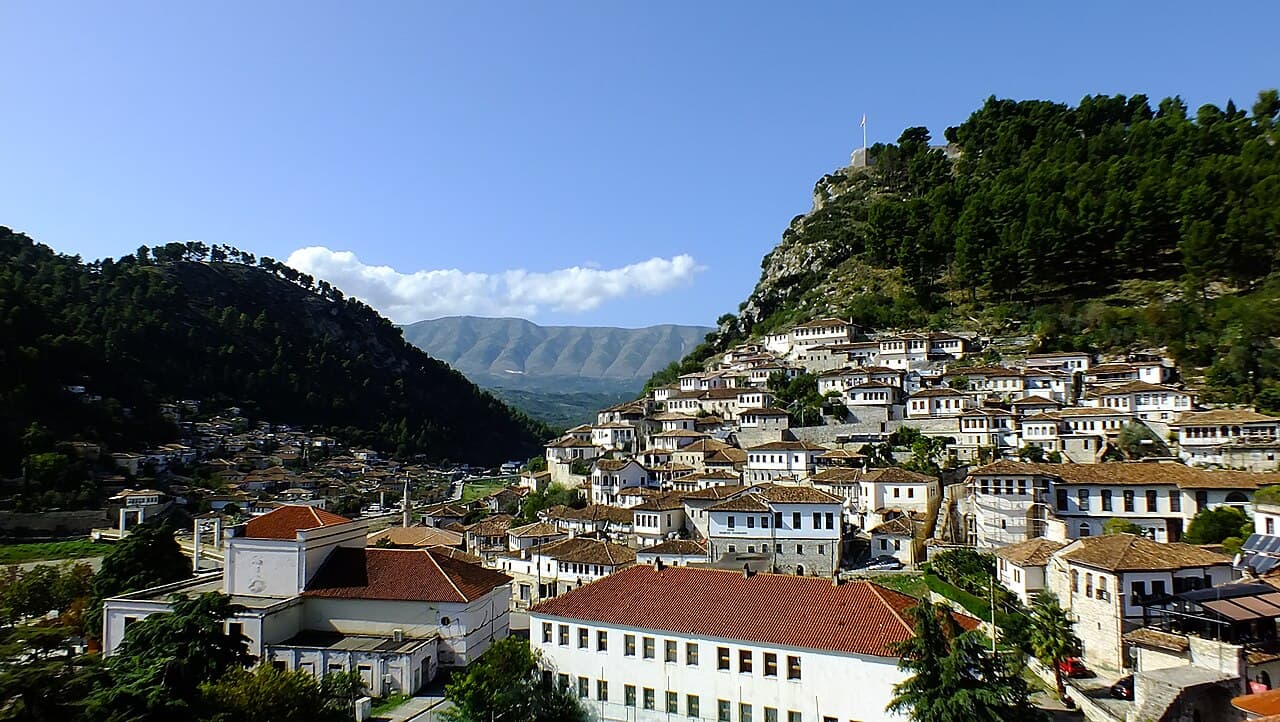
AlbaniaPhoto: Michel NOCTURE / Wikimedia Commons (CC BY-SA 2.0)

Albania

Country · AL · ALL · Europe/Tirane

This information may change. Always check the official source.Last verified: August 2026 by

Ninety days on Albania's own clock for most - and a full year for US citizens, which is unmatched anywhere in Europe.

  • Albania is outside the Schengen area and outside the EU. Its 90 days in 180 are counted separately.
  • Days spent here do not consume your Schengen allowance - which makes the region genuinely useful if you are close to your 90-day Schengen limit and want to stay in Europe.
  • US passport holders are admitted visa-free for up to 365 days, with no residence permit.
  • That is one full year, and it is the most generous unilateral allowance offered by any European country.
  • Albania is an EU candidate and has aligned much of its visa policy with the EU's, but it is not in Schengen and its allowance is separate.
More details

The allowance is not your Schengen one

  • Albania is outside the Schengen area and outside the EU. Its 90 days in 180 are counted separately.
  • Days spent here do not consume your Schengen allowance - which makes the region genuinely useful if you are close to your 90-day Schengen limit and want to stay in Europe.
  • Your passport is stamped on entry and exit. This country is outside EES, so the stamps are the record and you should keep the passport pages readable.
  • Crossing back into the EU re-enters Schengen and is an external border: expect the EES biometric check, and a longer queue than the drive suggests.

The American exception

  • US passport holders are admitted visa-free for up to 365 days, with no residence permit.
  • That is one full year, and it is the most generous unilateral allowance offered by any European country.
  • A weekend in Montenegro does not reset it. The US embassy is explicit that short trips out neither lengthen nor restart the year; to begin another one you must leave Albania and stay out for at least 90 days.
  • It is a unilateral Albanian policy, not a treaty, and it has been in place for years - but check before relying on it for a long stay, because unilateral policies can change without notice.
  • Everyone else gets the standard 90 days in 180, on Albania's own clock.

Practicalities

  • Albania is an EU candidate and has aligned much of its visa policy with the EU's, but it is not in Schengen and its allowance is separate.
  • There is a small entry fee for some nationalities - check yours; most Western passports pay nothing.
  • Your passport is stamped. Keep the stamps; Albania is outside EES.
Sources (3)

Albania's allowances are the usual regional numbers, and the rule that catches people is the ban on taking antiquities out.

  • The tobacco and alcohol allowance follows the regional pattern - a carton of cigarettes and a litre or two of spirits per adult - and is checked more closely at the land crossings than at Tirana airport.
  • Exporting antiquities and cultural objects is prohibited without a permit from the Ministry of Culture. Ottoman-era items and old coins from the markets are the usual problem.
  • Cash above the equivalent of EUR 10,000 must be declared on entry and on exit, and the exit side is where it gets confiscated.
  • The land borders with Montenegro, Kosovo, North Macedonia and Greece are all customs borders with queues that vary from minutes to hours by season.
More details
  • The tobacco and alcohol allowance follows the regional pattern - a carton of cigarettes and a litre or two of spirits per adult - and is checked more closely at the land crossings than at Tirana airport.
  • Exporting antiquities and cultural objects is prohibited without a permit from the Ministry of Culture. Ottoman-era items and old coins from the markets are the usual problem.
  • Cash above the equivalent of EUR 10,000 must be declared on entry and on exit, and the exit side is where it gets confiscated.
  • The land borders with Montenegro, Kosovo, North Macedonia and Greece are all customs borders with queues that vary from minutes to hours by season.
  • Albania is not in the EU, so the duty-free allowance applies both ways when you travel on to Greece or Italy.
Sources (1)

No EHIC, state facilities the FCDO calls very poor, bottled water only, and private clinics in Tirana for anything that matters.

  • The EHIC and GHIC do not apply. Travel insurance is essential and should include repatriation.
  • State healthcare is very poor, in the FCDO's own words, and worse outside Tirana - accident and emergency included.
  • Private clinics in Tirana are the practical option for anything beyond a pharmacy problem.
  • Do not drink the tap water. The FCDO does not hedge on this one: bottled water only, anywhere in the country.
  • Pharmacies (farmaci) are well stocked in towns.
More details

Cover

  • The EHIC and GHIC do not apply. Travel insurance is essential and should include repatriation.
  • State healthcare is very poor, in the FCDO's own words, and worse outside Tirana - accident and emergency included.
  • Private clinics in Tirana are the practical option for anything beyond a pharmacy problem.

Everyday health

  • Do not drink the tap water. The FCDO does not hedge on this one: bottled water only, anywhere in the country.
  • Pharmacies (farmaci) are well stocked in towns.
  • Summer heat on the coast is severe.
  • Stray dogs are common; do not approach them, and seek treatment immediately after any bite.
Sources (2)

Tirana

Long-term averages for Tirana: the mean daily high, the mean overnight low and the mean monthly rainfall across 30 years of ERA5 reanalysis data (1995–2024).

DayNight
0102030°C0200mmJanFebMarAprMayJunJulAugSepOctNovDecJanuary: Day 11 °C, Night 2 °C, Rain 132 mm. February: Day 12 °C, Night 3 °C, Rain 108 mm. March: Day 15 °C, Night 5 °C, Rain 126 mm. April: Day 18 °C, Night 8 °C, Rain 108 mm. May: Day 23 °C, Night 13 °C, Rain 94 mm. June: Day 27 °C, Night 17 °C, Rain 54 mm. July: Day 30 °C, Night 19 °C, Rain 31 mm. August: Day 31 °C, Night 20 °C, Rain 33 mm. September: Day 26 °C, Night 16 °C, Rain 108 mm. October: Day 21 °C, Night 12 °C, Rain 118 mm. November: Day 17 °C, Night 8 °C, Rain 148 mm. December: Day 12 °C, Night 4 °C, Rain 148 mm
Show the monthly table
Tirana
MonthDay (°C)Night (°C)Rain (mm)
January112132
February123108
March155126
April188108
May231394
June271754
July301931
August312033
September2616108
October2112118
November178148
December124148

Sarande

Long-term averages for Sarande: the mean daily high, the mean overnight low and the mean monthly rainfall across 30 years of ERA5 reanalysis data (1995–2024).

DayNight
5101520253035°C0500mmJanFebMarAprMayJunJulAugSepOctNovDecJanuary: Day 12 °C, Night 5 °C, Rain 185 mm. February: Day 13 °C, Night 5 °C, Rain 157 mm. March: Day 15 °C, Night 7 °C, Rain 146 mm. April: Day 19 °C, Night 10 °C, Rain 99 mm. May: Day 23 °C, Night 14 °C, Rain 66 mm. June: Day 28 °C, Night 19 °C, Rain 34 mm. July: Day 31 °C, Night 21 °C, Rain 15 mm. August: Day 31 °C, Night 22 °C, Rain 23 mm. September: Day 26 °C, Night 18 °C, Rain 120 mm. October: Day 22 °C, Night 14 °C, Rain 168 mm. November: Day 17 °C, Night 10 °C, Rain 256 mm. December: Day 13 °C, Night 6 °C, Rain 234 mm
Show the monthly table
Sarande
MonthDay (°C)Night (°C)Rain (mm)
January125185
February135157
March157146
April191099
May231466
June281934
July312115
August312223
September2618120
October2214168
November1710256
December136234
Sources (1)

The cheapest coast in the Mediterranean, and a two-month season that fills it completely.

  • The Albanian riviera - Himara, Dhermi, Ksamil - is the cheapest good coast in the Mediterranean and it is not a secret any more.
  • July and August fill it completely, mostly with Albanians and Kosovars, and prices rise sharply.
  • Berat and Gjirokaster are UNESCO towns with Ottoman houses converted into guesthouses, and are excellent value.
  • The Accursed Mountains (Theth, Valbona) have guesthouses that book out for the summer walking season and are hard to reach outside it.
  • You will be asked for your passport at check-in.
More details

The riviera

  • The Albanian riviera - Himara, Dhermi, Ksamil - is the cheapest good coast in the Mediterranean and it is not a secret any more.
  • July and August fill it completely, mostly with Albanians and Kosovars, and prices rise sharply.
  • June and September are much better.
  • Out of season most of it closes.

Inland

  • Berat and Gjirokaster are UNESCO towns with Ottoman houses converted into guesthouses, and are excellent value.
  • The Accursed Mountains (Theth, Valbona) have guesthouses that book out for the summer walking season and are hard to reach outside it.

Practicalities

  • You will be asked for your passport at check-in.
  • Cash is often expected in family-run guesthouses.
  • Air conditioning is not universal and the coast is very hot in August.
Sources (2)

EU roaming does NOT apply here - Albania is outside the EU, so a European SIM roams at foreign rates unless your operator includes the Western Balkans.

  • Albania is outside the EU, so roam-like-at-home does not apply. A European SIM roams at whatever your operator charges for a non-EU country, which can be brutal.
  • Vodafone Albania - https://www.vodafone.al/
  • An eSIM is live before you land and skips the shop entirely, which on a short trip is the whole argument for it.
  • Keep your home number reachable for two-factor codes. If you swap in a local SIM as your only card, bank apps that text a code to your home number stop working at the worst possible moment. A dual-SIM phone, or an eSIM alongside your home SIM, solves it.
More details

Your EU plan does not cover you here

This is the trap, and it is the reverse of everywhere else in this part of Europe.

  • Albania is outside the EU, so roam-like-at-home does not apply. A European SIM roams at whatever your operator charges for a non-EU country, which can be brutal.
  • Some EU operators now include the Western Balkans in their roaming zones - a regional agreement has pushed prices down - but it is opt-in by operator, not automatic. Check yours before you land.
  • Turn off data roaming on arrival until you have checked.

Local prepaid SIM

  • Vodafone Albania - https://www.vodafone.al/

  • One Albania - https://www.one.al/

  • Prepaid SIMs are cheap and sold in operator shops and kiosks.

  • Bring your passport.

  • This is the cheapest fix if your operator does not include the region.

eSIM

  • An eSIM is live before you land and skips the shop entirely, which on a short trip is the whole argument for it.
  • Check your phone takes one. Most flagship phones since 2019 do; most budget models do not.

Practical points

  • Keep your home number reachable for two-factor codes. If you swap in a local SIM as your only card, bank apps that text a code to your home number stop working at the worst possible moment. A dual-SIM phone, or an eSIM alongside your home SIM, solves it.
  • Wi-fi is widespread in cafes, hotels and stations.
Sources (2)

Albanian sockets are Type and at 230 V - the Schuko outlet, the same as Greece and the rest of the western Balkans.

  • A Europlug fits every socket in the country.
  • Greece, North Macedonia, Kosovo and Montenegro match. Italy, across the water, adds its own Type socket.
  • British, American and Australian plugs need an adapter.
  • Power cuts are less frequent than they were but the supply still sags in the mountains under evening load, so charge when you can.
  • 230 V, so only American 120 V-only appliances need a converter.
More details

Sockets in Albania are Type and at 230 V, 50 Hz - the round two-pin Schuko outlet.

  • A Europlug fits every socket in the country.
  • Greece, North Macedonia, Kosovo and Montenegro match. Italy, across the water, adds its own Type socket.
  • British, American and Australian plugs need an adapter.
  • Power cuts are less frequent than they were but the supply still sags in the mountains under evening load, so charge when you can.
  • 230 V, so only American 120 V-only appliances need a converter.
  • The ferry to Corfu changes nothing - Greece uses the same socket, the same voltage and the same frequency.
Sources (1)

Type and sockets, a language related to nothing, and a head shake that means yes.

  • Albanians shake their head for yes and nod for no, as Bulgarians do.
  • It is inconsistent when speaking to foreigners, which makes it more confusing rather than less.
  • Albanian is an isolate - its own branch of Indo-European, related to no living language. You will not guess a single word.
  • 230 V, 50 Hz, sockets type and .
  • Hospitality is a serious cultural obligation. An invitation is meant.
More details

The head shake, again

  • Albanians shake their head for yes and nod for no, as Bulgarians do.
  • It is inconsistent when speaking to foreigners, which makes it more confusing rather than less.
  • "Po" is yes and "jo" is no. Use the words.

Language

  • Albanian is an isolate - its own branch of Indo-European, related to no living language. You will not guess a single word.
  • English is widely spoken by younger people, Italian by many older Albanians who grew up watching Italian television.
  • "Faleminderit" is thank you, and attempting it is disproportionately appreciated.

Power

  • 230 V, 50 Hz, sockets type and .

Manners

  • Hospitality is a serious cultural obligation. An invitation is meant.
  • Coffee is a long social event.
  • Both mosques and churches are used - Albania is unusually relaxed about religion and unusually proud of that fact.
Sources (2)

The lek, and a habit of quoting prices in "old lek" that makes figures look ten times too high.

  • The currency is the Albanian lek (ALL).
  • Prices are frequently quoted in "old lek" - a currency reform decades ago cut a zero, and many Albanians, especially older ones, still quote the pre-reform figure.
  • Always refuse the machine's offer to charge you in your own currency. Dynamic currency conversion at an ATM or a card terminal costs several per cent, every time, and the offer is worded to sound helpful. Choose the local currency and let your own bank convert.
  • Use bank ATMs rather than the independent machines in tourist areas, which add their own fee on top.
  • Rounding up is normal, 10 per cent for good restaurant service.
More details

Old lek and new lek

  • The currency is the Albanian lek (ALL).
  • Prices are frequently quoted in "old lek" - a currency reform decades ago cut a zero, and many Albanians, especially older ones, still quote the pre-reform figure.
  • If a price sounds ten times too high, that is why. Ask, or check the written number.
  • Cards work in Tirana and the tourist coast, and much less reliably inland.
  • Carry cash. Albania is more of a cash economy than anywhere else in this batch.

ATMs

  • Always refuse the machine's offer to charge you in your own currency. Dynamic currency conversion at an ATM or a card terminal costs several per cent, every time, and the offer is worded to sound helpful. Choose the local currency and let your own bank convert.
  • Use bank ATMs rather than the independent machines in tourist areas, which add their own fee on top.
  • Beware the standalone Euronet machines in tourist areas across the region. They add a large fee and push dynamic currency conversion hard. Use a bank's own machine.

Tipping

  • Rounding up is normal, 10 per cent for good restaurant service.
Sources (2)

Everyday prices

Typical prices in Albanian lek (ALL), averaged across the country by Numbeo and read on 19 August 2026. Tick Convert prices above the table to see every amount in your own currency.

Everyday prices
ItemTypical price
Inexpensive restaurant meal800 ALL
Dinner for two, mid-range, three courses3,500 ALL
Cappuccino170 ALL
Local draught beer, 0.5 l220 ALL
Bottled water, 0.33 l79 ALL
Public transport, one-way ticket40 ALL
Taxi, starting fare300 ALL
Petrol, 1 litre180 ALL
Cigarettes, pack of 20 (Marlboro)375 ALL
Average net monthly salary60,100 ALL

These are country-wide averages, not a price list: tourist districts, airports and islands sit well above them, and small towns below. The salary line is there for proportion - it is what people living here actually earn.

Sources (1)

Airport guides for Albania1

One page per airport: the routes into town, what they cost and the trap particular to that arrival.

See all 1 airports

Tirana airport has one bus into the city - 400 lek, hourly, around the clock - and a taxi at about 2,200 lek.

  • The Rinas Express bus runs between the airport and central Tirana for 400 lek (about EUR 4), every hour on the hour, around the clock, taking 30 to 40 minutes. It is by far the cheapest way in, and the 24-hour service is what makes it useful on a late arrival.
  • In town it stops behind the Palace of Opera and Ballet, on the edge of Skanderbeg Square.
  • Corfu and Ioannina in Greece are close to the southern coast, and the Corfu to Saranda ferry is the classic route into the Albanian riviera.
  • Podgorica in Montenegro is close to Shkoder and the north.
  • Furgons (shared minibuses) leave from informal terminals rather than a bus station, and go when they fill.
More details
Tirana (TIA)
  • The Rinas Express bus runs between the airport and central Tirana for 400 lek (about EUR 4), every hour on the hour, around the clock, taking 30 to 40 minutes. It is by far the cheapest way in, and the 24-hour service is what makes it useful on a late arrival.
  • In town it stops behind the Palace of Opera and Ballet, on the edge of Skanderbeg Square.
  • The airport is about 17 km northwest of the city.
  • A taxi into the centre is about 2,200 lek and takes 20 to 25 minutes. The airport's own operator is Auto Holiday Albania and its cars are yellow, with the company and airport logos on the side - agree the fare before you get in, and use a marked car.
  • Tirana is Albania's only significant airport, which concentrates everything through it.
The alternatives
  • Corfu and Ioannina in Greece are close to the southern coast, and the Corfu to Saranda ferry is the classic route into the Albanian riviera.
  • Podgorica in Montenegro is close to Shkoder and the north.
  • Ohrid in North Macedonia serves the east.
Onward
  • Furgons (shared minibuses) leave from informal terminals rather than a bus station, and go when they fill.
  • Ask your accommodation where the furgon for your destination leaves from - this is local knowledge and it changes.
Sources (4)

Minibuses that leave when full, no useful railway, and roads that are much better than their reputation.

  • The furgon - a shared minibus - is the national transport system.
  • They leave when full, not to a timetable, from informal departure points that locals know and maps do not.
  • Scheduled intercity buses run the main corridors - Tirana to Shkoder, Saranda, Berat, Gjirokaster.
  • The railway is effectively defunct for practical purposes. Do not plan around it. In 2026 the only passenger service running is one weekly return between Shkoder and Gjorme; Durres-Elbasan is closed for works and Elbasan-Pogradec has been shut since 2012.
  • Roads have improved enormously and the main corridors are good.
More details

Furgons

  • The furgon - a shared minibus - is the national transport system.
  • They leave when full, not to a timetable, from informal departure points that locals know and maps do not.
  • Ask at your accommodation where the one for your destination goes from. This is genuinely the way it works.
  • They are cheap and fast and the drivers are committed.

Buses

  • Scheduled intercity buses run the main corridors - Tirana to Shkoder, Saranda, Berat, Gjirokaster.
  • The Tirana to Saranda run takes about five hours.

Trains

  • The railway is effectively defunct for practical purposes. Do not plan around it. In 2026 the only passenger service running is one weekly return between Shkoder and Gjorme; Durres-Elbasan is closed for works and Elbasan-Pogradec has been shut since 2012.
  • A rebuilt Durres-Tirana-Rinas line is coming, but not yet. The operator is being tendered through late 2026 and service is expected around the end of 2027 - which is to say, not on this trip.

Driving

  • Roads have improved enormously and the main corridors are good.
  • Mountain roads are another matter - narrow, unguarded and slow.
  • Driving standards are assertive. Overtaking on blind bends is normal and defensive driving is essential.
  • The SH8 coast road is spectacular and worth the hire car on its own.
Sources (3)

Albania has one tolled highway, very assertive local driving, and mountain roads that need a high car.

  • The Milot-Morine highway to Kosovo is the country's toll road, paid at a plaza; everything else is free.
  • Local driving is fast and improvisational. Overtaking on blind bends, undertaking and ignored lane markings are normal, and the accident rate is among the highest in Europe.
  • The alcohol limit is 0.1 g/l - effectively nothing, and the penalties got harsher on 7 August 2026, when an amended Road Code raised fines for dangerous driving to as much as 60,000 lek and made the licence loss permanent for a repeat offender caught over 0.5 g/l.
  • The mountain roads to Theth and the Valbona valley need a high-clearance car; ordinary hire cars are often excluded from them by contract.
More details

One toll road, a great deal of assertive driving, and roads that vary from motorway to riverbed within a few kilometres.

  • The Milot-Morine highway to Kosovo is the country's toll road, paid at a plaza; everything else is free.
  • Local driving is fast and improvisational. Overtaking on blind bends, undertaking and ignored lane markings are normal, and the accident rate is among the highest in Europe.
  • The alcohol limit is 0.1 g/l - effectively nothing, and the penalties got harsher on 7 August 2026, when an amended Road Code raised fines for dangerous driving to as much as 60,000 lek and made the licence loss permanent for a repeat offender caught over 0.5 g/l.
  • The mountain roads to Theth and the Valbona valley need a high-clearance car; ordinary hire cars are often excluded from them by contract.
  • A green card is required for a foreign-registered car, and one is sold at the border if you arrive without.
  • Bring a 1968 International Driving Permit, not a 1949 one. The FCDO is explicit that the 1949 permit is no longer accepted here; the 1968 version alongside your own licence is what hire desks and police expect.
Sources (1)

Far safer than its reputation; the roads are the genuine hazard.

  • Albania is a safe country for visitors and violent crime against them is rare.
  • The 1990s reputation persists in the minds of people who have not been. It does not match the country.
  • This is the real risk. Albania's road safety record is among the worst in Europe.
  • Beaches have few lifeguards and currents on the open coast are real.
  • Pickpocketing in Tirana's crowds is the usual level.
More details

The reputation is out of date

  • Albania is a safe country for visitors and violent crime against them is rare.
  • The 1990s reputation persists in the minds of people who have not been. It does not match the country.
  • Albanians are conspicuously hospitable to foreigners, which is a cultural tradition (besa) rather than a tourist-board slogan.

Roads

  • This is the real risk. Albania's road safety record is among the worst in Europe.
  • Overtaking on blind bends, at night, in the rain is the specific danger.
  • Pedestrians, animals and unlit vehicles are all normal on rural roads after dark.
  • Do not drive at night outside the main corridors if you can avoid it.

The sea and the mountains

  • Beaches have few lifeguards and currents on the open coast are real.
  • The northern mountains are remote with limited rescue - tell someone your route.

Crime

  • Pickpocketing in Tirana's crowds is the usual level.
  • Card skimming has been reported at independent ATMs; use bank machines.
Sources (1)

112 works, and 129/128/127 are the local numbers.

  • 112 works from any phone, free, with no credit and no SIM, and operators handle English.
  • Report a theft to the police and get a written record. No insurer will pay a claim without one, and obtaining it later from another country is close to impossible.
  • A lost passport means the police first, then your embassy.
  • Save 112 in your phone now, and write your accommodation's address somewhere that does not depend on a charged battery.
  • Not every country keeps an embassy in Albania. Several cover it from a neighbouring capital - check yours before you need to know.
More details

The numbers

Emergency numbers in Albania
ServiceNumber
All emergencies112
Police129
Fire128
Ambulance127
  • 112 works from any phone, free, with no credit and no SIM, and operators handle English.

If you need help

  • Report a theft to the police and get a written record. No insurer will pay a claim without one, and obtaining it later from another country is close to impossible.
  • A lost passport means the police first, then your embassy.
  • Your embassy cannot pay your bills or get you out of jail, but it can issue emergency travel documents, contact your family and provide lists of local lawyers and doctors.

Before you need them

  • Save 112 in your phone now, and write your accommodation's address somewhere that does not depend on a charged battery.
  • Not every country keeps an embassy in Albania. Several cover it from a neighbouring capital - check yours before you need to know.
Sources (3)