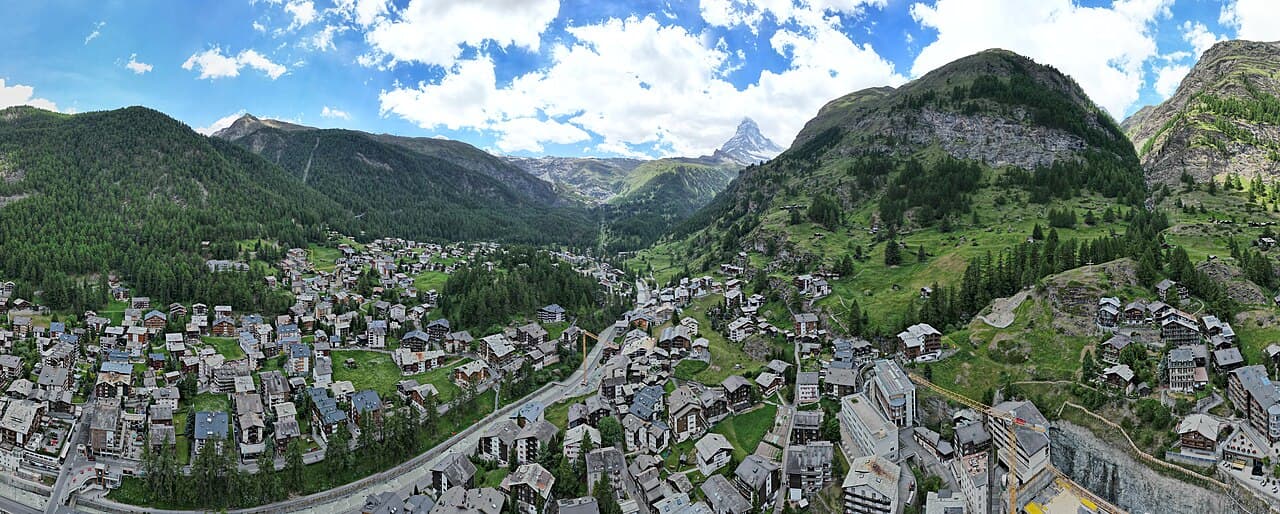
SwitzerlandPhoto: Bob Tan / Wikimedia Commons (CC BY-SA 4.0)

Switzerland

Country · CH · CHF · Europe/Zurich

This information may change. Always check the official source.Last verified: August 2026 by

Schengen rules apply in full, so your 90 days are shared with the rest of Europe. But Switzerland is outside the EU customs union, which is the part that catches people out at the border.

  • Switzerland is in Schengen but not the EU, so there are no routine passport checks on the land borders - but there are customs checks, because it is outside the EU customs union.
  • The stay is 90 days in any rolling 180, counted across the whole Schengen area, and since 10 April 2026 there is no stamp - your face and fingerprints are registered instead.
  • ETIAS is not in operation and no applications are being collected; the Q4 2026 target was withdrawn in July 2026. It will cost EUR 20 when it arrives.
  • The tax-free import limit halved to CHF 150 per person per day on 1 January 2025, and once you go over, 8.1 percent VAT is charged on the entire value - CHF 160 of shopping means CHF 12.96, not 81 centimes.
  • Meat is capped at 1 kg a person, and customs officers do stop cars at the French and German borders, particularly on Saturdays. Declare with the QuickZoll app.
More details

Schengen, but not the EU

Switzerland joined Schengen in December 2008 and has never joined the EU. That split explains almost everything odd about arriving here.

  • Your stay is capped at 90 days in any rolling 180, counted across the whole Schengen area.
  • There are no routine passport checks on the land borders with France, Germany, Italy and Austria.
  • There are customs checks, because Switzerland is outside the EU customs union. Officers at land borders and airports are looking at what you are carrying, not at your passport.
  • Arriving from outside Schengen means a full border check at Zurich, Geneva or Basel.

No more stamps

  • The Entry/Exit System has been fully operational since 10 April 2026. Your face and fingerprints are registered instead.
  • Children under 12 give no fingerprints.
  • The first registration takes a few extra minutes. Later crossings are quick.
  • Keep your own record of dates, because there is no stamp to count and the database is not visible to you.

ETIAS is not running

  • The official EU site states that ETIAS is not in operation and no applications are being collected.
  • The Q4 2026 launch target was withdrawn in July 2026. Advice telling you to apply before travelling this year is out of date.
  • It will cost EUR 20 when it does arrive.

Where your nationality lands

Visa and entry in Switzerland
You holdWhat you need
Germany, France, Italy, Spain, Netherlands, PolandNothing. Free movement under the Swiss and EU agreement
USA, Canada, Australia, UK, Japan, South Korea, Malaysia, Singapore, TaiwanNo visa. 90 days in any 180
China, India, Russia, Saudi Arabia, CambodiaSchengen visa in advance
  • The Schengen visa fee rose to EUR 90 on 11 June 2026. Swiss representations charge the franc equivalent, around CHF 95, and adjusted their tables in May 2026.
  • EU citizens use free movement rights under the bilateral agreement rather than EU law, but in practice a passport or national ID card is all you need.
  • Russian applicants inside Russia are now issued single-entry visas as a rule, following the Commission's decision of 7 November 2025.
  • Travel medical insurance of at least EUR 30,000 is a visa condition.

What you may bring in

This is the Swiss-specific part, and it changed on 1 January 2025.

  • The tax-free value limit halved from CHF 300 to CHF 150 per person per day.
  • Once you go over, VAT of 8.1 percent is charged on the entire value, not just the excess. CHF 160 of shopping means CHF 12.96 of VAT, not 81 centimes.
  • Meat is limited to 1 kg a person, which catches people driving back from an Italian butcher.
  • Alcohol: 5 litres up to 18 percent plus 1 litre above 18 percent, for over 17s.
  • Declare with the QuickZoll app if you are over the limits. It calculates and takes payment before you cross.
  • Customs officers do stop cars at the French and German borders, particularly on Saturdays, and the fines are not nominal.
Sources (4)

Switzerland is outside the EU customs union, and since January 2025 the value limit is CHF 150 a day - low enough that a single shopping trip crosses it.

  • The tax-free limit on goods is CHF 150 per person per day, halved from CHF 300 on 1 January 2025 to blunt cross-border shopping. That is not a lot: one jacket bought in Milan and the whole purchase becomes declarable at the border.
  • Going over means VAT of 8.1 per cent on the whole value, not on the excess. CHF 160 of shopping is CHF 12.96, not 81 centimes. Declare and pay in the QuickZoll app before you cross; the reduced 2.6 per cent rate on food is only available at a staffed crossing or by written declaration.
  • Alcohol is 5 litres up to 18 % plus 1 litre above it, and tobacco is 250 cigarettes or 250 g. Both apply from age 17.
More details
  • The tax-free limit on goods is CHF 150 per person per day, halved from CHF 300 on 1 January 2025 to blunt cross-border shopping. That is not a lot: one jacket bought in Milan and the whole purchase becomes declarable at the border.
  • Going over means VAT of 8.1 per cent on the whole value, not on the excess. CHF 160 of shopping is CHF 12.96, not 81 centimes. Declare and pay in the QuickZoll app before you cross; the reduced 2.6 per cent rate on food is only available at a staffed crossing or by written declaration.
  • Alcohol is 5 litres up to 18 % plus 1 litre above it, and tobacco is 250 cigarettes or 250 g. Both apply from age 17.
  • Meat and dairy have their own quota, because Swiss agriculture is protected - the limit is measured in kilograms per person and the border shops on the German and French side exist entirely because of it.
  • There is no cash declaration form, but customs may ask what you are carrying if it reaches CHF 10,000, and refusing to answer is the offence.
  • Every land border is a customs border. The crossings look open and mostly are, but the checks at Basel, Chiasso and Geneva are real and random.
Sources (2)

World-class care at world-record prices. The European card works here, but it does not cover a helicopter, and that is the bill that hurts.

  • EHIC and GHIC are valid here, but Swiss residents pay a large excess themselves, so "the same terms as a local" still means a bill. This is not the NHS.
  • Check your policy covers mountain rescue, winter sports and repatriation as separate line items - Switzerland is where a thin policy shows.
  • 1414 is Rega, the air rescue number, and it is not 144. Rescue is not covered by the EHIC and averages CHF 4,500.
  • Altitude matters above about 2,500 m, and cable cars here take you from 600 m to 3,400 m in half an hour - take the Jungfraujoch and Klein Matterhorn slowly.
  • Ticks carry encephalitis in Swiss forests below about 1,500 m, with vaccination recommended for anyone spending time in wooded areas. Tap water everywhere is superb.
More details

Cover

  • EU, EEA and UK visitors: the EHIC and GHIC are valid in Switzerland. They give you state-priced treatment on the same terms as an insured resident.
  • Swiss residents pay a large excess themselves, so "the same terms as a local" still means a bill. This is not the NHS.
  • Expect to pay up front at some providers and claim afterwards. Keep every receipt.
  • Everyone else needs proper travel insurance, and Switzerland is the country where a thin policy shows.
  • Check the policy covers mountain rescue, winter sports and repatriation as separate line items.

Getting treated

  • Standards are outstanding and English is widely spoken by medical staff.
  • Go to a hospital emergency department (Notfall) for anything urgent, or a walk-in Permanence clinic in the cities for the less serious.
  • A GP appointment costs CHF 100 to CHF 200 without cover.
  • Pharmacies (Apotheke, pharmacie, farmacia) are excellent and pharmacists can treat minor problems directly.
  • Every region has a duty pharmacy out of hours, posted on the doors of the closed ones.

The mountains again

  • 1414 is Rega, the air rescue service. It is not 144 and it is the number to have.
  • Rescue is not covered by the EHIC. It is a separate cost and it averages CHF 4,500.
  • Altitude sickness starts to matter above about 2,500 m, and Switzerland has cable cars that take you from 600 m to 3,400 m in half an hour. Take it slowly on the Jungfraujoch and the Klein Matterhorn.
  • Alpine sun burns very fast and reflects off snow. High-factor sunscreen is not optional in the mountains, in any season.

Everyday health

  • Tap water is superb everywhere. Public fountains are drinking water unless signed otherwise.
  • Ticks carry encephalitis in Swiss forests below about 1,500 m. The Federal Office of Public Health recommends vaccination for people spending time in wooded areas. Check yourself after walks.
  • Food safety is not a concern.
  • No vaccinations are required to enter.
Sources (3)

Zurich

Long-term averages for Zurich: the mean daily high, the mean overnight low and the mean monthly rainfall across 30 years of ERA5 reanalysis data (1995–2024).

DayNight
-50510152025°C0200mmJanFebMarAprMayJunJulAugSepOctNovDecJanuary: Day 5 °C, Night -2 °C, Rain 81 mm. February: Day 6 °C, Night -1 °C, Rain 70 mm. March: Day 10 °C, Night 1 °C, Rain 80 mm. April: Day 14 °C, Night 4 °C, Rain 86 mm. May: Day 18 °C, Night 9 °C, Rain 122 mm. June: Day 22 °C, Night 13 °C, Rain 115 mm. July: Day 24 °C, Night 15 °C, Rain 125 mm. August: Day 23 °C, Night 15 °C, Rain 116 mm. September: Day 19 °C, Night 11 °C, Rain 91 mm. October: Day 15 °C, Night 8 °C, Rain 84 mm. November: Day 9 °C, Night 3 °C, Rain 90 mm. December: Day 5 °C, Night 0 °C, Rain 95 mm
Show the monthly table
Zurich
MonthDay (°C)Night (°C)Rain (mm)
January5-281
February6-170
March10180
April14486
May189122
June2213115
July2415125
August2315116
September191191
October15884
November9390
December5095

Geneva

Long-term averages for Geneva: the mean daily high, the mean overnight low and the mean monthly rainfall across 30 years of ERA5 reanalysis data (1995–2024).

DayNight
-50510152025°C0200mmJanFebMarAprMayJunJulAugSepOctNovDecJanuary: Day 5 °C, Night -1 °C, Rain 115 mm. February: Day 7 °C, Night 0 °C, Rain 96 mm. March: Day 11 °C, Night 2 °C, Rain 107 mm. April: Day 15 °C, Night 6 °C, Rain 102 mm. May: Day 19 °C, Night 10 °C, Rain 138 mm. June: Day 23 °C, Night 14 °C, Rain 112 mm. July: Day 25 °C, Night 16 °C, Rain 118 mm. August: Day 25 °C, Night 16 °C, Rain 111 mm. September: Day 20 °C, Night 12 °C, Rain 100 mm. October: Day 16 °C, Night 8 °C, Rain 106 mm. November: Day 10 °C, Night 3 °C, Rain 124 mm. December: Day 6 °C, Night 0 °C, Rain 128 mm
Show the monthly table
Geneva
MonthDay (°C)Night (°C)Rain (mm)
January5-1115
February7096
March112107
April156102
May1910138
June2314112
July2516118
August2516111
September2012100
October168106
November103124
December60128

Interlaken

Long-term averages for Interlaken: the mean daily high, the mean overnight low and the mean monthly rainfall across 30 years of ERA5 reanalysis data (1995–2024).

DayNight
-50510152025°C0250mmJanFebMarAprMayJunJulAugSepOctNovDecJanuary: Day 5 °C, Night -2 °C, Rain 125 mm. February: Day 6 °C, Night -2 °C, Rain 108 mm. March: Day 10 °C, Night 1 °C, Rain 119 mm. April: Day 13 °C, Night 4 °C, Rain 131 mm. May: Day 17 °C, Night 8 °C, Rain 197 mm. June: Day 22 °C, Night 12 °C, Rain 191 mm. July: Day 24 °C, Night 14 °C, Rain 208 mm. August: Day 23 °C, Night 15 °C, Rain 202 mm. September: Day 20 °C, Night 11 °C, Rain 147 mm. October: Day 16 °C, Night 7 °C, Rain 123 mm. November: Day 10 °C, Night 2 °C, Rain 131 mm. December: Day 6 °C, Night -1 °C, Rain 133 mm
Show the monthly table
Interlaken
MonthDay (°C)Night (°C)Rain (mm)
January5-2125
February6-2108
March101119
April134131
May178197
June2212191
July2414208
August2315202
September2011147
October167123
November102131
December6-1133
Sources (1)

The nightly visitor tax buys you something real in most towns: a guest card with free local transport, and often free cable cars. Ask for it at check-in.

  • The visitor tax of CHF 2 to CHF 7 a night buys you a guest card worth far more than the tax - ask for it at check-in, because hotels do not always volunteer it.
  • In Geneva that card is free unlimited public transport for your whole stay, trams, buses, the airport train and the lake Mouettes included; Bern gives the equivalent Bern Ticket.
  • A CHF 150 double is a budget room here. Youth hostels are excellent, used by all ages, and are the main way to visit Switzerland cheaply.
  • Book Zermatt, Grindelwald and the Engadin months ahead for winter and for July or August alike.
  • Many alpine hotels close in the shoulder seasons - late April to mid June and late October to mid December - when the lifts stop.
More details

The visitor tax pays for something

  • There is no national tourist tax. Each commune sets its own, typically CHF 2 to CHF 7 per adult per night.
  • In most places it buys you a guest card, and the guest card is worth far more than the tax.
  • Geneva: free unlimited public transport for your whole stay, including trams, buses, the airport train and the little yellow Mouettes across the lake.
  • Bern: the Bern Ticket, free travel on the city network, given with any overnight stay.
  • Interlaken, Lucerne, Zermatt, the Engadin and many alpine valleys issue cards with free buses and discounted or free cable cars.
  • Ask for it at check-in. Hotels do not always volunteer it and it is not printed on your booking.

Booking

  • Prices are high and quality is consistently good. A CHF 150 double is a budget room here.
  • Youth hostels are excellent, clean and used by all ages, and are the main way to visit Switzerland cheaply.
  • Mountain huts (SAC huts) need booking and are cash or card at the hut. Half board is normal and you bring a sleeping liner.
  • Book Zermatt, Grindelwald and the Engadin months ahead for both winter and July or August.
  • Many alpine hotels close in the shoulder seasons, roughly late April to mid June and late October to mid December, when the lifts stop.

Practicalities

  • Check-in from 15:00, check-out by 11:00, enforced politely and precisely.
  • Quiet hours are real. Most buildings observe 22:00 to 07:00, and complaints get made.
  • Recycling is separated in your room or apartment and you are expected to do it properly.
  • Air conditioning is rare because it is usually not needed. In a hot July in Geneva or Ticino that can matter, so check if you feel the heat.
Sources (2)

The most expensive mobile market in Europe, and the one place where a travel eSIM usually beats a local SIM outright. Note that EU roaming does not apply here.

  • Your EU roam-like-at-home allowance does not cover Switzerland, and this is the single most expensive mistake visitors make - people have come home to four-figure bills from a week of ordinary use.
  • Border regions make it worse. In Geneva, Basel and Ticino your phone hops onto a French, German or Italian mast and back, roaming both ways.
  • A travel eSIM costs a fraction of local prepaid for a week's data, and all three Swiss networks support eSIM if you want a local number.
  • Swisscom prepaid runs about CHF 20 for 7 days or CHF 65 for 30 days with unlimited data; Salt is the budget option at roughly CHF 2 an active day.
  • Swisscom has the clearly best mountain coverage, reaching valleys and passes the others do not - the one to buy if you are hiking seriously.
More details

Switzerland is outside EU roaming

This is the single most expensive mistake visitors make.

  • Your EU "roam like at home" allowance does not cover Switzerland. It is not in the EU, and Swiss roaming is charged at whatever your operator likes.
  • People have come home to four-figure bills from a week of ordinary phone use. Check your plan before you land, not after.
  • Some EU operators do include Switzerland voluntarily. Many do not. Read the actual terms.
  • Border regions make it worse. In Geneva, Basel and Ticino your phone can hop onto a French, German or Italian mast and back again, roaming both ways.

Local prepaid

  • Swisscom, Sunrise and Salt are the three networks. Swisscom has the best mountain coverage by a clear margin.
  • Swisscom prepaid flat rates: about CHF 20 for 7 days, CHF 65 for 30 days, CHF 150 for 90 days, unlimited data.
  • Salt is the budget option, roughly CHF 2 an active day.
  • You must show a passport or photo ID to register, and fill in a form at the counter.

eSIM is usually the answer

  • A travel eSIM covering Switzerland, Saily for instance, costs a fraction of the local prepaid price for a week's data.
  • All three Swiss networks support eSIM if you prefer a local number.
  • Set it up before you fly. Airport wifi at Zurich and Geneva is free but time limited.

Coverage

  • Excellent almost everywhere, including in the mountains, in tunnels and on trains.
  • Swisscom reaches valleys and passes the others do not. If you are hiking seriously, that is the one to buy.
  • Free wifi on most trains, in stations and in cafes.
Sources (2)

Swiss sockets are the hexagonal Type at 230 V - a Europlug fits, and a Schuko plug is simply too wide.

  • It looks like a Type socket with a third hole slightly off centre. That offset earth is the whole difference, and it is why a Swiss plug fits nothing abroad.
  • A Europlug fits a Swiss socket. Chargers and laptop bricks are fine without an adapter.
  • A Schuko plug does not. The German plug's round body is too wide for the hexagonal recess, so an appliance lead from Germany, Austria or Italy needs an adapter - a surprise for people driving in from a neighbouring country.
  • British, American and Australian plugs need one too.
  • 230 V, so only American 120 V-only equipment needs a converter. Swiss supermarkets sell adapters; so does every station kiosk.
More details

Sockets in Switzerland are Type at 230 V, 50 Hz - three round pins in a hexagonal recess that exists nowhere else except Liechtenstein.

  • It looks like a Type socket with a third hole slightly off centre. That offset earth is the whole difference, and it is why a Swiss plug fits nothing abroad.
  • A Europlug fits a Swiss socket. Chargers and laptop bricks are fine without an adapter.
  • A Schuko plug does not. The German plug's round body is too wide for the hexagonal recess, so an appliance lead from Germany, Austria or Italy needs an adapter - a surprise for people driving in from a neighbouring country.
  • British, American and Australian plugs need one too.
  • 230 V, so only American 120 V-only equipment needs a converter. Swiss supermarkets sell adapters; so does every station kiosk.
Sources (1)

Four national languages, Sunday closing, and rules about rubbish and noise that visitors treat as suggestions and locals do not.

  • Four national languages, and which you meet depends entirely on where you are: Zurich, Bern, Basel and Lucerne German, Geneva and Lausanne French, Ticino Italian. Greet people when entering a shop.
  • Almost all shops close on Sundays and shut at 18:30 or 19:00 on weekdays - station and airport shops and petrol stations are your fallback.
  • Quiet hours are observed, generally 22:00 to 07:00 plus all Sunday, which in an apartment can extend to not running a washing machine.
  • Rubbish is charged by the bag in most cantons and using the wrong bag is fined - if you are in an apartment, ask the host how it works, because it is not obvious.
  • Plugs are type . A European two-pin type fits, but a three-pin Schuko does not, so bring an adapter. Station toilets cost CHF 1 to CHF 2.
More details

Languages

  • Four national languages: German, French, Italian and Romansh. Which one you meet depends entirely on where you are.
  • Zurich, Bern, Basel and Lucerne are German-speaking. Geneva, Lausanne and Montreux are French. Ticino, including Lugano, is Italian.
  • Spoken Swiss German is not standard German and Germans struggle with it too. Written German is standard.
  • English is very widely spoken, especially in Zurich, Geneva and anywhere touristed.
  • Greet people when entering a shop. "Grüezi", "bonjour" or "buongiorno" depending on the canton.

Sunday and the clock

  • Almost all shops close on Sundays. Station and airport shops and petrol stations are the exceptions, and they are your fallback.
  • Shops shut at 18:30 or 19:00 on weekdays and earlier on Saturdays.
  • Quiet hours are observed, generally 22:00 to 07:00 plus Sunday all day. In apartment buildings this can extend to not running a washing machine or a noisy shower.
  • Punctuality is real. A 19:00 dinner invitation means 19:00, and being 15 minutes late needs an apology.

Rubbish and rules

  • Rubbish disposal is charged by the bag in most cantons. Zurich's Züri-Sack and its equivalents cost a couple of francs each, and using the wrong bag is fined.
  • Recycling is separated rigorously, with PET, glass by colour, aluminium and paper each having their own collection.
  • If you are in an apartment, ask the host how the rubbish works. It is not obvious and getting it wrong lands on them.
  • Littering fines are enforced, including for cigarette ends.

Eating and drinking

  • Lunch runs roughly 12:00 to 14:00 and dinner from 18:30, and many kitchens close between them.
  • The daily lunch menu (Tagesteller, plat du jour) is the cheapest hot meal in the country, often half the evening price for the same food.
  • Fondue is a winter dish and ordering it in August marks you out gently.
  • Tap water is free on request in most restaurants, though some charge for it.
  • Coop and Migros are the two supermarket chains and both close early and on Sundays.

Practicalities

  • Plugs are type , the Swiss three-pin. A standard European two-pin type plug fits, but a three-pin type "Schuko" plug does not fit a Swiss socket. Bring an adapter.
  • Voltage is 230 V.
  • Public toilets in stations charge CHF 1 to CHF 2.
  • Public holidays vary by canton, which means a town can be shut while the next one over is open. Fixed national ones are 1 January, Ascension and 1 August.
  • 1 August is the national day, with fireworks and closed everything.
Sources (2)

Francs, not euros. Shops that accept euros give you a poor rate and hand back change in francs, and service is included by law so tipping is only rounding up.

  • Pay in francs, always. Tourist businesses take euros at a deliberately bad rate and give change in francs.
  • Twint is the local payment app and needs a Swiss bank account, so it is closed to visitors - but cards work everywhere, mountain huts and market stalls included.
  • Carry some cash anyway for small alpine cable cars, honesty-box farm shops and parking, and be aware ATMs will happily hand you a CHF 200 note.
  • Tipping is not expected - service is included by law. Round up CHF 47 to CHF 50 if you were pleased; a percentage would be strange.
  • Calibrate before you order: coffee CHF 4.50 to CHF 6, a restaurant main CHF 25 to CHF 40, Jungfraujoch over CHF 200 return without a pass. A Coop or Migros picnic costs a fifth of a restaurant meal and locals do it too.
More details

The franc

  • Switzerland uses the Swiss franc (CHF). It is not in the eurozone and has no plans to be.
  • Many tourist businesses accept euros at a deliberately unfavourable rate and give change in francs. Paying in francs is always cheaper.
  • Cards are accepted everywhere, including mountain huts and market stalls, and contactless is universal.
  • Twint is the local payment app and it is everywhere, but it needs a Swiss bank account, so it is not an option for visitors.
  • Carry some cash anyway for small alpine cable cars, honesty-box farm shops and parking.

ATMs and exchange

  • Bank ATMs give the fair rate. Use one attached to UBS, PostFinance, Raiffeisen or a cantonal bank.
  • Refuse dynamic currency conversion. Choose to be charged in francs every time.
  • Airport exchange desks are poor value, as everywhere.
  • Swiss ATMs will happily dispense a CHF 200 note, which is awkward for small purchases. Ask for a mix if the machine offers one.

Tipping is not expected

  • Service is included in the price by law. A Swiss bill is the whole bill.
  • Round up if you were pleased. CHF 47 becomes CHF 50 and that is generous.
  • No percentage is expected, and 15 or 20 percent would be strange.
  • Taxi: round up. Hotel porter: a couple of francs.

What things cost

Switzerland is genuinely one of the most expensive countries in the world, and it is worth calibrating before you order.

  • Coffee: CHF 4.50 to CHF 6.
  • A half litre of beer: CHF 7 to CHF 9.
  • A basic restaurant main: CHF 25 to CHF 40. A pizza is CHF 22.
  • A supermarket meal from Coop or Migros costs a fifth of that, and the picnic-by-the-lake strategy is what locals do too.
  • Mountain railways are the big-ticket item. Jungfraujoch is over CHF 200 return without a pass.
  • Tap water is excellent and free, and public fountains all over the country are drinking water unless marked otherwise. Carry a bottle and refill it.

Bringing goods in

  • The duty-free limit is CHF 150 a person a day, halved from CHF 300 on 1 January 2025.
  • Above that, 8.1 percent VAT is charged on the entire amount, not the excess.
  • The QuickZoll app lets you declare and pay before you cross.
Sources (2)

Everyday prices

Typical prices in Swiss franc (CHF), averaged across the country by Numbeo and read on 12 August 2026. Tick Convert prices above the table to see every amount in your own currency.

Everyday prices
ItemTypical price
Inexpensive restaurant meal25 CHF
Dinner for two, mid-range, three courses100 CHF
Cappuccino5.09 CHF
Local draught beer, 0.5 l7.40 CHF
Bottled water, 0.33 l3.99 CHF
Public transport, one-way ticket3.50 CHF
Taxi, starting fare6.55 CHF
Petrol, 1 litre1.84 CHF
Cigarettes, pack of 20 (Marlboro)9.00 CHF
Average net monthly salary5,920 CHF

These are country-wide averages, not a price list: tourist districts, airports and islands sit well above them, and small towns below. The salary line is there for proportion - it is what people living here actually earn.

Sources (1)

Airport guides for Switzerland3

One page per airport: the routes into town, what they cost and the trap particular to that arrival.

See all 3 airports

Both main airports have a railway station under the terminal. In Geneva the ticket is free from a machine in the baggage hall, and most arrivals walk straight past it.

  • At Geneva, a machine in the baggage hall issues a free transport ticket valid 80 minutes - take it before you leave the hall, because there is no second chance and almost nobody notices it. The train to Cornavin takes 7 minutes.
  • Your Geneva hotel then gives you the Geneva Transport Card, free unlimited public transport for the whole stay. Ask at check-in if it is not handed over.
  • From Zurich airport the train is CHF 7 and 10 to 12 minutes to the Hauptbahnhof, every 5 to 10 minutes; a taxi is CHF 60 to CHF 80 and there is no reason to take one.
  • Long-distance trains leave from Zurich airport direct to Bern, Lucerne, Basel and St Gallen, so you often need not go into the city at all.
  • Basel's EuroAirport is physically in France and has separate Swiss and French exits. Take the Swiss one for Basel - bus 50 to Basel SBB in about 20 minutes - because the French door means clearing customs to get back.
More details
Geneva: take the free ticket
  • A machine in the baggage reclaim hall issues a free public transport ticket, valid 80 minutes across the All Geneva zone. It covers the train into Cornavin, the trams and the buses.
  • Take it before you leave the baggage hall. There is no second chance airside and almost nobody notices the machine.
  • Keep your boarding pass. If an inspector checks, you must show you arrived that day.
  • The train to Geneva Cornavin takes 7 minutes.
  • Your hotel then gives you the Geneva Transport Card, free unlimited public transport for your whole stay, funded by the tourist tax you are paying anyway. Ask at check-in if it is not handed over.
  • Note that Geneva airport has a French sector. If you fly in on a French ticket you can exit into France without entering Switzerland, which is useful for Chamonix and confusing for everyone else.
Zurich: CHF 7 to the main station
  • Trains S2, S16 and S24 run every 5 to 10 minutes from the station under the terminal to Zurich Hauptbahnhof in 10 to 12 minutes.
  • The fare is CHF 7.00, a single-zone ticket.
  • Contactless works at the yellow ZVV readers on the platform entrance. Tap a card or phone and the system charges you the right fare.
  • Long-distance trains also leave from the airport, direct to Bern, Lucerne, Basel and St Gallen, so you often need not go into Zurich at all.
  • A taxi is CHF 60 to CHF 80 and there is no reason to take one.
Basel: mind which country you walk into
  • EuroAirport Basel Mulhouse Freiburg is physically in France and has separate Swiss and French exits.
  • Take the Swiss exit for Basel. Bus 50 runs to Basel SBB in about 20 minutes.
  • Take the French exit and you are in France, with different buses, and re-entering Switzerland means clearing customs.
  • Check your onward ticket before you choose a door. People get this wrong regularly.
Elsewhere
  • Bern, Lugano and Sion airports are small and taxis or local buses cover them.
  • The Swiss Travel Pass and Half Fare Card are valid on airport trains and on the Geneva and Zurich transfers.
  • Luggage can be checked through to some Swiss stations on certain airlines, so ask about the SBB baggage service if you are heading straight to the mountains.
Sources (3)

The best public transport network on earth, at prices to match. Prices changed on 1 January 2026, and choosing the right pass is worth hundreds of francs.

  • The Half Fare Card is the biggest single saving available, CHF 150 for a month since it rose on 1 January 2026, and one Zurich to Zermatt return at full fare is roughly CHF 150 on its own.
  • Saver Day Passes start at CHF 52, or CHF 29 with a Half Fare Card, and are demand priced - book as early as you can, up to 6 months ahead.
  • SBB Mobile is the only app you need, covering trains, buses, boats, trams and most cable cars nationwide, with EasyRide check-in check-out charging you the cheapest fare automatically.
  • Trains are punctual to the minute and connections are designed to work - a 4 minute change is a real change, not a gamble - and no reservation is needed on domestic trains.
  • The motorway vignette is CHF 40 and compulsory; driving without one is a CHF 200 fine plus the CHF 40. Buy the e-vignette online against your number plate before you arrive.
More details

Choosing a pass

Get this right first. It is the biggest single saving available to a visitor.

Getting around and apps in Switzerland
OptionPriceBest for
Half Fare CardCHF 150 for one monthAnyone travelling more than about CHF 300 worth
Saver Day Passfrom CHF 52, or CHF 29 with a Half Fare CardBig single days out
Swiss Travel Passmulti-day, rose about 5 percent on 1 January 2026Dense sightseeing, museums included
  • The Half Fare Card went up from CHF 120 to CHF 150 on 1 January 2026. It still pays for itself quickly: one Zurich to Zermatt return is roughly CHF 150 at full fare.
  • Saver Day Passes are demand priced. Book as early as you can, up to 6 months ahead, and the price climbs as the date nears.
  • The Swiss Travel Pass includes most museums and many mountain railways, which is where its value sits rather than in the trains alone.
  • Point-to-point tickets and day passes did not change price in 2026.

The apps

  • SBB Mobile is the only app you need. It covers trains, buses, boats, trams and most cable cars, nationwide, with live platform changes.
  • EasyRide inside SBB Mobile is check-in check-out ticketing. Swipe in when you board, swipe out when you leave, and it charges the cheapest fare. It is the simplest way to travel without thinking about zones.
  • Contactless card readers work in Zurich and several other networks if you would rather not install anything.
  • 12Go sells Swiss trains and buses alongside the rest of a European itinerary, which is useful if Switzerland is one leg of a longer route.

Using the network

  • Trains are punctual to the minute and connections are designed to work. A 4 minute change is a real change, not a gamble.
  • Timetables repeat hourly, so if you miss one, the next is at the same minutes past.
  • Reservations are not needed on domestic trains. Just get on.
  • Postbuses reach every village, including places with no road you would drive yourself.
  • Boats on the lakes are part of the same system and covered by the same passes.

Driving

  • The motorway vignette costs CHF 40 and is compulsory on motorways and semi-motorways for vehicles under 3.5 tonnes. The 2026 one runs from 1 December 2025 to 31 January 2027.
  • The e-vignette is linked to the number plate and can be bought online before you arrive.
  • Driving without one is a CHF 200 fine plus the CHF 40.
  • Speed enforcement is severe. Fines scale with income for residents and are heavy for everyone, and serious speeding is a criminal matter with vehicle confiscation.
  • Winter tyres are not legally mandated but you are liable if you cause an accident without them, and mountain passes close in winter regardless.
  • Trains beat driving almost everywhere here. Parking in city centres is expensive and scarce.
Sources (3)

Switzerland sells only an annual motorway vignette - there is no short-term version - and speed enforcement is unforgiving.

  • The vignette is valid for a calendar year whatever day you buy it, and there is no ten-day version as in Austria. It is sold at the border, at petrol stations and as an e-vignette tied to the plate.
  • Speeding is treated as a crime, not a fine, above certain margins. Serious excesses bring vehicle confiscation and a criminal record, and fines are means-tested.
  • The alcohol limit is 0.5 g/l, and 0.1 g/l for new and professional drivers.
  • Dipped headlights are compulsory day and night.
  • The big alpine tunnels are included in the vignette - the Gotthard charges nothing - but the car trains through the Lotschberg and Furka are separate and worth the money in winter.
More details

One annual vignette, no short-term option, and the strictest speed enforcement in Europe.

  • The vignette is valid for a calendar year whatever day you buy it, and there is no ten-day version as in Austria. It is sold at the border, at petrol stations and as an e-vignette tied to the plate.
  • Speeding is treated as a crime, not a fine, above certain margins. Serious excesses bring vehicle confiscation and a criminal record, and fines are means-tested.
  • The alcohol limit is 0.5 g/l, and 0.1 g/l for new and professional drivers.
  • Dipped headlights are compulsory day and night.
  • The big alpine tunnels are included in the vignette - the Gotthard charges nothing - but the car trains through the Lotschberg and Furka are separate and worth the money in winter.
Sources (1)

One of the safest countries anywhere. The real hazard is the mountains, and the second one is the size of the bill if they go wrong.

  • Crime is close to a non-issue - pickpockets at Zurich Hauptbahnhof, Geneva Cornavin, Basel SBB and summer festivals is roughly the extent of it.
  • The mountains kill more visitors than crime does, by an enormous margin. A sunny valley says nothing about conditions at 2,500 m.
  • Trail markings are a grading system: yellow is an easy hike, white-red-white a mountain path needing sure footing, white-blue-white an alpine route needing equipment and experience. People die on those every summer.
  • A Rega helicopter mission averages around CHF 4,500, Swiss basic insurance covers a fraction, and many travel policies exclude mountain activity outright.
  • Rega patronage is about CHF 40 a year - not insurance, but Rega can waive what your insurer will not pay, and it is the cheapest protection there is.
More details

Crime is close to a non-issue

  • Violent crime against visitors is very rare. Walking anywhere at night is unremarkable.
  • Pickpockets work Zurich Hauptbahnhof, Geneva Cornavin, Basel SBB and crowded summer festivals. That is the extent of it.
  • Bike theft is common and unattended bikes are locked properly by locals for a reason.
  • Leaving a laptop on a cafe table while you order is normal here, which tells you most of what you need to know. Do not take it as licence at the main stations.

The mountains are the actual risk

Switzerland kills more visitors through terrain and weather than through crime, by an enormous margin.

  • Weather changes fast and completely. A sunny valley says nothing about conditions at 2,500 m.
  • Trail markings are a grading system. White-red-white is a mountain path needing sure footing. White-blue-white is an alpine route needing equipment and experience. Yellow is an easy hike.
  • Do not treat a white-blue-white route as a walk. People die on them every summer.
  • Check the avalanche bulletin in winter at slf.ch, and take it seriously off-piste.
  • Glaciers are not paths. Crevasses are covered by snow well into summer.
  • Start early. Afternoon thunderstorms in the Alps are routine and dangerous.

Rescue costs money

  • A Rega helicopter mission averages around CHF 4,500.
  • Swiss basic health insurance covers only a fraction of rescue costs, and your travel policy may exclude mountain activity entirely.
  • Rega patronage costs about CHF 40 a year. It is not insurance, but Rega can waive the costs its patrons' insurance does not cover, and it is the cheapest protection available.
  • Buy the mountain sports extension on your travel policy if you are going above the treeline at all.
  • Check whether your policy defines hiking above a certain altitude as an excluded activity. Many do.

Small things

  • Littering is fined, and in some cantons heavily.
  • Jaywalking is fined and locals do not do it.
  • Trains are checked by inspectors and travelling without a valid ticket costs CHF 100 or more on top of the fare.
  • Take the recycling and quiet-hours rules seriously. They are the local version of a serious offence.
Sources (2)

Learn 1414 alongside 112. It is Rega, the air rescue service, and in the mountains it is the number that actually matters.

  • 112 works from any phone, without a SIM and from a locked one, and reaches an English-speaking operator who routes you correctly.
  • The domestic numbers are 117 police, 118 fire, 144 ambulance and 145 for poisons, with 140 for roadside assistance.
  • 1414 is Rega air rescue - the mountain number - and the Rega app sends your coordinates automatically and works where placing a call is hard. In Valais, 1415 reaches Air Glaciers.
  • Rega patronage at about CHF 40 a year is worth arranging before you travel, not from a ledge, since a mission averages about CHF 4,500 and the EHIC covers none of it.
  • The alpine distress signal is six signals a minute, then a minute's pause, repeated; the answer is three a minute. To a helicopter, both arms up in a Y means yes, I need help.
More details

The numbers

Emergency information in Switzerland
NumberService
112European emergency number, works from any phone
117Police
118Fire brigade
144Ambulance
1414Rega air rescue
1415Alpine Rescue Switzerland, and Air Glaciers in Valais
145Poisons centre
140Roadside assistance
  • 112 reaches an English-speaking operator and routes you correctly.
  • 1414 is Rega and it is the mountain number. From a mobile with signal, or through the Rega app, which sends your coordinates automatically.
  • The Rega app works even where a call is hard to place and is worth installing before you go anywhere high.
  • In Valais, 1415 reaches Air Glaciers, the cantonal operator, which is the local equivalent.

What a rescue costs

  • A Rega mission averages about CHF 4,500.
  • Basic Swiss health insurance covers very little of it and the EHIC covers none of it.
  • Rega patronage costs about CHF 40 a year. It is not insurance, but as a patron Rega can waive whatever your insurance does not pay, and it is the standard local answer.
  • Do this before you travel, not from a ledge.

Alpine distress

  • The alpine distress signal is six signals a minute, by whistle, torch or shout, then a minute's pause, then repeat. The answer is three signals a minute.
  • If a helicopter approaches: both arms up in a Y means yes, I need help. One arm up and one down means no, I do not.
  • Give your coordinates if you can. Any map app will show them.

If something goes wrong

  • Theft: report at a police station and get the written report for your insurer.
  • Lost passport: embassies are in Bern, with consulates in Zurich and Geneva for many countries.
  • Card lost: freeze it in your banking app first.
  • Road accident: call 112. Swiss law requires you to stop and to secure the scene.
  • 112 works without a SIM and from a locked phone.
Sources (4)