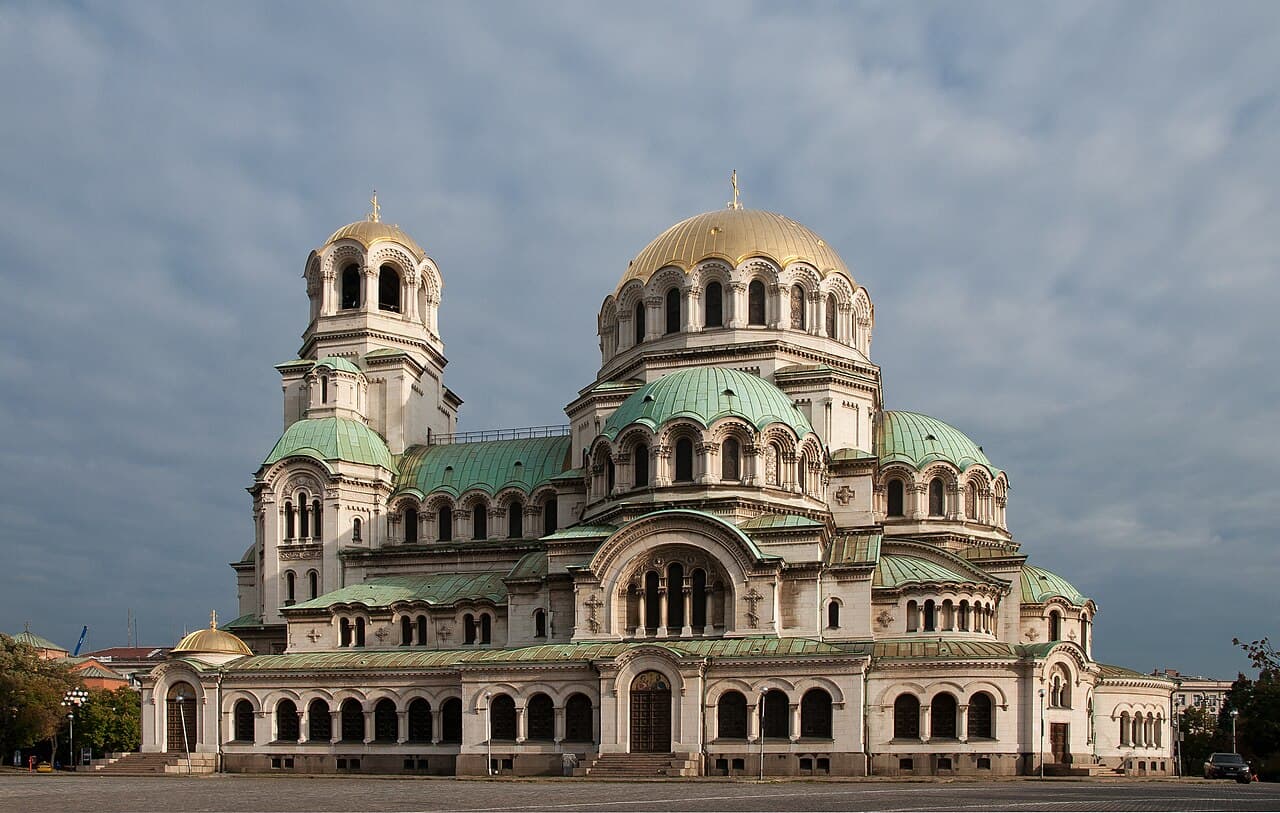
BulgariaPhoto: Plamen Agov (user:MrPanyGoff) / Wikimedia Commons (CC BY-SA 4.0)

Bulgaria

Country · BG · EUR · Europe/Sofia

This information may change. Always check the official source.Last verified: August 2026 by

A full Schengen member since 1 January 2025, so the land border checks older guides describe are gone and your days here count against the same 90/180.

  • 90 days in any rolling 180. Not 90 days per visit and not 90 days per country. Every day anywhere in the Schengen area counts against the same allowance.
  • Bulgaria has been a full Schengen member since 1 January 2025. Air and sea controls went on 31 March 2024 and the land borders followed on 1 January 2025, so driving in from Romania or Greece is no longer a border check.
  • The EU Entry/Exit System has been fully operational since 10 April 2026.
  • ETIAS has not launched and there is no announced launch date. The Q4 2026 target that circulated through 2025 was removed from the official pages in July 2026.
  • The Schengen short stay visa fee is EUR 90, EUR 45 for children aged 6 to 11.
More details

The Schengen arithmetic

  • 90 days in any rolling 180. Not 90 days per visit and not 90 days per country. Every day anywhere in the Schengen area counts against the same allowance.
  • Bulgaria has been a full Schengen member since 1 January 2025. Air and sea controls went on 31 March 2024 and the land borders followed on 1 January 2025, so driving in from Romania or Greece is no longer a border check.
  • This changes your day count. Bulgaria used to sit outside the 90/180 clock and now sits inside it.
  • The rolling window is the part people get wrong. On any given day, count back 180 days and add up your Schengen days in that period.
  • The passport must have been issued within the last 10 years and be valid for 3 months beyond your intended departure.

EES: no more stamps

  • The EU Entry/Exit System has been fully operational since 10 April 2026.
  • Your face and fingerprints are registered on first entry at a Schengen external border, and reused on later trips.
  • No stamp goes in your passport. The system computes your 90/180 balance itself.
  • Keep your own record of entry and exit dates. If the system's view and yours differ, you want the evidence.

ETIAS: not yet, and no date

  • ETIAS has not launched and there is no announced launch date. The Q4 2026 target that circulated through 2025 was removed from the official pages in July 2026.
  • Applications are not open. Any website selling you an ETIAS today is a scam.
  • When it comes, the fee is EUR 20, free for under-18s and over-70s. The old EUR 7 figure is obsolete.
  • It will be a travel authorisation, not a visa, valid three years or until the passport expires.

Where your nationality lands

Visa and entry in Bulgaria
You holdWhat you need
Germany, France, Italy, Spain, Netherlands, PolandNothing. EU freedom of movement
USA, Canada, Australia, UK, Japan, South Korea, Malaysia, Singapore, TaiwanNo visa. 90/180, EES registration
China, India, Cambodia, Saudi ArabiaSchengen visa in advance
RussiaSchengen visa in advance, single entry as a rule
  • The Schengen short stay visa fee is EUR 90, EUR 45 for children aged 6 to 11.

  • Turkey, Serbia and North Macedonia are outside Schengen. The crossings to all three are external borders, so a side trip leaves the area and your EES record follows you back in.

Sources (4)

Bulgaria applies the EU's lower 40-cigarette limit to travellers arriving overland, which is most of them from Turkey and Serbia.

  • Between EU countries there is no duty-free limit. Goods bought tax-paid in another member state travel with you; customs may only ask what a very large quantity is for, against indicative figures of 800 cigarettes and 10 litres of spirits.
  • The tobacco allowance is the lower one for land and sea arrivals: 40 cigarettes rather than 200. The rest of the allowance is the EU standard - 1 litre of spirits over 22 % (or 2 litres of fortified or sparkling wine), 4 litres of still wine and 16 litres of beer.
  • Other goods are capped by value - EUR 430 arriving by air or sea, EUR 300 by land - and the allowance cannot be pooled between travellers for a single item.
More details
  • Between EU countries there is no duty-free limit. Goods bought tax-paid in another member state travel with you; customs may only ask what a very large quantity is for, against indicative figures of 800 cigarettes and 10 litres of spirits.
  • The tobacco allowance is the lower one for land and sea arrivals: 40 cigarettes rather than 200. The rest of the allowance is the EU standard - 1 litre of spirits over 22 % (or 2 litres of fortified or sparkling wine), 4 litres of still wine and 16 litres of beer.
  • Other goods are capped by value - EUR 430 arriving by air or sea, EUR 300 by land - and the allowance cannot be pooled between travellers for a single item.
  • Cash of EUR 10,000 or more must be declared, counting notes, coins, cheques and prepaid cards together. The money is seized for not declaring it, not for carrying it.
  • The Turkish border at Kapitan Andreevo is where this is enforced, and it is the busiest land crossing into the EU.
Sources (1)

EHIC covers the state system, private clinics are cheap, and ticks are a real risk in the mountains.

  • EU and EEA visitors: carry your EHIC. It gives access to state healthcare on the same terms as a resident.
  • UK visitors: the GHIC does the same job. Neither card is travel insurance, and neither covers repatriation or a private clinic.
  • Tick-borne encephalitis is present in Bulgarian forests and the season runs spring to autumn. The vaccine is worth discussing if you are hiking or camping.
  • Lyme disease is the commoner infection. Cover up, use repellent, check yourself after a day outdoors.
  • Tap water is safe in the cities; in remote villages ask.
More details

Cover

  • EU and EEA visitors: carry your EHIC. It gives access to state healthcare on the same terms as a resident.
  • UK visitors: the GHIC does the same job. Neither card is travel insurance, and neither covers repatriation or a private clinic.
  • Travel insurance still matters for anything the state system does not cover.
  • Private clinics in Sofia are inexpensive and quick, and are what many residents use for anything non-urgent.

Ticks

  • Tick-borne encephalitis is present in Bulgarian forests and the season runs spring to autumn. The vaccine is worth discussing if you are hiking or camping.
  • Lyme disease is the commoner infection. Cover up, use repellent, check yourself after a day outdoors.

Everyday health

  • Tap water is safe in the cities; in remote villages ask.
  • Pharmacies (apteka) are well stocked and pharmacists advise on minor problems.
  • Bring enough prescription medicine for the trip plus a margin, in original packaging with a copy of the prescription.
Sources (2)

Sofia

Long-term averages for Sofia: the mean daily high, the mean overnight low and the mean monthly rainfall across 30 years of ERA5 reanalysis data (1995–2024).

DayNight
-551525°C0100mmJanFebMarAprMayJunJulAugSepOctNovDecJanuary: Day 4 °C, Night -4 °C, Rain 48 mm. February: Day 7 °C, Night -3 °C, Rain 38 mm. March: Day 10 °C, Night 0 °C, Rain 57 mm. April: Day 16 °C, Night 5 °C, Rain 59 mm. May: Day 20 °C, Night 10 °C, Rain 71 mm. June: Day 24 °C, Night 14 °C, Rain 63 mm. July: Day 27 °C, Night 16 °C, Rain 46 mm. August: Day 27 °C, Night 17 °C, Rain 38 mm. September: Day 22 °C, Night 12 °C, Rain 39 mm. October: Day 17 °C, Night 7 °C, Rain 52 mm. November: Day 11 °C, Night 2 °C, Rain 43 mm. December: Day 5 °C, Night -2 °C, Rain 53 mm
Show the monthly table
Sofia
MonthDay (°C)Night (°C)Rain (mm)
January4-448
February7-338
March10057
April16559
May201071
June241463
July271646
August271738
September221239
October17752
November11243
December5-253

Varna

Long-term averages for Varna: the mean daily high, the mean overnight low and the mean monthly rainfall across 30 years of ERA5 reanalysis data (1995–2024).

DayNight
051015202530°C0100mmJanFebMarAprMayJunJulAugSepOctNovDecJanuary: Day 6 °C, Night 0 °C, Rain 52 mm. February: Day 8 °C, Night 1 °C, Rain 39 mm. March: Day 11 °C, Night 3 °C, Rain 49 mm. April: Day 15 °C, Night 7 °C, Rain 49 mm. May: Day 20 °C, Night 13 °C, Rain 60 mm. June: Day 25 °C, Night 17 °C, Rain 65 mm. July: Day 28 °C, Night 20 °C, Rain 47 mm. August: Day 28 °C, Night 20 °C, Rain 40 mm. September: Day 23 °C, Night 16 °C, Rain 55 mm. October: Day 18 °C, Night 11 °C, Rain 50 mm. November: Day 13 °C, Night 7 °C, Rain 50 mm. December: Day 8 °C, Night 2 °C, Rain 55 mm
Show the monthly table
Varna
MonthDay (°C)Night (°C)Rain (mm)
January6052
February8139
March11349
April15749
May201360
June251765
July282047
August282040
September231655
October181150
November13750
December8255
Sources (1)

Two entirely separate seasons - a summer coast and a winter mountain - and prices that swing with both.

  • The Black Sea coast is a July and August proposition. Sunny Beach and Golden Sands fill and empty completely; out of season much of the infrastructure closes.
  • Bansko, Borovets and Pamporovo are winter resorts and are among the cheapest ski destinations in Europe. Their season runs roughly December to April.
  • Sofia and Plovdiv work all year and are where the country's actual life is.
  • You will be asked for your passport at check-in.
  • A city tourist tax applies on top of the rate in most places.
More details

Two seasons, two countries

  • The Black Sea coast is a July and August proposition. Sunny Beach and Golden Sands fill and empty completely; out of season much of the infrastructure closes.
  • Bansko, Borovets and Pamporovo are winter resorts and are among the cheapest ski destinations in Europe. Their season runs roughly December to April.
  • Sofia and Plovdiv work all year and are where the country's actual life is.

Practicalities

  • You will be asked for your passport at check-in.
  • A city tourist tax applies on top of the rate in most places.
  • Plovdiv is the better base than Sofia for a short cultural trip - one of Europe's oldest continuously inhabited cities, and considerably prettier.
  • Book Bansko early for the season. It is small and it fills with British and Israeli ski traffic.
Sources (2)

EU visitors need nothing; everyone else finds prepaid SIMs cheap from A1, Yettel or Vivacom.

  • Roam-like-at-home applies. A SIM from any EU or EEA country works here at your domestic rates, with your domestic allowance. Buying anything local is money wasted.
  • A1, Yettel and Vivacom cover the country, including the Black Sea coast and the ski resorts.
  • An eSIM is live before you land and skips the shop entirely, which on a short trip is the whole argument for it.
  • Keep your home number reachable for two-factor codes. If you swap in a local SIM as your only card, bank apps that text a code to your home number stop working at the worst possible moment. A dual-SIM phone, or an eSIM alongside your home SIM, solves it.
More details

If you have an EU plan, stop reading

  • Roam-like-at-home applies. A SIM from any EU or EEA country works here at your domestic rates, with your domestic allowance. Buying anything local is money wasted.
  • UK plans are not covered any more. Several UK networks reintroduced EU roaming charges after Brexit - check yours before you land rather than after.

Local prepaid SIM

  • A1, Yettel and Vivacom cover the country, including the Black Sea coast and the ski resorts.
  • Prepaid starter packs are cheap and sold in operator shops and malls.
  • Bring your passport - prepaid SIMs are registered.

eSIM

  • An eSIM is live before you land and skips the shop entirely, which on a short trip is the whole argument for it.
  • Check your phone takes one. Most flagship phones since 2019 do; most budget models do not.

Practical points

  • Keep your home number reachable for two-factor codes. If you swap in a local SIM as your only card, bank apps that text a code to your home number stop working at the worst possible moment. A dual-SIM phone, or an eSIM alongside your home SIM, solves it.
  • Wi-fi is widespread in cafes, hotels and stations.
Sources (3)

Bulgarian sockets are Type Schuko at 230 V, matching Greece, Romania and Turkey.

  • A Europlug fits every socket in the country.
  • British, American and Australian plugs need an adapter.
  • Greece, Turkey, Romania, Serbia and North Macedonia all use the same socket, so nothing changes at a Bulgarian border.
  • 230 V, so American 120 V-only appliances need a converter.
  • Sofia's older apartment blocks often have two-pin unearthed sockets that take the same plugs with no earth behind them.
More details

Sockets in Bulgaria are Type and at 230 V, 50 Hz - the round Schuko outlet.

  • A Europlug fits every socket in the country.
  • British, American and Australian plugs need an adapter.
  • Greece, Turkey, Romania, Serbia and North Macedonia all use the same socket, so nothing changes at a Bulgarian border.
  • 230 V, so American 120 V-only appliances need a converter.
  • Sofia's older apartment blocks often have two-pin unearthed sockets that take the same plugs with no earth behind them.
  • Type is the earthed version of the same outlet, with clips on the rim rather than a third hole, so a two-pin adapter fits but earths nothing.
Sources (1)

Cyrillic script, type sockets, and a nod that means no.

  • Bulgarians shake their head for yes and nod for no. This is real, it is not a myth, and it will confuse you on your first day.
  • It is inconsistent with foreigners - many Bulgarians switch to the western convention when speaking English, which makes it worse rather than better.
  • Bulgarian is written in Cyrillic, which Bulgaria invented and is quietly proud of.
  • 230 V, 50 Hz, sockets type and . The same round two-pin plugs as most of continental Europe.
  • Take your shoes off indoors in someone's home.
More details

The head shake

  • Bulgarians shake their head for yes and nod for no. This is real, it is not a myth, and it will confuse you on your first day.
  • It is inconsistent with foreigners - many Bulgarians switch to the western convention when speaking English, which makes it worse rather than better.
  • When it matters, ask for words. "Da" is yes and "ne" is no.

Language and script

  • Bulgarian is written in Cyrillic, which Bulgaria invented and is quietly proud of.
  • Learning the alphabet takes an hour and transforms your ability to read street signs, menus and station boards. It is the single highest-return thing you can do before this trip.
  • English is widely spoken by younger people and in the tourist economy, less so elsewhere; Russian among older Bulgarians.

Power

  • 230 V, 50 Hz, sockets type and . The same round two-pin plugs as most of continental Europe.

Manners

  • Take your shoes off indoors in someone's home.
  • Orthodox churches expect covered shoulders and knees.
  • Do not confuse Bulgarian with Russian, and do not assume the Soviet period is a neutral topic.
Sources (2)

Bulgaria adopted the euro on 1 January 2026 - the lev is gone, and every price you have read in lev is now history.

  • Bulgaria adopted the euro on 1 January 2026, becoming the 21st member of the euro area.
  • The fixed conversion rate was EUR 1 = BGN 1.95583.
  • Cards work nearly everywhere and contactless is standard.
  • Always refuse the machine's offer to charge you in your own currency. Dynamic currency conversion at an ATM or a card terminal costs several per cent, every time, and the offer is worded to sound helpful. Choose the local currency and let your own bank convert.
  • Around 10 per cent in restaurants where service is not included.
More details

The lev is gone

This is the fact that invalidates most published Bulgarian price information.

  • Bulgaria adopted the euro on 1 January 2026, becoming the 21st member of the euro area.
  • The fixed conversion rate was EUR 1 = BGN 1.95583.
  • The lev stopped being legal tender on 1 February 2026, ending 146 years of the currency.
  • Dual pricing in both currencies was mandatory until 8 August 2026, so even that transitional signposting has now ended.

Practically: any guidebook, blog or price list quoting lev is describing a currency you cannot spend. Divide old lev prices by roughly 1.96 to get a sense of the euro figure, and expect some rounding upward in practice, as happens in every changeover.

Cards and cash

  • Cards work nearly everywhere and contactless is standard.
  • Carry some cash for village shops, markets and mountain huts.
  • Commercial banks were required to exchange lev coins for euro free of charge through the first half of 2026 - if you have leftover lev from an earlier trip, that window has closed for most purposes and the central bank is the remaining route.

ATMs

  • Always refuse the machine's offer to charge you in your own currency. Dynamic currency conversion at an ATM or a card terminal costs several per cent, every time, and the offer is worded to sound helpful. Choose the local currency and let your own bank convert.
  • Use bank ATMs rather than the independent machines in tourist areas, which add their own fee on top.

Tipping

  • Around 10 per cent in restaurants where service is not included.
  • Check the bill. Some tourist-area restaurants add service and hope you tip again.
Sources (2)

Everyday prices

Typical prices in euro (EUR), averaged across the country by Numbeo and read on 19 August 2026. Tick Convert prices above the table to see every amount in your own currency.

Everyday prices
ItemTypical price
Inexpensive restaurant meal10 EUR
Dinner for two, mid-range, three courses41 EUR
Cappuccino2.27 EUR
Local draught beer, 0.5 l2.05 EUR
Bottled water, 0.33 l1.11 EUR
Public transport, one-way ticket0.80 EUR
Taxi, starting fare1.33 EUR
Petrol, 1 litre1.41 EUR
Cigarettes, pack of 20 (Marlboro)3.50 EUR
Average net monthly salary1,030 EUR

These are country-wide averages, not a price list: tourist districts, airports and islands sit well above them, and small towns below. The salary line is there for proportion - it is what people living here actually earn.

Sources (1)

Airport guides for Bulgaria4

One page per airport: the routes into town, what they cost and the trap particular to that arrival.

See all 4 airports

Sofia airport has a metro station at Terminal 2 and a taxi problem the metro neatly avoids.

  • Metro line M4 serves Terminal 2 directly, reaching Serdika in the centre in 26 to 32 minutes for EUR 0.80 - the ordinary city fare, valid for transfers across the whole network. Tap a contactless card at the gate.
  • The station is next to the Terminal 2 building. From Terminal 1, take the free inter-terminal shuttle first.
  • Book at the official OK Supertrans desk inside the terminal, not from a driver in the hall.
  • Check the per-kilometre rate printed on the car's window. Fraudulent cars display a rate several times the normal one - it is technically legal and the reason people arrive at their hotel owing a small fortune.
  • The coastal airports are seasonal and busy with charter traffic in summer.
More details
Sofia (SOF)
  • Metro line M4 serves Terminal 2 directly, reaching Serdika in the centre in 26 to 32 minutes for EUR 0.80 - the ordinary city fare, valid for transfers across the whole network. Tap a contactless card at the gate.
  • The station is next to the Terminal 2 building. From Terminal 1, take the free inter-terminal shuttle first.
  • This is the answer. It is cheap, fast and immune to the taxi problem below.
The taxi problem

Sofia airport taxis are the classic Bulgarian complaint and the mechanism is always the same.

  • Book at the official OK Supertrans desk inside the terminal, not from a driver in the hall.
  • Check the per-kilometre rate printed on the car's window. Fraudulent cars display a rate several times the normal one - it is technically legal and the reason people arrive at their hotel owing a small fortune.
  • A normal Sofia rate is EUR 0.40 to EUR 0.56 per kilometre by day. Above about EUR 0.77 you are in the scam, and the airport version of it charges EUR 40 to 60 for a ride that meters at EUR 10 to 14.
  • Bolt works in Sofia and removes the whole question.
Burgas and Varna
  • The coastal airports are seasonal and busy with charter traffic in summer.
  • Both are close to their cities with ordinary city buses into town.
  • Most arrivals are on package transfers - check whether yours is included before buying anything.
Sources (3)

Buses beat trains almost everywhere, and the road vignette is electronic.

  • The Bulgarian vignette is electronic and tied to your plate. No sticker.
  • Buy it online at bgtoll.bg, at a petrol station or at the border before joining a national road.
  • Intercity buses are faster, more frequent and more comfortable than the trains on almost every route. This is the reverse of most of Europe and it is worth knowing before you plan.
  • The metro is modern and cheap and reaches the airport, the centre and the main stations.
  • Mountain roads are good but weather-dependent, and winter tyres are compulsory from mid-November to the beginning of March.
More details

The road vignette

  • The Bulgarian vignette is electronic and tied to your plate. No sticker.
  • Buy it online at bgtoll.bg, at a petrol station or at the border before joining a national road.
  • Rental cars usually have one - confirm it in writing.

Buses over trains

  • Intercity buses are faster, more frequent and more comfortable than the trains on almost every route. This is the reverse of most of Europe and it is worth knowing before you plan.
  • Sofia to Plovdiv or Varna is a bus journey, run by several competing companies from the central bus station.
  • The train is cheap and slow, and scenic on the Septemvri to Bansko narrow-gauge line, which is worth doing for its own sake.

In Sofia

  • The metro is modern and cheap and reaches the airport, the centre and the main stations.
  • Buy tickets in the app or from a machine.
  • Validate every time.

Driving

  • Mountain roads are good but weather-dependent, and winter tyres are compulsory from mid-November to the beginning of March.
  • Some passes close in winter.
Sources (3)

Bulgaria sells an e-vignette online or at petrol stations, and the mountain roads matter more than the motorway rules.

  • The e-vignette is bought online or at a petrol station and is tied to the plate; weekend, weekly, monthly and annual versions exist.
  • The alcohol limit is 0.5 g/l.
  • Motorway quality is good and the secondary network is not. The A1 to Burgas and the A2 to Varna are modern; the mountain roads to Bansko and the Rhodopes are narrow, unlit and slow.
  • Winter tyres are required from 15 November to 1 March.
  • Dipped headlights are compulsory all year.
More details

An electronic vignette bought before the first motorway, and roads that vary sharply once you leave them.

  • The e-vignette is bought online or at a petrol station and is tied to the plate; weekend, weekly, monthly and annual versions exist.
  • The alcohol limit is 0.5 g/l.
  • Motorway quality is good and the secondary network is not. The A1 to Burgas and the A2 to Varna are modern; the mountain roads to Bansko and the Rhodopes are narrow, unlit and slow.
  • Winter tyres are required from 15 November to 1 March.
  • Dipped headlights are compulsory all year.
  • Fuel is among the cheapest in the EU, which is why cars from neighbouring countries fill up before crossing back.
Sources (1)

A safe country whose two real problems are taxi meters and mountain weather.

  • The rigged meter is Bulgaria's signature scam and it operates at the airport, at Sofia's stations and in tourist areas.
  • Read the per-kilometre rate on the car window before you get in.
  • Bulgarian mountain rescue is PSS, reachable on 1470 as well as 112.
  • Violent crime against visitors is rare.
  • Bulgaria's road safety record is poor by EU standards.
More details

Taxis

  • The rigged meter is Bulgaria's signature scam and it operates at the airport, at Sofia's stations and in tourist areas.
  • Read the per-kilometre rate on the car window before you get in.
  • Use Bolt, or book from an official desk.
  • Insist on the meter and take the printed receipt.

The mountains

  • Bulgarian mountain rescue is PSS, reachable on 1470 as well as 112.
  • The Rila and Pirin ranges are serious mountains with fast weather and avalanche risk in winter.
  • Off-piste skiing is where the accidents happen and rescue is not free - check your insurance covers it.
  • Marked trails close in winter and the marking is not always maintained.

Crime

  • Violent crime against visitors is rare.
  • Pickpocketing happens in Sofia's crowds and on busy coastal promenades.
  • Card skimming has been reported at independent ATMs; use bank machines.
  • Bar and nightclub overcharging occurs in the coastal resorts - check prices before ordering.

Roads

  • Bulgaria's road safety record is poor by EU standards.
  • Mountain roads are narrow and unlit, and winter conditions arrive early.
Sources (2)

112 for everything, and 1470 for mountain rescue.

  • 112 works from any phone, free, with no credit and no SIM, and operators handle English.
  • Report a theft to the police and get a written record. No insurer will pay a claim without one, and obtaining it later from another country is close to impossible.
  • A lost passport means the police first, then your embassy.
  • Save 112 in your phone now, and write your accommodation's address somewhere that does not depend on a charged battery.
  • Not every country keeps an embassy in Bulgaria. Several cover it from a neighbouring capital - check yours before you need to know.
More details

The numbers

Emergency numbers in Bulgaria
ServiceNumber
All emergencies112
Ambulance, fire, police112
Mountain rescue (PSS)1470
  • 112 works from any phone, free, with no credit and no SIM, and operators handle English.

If you need help

  • Report a theft to the police and get a written record. No insurer will pay a claim without one, and obtaining it later from another country is close to impossible.
  • A lost passport means the police first, then your embassy.
  • Your embassy cannot pay your bills or get you out of jail, but it can issue emergency travel documents, contact your family and provide lists of local lawyers and doctors.

Before you need them

  • Save 112 in your phone now, and write your accommodation's address somewhere that does not depend on a charged battery.

  • Not every country keeps an embassy in Bulgaria. Several cover it from a neighbouring capital - check yours before you need to know.

  • 1470 is the number to save before going into the Rila or Pirin. It reaches mountain rescue directly.

Sources (3)