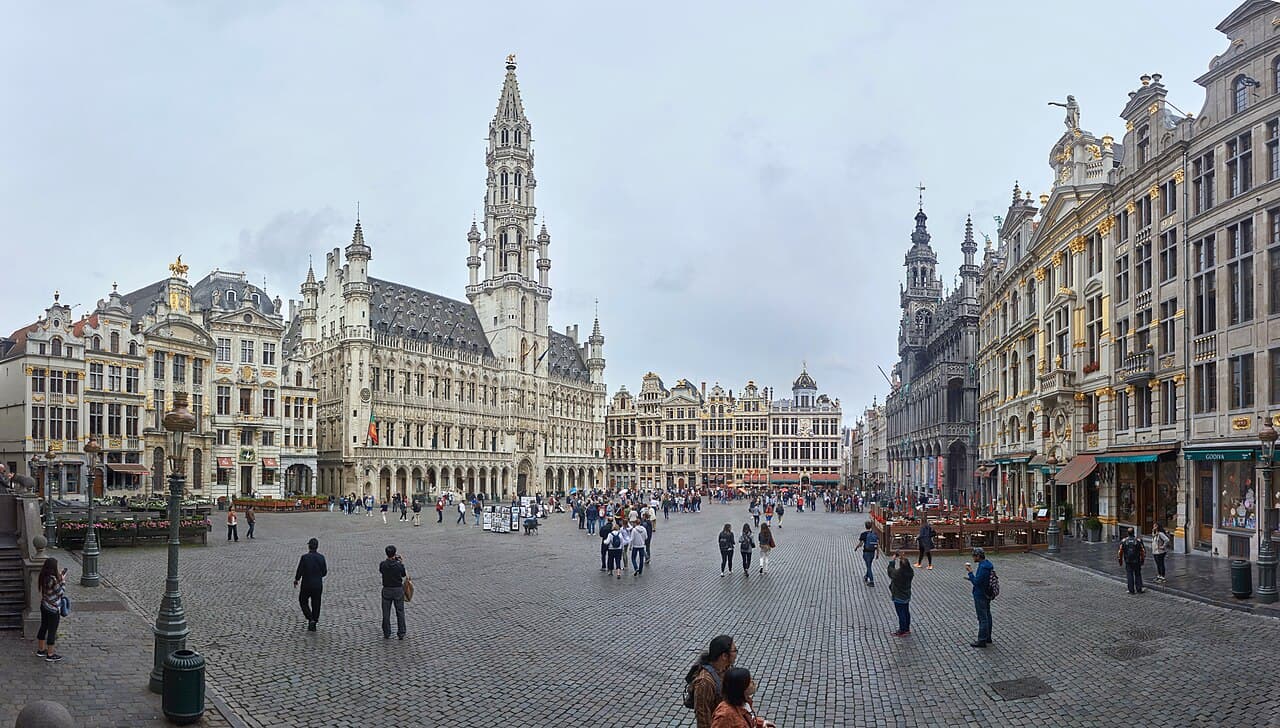
BelgiumPhoto: Celuici / Wikimedia Commons (CC BY-SA 4.0)

Belgium

Country · BE · EUR · Europe/Brussels

This information may change. Always check the official source.Last verified: August 2026 by

Schengen: 90 days in any 180, counted automatically by EES. Once you are in, Belgian law expects you to be able to prove your identity in the street.

  • 90 days in any rolling 180. Not 90 days per visit and not 90 days per country. Every day anywhere in the Schengen area counts against the same allowance.
  • You must be able to prove your identity in a public place. Belgium requires identity and residence documents to be carried, and this applies to foreign nationals, not only to residents.
  • The EU Entry/Exit System has been fully operational since 10 April 2026.
  • ETIAS has not launched and there is no announced launch date.
  • The Schengen short stay visa fee is EUR 90, EUR 45 for children aged 6 to 11.
More details

The Schengen arithmetic

  • 90 days in any rolling 180. Not 90 days per visit and not 90 days per country. Every day anywhere in the Schengen area counts against the same allowance.
  • Belgium is a full Schengen member. Arriving from the Netherlands, France, Germany or Luxembourg involves no check at all, and the land borders are unmarked.
  • The Eurostar from London is different. You clear an external Schengen border in the terminal before you board, so your entry is processed in London, not Brussels.
  • The passport must have been issued within the last 10 years and be valid for 3 months beyond your intended departure.

After you arrive: carry your passport

This is the Belgian rule that surprises people, and it is worth reading twice.

  • You must be able to prove your identity in a public place. Belgium requires identity and residence documents to be carried, and this applies to foreign nationals, not only to residents.
  • The fine runs from EUR 26 to EUR 500.
  • The police may detain a foreign national without documents for up to 24 hours pending a decision by the Immigration Office.
  • The usual travel advice does not apply here. "Leave your passport in the hotel safe and carry a photocopy" is the standard instruction in most of Europe; in Belgium it can leave you unable to satisfy a police check.

EES: no more stamps

  • The EU Entry/Exit System has been fully operational since 10 April 2026.
  • Your face and fingerprints are registered on first entry at a Schengen external border, and reused on later trips.
  • No stamp goes in your passport. The system computes your 90/180 balance itself.
  • Keep your own record of entry and exit dates.

ETIAS: not yet, and no date

  • ETIAS has not launched and there is no announced launch date.
  • Applications are not open. Any website selling you an ETIAS today is a scam.
  • When it comes, the fee is EUR 20, free for under-18s and over-70s. The old EUR 7 figure is obsolete.

Where your nationality lands

Visa and entry in Belgium
You holdWhat you need
Germany, France, Italy, Spain, Netherlands, PolandNothing. EU freedom of movement
USA, Canada, Australia, UK, Japan, South Korea, Malaysia, Singapore, TaiwanNo visa. 90/180, EES registration
China, India, Cambodia, Saudi ArabiaSchengen visa in advance
RussiaSchengen visa in advance, single entry as a rule
  • The Schengen short stay visa fee is EUR 90, EUR 45 for children aged 6 to 11.
Sources (4)

Belgium applies the standard EU allowance, and its ports are among the most heavily screened in Europe.

  • Between EU countries there is no duty-free limit. Goods bought tax-paid in another member state travel with you; customs may only ask what a very large quantity is for, against indicative figures of 800 cigarettes and 10 litres of spirits.
  • Arriving from outside the EU the allowance is one set of numbers: 200 cigarettes, 1 litre of spirits over 22 % (or 2 litres of fortified or sparkling wine), 4 litres of still wine and 16 litres of beer.
  • Other goods are capped by value - EUR 430 arriving by air or sea, EUR 300 by land - and the allowance cannot be pooled between travellers for a single item.
More details
  • Between EU countries there is no duty-free limit. Goods bought tax-paid in another member state travel with you; customs may only ask what a very large quantity is for, against indicative figures of 800 cigarettes and 10 litres of spirits.
  • Arriving from outside the EU the allowance is one set of numbers: 200 cigarettes, 1 litre of spirits over 22 % (or 2 litres of fortified or sparkling wine), 4 litres of still wine and 16 litres of beer.
  • Other goods are capped by value - EUR 430 arriving by air or sea, EUR 300 by land - and the allowance cannot be pooled between travellers for a single item.
  • Cash of EUR 10,000 or more must be declared, counting notes, coins, cheques and prepaid cards together. The money is seized for not declaring it, not for carrying it.
  • Antwerp and Zeebrugge are the EU's front line for smuggling checks, which raises the chance that an ordinary traveller's bag is opened at the ferry terminal.
Sources (1)

Excellent healthcare on a reimbursement model: you generally pay the doctor and claim it back, even with an EHIC.

  • EU and EEA visitors: carry your EHIC. UK visitors: the GHIC does the same job. Neither is travel insurance.
  • Belgium reimburses rather than exempts. Unlike the UK or Spain, you will often pay the doctor or pharmacy in full and claim the money back, either at the time or after you get home. Bring a card with room on it and keep every receipt.
  • Belgian healthcare is among the best in Europe and waiting times are short by European standards.
  • You can walk into most GP practices without being registered, which is unusual and useful.
  • Tap water is safe everywhere in Belgium.
More details

Cover

  • EU and EEA visitors: carry your EHIC. UK visitors: the GHIC does the same job. Neither is travel insurance.
  • Belgium reimburses rather than exempts. Unlike the UK or Spain, you will often pay the doctor or pharmacy in full and claim the money back, either at the time or after you get home. Bring a card with room on it and keep every receipt.
  • Travel insurance still matters for repatriation, private clinics and anything the state system does not cover.

Quality and access

  • Belgian healthcare is among the best in Europe and waiting times are short by European standards.
  • You can walk into most GP practices without being registered, which is unusual and useful.
  • Hospital emergency departments (urgences/spoed) handle serious cases. For minor problems a GP or pharmacist is quicker and much cheaper.
  • Pharmacies (apotheek/pharmacie) are everywhere and pharmacists advise on minor complaints. There is a duty rota for nights and weekends, posted on the door.

Everyday

  • Tap water is safe everywhere in Belgium.
  • No vaccinations are required for entry.
  • Bring enough prescription medicine for the trip plus a margin, in original packaging with a copy of the prescription.
Sources (2)

Brussels

Long-term averages for Brussels: the mean daily high, the mean overnight low and the mean monthly rainfall across 30 years of ERA5 reanalysis data (1995–2024).

DayNight
0510152025°C0100mmJanFebMarAprMayJunJulAugSepOctNovDecJanuary: Day 6 °C, Night 1 °C, Rain 65 mm. February: Day 8 °C, Night 2 °C, Rain 64 mm. March: Day 11 °C, Night 3 °C, Rain 60 mm. April: Day 14 °C, Night 5 °C, Rain 47 mm. May: Day 18 °C, Night 9 °C, Rain 66 mm. June: Day 21 °C, Night 12 °C, Rain 68 mm. July: Day 22 °C, Night 14 °C, Rain 73 mm. August: Day 23 °C, Night 14 °C, Rain 70 mm. September: Day 19 °C, Night 12 °C, Rain 56 mm. October: Day 15 °C, Night 9 °C, Rain 63 mm. November: Day 10 °C, Night 5 °C, Rain 66 mm. December: Day 7 °C, Night 2 °C, Rain 73 mm
Show the monthly table
Brussels
MonthDay (°C)Night (°C)Rain (mm)
January6165
February8264
March11360
April14547
May18966
June211268
July221473
August231470
September191256
October15963
November10566
December7273

Bruges

Long-term averages for Bruges: the mean daily high, the mean overnight low and the mean monthly rainfall across 30 years of ERA5 reanalysis data (1995–2024).

DayNight
0510152025°C0100mmJanFebMarAprMayJunJulAugSepOctNovDecJanuary: Day 6 °C, Night 2 °C, Rain 66 mm. February: Day 8 °C, Night 3 °C, Rain 55 mm. March: Day 10 °C, Night 4 °C, Rain 56 mm. April: Day 13 °C, Night 6 °C, Rain 46 mm. May: Day 16 °C, Night 9 °C, Rain 62 mm. June: Day 19 °C, Night 12 °C, Rain 60 mm. July: Day 21 °C, Night 15 °C, Rain 66 mm. August: Day 22 °C, Night 15 °C, Rain 75 mm. September: Day 19 °C, Night 13 °C, Rain 64 mm. October: Day 15 °C, Night 10 °C, Rain 74 mm. November: Day 10 °C, Night 6 °C, Rain 76 mm. December: Day 7 °C, Night 3 °C, Rain 76 mm
Show the monthly table
Bruges
MonthDay (°C)Night (°C)Rain (mm)
January6266
February8355
March10456
April13646
May16962
June191260
July211566
August221575
September191364
October151074
November10676
December7376

Antwerp

Long-term averages for Antwerp: the mean daily high, the mean overnight low and the mean monthly rainfall across 30 years of ERA5 reanalysis data (1995–2024).

DayNight
0510152025°C0100mmJanFebMarAprMayJunJulAugSepOctNovDecJanuary: Day 6 °C, Night 1 °C, Rain 67 mm. February: Day 8 °C, Night 2 °C, Rain 63 mm. March: Day 10 °C, Night 3 °C, Rain 59 mm. April: Day 14 °C, Night 5 °C, Rain 46 mm. May: Day 18 °C, Night 9 °C, Rain 69 mm. June: Day 21 °C, Night 12 °C, Rain 69 mm. July: Day 22 °C, Night 14 °C, Rain 77 mm. August: Day 23 °C, Night 14 °C, Rain 73 mm. September: Day 19 °C, Night 12 °C, Rain 59 mm. October: Day 15 °C, Night 9 °C, Rain 66 mm. November: Day 10 °C, Night 5 °C, Rain 67 mm. December: Day 7 °C, Night 2 °C, Rain 73 mm
Show the monthly table
Antwerp
MonthDay (°C)Night (°C)Rain (mm)
January6167
February8263
March10359
April14546
May18969
June211269
July221477
August231473
September191259
October15966
November10567
December7273
Sources (1)

City tax on top of the rate, and a Brussels calendar dominated by EU business weeks that swing prices violently.

  • A city tourist tax applies on top of the room rate in Brussels and most Belgian cities, charged per person per night. It is often not included in the price you booked online.
  • Ask whether it is included when you book, so the bill at checkout is not a surprise.
  • Brussels is a business city first. Hotel prices peak midweek when the EU institutions and the lobbying industry are working, and fall sharply at weekends.
  • A Saturday night in Brussels is often cheaper than a Tuesday - the reverse of nearly everywhere else in Europe.
  • You will be asked for your passport at check-in. Belgium registers guests, and given the general obligation to carry identity documents this is not the moment to have left it at home.
More details

What you will be charged

  • A city tourist tax applies on top of the room rate in Brussels and most Belgian cities, charged per person per night. It is often not included in the price you booked online.
  • Ask whether it is included when you book, so the bill at checkout is not a surprise.

The Brussels rhythm

  • Brussels is a business city first. Hotel prices peak midweek when the EU institutions and the lobbying industry are working, and fall sharply at weekends.
  • A Saturday night in Brussels is often cheaper than a Tuesday - the reverse of nearly everywhere else in Europe.
  • Bruges and Ghent invert this, filling at weekends and in summer.

Practicalities

  • You will be asked for your passport at check-in. Belgium registers guests, and given the general obligation to carry identity documents this is not the moment to have left it at home.
  • Bruges is very small and very popular. Book months ahead in summer, or stay in Ghent - twenty minutes away by train, larger, cheaper and with a student population that keeps it alive in the evenings.
  • Breakfast is frequently not included at the cheaper end in Brussels, and the difference is significant.
Sources (2)

EU visitors need nothing. Everyone else chooses between a prepaid SIM from Proximus, Orange Belgium or Telenet/BASE and an eSIM bought before landing.

  • Roam-like-at-home applies. A SIM from any EU or EEA country works in Belgium at your domestic rates. Buying anything local is money wasted.
  • Three networks cover the country: Proximus, Orange Belgium and Telenet. You will see BASE on the high street more often than Telenet - it is Telenet's consumer brand, running on the same network, not a fourth operator. Coverage is essentially universal; Belgium is small, flat and dense.
  • An eSIM is live before you land and avoids the shop entirely, which on a two- or three-day city break is the whole argument.
  • Wi-fi is universal in cafes, hotels and stations, and free on many trains.
More details

If you have an EU plan, stop reading

  • Roam-like-at-home applies. A SIM from any EU or EEA country works in Belgium at your domestic rates. Buying anything local is money wasted.
  • UK plans are not covered any more. Several UK networks reintroduced EU roaming charges after Brexit - check yours before you land.

Local prepaid SIM

  • Three networks cover the country: Proximus, Orange Belgium and Telenet. You will see BASE on the high street more often than Telenet - it is Telenet's consumer brand, running on the same network, not a fourth operator. Coverage is essentially universal; Belgium is small, flat and dense.
  • Prepaid SIMs are sold in operator shops, supermarkets and phone shops across the cities and at Brussels Airport.
  • Registration is required. Bring your passport; a Belgian prepaid SIM must be linked to an identified person, which fits the general Belgian attitude to identity documents.

eSIM

  • An eSIM is live before you land and avoids the shop entirely, which on a two- or three-day city break is the whole argument.
  • Check your phone supports one before buying.

Practical points

  • Wi-fi is universal in cafes, hotels and stations, and free on many trains.
  • Keep your home number reachable for two-factor codes. Banking apps that text a code to your home number stop working if you swap your only SIM out.
  • Belgium is three language communities. Network shop staff will speak Dutch in Flanders, French in Wallonia, both in Brussels - and English almost everywhere in the cities.
Sources (3)

Belgian sockets are Type at 230 V with the earth pin standing out of the wall, so a bare Schuko plug will not enter.

  • A Europlug fits everywhere, which covers phone and laptop chargers.
  • A bare Schuko plug from the Netherlands or Germany does not fit. The hybrid CEE 7/7 plug on most appliance leads does, but an old extension lead brought across the border may not.
  • British, American and Australian plugs need an adapter.
  • Some areas run a 230 V three-phase supply with no neutral, which appliances handle but which is why a few devices behave oddly on cheap adapters.
  • 230 V, so only American 120 V-only equipment needs a converter.
More details

Sockets in Belgium are Type and at 230 V, 50 Hz - the French pattern, where the earth is a pin projecting from the socket.

  • A Europlug fits everywhere, which covers phone and laptop chargers.
  • A bare Schuko plug from the Netherlands or Germany does not fit. The hybrid CEE 7/7 plug on most appliance leads does, but an old extension lead brought across the border may not.
  • British, American and Australian plugs need an adapter.
  • Some areas run a 230 V three-phase supply with no neutral, which appliances handle but which is why a few devices behave oddly on cheap adapters.
  • 230 V, so only American 120 V-only equipment needs a converter.
Sources (1)

Three official languages with hard geographic borders, type sockets, and a country where which language you open with is a real decision.

  • Belgium has three official languages - Dutch in Flanders (the north), French in Wallonia (the south), German in a small eastern area. Brussels is officially bilingual Dutch and French.
  • The language border is real and it is political. Speaking French in Flanders can land badly; speaking Dutch in Wallonia is simply not understood.
  • 230 V, 50 Hz, socket type - the French style with a protruding earth pin on the socket.
  • Type plugs fit; type (Schuko) usually does too but not always, because the earth pin can foul the plug. If you have a German-style plug, a cheap adapter is worth carrying.
  • Shops generally close on Sundays outside tourist areas, and many close for lunch in smaller towns.
More details

Language: the thing to get right

  • Belgium has three official languages - Dutch in Flanders (the north), French in Wallonia (the south), German in a small eastern area. Brussels is officially bilingual Dutch and French.
  • The language border is real and it is political. Speaking French in Flanders can land badly; speaking Dutch in Wallonia is simply not understood.
  • English is the safe opener for a visitor. It is widely spoken, carries no baggage, and nobody expects a foreigner to pick a side.
  • Place names change with the language. Bergen is Mons, Luik is Liege, Rijsel is Lille, Doornik is Tournai. Road signs switch as you cross the language border and do not always give both, which is how drivers get lost.

Power

  • 230 V, 50 Hz, socket type - the French style with a protruding earth pin on the socket.
  • Type plugs fit; type (Schuko) usually does too but not always, because the earth pin can foul the plug. If you have a German-style plug, a cheap adapter is worth carrying.
  • UK, US, Irish and Australian plugs need an adapter.

Practicalities

  • Shops generally close on Sundays outside tourist areas, and many close for lunch in smaller towns.
  • Restaurants serve dinner from about 19:00 and kitchens close earlier than in southern Europe.
  • Chips are a national institution and come from a friterie/frituur, with mayonnaise, and they are not French.
  • Belgians are formal with strangers. Use "bonjour" or "goedendag" on entering a shop; not greeting is read as rude.
Sources (2)

Euro, cards everywhere, and a card network of its own that occasionally refuses foreign cards in small shops.

  • Belgium uses the euro and has since the start.
  • Cards are accepted nearly everywhere, contactless is standard, and cash is increasingly a minority choice.
  • Belgium has its own domestic card scheme, Bancontact. Most terminals take international Visa and Mastercard as well, but not all of them do.
  • Always refuse the machine's offer to charge you in your own currency. Dynamic currency conversion costs several per cent every time, and the offer is phrased to sound helpful. Choose euro.
  • Service is included in restaurant bills by law. Rounding up or leaving five per cent for good service is normal, ten is generous.
More details

The currency

  • Belgium uses the euro and has since the start.
  • Cards are accepted nearly everywhere, contactless is standard, and cash is increasingly a minority choice.

The Bancontact quirk

  • Belgium has its own domestic card scheme, Bancontact. Most terminals take international Visa and Mastercard as well, but not all of them do.
  • Small independent shops, bakeries, market stalls and some cafes are Bancontact-only. A foreign card is simply declined, with no warning until you try.
  • Carry a modest amount of cash for exactly this. It is the one reason you still need notes in a country that otherwise runs on plastic.

ATMs

  • Always refuse the machine's offer to charge you in your own currency. Dynamic currency conversion costs several per cent every time, and the offer is phrased to sound helpful. Choose euro.
  • Bank ATMs are being consolidated. Belgian banks have moved to shared "Batopin" cash points, which are grouped rather than sitting outside every branch - so plan to withdraw when you see one rather than assuming there is another round the corner.
  • Withdraw larger amounts less often if your bank charges a flat fee.

Tipping

  • Service is included in restaurant bills by law. Rounding up or leaving five per cent for good service is normal, ten is generous.
  • Toilets often charge, typically small change, including in stations and some restaurants. Keep coins.
Sources (2)

Everyday prices

Typical prices in euro (EUR), averaged across the country by Numbeo and read on 19 August 2026. Tick Convert prices above the table to see every amount in your own currency.

Everyday prices
ItemTypical price
Inexpensive restaurant meal20 EUR
Dinner for two, mid-range, three courses80 EUR
Cappuccino3.71 EUR
Local draught beer, 0.5 l5.00 EUR
Bottled water, 0.33 l2.64 EUR
Public transport, one-way ticket2.80 EUR
Taxi, starting fare5.00 EUR
Petrol, 1 litre1.71 EUR
Cigarettes, pack of 20 (Marlboro)12 EUR
Average net monthly salary2,650 EUR

These are country-wide averages, not a price list: tourist districts, airports and islands sit well above them, and small towns below. The salary line is there for proportion - it is what people living here actually earn.

Sources (1)

Airport guides for Belgium2

One page per airport: the routes into town, what they cost and the trap particular to that arrival.

See all 2 airports

Every train to and from Brussels Airport carries a compulsory supplement that roughly doubles the fare. And "Brussels South Charleroi" is about 50 km from Brussels.

  • The station is under the terminal and the train reaches Brussels-Central in about 17 minutes, with departures every ten to fifteen minutes. As an airport link it is genuinely excellent.
  • Every ticket carries the Diabolo fee. SNCB adds a compulsory supplement to every rail journey to or from Brussels Airport, on top of the ordinary fare, to pay for the dedicated tunnel. It is not optional, it is not a first-class extra, and it applies to season tickets and rail passes too.
  • It is about 50 km south of Brussels, in Wallonia. Ryanair and Wizz Air sell it as Brussels.
  • Brussels transport is STIB, one integrated system of metro, tram and bus.
More details
Brussels Airport (BRU), Zaventem
  • The station is under the terminal and the train reaches Brussels-Central in about 17 minutes, with departures every ten to fifteen minutes. As an airport link it is genuinely excellent.
  • Every ticket carries the Diabolo fee. SNCB adds a compulsory supplement to every rail journey to or from Brussels Airport, on top of the ordinary fare, to pay for the dedicated tunnel. It is not optional, it is not a first-class extra, and it applies to season tickets and rail passes too.
  • The practical effect is that a 17-minute ride costs more than an hour's journey elsewhere in Belgium. Nothing is wrong with your ticket machine.
  • Check the current supplement on SNCB's own page before you budget - it has been raised repeatedly and the figures circulating in guides disagree with each other.
  • The airport bus is cheaper, but not on an ordinary ticket. STIB's airport line (bus 12 on weekday daytimes, 21 evenings and weekends) runs to Schuman and the EU quarter - and leaving the airport you need an Airport2City ticket, EUR 7.90 contactless or on a MOBIB card, EUR 8.40 on paper. An ordinary STIB ticket is only valid in the other direction, towards the airport.
  • So it saves a few euro over the train, not a fraction of it, and it takes considerably longer. Your Airport2City ticket then covers metro, tram and bus connections for an hour after you validate it.
Brussels South Charleroi Airport (CRL) is not in Brussels
  • It is about 50 km south of Brussels, in Wallonia. Ryanair and Wizz Air sell it as Brussels.
  • The Flibco shuttle runs to Brussels-Midi, the city's main international station, roughly every 20 to 30 minutes through the day.
  • Reckon on an hour for the transfer, and buy online rather than at the desk.
  • Brussels-Midi is where the Eurostar and the Thalys go from, so the shuttle drops you somewhere genuinely useful if you are travelling on.
Getting into town from Brussels-Midi or Central
  • Brussels transport is STIB, one integrated system of metro, tram and bus.
  • A single journey on Brupass is EUR 2.70; buying through the GO app costs EUR 2.30, and paying the driver in cash EUR 2.60.
  • Brupass XL at EUR 3.60 extends beyond the city boundary, which is what you need for some suburban destinations.
  • A MOBIB card costs EUR 6 and is the reusable card that season tickets and multi-journey fares load onto - worth it only if you are staying a while.
Sources (5)

The country is small enough that the train solves almost everything, and the three regions each run their own buses under different names.

  • SNCB (NMBS in Dutch) runs everything and Belgium is small: Brussels to Bruges is about an hour, Brussels to Antwerp about forty minutes, Brussels to Liege under an hour.
  • Fares rose on 1 February 2026 in line with the consumer price index, so older printed figures are slightly low.
  • De Lijn in Flanders - Bruges, Ghent, Antwerp, Leuven.
  • The Kusttram along the coast is the longest tram line in the world, running the length of the Belgian coast from De Panne to Knokke. It is a genuine means of transport rather than a novelty.
  • Flanders is flat and comprehensively signposted, with a numbered node network that makes route-finding trivial.
More details

Trains

  • SNCB (NMBS in Dutch) runs everything and Belgium is small: Brussels to Bruges is about an hour, Brussels to Antwerp about forty minutes, Brussels to Liege under an hour.
  • Fares rose on 1 February 2026 in line with the consumer price index, so older printed figures are slightly low.
  • You rarely need to book ahead. Domestic tickets are not yield-priced the way Eurostar is; turn up and travel.
  • Weekend return tickets are substantially discounted, which is worth knowing if your trip spans a Saturday.
  • Validate nothing - Belgian domestic tickets are checked on board, not at a gate.

The three bus networks

Belgium's regions run their own operators and their tickets do not interchange:

  • De Lijn in Flanders - Bruges, Ghent, Antwerp, Leuven.
  • TEC in Wallonia - Liege, Namur, Charleroi, Mons.
  • STIB/MIVB in Brussels.
  • Brupass is the exception and is the thing to buy in Brussels: it covers STIB plus the De Lijn, TEC and SNCB stops inside the city.

Trams

  • The Kusttram along the coast is the longest tram line in the world, running the length of the Belgian coast from De Panne to Knokke. It is a genuine means of transport rather than a novelty.
  • Ghent and Antwerp have extensive tram networks and they are the sensible way around both cities.

Cycling

  • Flanders is flat and comprehensively signposted, with a numbered node network that makes route-finding trivial.
  • Bike hire is available at most stations. Blue-bike operates from railway stations nationally.
  • Wallonia is hilly and a different proposition entirely.
Sources (3)

Belgian motorways are free, priority from the right still applies, and Brussels and Antwerp charge older cars to enter.

  • Priority from the right is the default. At an unmarked junction, the car coming from your right goes first even from a minor road. Belgian drivers use it.
  • Brussels, Antwerp and Ghent have low-emission zones. Foreign-registered cars must register online before entering, and the fine for not doing so is automatic.
  • The alcohol limit is 0.5 g/l, and 0.2 g/l for professional drivers.
  • Motorways are free and, unusually, much of the network is lit at night.
  • The Liefkenshoek tunnel at Antwerp is the one toll on the network.
More details

Free motorways, low-emission zones in the big cities, and a priority rule that has caused more visitor accidents than any other in Europe.

  • Priority from the right is the default. At an unmarked junction, the car coming from your right goes first even from a minor road. Belgian drivers use it.
  • Brussels, Antwerp and Ghent have low-emission zones. Foreign-registered cars must register online before entering, and the fine for not doing so is automatic.
  • The alcohol limit is 0.5 g/l, and 0.2 g/l for professional drivers.
  • Motorways are free and, unusually, much of the network is lit at night.
  • The Liefkenshoek tunnel at Antwerp is the one toll on the network.
Sources (1)

A safe country with a serious pickpocketing problem concentrated in Brussels stations, the metro at night and the Grand Place.

  • Brussels-Central and Brussels-Midi stations are the hotspots, along with the Grand Place, the Atomium and the metro at night.
  • Thieves work in groups and use distraction - bumping into you on a busy street, a spilled drink, a map held out for help.
  • You must be able to prove your identity in a public place - fines run from EUR 26 to EUR 500, and a foreign national without documents may be held up to 24 hours.
  • This cuts against the usual anti-theft advice. The compromise most visitors settle on is carrying the passport in a secure inside pocket rather than a bag, so it is on you but not easily lifted.
  • Violent crime against visitors is rare and Belgium is a low-risk country overall.
More details

Pickpocketing is the real risk

  • Brussels-Central and Brussels-Midi stations are the hotspots, along with the Grand Place, the Atomium and the metro at night.
  • Thieves work in groups and use distraction - bumping into you on a busy street, a spilled drink, a map held out for help.
  • Brussels-Midi has a poor reputation after dark. It is the Eurostar station and the area immediately outside it is not where to wander with luggage late at night.
  • Carry a small amount of cash and only the cards you need. Keep bags closed and in front of you on the metro.

The ID rule again

  • You must be able to prove your identity in a public place - fines run from EUR 26 to EUR 500, and a foreign national without documents may be held up to 24 hours.
  • This cuts against the usual anti-theft advice. The compromise most visitors settle on is carrying the passport in a secure inside pocket rather than a bag, so it is on you but not easily lifted.

Everything else

  • Violent crime against visitors is rare and Belgium is a low-risk country overall.
  • Demonstrations happen in Brussels regularly, particularly in the European quarter and around Gare du Nord. They are usually peaceful; walk away from any that is not.
  • Traffic is the underrated danger. Belgian drivers have a poor European road-safety record, and the priority-to-the-right rule at unmarked junctions catches out visitors who assume a main road has priority. It usually does not.
Sources (2)

112 for ambulance and fire, 101 for police, and an official app that sends your location to the emergency services.

  • 112 works from any phone, free, with no credit and no SIM. Operators handle English, and in Brussels also French, Dutch and German.
  • 101 is the police number and Belgium keeps it separate from 112. Either will get you help; 101 is faster for a purely police matter.
  • Report a theft to the police and get a written record. No insurer pays without one, and Brussels police stations issue them routinely because they see so many.
  • A lost passport means the police first, then your embassy - and given the obligation to carry identity documents, replacing it promptly matters more here than elsewhere.
  • Save 112 and 101 in your phone now.
More details

The numbers

Emergency numbers in Belgium
ServiceNumber
Ambulance and fire112
Police101
Any emergency, from a foreign phone112
European emergency, all services112
  • 112 works from any phone, free, with no credit and no SIM. Operators handle English, and in Brussels also French, Dutch and German.
  • 101 is the police number and Belgium keeps it separate from 112. Either will get you help; 101 is faster for a purely police matter.
  • The 112 BE app is worth installing. It sends your exact location to the emergency services when you call, which matters if you cannot describe where you are - and Belgian street names come in two languages.

If you need help

  • Report a theft to the police and get a written record. No insurer pays without one, and Brussels police stations issue them routinely because they see so many.
  • A lost passport means the police first, then your embassy - and given the obligation to carry identity documents, replacing it promptly matters more here than elsewhere.
  • Your embassy cannot pay your bills or get you out of jail, but it can issue emergency travel documents and provide lists of lawyers and doctors.

Before you need them

  • Save 112 and 101 in your phone now.
  • Note your accommodation's address in the local language - the Dutch and French versions of a Brussels street name are different words, and an operator needs one of them.
Sources (2)