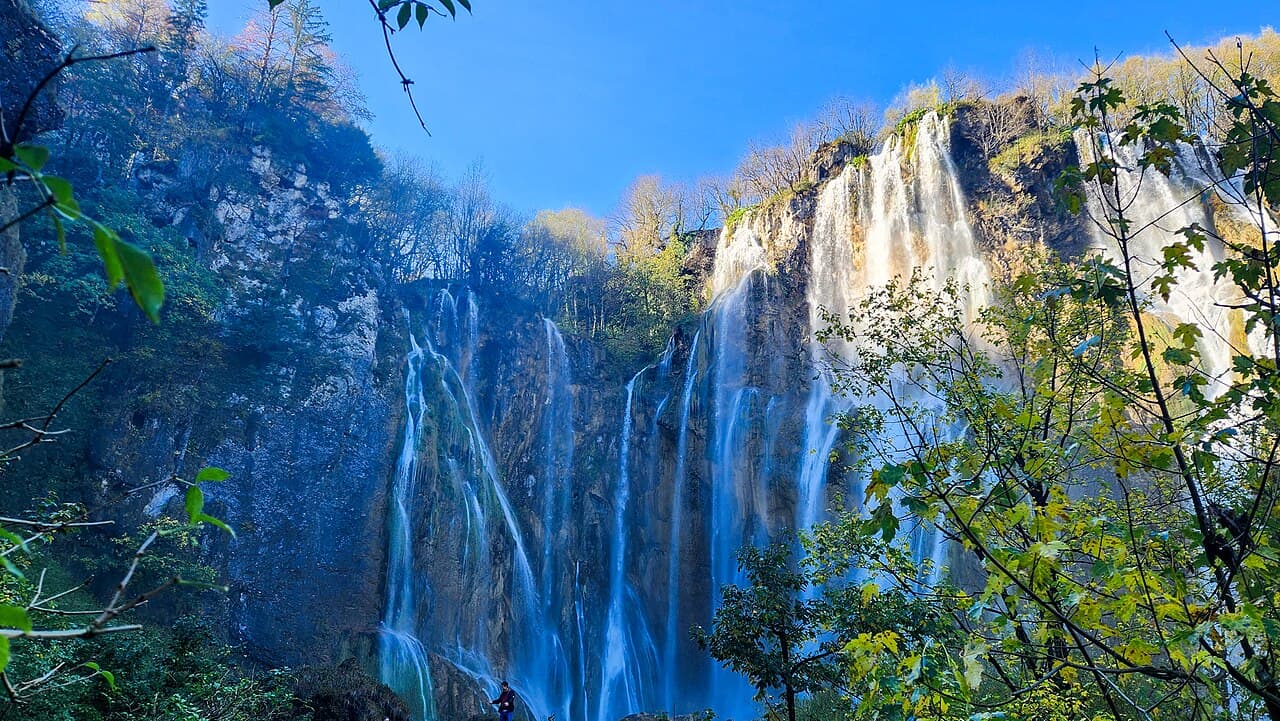
CroatiaPhoto: OrionCro / Wikimedia Commons (CC BY-SA 4.0)

Croatia

Country · HR · EUR · Europe/Zagreb

This information may change. Always check the official source.Last verified: August 2026 by

Croatia has been in Schengen since 1 January 2023, so your 90 days are shared with the rest of Europe. The land borders with Bosnia and Montenegro are external Schengen borders and now take your fingerprints.

  • Croatia has been in Schengen since 1 January 2023, so your 90 days in any 180 are shared with the rest of Europe - time in Italy, Austria or Slovenia counts against the same allowance.
  • Bosnia, Montenegro and Serbia are outside Schengen. Days there do not count, but every crossing back into Croatia is an external border crossing.
  • The Entry/Exit System has been live since 10 April 2026: facial image and fingerprints on your first crossing, and no more passport stamps to count.
  • Land crossings from Bosnia and Montenegro are where you feel it - allow well over an hour at Karasovici or Nova Sela on a summer weekend.
  • ETIAS is not running. The Q4 2026 target was withdrawn in July 2026, so guidance telling you to apply this autumn is out of date; it will cost EUR 20 when it launches.
More details

Schengen since 2023

Croatia joined the Schengen area on 1 January 2023, the same day it adopted the euro, and that changed the arithmetic of a Balkan trip.

  • 90 days in any rolling 180 days, counted across the whole Schengen area, not per country.
  • Time in Italy, Austria, Germany or Slovenia counts against the same allowance.
  • Bosnia and Herzegovina, Montenegro and Serbia are outside Schengen. Days there do not count, but each crossing back into Croatia is an external border crossing.
  • The Neum corridor is the odd one out. The coast road from Split to Dubrovnik passes through 9 km of Bosnia, so you leave and re-enter Schengen twice. The Peljesac Bridge avoids it entirely and most traffic now uses the bridge.

No stamps since April 2026

The Entry/Exit System has been fully operational since 10 April 2026.

  • Your facial image and fingerprints are recorded on your first crossing, and children under 12 give no fingerprints.
  • Manual passport stamping has ended. There is nothing to count in your passport now.
  • Land crossings from Bosnia and Montenegro are where you will feel this, especially in August. Allow well over an hour at Karasovici or Nova Sela on a summer weekend.
  • Keep your own note of entry and exit dates, because the database is now the only record and you cannot see it.

ETIAS is not running

  • The official EU site says ETIAS is not in operation and no applications are being collected.
  • The Q4 2026 target was withdrawn in July 2026, so guidance telling you to apply this autumn is out of date.
  • It will cost EUR 20 when it eventually launches, for visa-free visitors aged 18 to 70.

Where your nationality lands

Visa and entry in Croatia
You holdWhat you need
Germany, France, Italy, Spain, Netherlands, PolandNothing. Free movement, no day limit
USA, Canada, Australia, UK, Japan, South Korea, Malaysia, Singapore, TaiwanNo visa. 90 days in any 180
China, India, Russia, Saudi Arabia, CambodiaSchengen visa in advance
  • The Schengen visa fee rose to EUR 90 on 11 June 2026.
  • Apply to Croatia if it is your main destination. Croatian consulates issue standard Schengen visas valid across the area.
  • Russian applicants in Russia are now issued single-entry visas as a rule, following the Commission's decision of 7 November 2025.
  • A national ID card is enough for EU citizens. Everyone else needs a passport valid 3 months beyond departure and issued within the last 10 years.

Arriving by boat

  • Yachts must clear in at a port of entry and the skipper reports crew and guests. This is enforced.
  • Cruise passengers are processed as a group and the ship handles the paperwork.
  • The ferry from Italy counts as an internal Schengen crossing, so it is straightforward.
Sources (3)

Croatia applies the EU's lower 40-cigarette limit to arrivals by road and sea, which covers the Bosnian and Serbian borders.

  • Between EU countries there is no duty-free limit. Goods bought tax-paid in another member state travel with you; customs may only ask what a very large quantity is for, against indicative figures of 800 cigarettes and 10 litres of spirits.
  • The tobacco allowance is the lower one for land and sea arrivals: 40 cigarettes rather than 200. The rest of the allowance is the EU standard - 1 litre of spirits over 22 % (or 2 litres of fortified or sparkling wine), 4 litres of still wine and 16 litres of beer.
  • Other goods are capped by value - EUR 430 arriving by air or sea, EUR 300 by land - and the allowance cannot be pooled between travellers for a single item.
More details
  • Between EU countries there is no duty-free limit. Goods bought tax-paid in another member state travel with you; customs may only ask what a very large quantity is for, against indicative figures of 800 cigarettes and 10 litres of spirits.
  • The tobacco allowance is the lower one for land and sea arrivals: 40 cigarettes rather than 200. The rest of the allowance is the EU standard - 1 litre of spirits over 22 % (or 2 litres of fortified or sparkling wine), 4 litres of still wine and 16 litres of beer.
  • Other goods are capped by value - EUR 430 arriving by air or sea, EUR 300 by land - and the allowance cannot be pooled between travellers for a single item.
  • Cash of EUR 10,000 or more must be declared, counting notes, coins, cheques and prepaid cards together. The money is seized for not declaring it, not for carrying it.
  • The Bosnian and Serbian crossings are external EU borders, and the coastal route to Dubrovnik no longer passes through Neum since the Peljesac bridge opened.
Sources (1)

The EHIC covers state treatment and the standard is good. What it does not cover is a boat ride off an island or a private clinic, which is what the coast is full of.

  • EU, EEA and Swiss visitors bring the EHIC, UK visitors a GHIC, which gives state treatment on the same terms as a Croatian, with a small participation charge.
  • The EHIC is worthless in a private clinic, and the coast is full of them - check whether the sign says "dom zdravlja" or a private name.
  • Small islands have a doctor, not a hospital. Anything serious means a boat or helicopter transfer to Split, Zadar, Rijeka or Dubrovnik, and in bad weather it means waiting.
  • That island transfer is the real argument for travel insurance in Croatia, more than any disease risk - check the policy covers repatriation.
  • Tap water is safe and good throughout, islands included. Tick-borne encephalitis exists in inland forested areas but is not a coastal concern.
More details

Cover

  • EU, EEA and Swiss visitors: bring the EHIC. UK visitors use the GHIC. Both give you state treatment on the same terms as a Croatian.
  • A small participation charge applies to some treatment, as it does for locals.
  • Everyone else needs travel insurance. So does anyone planning to use a private clinic.
  • Private clinics are everywhere on the coast and will treat you fast for cash. The EHIC is worthless there, so check whether the sign says "dom zdravlja" (state) or a private name.

The island problem

  • Small islands have a doctor, not a hospital. Anything serious means a transfer to Split, Zadar, Rijeka or Dubrovnik.
  • Transfer can mean a boat or a helicopter, and in bad weather it means waiting.
  • This is the argument for real travel insurance in Croatia, more than any disease risk.
  • Check your policy covers repatriation, because the coast is a long way from home by ambulance.

Pharmacies

  • "Ljekarna" with a green cross. Well stocked, and pharmacists usually speak some English.
  • Every larger town has a duty pharmacy open at nights and weekends, posted on the door of the closed ones.
  • Bring your own regular medication with the prescription.

Practical risks

  • Tap water is safe and good throughout the country, including on the islands.
  • The summer sun is fierce and the sea breeze hides it. Croatian July heat regularly passes 35 °C.
  • Tick-borne encephalitis exists in inland forested areas, mainly the continental north. Not a coastal concern.
  • Sea urchin spines need removing properly. A pharmacy will help.
  • Mosquitoes are a nuisance in the Neretva delta and around Zagreb rather than a health risk.
  • 112 gets you an ambulance and reaches an English-speaking operator.
Sources (3)

Zagreb

Long-term averages for Zagreb: the mean daily high, the mean overnight low and the mean monthly rainfall across 30 years of ERA5 reanalysis data (1995–2024).

DayNight
-551525°C0200mmJanFebMarAprMayJunJulAugSepOctNovDecJanuary: Day 5 °C, Night -2 °C, Rain 57 mm. February: Day 8 °C, Night -1 °C, Rain 56 mm. March: Day 12 °C, Night 2 °C, Rain 59 mm. April: Day 17 °C, Night 6 °C, Rain 68 mm. May: Day 21 °C, Night 11 °C, Rain 93 mm. June: Day 25 °C, Night 15 °C, Rain 81 mm. July: Day 28 °C, Night 17 °C, Rain 79 mm. August: Day 27 °C, Night 17 °C, Rain 82 mm. September: Day 22 °C, Night 13 °C, Rain 102 mm. October: Day 17 °C, Night 8 °C, Rain 75 mm. November: Day 11 °C, Night 4 °C, Rain 80 mm. December: Day 5 °C, Night -1 °C, Rain 68 mm
Show the monthly table
Zagreb
MonthDay (°C)Night (°C)Rain (mm)
January5-257
February8-156
March12259
April17668
May211193
June251581
July281779
August271782
September2213102
October17875
November11480
December5-168

Split

Long-term averages for Split: the mean daily high, the mean overnight low and the mean monthly rainfall across 30 years of ERA5 reanalysis data (1995–2024).

DayNight
051015202530°C0250mmJanFebMarAprMayJunJulAugSepOctNovDecJanuary: Day 10 °C, Night 4 °C, Rain 137 mm. February: Day 11 °C, Night 4 °C, Rain 110 mm. March: Day 14 °C, Night 6 °C, Rain 105 mm. April: Day 17 °C, Night 10 °C, Rain 100 mm. May: Day 22 °C, Night 14 °C, Rain 81 mm. June: Day 27 °C, Night 18 °C, Rain 45 mm. July: Day 30 °C, Night 21 °C, Rain 24 mm. August: Day 30 °C, Night 21 °C, Rain 49 mm. September: Day 25 °C, Night 17 °C, Rain 114 mm. October: Day 20 °C, Night 13 °C, Rain 124 mm. November: Day 15 °C, Night 9 °C, Rain 230 mm. December: Day 11 °C, Night 5 °C, Rain 182 mm
Show the monthly table
Split
MonthDay (°C)Night (°C)Rain (mm)
January104137
February114110
March146105
April1710100
May221481
June271845
July302124
August302149
September2517114
October2013124
November159230
December115182

Dubrovnik

Long-term averages for Dubrovnik: the mean daily high, the mean overnight low and the mean monthly rainfall across 30 years of ERA5 reanalysis data (1995–2024).

DayNight
51015202530°C0500mmJanFebMarAprMayJunJulAugSepOctNovDecJanuary: Day 11 °C, Night 5 °C, Rain 181 mm. February: Day 12 °C, Night 5 °C, Rain 164 mm. March: Day 14 °C, Night 7 °C, Rain 152 mm. April: Day 17 °C, Night 10 °C, Rain 133 mm. May: Day 22 °C, Night 15 °C, Rain 102 mm. June: Day 26 °C, Night 19 °C, Rain 63 mm. July: Day 29 °C, Night 21 °C, Rain 39 mm. August: Day 29 °C, Night 21 °C, Rain 58 mm. September: Day 24 °C, Night 17 °C, Rain 150 mm. October: Day 20 °C, Night 14 °C, Rain 193 mm. November: Day 16 °C, Night 10 °C, Rain 275 mm. December: Day 12 °C, Night 6 °C, Rain 220 mm
Show the monthly table
Dubrovnik
MonthDay (°C)Night (°C)Rain (mm)
January115181
February125164
March147152
April1710133
May2215102
June261963
July292139
August292158
September2417150
October2014193
November1610275
December126220
Sources (1)

A nightly sojourn tax of EUR 1 to EUR 3 gets added at check-in, and your host is legally required to register you within 24 hours.

  • A sojourn tax of EUR 1 to EUR 3 per adult per night is collected at check-in and is rarely in the online price. Under-12s pay nothing.
  • Your host must register you within 24 hours and will ask for your passport. A host who never asks is probably unregistered, which becomes your problem in a dispute.
  • "Sobe" and "apartmani" signs mean private rooms and apartments - the traditional Croatian option and often the best value.
  • Hotels in Dubrovnik and Hvar are expensive in season; staying in Cavtat, Gruz or on a nearby island cuts the price sharply.
  • June and September are the sweet spot - warm sea, half the crowds, lower prices - while much of the coast shuts down from November to April.
More details

The sojourn tax

  • EUR 1 to EUR 3 per adult per night, depending on the destination and the season. Coastal towns in peak summer sit at the top.
  • Children under 12 pay nothing, and 12 to 18 year olds usually pay half.
  • It is collected at check-in and is rarely included in the online price.
  • It applies to campsites, apartments, hotels and boats alike.
  • Several islands have discussed adding an eco-fee on top. Nothing is in force yet, but do not be shocked if one appears.

Registration

  • Your host must register you within 24 hours of arrival. They will ask for your passport, which is normal and legally required.
  • A host who does not ask for it is probably unregistered, which becomes your problem if there is a dispute or an inspection.
  • You get nothing back to carry. The registration is electronic and you do not need proof.

Types of accommodation

  • "Sobe" and "apartmani" signs mean private rooms and apartments, the traditional Croatian option and often the best value.
  • Family-run apartments dominate the coast, and many are booked directly with no deposit.
  • Hotels in Dubrovnik and Hvar are expensive in season. Staying in Cavtat, Gruz or on a nearby island cuts the price sharply.
  • Campsites are excellent and many are right on the water.
  • Naturist campsites are a well-established Croatian institution and clearly signed as FKK. You will not wander into one by accident.

Timing

  • Book July and August months ahead, especially for islands and anywhere with a festival.
  • June and September are the sweet spot, warm sea, half the crowds, lower prices.
  • Much of the coast shuts down from November to April. On smaller islands that includes the restaurants and the ferries thin out.
Sources (2)

Three networks, tourist SIMs around EUR 10 to EUR 20, and coverage that is better on the islands than you would expect but patchy in the mountains.

  • Hrvatski Telekom, A1 and Telemach cover the country, and HT has the best reach on the islands and along the coast.
  • A tourist prepaid SIM runs EUR 10 to EUR 20 for 20 GB to 100 GB over 30 days, and you need your passport because prepaid SIMs are registered.
  • EU roaming is included, but Bosnia and Montenegro are not in the EU - roaming there is charged separately and can be expensive.
  • Watch for accidental roaming on the southern Dalmatian coast, where your phone can latch onto a Bosnian or Montenegrin mast. Turn off automatic network selection near those borders.
  • Coverage is good along the whole coast and on inhabited islands but has gaps in the Dinaric mountains - Plitvice and Paklenica are fine at the entrances and thin on the trails.
More details

The networks

  • Hrvatski Telekom, A1 and Telemach cover the country. HT has the best reach on the islands and along the coast.
  • A tourist prepaid SIM runs about EUR 10 to EUR 20 for 20 GB to 100 GB over 30 days.
  • EU roaming is included, which matters because a Croatian trip often involves a hop to Bosnia or Montenegro. Those are not in the EU, so roaming there is charged separately and can be expensive.
  • eSIM is supported by all three networks and by Saily.

Buying one

  • You need your passport. Prepaid SIMs are registered.
  • Operator shops in every town, plus Tisak kiosks, the small newsstands on street corners, sell SIMs and top-ups.
  • Airport counters exist at Zagreb, Split and Dubrovnik but cost a few euros more than a shop in town.

Coverage

  • 4G and 5G along the whole coast and on the inhabited islands.
  • The Dinaric mountains and inland national parks have gaps. Plitvice and Paklenica are fine at the entrances and thin on the trails.
  • On a ferry you will lose signal in the middle of a long crossing and pick it up near each island.
  • Watch out for accidental roaming. On the southern Dalmatian coast your phone can latch onto a Bosnian or Montenegrin mast. Turn off automatic network selection if you are near those borders.
Sources (2)

Croatian sockets are Type Schuko at 230 V, the same as most of central Europe.

  • A Europlug fits every socket, and so does the hybrid European plug on appliance leads.
  • British, American and Australian plugs need an adapter.
  • 230 V matches the rest of Europe; only American 120 V-only equipment needs a converter.
  • Apartments and sobe in older stone houses often have a single earthed socket per room and a chain of extension leads off it, which is worth knowing before you rely on charging four things at once.
  • Slovenia, Bosnia, Serbia, Montenegro and Hungary all match, so a Balkans road trip needs one adapter and no more - until Italy, a ferry away, where the Italian gauge appears.
More details

Sockets in Croatia are Type and at 230 V, 50 Hz - Schuko, the same as Germany, Austria and Italy's non-Italian outlets.

  • A Europlug fits every socket, and so does the hybrid European plug on appliance leads.
  • British, American and Australian plugs need an adapter.
  • 230 V matches the rest of Europe; only American 120 V-only equipment needs a converter.
  • Apartments and sobe in older stone houses often have a single earthed socket per room and a chain of extension leads off it, which is worth knowing before you rely on charging four things at once.
  • Slovenia, Bosnia, Serbia, Montenegro and Hungary all match, so a Balkans road trip needs one adapter and no more - until Italy, a ferry away, where the Italian gauge appears.
Sources (1)

Learn the coastal rhythm: everything shuts in the afternoon, dinner is late, and what you wear off the beach is a legal question rather than a style one.

  • Dress rules here are law, not style. Swimwear away from the beach starts at EUR 150, and churches expect covered shoulders and knees.
  • Shops open around 08:00 and many close for a long afternoon break, especially in smaller coastal towns, and Sunday trading is restricted.
  • Dinner is late - restaurants fill from 20:00, and "pomalo", take it easy, is the coastal philosophy. Service is unhurried by design.
  • Plitvice runs about EUR 40 in July and August and needs a timed ticket booked online. Turning up is not a plan in August; Krka is around EUR 25.
  • Plugs are type and at 230 V, tap water is drinkable everywhere, and smoking is banned indoors in restaurants and bars.
More details

Dress rules are law here

  • Swimwear is for the beach. Walking through a town centre in it is an offence, not a faux pas, and the fine starts at EUR 150.
  • Shirtless men get fined too. This is the most commonly enforced version.
  • Naturist beaches are marked FKK and are entirely mainstream. Nudity elsewhere is not.
  • Churches expect covered shoulders and knees, including Diocletian's cathedral in Split.

The daily rhythm

  • Shops open around 08:00 and many close for a long afternoon break, especially in smaller coastal towns.
  • Sunday trading is restricted. Croatia limits Sunday opening, with a set number of Sundays a year when shops may open, and in summer many coastal shops do open. Do not count on it inland.
  • Dinner is late. Restaurants fill from 20:00 and a konoba may not take you seriously before 19:00.
  • "Pomalo" is the coastal philosophy, roughly "take it easy". Service is unhurried by design and hurrying it does not work.
  • Coffee is a social institution. Sitting over one for an hour is the point.

Language and manners

  • Croatian, and English is very widely spoken on the coast, in hotels and by anyone under 50. German and Italian are common too.
  • "Dobar dan" for hello, "hvala" for thank you. Both are appreciated.
  • Do not call it Yugoslavia, and do not raise the 1990s war casually. People will talk about it if they choose to.
  • Croatian, Serbian and Bosnian are close, but calling them the same language is a bad idea.

Practicalities

  • Plugs are type and , 230 V.
  • Public holidays are mostly Catholic and include 1 January, Easter Monday, 1 May, Corpus Christi, 22 June, 25 June, 5 August, 15 August, 1 and 18 November, and 25 and 26 December. Shops close.
  • National parks charge real money in season. Plitvice runs about EUR 40 in July and August and needs a timed ticket booked online. Krka is around EUR 25.
  • Book Plitvice ahead. Entry slots sell out and turning up is not a plan in August.
  • Smoking is banned indoors in restaurants and bars, with some exceptions for designated rooms. Terraces are full of smokers.
  • Tap water is drinkable everywhere, so carry a refillable bottle.
Sources (2)

Euros since 2023. If you have kuna coins left from an older trip they are now worthless: the exchange deadline passed on 31 December 2025.

  • Croatia adopted the euro on 1 January 2023 and prices are in euros everywhere.
  • Kuna coins expired on 31 December 2025 and cannot be exchanged anywhere by anyone. If you kept a handful from an old holiday, they are souvenirs.
  • Kuna banknotes can still be exchanged free with no deadline, but only at the Croatian National Bank in Zagreb. No commercial bank will take them.
  • Fish sold by the kilo is the classic bill shock - a whole sea bass can arrive at EUR 60. Ask what it weighs and the price per kilo before it goes in the pan.
  • Carry cash for village konobas, market stalls, parking machines and bus luggage fees, and always decline conversion into your home currency at a terminal.
More details

The euro, and the end of the kuna

  • Croatia adopted the euro on 1 January 2023. Prices are in euros everywhere.
  • Kuna coins expired on 31 December 2025. They cannot be exchanged anywhere, by anyone, any more. If you kept a handful from an old holiday, they are souvenirs.
  • Kuna banknotes can still be exchanged, free of charge, with no deadline, but only at the Croatian National Bank in Zagreb, at the fixed rate of 7.53450 to the euro. No commercial bank will take them.
  • Ignore any exchange office offering to buy kuna. They have no obligation to give you a fair rate for a dead currency.

Cards and cash

  • Cards work in hotels, restaurants, supermarkets and most shops. Contactless is normal.
  • Carry cash for small coastal businesses, konobas in villages, market stalls, parking machines and bus luggage fees.
  • Bus drivers want cash for hold luggage.
  • ATMs are everywhere. Use one attached to a bank rather than a standalone machine in a tourist street.
  • Always decline conversion into your home currency. Choosing euros is always cheaper.

Prices to calibrate against

  • Coffee: EUR 2 to EUR 3.50, more on the Dubrovnik waterfront.
  • A half litre of beer: EUR 3.50 to EUR 5.
  • A main course in a konoba: EUR 14 to EUR 25. Fresh fish is sold by the kilo, so ask the price before you agree.
  • Fish priced per kilo is the classic bill shock. A whole sea bass can arrive at EUR 60. Ask what the fish weighs before it is cooked.
  • Dubrovnik is markedly more expensive than the rest of the country, often by half again.

Tipping

  • Round up or add about 10 percent in restaurants if you were happy.
  • Coffee and drinks: leave the small change.
  • Taxis: round up.
  • Service is not included and there is no obligation, but tipping is normal in tourist areas.
Sources (2)

Everyday prices

Typical prices in euro (EUR), averaged across the country by Numbeo and read on 12 August 2026. Tick Convert prices above the table to see every amount in your own currency.

Everyday prices
ItemTypical price
Inexpensive restaurant meal12 EUR
Dinner for two, mid-range, three courses60 EUR
Cappuccino2.23 EUR
Local draught beer, 0.5 l3.48 EUR
Bottled water, 0.33 l2.20 EUR
Public transport, one-way ticket1.43 EUR
Taxi, starting fare3.32 EUR
Petrol, 1 litre1.57 EUR
Cigarettes, pack of 20 (Marlboro)5.00 EUR
Average net monthly salary1,380 EUR

These are country-wide averages, not a price list: tourist districts, airports and islands sit well above them, and small towns below. The salary line is there for proportion - it is what people living here actually earn.

Sources (1)

Airport guides for Croatia7

One page per airport: the routes into town, what they cost and the trap particular to that arrival.

See all 7 airports

Every Croatian airport has a shuttle timed to flights for about EUR 9 to EUR 10. At Split and Zagreb a public bus does the same trip for a third of the price.

  • Split: the Platanus shuttle is EUR 9 and takes about 45 minutes to the waterfront and ferry port, waiting for flights. City bus 37 is about EUR 3 and takes an hour with little luggage space.
  • If your ferry is tight, take the shuttle. The airport is 25 km from the port and bus 37 is not where you want to discover Croatian traffic in August.
  • Dubrovnik: the shuttle is EUR 10 one way, EUR 15 return, 35 to 45 minutes to the Old Town and Gruz, and it runs to the flight schedule. There is no public city bus from the airport.
  • Zagreb: ZET bus 290 costs about EUR 0.95 from a Tisak kiosk and takes 45 to 50 minutes - the cheapest airport bus in the country, against EUR 9 for the official shuttle.
  • Book nothing in advance - shuttles do not sell out. Ignore drivers quoting a "fixed price" in the arrivals hall and use the rank or an app.
More details
Split
  • Platanus runs the official airport shuttle at EUR 9 one way, about 45 minutes to the Split waterfront and ferry port. It waits for flights.
  • Pleso Transport stopped serving Split on 1 February 2026, so older guides naming them are wrong.
  • City bus 37 costs about EUR 3 and takes 55 to 60 minutes with every stop and very little luggage space. It leaves from a stop a short walk from the terminal.
  • Taxis are around EUR 35 to EUR 45 into town. Uber and Bolt both operate and are usually cheaper.
  • If your ferry is tight, take the shuttle. The airport is 25 km from the port and bus 37 is not the place to discover Croatian traffic in August.
Dubrovnik
  • The airport shuttle costs EUR 10 one way and EUR 15 return, 35 to 45 minutes to the Old Town and the main bus station at Gruz.
  • It runs to the flight schedule, so there is one for your plane.
  • Taxis are EUR 35 to EUR 45. Uber operates.
  • There is no public city bus from the airport. The shuttle really is the budget option here.
Zagreb
  • The official shuttle costs EUR 9, 35 to 40 minutes to the main bus station.
  • ZET bus 290 costs about EUR 0.95 with a kiosk ticket and takes 45 to 50 minutes to Kvaternikov trg, from where trams run everywhere. It is the cheapest airport bus in the country by a distance.
  • Buy the 290 ticket at the Tisak kiosk before boarding. On board it costs more.
General
  • Book nothing in advance. Shuttles do not sell out and the ticket is bought at the door or from the driver.
  • Watch for taxi drivers quoting a "fixed price" in the arrivals hall. Use the rank or an app.
  • In peak season, coastal roads jam. A 45 minute transfer can become 90 in the second week of August.
Sources (3)

Buses beat trains everywhere in Croatia, and the ferry is the one thing you should actually book ahead if you are a foot passenger in July or August.

  • Buses beat trains everywhere. Zagreb to Split is 5 to 6 hours by coach, Split to Dubrovnik about 4.5, and there is no rail line to Dubrovnik at all.
  • Bags in the hold cost EUR 1 to EUR 2 extra, paid in cash to the driver. This surprises everyone once.
  • Foot passengers on catamarans should book ahead in July and August - seats are capped and popular sailings genuinely sell out. Car ferries take no reservations, so you queue.
  • Ferry timetables change several times a year. Check again a few days before you travel, not just when you plan.
  • Motorways are excellent and tolled - Zagreb to Split is roughly EUR 25 - while the coastal road takes double the time the map suggests. Bura wind closes bridges, and HAK publishes live restrictions.
More details

Buses, not trains

  • The bus network is the backbone of Croatian travel. Frequent, comfortable and reaching everywhere the train does not.
  • FlixBus, Arriva and Croatia Bus run the main routes. Zagreb to Split takes 5 to 6 hours, Split to Dubrovnik about 4.5.
  • Trains are slow and limited. There is no rail line to Dubrovnik at all and the Zagreb to Split train takes longer than the bus.
  • Bags in the hold usually cost EUR 1 to EUR 2 extra, paid in cash to the driver. This surprises everyone once.
  • 12Go sells Croatian buses and ferries together, which is convenient when you are stringing islands and cities into one route.

Ferries are the thing to plan

  • Jadrolinija is the state operator, running car ferries plus catamarans. Kapetan Luka (Krilo) and TP Line run fast catamarans.
  • Foot passengers on catamarans should book ahead in July and August. Seats are capped and the popular sailings genuinely sell out.
  • Car ferries do not take reservations on most routes. You queue, and in peak season you queue for hours. Arrive early or accept the wait.
  • Timetables change several times a year. Check again a few days before you travel, not just when you plan.
  • The catamaran is faster but foot passengers only. If you have a hire car you need the car ferry.

In town

  • Zagreb has trams, and a ticket from a Tisak kiosk costs less than one bought on board.
  • Split and Dubrovnik run city buses. In Dubrovnik the Old Town is pedestrian only and you walk.
  • Uber and Bolt operate in Zagreb, Split, Dubrovnik and Zadar and undercut street taxis.

Driving

  • Motorways are excellent and tolled. Zagreb to Split costs roughly EUR 25 in tolls. You take a ticket on entry and pay on exit, by card or cash.
  • The coastal road is beautiful and slow. Budget double the time the map suggests.
  • Winter equipment is compulsory from 15 November to 15 April on many inland roads.
  • Parking in coastal towns in August is genuinely difficult and illegally parked cars are towed quickly.
  • Bura wind closes bridges and coastal roads, especially the Maslenica bridge. HAK publishes live restrictions.
Sources (3)

Croatian motorway tolls are paid at booths, the coast road is free and slow, and the Peljesac bridge removed the Bosnian border crossing.

  • The A1 to Split and Dubrovnik is tolled at booths; take a ticket and pay on exit by card. Summer queues at Lucko and around Zagreb are routine.
  • The Peljesac bridge opened in 2022 and the drive to Dubrovnik no longer passes through the Bosnian corridor at Neum - one fewer passport check, and no queue.
  • The coastal Jadranska magistrala is free and one of the best drives in Europe, at about half the average speed of the motorway.
  • The alcohol limit is 0.5 g/l, and zero for drivers under 24.
  • Winter equipment is required on inland roads from 15 November to 15 April; the coast is exempt.
More details

Toll booths on the motorways, a free and beautiful coast road that takes twice as long, and no border crossing to Dubrovnik any more.

  • The A1 to Split and Dubrovnik is tolled at booths; take a ticket and pay on exit by card. Summer queues at Lucko and around Zagreb are routine.
  • The Peljesac bridge opened in 2022 and the drive to Dubrovnik no longer passes through the Bosnian corridor at Neum - one fewer passport check, and no queue.
  • The coastal Jadranska magistrala is free and one of the best drives in Europe, at about half the average speed of the motorway.
  • The alcohol limit is 0.5 g/l, and zero for drivers under 24.
  • Winter equipment is required on inland roads from 15 November to 15 April; the coast is exempt.
Sources (1)

Crime is low and Croatia finished demining on 1 March 2026 and declared itself mine-free on the 9th. The thing most likely to cost you money is a public order fine for something you did not know was an offence.

  • Swimwear in a town centre is an offence, not a faux pas: EUR 150 to EUR 700, and shirtless men get fined most often. Put a shirt and shorts on before you leave the beach.
  • Rolling a wheeled suitcase through Dubrovnik's Old Town costs about EUR 265. Carry it over the polished limestone - the city means it.
  • Public order offences run to EUR 4,000, and insulting a police officer is a serious offence in Croatian law rather than a joke.
  • Shops in some towns may not sell alcohol at night - Split bans retail sales 21:00 to 06:00 from 1 June to 15 September, and Makarska year-round. Bars and restaurants are unaffected.
  • Croatia completed demining on 1 March 2026, so the old advice about mines in former conflict areas is now historical. Sea urchins are the likeliest injury - cheap water shoes solve it.
More details

The fines are the real risk

Croatia has spent three years turning tourist misbehaviour into on-the-spot fines, and enforcement is real.

Safety and common scams in Croatia
OffenceTypical fine
Walking through a town centre in swimwear or shirtlessEUR 150 to EUR 700
Drinking alcohol in a public placeEUR 150
Rolling a wheeled suitcase in Dubrovnik's Old Townabout EUR 265
Sleeping in a public placeon-the-spot fine
Public order offences: fighting, shouting, urinating, abusing an officerup to EUR 4,000
  • The swimwear rule catches ordinary people, not just stag parties. Walking from the beach to your apartment through the centre of Split or Dubrovnik in a bikini is the offence.
  • Put a shirt and shorts on before you leave the beach. That is the whole solution.
  • In Dubrovnik carry your suitcase over the polished limestone, do not roll it. The Stradun is centuries old and the city means it.
  • Insulting a police officer is a serious offence in Croatian law, not a joke, and the fine reflects that.

Alcohol sales are being restricted

  • Parliament amended the Trade Act on 29 May 2026 to let municipalities set the hours during which shops may sell alcohol.
  • Makarska was the first to use it, banning retail alcohol sales between 21:00 and 06:00.
  • Split applies a ban from 21:00 to 06:00 between 1 June and 15 September.
  • Hvar and Zadar have said they may follow.
  • Bars and restaurants are unaffected. It is shops, supermarkets, kiosks and petrol stations.

Croatia is now mine-free

  • Croatia completed demining on 1 March 2026 and declared itself mine-free on 9 March, meeting its Ottawa Convention obligation after nearly three decades. Almost 107,000 mines and around 470,000 pieces of unexploded ordnance came out of the ground.
  • The standing advice to stay on marked paths in former conflict areas is now historical. Older guidebooks and blogs still carry it.
  • Stay on marked paths anyway in Lika, Karlovac and the inland ranges, for ordinary reasons of terrain and weather.

Ordinary crime

  • Violent crime is rare and Croatian towns are safe to walk at night.
  • Pickpockets work Split's Riva, Dubrovnik's Stradun and Zagreb's main square in high season, and crowded ferries and buses.
  • Watch for taxi drivers without a meter and agree a price first if there is not one.
  • Fish sold by weight is the standard restaurant overcharge. Ask for the weight and the price per kilo before it goes in the pan.

The sea

  • Sea urchins are the most common holiday injury. Rocky beaches are full of them. Cheap water shoes solve it.
  • Jellyfish appear in warm late-summer water and are usually harmless but unpleasant.
  • The bura wind can turn a calm sea rough within an hour. Take small boat hire seriously and check the forecast.
  • Cliff jumping accounts for a grim number of visitor deaths each year. Do not jump into water you have not swum in.
  • Wildfires are a genuine summer risk on the coast and islands. Open flames and cigarettes near dry vegetation are heavily fined.
Sources (4)

112 for everything, including mountain and sea rescue. Croatian mountain rescue is free, which makes it a rare and welcome exception in Europe.

  • 112 covers everything - fire, ambulance, police, mountain and sea rescue - with English-speaking operators, from any phone with or without a SIM.
  • Croatian mountain rescue does not bill the person it rescues. HGSS is a publicly funded volunteer service, which is a rare exception in Europe.
  • That is not a reason to be careless. Rescues in the Velebit and Paklenica take hours and put volunteers at risk - install the HGSS app, which sends your coordinates.
  • 195 is sea search and rescue, and VHF channel 16 is monitored if you are on a boat. The bura and jugo winds change conditions fast.
  • Theft means a police station and the written report, which insurers require. For a road accident call 112 - even minor damage needs a report for the hire company.
More details

The numbers

Emergency information in Croatia
NumberService
112Everything. Fire, ambulance, police, mountain and sea rescue
192Police direct
193Fire brigade direct
194Ambulance direct
195Search and rescue at sea
1987Roadside assistance (HAK)
  • 112 is the number to remember. Operators speak English and it works from any phone, with or without a SIM.
  • HGSS, the mountain rescue service, is reached through 112 and covers mountains, caves, canyons and coastal cliffs.

Mountain rescue is free

  • HGSS does not bill the person it rescues. It is a volunteer service funded publicly, and Croatia is unusual in Europe for this.
  • That is not a reason to be careless. Rescues in the Velebit and Paklenica take hours and put volunteers at risk.
  • The HGSS app sends your coordinates to the rescue service and is worth installing before you hike.
  • Tell someone your route and expected return.

On the water

  • 195 is sea search and rescue. The coastguard covers the whole Adriatic.
  • VHF channel 16 is monitored if you are on a boat.
  • The bura and jugo winds change conditions fast. Check the forecast before hiring anything with a motor.

If something goes wrong

  • Theft: report at a police station and take the written report. Insurers require it.
  • Lost passport: your embassy is in Zagreb, though several countries have consulates in Split or Dubrovnik in summer.
  • Card lost: freeze it in the app first, then call your bank.
  • Road accident: call 112. For minor damage you still need a police report to satisfy the hire company.
  • Wildfire: get away from it and call 112. Fires move fast in the coastal pines and the wind decides direction.
Sources (4)