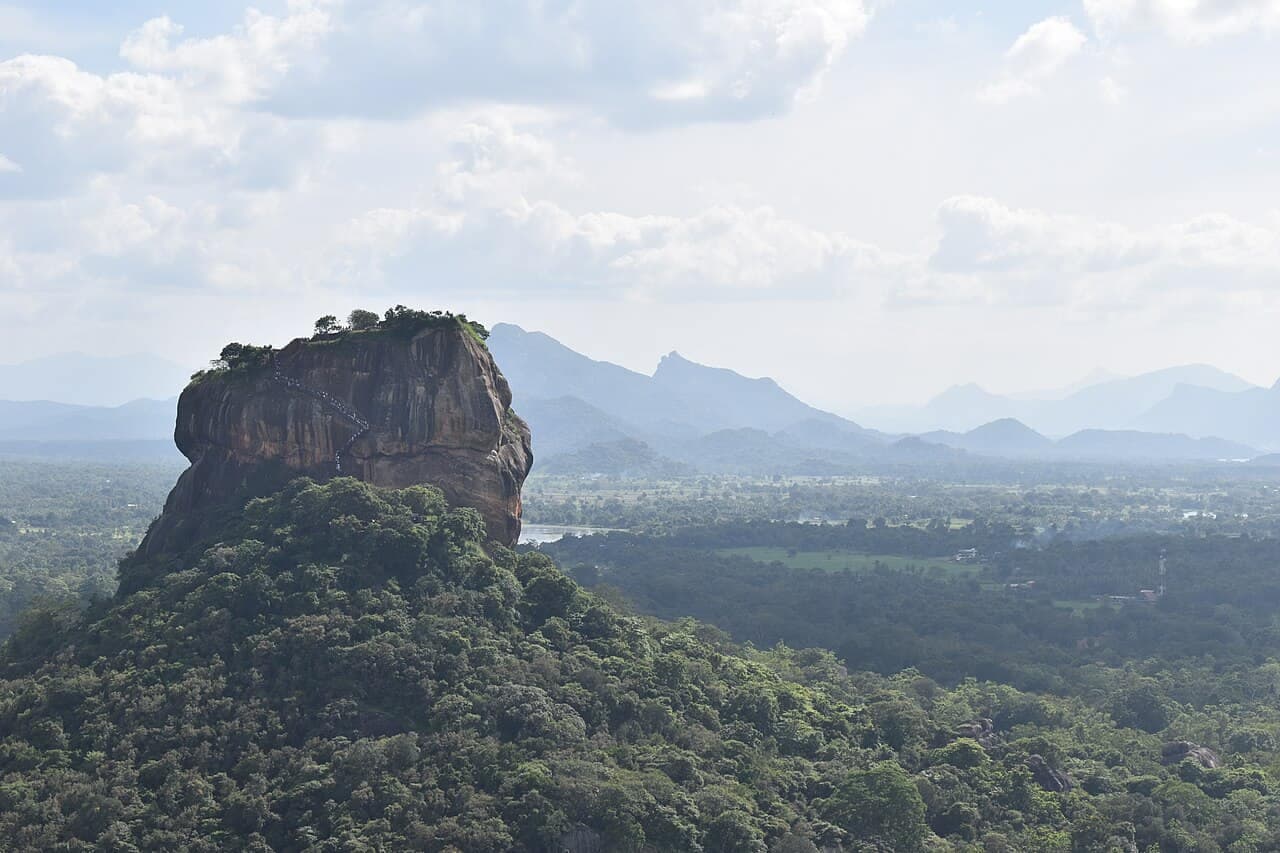
Sri Lanka

Country · LK · LKR · Asia/Colombo

Visa and entry in Sri Lanka

This information may change. Always check the official source.

Visa and entry in Sri Lanka

Warning Important

Sri Lanka requires a pre-approved ETA for everyone — free for 40 nationalities including EU citizens from 25 May 2026 under a pilot program — applied for only at eta.gov.lk, plus a free online arrival card submitted within 72 hours before arrival. Airlines deny boarding without the approved ETA; bringing any tobacco is effectively illegal.

Decision flow

To pick the right visa procedure and avoid problems at check-in at the departure airport, travelers follow this decision scheme:

  1. Free-ETA nationality check: Verify whether you hold a passport of one of the 40 countries in the free program approved from 25 May 2026. If so, apply for the free tourist ETA exclusively online via https://eta.gov.lk. The authorization is granted for 30 days with two entries (double entry) within that period.
  2. Bilateral agreements: Holders of Maldivian, Singaporean and Seychellois passports fall under permanent reciprocal agreements. Maldivian citizens receive a free 90-day ETA; citizens of Singapore and the Seychelles get 30 days.
  3. Paid regime for other states: If a country is neither on the 40-state exemption list nor covered by reciprocal exceptions (e.g. Cambodia), the traveler applies for a paid ETA online for a 50 USD fee, or uses the on-arrival option (VOA) at the airport for an increased 60 USD fee.
  4. Special sponsored regime: Travelers with Taiwanese, Kosovar or Syrian passports cannot use the online self-service system. Their application must be filed physically through an authorized Sri Lankan sponsor directly at the immigration headquarters in Battaramulla, and the visa is then granted as a Landing Endorsement at the arrival counter.

Entry formalities common to everyone

Sri Lankan immigration and customs strictly require the following from all arriving foreigners:

  • Arrival Card (for Foreigners): Since 1 January 2023 the arrival card can be completed fully digitally. Travelers must submit the form no later than 72 hours before the planned arrival time via the official Ministry of Interior portal (https://eservices.immigration.gov.lk/emb/eEmbarkation). It is entirely free, and on successful submission the system issues a confirmation linked to the passport number.
  • Customs declaration and duty-free limits: Travelers over 18 may import duty-free only 1.5 liters of spirits and 2 regular bottles of wine. Importing any cigarettes, cigars, beedi or tobacco in personal luggage is illegal for foreigners and subject to immediate confiscation and fines unless declared and fully taxed at the customs counter. Gifts and souvenirs must not exceed a total value of 250 USD per person. Importing foreign currency above 15,000 USD must be declared to customs, and re-exporting cash above 10,000 USD is possible only with the original arrival customs declaration. Import and export of Sri Lankan rupees is limited to 20,000 LKR.
  • Mandatory health registration: Proof of yellow-fever vaccination (international vaccination certificate) is required only from those who, in the past 9 days, stayed in or transited countries with endemic yellow fever. No other mandatory health registrations apply as of July 2026.

What matters in practice

Analysis of real traveler experience points to several critical spots in the arrival process. According to the r/srilanka community, the most frequent failures happen with airlines at check-in outside Sri Lanka, where counter staff misread "Free ETA" as a complete waiver of the visa requirement. As a result, travelers without a pre-approved digital ETA document are refused carriage. Make sure you carry the printed ETA approval confirmation delivered by e-mail, even though the system is digitally linked to your passport. There is also high activity by fraudulent websites that visually copy the official government interface and charge extra handling fees under the pretext of expedited processing. The only legitimate platform is eta.gov.lk. If the government system collapses technically (as happened on 4 March 2026), a visa on arrival (VOA) at the standard fee is temporarily allowed directly at the airport counter as a fallback.

This information may change. Always check the official source.

Report a change

Suggest a correction

JPEG, PNG or WebP, up to 5 MB. Location metadata is removed.

Corrections and photos are private and visible only to the review team.

SIM and eSIM in Sri Lanka

SIM and eSIM in Sri Lanka

An eSIM from SimCorner activated before departure avoids airport queues, passport handling and Sri Lanka's IMEI-blocking rule for unregistered phones. Physical tourist SIMs from Dialog, SLT-Mobitel and Hutch cost 821–1,799 LKR for 15–30 GB at the 24/7 CMB airport kiosks, with passport registration and a photo taken on the spot.

SIM and eSIM: what to buy right after arrival

Getting mobile internet in the first hours after arrival is essential for ride-hailing apps and online navigation to work smoothly. Foreign roaming is uneconomical because local operators charge extreme data rates. Travelers choose between a physical SIM card bought right in the arrivals hall and a virtual eSIM activated before departure. While a physical card requires in-person registration at the counter, with a passport and a photo taken on the spot, international eSIM platforms offer immediate activation without any airport paperwork. One regulation must be kept in mind for a smooth transition to Sri Lankan networks: since 28 January 2025, all mobile devices with an unregistered IMEI code are permanently blocked once they join a local network, unless they were active in the country before that date. Reputable international eSIMs eliminate this risk by routing data through partner roaming networks that are not subject to direct local IMEI registration.

Comparison table

The main telecom options as of July 2026:

OperatorTourist packagePriceDataValiditySales channelPassport registration
DialogTourists Plan 191,399 LKR (~3.60 EUR / 4.10 USD)20 GB (incl. 174 LKR call credit)30 daysCMB airport (24/7), brand storesYes (physical passport + photo on site)
DialogTourists Plan 291,799 LKR (~4.70 EUR / 5.30 USD)30 GB (incl. 164 LKR call credit)30 daysCMB airport (24/7), brand stores, onlineYes (physical passport + photo on site)
SLT-Mobitel7-Day Plan821 LKR (~2.10 EUR / 2.40 USD)15 GB (incl. unlimited local calls)7 daysCMB, HRI, JAF airportsYes (physical passport + photo)
SLT-Mobitel30-Day Plan1,540 LKR (~4.00 EUR / 4.50 USD)30 GB of mobile data30 daysCMB, HRI, JAF airports, city storesYes (physical passport)
HutchAnytime Plan1,228 LKR (~3.20 EUR / 4.00 USD)21 GB with no daily caps30 daysCMB airport, MRIA airport, Keells supermarketsYes (physical passport)
SimCorner (eSIM)Unlimited eSIMfrom 4 AUD (~2.50 EUR / 2.70 USD)Unlimited (3 GB/day full speed, then 128 kbps)5 to 90 daysOnline in advance onlyNo (no document upload)

Where exactly to buy

  • Bandaranaike International Airport (CMB): Official kiosks of Dialog, SLT-Mobitel and Hutch sit in the arrivals hall right past customs. These stands are open 24/7. Payment is either in LKR cash or by international card, which the Dialog and Mobitel counters accept.
  • Other airports (HRI and JAF): Mattala (HRI) and Jaffna (JAF) have Mobitel and Hutch stands, but their hours are strictly tied to charter or seasonal flight arrivals and cannot be fully relied on outside those schedules.
  • City networks and supermarkets: Physical SIMs are sold in city-center "Dialog Experience Centre" brand stores. Hutch cards are also sold at the tills of the Keells supermarket chain.
  • Online eSIM platforms: Purchases go through international sites (SimCorner, Holafly). The traveler receives a QR code by e-mail and configures the phone before departure.

Short verdict

For a typical tourist with an eSIM-capable phone the best solution is activating an eSIM via SimCorner before the trip. It completely removes queueing after a long flight, handing your passport to strangers and the IMEI-registration risks at the airport. For owners of phones without eSIM support, the best pick is the Dialog Tourist Plan 30GB for 1,799 LKR from the airport counter, which offers the most stable geographic coverage in the country.

This information may change. Always check the official source.

Report a change

Suggest a correction

JPEG, PNG or WebP, up to 5 MB. Location metadata is removed.

Corrections and photos are private and visible only to the review team.

Transport from the airport in Sri Lanka

Transport from the airport in Sri Lanka

From CMB airport, pre-booked transfers cost 6,000–9,000 LKR, the official taxi counter 5,500–8,000 LKR, PickMe/Uber 4,500–7,000 LKR (plus the 400 LKR toll), and the Route 187 express bus just 150 LKR until about 22:00. At Mattala (HRI) and Jaffna (JAF) there is no public transport or taxi rank at all — a pre-booked transfer is the only way out.

Bandaranaike International Airport (CMB)

Bandaranaike International Airport (Katunayake) lies 35 km north of Colombo. The drive along the Colombo–Katunayake Expressway (E03) takes 40 to 50 minutes under normal conditions. Transfer options:

  • Pre-booked private transfer: A fixed price of 6,000 to 9,000 LKR (~16 to 24 EUR) depending on vehicle size. Drivers wait with a name board in the arrivals hall. The service runs around the clock and includes the 400 LKR expressway toll.
  • Official airport taxi (Airport Taxi Counter): The licensed-car rank is managed by a counter inside the arrivals hall, staffed 24 hours a day. A ride to central Colombo costs a fixed 5,500 to 8,000 LKR (~14 to 21 EUR). Check in advance whether the 400 LKR toll is included; if not, the driver collects it in cash at the toll gate.
  • Ride-hailing apps (PickMe / Uber): Cars can be called to designated points in front of the arrivals terminal. Prices run between 4,500 and 7,000 LKR (~12 to 18 EUR). Prices surge during peak hours or night rain, and availability after midnight is unstable. App prices normally exclude the 400 LKR toll, which the driver adds manually at the end of the ride.
  • Express airport bus (Route 187): The state air-conditioned bus leaves from about 50 meters to the left of the terminal exit and heads to the main Colombo Fort station. The fare is 150 LKR (~0.40 EUR). Service ends around 22:00, the trip takes 60 to 80 minutes and the vehicles are not built for bulky luggage.

Strictly avoid unofficial touts in the arrivals hall who offer overpriced, unlicensed rides and often demand payment in USD instead of LKR at the end.

Mattala Rajapaksa International Airport (HRI)

This terminal, 26 km from Hambantota, sees minimal traffic and is surrounded by nothing but countryside. There is no public bus service, no rail link and no regular taxi rank at the airport.

  • Pre-booked transfer: A private transfer is the only reliable way out of the airport. The vehicle must be booked before departure (e.g. via the international Transfeero platform or local licensed services). Transfers to Hambantota start at 39 USD (~36 EUR). Trips to tourist areas such as Ella (90 minutes) start at 40 USD, Kandy at 80 USD and Colombo at 83 USD. Trying to use the PickMe app on the spot fails because there are simply no drivers within 20 kilometers of the airport.

Jaffna International Airport (JAF)

A regional airport in the north of the country, 22 km from the city of Jaffna.

  • Getting to town: There is no public transport and no waiting taxis. A ride into central Jaffna must be arranged in advance as a private Meet & Greet service. A one-way transfer in an air-conditioned sedan costs about 21 USD (~19 EUR) and takes roughly 30 minutes.

Recommendation by traveler type

  • Solo traveler: For daytime arrivals at CMB, the most economical option is the Route 187 express bus to Colombo Fort station (150 LKR). At night, PickMe is recommended for safety and comfort. At HRI and JAF, even a solo traveler needs a pre-arranged car — it is the only way not to end up stranded at the terminal.
  • Family with children: The only safe choice is a pre-booked private transfer with an explicit request for child seats. Regular taxis and PickMe cars carry no child seats and local law tolerates their absence in commercial vehicles — a serious safety risk given the aggressive local driving style.
  • Night arrival (after 22:00): At CMB, use the official airport taxi counter or a pre-booked car. Public transport is not running at that hour. At HRI and JAF a night arrival without pre-arranged pickup is a crisis situation — the airport surroundings are unlit and no services are within walking distance.
  • Low budget: Take the Route 187 airport bus from CMB to the main Colombo Fort station, from which cheap state trains and long-distance buses connect onward.

This information may change. Always check the official source.

Report a change

Suggest a correction

JPEG, PNG or WebP, up to 5 MB. Location metadata is removed.

Corrections and photos are private and visible only to the review team.

Useful local apps in Sri Lanka

Useful local apps in Sri Lanka

PickMe is the national ride-hailing app for tuk-tuks, cars and vans; Uber works only in Colombo. In street tuk-tuks, board only 'Metered Taxi' vehicles and insist on the meter (flagfall 100 LKR). The 1990 Suwa Seriya app connects to the state ambulance service.

City transport and apps

Urban public transport in the big agglomerations (Colombo, Kandy) consists of a network of state (CTB) and private buses. These services are extremely overcrowded, lack air-conditioning, and no timetables or route maps exist anywhere, physically or online. Fares are paid in cash to the conductor on board and rarely exceed 100 LKR per ride. These mobile apps are key to moving around cities efficiently and safely:

  • PickMe: The national ride-hailing leader. It books three-wheelers (tuk-tuks), regular cars and vans. Activation is by phone-number registration with SMS verification. Payment can go through a card registered in the app, though tuk-tuk drivers prefer cash.
  • Uber: Works reliably in Colombo and the adjacent suburbs. In the rest of the island the driver network is minimal and the app is unusable.

When using street tuk-tuks, board only vehicles marked "Metered Taxi" and insist the digital meter is switched on before setting off. The flagfall as of July 2026 is 100 LKR for the first kilometer, with a fixed per-meter rate added afterwards. If the driver refuses to start the meter, leave the vehicle immediately to avoid being pressed for absurdly inflated sums at the end of the ride.

This information may change. Always check the official source.

Report a change

Suggest a correction

JPEG, PNG or WebP, up to 5 MB. Location metadata is removed.

Corrections and photos are private and visible only to the review team.

Local transport and booking in Sri Lanka

Local transport and booking in Sri Lanka

By day take the Route 187 bus from CMB (150 LKR); at night use PickMe. Families need pre-booked transfers with child seats — local taxis carry none. City buses are overcrowded with no timetables; metered tuk-tuks start at 100 LKR per kilometer.

Recommendation by traveler type

  • Solo traveler: For daytime arrivals at CMB, the most economical option is the Route 187 express bus to Colombo Fort station (150 LKR). At night, PickMe is recommended for safety and comfort. At HRI and JAF, even a solo traveler needs a pre-arranged car — it is the only way not to end up stranded at the terminal.
  • Family with children: The only safe choice is a pre-booked private transfer with an explicit request for child seats. Regular taxis and PickMe cars carry no child seats and local law tolerates their absence in commercial vehicles — a serious safety risk given the aggressive local driving style.
  • Night arrival (after 22:00): At CMB, use the official airport taxi counter or a pre-booked car. Public transport is not running at that hour. At HRI and JAF a night arrival without pre-arranged pickup is a crisis situation — the airport surroundings are unlit and no services are within walking distance.
  • Low budget: Take the Route 187 airport bus from CMB to the main Colombo Fort station, from which cheap state trains and long-distance buses connect onward.

City transport and apps

Urban public transport in the big agglomerations (Colombo, Kandy) consists of a network of state (CTB) and private buses. These services are extremely overcrowded, lack air-conditioning, and no timetables or route maps exist anywhere, physically or online. Fares are paid in cash to the conductor on board and rarely exceed 100 LKR per ride. These mobile apps are key to moving around cities efficiently and safely:

  • PickMe: The national ride-hailing leader. It books three-wheelers (tuk-tuks), regular cars and vans. Activation is by phone-number registration with SMS verification. Payment can go through a card registered in the app, though tuk-tuk drivers prefer cash.
  • Uber: Works reliably in Colombo and the adjacent suburbs. In the rest of the island the driver network is minimal and the app is unusable.

When using street tuk-tuks, board only vehicles marked "Metered Taxi" and insist the digital meter is switched on before setting off. The flagfall as of July 2026 is 100 LKR for the first kilometer, with a fixed per-meter rate added afterwards. If the driver refuses to start the meter, leave the vehicle immediately to avoid being pressed for absurdly inflated sums at the end of the ride.

This information may change. Always check the official source.

Report a change

Suggest a correction

JPEG, PNG or WebP, up to 5 MB. Location metadata is removed.

Corrections and photos are private and visible only to the review team.

Money and payments in Sri Lanka

Money and payments in Sri Lanka

Sri Lanka is largely a cash economy: 1 EUR ≈ 384 LKR, 1 USD ≈ 340 LKR. ATMs of BOC, Commercial Bank, HNB and Sampath accept foreign cards with a 200–300 LKR fee and 40,000–60,000 LKR limits; always refuse DCC conversion. Exchange cash at airport bank counters and expect a 10% service charge in restaurants.

Money and payments

The official currency is the Sri Lankan rupee (LKR). Indicative exchange rates as of July 2026:

  • 1 EUR = about 384 LKR (the official bank selling rate hovers around 391 LKR).
  • 1 USD = about 340 LKR.

ATM withdrawals: Foreign cards (Visa, Mastercard) are accepted by most large banking institutions such as Bank of Ceylon (BOC), Commercial Bank of Ceylon, Hatton National Bank (HNB) and Sampath Bank.

  • Withdrawal fees: Nearly all local ATM operators charge a fixed transaction fee of 200 to 300 LKR (~0.50 to 0.80 EUR) per foreign-card withdrawal, on top of whatever your home bank charges.
  • Transaction limits: The standard single-withdrawal limit runs between 40,000 and 60,000 LKR. Selected new ATMs of the largest banks allow up to 150,000 LKR in one go.
  • Dynamic Currency Conversion (DCC): ATMs and merchant terminals often offer to settle in the card's home currency (EUR) instead of LKR. Always decline (choose "Without conversion" / "Charge in local currency") — the DCC rate hides a 5% to 8% markup against you.

Exchanging cash: Cash (USD, EUR) is best changed at the official bank counters in the airport arrivals hall, which offer a safe environment and fair rates with minimal spread. Street exchanges outside the banking sector may advertise better rates but expose foreigners to rigged arithmetic or theft. Banks strictly refuse to exchange damaged, marked or crumpled foreign banknotes. Contactless payments and tipping: Outside Colombo and the tourist resorts, Sri Lanka is a purely cash economy. Cards are taken by big supermarkets (Keells, Cargills) and international fuel stations, but daily life (tuk-tuks, local restaurants, street markets) is impossible without LKR cash. Restaurants normally add a 10% service charge to the bill; if it is missing, a 10% tip is customary. Hotel porters and drivers expect small tips of 100 to 200 LKR.

This information may change. Always check the official source.

Report a change

Suggest a correction

JPEG, PNG or WebP, up to 5 MB. Location metadata is removed.

Corrections and photos are private and visible only to the review team.

Accommodation in Sri Lanka

Accommodation in Sri Lanka

Spend the first nights in Negombo, only 10 km from CMB airport (30–120 USD, transfer 2,000–3,500 LKR), or near Colombo Fort if catching a morning train inland; Cinnamon Gardens is the safest upscale district. Hotels must register foreigners at check-in with a physical passport, and small guesthouses often demand cash payment on arrival.

Accommodation

For the first two nights after arrival these locations are recommended:

  • Negombo (Beach Road): Only 10 km from CMB airport. The ideal place to beat jet lag and acclimatize. The area covers everything from cheap family guesthouses to international beach resorts. An airport transfer costs only around 2,000–3,500 LKR. Indicative prices: 30–120 USD per night.
  • Colombo Fort / Pettah: The best district for travelers planning to leave the very next morning by train from the main Colombo Fort station to the interior (Kandy, Ella, Anuradhapura). The area is very noisy, with dense traffic and heavy smog. Indicative prices: 25–80 USD per night.
  • Colombo 7 (Cinnamon Gardens): The residential and safest district of Colombo, marked by wide boulevards, parks, diplomatic residences and upscale cafés. An airport transfer here costs about 6,000–8,000 LKR. Indicative prices: 80–250 USD per night.

Accommodation practice and obligations: At check-in, all accommodation providers are legally required to register foreigners. Staff need the physical passport to copy personal details, the entry stamp and the approved ETA. Smaller family guesthouses commonly require payment in cash on arrival, even when the booking was guaranteed online by card.

This information may change. Always check the official source.

Report a change

Suggest a correction

JPEG, PNG or WebP, up to 5 MB. Location metadata is removed.

Corrections and photos are private and visible only to the review team.

Safety and common scams in Sri Lanka

This information may change. Always check the official source.

Safety and common scams in Sri Lanka

Warning Important

Violent crime is rare, but organized scams target fresh arrivals: spice-garden and gem-shop pressure sales, the 'closed attraction' tuk-tuk routine, and scooter rentals demanding your passport as a deposit — hand over only a photocopy. In the north, stay on main roads because of leftover minefields from the civil war.

Safety and the most common scams

Sri Lanka has a low rate of violent crime, but economic instability has bred highly organized petty crime and sophisticated scams that target tourists in the first hours after arrival:

  • Spice/Herbal garden scam: Runs mainly on the routes between Colombo, Kandy and Sigiriya. Taxi or tuk-tuk drivers stop at a garden under the pretext of a break, where a "free" guide takes over. After a tour and a massage (for which a tip of over 1,000 LKR is then aggressively demanded), guests are led into a shop with ayurvedic remedies. Strong psychological pressure is applied to buy ordinary oils and creams at extremely inflated prices (5,000 to 15,000 LKR) with hand-rewritten receipts. These products are demonstrably worthless; buy certified ayurvedic medicine only in pharmacies at regulated (MSRP) prices.
  • Gem Museum scam: A well-dressed accomplice strikes up a street conversation, wins trust and recommends a visit to a "state gem exhibition" with an exceptional one-day discount. A "randomly passing" tuk-tuk takes the victim to a shop where synthetic or glass imitations are sold under pressure for hundreds of dollars.
  • "Closed attraction" scam: Tuk-tuk drivers claim the Buddhist temple or national park you picked is closed for a government holiday and offer an alternative route that leads to souvenir shops paying them commissions.
  • Scooter rentals: Street rental shops often demand the original passport as a deposit. Never leave your physical passport as collateral — staged damage accusations follow, and the passport is withheld until large sums are paid. Provide only a paper photocopy.
  • Military risks in border areas: In the Northern Province and parts of the Eastern Province, marked and unmarked minefields from the civil war remain a danger. Stay strictly on the main paved roads and never walk into unknown terrain.

This information may change. Always check the official source.

Report a change

Suggest a correction

JPEG, PNG or WebP, up to 5 MB. Location metadata is removed.

Corrections and photos are private and visible only to the review team.

Health in Sri Lanka

This information may change. Always check the official source.

Health in Sri Lanka

Warning Important

Dengue is a year-round risk — use DEET repellent and drink only sealed bottled water. For care, use private hospitals with English-speaking staff (Nawaloka, Lanka Hospitals, Asiri); the 1990 Suwa Seriya ambulance is free with sub-15-minute response. Tourist police: +94 11 242 1052. Insurance is mandatory in practice.

Health and emergencies

  • Recommended vaccinations: Standard protection means vaccination against hepatitis A and B and typhoid.
  • Dengue fever: A high risk of dengue infection is present year-round across the whole country. It is carried by Aedes mosquitoes, active mainly in daylight in urbanized areas. Prevention means repellents with a high DEET content and sleeping under a mosquito net. Malaria risk is currently minimal.
  • Tap water: Water from the public supply is not drinkable. Use only bottled water with an intact seal, or boiled water, for drinking, brushing teeth and washing food.
  • Medical facilities for foreigners: For medical care, go exclusively to private clinics in the big cities with English-speaking staff:
  • Nawaloka Hospital (Colombo)
  • Lanka Hospitals (Colombo)
  • Asiri Hospital (branches in Colombo and Kandy)
  • For urgent surgery and trauma, the state National Hospital of Sri Lanka in Colombo is the place to go.
  • Emergency contacts:
  • Ambulance (Suwa Seriya): 1990. A free, highly modern and fast pre-hospital care service whose ambulances with trained paramedics are stationed at police posts across the island, with an average response time under 15 minutes.
  • Police: 118 / 119.
  • Fire service: 110.
  • Tourist police: +94 11 242 1052.

Travel insurance with sufficient medical coverage is a hard requirement — private hospitals will not treat you without a guarantee letter from your insurer or immediate cash payment.

This information may change. Always check the official source.

Report a change

Suggest a correction

JPEG, PNG or WebP, up to 5 MB. Location metadata is removed.

Corrections and photos are private and visible only to the review team.

Everyday practical information in Sri Lanka

Everyday practical information in Sri Lanka

Buddhist-protection laws are enforced hard: visible Buddha tattoos get travelers arrested and deported, and posing with your back to a statue is banned. On monthly Poya full-moon days all alcohol sales stop nationwide. Sockets are types G/D/M at 230 V, the time zone is UTC+5:30, and drone use without prior MOD/CAASL registration is criminal.

Local rules and cultural differences

Buddhist culture in Sri Lanka is protected by strict legislation, and ignorance excuses no one:

  • Religion-protection laws: Any behavior deemed disrespectful to Buddhist symbols is a criminal offense.
  • Buddha tattoos: Visible Buddhist-themed tattoos are banned; foreigners with such tattoos are routinely arrested right at the airport and immediately deported. The tattoo must be fully covered in public.
  • Posing with your back to statues: Being photographed with your back to any depiction of the Buddha is forbidden. Touching or mimicking the statues is equally unacceptable.
  • Conduct towards monks: Monks enjoy the highest social respect. Women must not touch monks or their robes; the front seats in public transport are reserved for monks.
  • Poya holiday and prohibition: Every full-moon day (the Poya holiday, roughly once a month) is a day of religious rest. On Poya days a nationwide, absolute ban applies to the sale and distribution of all alcohol and fresh meat. Wine stores, supermarket alcohol sections and hotel bars close. Drinking is allowed only privately in your room, provided the alcohol was bought earlier.
  • Public consumption: Drinking alcohol and smoking in public places (roads, beaches, parks) is illegal and fined. The legal age for buying alcohol is 21.
  • Strict drone rules: Flying any drone (including sub-250 g categories such as the DJI Mini) without prior registration is strictly prohibited. Travelers must first obtain a security clearance from the Ministry of Defence (MOD), frequency approval from the telecom regulator (TRCSL), an import license, and register on the CAASL portal for a fee of about 16,095 LKR (~42 EUR). Illegal drone flights near monuments (Sigiriya, Kandy) lead to immediate confiscation, arrest and prosecution.

Everyday practical information

  • Power sockets: Three socket types are used: British type G (three flat pins), type D (three round pins) and type M (large round pins for high-draw appliances). Mains power is 230 V at 50 Hz. Carry a universal adapter.
  • Drinking water: Tap water is not drinkable. Buy only certified bottled water carrying the "SLSI" (Sri Lanka Standards Institution) logo.
  • Time zone: Sri Lanka Standard Time (SLST) is UTC +5:30. Relative to Central Europe that is +3.5 hours during summer time and +4.5 hours during winter time.
  • Opening hours and holidays: State offices and banks close on weekends, on Poya days and during the Sinhala and Tamil New Year (13 and 14 April). Regular shops are open from 9:00 to 21:00.
  • Toilets: Squat toilets with a bidet spray dominate public spaces. Toilet paper is not commonly provided — carry your own supplies.
  • Wi-Fi availability: Wireless networks in cheaper guesthouses are slow and unstable. For work, rely on the local operators' 4G/LTE mobile data.

This information may change. Always check the official source.

Report a change

Suggest a correction

JPEG, PNG or WebP, up to 5 MB. Location metadata is removed.

Corrections and photos are private and visible only to the review team.

Emergency information in Sri Lanka

This information may change. Always check the official source.

Emergency information in Sri Lanka

Warning Important

Call 1990 for the free Suwa Seriya ambulance (average response under 15 minutes), 118/119 for police, 110 for fire, +94 11 242 1052 for tourist police. Private hospitals (Nawaloka, Lanka Hospitals, Asiri) require an insurer guarantee or upfront cash before treating you.

Health and emergencies

  • Recommended vaccinations: Standard protection means vaccination against hepatitis A and B and typhoid.
  • Dengue fever: A high risk of dengue infection is present year-round across the whole country. It is carried by Aedes mosquitoes, active mainly in daylight in urbanized areas. Prevention means repellents with a high DEET content and sleeping under a mosquito net. Malaria risk is currently minimal.
  • Tap water: Water from the public supply is not drinkable. Use only bottled water with an intact seal, or boiled water, for drinking, brushing teeth and washing food.
  • Medical facilities for foreigners: For medical care, go exclusively to private clinics in the big cities with English-speaking staff:
  • Nawaloka Hospital (Colombo)
  • Lanka Hospitals (Colombo)
  • Asiri Hospital (branches in Colombo and Kandy)
  • For urgent surgery and trauma, the state National Hospital of Sri Lanka in Colombo is the place to go.
  • Emergency contacts:
  • Ambulance (Suwa Seriya): 1990. A free, highly modern and fast pre-hospital care service whose ambulances with trained paramedics are stationed at police posts across the island, with an average response time under 15 minutes.
  • Police: 118 / 119.
  • Fire service: 110.
  • Tourist police: +94 11 242 1052.

Travel insurance with sufficient medical coverage is a hard requirement — private hospitals will not treat you without a guarantee letter from your insurer or immediate cash payment.

This information may change. Always check the official source.

Report a change

Suggest a correction

JPEG, PNG or WebP, up to 5 MB. Location metadata is removed.

Corrections and photos are private and visible only to the review team.

Experiences

Nothing here yet.

General tips

Nothing here yet.

Share a tip

Sign in to continue.