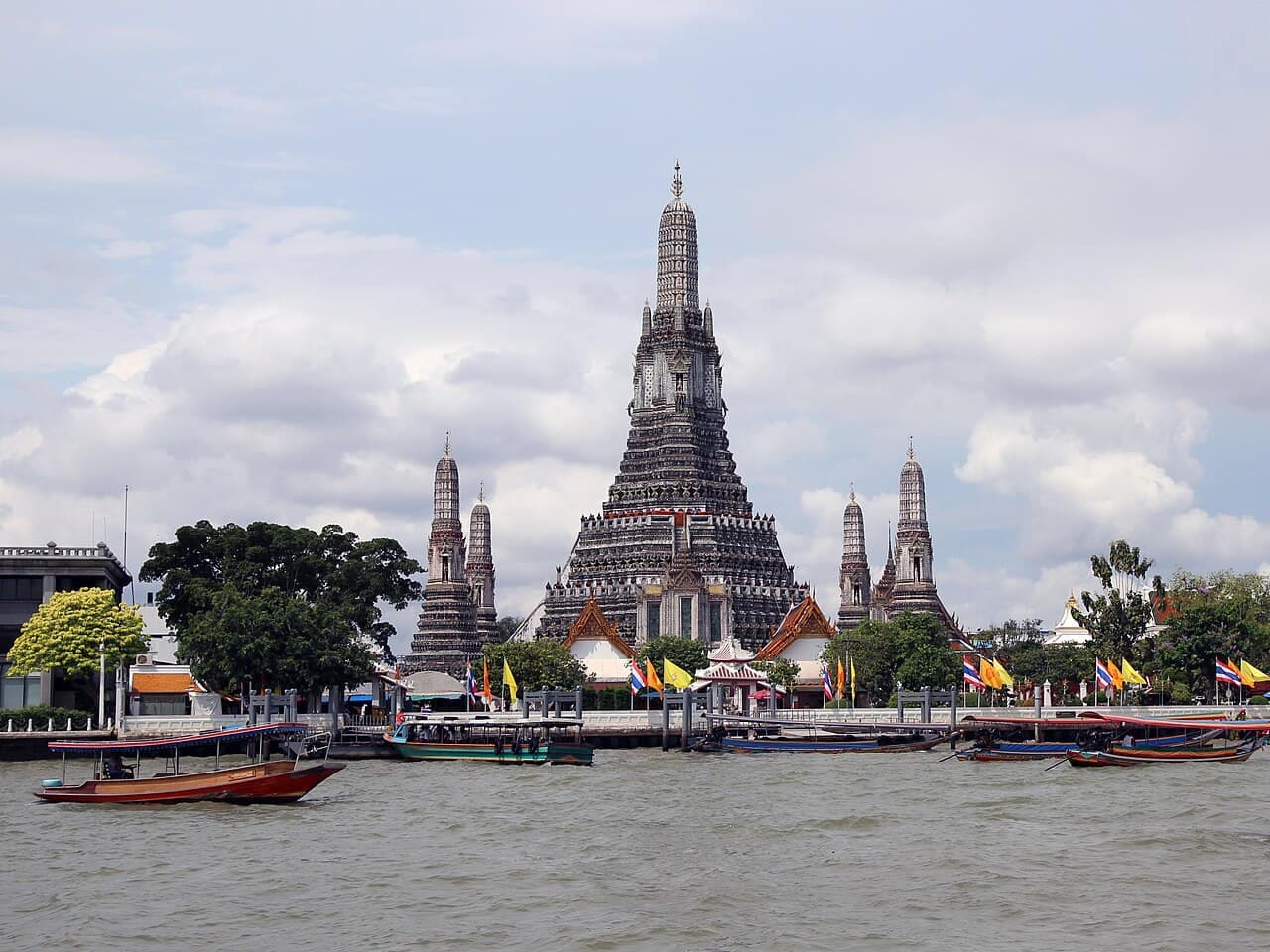
ThailandPhoto: Rolf Heinrich, Köln / Wikimedia Commons (CC BY 3.0)

Thailand

Country · TH · THB · Asia/Bangkok

This information may change. Always check the official source.Last verified: August 2026 by

Thailand offers four practical entry routes for tourists - visa-free, eVisa, Visa on Arrival, and a consular visa - plus the mandatory TDAC digital arrival card for all non-Thai citizens. Requirements such as fees, maximum stay, passport validity, onward tickets, proof of funds, and route-dependent yellow fever certificates vary by nationality and itinerary.

  • Tourists use four regimes: visa-free entry, eVisa, Visa on Arrival, or an embassy visa.
  • The TDAC digital arrival card is mandatory for non-Thai citizens - it is not a visa.
  • Visa-free entry gives up to 60 days today - but the cabinet approved cutting it to 30 (15 for a few countries) on 19 May 2026, and it takes effect 15 days after Royal Gazette publication, which had not happened as of 26 August 2026. Officers often check onward ticket, accommodation and funds.
  • Visa on Arrival costs 2,000 THB for 15 days and needs proof of funds and a return ticket.
  • Keep at least 6 months of passport validity and verify your exact case in Timatic.
  • Yellow fever proof is required if you arrive from or transited 12+ hours in a risk country.
More details

The 60 days are on borrowed time

The visa-free stay still is 60 days, and the decision to halve it has already been taken.

  • On 19 May 2026 the Thai cabinet approved replacing the 60-day exemption with a tiered system: 30 days for 54 countries and territories - the EU states, the UK, the US, Canada, Australia, Japan and South Korea among them - and 15 days for the Seychelles, the Maldives and Mauritius.
  • It is not in force yet. The five Interior Ministry announcements have to appear in the Royal Gazette and take effect 15 days after publication. As of 26 August 2026 that publication has not happened, so 60 days is what you get today.
  • This matters if your trip is longer than a month. A stay planned around 60 days could be booked under one rule and flown under another, and the fifteen-day notice is the whole warning you get. Check the Gazette position before you fly, not when you booked.
  • Around nine in ten visitors leave within 30 days anyway, so an ordinary two- or three-week holiday is unaffected either way.

Entry regimes

Separate your entry status from your arrival paperwork - they are two different things.

For tourists, Thailand today has four practically usable entry regimes:

  • Visa-free entry
  • eVisa
  • Visa on Arrival
  • A classic visa obtained through an embassy or consulate

The TDAC is not a visa. A fifth category sometimes described as e-registration is, for Thailand, functionally represented mainly by the TDAC: a mandatory digital arrival card for non-Thai citizens. Sources: TDAC, TDAC FAQ, Royal Thai Embassy Washington - visa information, Thai e-Visa.

What your entry status depends on

Entry rules are not a simple "list of 70 countries" - they depend on your full profile and route, similar to the Timatic decision system used by airlines. The official eVisa manual assesses eligibility against at least these variables:

  • Country/Territory of Passport/TD
  • Current Location
  • Apply at
  • Travel Document Type, Visa Type, Purpose of Visit, and Number of Entries

Sources: Thai e-Visa manual, IATA Timatic.

Health and transit dependencies are a real entry condition, not theory.

  • Yellow fever certificate - the WHO requires one for travelers older than 9 months arriving from a country with a risk of transmission.
  • It follows your whole route - it also applies if you transited more than 12 hours at an airport in such a country, so assess the route rather than just the final destination.

Sources: WHO yellow fever country list PDF, CDC Thailand travel health.

Example decision table for five scenarios

Visa and entry in Thailand
Example passport and routeEntry statusFeeMax. stayProcessingPassport validityOther requirementsSource
USA, tourism, 14 days, direct / standard transitVisa-free0up to 60 daysat the bordertypically check 6 months in Timatic; if less, verifyTDAC; often checks of onward ticket, accommodation, and sufficient fundsThai Embassy Washington, FAQ, TDAC, Timatic
India, tourism, 20 days, application filed from IndiaeVisae.g. tourist TR 3,000 INR60 daysapproximately 14 working daysper embassy and documents; verify in practiceTDAC, accommodation, travel plan, supporting documents per checklistRoyal Thai Embassy New Delhi - visa, Implementation of e-Visa in India, Thai e-Visa
India, tourism, 12 days, arrival at a main airportVisa on Arrival / E-VOA2,000 THB15 daysusually at the airport / E-VOA pre-filingofficial leaflet states min. 30 days of remaining validity; verify in practice against your current routereturn ticket within 15 days, verifiable accommodation, funds min. 10,000 THB/person or 20,000 THB/family, photoVOA PDF, Immigration
Pakistan, tourism, 10 daysConsular visatourist single-entry 5,000 PKRper visa typeapprox. 5 working daysmin. 6 monthsbank statement, flight ticket, hotel, further documents; VOA is not availableRoyal Thai Embassy Islamabad - FAQ, Visa fees
USA, tourism, 10 days, but transit >12 h via a YF-risk countryVisa-free + health condition0up to 60 daysat the borderas abovemandatory yellow fever certificate based on route + TDACWHO PDF, TDAC

The data in this table combines official embassies, the official eVisa system, TDAC, and the WHO. Where no uniformly stated primary source for passport validity was found for a specific scenario, the row is deliberately marked verify in Timatic / with your airline.

Sources (14)

Vapes are illegal in Thailand and the police do look for them - the customs risk here is not about duty at all.

  • Electronic cigarettes and their liquids are illegal to import, sell or possess. They are confiscated at the airport, and possession in tourist areas has led to fines and detention. There is no personal-use exemption.
  • Cigarettes are limited to 200 - one carton - and the limit is enforced with fines that dwarf the value of the tobacco.
  • Alcohol is 1 litre per adult, which is less than the duty-free shop will happily sell you.
More details
  • Electronic cigarettes and their liquids are illegal to import, sell or possess. They are confiscated at the airport, and possession in tourist areas has led to fines and detention. There is no personal-use exemption.
  • Cigarettes are limited to 200 - one carton - and the limit is enforced with fines that dwarf the value of the tobacco.
  • Alcohol is 1 litre per adult, which is less than the duty-free shop will happily sell you.
  • Cannabis is no longer the free-for-all it was. Since 25 June 2025 it is medical-only: buying, holding or smoking it needs a prescription from a licensed Thai practitioner, valid 30 days, and a foreign medical-cannabis card counts for nothing here. Thousands of the dispensaries that opened after 2022 have closed. Getting it wrong can mean up to a year and a THB 20,000 fine.
  • Taking cannabis or kratom out of Thailand is prohibited whatever your status inside it - and it is a drug offence in the country you land in as well.
  • THB 450,000 or the foreign-currency equivalent must be declared on arrival.
  • The red and green channels at Suvarnabhumi are used properly, and bags are scanned on the way in.
Sources (2)

No vaccination is required except yellow fever from a risk country. Thailand is a rabies-risk country and dengue is present year-round, including central Bangkok. Do not drink the tap water; private hospitals need a payment guarantee up front.

  • No vaccination is required to enter except proof of yellow fever if you have come through a risk country in Africa or South America.
  • Thailand is a rabies-risk country. Do not touch dogs, cats or the habituated monkeys at temples - any bite or scratch needs washing and immediate medical assessment.
  • Dengue is a daytime risk, year-round, and it reaches central Bangkok. The mosquito bites during the day, so repellent is a daytime habit, not just an evening one.
  • Malaria is not a risk in Bangkok, Chiang Mai, Phuket, Samui or the main islands - it is limited to some forested border areas.
  • Private hospitals ask for a payment guarantee or a card before non-emergency treatment, and an emergency department visit starts around 5,000 THB. Do not drink the tap water.
More details

Health, insurance and where to be treated

No vaccination is required to enter Thailand, with one exception: proof of yellow fever vaccination if you are arriving from, or have recently passed through, a country with a risk of yellow fever transmission in Africa or South America.

  • Keep routine vaccinations up to date.
  • Hepatitis A - recommended for essentially all travellers, because it spreads through contaminated food and water.
  • Hepatitis B - worth having if you might get a tattoo or piercing, need medical or dental treatment, or expect sexual contact.

Thailand is a rabies-risk country.

  • Do not touch dogs, cats or monkeys, including the habituated monkeys around temples and tourist sites.
  • Any bite, scratch or licked broken skin needs washing with soap and water and immediate medical assessment. Post-exposure treatment is widely available in Thai hospitals but has to be started quickly.

Dengue is a daytime risk, year-round.

  • It reaches central Bangkok and peaks in the rainy season.
  • The mosquito that carries it bites during the day, so repellent is a daytime habit, not just an evening one. Use products containing DEET, Icaridin or PMD.
  • Malaria is not a risk in Bangkok, Chiang Mai, Phuket, Samui or the main tourist islands - it is limited to some forested border areas.

Do not drink the tap water. Bottled water is sold everywhere at roughly 7 to 15 THB for 1.5 litres. Ice in established restaurants and cafés is made from purified water and is generally safe.

For minor problems go to a pharmacy first. The Boots, Watsons and Fascino chains are better stocked and more consistent than small independent shops, and pharmacists speak workable English in tourist areas. Many medicines that need a prescription at home are sold over the counter here.

For anything more serious, use a private international hospital:

  • Bumrungrad International Hospital, Bangkok - the best-known, with English-speaking staff throughout and a dedicated travel medicine centre.
  • Bangkok Hospital and Samitivej, Bangkok - large private networks with international patient departments.

Indicative private-hospital costs:

  • Emergency department visit - from about 5,000 THB.
  • Specialist consultation - 800 to 2,000 THB.
  • X-ray - 1,000 to 3,000 THB.
  • Blood tests - 500 to 5,000 THB depending on the panel.

Carry travel medical insurance covering hospitalisation and emergency evacuation, and keep the insurer's emergency number reachable offline. Private hospitals ask for a guarantee of payment or a card before non-emergency treatment, and evacuation from the islands to a mainland hospital is expensive without cover.

The EHIC is not a substitute for travel insurance. The EU itself states that it does not cover private care, repatriation, or lost or stolen belongings. Keep your EHIC for European trips and take out full commercial travel insurance for Thailand, ideally with coverage for traffic accidents - and scooter coverage only if you genuinely meet the licensing conditions. Sources: EU - EHIC FAQ, EU social affairs EHIC note, Smartraveller Thailand.

Sources (4)

Bangkok

Long-term averages for Bangkok: the mean daily high, the mean overnight low and the mean monthly rainfall, from the climate normals published by the Thai Meteorological Department / WMO.

DayNight
2025303540°C0500mmJanFebMarAprMayJunJulAugSepOctNovDecJanuary: Day 33 °C, Night 23 °C, Rain 24 mm. February: Day 34 °C, Night 25 °C, Rain 21 mm. March: Day 35 °C, Night 26 °C, Rain 51 mm. April: Day 36 °C, Night 27 °C, Rain 93 mm. May: Day 35 °C, Night 27 °C, Rain 217 mm. June: Day 34 °C, Night 26 °C, Rain 198 mm. July: Day 34 °C, Night 26 °C, Rain 190 mm. August: Day 33 °C, Night 26 °C, Rain 227 mm. September: Day 33 °C, Night 25 °C, Rain 336 mm. October: Day 33 °C, Night 25 °C, Rain 289 mm. November: Day 33 °C, Night 25 °C, Rain 45 mm. December: Day 32 °C, Night 23 °C, Rain 12 mm
Show the monthly table
Bangkok
MonthDay (°C)Night (°C)Rain (mm)
January332324
February342521
March352651
April362793
May3527217
June3426198
July3426190
August3326227
September3325336
October3325289
November332545
December322312

Chiang Mai

Long-term averages for Chiang Mai: the mean daily high, the mean overnight low and the mean monthly rainfall, from the climate normals published by the Thai Meteorological Department / WMO.

DayNight
152025303540°C0250mmJanFebMarAprMayJunJulAugSepOctNovDecJanuary: Day 30 °C, Night 16 °C, Rain 11 mm. February: Day 33 °C, Night 17 °C, Rain 10 mm. March: Day 35 °C, Night 20 °C, Rain 20 mm. April: Day 37 °C, Night 23 °C, Rain 54 mm. May: Day 35 °C, Night 24 °C, Rain 168 mm. June: Day 33 °C, Night 24 °C, Rain 118 mm. July: Day 32 °C, Night 24 °C, Rain 149 mm. August: Day 32 °C, Night 24 °C, Rain 223 mm. September: Day 32 °C, Night 24 °C, Rain 207 mm. October: Day 32 °C, Night 23 °C, Rain 124 mm. November: Day 31 °C, Night 20 °C, Rain 41 mm. December: Day 29 °C, Night 17 °C, Rain 14 mm
Show the monthly table
Chiang Mai
MonthDay (°C)Night (°C)Rain (mm)
January301611
February331710
March352020
April372354
May3524168
June3324118
July3224149
August3224223
September3224207
October3223124
November312041
December291714

Phuket

Long-term averages for Phuket: the mean daily high, the mean overnight low and the mean monthly rainfall, from the climate normals published by the Thai Meteorological Department / WMO.

DayNight
253035°C0500mmJanFebMarAprMayJunJulAugSepOctNovDecJanuary: Day 33 °C, Night 25 °C, Rain 50 mm. February: Day 34 °C, Night 25 °C, Rain 24 mm. March: Day 34 °C, Night 26 °C, Rain 81 mm. April: Day 34 °C, Night 26 °C, Rain 135 mm. May: Day 33 °C, Night 26 °C, Rain 237 mm. June: Day 33 °C, Night 26 °C, Rain 249 mm. July: Day 32 °C, Night 26 °C, Rain 240 mm. August: Day 32 °C, Night 26 °C, Rain 309 mm. September: Day 32 °C, Night 25 °C, Rain 350 mm. October: Day 32 °C, Night 25 °C, Rain 336 mm. November: Day 32 °C, Night 25 °C, Rain 178 mm. December: Day 32 °C, Night 25 °C, Rain 82 mm
Show the monthly table
Phuket
MonthDay (°C)Night (°C)Rain (mm)
January332550
February342524
March342681
April3426135
May3326237
June3326249
July3226240
August3226309
September3225350
October3225336
November3225178
December322582
Sources (1)

Stay within a 10-minute walk of a BTS or MRT station - Sukhumvit is the easiest first-time base, Silom and Riverside the alternatives, Khao San has no rail at all. Budget rooms run 400 to 800 THB, mid-range hotels with a pool 2,000 to 5,000 THB.

  • One rule matters more than any hotel review: stay within about a 10-minute walk of a BTS or MRT station. A cheaper room needing a taxi for every trip costs more in time and fares.
  • Sukhumvit is the easiest first-time base - malls, hotels and restaurants along the BTS between Asok and Phrom Phong, with the widest choice of English-speaking accommodation.
  • Silom and Sathorn are unusually transit-rich, with the BTS along Silom Road, the MRT crossing it and Saphan Taksin connecting to the river boats.
  • Khao San has no BTS or MRT station at all, so every trip starts with a taxi or a boat. Budget travellers get better value near Silom for a similar rate.
  • Hand over the passport itself at check-in, not a copy - licensed hotels must file the TM30 notification for every foreign guest from the data page.
More details

Accommodation

One rule matters more than any hotel review: stay within about a 10-minute walk of a BTS Skytrain or MRT station. Bangkok traffic is severe and unpredictable, and being on the rail network lets you ignore it. A cheaper room that needs a taxi for every trip usually costs more in time and fares than a dearer one above a station.

  • Sukhumvit - the easiest base for a first visit. A modern, expat-heavy corridor of malls, hotels and restaurants strung along the BTS between Asok and Phrom Phong. Widest choice of English-speaking accommodation and the safest area to book at short notice.
  • Silom and Sathorn - the financial district by day, one of the city's nightlife centres after dark, and the heart of the LGBTQ+ scene. Unusually transit-rich: BTS runs along Silom Road with Sala Daeng in the middle, the MRT crosses it, and Saphan Taksin connects to the river boats.
  • Riverside - quieter and more scenic, along the Chao Phraya. Best if you want old Bangkok, temples and river cruises over shopping malls. River ferries run up to the Grand Palace and Wat Arun, and Saphan Taksin links the area to the Skytrain.
  • Khao San and Banglamphu - the backpacker hub, cheap and lively, but it has no BTS or MRT station. Every trip starts with a taxi or a boat. Budget travellers usually get better value near Silom or lower Sukhumvit for a similar nightly rate.

Indicative nightly rates:

Accommodation in Thailand
TypeTypical areaPrice per night
Budget guesthouse or hostel private roomKhao San, Banglamphu400 to 800 THB
Mid-range hotel with a poolSilom, Sukhumvit2,000 to 5,000 THB
Boutique hotelSilom, Riverside4,000 to 9,000 THB
International luxuryRiverside, Sukhumvitfrom 15,000 THB

At check-in you hand over your passport, not a copy - licensed hotels are legally required to file the TM30 notification of residence for every foreign guest, and they do it from the passport data page. You do not file anything yourself when staying in a hotel. Many hotels also ask for a refundable deposit, either blocked on a card or taken in cash; get a receipt for a cash deposit and check it is returned at checkout.

Book the first two nights before you fly. Arrivals at Suvarnabhumi and Don Mueang are frequently late at night, and hunting for a room after a long flight is where most first-day problems start.

Where to stay outside Bangkok

Accommodation in Thailand
CityTraveler typeRecommended areaWhySource
Phuketnightlife / first visitPatongstrongest nightlife and the most tourist infrastructurePhuket destination, 10 things to do in Phuket
Phuketfamilies / beachKata / Karonbeaches, less chaos than PatongPhuket destination
Phuketcalm / comfortBang Tao / north of the islandthe north is calmer than the south according to TATPhuket destination
Chiang Maifirst visitOld City / Tha Phae areamonuments and walking streets within walking distanceChiang Mai destination
Chiang Maidigital nomads / cafésNimmanhaeminlisted by TAT as the current lifestyle and shopping coreChiang Mai destination
Chiang Maiquieter stayoutside the center / riversideless traffic, calmer paceChiang Mai destination
Sources (4)

Compares five ways to get online in Thailand - airport tourist SIM, city SIM, operator eSIM, international travel eSIM, and home-operator roaming - with practical picks by trip length. Also covers passport-based SIM registration and KBank's PAY & TOUR prepaid card with Thai QR payment support via TAGTHAi.

  • The choice is less about operator and more about where and how you want to get online.
  • The airport SIM is the most convenient but often not the cheapest; a city SIM is best value.
  • For best nationwide coverage, an AIS-based choice is most often recommended.
  • In Bangkok, Chiang Mai and Phuket the difference between big networks is smaller than on the islands.
  • For a short trip, an international eSIM or an airport tourist pack is easiest.
  • For a week, an airport tourist SIM if you're in a hurry, otherwise a local city plan.
  • For a month, a city/local SIM or an operator eSIM.
  • A passport is commonly used to register a SIM.
  • A week of data runs about 300-700 THB, a month 900-1,200 THB; airport counters cost 20-30% more than city shops.
More details

SIM and connectivity

The decision that matters is not "which operator" but where and how you want to get online. Five categories are worth comparing: airport tourist SIM, city physical SIM, operator eSIM, international travel eSIM, and roaming with your home operator. A passport is commonly used to register a SIM in Thailand.

In Thai reality:

  • The airport option is the most convenient but often not the cheapest.
  • A city SIM tends to be economically the best.
  • An eSIM is best for travelers who want to be online the moment they touch the runway.

Sources: AIS official, TrueMove H official, dtac official, Reddit - Thailand tourist SIM threads, TAGTHAi Easy Pay.

Pick by what you care about most:

  • A hassle-free start - an eSIM or an airport kiosk.
  • The lowest price - a city or local SIM in regular retail or an operator shop.
  • Network certainty across the whole country - traveler reports most often recommend an AIS-based choice. Grab, Bolt and Reddit communities often note that in big cities the difference between the major networks is smaller than on the islands and away from main routes.

Treat specific prices as indicative - exact plan price lists change faster than visa rules. Sources: Reddit - network/coverage discussions, Phuket/Chiang Mai threads, CDC Thailand packing list - water purification tablets / remote travel note.

Options worth comparing

SIM and eSIM in Thailand
CategoryWhere to buyActivationPhone numberHotspotPassport registrationProsConsSource
Airport tourist SIMoperator kiosk at the airport after arrivalstaff on the spotusually yesusually yes, but always verify the specific packagetypically yeseasiest right after arrivalmore expensive than in the cityAOT airport services, AIS, True, dtac
City local SIMoperator shops, retail, often convenience retailin-store or self-activationyesmostly yestypically yescheaper price/data ratiotakes time after arrivalAIS, True, dtac
Operator eSIMonline on the operator's websitebefore departure or after landingoften yesdepends on planremote verification / passport per processlocal network without visiting a shoprequires an eSIM-compatible phoneThai eSIM / operator sites, True, dtac
International travel eSIMonlineinstantdata-onlyyesno physical visitworks immediately after landingsometimes worse price/GB and no local numberSaily, from USD 2.99 / 1 GB / 7 days
Home operator roamingnothing to buyautomaticyour home numberper your home plannosimplest of allheavily dependent on your operator, often more expensive[verify with your home operator]

The table above is deliberately categorical: exact operator packages and local retail prices change too quickly to treat as a fixed price list.

What a tourist SIM actually costs

Prices move by sales channel more than by operator. Two independent checks in 2026 priced the same packages differently, and that spread is the useful answer: the airport counter, the operator's own app and a 7-Eleven are three different price lists.

SIM and eSIM in Thailand
OperatorValidityDataPrice (THB)As checked
AIS8 days15 GB299The Thaiger, March 2026
AIS8 daysunlimited499Traveltomtom, April 2026
AIS30 days50 GB899The Thaiger, March 2026
AIS30 daysunlimited1,199Traveltomtom, April 2026
TrueMove H8 daysunlimited449-499both, March-April 2026
TrueMove H15 daysunlimited699both, March-April 2026
TrueMove H30 daysunlimited1,199both, March-April 2026
dtac8 days15 GB299Traveltomtom, April 2026
dtac15 days30 GB599Traveltomtom, April 2026

Budget by the range, not the number: roughly 300-700 THB for a week and 900-1,200 THB for a month. Airport counters run 20-30% above the same operator's city shops, which is the single biggest difference between paying a little and paying a lot.

Buying one when you land

  • Suvarnabhumi (BKK) - operator counters sit in the arrivals hall; the AIS desk is by gates 6-7. Only buy from a counter carrying the operator's own branding.
  • Don Mueang (DMK), Phuket (HKT) and Samui (USM) all have operator counters in arrivals as well.
  • In the city - operator shops in shopping malls, and 7-Eleven or Family Mart for the SIM itself. Convenience stores sell the SIM but activation there is fiddlier than at an operator counter.

Registration is on your passport

  • Bring your passport to the counter. The SIM is registered to your name and passport number; Thai rules also involve biometric registration at the point of sale.
  • Five prepaid SIMs per passport per operator is the cap, so a lost SIM is not the end of it.

Keeping your home number while you use Thai data

  • A Thai SIM is a second line, not a replacement. Put the local SIM or eSIM in the data slot and leave your home SIM active for the bank and account codes that still arrive by SMS.
  • Turn data roaming off on the home line and set the Thai line as the default for mobile data, or the phone quietly bills the expensive one.
  • Check the phone is carrier-unlocked before you fly. A locked handset takes neither a Thai SIM nor a travel eSIM, and there is nothing to be done about it at the airport.

Practical recommendations

  • Cheapest - a city physical SIM or a local operator eSIM, if you do not want to pay the airport premium.
  • Easiest - an international eSIM such as Saily activated before departure, from USD 2.99 for 1 GB over 7 days.
  • Best coverage - in practice often an AIS-based choice, but in Bangkok, Chiang Mai and Phuket the differences tend to be smaller than away from main routes; the exact answer depends on current crowdsourced reports and where your hotel is.
  • For a 3-day trip - an international eSIM or an airport tourist pack.
  • For 7 days - an airport tourist SIM if you are in a hurry; otherwise a local plan in the city.
  • For 30 days - a city or local SIM, or an operator eSIM.

PAY & TOUR and QR payments as a companion to connectivity

A large part of Thailand's micro-economy runs on domestic QR payments, so a non-bank companion is worth knowing about. PAY & TOUR by KBank is an e-wallet and prepaid card for foreign tourists, and the official sales sheet states:

  • Where it works - anywhere Visa is accepted, and after linking with TAGTHAi it also supports Thai QR payments.
  • Top-up - at a KBank foreign exchange booth.
  • Wallet maximum - 100,000 THB.
  • Daily ATM withdrawal limit - 10,000 THB.
  • Promotion until 31 Dec 2026 - waives both the joining fee and the K-ATM withdrawal fee.

This is a very strong use case for tourists who do not want to deal with cash all the time. Sources: KBank sales sheet, TAGTHAi - how to get Easy Pay, TAT news.

Sources (7)

Thai sockets are usually hybrids taking Type , , and the local Type at 230 V - and European plugs fit them without earthing anything.

  • The common socket is a round hole crossed by a slot. It accepts American flat pins, Europlugs and the Thai three-pin plug from the same opening.
  • Schuko and French plugs fit but earth nothing. Thailand banned the sale of appliances with those plugs for exactly this reason. If you are carrying a European laptop brick with an earthed plug, the earth is not connected.
  • American 120 V appliances are the real hazard here. The socket takes a US plug perfectly and then delivers 230 V to it. Check every label for 100-240 V before it goes in the wall.
  • Type is the national standard introduced in 2006 - three round pins, earthed - and new buildings are being wired for it.
More details

Sockets in Thailand are hybrids taking Type , , and the Thai Type at 230 V, 50 Hz, so almost any plug goes in - which is the problem.

  • The common socket is a round hole crossed by a slot. It accepts American flat pins, Europlugs and the Thai three-pin plug from the same opening.
  • Schuko and French plugs fit but earth nothing. Thailand banned the sale of appliances with those plugs for exactly this reason. If you are carrying a European laptop brick with an earthed plug, the earth is not connected.
  • American 120 V appliances are the real hazard here. The socket takes a US plug perfectly and then delivers 230 V to it. Check every label for 100-240 V before it goes in the wall.
  • Type is the national standard introduced in 2006 - three round pins, earthed - and new buildings are being wired for it.
  • Adapters are cheap and everywhere, from 7-Eleven upwards, so there is no need to buy one at the airport.
Sources (1)

Daily budgets range from about 1,000–1,200 THB (low-cost) through 2,700–3,200 THB (standard) to 6,800–9,700+ THB (comfort) per person, varying by region. Covers common scams, temple dress codes, the ban on criticizing the monarchy, vaping risks, drone registration via CAAT, alcohol sales 11:00–24:00 from 29 May 2026, plus power (230 V, plugs A/B/C/O), the UTC+7 time zone, climate, air quality, luggage storage, and food delivery.

  • Expect 230 V / 50 Hz with plug types , , and ; Thailand is UTC+7 year-round.
  • The temple/palace dress code is conservative: covered shoulders and legs.
  • Criticizing the monarchy is a criminal offense; vaping/e-cigarettes are legally problematic.
  • Since 29 May 2026, general alcohol sales run 11:00–24:00, with local exceptions.
  • BKK has luggage storage (Bellugg) on Levels 2 and 4 from 100 THB / 24 h.
  • GrabFood works nationwide; 7-Eleven is everywhere but not always 24/7.
  • Indicative daily budget: low-cost 1,000–1,200 THB, standard 2,700–3,200, comfort 6,800–9,700+.
More details

Daily budget

Everyday practical information in Thailand
Travel styleApprox. / day / personWhat it typically includesSource
Low-costapprox. 1,000–1,200 THBhostel/guesthouse, street food, local transportBudgetYourTrip, recent traveler example
Standardapprox. 2,700–3,200 THBprivate room, mix of restaurants, transfers, 1 activityBudgetYourTrip
Comfortapprox. 6,800–9,700 THB+better hotels, taxi/Grab, more paid activitiesBudgetYourTrip, recent travel cost summary

Scale the budget by region. Bangkok tends to be more expensive than the north, Phuket is markedly more expensive than Chiang Mai, and island transfers can noticeably raise your daily average.

Local rules and cultural differences

Four legal and cultural notes matter most for tourists today:

  • Palaces and temples have a conservative dress code. TAT uses a simple rule: men wear sleeved shirts and long trousers, women wear sleeved tops and below-knee skirts or long trousers.
  • Criticizing the monarchy is a criminal offense in Thailand.
  • Vaping and e-cigarettes are legally problematic - it is safer not to bring them into the country at all.
  • Drones require registration via the CAAT UAS Portal.

The alcohol rule changed in 2026. TAT states that from 29 May 2026, general alcohol sales are permitted from 11:00 to 24:00, with local conditions and place-specific exceptions still applying. Worth knowing after check-in and before your evening shopping.

Sources: TAT temple/palace dress guide, UK FCDO Thailand, CAAT drone registration, CAAT UAS portal, TAT alcohol rules 2026.

Everyday practicalities

Everyday practical information in Thailand
TopicPractical takeawaySource
Sockets and voltageexpect 230 V / 50 Hz; you will commonly meet plug types , , , and Electrical Safety First
Time zoneThailand is ICT / UTC+7 year-round, no DSTtimeanddate
ClimateTAT sums up the year as roughly 6 months of rain, 3 months of cooler dry weather, and 3 months of heatTAT climate & weather
Air qualityvaries significantly; check e.g. IQAir before your trip, especially for the north of the countryIQAir Thailand, IQAir Chiang Mai
Luggage storageBKK has an officially listed Bellugg service on Levels 2 and 4; prices from 100 THB / 24 h by sizeBKK Bellugg
Food deliveryGrabFood works across ThailandGrabFood Thailand
Public transport in BangkokViaBus is very useful for live journey planningViaBus Play, ViaBus App Store

Use live map data for shops and services. 7-Eleven is practically ubiquitous, but a 24/7 schedule cannot safely be assumed for every branch, so check the nearest open branches on a map. The same applies to laundries, public toilets and local services: common in tourist zones, but quality and opening hours are local. Sources: 7-Eleven Thailand, GrabFood.

Information last reviewed: 2026-07-16. Items marked unclear/verify should be re-checked close to your travel date.

Sources (18)

Thailand's currency is the baht (ECB reference approx. 38.489 THB per EUR as of 16 Jul 2026); always pay in THB and refuse DCC. Cards work in hotels, malls, and chains, but cash and Thai QR dominate smaller venues; ATM fees run about 220–250 THB per withdrawal, and KBank's PAY & TOUR wallet bridges cards and local QR payments.

  • The currency is the Thai baht; about 38.5 THB per 1 EUR at the time of research.
  • Big hotels and chains take cards, but small shops, markets and street food want cash or Thai QR.
  • Always pay and withdraw in THB, not your home currency, to avoid DCC.
  • ATM withdrawals typically cost 220–250 THB, so withdraw larger amounts less often.
  • Use official bank ATMs in controlled spaces such as a branch, mall or airport.
  • Apple Pay / Google Wallet can work on contactless terminals, but depend on the terminal and your bank.
  • KBank PAY & TOUR is a tourist wallet that also supports Thai QR payments.
More details

Money

The currency is the Thai baht. The ECB reference rate as of 16 Jul 2026 was approximately 38.489 THB per 1 EUR.

  • Always pay in THB, never your home currency. DCC (dynamic currency conversion) usually worsens the rate for both card purchases and ATM withdrawals. Sources: ECB, Wise - DCC Thailand, Wise - local vs home currency.
  • Card acceptance runs on two tracks. Large hotels, shopping centers and chains commonly take cards; at smaller businesses, markets and street food stalls, cash or Thai QR still strongly dominates. This is why TAT and KBank offer tourists TAGTHAi Easy Pay/PAY & TOUR as a bridge between cards and the local QR economy. Sources: TAT - Easy Pay, KBank PAY & TOUR, Reddit - ATM / cash reality.
  • Budget 220–250 THB per ATM withdrawal. That is the current practical estimate from recent traveler reports.
  • Where you withdraw matters more than which bank. Use an official bank ATM in a controlled space - ideally a bank branch, mall or airport - and withdraw larger amounts less often. KBank's PAY & TOUR is interesting precisely because during its promotional period it advertises a free K-ATM withdrawal fee; this does not apply to regular foreign cards. Sources: UK FCDO - ATM skimming caution, Reddit - 220–250 THB, KBank PAY & TOUR.
  • Tap-to-pay works, conditionally. Google lists Google Wallet tap-to-pay support in Thailand, and Apple lists general Apple Pay acceptance on supported contactless terminals. If you have a supported card and the merchant takes contactless, Apple Pay / Google Wallet can work, but the deciding factors are the terminal and your issuing bank. Sources: Google Wallet supported countries, Google Wallet Thailand payment methods, Apple Pay countries and regions.
Sources (10)

Everyday prices

Typical prices in Thai baht (THB), averaged across the country by Numbeo and read on 12 August 2026. Tick Convert prices above the table to see every amount in your own currency.

Everyday prices
ItemTypical price
Inexpensive restaurant meal100 THB
Dinner for two, mid-range, three courses900 THB
Cappuccino70 THB
Local draught beer, 0.5 l75 THB
Bottled water, 0.33 l12 THB
Public transport, one-way ticket30 THB
Taxi, starting fare40 THB
Petrol, 1 litre45 THB
Cigarettes, pack of 20 (Marlboro)146 THB
Average net monthly salary19,100 THB

These are country-wide averages, not a price list: tourist districts, airports and islands sit well above them, and small towns below. The salary line is there for proportion - it is what people living here actually earn.

Sources (1)

Airport guides for Thailand8

One page per airport: the routes into town, what they cost and the trap particular to that arrival.

See all 8 airports

Official airport-to-city options at BKK, DMK, HKT, and CNX with boarding points, operating hours, and fares (e.g. DMK BMTA buses 30–50 THB, Chiang Mai city buses 40–60 THB, BKK taxi meter plus 50 THB airport surcharge). Includes recommendations by group size, common airport taxi scams, and a step-by-step arrival flowchart for Bangkok.

  • At BKK, the Airport Rail Link (Level B1) is fastest for hotels near BTS/MRT.
  • BKK taxis are at Level 1, Gates 4–7, with a 50 THB airport surcharge on top of the meter.
  • Grab at BKK has an officially marked pickup point at Level 1, Gate 4.
  • At Don Mueang (DMK), the BMTA A1/A2 buses to the city are 30 THB.
  • Phuket has the Phuket Smart Bus (up to 100 THB) and PMK minibuses (150–200 THB by area).
  • Chiang Mai airport shuttle buses A1 - A3 cost 40–60 THB.
  • For 3–4 people an official taxi, app ride or minivan often wins; after midnight use a taxi or Grab.
  • Keep the slip from the taxi queue machine and ignore touts outside the official queue.
More details
From the airport to the city

Prices and boarding points below are either officially published by the airports or clearly attributable at the time of research. Dynamic taxi and ride-hailing fares are marked unclear/verify. Official documentation is good for the AOT national airports BKK and DMK; for HKT and CNX, some information is spread across "How to get to airport" pages, transportation cards and operator websites.

Overview of the main airports
Transport from the airport in Thailand
AirportOptionBoarding / platformOperating hoursFareNoteSource
BKK SuvarnabhumiAirport Rail LinkLevel B105:30–24:0015–45 THB by distance: 35 to Makkasan, 45 to Phaya Thaifastest for hotels near BTS/MRTAirport Rail Link fares
BKK SuvarnabhumiTaxiLevel 1, Gates 4–7, inner curb24/7flagfall 35/40 THB + meter + 50 THB airport surchargeofficial queue ticket, waiting depends on demandBKK transportation
BKK SuvarnabhumiGrabLevel 1, Gate 424/7dynamiclegal ride-hailing, pickup point officially markedBKK Grab
BKK SuvarnabhumiBus S1Level 1, Gate 706:00–20:00about 60 THB, paid on boarduseful for the Khao San / Sanam Luang directionBKK BMTA buses
BKK ↔ DMKShuttle busLevel 2, Gate 305:00–24:00, every 30 minfreeonly for connecting passengers with a ticket/proof of onward travelBKK transportation
DMK Don MueangBMTA A1Terminal 1, Floor 1, Gate 605:45–24:00, approx. every 15 min30 THBMo Chit / ChatuchakDMK BMTA
DMK Don MueangBMTA A2same06:00–23:00, approx. every 15 min30 THBVictory MonumentDMK BMTA
DMK Don MueangBMTA A3same06:00–23:00, approx. every 30 min50 THBLumpini ParkDMK BMTA
DMK Don MueangBMTA A4same06:00–23:00, approx. every 30 min50 THBDemocracy Monument / Khao San / Sanam LuangDMK BMTA
HKT PhuketAirport Bus to townin front of the arrival hall exit08:15–20:15 from the airportunclear/verifyhourly interval per the airportPhuket Airport
HKT PhuketAirport Express / Patongin front of the arrival hall exit08:00–20:00 from the airportunclear/verifymore direct option to PatongPhuket Airport
HKT PhuketPhuket Smart Busat the Domestic Terminal near the arrival exitper timetableup to 100 THBbest low-cost option for the west coast beachesPhuket Smart Bus
HKT PhuketPMK Taxi MinibusEntrance 1, domestic/international countersuntil midnightTown 150, Patong 180, Kata/Rawai 200 THBoften a reasonable compromise for 1–2 peoplePMK Taxi Minibus
CNX Chiang MaiCity Bus / airport shuttle A1International Terminal Gate 1206:00–23:3040 THBNimman - Huay Kaew - moatChiang Mai Airport
CNX Chiang MaiCity Bus / airport shuttle A2same06:00–23:3040 THBMahidol - Night Bazaar - Chang KlanChiang Mai Airport
CNX Chiang MaiCity Bus / airport shuttle A3same06:00–23:3060 THBouter ring / 700 Years StadiumChiang Mai Airport

The ECB reference rate is 1 EUR = 38.489 THB. Source: ECB.

Recommendations by traveler type
  • 1 person with a backpack - public transport or an airport bus is usually best.
  • 2 people with two suitcases - the economics shift. In Bangkok it often makes sense to take the Airport Rail Link + a short Grab ride if the hotel is near BTS/MRT; if it is not, going straight for a Grab or an official taxi is usually rational.
  • 3–4 people - an official taxi, app ride or minivan often wins, because the difference versus four individual tickets shrinks quickly.
  • After midnight - the most reliable choice is an official taxi or Grab.

Phuket and Chiang Mai are simpler than this. The routes above are written around Bangkok and its backbone transit lines; elsewhere the path is usually just arrival hall → app ride or minibus → hotel.

Sources (13)

Apps and getting around the city

In Thailand no single app covers everything: the best combination is Grab plus Bolt for rides, 12Go for intercity trains, buses, and ferries, ViaBus for Bangkok public transport, and MuvMi for shared electric tuk-tuks in Bangkok. Includes a comparison of foreign card support, phone number requirements, and English UI for each app.

  • Install Grab first - it is the most universal for tourists and works in 60+ cities.
  • Add Bolt as a price alternative; it is often cheaper but driver availability varies by city.
  • Use 12Go for intercity buses, trains and ferries; ViaBus for live Bangkok transit.
  • MuvMi shared electric tuk-tuks are a nice add-on in central Bangkok.
  • Grab accepts international phone numbers for signup; foreign cards may carry a 2–3% fee.
  • Uber is not relevant for Thailand - the market is Grab, Bolt and inDrive.
More details

Do not rely on a single app in Thailand. The best-working combination is Grab + Bolt + 12Go + Google Maps/ViaBus, plus MuvMi in Bangkok.

  • Grab - the best documented and the most universal for tourists.
  • Bolt - a strong footprint in the main tourist centers, with officially described driver pickup points at all four airports covered here.
  • inDrive - tends to be cheaper but is less predictable, and its payment methods depend on location.
  • 12Go - very useful for intercity buses, trains, boats and ferry combinations.

Sources: Grab transport TH, Grab explore Thailand, Bolt airports Thailand, inDrive payments, 12Go.

App comparison table

Apps and getting around the city
AppWhat it is forBangkokChiang MaiPhuketForeign cardLocal numberEnglish UINoteLinks
Grabtaxi, car, bike, delivery, airport ridesyesyesyesyes; sometimes a foreign payment fee of 2–3%no; an international number is supportedyesmost universal for tourists; works across 60+ citiesWeb, Help - intl number, Help - payment, iOS, Android
Bolttaxi / ride-hailingyesyesyesyesunclear/verify; signup runs via phoneyesoften cheaper than Grab, but driver availability varies city by cityWeb, Thailand airports, Payment, iOS, Android
inDriveride-hailing, often with biddingyes*yes*yes*depends on locationphone signup required; a Thai number requirement is not confirmed by a primary sourceyescheaper but less predictable; payment methods depend on locationWeb, Payments, iOS, Android
12Gotrains, buses, ferries, intercityyesyesyesyestypically noyesexcellent for intercity travel; for some operators a screenshot of the voucher is enoughWeb, FAQ, iOS, Android
ViaBuslive public transportyeslimitedlimitedno payments handlednoyesexcellent for Bangkok bus/boat/BTS/MRT orientationApp Store, Google Play
MuvMishared electric tuk-tuksyesnonoyesapp signupyesgreat as a local Bangkok add-onWeb, App Store, Google Play
SRT D-Ticketofficial train ticketsyesyesyesyessignup requiredparts of the UI may be less friendlyofficial app of the State Railway of ThailandGoogle Play dev, App Store

* inDrive coverage of Bangkok/Chiang Mai/Phuket is based mainly on traveler reports; no official consumer city matrix was found, so treat it as unclear/verify.

What to install, in order:

  • Always install Grab.
  • Add Bolt as a price alternative.
  • Use 12Go for intercity trips.
  • Use ViaBus for Bangkok.
  • Add MuvMi as a bonus in central Bangkok.

Skip Uber. It is not worth including as a default for a Thailand arrival in 2026; current Thai and traveler sources are dominated by Grab, Bolt and inDrive.

Sources (8)

Thailand requires an International Driving Permit, and hiring a motorbike without the right licence class is what voids most travel insurance.

  • Police check the permit at roadside stops, particularly in Phuket, Chiang Mai and Pattaya. Driving without it is an offence and, more expensively, means an accident is uninsured.
  • A car licence does not cover a motorbike. Renting a scooter on a car licence is the single most common reason travel insurance refuses a medical claim here, and the hospital bill after a scooter accident is the most common large claim in the country.
  • The alcohol limit is 0.05 % (50 mg/dl), but 0.02 % if you are driving without a valid licence - which is what you are doing if you have no International Driving Permit. The 0.02 % limit also covers drivers under 20 and provisional licence holders. A single beer can put you over it.
More details

An International Driving Permit is required, and the motorbike question decides whether your insurance means anything.

  • Police check the permit at roadside stops, particularly in Phuket, Chiang Mai and Pattaya. Driving without it is an offence and, more expensively, means an accident is uninsured.
  • A car licence does not cover a motorbike. Renting a scooter on a car licence is the single most common reason travel insurance refuses a medical claim here, and the hospital bill after a scooter accident is the most common large claim in the country.
  • The alcohol limit is 0.05 % (50 mg/dl), but 0.02 % if you are driving without a valid licence - which is what you are doing if you have no International Driving Permit. The 0.02 % limit also covers drivers under 20 and provisional licence holders. A single beer can put you over it.
  • A helmet is required by law on a motorcycle, and rented scooters in tourist areas are often unregistered and cannot legally be used on a public road at all - check the registration before you take one.
  • Traffic drives on the left, and the Bangkok expressways are tolled at barriers with cash or an Easy Pass tag.
  • Rural night driving is the risk, not the cities: unlit vehicles, dogs and pickup trucks with no rear lights.
Sources (2)

Safety and common scams in Thailand

The scams tourists most often meet in Thailand are airport taxi tricks (approaches outside the official queue, fake luggage fees, manipulated meters), ATM skimming, restaurant overcharging, and scooter/jet-ski rentals that hold passports as deposits and then bill alleged damage. Key rules: use official taxi points, keep your queue slip, never leave your passport as a deposit, and photograph a scooter before riding.

  • The most common problems are taxi meter scams, ATM skimming and overpriced restaurant items.
  • The biggest trap is scooter/jet-ski rentals that take your passport and bill for alleged damage.
  • Never hand over your passport as a rental deposit.
  • Photograph and inspect a scooter's condition before setting off.
  • Stick to official taxi points and ignore touts outside the queue.
  • Reports include manipulated BKK meters, luggage surcharges and aggressive Phuket scooter scams.
  • Ignore any tuk-tuk driver or stranger who says a temple or the Grand Palace is "closed today" - it steers you to commission shops; check the official gate yourself.
More details

Most common airport taxi scams

Official advice and recent traveler reports repeat three patterns:

  • Being approached outside the official queue.
  • Claims that a suitcase costs an extra fee.
  • Meter manipulation, or attempts to take your ticket from the queue machine.

At BKK and DMK, stick to the official taxi points or the officially marked Grab pickup point, and keep the slip from the taxi queue machine with you until the end of the ride. Sources: UK FCDO Thailand, Reddit - BKK taxi scam with meter, Reddit - manipulated meter at BKK, Reddit - airport taxi advice.

Safety in practice

Malaria in Thailand is limited to some areas - the WHO states there is no risk in Bangkok, Chiang Mai, Pattaya, Samui, or Phuket's main resorts. Do not drink tap water (use bottled or treated water and watch out for ice), and note that the EHIC is not a substitute for full commercial travel insurance in Thailand. Also covers common tourist scams such as meter fraud, ATM skimming, and scooter rental passport-deposit schemes.

  • Tourist Police 1155 (English), ambulance / medical emergency 1669, nationwide 24/7.
  • There is no malaria risk in Bangkok, Chiang Mai, Pattaya, Samui or the main Phuket resorts.
  • Do not drink tap water - use bottled or treated water, and watch out for ice.
  • The EHIC does not cover Thailand; take full commercial travel insurance instead.
  • Reference hospitals: Bumrungrad Bangkok, Bangkok Hospital Phuket, Bangkok Hospital Chiang Mai.
  • Add scooter coverage to your insurance only if you truly meet the licensing conditions.
More details

Four situations account for most tourist trouble in Thailand, according to official warnings and community reports - a concrete list is more useful than a generic "Thailand is safe":

  • Taxi overcharge and meter scams.
  • ATM skimming and card fraud.
  • Overpriced or unordered items in restaurants.
  • Scooter and jet-ski rentals that ask for your passport as a deposit and then bill you for alleged damage.

In the last 12 months Reddit has carried very specific reports: a manipulated taxi meter at BKK, attempts to charge extra for luggage in airport taxis, and aggressive scooter scams in Phuket demanding tens of thousands of baht. This is no reason to panic, but it is exactly the kind of arrival intelligence to have in mind right after landing.

The practical minimum:

  • Never hand over your passport as a deposit.
  • Photograph and inspect the scooter's condition before setting off.
  • Stick to official taxi points.
  • Ignore touts outside the queue.

Sources: UK FCDO Thailand, Smartraveller scams, Smartraveller Thailand, Reddit - manipulated BKK meter, Reddit - airport taxi experiences, Reddit - Phuket scooter scam.

Sources (14)

Key emergency numbers in Thailand: police 191, fire 199, ambulance 1669, Tourist Police 1155 and TAT Call Center 1672; save your country's embassy contacts in Bangkok as well. Recommended international hospitals for tourists include Bumrungrad in Bangkok, Bangkok Hospital Phuket, Bangkok Hospital Chiang Mai, and Chiang Mai Ram Hospital.

  • Police: 191. Fire: 199. Ambulance / medical: 1669.
  • Tourist Police: 1155 (English). TAT information: 1672.
  • Look up your own country's embassy or consulate contact before you travel - it's your first call if you lose your passport.
  • Save the nearest international hospital to your hotel before you need it.
  • Reference hospitals: Bumrungrad Bangkok, Bangkok Hospital Phuket, Chiang Mai Ram.
More details

Emergency numbers and key contacts

Emergency information in Thailand
ServiceContactNoteSource
Police191the number to call for a crime or an accidentFCDO Thailand
Fire199fire and rescueFCDO Thailand
Tourist Police1155English spoken, tourist casesTAT crisis note
TAT Call Center1672tourist informationTAT crisis note
Ambulance / medical emergency166924/7 nationwide emergency assistanceBumrungrad - How to call ambulance
Your country's embassy in Bangkoklook up and save its emergency line before travelconsular help with lost documents and emergenciesEmbassy contacts

The best hospital shortlist for a tourist is to save the international hospital nearest to your hotel. As reference points for the main tourist centers, use Bumrungrad Bangkok, Bangkok Hospital Phuket, Bangkok Hospital Chiang Mai, or Chiang Mai Ram Hospital. Sources: Bumrungrad emergency, Bangkok Hospital Phuket, Bangkok Hospital Chiang Mai, Chiang Mai Ram.

Sources (5)