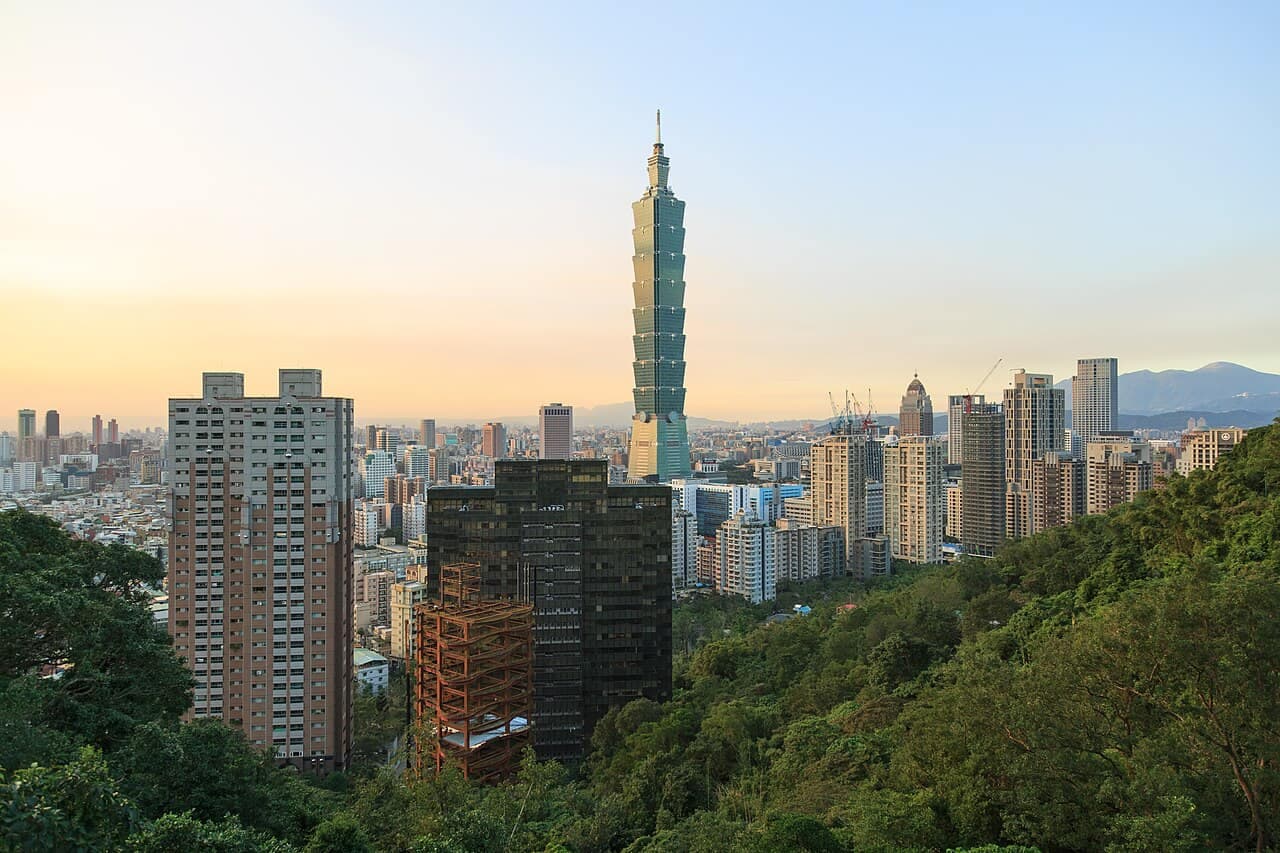
Taiwan

Country · TW · TWD · Asia/Taipei

Visa and entry in Taiwan

This information may change. Always check the official source.

Visa and entry in Taiwan

Warning Important

How Taiwan's entry regime is decided (visa-free 90/30/14 days, eVisa, TAC/ETA, Landing Visa), the mandatory TWAC digital arrival card (submit up to 7 days pre-arrival), duty-free limits — and the brutal bans: meat imports fined 200,000 NTD, e-cigarettes fined up to 5,000,000 NTD.

Decision flow

Determining the correct visa regime for entering Taiwan requires a systematic check of several sequential criteria:

  1. Travel document check: you need an ordinary passport valid at least 6 months from the entry date. Only citizens of the United States and Japan are exempt — their passports must be valid for the planned stay. Holders of emergency, temporary or other non-biometric passports cannot use visa-free entry and must apply for a classic visa or a Landing Visa at the airport (not available for US emergency passports, which do qualify for visa-free entry).
  2. Nationality assessment for visa-free entry (Visa-Exempt - VF): citizens of countries on the visa-waiver list enter visa-free. For citizens of EU member states, the USA, Canada, the United Kingdom, Japan, South Korea and Australia the maximum stay is 90 days. For Singapore and Malaysia the limit is 30 days. Citizens of Thailand, the Philippines and Brunei get up to 14 days under a trial programme (valid as of July 2026).
  3. e-Visa eligibility: travelers not from visa-free countries should check the online e-Visa. It is available without special invitation to citizens of e.g. Saudi Arabia, Turkey, the UAE, Oman and other Gulf states. Russian citizens can apply for the e-Visa between 7 July 2026 and 6 July 2027 (ordinary passports only).
  4. Travel Authorization Certificate (TAC / ETA) eligibility: travelers from selected countries (India, Cambodia, Vietnam, Indonesia, Laos, Myanmar) can enter on a free online TAC if they hold a valid — or within the last 10 years expired — visa or residence permit for the USA, Canada, the UK, the Schengen area, Japan, South Korea or Australia.
  5. Classic visa: travelers matching none of the above categories must apply for a classic visa before departure at the nearest Taiwan representative office (Taipei Economic and Cultural Office).
  6. Supporting documents: all the above regimes require a confirmed return or onward ticket with a reserved seat and proof of accommodation.

Entry formalities applicable to everyone

Effective 1 October 2025 the National Immigration Agency (NIA) fully digitized arrival formalities. Paper arrival cards were abolished entirely and replaced by the electronic Taiwan Arrival Card (TWAC) system. The form is available free of charge on the government portal twac.immigration.gov.tw. Every foreigner entering visa-free or on a short-term visa must complete the form, including minors of any age. Only holders of resident certificates (ARC), resident visas and diplomatic cards are exempt. The submission code is generated after verifying your e-mail address on the portal's landing page. The form must be submitted within a window opening at the earliest 7 days before the planned arrival (a three-day limit applied until June 2026, then extended to seven days). Nothing needs printing after submission — the data pairs automatically with your passport number in the border-control database. Customs control applies strict duty-free limits per person:

  • Cash: the undeclared import limit is 10,000 USD in foreign currency (or equivalent), 100,000 NTD in local currency and 20,000 CNY in Chinese currency. Any amount above the limit must be reported to a customs officer in the red channel, otherwise it faces immediate confiscation without compensation.
  • Alcohol and tobacco: import allowed only for persons over 18 for alcohol (1 litre limit) and over 20 for tobacco (200 cigarettes, 25 cigars or 454 grams of tobacco).
  • Other goods: personal gifts and purchases up to a total of 20,000 NTD (about 615 USD).

An absolute ban on importing any meat products applies at the border, especially anything containing pork, to guard against African swine fever. The ban covers heat-processed foods, cans, dried meat, mooncakes with meat filling and unfinished meals from the plane. A first violation draws an immediate fine of 200,000 NTD (about 6,250 USD); repeat violations are fined 1,000,000 NTD. A foreign traveler without resident status who cannot pay on the spot is immediately refused entry and repatriated on the next flight. An equally strict regime covers e-cigarettes, vaporizers and refills (including nicotine-free ones). Under the Tobacco Hazards Prevention Act their import, sale and mere possession in Taiwan is illegal. Found at customs, the devices are seized and destroyed without compensation, and the traveler faces an administrative fine of 50,000 to 5,000,000 NTD. Under an amendment approved by the government on 25 June 2026, travelers attempting to import fewer than five e-cigarettes for personal use face an immediate administrative fine of 200,000 to 1,000,000 NTD, and possessing e-cigarettes anywhere in public is newly fined 30,000 to 100,000 NTD.

What matters in practice

Traveler experience and immigration advisers point to several critical pain points that can complicate the first hours after arrival:

  • Onward ticket check: airlines strictly verify the existence of a return or onward ticket out of Taiwan already at check-in at the departure airport (e.g. in Europe or the USA). Without a confirmed ticket out of Taiwan, boarding is typically denied.
  • TWAC system outages: per field reports from r/taiwan users, the TWAC system launched in October 2025 suffers occasional instability, slow verification e-mails and strict airline-name matching. If the code e-mail does not arrive, use a Gmail or Yahoo address — delivery there is reliable. If digital registration fails, self-service tablets are available in airport immigration halls, but using them at peak times causes significant delays.
  • Dual citizenship issues: holders of both a Taiwan (Republic of China) passport and another country's passport must pay close attention to conscription laws. Under Article 14 of the draftee exit regulations, every Taiwanese citizen with active household registration must enter and exit exclusively on the Taiwanese passport. Using a foreign passport to enter in order to avoid military service is illegal and leads to exit restrictions.

This information may change. Always check the official source.

Report a change

Suggest a correction

JPEG, PNG or WebP, up to 5 MB. Location metadata is removed.

Corrections and photos are private and visible only to the review team.

SIM and eSIM in Taiwan

SIM and eSIM in Taiwan

Chunghwa Telecom's 10-day unlimited 5G tourist pass is the top pick — 580 NTD when pre-ordered via Klook/KKday (vs 800 NTD walk-up at the airport). Registration legally requires a passport plus a second ID at 18+. Counter locations and hours for Taoyuan, Songshan and Kaohsiung airports included.

SIM and eSIM: what to buy immediately after arrival

An immediate internet connection is essential for arrival formalities, navigation and hailing transport. Foreigners are strongly advised to buy a physical tourist SIM or activate an eSIM right at the airport. For network quality and data speed, Chunghwa Telecom dominates as of January 2026 with the island's densest 5G coverage (95%, which matters when leaving the capital for areas like Taroko or Sun Moon Lake). The second most reliable operator is Taiwan Mobile with 92% 5G coverage. Economically it is best not to buy walk-up at the counter, but to pre-order 24 hours ahead via discount platforms like Klook or KKday, which offer 20–30% discounts. For example, Chunghwa Telecom's standard 10-day unlimited 5G package costs 800 NTD (about 25 USD) at the airport but only 580 NTD (about 18 USD) when pre-ordered online.

Comparison table

Comparison of the main Taiwanese operators' standard 10-day tourist 5G packages (prices and rates as of January 2026, at 32 NTD/USD):

OperatorTourist packageAirport (walk-up) pricePre-order price (Klook/KKday)Data and limitsPickup / purchase locationPassport registration
Chunghwa Telecom10-day 5G Pass800 NTD (~25 USD / 22.80 EUR)580 NTD (~18 USD / 16.50 EUR)Unlimited 5G data; tethering capped at 10 GB; 100 NTD call credit.Taoyuan airport (T1, T2), Songshan airport, airport MRT station.Yes — passport + a second ID (18+).
Taiwan Mobile10-day 5G Pass800 NTD (~25 USD / 22.80 EUR)600 NTD (~19 USD / 17.40 EUR)Unlimited 5G data; limited tethering; basic call credit.Taoyuan airport (T1, T2), Songshan airport (city branches).Yes — passport + a second ID (18+).
Far EasTone (FET)10-day 5G Pass770 NTD (~24 USD / 22.00 EUR)640 NTD (~20 USD / 18.30 EUR)Unlimited 5G data; limited tethering; basic call credit.Taoyuan airport (T1, T2), selected airport kiosks.Yes — passport + a second ID (18+).

Where exactly to buy

Services are available at the key transport hubs:

  • Taoyuan Airport (TPE):
    • Terminal 1: official operator kiosks are in the arrivals hall on the 1st (ground) floor. Far EasTone and Taiwan Mobile counters open 06:00–23:30. The ezfly and Unite Traveler counters (handling pre-orders) run from 04:30 to 23:00.
    • Terminal 2: kiosks are on the 1st floor (arrivals hall) on the left after customs. Hours track the main international arrivals; most close between 22:00 and 00:00 depending on the operator.
  • Taipei Songshan Airport (TSA): options are far more limited. Only a Chunghwa Telecom kiosk operates in the international terminal (T1) arrivals hall, 07:00–23:00. Klook-style pre-orders are collected at the Pelican counter (ground floor near exit E) between 05:00 and 22:00.
  • Kaohsiung Airport (KHH): this airport has no dedicated branded kiosks of the three main national operators. The only airport option is the Fast Communication stand on the 1st floor of the international terminal (between the Chunghwa Telecom branch and exit 5), open 09:00–20:00. Arriving outside these hours means buying a prepaid SIM in the city centre at partner convenience stores (e.g. 7-Eleven sells a 5-day 4G ibon mobile for 350 NTD).

Purchase and registration follow the strict telecommunications law (NCC real-name verification rules). Every applicant must be at least 18 years old (up to 20 for some contract types) and present two original identity documents. The first must be a valid foreign passport. The second can be proof of legal entry (entry stamp), a boarding pass, a valid visa, a national driving licence or an APEC card. The phone must be unlocked for foreign networks before inserting the SIM.

Brief verdict

For the typical independent tourist the best choice is the Chunghwa Telecom 10-day 5G package pre-ordered online via Klook or KKday for 580 NTD. This removes the risk of airport sell-outs, cuts counter time to under two minutes and guarantees the most stable, fastest mobile connection across Taiwan including mountain areas.

This information may change. Always check the official source.

Report a change

Suggest a correction

JPEG, PNG or WebP, up to 5 MB. Location metadata is removed.

Corrections and photos are private and visible only to the review team.

Transport from the airport in Taiwan

Transport from the airport in Taiwan

Taoyuan: purple Airport MRT express to Taipei Main in 35–37 min for 150 NTD, 24-hour Kuo-Kuang bus 1819 for 140 NTD, metered yellow taxis 1,000–1,500 NTD. Songshan sits on the brown metro line (20–30 NTD); Kaohsiung airport is on the red MRT (30–35 NTD, 50 NTD international taxi surcharge).

Taoyuan International Airport (TPE)

The airport lies about 40 km west of Taipei with four main ways into the centre:

  • Taoyuan Airport MRT: the fastest and most reliable transport. Platforms are in the basements of both terminals, two levels below arrivals (follow the purple signs).
    • Express trains (purple): link the airport with Taipei Main Station in 35 minutes (from T1) / 37 minutes (from T2), every 15 minutes, stopping at only five key stations.
    • Commuter trains (blue): stop everywhere; Taipei Main Station takes 49–53 minutes.
    • Operating hours: the first express towards Taipei leaves at 05:57 (T2) and 05:59 (T1). The last express departs 22:55 (T2) / 22:58 (T1); the last commuter train 23:33 (T2) / 23:36 (T1).
    • Price: a single to Taipei Main Station costs 150 NTD (about 4.60 USD). Pay by tapping an EasyCard/iPASS contactless card at the gate or buy a single-ride plastic token from the machines before entry.
  • Airport buses (Limousine Bus): the primary choice for night arrivals after the MRT closes. The main line is route 1819 run by Kuo-Kuang Motor Transport between the airport and Taipei Main Station.
    • Hours and frequency: buses run 24 hours a day; night intervals are 20–30 minutes.
    • Time and price: the trip takes roughly 50–60 minutes; a single costs 140 NTD (about 4.30 USD). Buy tickets at the bus company counters in the arrivals hall.
  • Official airport taxis: available 24/7 right outside the arrivals halls of both terminals. All vehicles are licensed, yellow, and run strictly on the meter.
    • Time and price: central Taipei takes 40–60 minutes depending on traffic, costing 1,000 to 1,500 NTD (about 31–46 USD). Cash and cards accepted.
    • Warning: firmly decline unofficial drivers approaching travelers inside the terminal with inflated flat rates.
  • Ride-hailing (Uber / tripool): Uber works at the airport without restrictions. Pickup happens at specific marked zones outside the terminals, precisely indicated by the app. For long transfers or groups, pre-booking a private car via tripool guarantees a fixed price upfront.

Taipei Songshan Airport (TSA)

Songshan Airport sits directly in Taipei's urban fabric (northern Songshan district) with extremely fast connections:

  • Metro (MRT): the "Songshan Airport" station (terminus of the brown Wenhu Line) connects directly to the terminal basement.
    • Time and transfers: the key Zhongxiao Fuxing interchange takes just 7 minutes. Transfer to the red line (towards Taipei 101) via Daan station. Any central part of Taipei is within 20 minutes.
    • Hours: daily 06:00–24:00.
    • Price: standard EasyCard fares run 20 to 30 NTD (about 0.60–0.90 USD).
  • City taxis: ranks are directly outside the terminal. Given the location, any central Taipei hotel is 15–25 minutes away. Fares run 200 to 300 NTD (about 6–9 USD), strictly by meter.

Kaohsiung International Airport (KHH)

The southern international airport plugs directly into Kaohsiung's modern infrastructure:

  • Metro (Kaohsiung MRT – red line): the "Kaohsiung International Airport" station (R4) is integrated into the airport complex. Exit 2 leads to the domestic terminal, exit 6 to the international terminal.
    • Time: the central Formosa Boulevard interchange (R10) takes exactly 16 minutes; trains run every 4–8 minutes.
    • Hours: 06:00–24:00.
    • Price: the city centre costs 30 to 35 NTD (about 1.00–1.10 USD). Machines take coins and notes and dispense a plastic token; EasyCard/iPASS fully accepted.
  • Official taxis: ranks are on the 1st floor at the arrivals exits of both terminals (gate 1 at the international one). Metered.
    • Airport surcharge: departures from the international terminal carry a statutory 50 NTD surcharge added to the metered fare; no surcharge at the domestic terminal.
    • Prices and times: Formosa Boulevard takes 20–30 minutes for 250 to 300 NTD. The northern Zuoying station (HSR high-speed rail transfer) costs 350–400 NTD.

Recommendations by traveler type

  • Solo and budget travelers: the clear choice is the Airport MRT (Taoyuan) or city metro (Songshan, Kaohsiung) — lowest price, fully predictable timing and no traffic jams. A solo traveler landing at Taoyuan at night (00:00–05:30) should take the 24-hour Kuo-Kuang bus 1819 for 140 NTD.
  • Families and travelers with bulky luggage: use an official airport taxi or a pre-booked private transfer (e.g. tripool). It avoids navigating sprawling interchanges (especially Taipei Main Station, which is extremely confusing for newcomers). At Kaohsiung a taxi is highly cost-effective — split among 3–4 people it nearly matches the metro fare.
  • Night arrival (after midnight): at Taoyuan head to the ground-floor bus counters for the 24-hour line 1819, or take an official yellow taxi. At Songshan and Kaohsiung the metro is closed after midnight, so the only legal options are an airport taxi or ride-hailing (Uber).

This information may change. Always check the official source.

Report a change

Suggest a correction

JPEG, PNG or WebP, up to 5 MB. Location metadata is removed.

Corrections and photos are private and visible only to the review team.

Useful local apps in Taiwan

Useful local apps in Taiwan

Getting around the city and useful apps

Public transit across Taiwan is fully integrated and highly digitalized. The backbone of any city travel is the contactless smart card EasyCard (悠遊卡) or iPASS (一卡通). Both cards work the same way and are interchangeable. You can use them on the metro in Taipei, Taoyuan, Taichung and Kaohsiung, on all city buses, on TRA regional rail (for ordinary unreserved trains up to 70 km), and on light rail networks.

An EasyCard or iPASS can be bought at metro station counters or vending machines, and at any major convenience store (7-Eleven, FamilyMart, Hi-Life, OK Mart), for a fixed one-time fee of 100 NTD (about 65 CZK / 3 USD), which covers the physical card and is non-refundable. A newly purchased card has a zero balance. Topping up credit can only be done in cash (banknotes) at station top-up machines or convenience-store checkouts — card payment for topping up a transit card is not technically possible. Using EasyCard/iPASS on the metro gives an automatic discount of roughly 20% versus buying single tokens, and enables discounted transfers between metro and bus within 60 minutes.

The citywide bike-share system YouBike (generation 2.0 and electric 2.0E) is a key option for short trips. To use it you need the YouBike app, a linked EasyCard/iPASS, and an active Taiwanese phone number to receive a verification SMS. Major rule effective 1 January 2026: every YouBike user (including one-off unregistered credit-card rentals) must have mandatory public bicycle injury insurance activated in the YouBike app before unlocking a bike. Without completing this insurance registration, the system will not release a bike anywhere in Taiwan.

Recommended apps to download:

  • Uber: Works with a foreign phone number and a foreign payment card. The primary choice for hassle-free communication with drivers with no language barrier.
  • Taiwan Taxi (55688): The official app of the largest national fleet of yellow taxis. Requires registration with a Taiwanese phone number, but offers the fastest pickup outside city centers and supports dozens of payment types.
  • LINE GO / yoxi: Local ride-hailing platforms. LINE GO is built directly into the LINE chat app, which most of the population uses.
  • YouBike: Essential for finding available bikes and docks, and for activating the mandatory insurance required since 1 January 2026.

This information may change. Always check the official source.

Report a change

Suggest a correction

JPEG, PNG or WebP, up to 5 MB. Location metadata is removed.

Corrections and photos are private and visible only to the review team.

Local transport and booking in Taiwan

Local transport and booking in Taiwan

Recommendations by traveler type

  • Solo travelers and budget travelers: The clear choice is the express MRT (Taoyuan) or city metro (Songshan, Kaohsiung). It offers the lowest price, fully predictable travel times, and avoids traffic jams. If a solo traveler lands at Taoyuan Airport at night (00:00–05:30), the best option is the 24-hour Kuo-Kuang bus line 1819 for 140 NTD.
  • Families with children and travelers with bulky luggage: An official airport taxi or a pre-booked private transfer (e.g. tripool) is recommended. This removes the need to navigate large transfer hubs (especially Taipei Main Station, which is extremely confusing for newcomers). At Kaohsiung Airport, a taxi is highly cost-effective, since the fare split between 3–4 people is close to the metro fare.
  • Night arrivals (after midnight): At Taoyuan Airport, head to the bus ticket counters on the ground floor and take the 24-hour line 1819, or take an official yellow taxi. At Songshan and Kaohsiung airports the metro closes after midnight, so the only legal option is an airport taxi or ride-hailing (Uber).

Getting around the city and useful apps

Public transit across Taiwan is fully integrated and highly digitalized. The backbone of any city travel is the contactless smart card EasyCard (悠遊卡) or iPASS (一卡通). Both cards work the same way and are interchangeable. You can use them on the metro in Taipei, Taoyuan, Taichung and Kaohsiung, on all city buses, on TRA regional rail (for ordinary unreserved trains up to 70 km), and on light rail networks.

An EasyCard or iPASS can be bought at metro station counters or vending machines, and at any major convenience store (7-Eleven, FamilyMart, Hi-Life, OK Mart), for a fixed one-time fee of 100 NTD (about 65 CZK / 3 USD), which covers the physical card and is non-refundable. A newly purchased card has a zero balance. Topping up credit can only be done in cash (banknotes) at station top-up machines or convenience-store checkouts — card payment for topping up a transit card is not technically possible. Using EasyCard/iPASS on the metro gives an automatic discount of roughly 20% versus buying single tokens, and enables discounted transfers between metro and bus within 60 minutes.

The citywide bike-share system YouBike (generation 2.0 and electric 2.0E) is a key option for short trips. To use it you need the YouBike app, a linked EasyCard/iPASS, and an active Taiwanese phone number to receive a verification SMS. Major rule effective 1 January 2026: every YouBike user (including one-off unregistered credit-card rentals) must have mandatory public bicycle injury insurance activated in the YouBike app before unlocking a bike. Without completing this insurance registration, the system will not release a bike anywhere in Taiwan.

Recommended apps to download:

  • Uber: Works with a foreign phone number and a foreign payment card. The primary choice for hassle-free communication with drivers with no language barrier.
  • Taiwan Taxi (55688): The official app of the largest national fleet of yellow taxis. Requires registration with a Taiwanese phone number, but offers the fastest pickup outside city centers and supports dozens of payment types.
  • LINE GO / yoxi: Local ride-hailing platforms. LINE GO is built directly into the LINE chat app, which most of the population uses.
  • YouBike: Essential for finding available bikes and docks, and for activating the mandatory insurance required since 1 January 2026.

This information may change. Always check the official source.

Report a change

Suggest a correction

JPEG, PNG or WebP, up to 5 MB. Location metadata is removed.

Corrections and photos are private and visible only to the review team.

Money and payments in Taiwan

Money and payments in Taiwan

Money and payments

The official currency is the New Taiwan Dollar (TWD, marked locally as NT$ or 元). Approximate exchange rates as of July 2026:

  • 1 TWD = 0.65 CZK (1 CZK = 1.53 TWD)
  • 1 TWD = 0.027 EUR (1 EUR = 37.07 TWD)
  • 1 TWD = 0.031 USD (1 USD = 32.20 TWD)

ATM withdrawals: Most Taiwanese ATMs charge a fixed operator fee of 100 to 200 TWD (about 65–130 CZK / 3–6 USD) per transaction for foreign cards. The widespread CTBC Bank ATM network (located inside 7-Eleven stores) typically charges 100 to 150 TWD. Most banks cap a single foreign-card withdrawal at 20,000 NTD. Fee-free withdrawals: It's strongly recommended to use Cathay United Bank (CUB) ATMs. These machines, installed in most 7-Eleven branches, are a long-established favorite among international travelers as one of the few that charge no fee for withdrawals with foreign debit or credit cards (only your home issuing bank may charge its own fee). The DCC trap (Dynamic Currency Conversion): When withdrawing cash from an ATM or paying at a store terminal, the system often recognizes a foreign card and offers to settle the transaction in the card's home currency (CZK or EUR) instead of the local currency (TWD). Travelers should always choose settlement in local currency, TWD. Choosing DCC in CZK/EUR hands the exchange rate to the ATM/terminal operator, adding a hidden markup of 5% to 10% over the standard Visa/Mastercard rate. Exchanging cash: Bringing cash and exchanging it locally is safe. The best rates with minimal fees are offered at official bank counters right in the airport arrivals halls (Bank of Taiwan and Mega Bank branches). In the cities, money can only be exchanged at physical bank branches during opening hours (Monday to Friday, 09:00–15:30). There are no private street exchange booths in the country, which eliminates the risk of counterfeit-note scams or hidden fees. Card acceptance and the cash reality: Everyday life in Taiwan is still heavily cash-dependent. While hotels, department stores, international chains and better restaurants accept cards, smaller local eateries, night market stalls, traditional taxis and temples require cash only. A key fact: topping up city transit cards (EasyCard and iPASS) at metro machines or convenience-store checkouts can only be done with physical banknotes. Contactless payment for topping up transit credit is not technically supported. Tipping: Tipping has no tradition in Taiwanese culture and is not expected from foreigners. Higher-end restaurants and hotels standardly add an automatic 10% service charge directly to the final bill. Leaving loose change on the table at ordinary eateries can lead to staff running after you on the street to return the "forgotten" money.

This information may change. Always check the official source.

Report a change

Suggest a correction

JPEG, PNG or WebP, up to 5 MB. Location metadata is removed.

Corrections and photos are private and visible only to the review team.

Accommodation in Taiwan

Accommodation in Taiwan

Accommodation

For the first days after arrival, choosing the right neighborhood matters most for logistical access from the airport and connection to city transit:

  • Taipei — Ximending (Wanhua district):
  • Best for: first-time visitors, young travelers, those interested in nightlife, street food and shopping.
  • Logistics: direct connection to the Blue Line (Bannan Line), which crosses the entire city.
  • Price level: low to mid; standard hotels run 1,500 to 3,000 NTD per night (about 1,000–2,000 CZK / 46–92 USD).
  • Taipei — around Taipei Main Station (Zhongzheng district):
  • Best for: travelers with heavy luggage, transit visitors, and those planning to take the HSR high-speed rail to other parts of the island in the following days.
  • Logistics: the main transport hub — direct access from the Airport MRT express line, the crossing point of the Red and Blue metro lines, and the TRA and HSR rail stations.
  • Price level: mid; clean international hotels and hostels run 2,000 to 4,000 NTD per night (about 1,300–2,600 CZK / 61–123 USD).
  • Taipei — Xinyi (around Taipei 101):
  • Best for: business travelers and discerning visitors looking for luxury five-star hotels, upscale restaurants and rooftop bars.
  • Logistics: Red Line (Tamsui-Xinyi), excellent cleanliness and safety, right next to the Taipei 101 skyscraper.
  • Price level: high; accommodation starts around 4,500 NTD per night (about 2,900 CZK / 138 USD) and climbs from there.
  • Kaohsiung — around Formosa Boulevard:
  • Best for: an ideal base in Kaohsiung for any type of traveler.
  • Logistics: Formosa Boulevard station (R10/O5) is the only interchange between the Red Line (direct connection from Kaohsiung Airport and Zuoying HSR station) and the Orange Line. Right next to the famous Liuhe Night Market.
  • Price level: low to mid; prices run 1,200 to 2,500 NTD per night (about 780–1,625 CZK / 37–77 USD).

Common accommodation practices: By law, at check-in every accommodation must register foreign guests, which requires presenting the physical passports of everyone staying. Most mid-range and upscale hotels require a guarantee for incidental costs at check-in, either a credit-card pre-authorization hold or a cash deposit (typically 1,000 to 2,000 NTD). Standard check-in time is 15:00, and check-out is by 11:00.

This information may change. Always check the official source.

Report a change

Suggest a correction

JPEG, PNG or WebP, up to 5 MB. Location metadata is removed.

Corrections and photos are private and visible only to the review team.

Safety and common scams in Taiwan

This information may change. Always check the official source.

Safety and common scams in Taiwan

Warning Important

Safety and common scams

Taiwan is rated globally as one of the safest destinations, with an exceptionally low crime rate. Pickpocketing and violent robbery are extremely rare, even at night or in side streets. There is no aggressive tourist-targeted crime or organized gangs preying on foreigners. Still, a few isolated scams can occur:

  • Taxi meter scam: While the vast majority of taxi drivers are honest, near major tourist attractions (e.g. around Taipei 101, the Xinyi skyscrapers, or the Grand Hyatt hotel) some dishonest drivers may deliberately not switch on the meter and then demand an inflated flat fee at the destination (e.g. 500 NTD for a ride that normally costs 180 NTD).
  • Protection: Before setting off, make sure the driver has switched on the meter. If they claim it's broken and refuse, get out immediately. If a dispute arises, photograph the driver's license (always displayed on the dashboard) and the vehicle's license plate. Simply photographing the license is usually enough to make the driver back down and accept the real fare, since a third reported meter violation results in permanent license revocation in Taiwan. The safest prevention is booking through the Uber app, where the price is fixed in advance.
  • False scooter damage claims: When renting a motorbike or scooter, a dishonest rental shop may try to charge the customer high repair fees for scratches that were already on the vehicle before rental.
  • Protection: Never leave your original passport as a deposit at a rental shop — this is illegal and exposes the traveler to extortion — always insist on providing a photocopy of your passport instead. Before taking the scooter, photograph and video the entire vehicle in detail in front of a rental-shop employee. Use only licensed, highly rated rental shops.
  • Tea house scam: This scam — where foreigners are lured by fake students under the pretext of practicing English or attending a festival into private tea rooms and then hit with an astronomical bill (running into hundreds of USD) — is typical of mainland China (Shanghai, Beijing) but practically does not occur in Taiwan. Even so, caution is advised when strangers on the street offer to accompany you to opaque venues.

This information may change. Always check the official source.

Report a change

Suggest a correction

JPEG, PNG or WebP, up to 5 MB. Location metadata is removed.

Corrections and photos are private and visible only to the review team.

Health in Taiwan

This information may change. Always check the official source.

Health in Taiwan

Warning Important

Health and emergencies

Health risks and vaccinations: No mandatory vaccination is required to enter Taiwan. Standard vaccination against hepatitis A and B and tetanus is recommended. In the southern part of the island (especially Kaohsiung and Tainan), mosquito-borne dengue fever occurs during the summer months. Travelers are advised to use high-DEET repellents and wear long clothing at dusk. Malaria does not occur in Taiwan. Tap water: Taiwan's municipal water goes through strict filtration and leaves the treatment plant as drinking water. The issue is secondary contamination in old, poorly maintained building plumbing. Drinking tap water directly without boiling it is strongly discouraged. Most hotels provide free bottled water daily or have hot/cold filtered water dispensers in the hallways. Hospitals suitable for foreigners (with English-speaking staff):

  • Taipei — Taiwan Adventist Hospital (TAH): Located in central Songshan (address: 424, Section 2, Bade Road, Taipei). Has a dedicated International Priority Care Center (IPCC) with fully English- and Japanese-speaking staff. The standard registration fee in this department is 1,700 NTD (about 1,100 CZK / 53 USD), with all exams, lab tests and medication billed separately. Taiwan's National Health Insurance (NHI) does not cover non-residents here — care is paid in cash, by card, or billed directly to international insurers.
  • Kaohsiung — Kaohsiung Chang Gung Memorial Hospital: A large teaching hospital with an International Medical Center (IMC) with English-speaking coordinators (address: No. 123, Dapi Road, Niaosong District, Kaohsiung).

Emergency numbers:

  • Police: 110

  • Fire and ambulance: 119

  • Free tourist hotline (Tourism Administration): 0800-011-765 (provides round-the-clock assistance in English, Japanese and Chinese for emergencies, lost documents, or interpretation).

Taking out commercial travel insurance with adequate medical coverage before departure is essential, since medical care for uninsured foreigners at international centers can reach very high amounts.

This information may change. Always check the official source.

Report a change

Suggest a correction

JPEG, PNG or WebP, up to 5 MB. Location metadata is removed.

Corrections and photos are private and visible only to the review team.

Everyday practical information in Taiwan

Everyday practical information in Taiwan

Local rules and cultural differences

  • Strict ban on eating and drinking in the metro (MRT): Across the entire metro system in Taipei, Kaohsiung and other cities, there is an absolute ban on eating, drinking, chewing gum or betel nut. The ban starts at the yellow line on the floor before the turnstiles (the paid area) and applies on platforms and inside trains alike. It even covers plain bottled water. The only exceptions are breastfeeding mothers and people with an acute medical condition (e.g. diabetics) after notifying station staff. Violating this rule is punished without exception by inspectors or metro police with a fine of 1,500 to 7,500 NTD (about 975–4,875 CZK / 46–230 USD). The rule exists to keep the system perfectly clean and prevent rodents that could damage the electrical wiring of the safety systems.
  • Strict drone regulation: Operating a drone in Taiwan is subject to strict rules from the Civil Aeronautics Administration (CAA). Any drone with a maximum take-off weight of 250 grams or more owned by an individual must be registered in the national registry at drone.caa.gov.tw.
  • Registration for foreigners: Foreign tourists (non-residents) must register by entering their passport number and uploading a valid drone license/registration issued in their home country (e.g. a registration issued by your national civil aviation authority). Registration for non-residents is valid for a maximum of 6 months, and the administrative fee is 150 NTD (about 4.60 USD). The registration number must be clearly and permanently marked on the drone body (e.g. with a QR-code sticker).
  • Penalties: Flying an unregistered drone weighing over 250 g carries a fine of 30,000 to 150,000 NTD. Flying in no-fly zones (airport perimeters, military sites, government buildings, national parks without a permit) is punished with an extreme fine of 300,000 to 1,500,000 NTD and immediate confiscation of the device.
  • Flight rules: Maximum flight altitude is limited to 122 meters (400 feet) above ground level. Flying is only allowed in daylight (sunrise to sunset), within the pilot's direct visual line of sight (max. 900 meters horizontally), and is strictly forbidden over crowds, outdoor gatherings or demonstrations.

Everyday practical information

  • Power outlets: All of Taiwan uses Type A and Type B electrical outlets (matching the US and Canadian standard). Mains voltage is 110 V at 60 Hz. European travelers need a physical adapter. For appliances that don't support dual voltage (marked 100–240 V — typically hair dryers or travel kettles), a voltage converter is required, or the device will underperform or be damaged. Phone and laptop chargers typically support dual voltage.
  • Time zone: Taiwan Standard Time (TST) is UTC+8. Taiwan does not observe daylight saving time, so the time difference from Central Europe is +6 hours during Central European Summer Time and +7 hours during winter time.
  • Opening hours: Taiwan has an exceptionally developed network of round-the-clock services. Convenience stores — 7-Eleven, FamilyMart, Hi-Life and OK Mart — are open 24 hours a day, 7 days a week in urban areas. Regular retail stores and shopping malls typically operate daily from 11:00 to 21:30 or 22:00. Government offices and banks are open Monday to Friday, 09:00 to 15:30.
  • Public restrooms: Available free of charge at every metro station, train station, department store and temple, and kept to a high standard of cleanliness. In older buildings and public parks, toilet paper should not be flushed directly into the bowl (narrow pipes clog easily) — it goes into the bin next to the toilet (watch for the pictograms).
  • Public Wi-Fi: The free national iTaiwan network has thousands of hotspots across public buildings, metro stations, libraries and tourist attractions. Foreigners can activate free access by showing their passport at any Travel Service Center counter (e.g. at airports or main train stations), where staff will set it up using the passport number.

This information may change. Always check the official source.

Report a change

Suggest a correction

JPEG, PNG or WebP, up to 5 MB. Location metadata is removed.

Corrections and photos are private and visible only to the review team.

Emergency information in Taiwan

This information may change. Always check the official source.

Emergency information in Taiwan

Warning Important

Health and emergencies

Health risks and vaccinations: No mandatory vaccination is required to enter Taiwan. Standard vaccination against hepatitis A and B and tetanus is recommended. In the southern part of the island (especially Kaohsiung and Tainan), mosquito-borne dengue fever occurs during the summer months. Travelers are advised to use high-DEET repellents and wear long clothing at dusk. Malaria does not occur in Taiwan. Tap water: Taiwan's municipal water goes through strict filtration and leaves the treatment plant as drinking water. The issue is secondary contamination in old, poorly maintained building plumbing. Drinking tap water directly without boiling it is strongly discouraged. Most hotels provide free bottled water daily or have hot/cold filtered water dispensers in the hallways. Hospitals suitable for foreigners (with English-speaking staff):

  • Taipei — Taiwan Adventist Hospital (TAH): Located in central Songshan (address: 424, Section 2, Bade Road, Taipei). Has a dedicated International Priority Care Center (IPCC) with fully English- and Japanese-speaking staff. The standard registration fee in this department is 1,700 NTD (about 1,100 CZK / 53 USD), with all exams, lab tests and medication billed separately. Taiwan's National Health Insurance (NHI) does not cover non-residents here — care is paid in cash, by card, or billed directly to international insurers.
  • Kaohsiung — Kaohsiung Chang Gung Memorial Hospital: A large teaching hospital with an International Medical Center (IMC) with English-speaking coordinators (address: No. 123, Dapi Road, Niaosong District, Kaohsiung).

Emergency numbers:

  • Police: 110

  • Fire and ambulance: 119

  • Free tourist hotline (Tourism Administration): 0800-011-765 (provides round-the-clock assistance in English, Japanese and Chinese for emergencies, lost documents, or interpretation).

Taking out commercial travel insurance with adequate medical coverage before departure is essential, since medical care for uninsured foreigners at international centers can reach very high amounts.

This information may change. Always check the official source.

Report a change

Suggest a correction

JPEG, PNG or WebP, up to 5 MB. Location metadata is removed.

Corrections and photos are private and visible only to the review team.

Experiences

Nothing here yet.

General tips

Nothing here yet.

Share a tip

Sign in to continue.